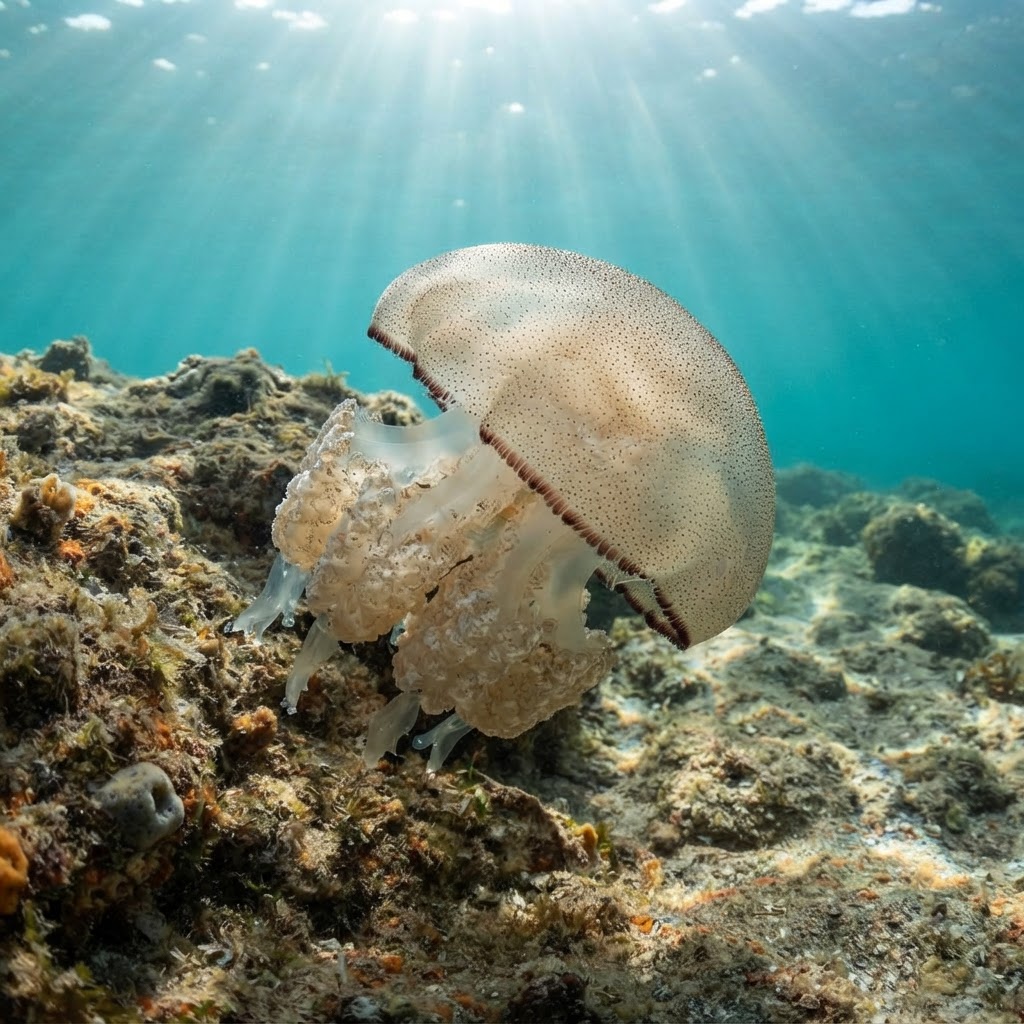
Rhopilema hispidum
A rarely-logged rhizostome jelly seen off Sai Kung, Hong Kong, drifting in warm 23-30C water year-round.
Safety warning
Its sting can cause skin irritation or a painful welt on contact, so avoid touching the bell or the frilled oral arms even if it looks sluggish. Keep a body length of distance when photographing it and rinse any contact area with vinegar or hot water rather than fresh water if stung.
If you're stung
Stinging tentaclesGeneral first-aid guidance, not a substitute for professional medical care. In an emergency, call your local emergency number.
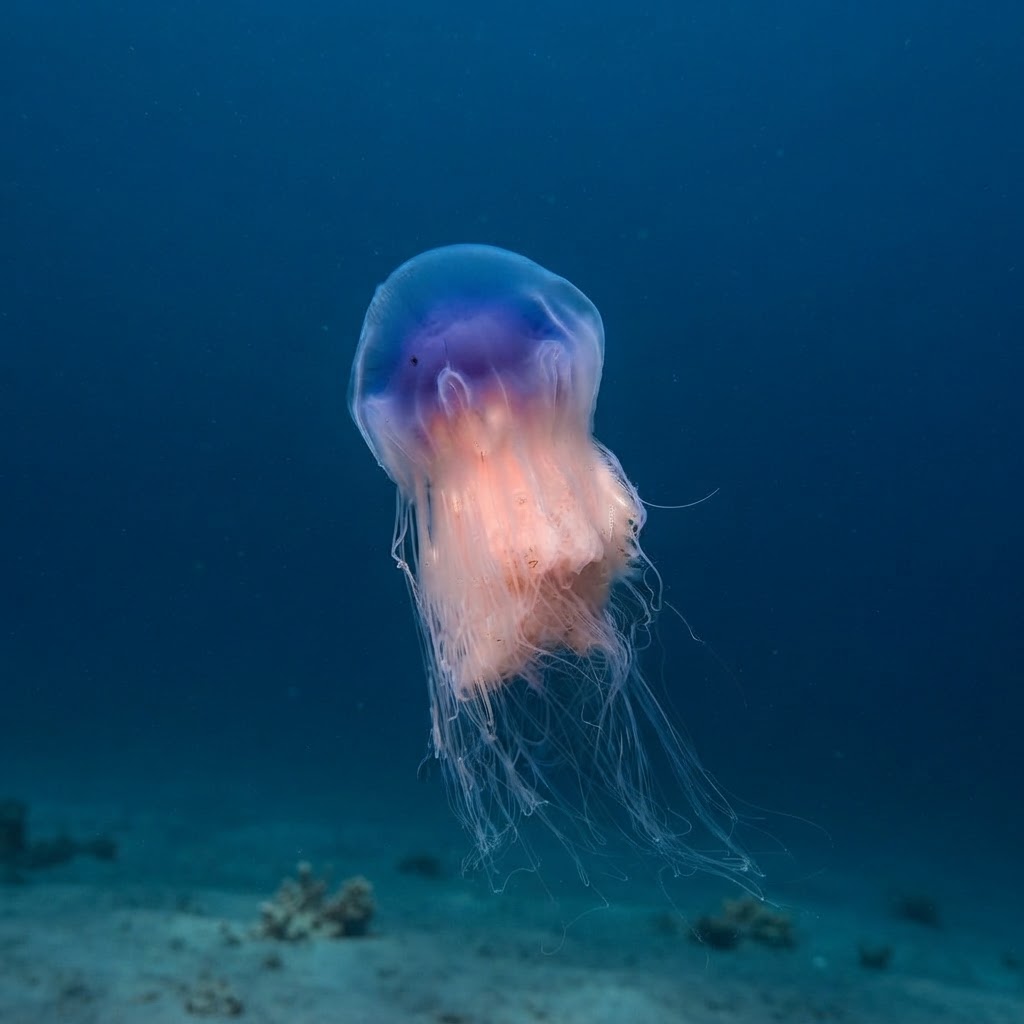
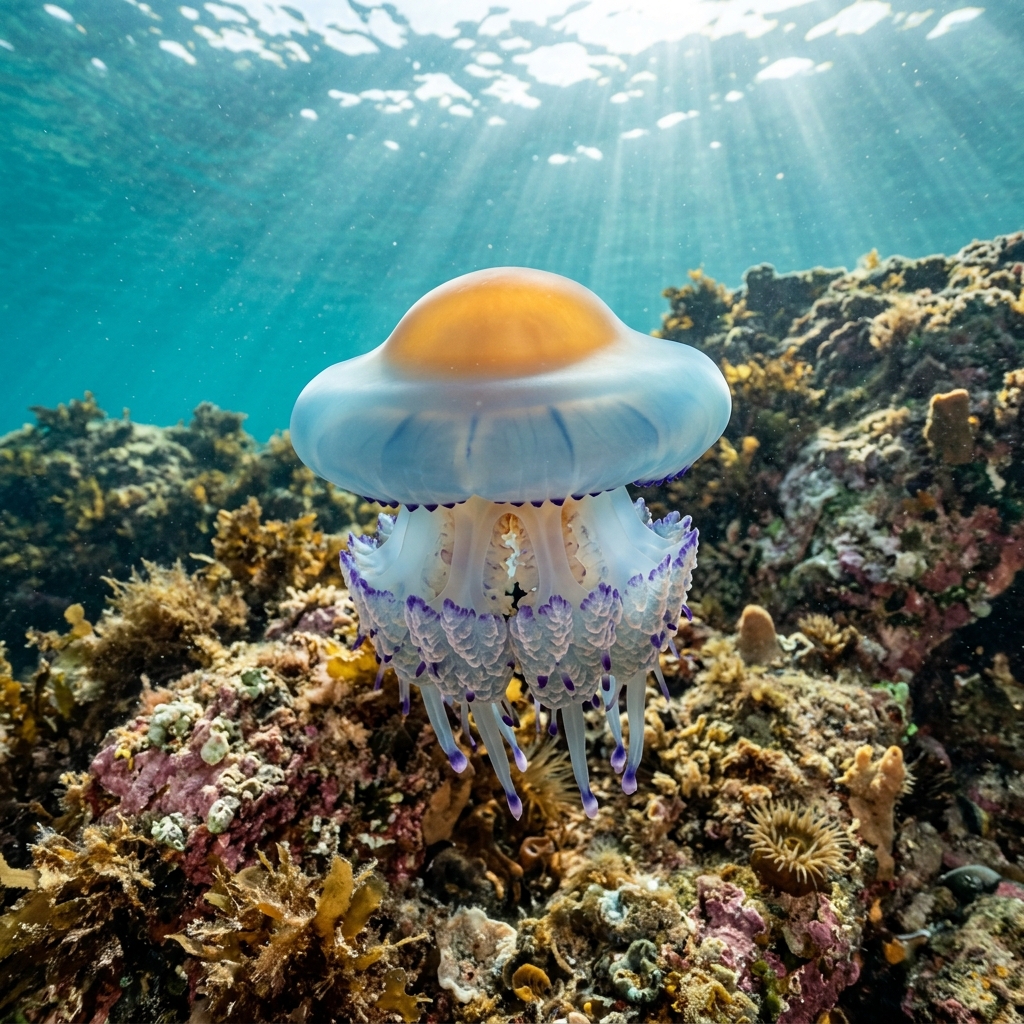
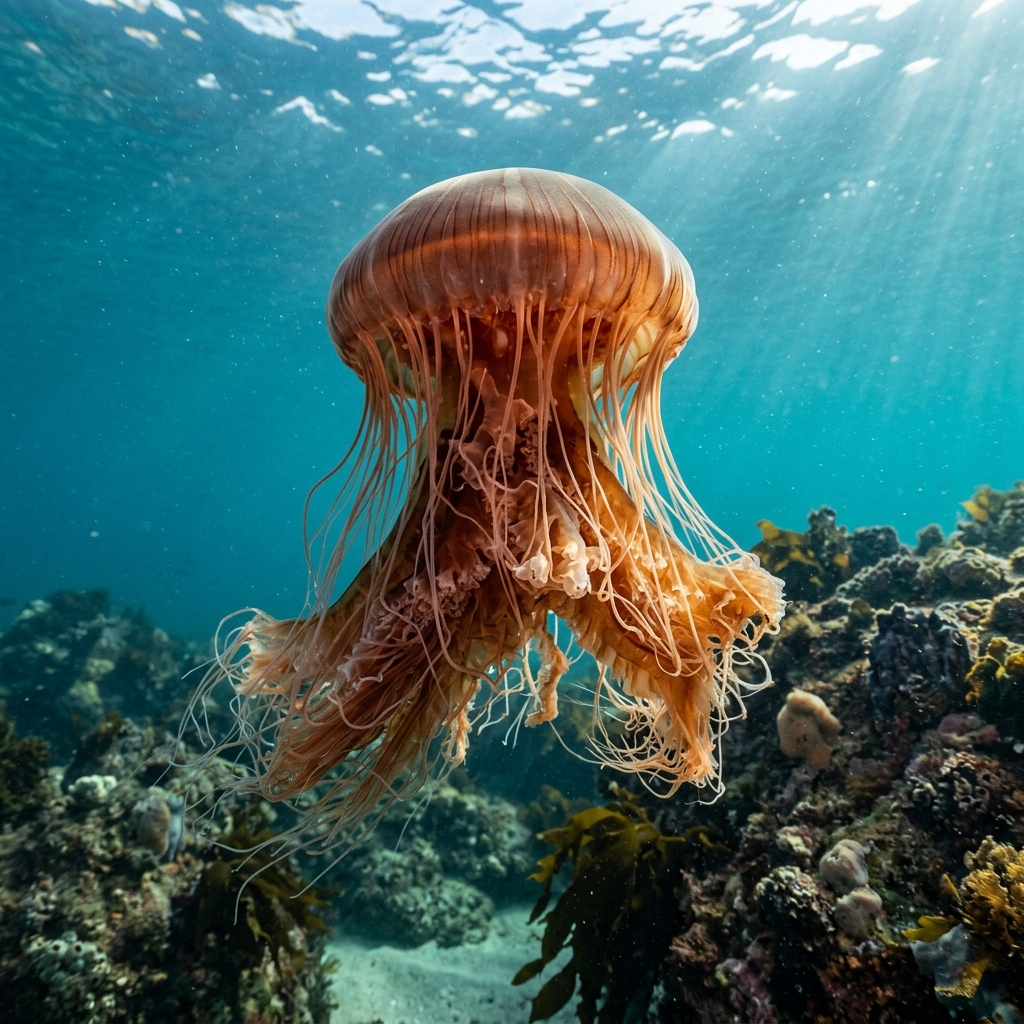
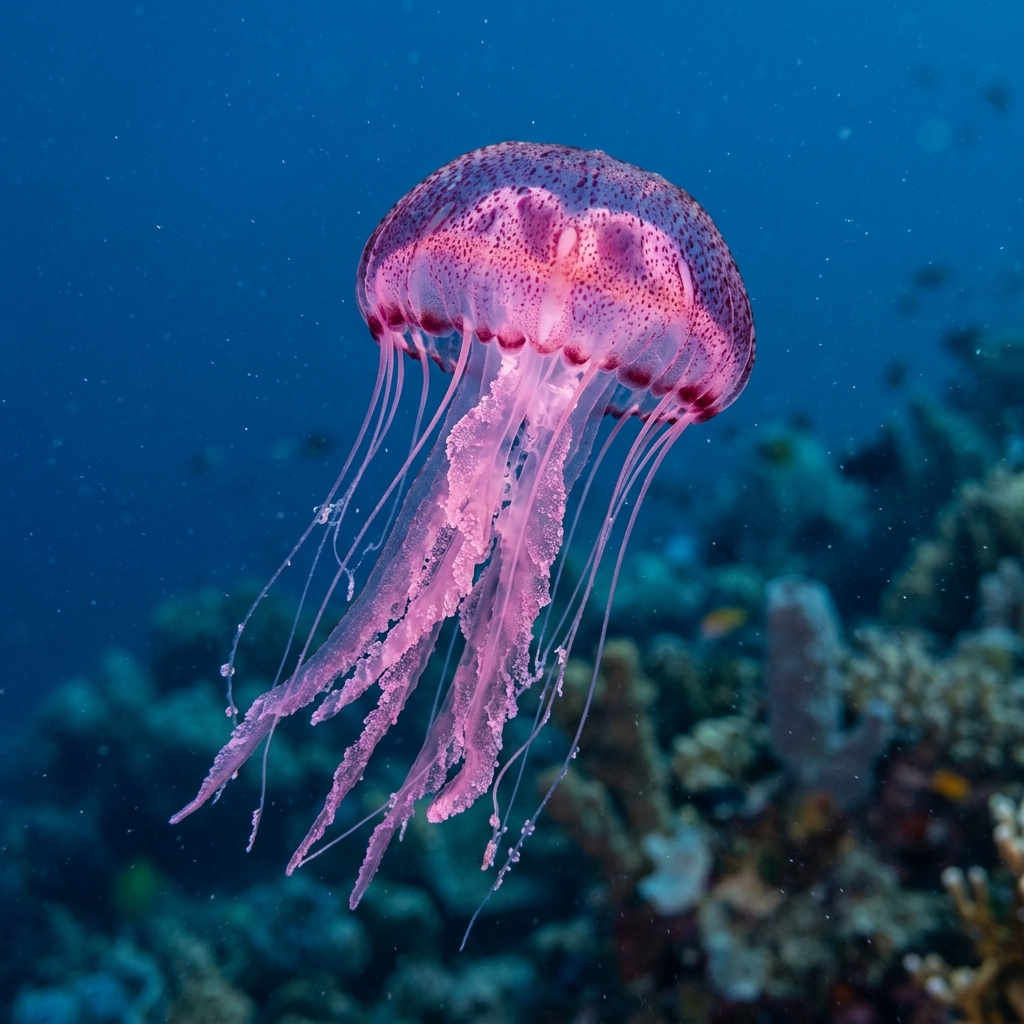
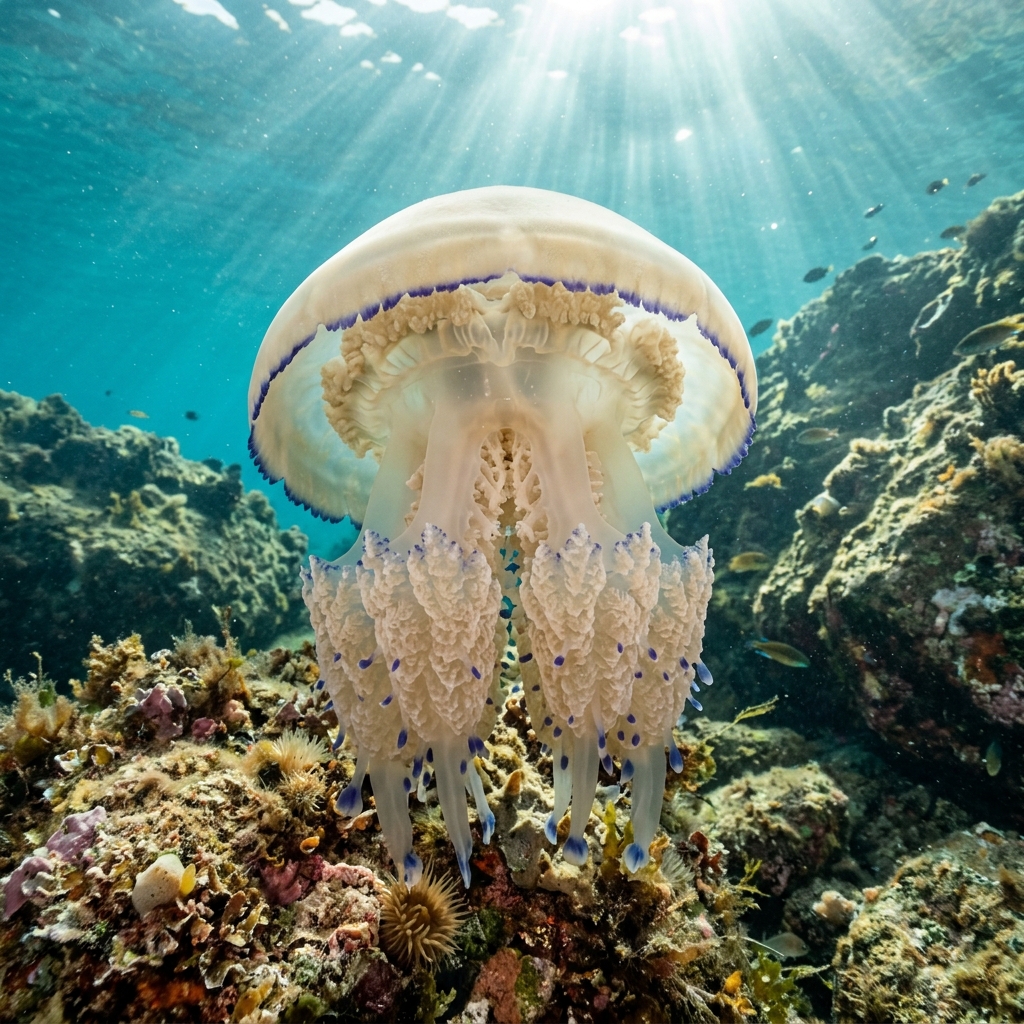
Recognisable by its dome-shaped bell, up to around 49 cm across, covered in small wart-like bumps that give it a rough, sandy texture rather than a smooth surface. The bell is typically a dull brown or greyish colour, blending into open water rather than standing out. Underneath, thick frilled oral arms hang down in place of a single set of tentacles, a hallmark of the rhizostome jellyfish group it belongs to.
Divers encounter it drifting passively in open water rather than attached to structure, moving with current and tide like most large jellyfish. It shows no real reaction to divers and simply pulses along, so most sightings are brief mid-water passes rather than extended encounters.
Like other rhizostomes, it has no single feeding tentacles; instead its frilled oral arms filter and sting plankton as it drifts, a slower and more passive feeding style than tentacled jellyfish.
Sightings don't show a clear seasonal pattern, and with a warm-water niche of 23.3 to 29.5C, it likely turns up across the diving season in Hong Kong rather than at one particular time of year.
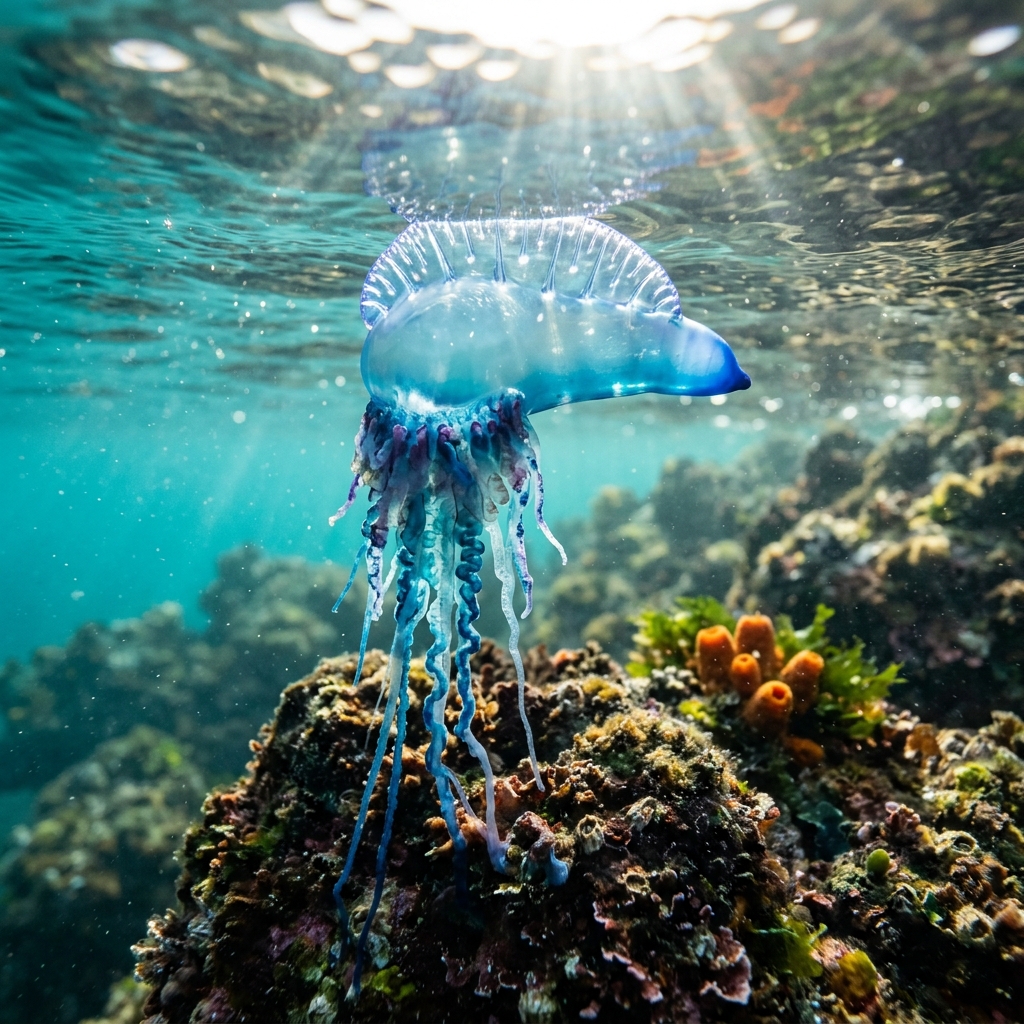
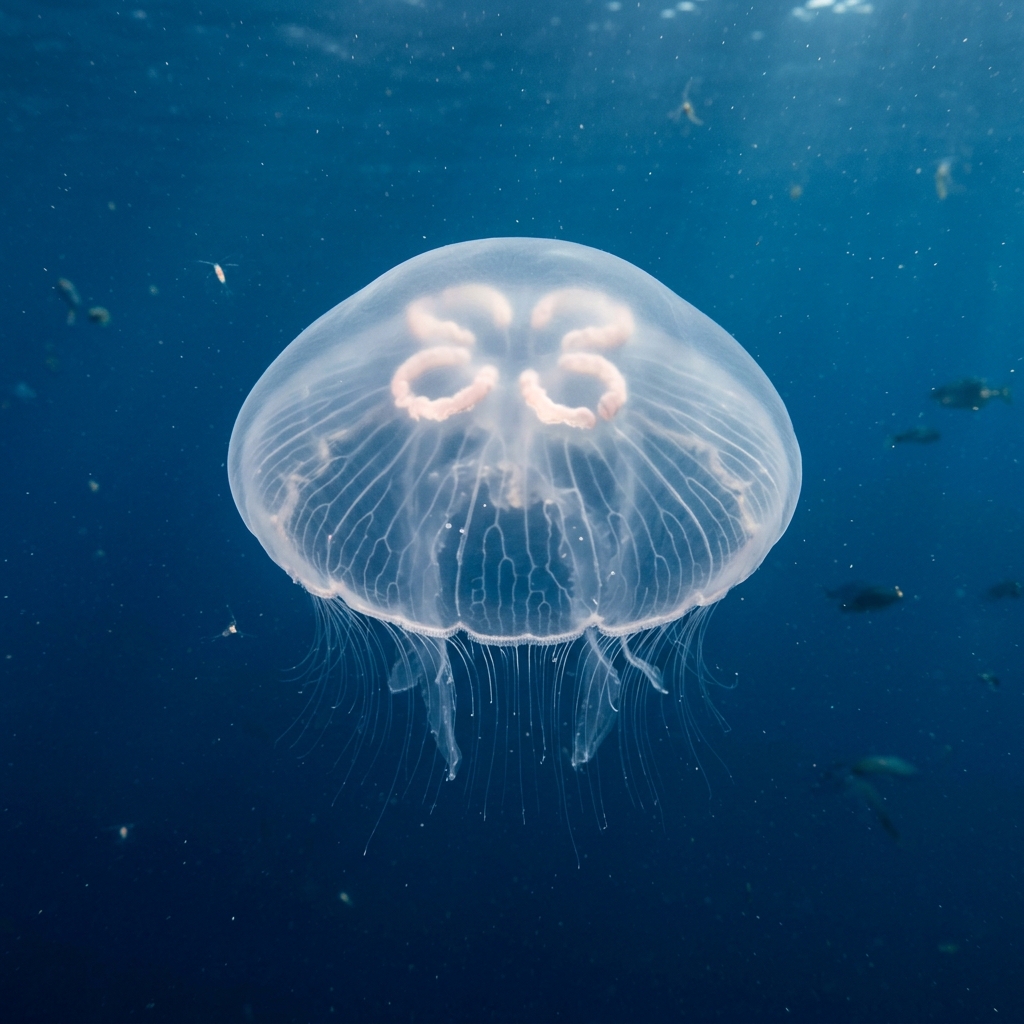
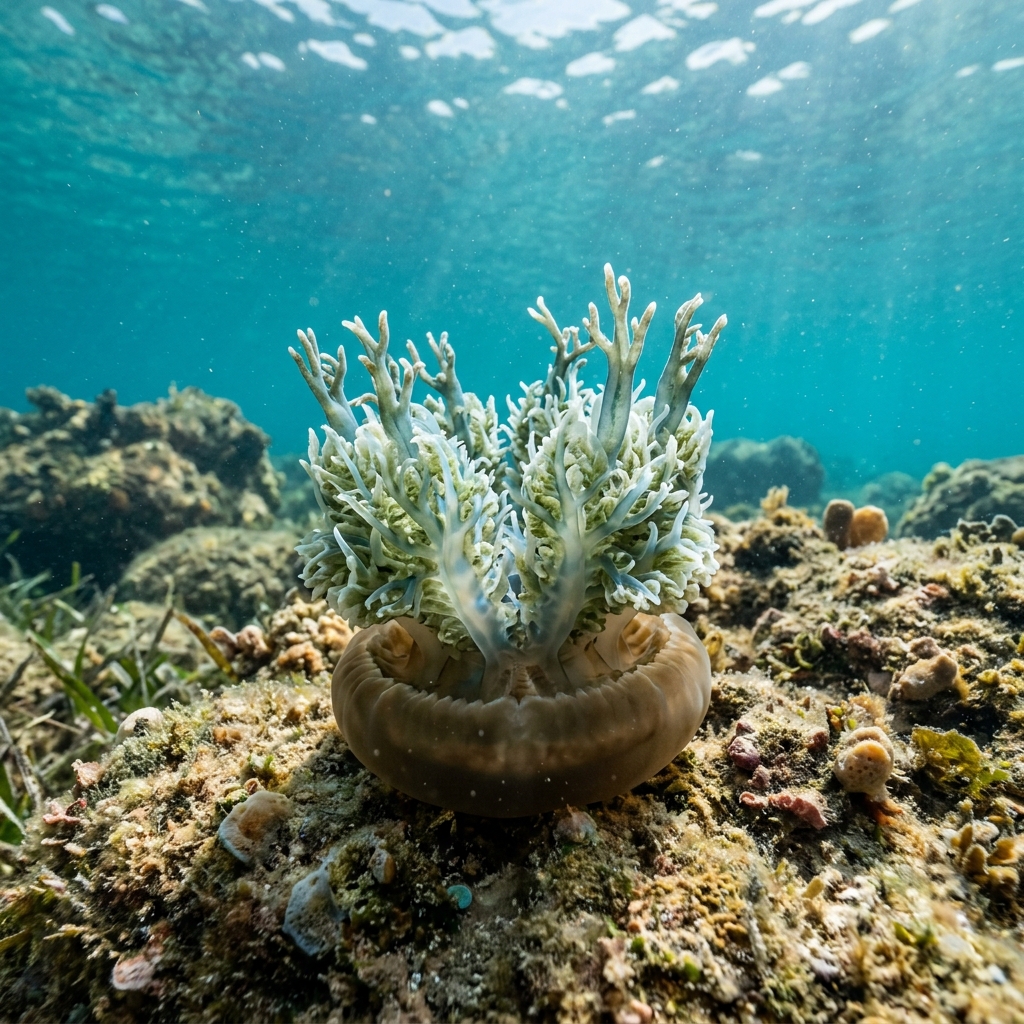
Reef neighbours a diver could mistake it for. Use the identification notes above to tell them apart.
Logged sightings are currently limited to Hong Kong, specifically around Sai Kung, where it shows up as a rare to uncommon find on local dives. There is not yet enough data to point to other regions, so Sai Kung is the place to look for now.
Mapping where Sand Jellyfish is logged…
Confirmed sightings come from Sai Kung in Hong Kong, where it's logged as a rare to uncommon find. There isn't enough data yet to name other reliable locations.
There's no clear seasonal pattern in the sighting data. Given its warm-water range of 23.3 to 29.5C, it's likely present through the local diving season rather than tied to one specific month.
Yes, contact with its bell or oral arms can cause a stinging, irritating welt. It's not aggressive and won't chase divers, so simply keep your distance and avoid touching it.
Look for a warty, dome-shaped bell around 49 cm across in a dull brown or grey tone, with thick frilled oral arms hanging below instead of long trailing tentacles.
They reach roughly 49 cm across the bell, making them a substantial mid-water jelly rather than a small species.
They have no single stinging tentacles. Instead, thick frilled oral arms under the bell filter and sting plankton as the animal drifts, a passive feeding style shared with other rhizostome jellyfish.
Site and sighting data is aggregated from diver logs, iNaturalist and GBIF. For taxonomy and conservation status:
Moon Jellyfish
1,766 sites