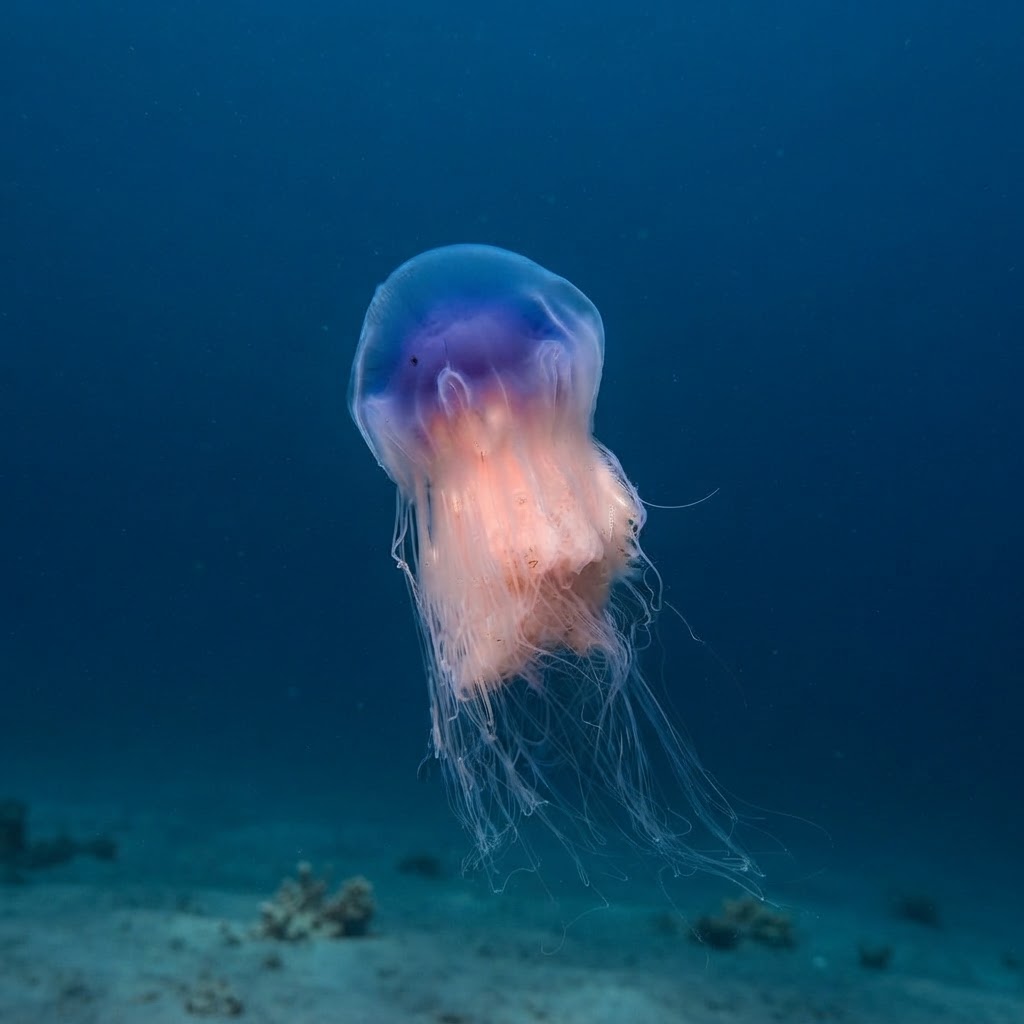
Cyanea lamarckii
Cool water drifter logged from Zeeland to Scotland at 8 to 14C, often trailing long stinging tentacles.
Safety warning
Contact with the tentacles causes a stinging rash similar to other jellyfish stings, milder than a Lion's Mane but still uncomfortable, especially on bare skin at the wrists or neck seal. Give it a wide berth rather than trying to move it aside, and rinse any contact area with seawater, not fresh water, if stung.
If you're stung
Stinging tentaclesGeneral first-aid guidance, not a substitute for professional medical care. In an emergency, call your local emergency number.
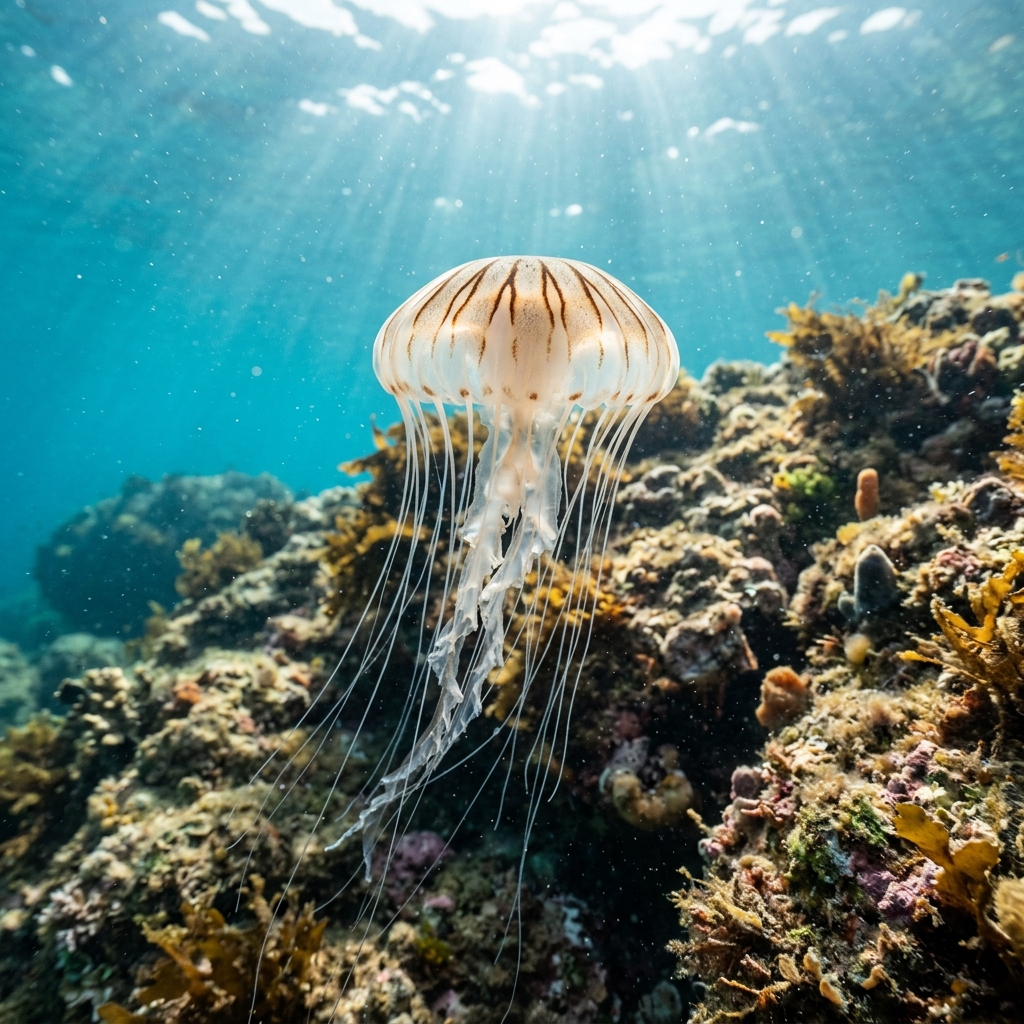
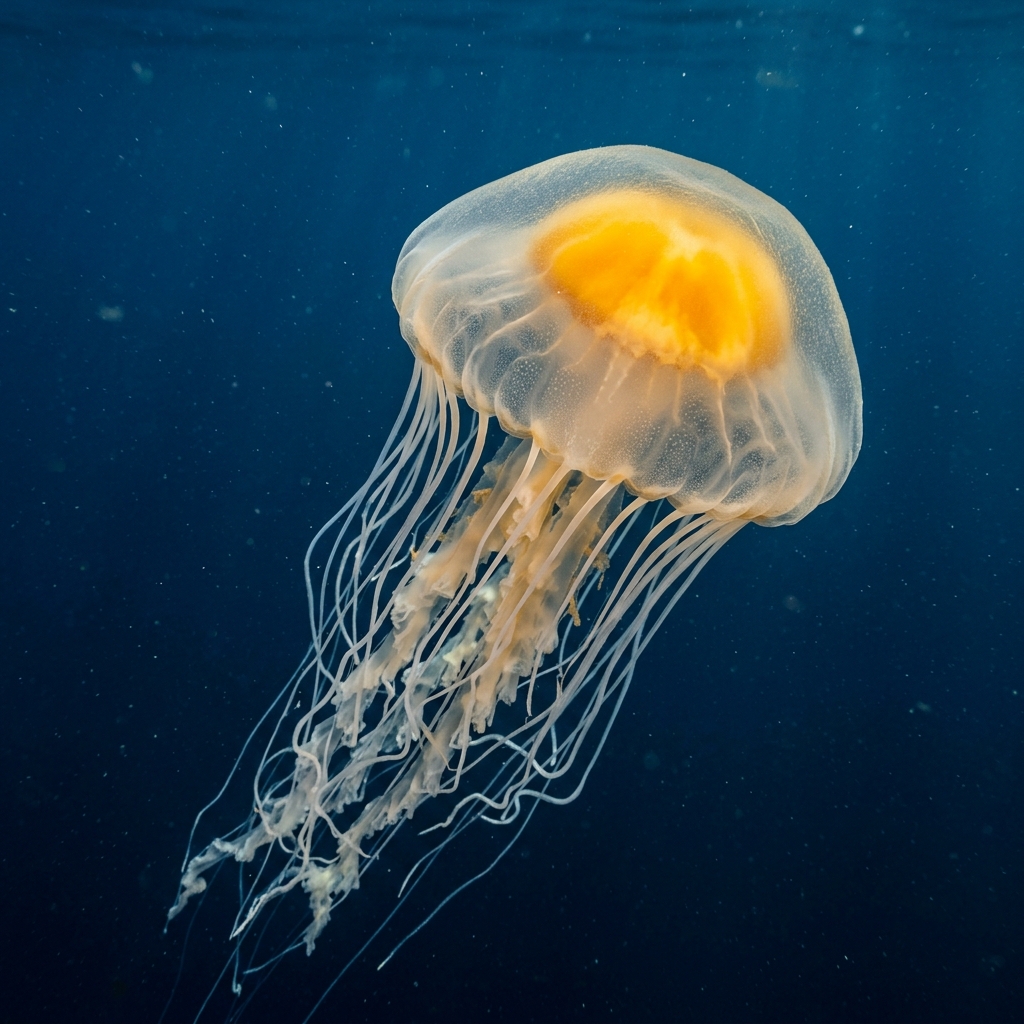
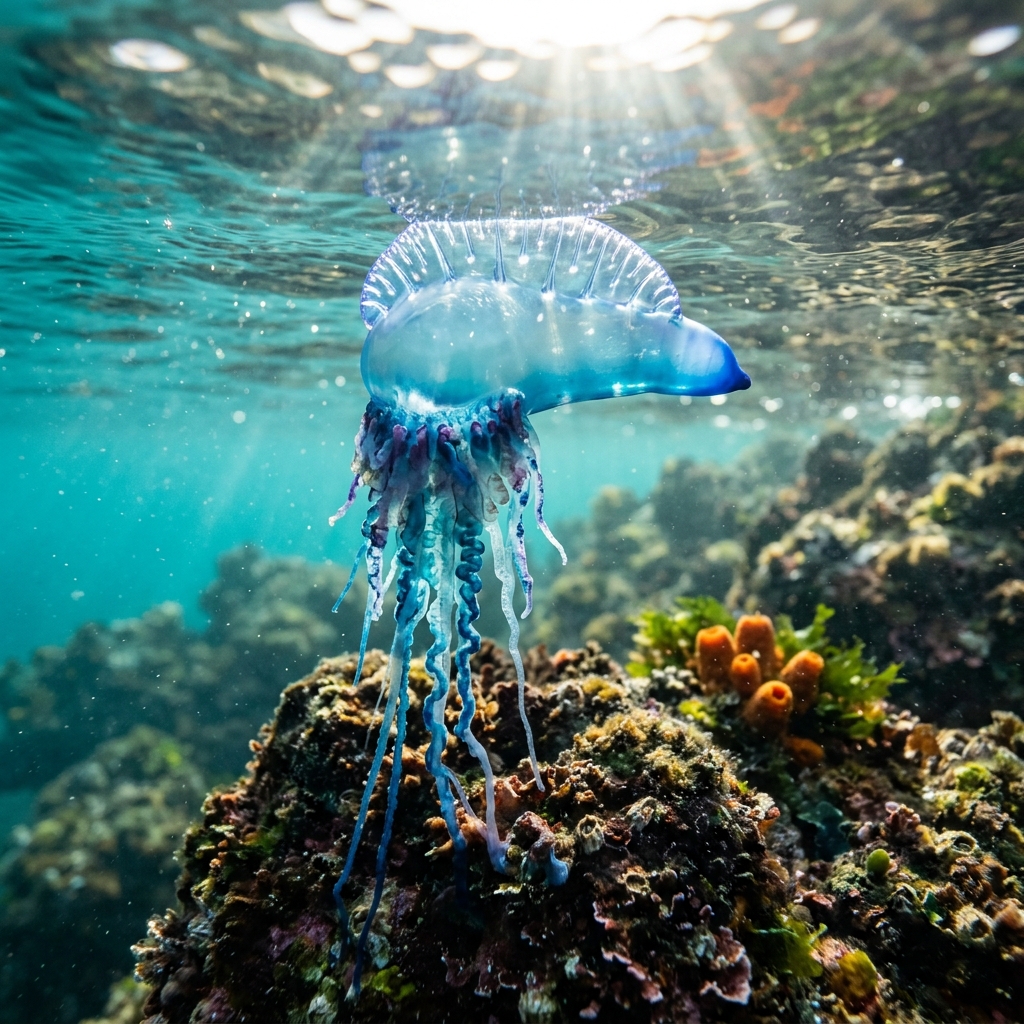
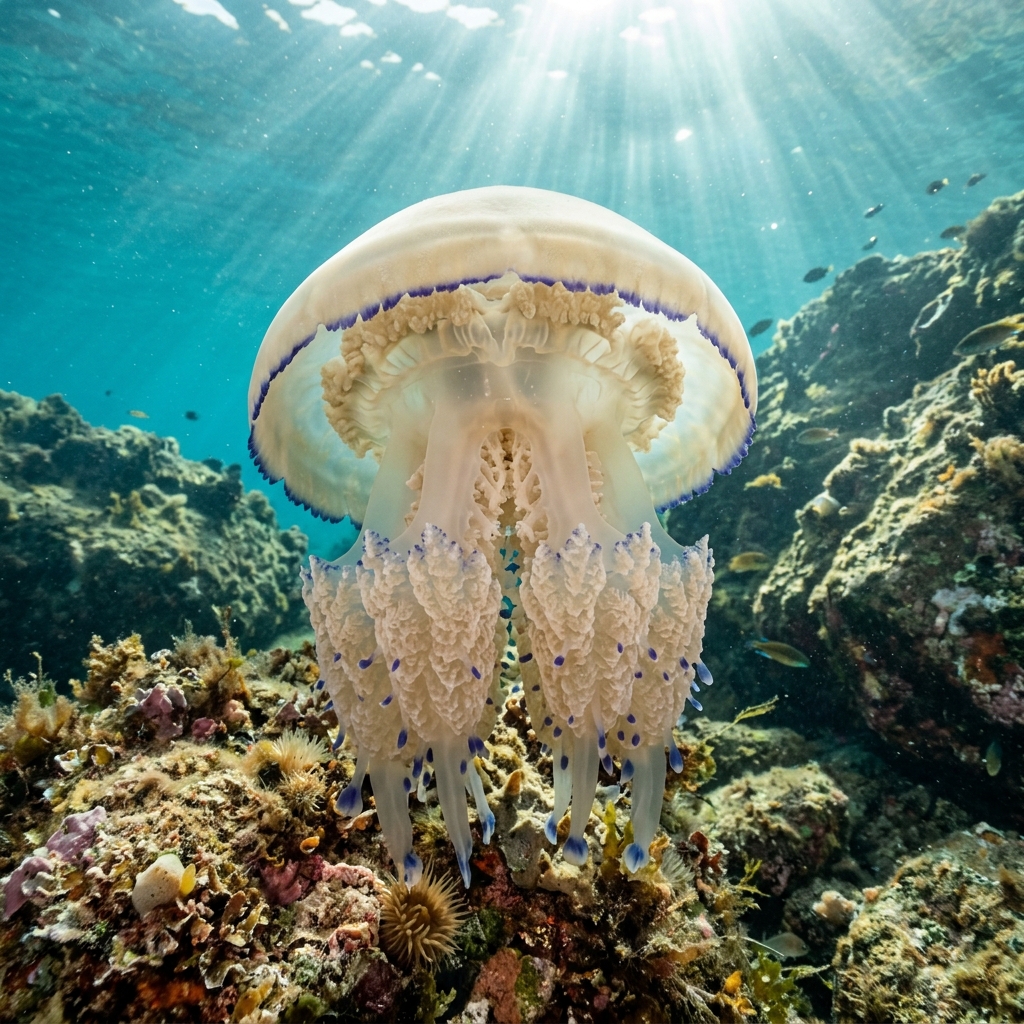
Bell reaches around 21 cm across and shows a pale blue to violet tint with faint radial lines running out from the centre, fading toward a whitish rim. Eight clusters of fine, hair-like tentacles trail well behind the bell, often longer than the bell itself, along with four frilly feeding arms (oral arms) near the mouth. Younger animals tend to run smaller and paler, with the blue tint deepening as the bell grows.
Expect to find it drifting passively in open water rather than attached to anything, carried by current and tide more than by its own swimming. It's usually logged solo or in loose scatterings rather than dense blooms, moving through the water column from near the surface down past recreational depths. Divers generally see it hanging motionless or pulsing slowly, showing no reaction to a diver nearby unless brushed by mask or hand.
Like other jellyfish, it captures small plankton and fish larvae using nematocysts (stinging cells) on its trailing tentacles, then passes prey to the frilly oral arms to feed rather than chasing anything down.
Sighting data doesn't show a clear seasonal spike, and the species tolerates a narrow cool band of roughly 8 to 14C, so divers log it across the year in these northern European waters rather than in one short window.
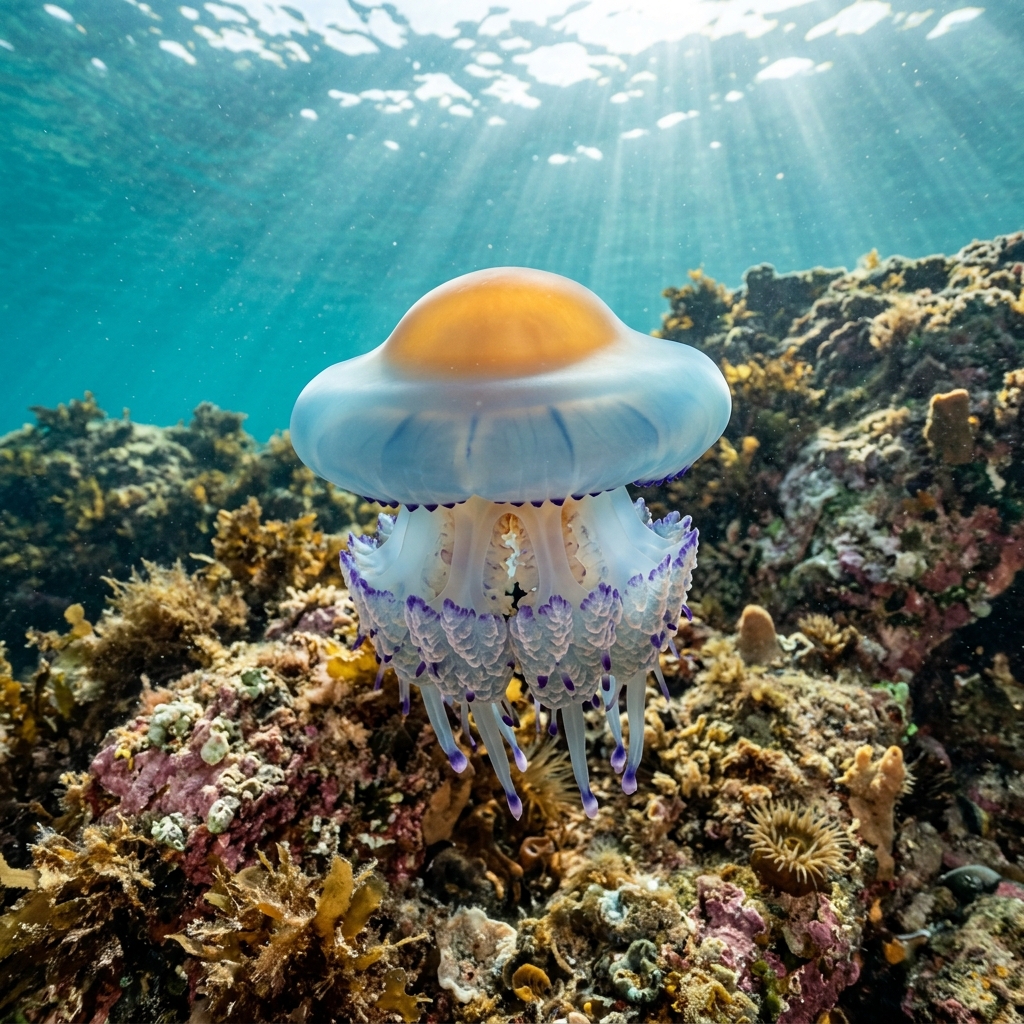
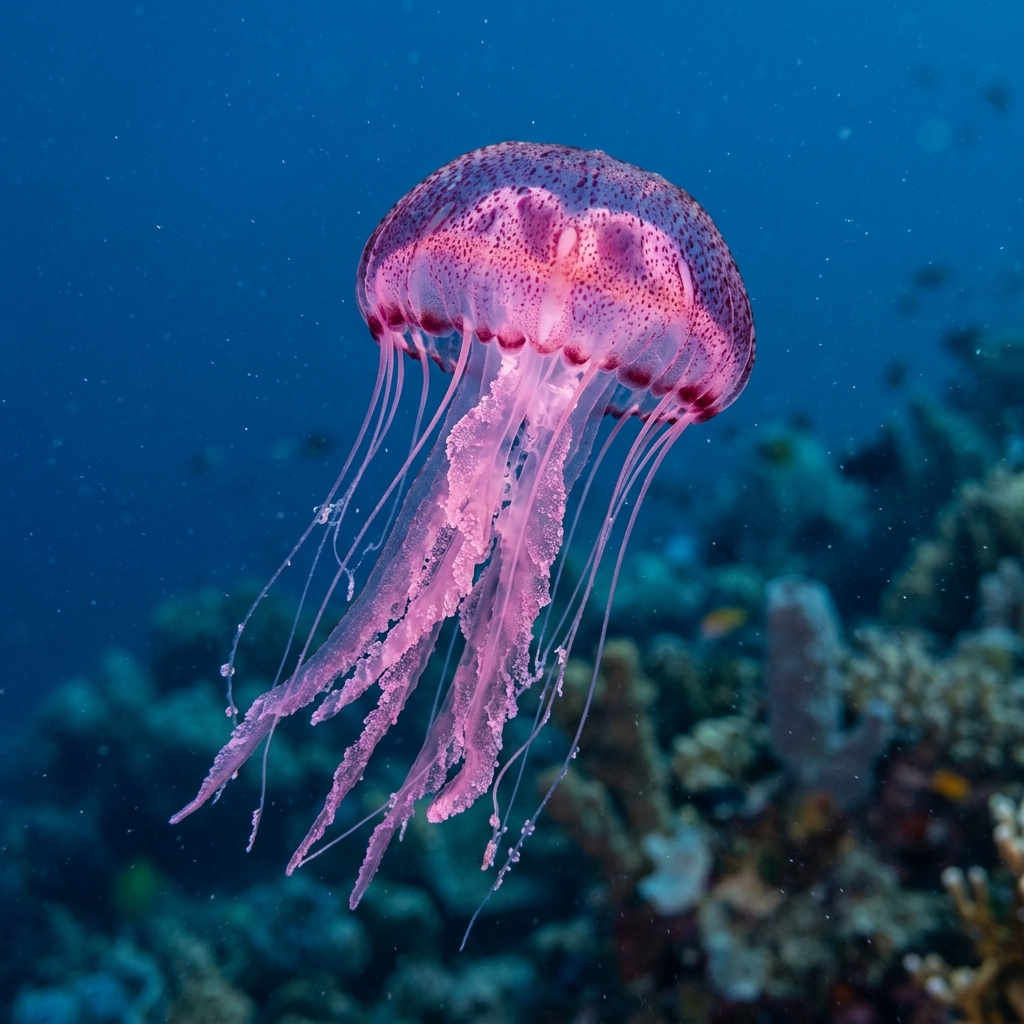
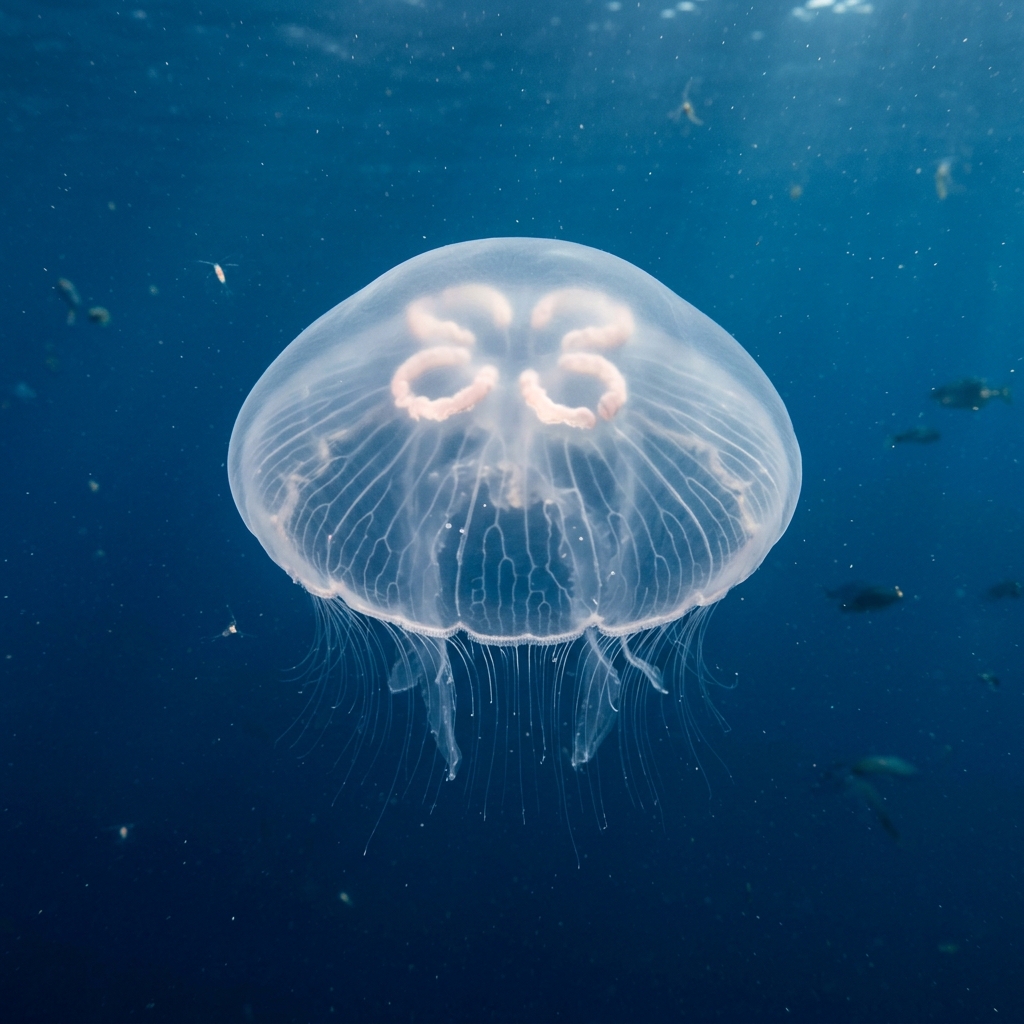
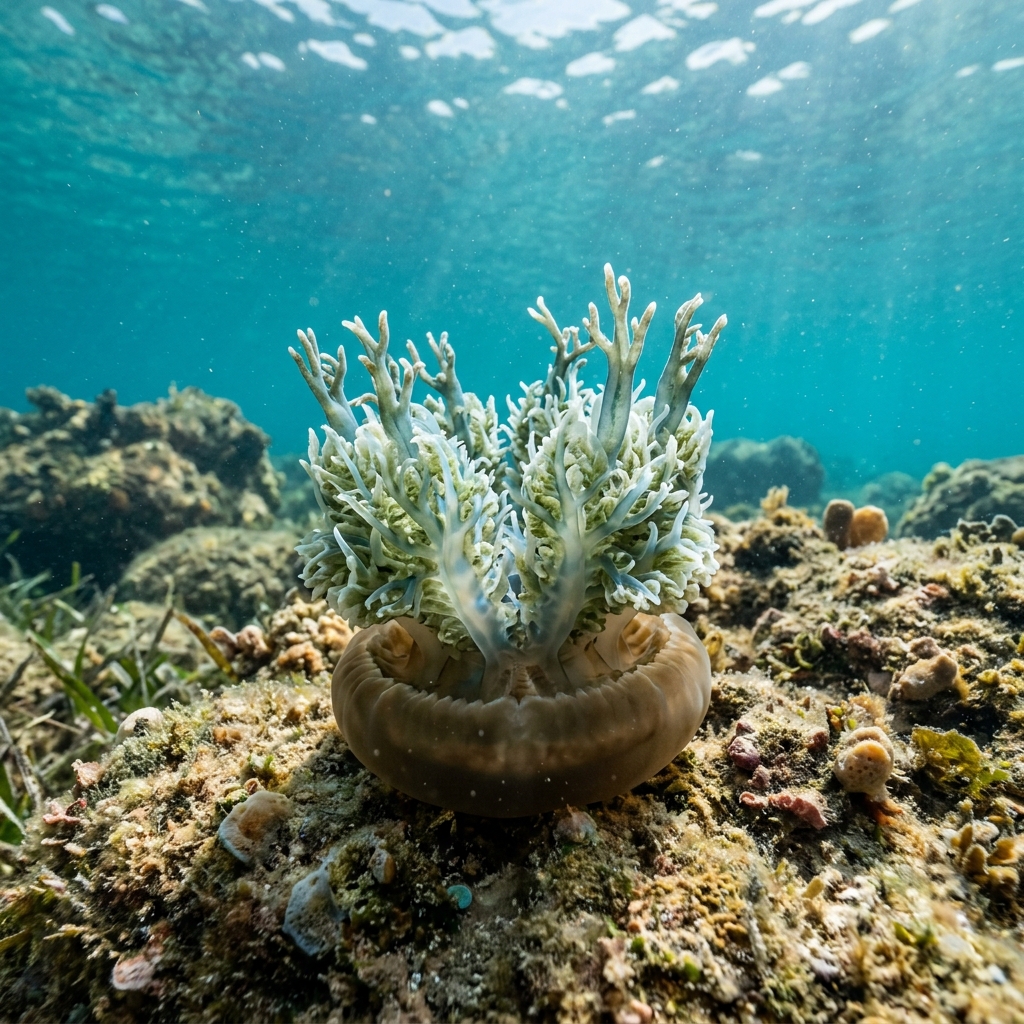
Reef neighbours a diver could mistake it for. Use the identification notes above to tell them apart.
Most consistently logged in the United Kingdom, especially England, Wales, Scotland and Northern Ireland, and in the Netherlands, where Zeeland alone accounts for a huge share of sightings. Sweden's Bohuslän coast and Ireland's Dublin area also produce regular reports, with smaller numbers from Brittany in France and along the Norwegian coast.
Mapping where Blue Jellyfish is logged…
Strongest sightings come from the United Kingdom (England, Wales, Scotland and Northern Ireland) and the Netherlands, particularly Zeeland. Sweden's Bohuslän coast, Ireland's Dublin area, Brittany in France and parts of Norway also produce regular logs.
There's no strong seasonal pattern in the sighting data, so treat it as a year-round possibility in cool northern European water between roughly 8 and 14C rather than a single-season target.
Yes, contact with the tentacles gives a stinging rash, milder than some larger jellyfish but still unpleasant on exposed skin. Keep a comfortable distance and avoid touching or handling one, even if it looks still.
Look for a pale blue to violet bell around 21 cm across with faint lines radiating from the centre, plus long fine trailing tentacles and four frilly oral arms near the mouth. It drifts passively rather than swimming with purpose.
Typical bell diameter logged by divers is around 21 cm, with trailing tentacles that can extend considerably longer than the bell itself.
Site and sighting data is aggregated from diver logs, iNaturalist and GBIF. For taxonomy and conservation status:
Moon Jellyfish
1,766 sites