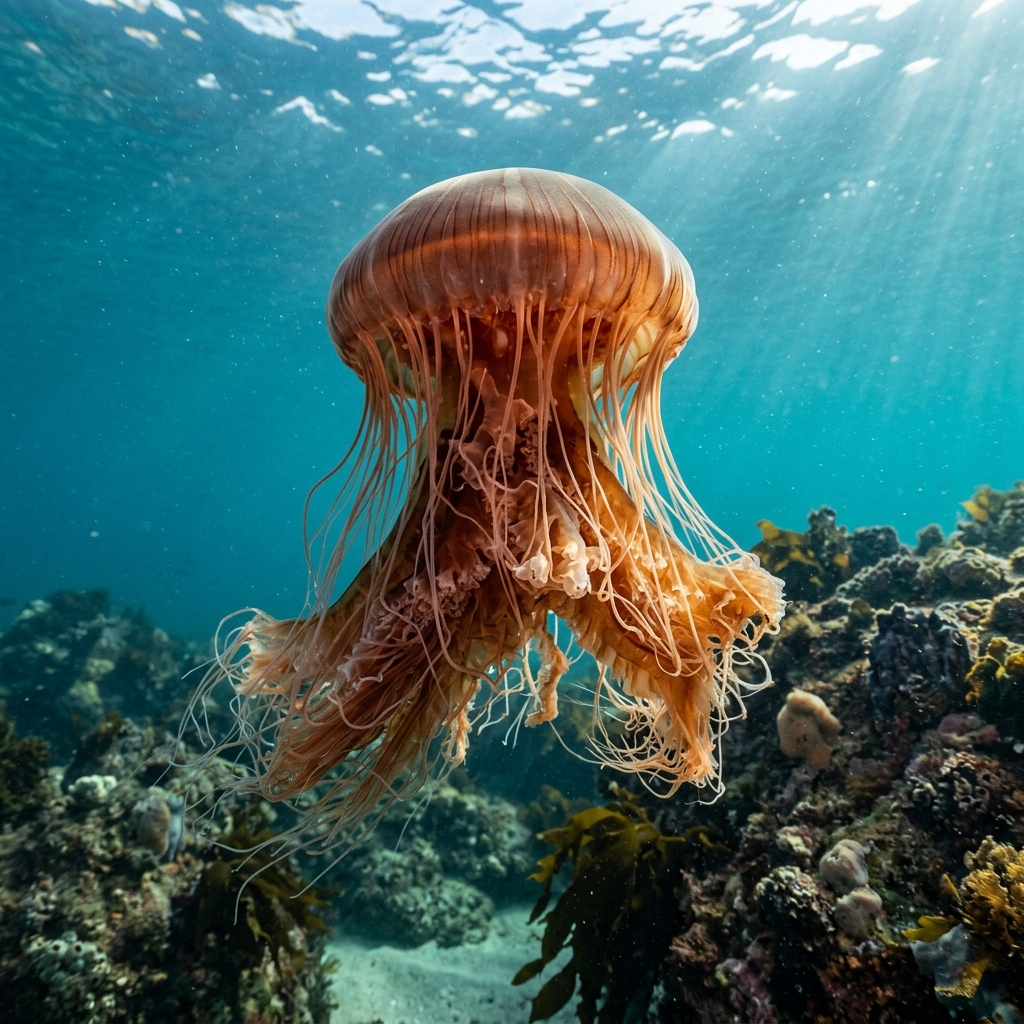
Cyanea capillata
Spot Giant Jellyfish in cold northern waters from Northern Ireland to Bohuslän. Season runs Mar, Oct in water as cold as 3°C.
Safety warning
This species can sting on contact with its tentacles, which may trail well beyond the body and can still sting after the animal is dead or washed up. Look but do not touch, and give it a wide berth.
If you're stung
Stinging tentaclesGeneral first-aid guidance, not a substitute for professional medical care. In an emergency, call your local emergency number.
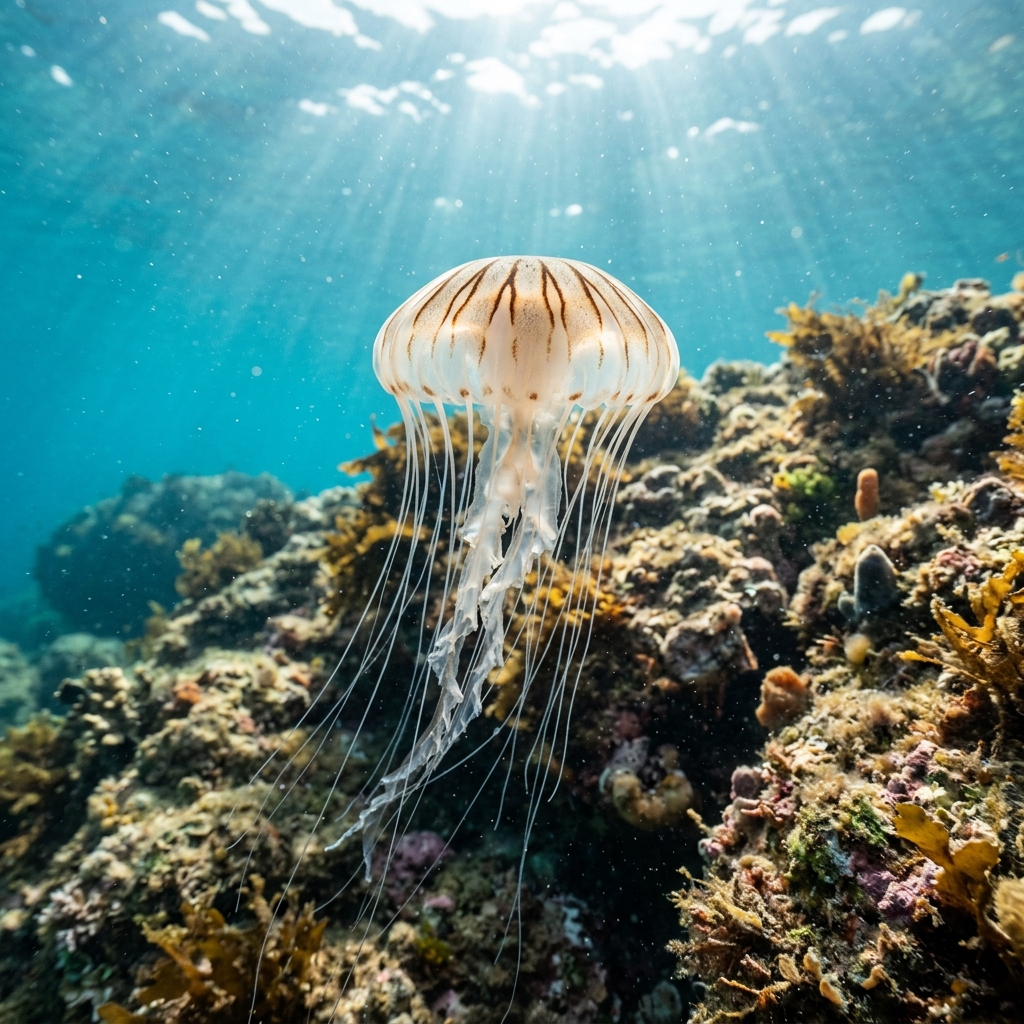
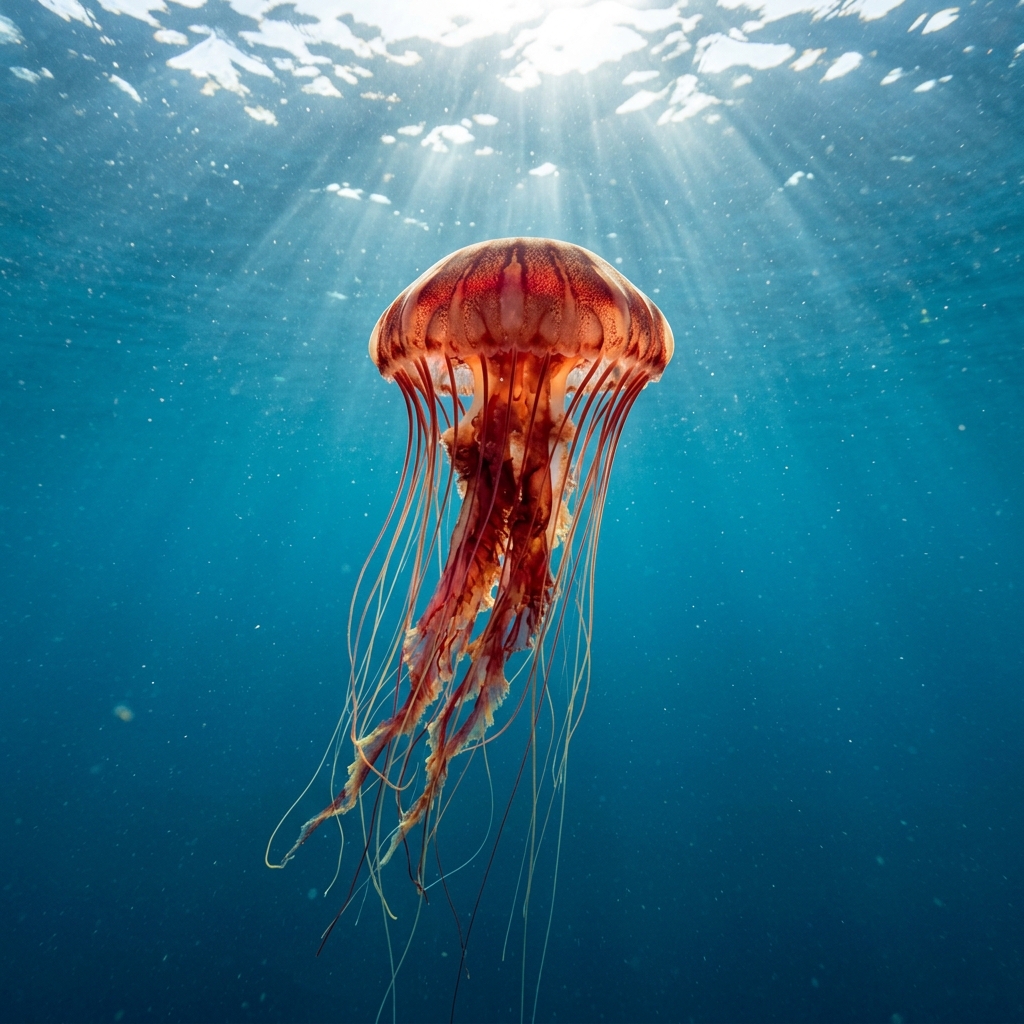
Size is the first clue: the bell can reach over a metre across, making it by far the largest jellyfish most northern European divers will ever encounter. The bell is typically a deep reddish-brown or maroon at the centre, fading to orange or yellow at the margins, and is divided into eight lobes giving it a scalloped outline. Beneath the bell hangs a thick fringe of oral arms and an enormous mass of fine, hair-like tentacles that can trail many metres behind the animal. In cold, green-tinted northern waters that colour combination and sheer scale are unmistakable.
Giant Jellyfish are mostly passive drifters, pulsing their bell slowly to maintain position rather than chase prey, and they show little reaction to approaching divers. You typically encounter them in mid-water or near the surface, often alone, though late-summer aggregations do occur. Small fish, particularly juvenile whiting and saithe, frequently shelter among the tentacles, giving you something to watch while you keep a respectful distance from the trailing mass beneath.
Those trailing tentacles can stretch to 30 metres or more in large individuals, making them one of the longest animals on the planet by linear measure despite looking compact from above.
Sightings concentrate between March and October in the Northern Hemisphere, peaking through the warmer months of that window when jellyfish populations build and visibility of open-water animals improves.
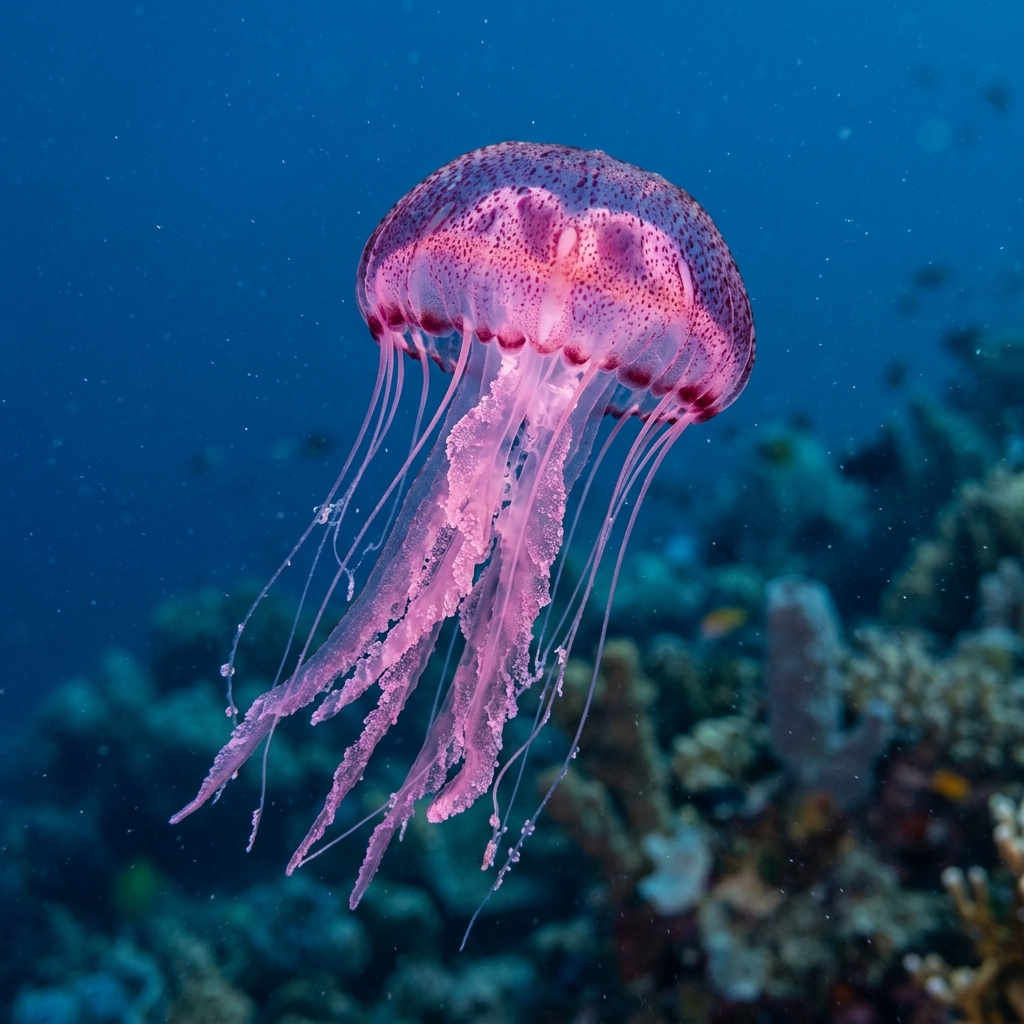
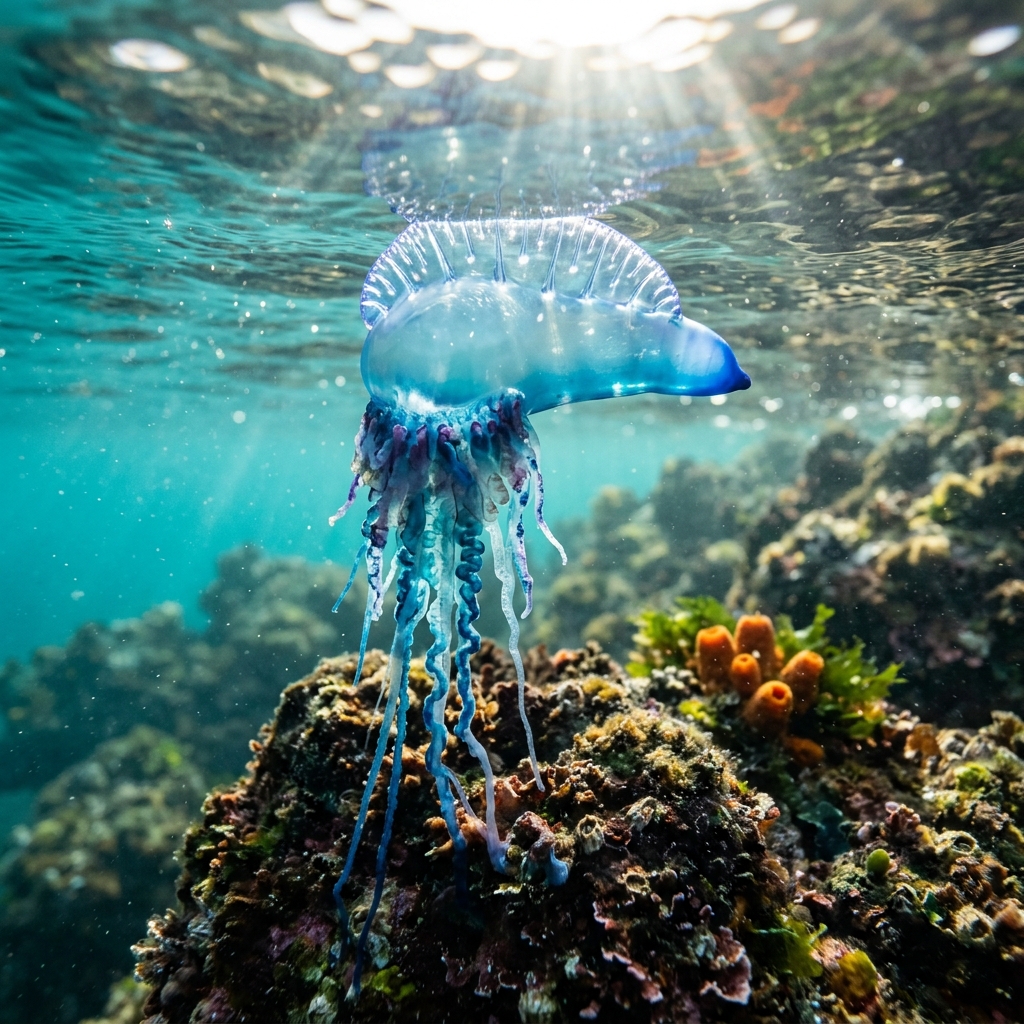
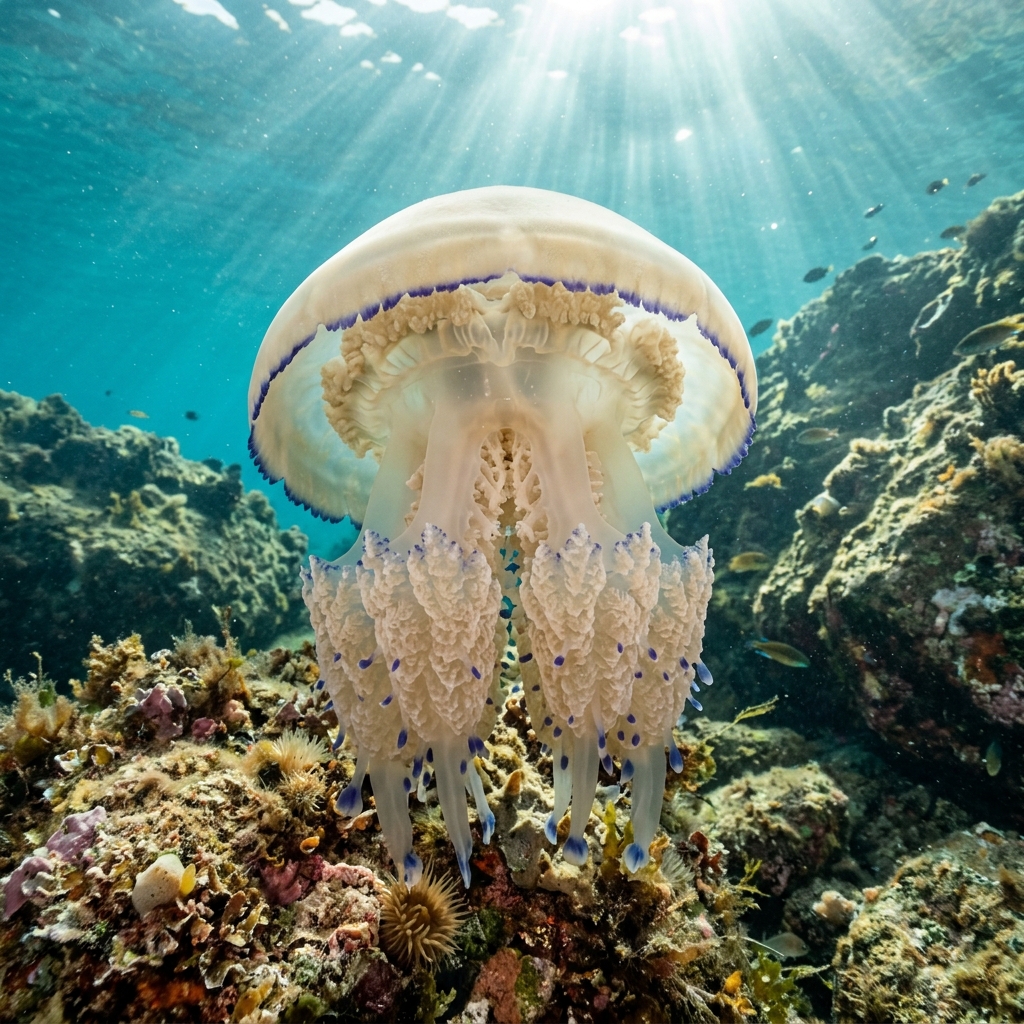
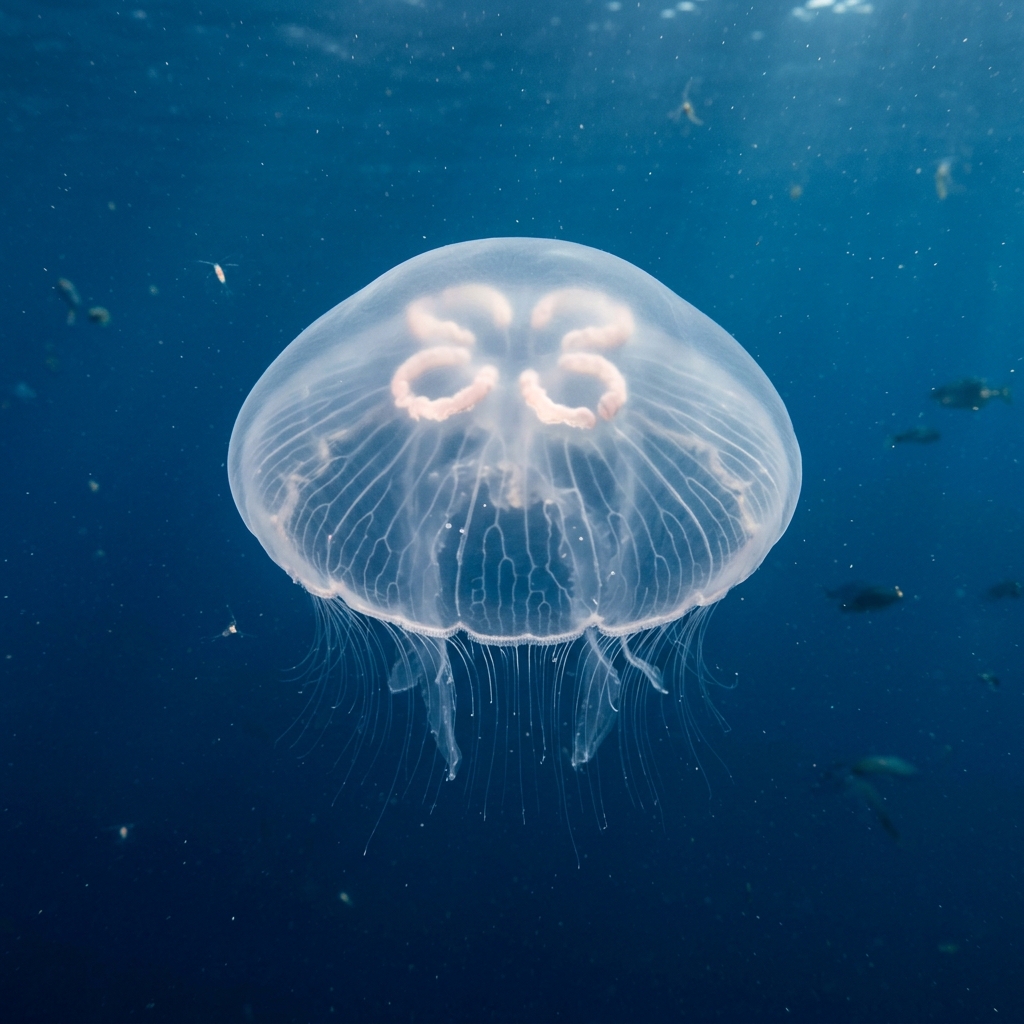
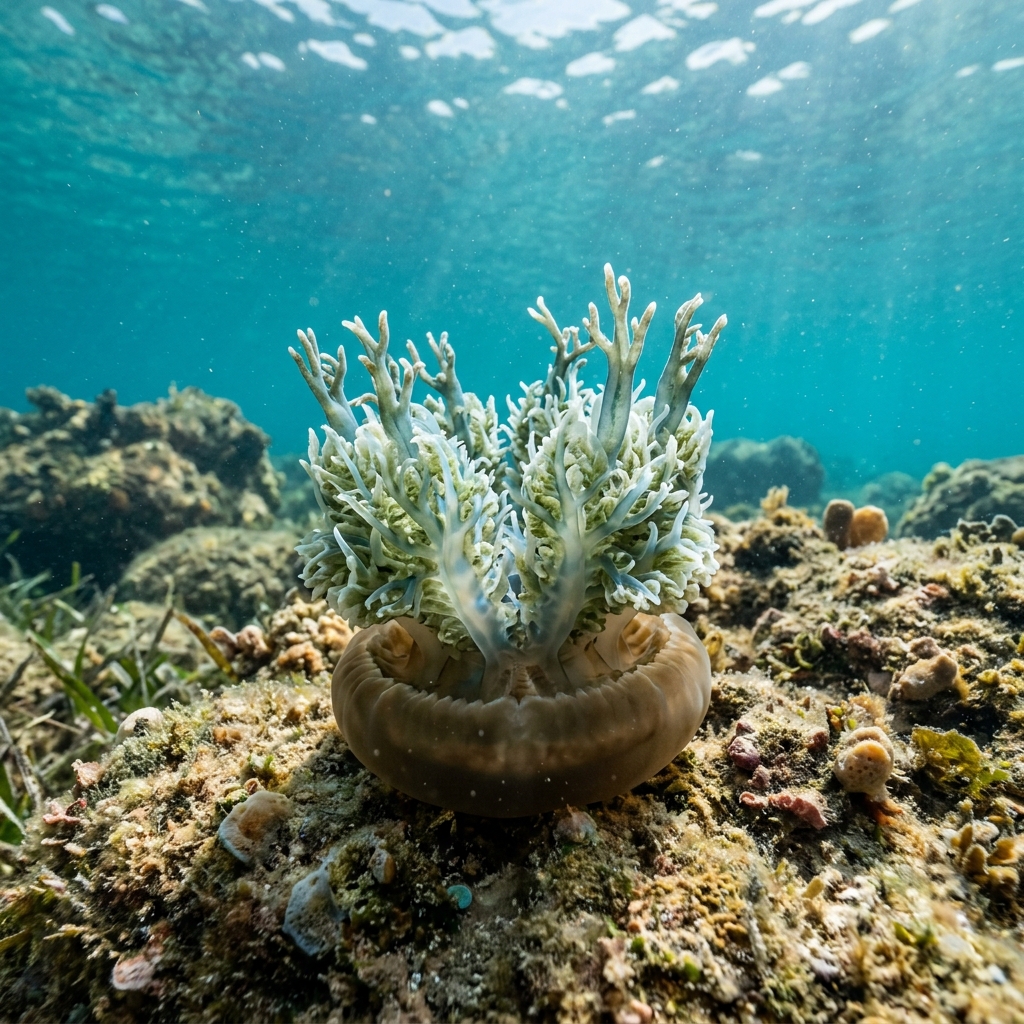
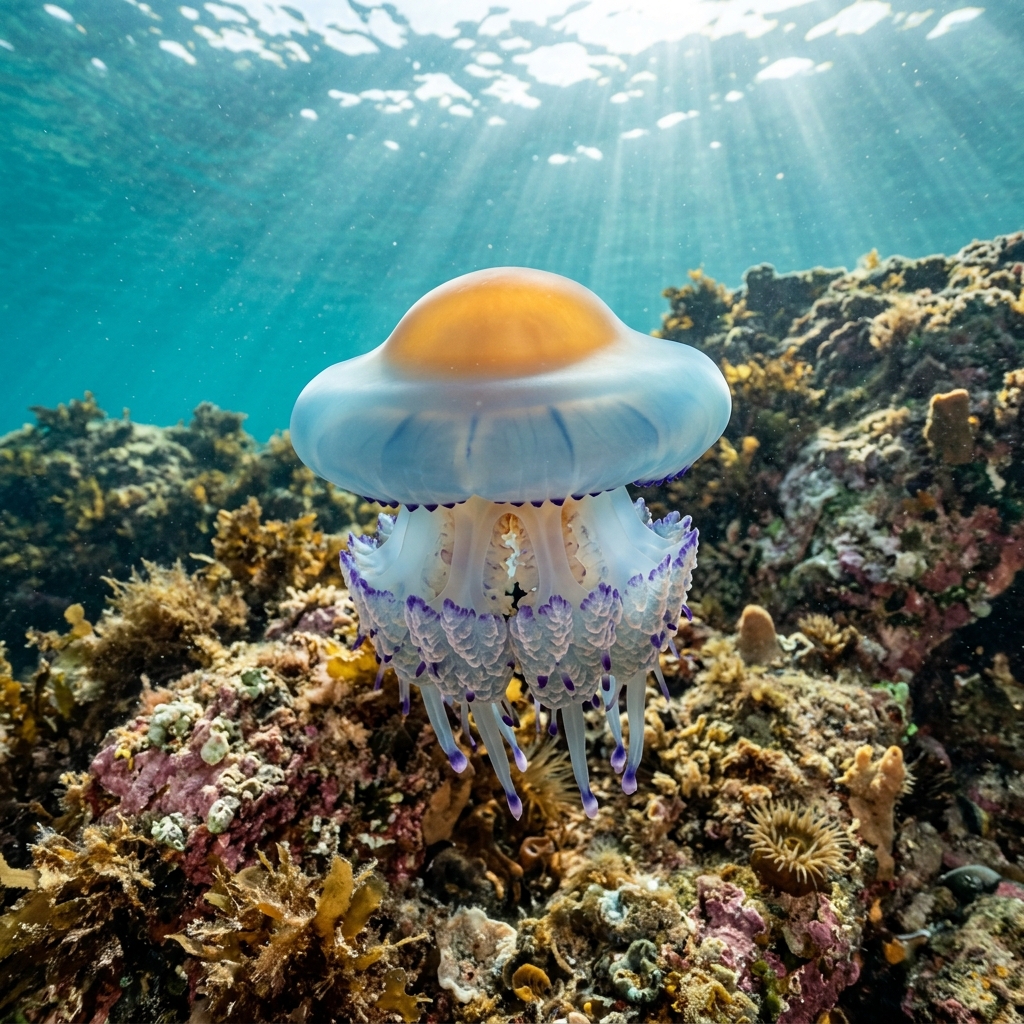
Reef neighbours a diver could mistake it for. Use the identification notes above to tell them apart.
Most sightings come from the United Kingdom, with Northern Ireland and Scotland's west coast the standout regions. Denmark follows closely, particularly Zealand, Little Belt, and the Aarhus area, with further records spread across northern Germany, Bohuslän in Sweden, and the east coast of Ireland. Norwegian waters also hold confirmed sightings, making this essentially a cold-water North Sea and north-east Atlantic speciality.
Mapping where Giant Jellyfish is logged…
The best-documented sites are in Northern Ireland and along Scotland's west coast, followed by Danish waters around Zealand and Little Belt, the Bohuslän coast in Sweden, northern Germany, and the east coast of Ireland. All of these are cold-water, temperate North Sea or north-east Atlantic environments where this species is most at home.
Sightings in northern European waters concentrate from March through to October, with summer and early autumn often bringing the most encounters as populations build and animals drift closer inshore. Water temperatures at logged sites range from around 3°C to 15°C, so exposure protection is essential year-round.
The bell of a large individual can exceed one metre in diameter, and the trailing tentacles can extend to 30 metres or more, placing it among the longest animals on Earth. Most individuals divers encounter are somewhat smaller, but anything you see in northern European waters that dwarfs a diver's torso is likely this species.
Look for a deep reddish-brown to maroon central bell with a yellow-orange fringe, clearly divided into eight scalloped lobes, and an enormous trailing mass of fine tentacles. The combination of sheer size, that dark-red colouration, and the dense tentacle curtain separates it from anything else in north-European waters.
They are not considered dangerous to divers, but that does not mean you should swim into the tentacles. Contact with the long, hair-like threads can cause a mild to moderate sting on exposed skin. Keep a body-length of distance, especially below the bell where the tentacles trail, and you will have no problems.
Site and sighting data is aggregated from diver logs, iNaturalist and GBIF. For taxonomy and conservation status:
Moon Jellyfish
1,766 sites