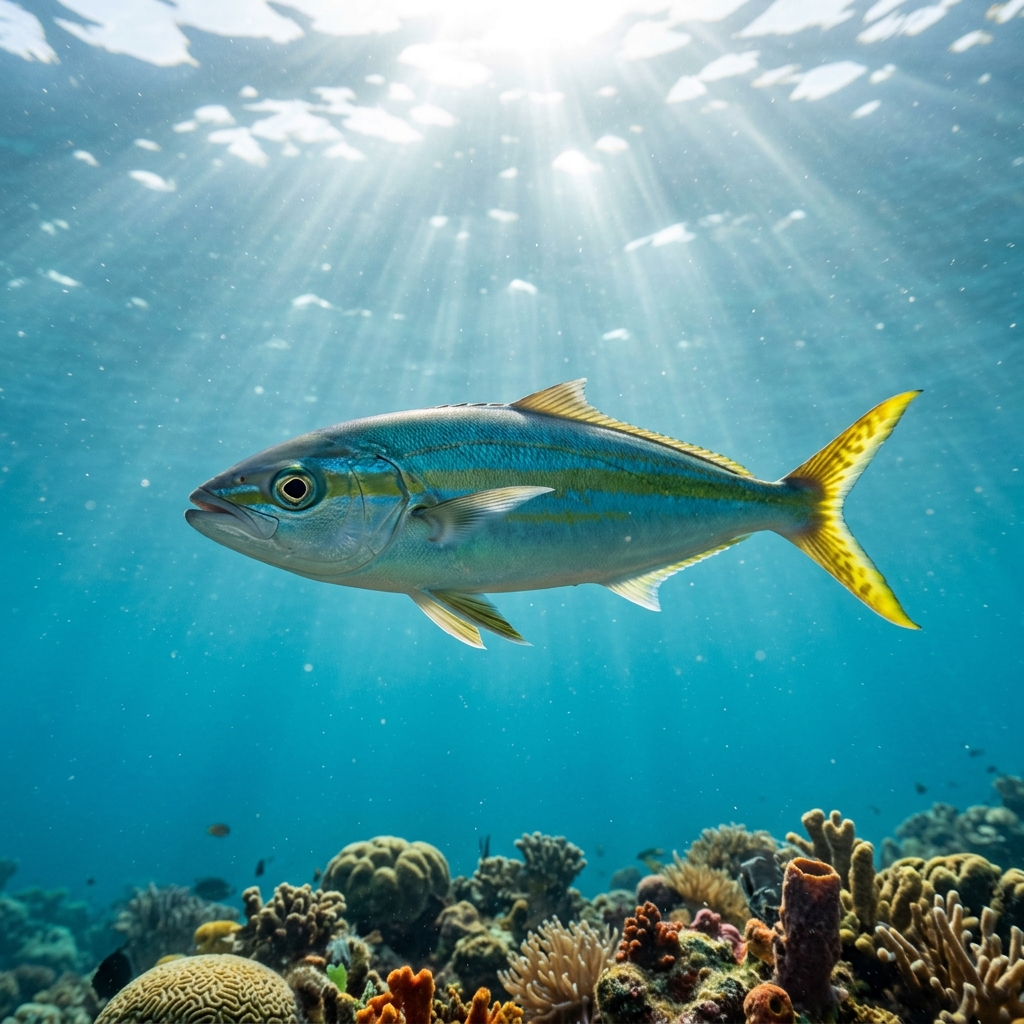
Seriola hippos
Bulky, deep-bodied jacks patrolling Western Australia's temperate reefs in 17-24C water, seen year-round from South Australia to Queensland.
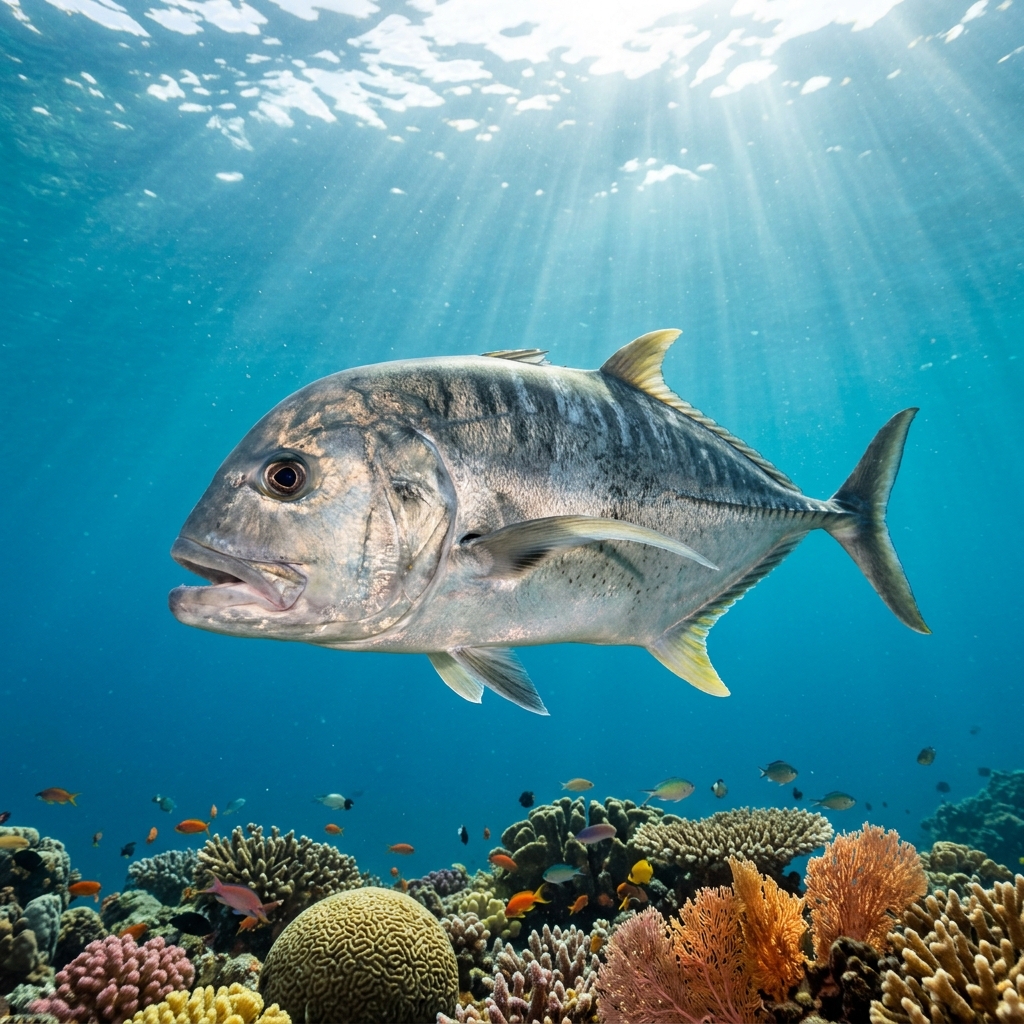
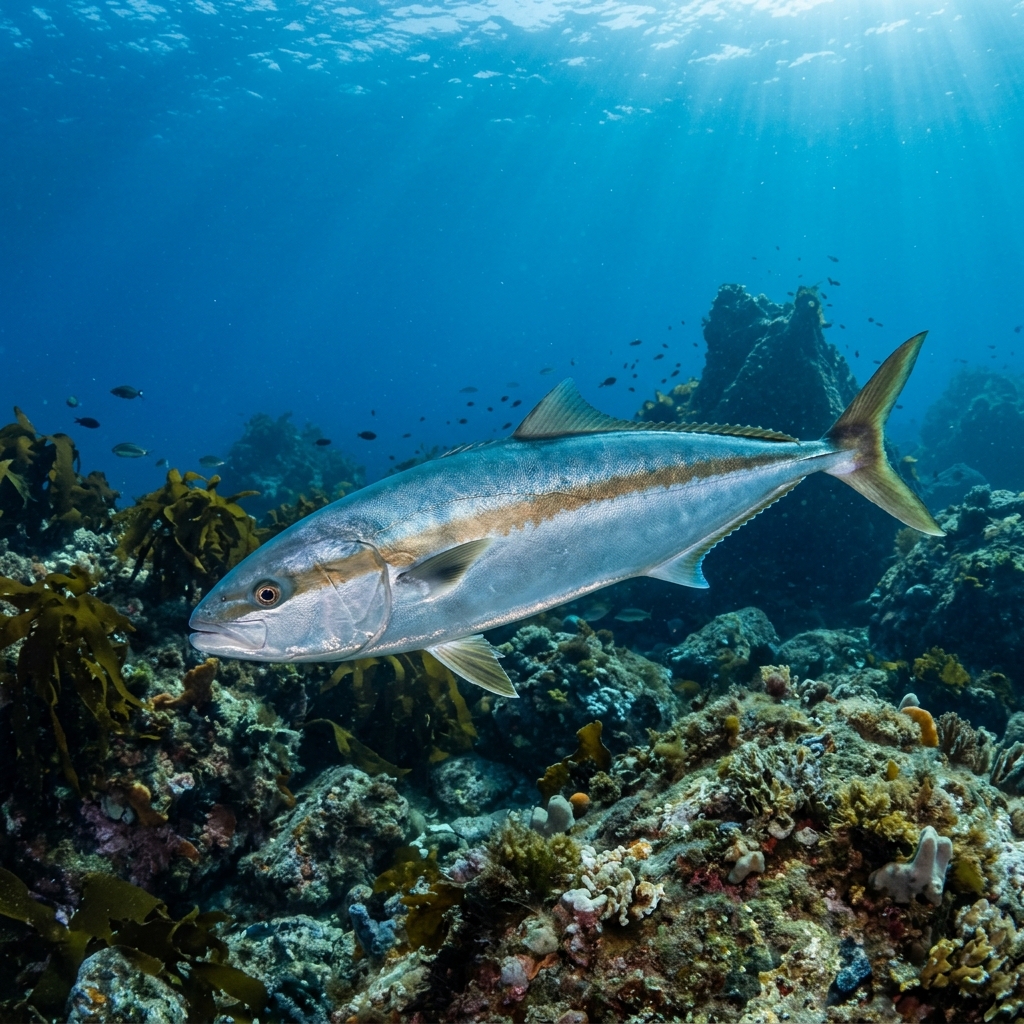
Deep-bodied, heavy-shouldered jack that looks stockier and more bulldog-faced than most amberjacks, reaching over a metre and often cruising as solitary adults or loose groups. Colouring runs bronze to olive-grey on the back fading to silver below, with no bold stripe or strong dark blotch to key on, so body shape and that thick-set head are the main giveaways. Smaller fish are noticeably slimmer and more silvery than the barrel-chested adults.
Divers typically find them cruising mid-water or along rocky reef edges, sometimes alone and sometimes in small loose groups rather than tight schools. They tend to keep a respectful distance from divers, holding position in the water column or moving off steadily rather than approaching, and are more often logged as an uncommon encounter than a guaranteed one.
Despite the bulk, this is a fast, powerful predator built for open-water chases, which is why it's usually spotted mid-water over reef rather than tucked into structure.
Sightings don't show a clear seasonal spike, and the observed temperature range of 16.6 to 23.5C spans much of the year on Australia's temperate coast, so it's best treated as a year-round possibility rather than a seasonal target.
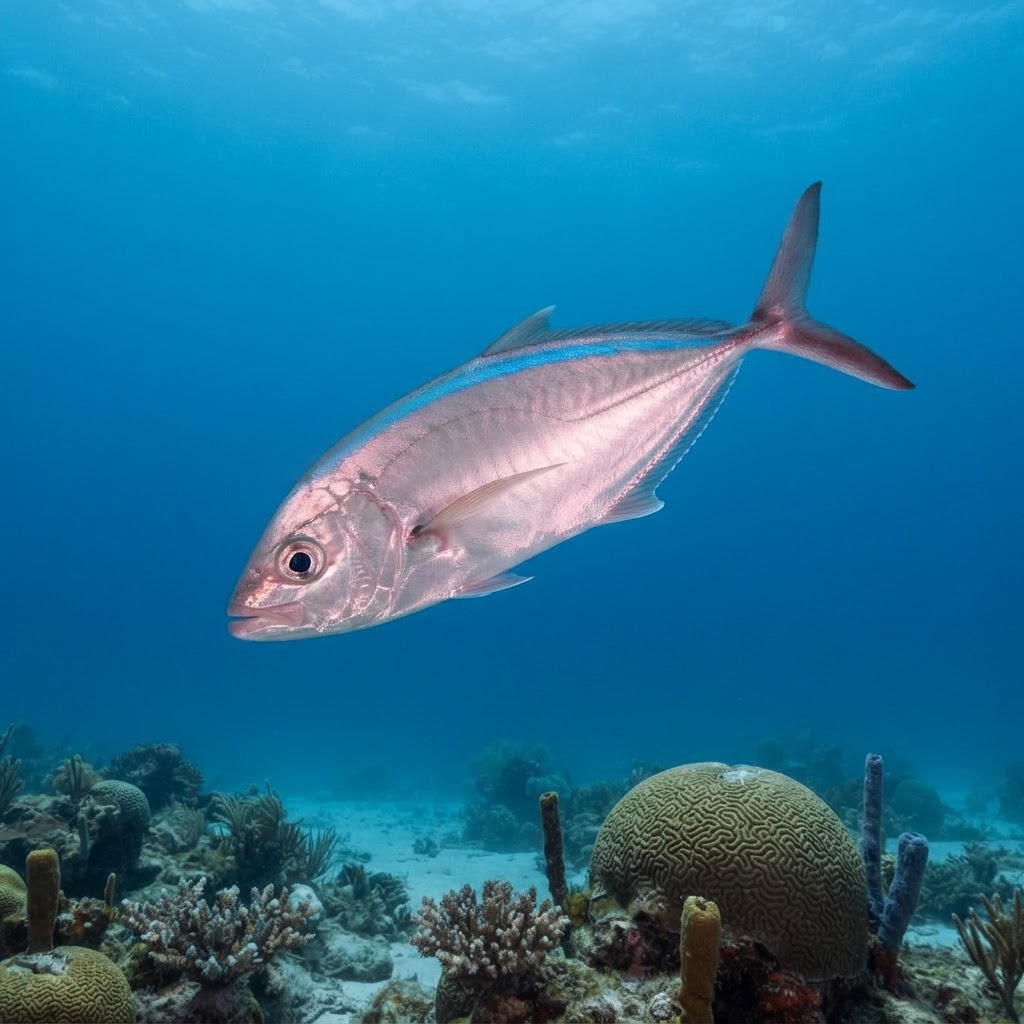
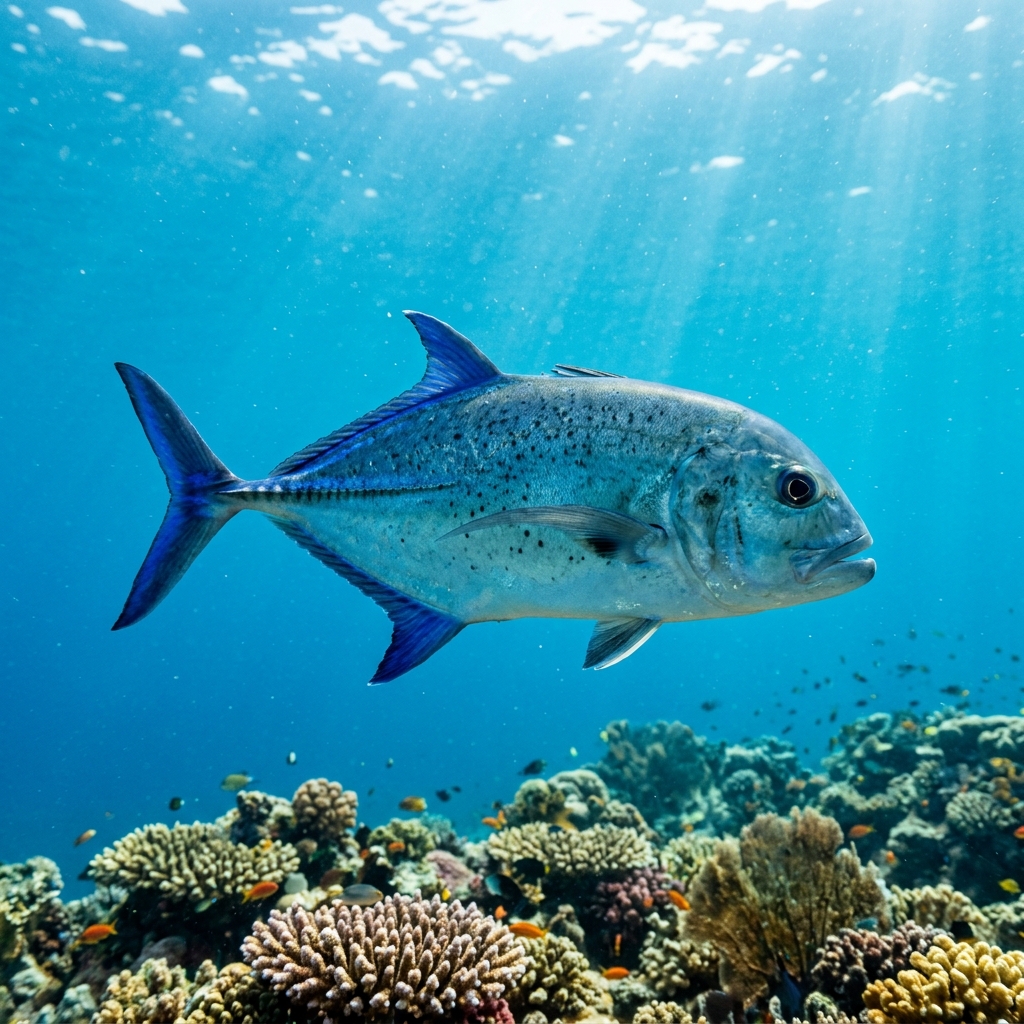
Reef neighbours a diver could mistake it for. Use the identification notes above to tell them apart.
Most reliably logged along Western Australia, with strong numbers also reported from South Australia and a smaller but real presence in New South Wales, Queensland and the Northern Territory. Western Australia is by far the stronghold, so temperate reefs and rocky headlands there give the best odds.
Mapping where Samson Fish is logged…
Western Australia is the strongest region by far, with further sightings reported from South Australia, New South Wales, Queensland and the Northern Territory. It's an Australia-only species on current dive logs.
There's no strong seasonal pattern in the sighting data, and the species turns up across a wide temperature band from about 17 to 24C, so it's realistic to look for it any time of year rather than a specific season.
Look for a deep-bodied, heavy-headed jack over a metre long with bronze-grey colouring fading to silver and no bold markings. The stocky, bulldog-faced profile is the best way to separate it from slimmer amberjacks and kingfish.
Typical adults seen by divers run around 105 cm, making them one of the larger jacks encountered on Australia's temperate reefs.
No, they're not considered dangerous to divers. They're a large predatory jack but pose no known threat and generally keep their distance underwater.
Site and sighting data is aggregated from diver logs, iNaturalist and GBIF. For taxonomy and conservation status:
Bigeye Trevally
2,591 sites