Oblada melanura
Spot the Saddled Seabream by its bold black tail-base spot across Mediterranean dive sites in Greece, Italy, Spain and Croatia.
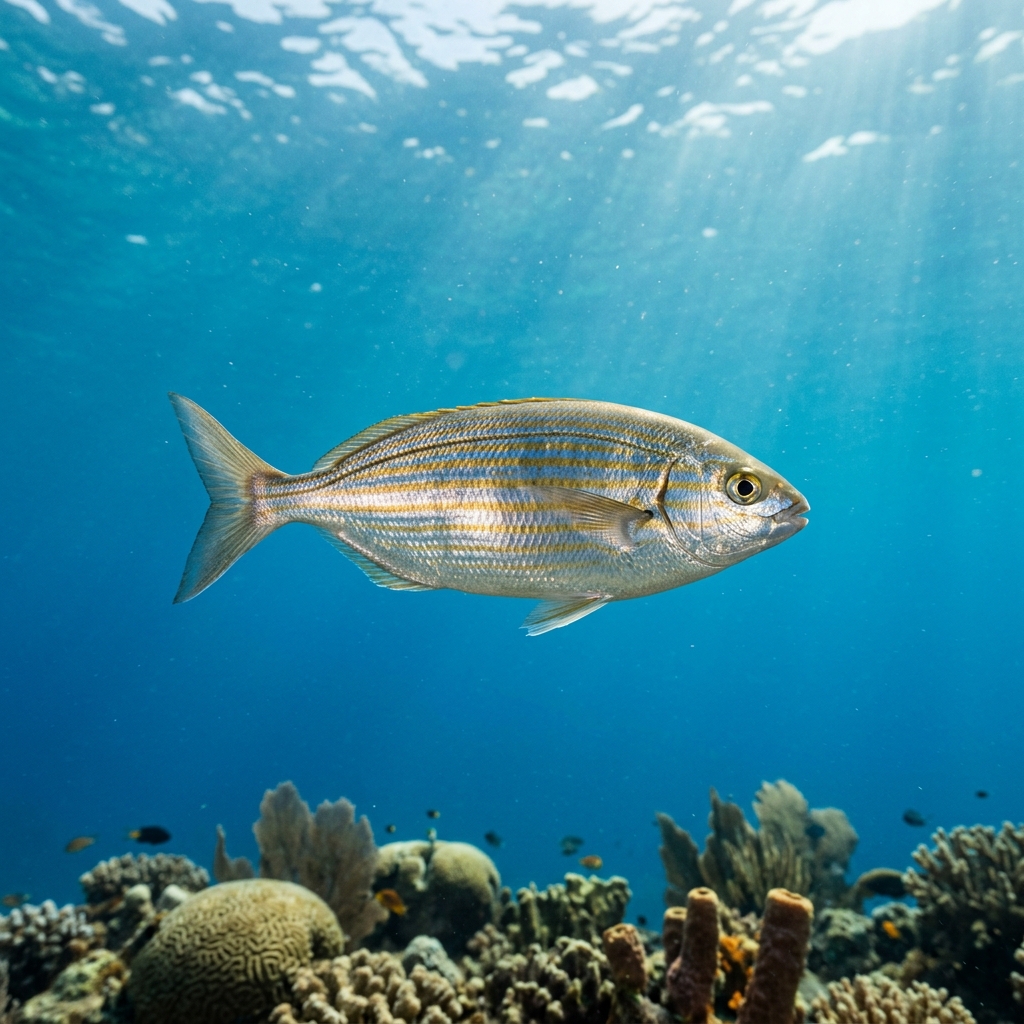
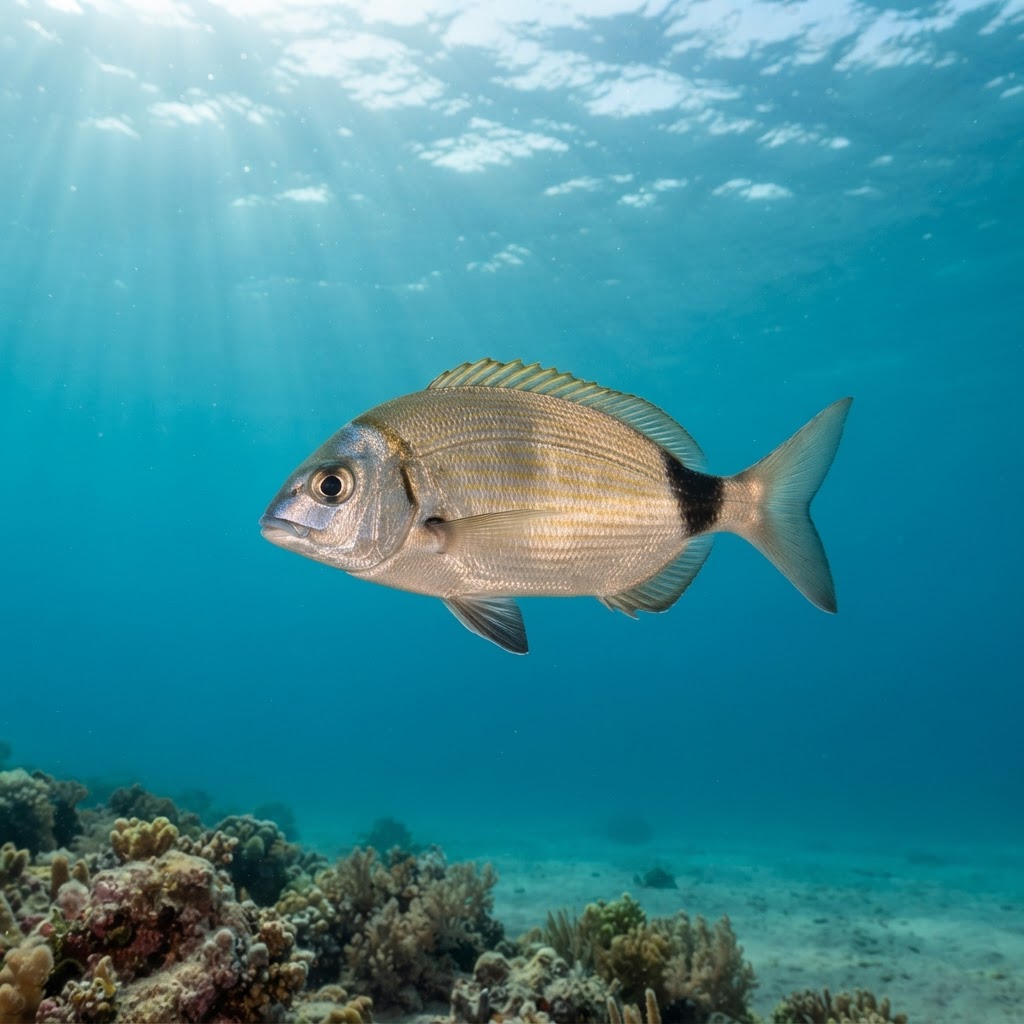
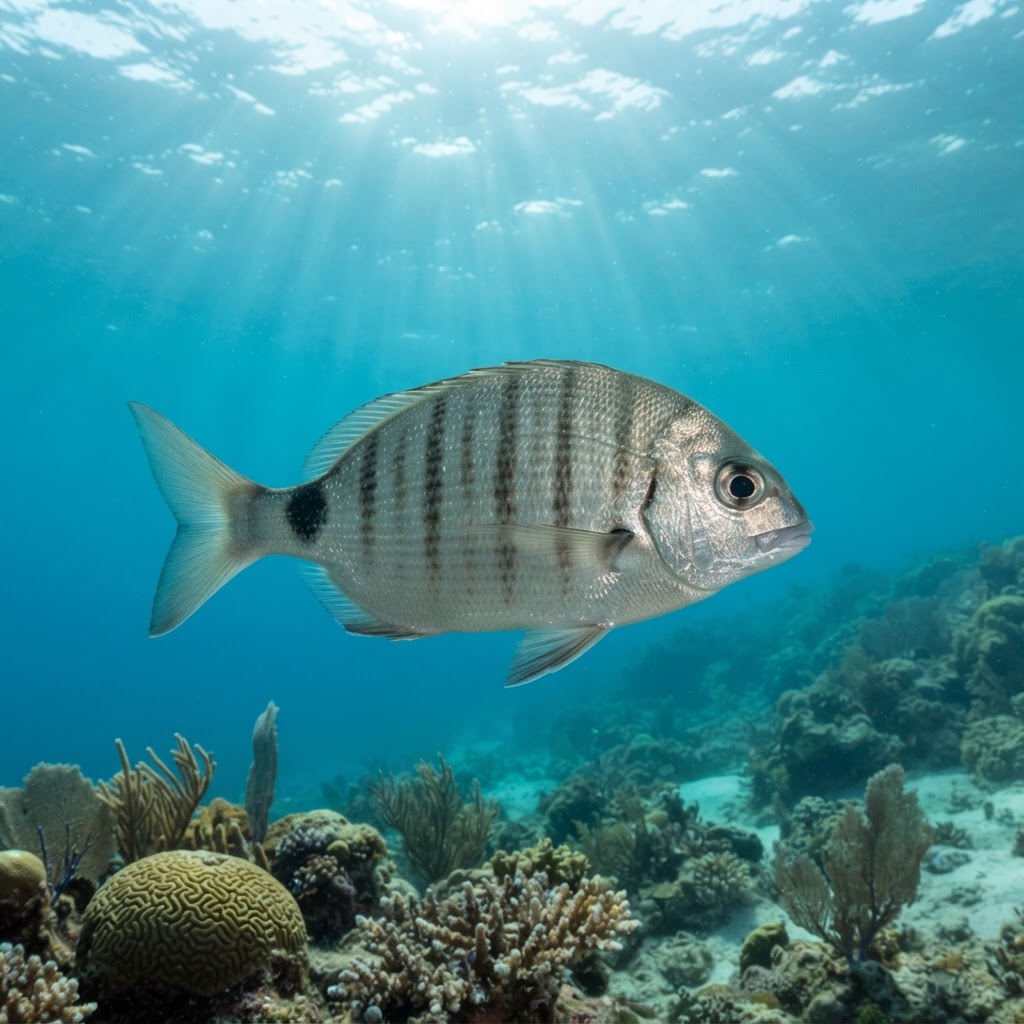
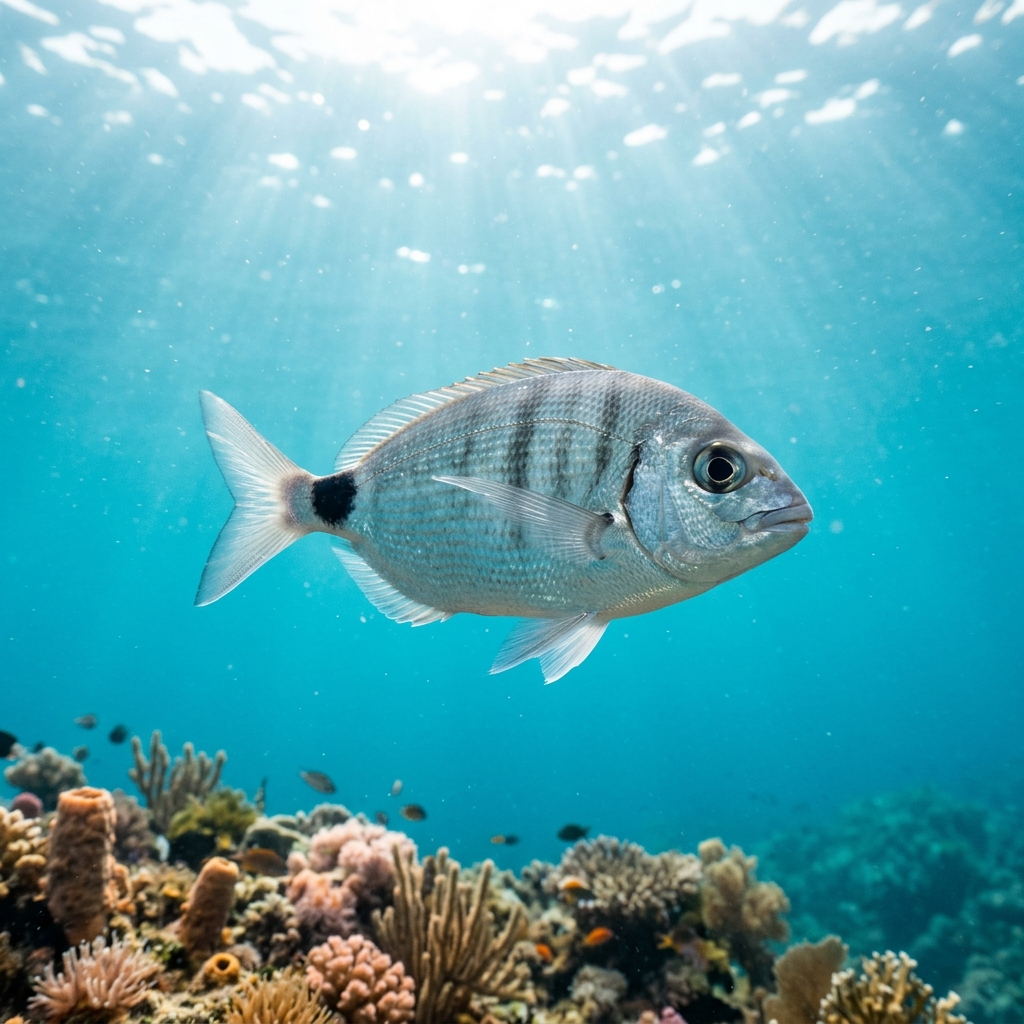
About 25 cm long, this is a slim, silver-bodied bream with faint horizontal stripes along its flanks and a single, unmistakable black saddle patch (a dark blotch wrapping the base of the tail) that gives it its name. That tail-base mark is the key underwater cue and is visible from several metres away. Body shape is typical bream: laterally compressed, oval, with a relatively small head.
Saddled Seabream are typically seen in loose shoals patrolling rocky reefs, seagrass beds, and shallow coastal walls, often in mid-water. They are a carnivore and actively pick at invertebrates and small organisms on and around the reef. Divers generally find them moderately approachable; they hold station or drift away slowly rather than bolting.
Saddled Seabream are protogynous hermaphrodites, meaning individuals can start life as female and later change sex to male. This means a larger, older fish in your field of view is more likely to be a male than a small one.
Available data does not show a clear seasonal peak, so this species can reasonably be treated as a year-round resident at its Mediterranean and eastern Atlantic sites. Its observed temperature range of roughly 14 to 25 °C matches conditions found across these regions in every season.
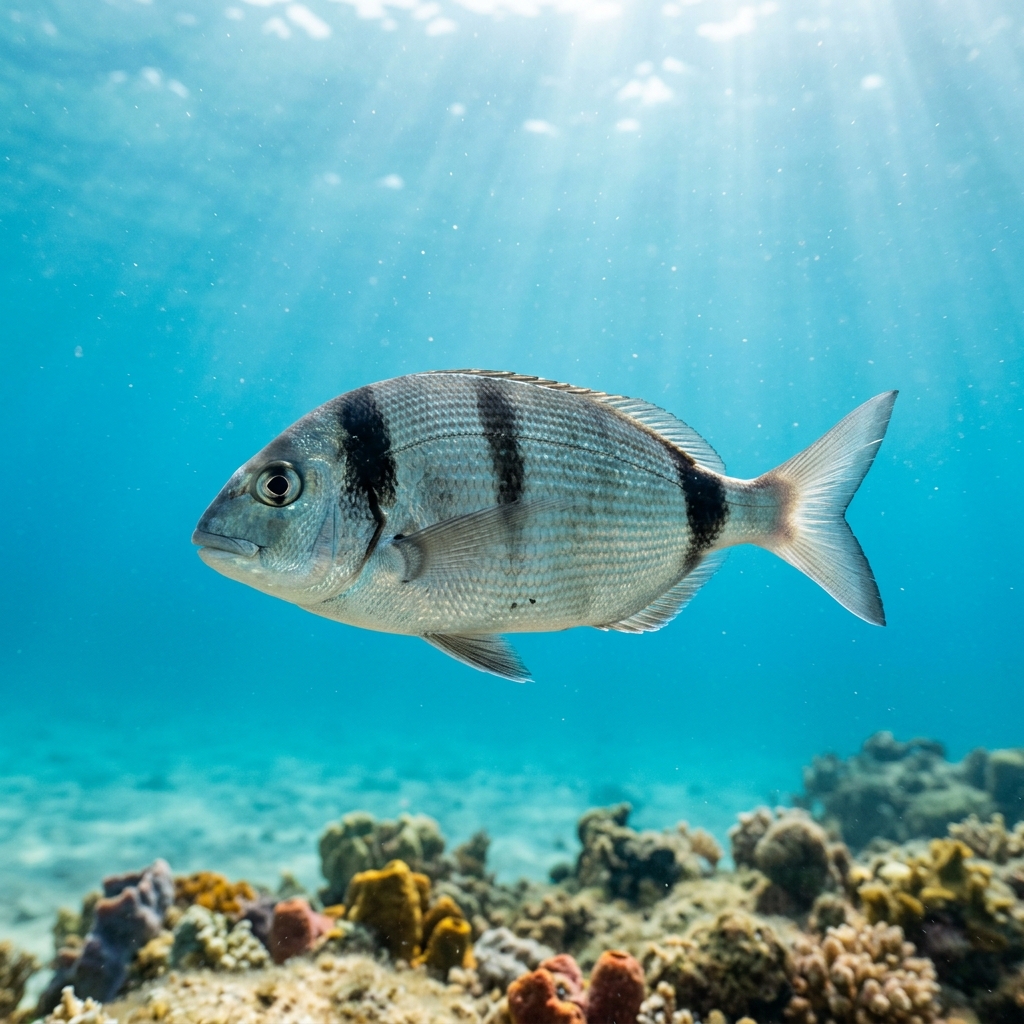
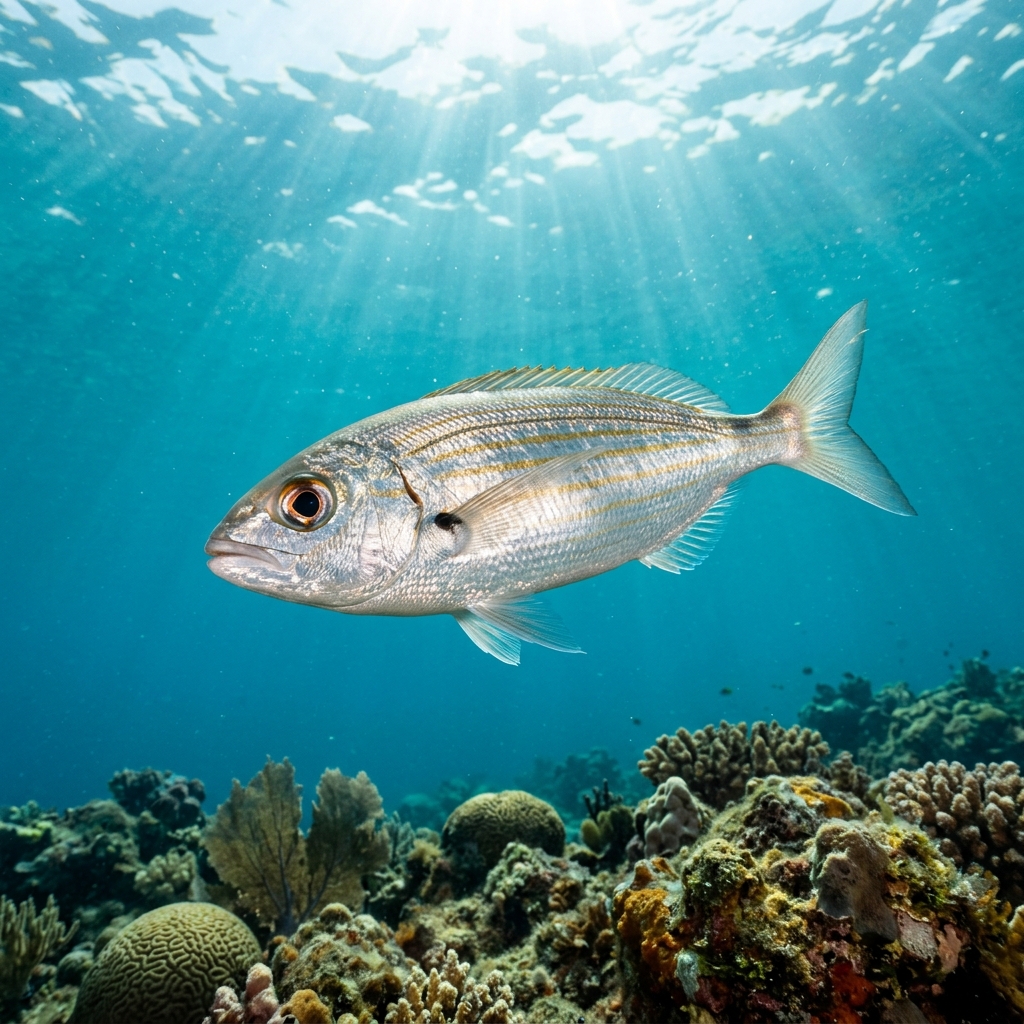
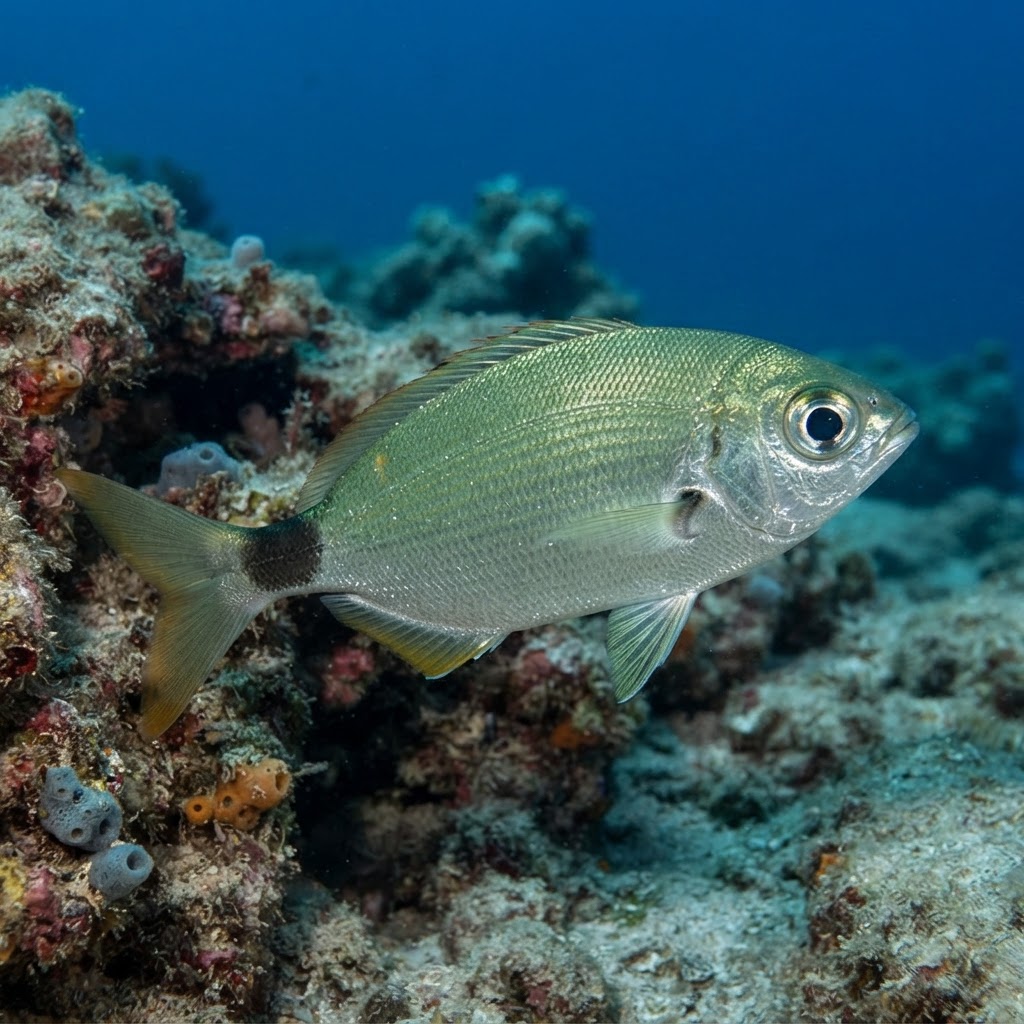
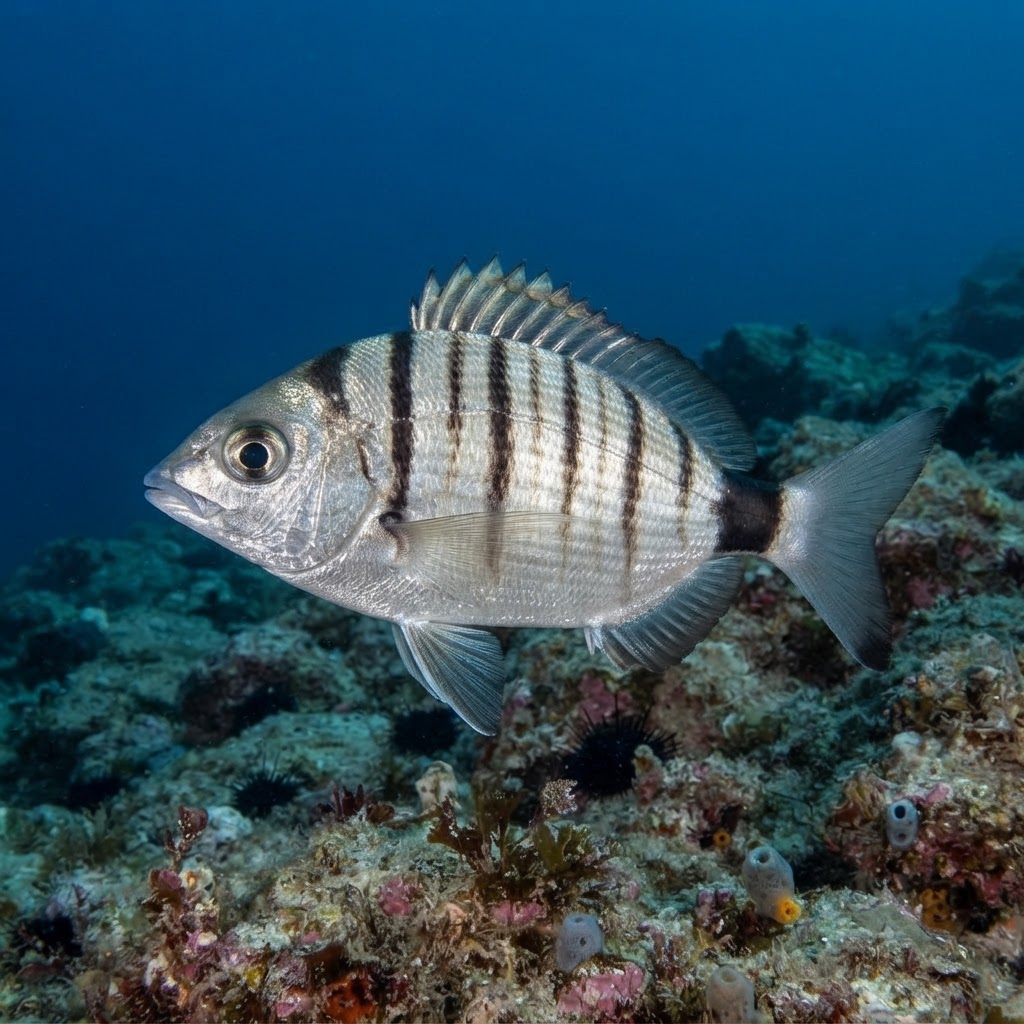
Reef neighbours a diver could mistake it for. Use the identification notes above to tell them apart.
Saddled Seabream are most widely recorded across the Mediterranean, with the greatest number of sites logged in Italy, Greece, Spain, Turkey, and Croatia. Strong regional coverage exists around Attica in Greece, Sicily and Sardinia in Italy, the Aegean Coast of Turkey, and the Costa Blanca in Spain. The Azores in the Atlantic also feature in the range, making it one of the few breams that shows up reliably across both the Mediterranean and the eastern Atlantic.
Mapping where Saddled Seabream is logged…
The best-covered sites are in Italy, Greece, Spain, Turkey, and Croatia. Particularly reliable areas include Attica in Greece, Sicily and Sardinia in Italy, the Aegean Coast of Turkey, and the Costa Blanca in Spain. The Azores also sit within the species' recorded range for Atlantic dives.
There is no strong seasonal peak in current sighting data, so Saddled Seabream are considered a year-round resident across their Mediterranean range. Their comfort in water temperatures from about 14 to 25 °C means they remain active even in cooler winter conditions at these sites.
Look for the bold black saddle patch at the base of the tail, that single mark distinguishes it from most other silver breams at a glance. The body is slim, oval, and silver with faint lateral stripes, and the fish reaches around 25 cm. No other common Mediterranean bream has quite such a clean, dark tail-base blotch.
Typical adults are around 25 cm. They are a mid-sized bream, smaller than some of the larger sparids you might see on the same reef.
No. Saddled Seabream pose no threat to divers. They are approachable, calm fish that move away slowly if approached too closely.
Site and sighting data is aggregated from diver logs, iNaturalist and GBIF. For taxonomy and conservation status:

Diplodus sargus
Boga
2,853 sites