Elysia velutinus
A tiny, uncommon find on Florida and Guadeloupe reef dives, this sap-sucking slug turns up year-round in warm 24-30C water.
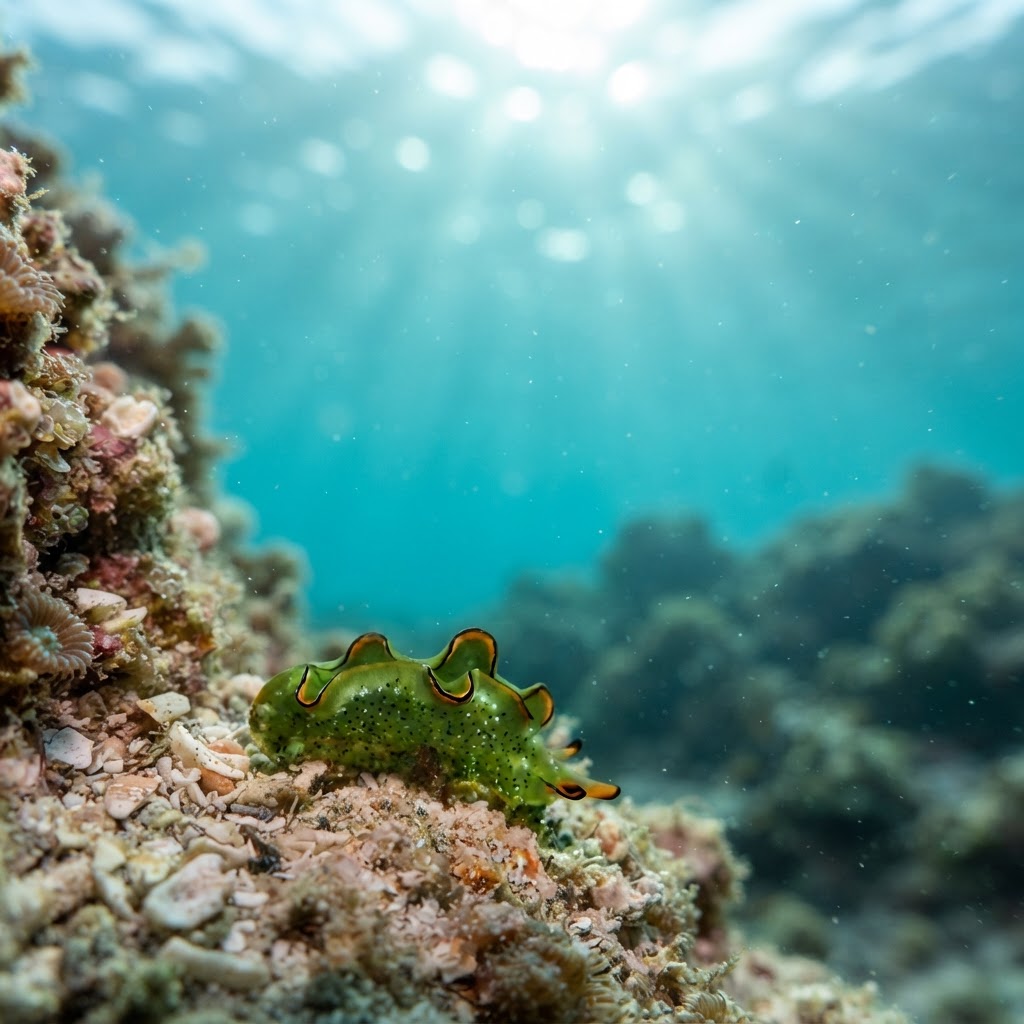
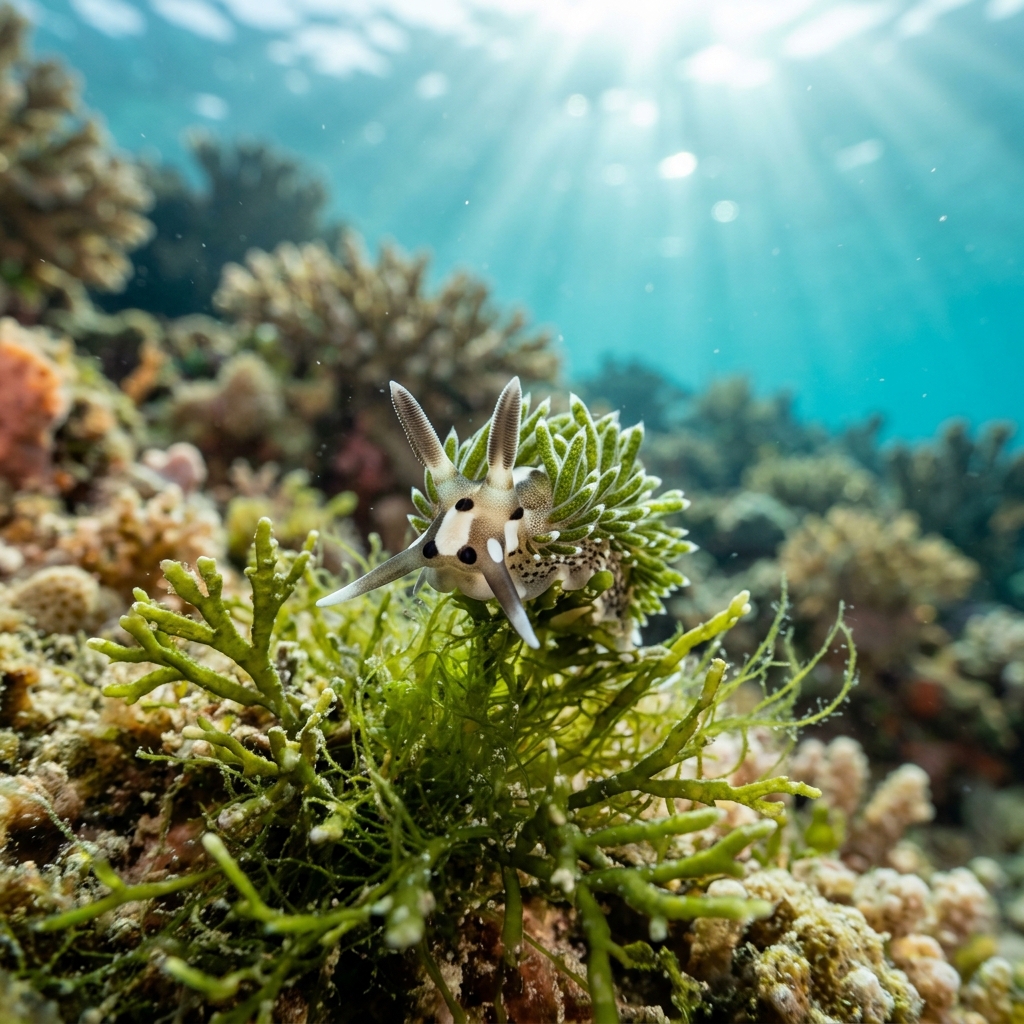
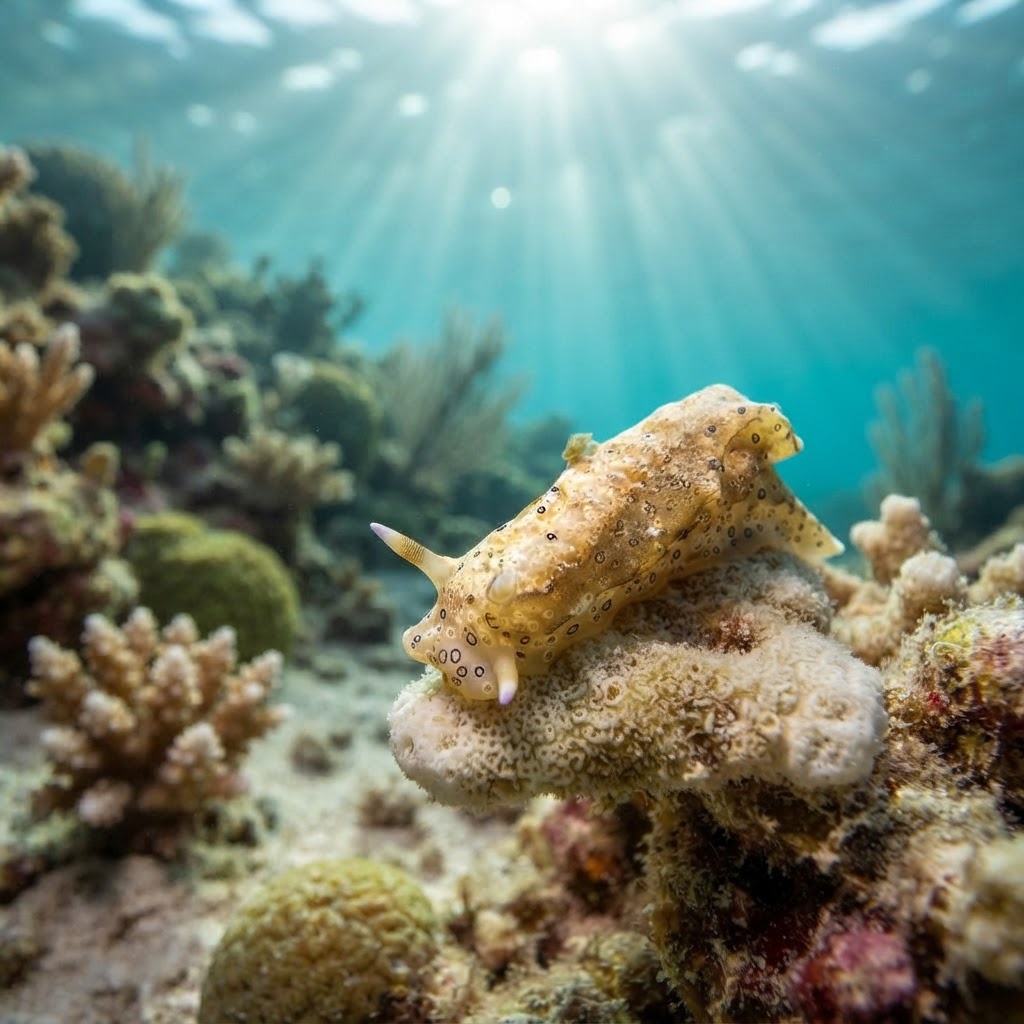
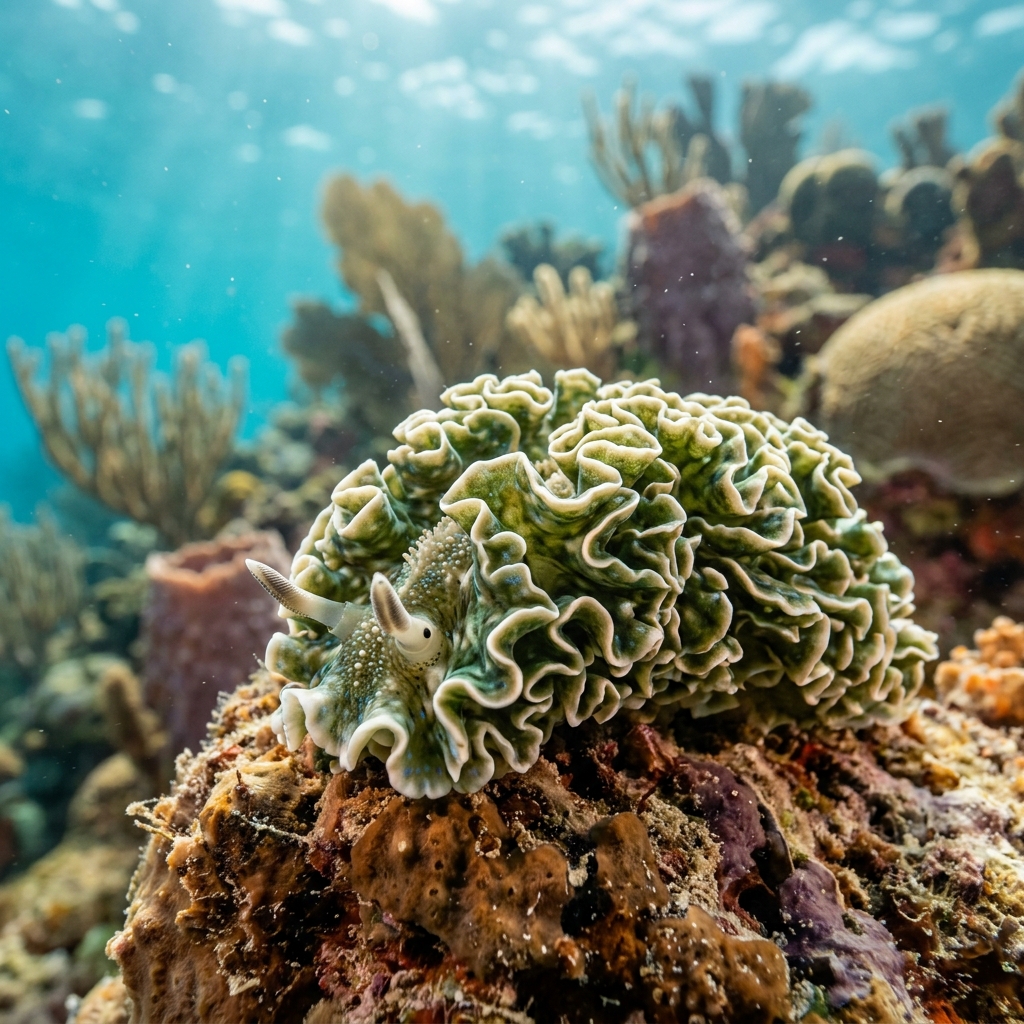
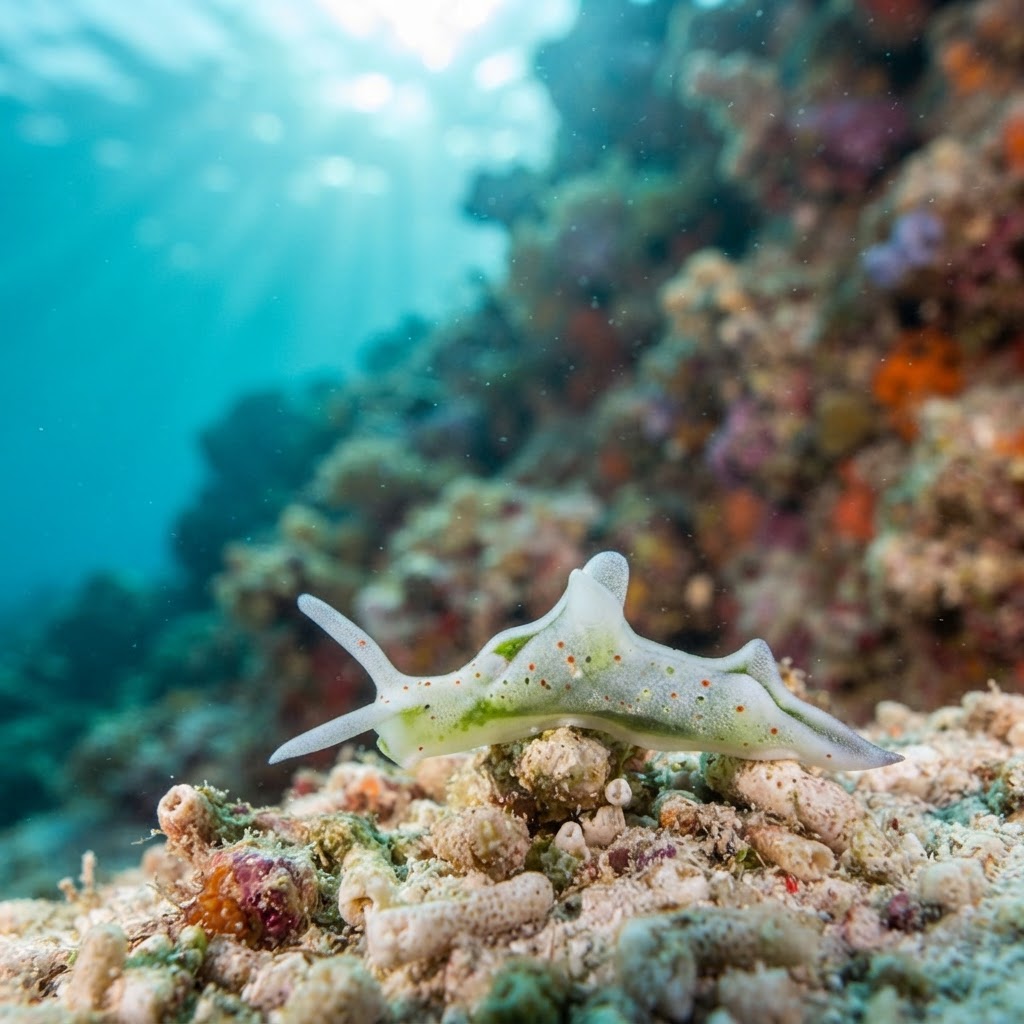
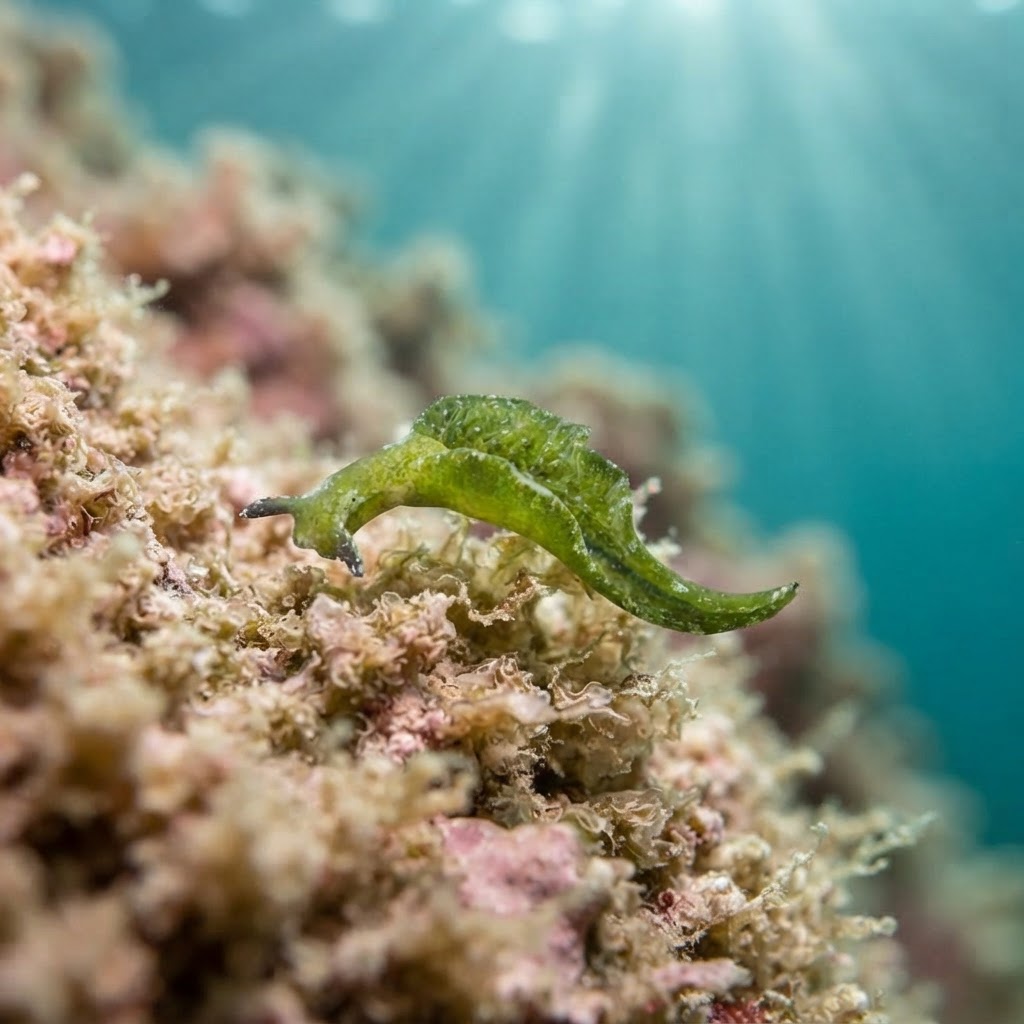
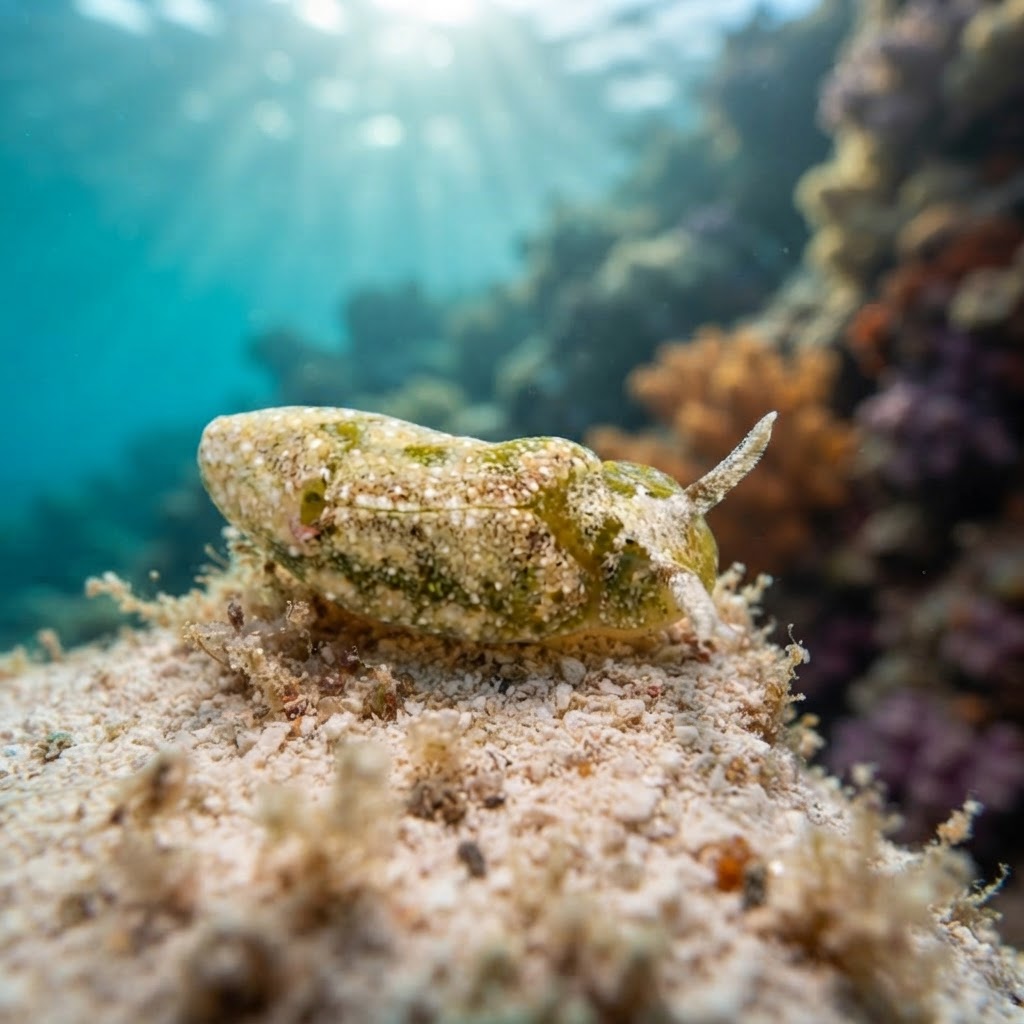
Look for a small, soft-bodied slug barely 3cm long, with a velvety, mottled body texture that blends into algae and rubble. It lacks a visible shell and moves slowly across the substrate, often with two rolled flaps (parapodia) along its back that give it a leaf-like outline. Colouring tends toward mottled greens and browns, matching the algae it feeds on, so most divers spot it by scanning rubble patches closely rather than by any bright marking.
Divers typically find it parked on algae or rubble, moving at a crawl as it grazes rather than reacting to a torch or a diver's approach. It shows no defensive display or fast retreat, so a slow, close look at algal patches on the reef floor is the standard way to pick one out. Most logs describe single individuals rather than groups, fitting its usually uncommon to rare status at most sites.
Sacoglossans are known as sap-sucking slugs because they pierce algal cells and feed on the chlorophyll-rich contents inside, and some species in the family can even retain functioning chloroplasts in their own tissue for a time afterward.
Sightings show no clear seasonal pattern, so treat this as a year-round find. Its comfort range of roughly 24.6 to 30.6C matches warm Caribbean and Florida reef temperatures for most of the year, which likely explains the lack of a distinct season.
Reef neighbours a diver could mistake it for. Use the identification notes above to tell them apart.
Most reliably logged on reefs in Florida in the United States and around Grande-Terre in Guadeloupe, with a smaller but steady presence off Grand Cayman in the Cayman Islands and the Yucatán Peninsula in Mexico. Divers searching rubble and algae patches on these sites have the best odds of a sighting, though it stays an uncommon find even where it turns up.
Mapping where Sacoglossan Sea Slug is logged…
Florida in the United States and Grande-Terre in Guadeloupe are the strongest regions for this species, with additional sightings around Grand Cayman and Mexico's Yucatán Peninsula. It stays an uncommon to rare find even at these sites, so patient searching of algae and rubble pays off.
There's no detected season, so any time of year works. Warm reef temperatures between roughly 24.6 and 30.6C hold steady through most of the year across its range, keeping it a year-round possibility.
It's a tiny slug, about 3cm, with a velvety, mottled body and rolled back flaps that give it a leaf-like shape. It lacks a shell and blends into algae, so look closely at rubble and weedy patches rather than expecting bold colours.
They stay small, typically around 3cm long, which is part of why they're easy to overlook on a reef.
It belongs to a slug family famous for feeding on algae by piercing individual cells to extract their chlorophyll-rich contents, a feeding style unique among sea slugs. Some relatives in the family can hold onto functioning chloroplasts afterward, using them briefly for extra energy.
No, they pose no threat to divers. They're slow, small, and have no sting or bite of concern, so simply avoid touching or disturbing them for a clear look.
Site and sighting data is aggregated from diver logs, iNaturalist and GBIF. For taxonomy and conservation status:
Elysia Timida
573 sites