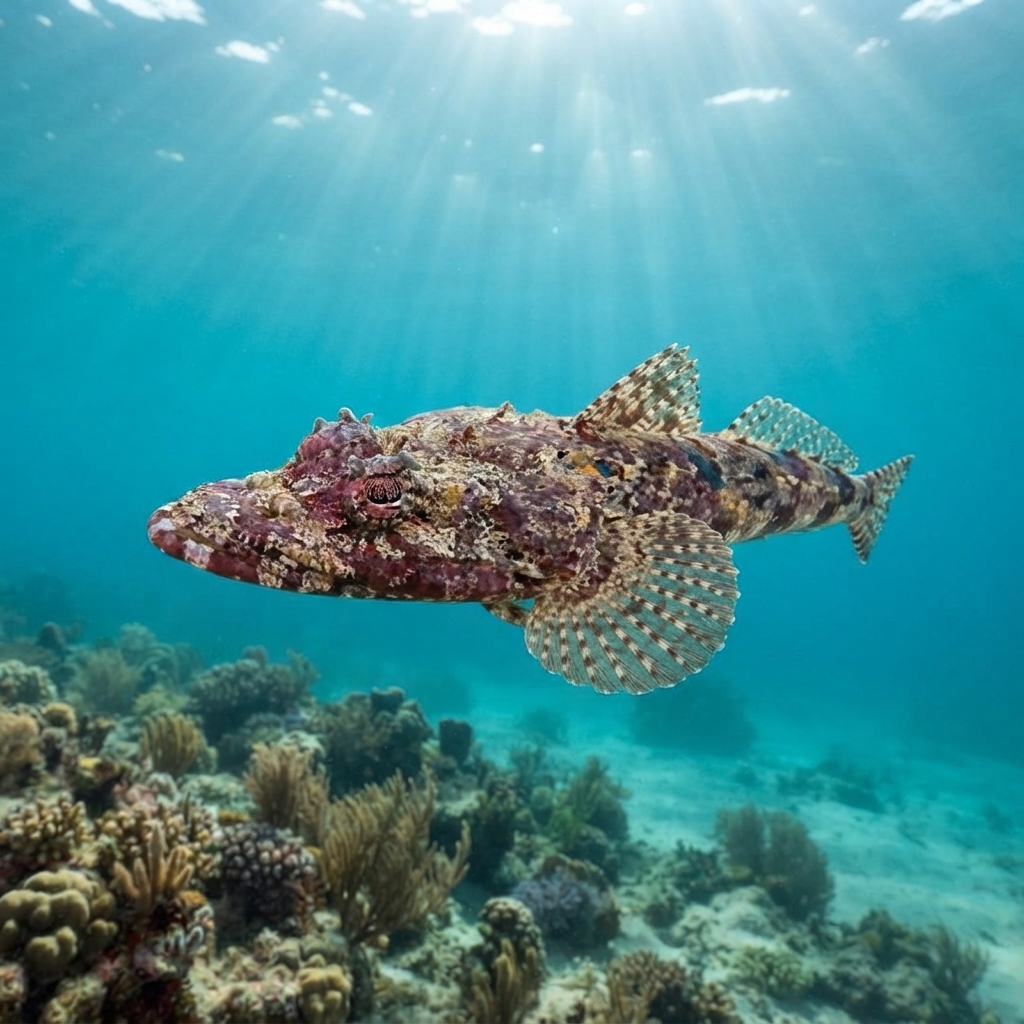
Thysanophrys cirronasus
Sand-coloured and flat as a pancake, this ambush predator turns up rare on dives in Western Australia and New South Wales, year-round.
Safety warning
Rock Flathead carry venomous spines along the dorsal fin and gill covers, and because they're so well camouflaged the real risk is putting a hand or knee down on one you didn't see. Watch where you place yourself on sandy bottoms and avoid handling it; a sting is painful but not typically life-threatening with prompt first aid.
If you're stung
Venomous spinesGeneral first-aid guidance, not a substitute for professional medical care. In an emergency, call your local emergency number.
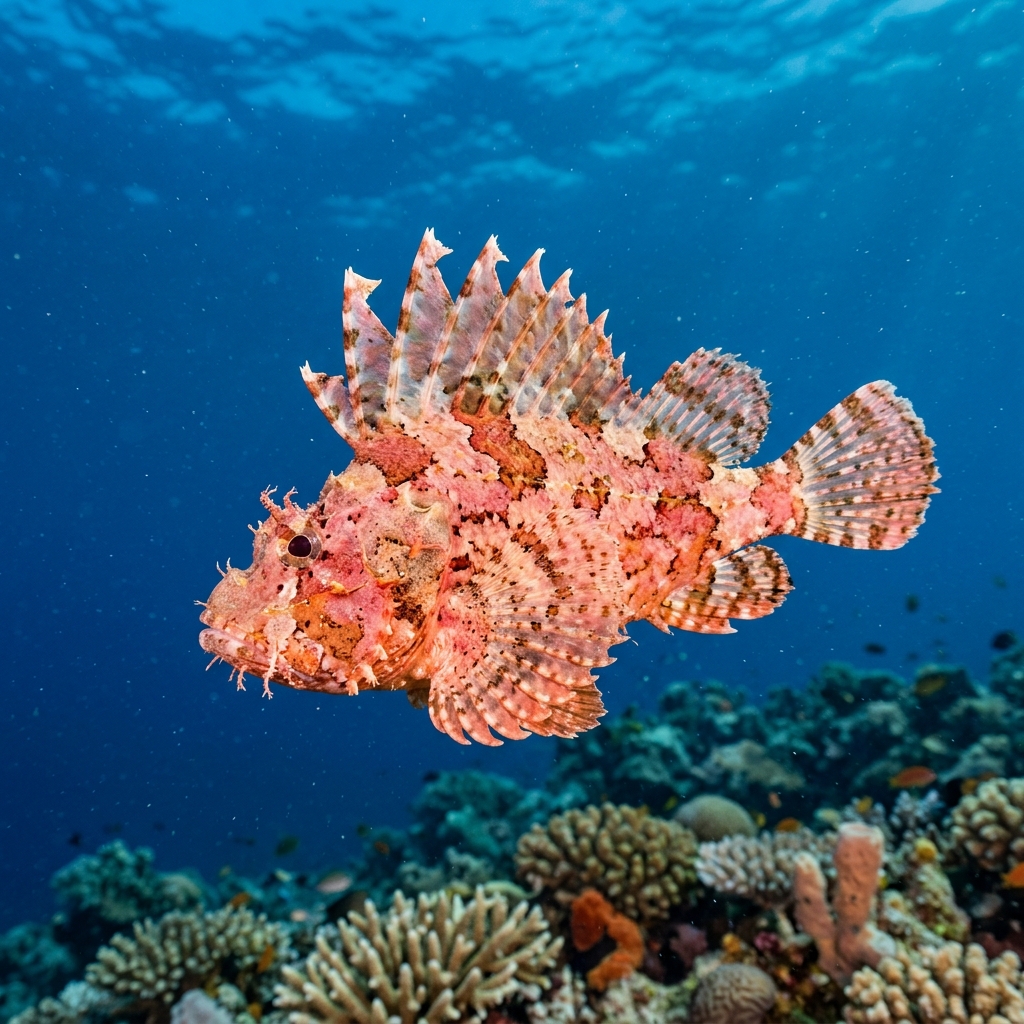
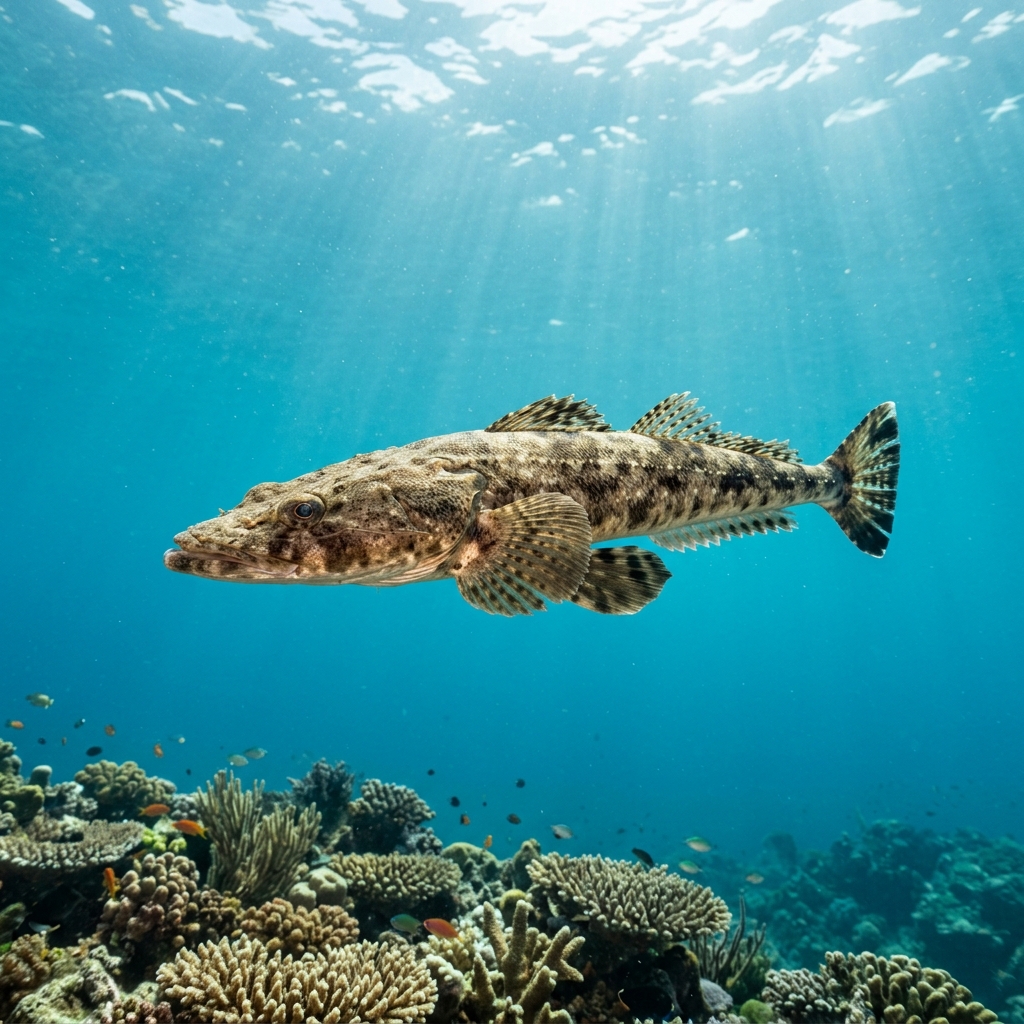
Grows to around 27 cm and lies flat against sand or rubble, body mottled brown and grey to match the seabed. The head is broad and depressed (flattened top to bottom), with eyes set high on top so it can watch for prey while buried. Look for the tapering, wedge-shaped profile and the way it stays dead still until you're almost on top of it, rather than a burst of colour.
Spends most of its time motionless on the bottom, half-buried in sand with only its eyes and outline showing, waiting for small fish or crustaceans to wander past. Divers usually spot it by accident while scanning sandy patches near rock or reef edges rather than mid-water. It rarely bolts unless approached closely, relying on camouflage first and a fast lunge second.
Its flattened head and upward-facing eyes are a classic ambush-predator adaptation, letting it stay almost invisible in sand while keeping full view of anything swimming overhead.
No clear seasonal pattern shows up in the data, so treat it as a year-round possibility wherever it's found. It sits in a cooler-water niche of roughly 16.7 to 21.5 C, consistent with the temperate Western Australian and New South Wales sites where it's logged.
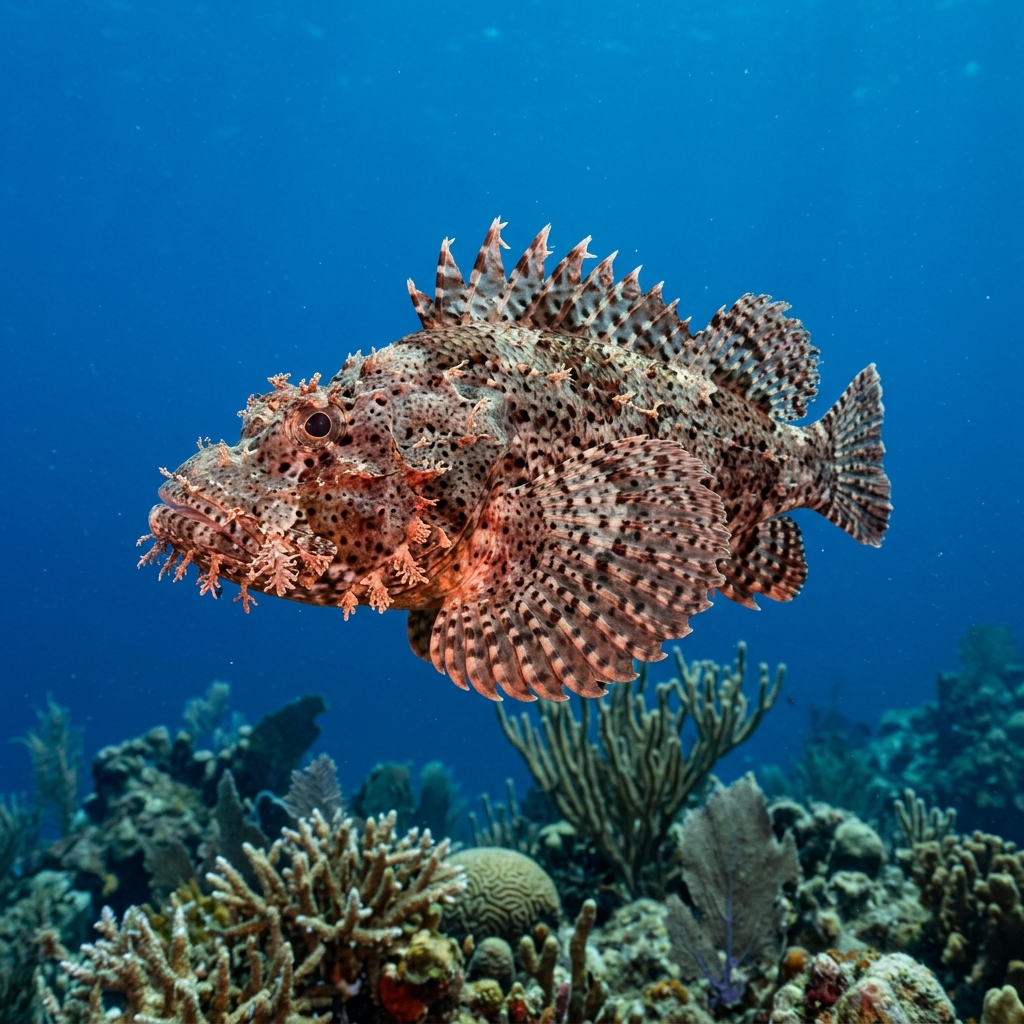
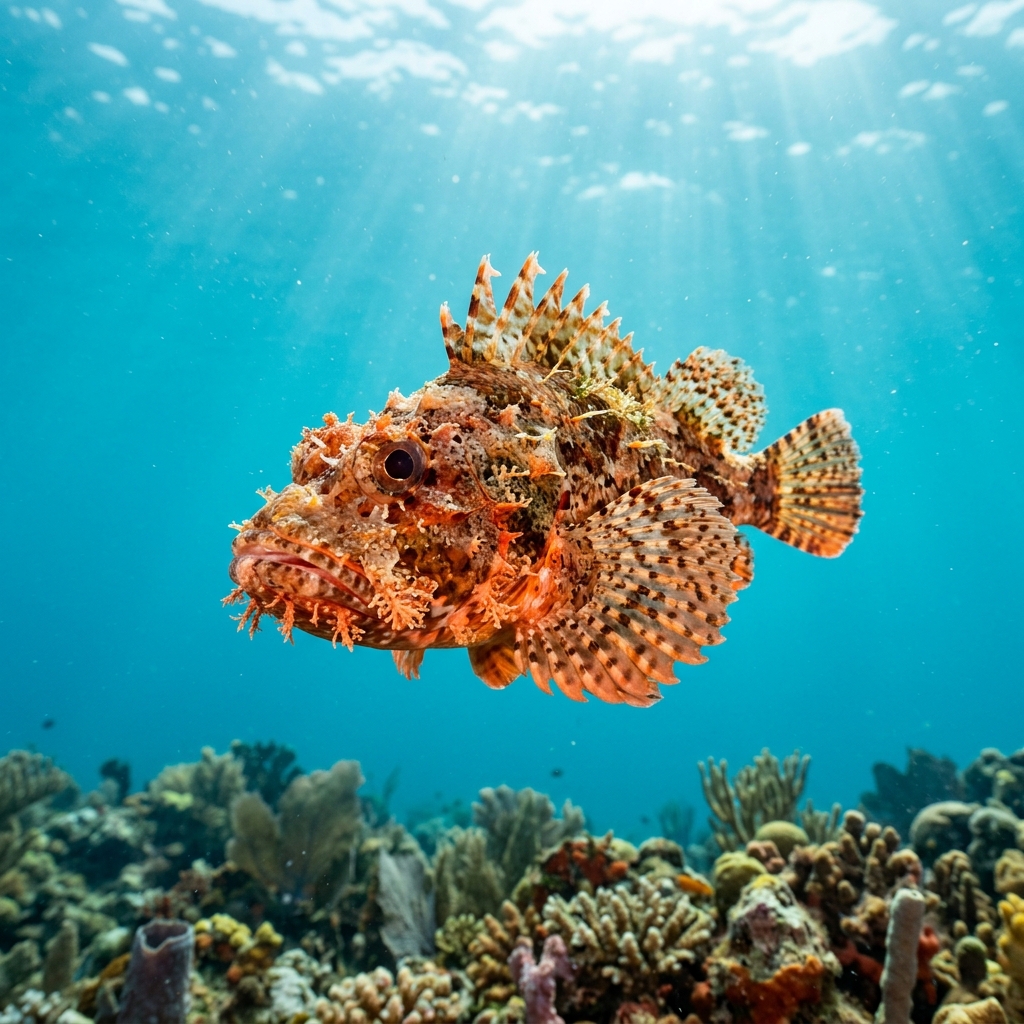
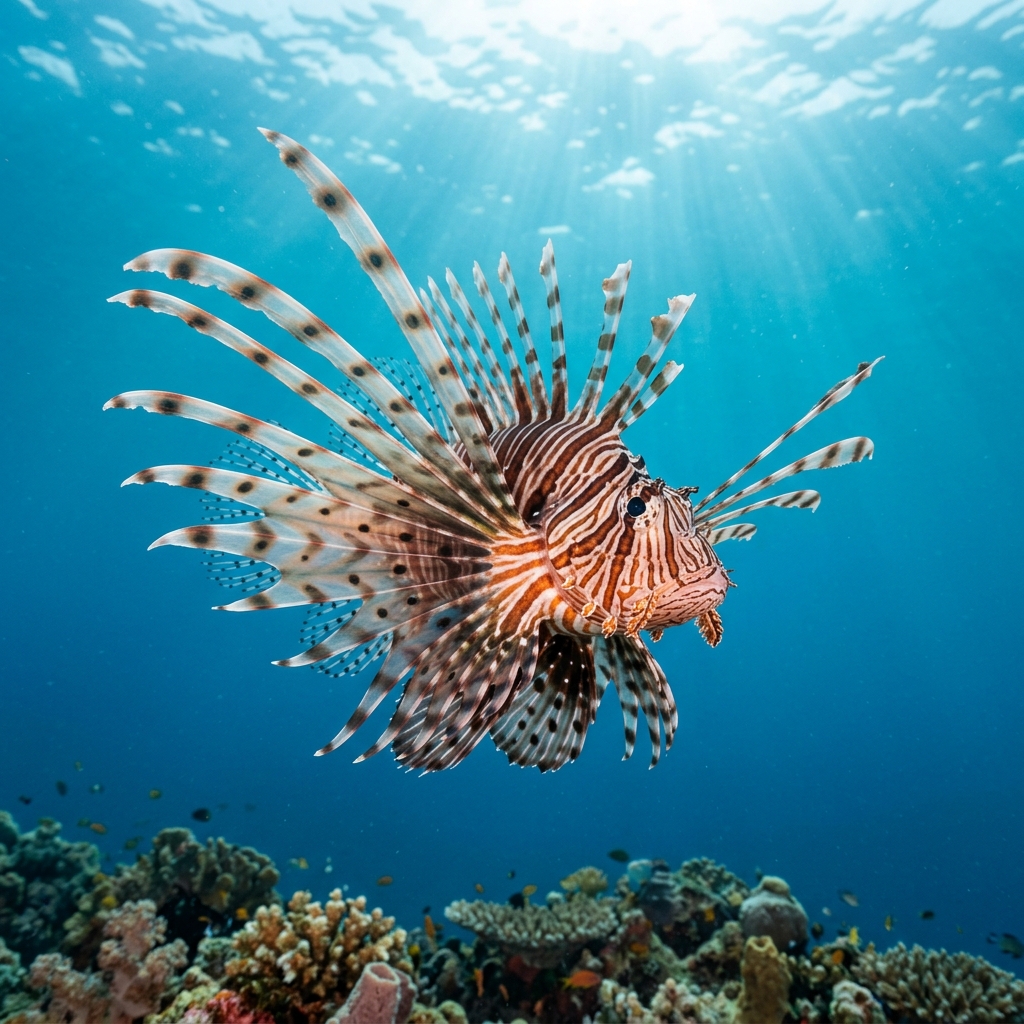
Reef neighbours a diver could mistake it for. Use the identification notes above to tell them apart.
Logged almost entirely in Australia, with Western Australia the stronger area for sightings and New South Wales a secondary spot. Divers find it on temperate sand and rubble patches rather than tropical reef, most reliably along these two coastlines.
Mapping where Tasselsnout Flathead is logged…
Almost all logged sightings come from Australia, especially Western Australia and, to a lesser extent, New South Wales. Look for sandy or rubble patches near reef structure rather than open reef.
There's no strong seasonal signal in the data, so sightings happen year-round. It's found in cooler water, roughly 16.7 to 21.5 C, which matches temperate Australian dive conditions most of the year.
Yes, they have venomous spines and their camouflage makes accidental contact the main hazard. Keep an eye on where you kneel or place your hands on sandy bottoms and don't attempt to touch one.
Look for a flat, wedge-shaped fish around 27 cm long lying still on sand, mottled brown and grey with eyes set high on its head. It's easy to swim past since it blends almost completely into the seabed.
They typically reach about 27 cm in length, a modest size that combined with their flat shape and sandy colouring makes them easy to overlook on a dive.
Most sites that log it describe sightings as rare, with a handful reporting it as uncommon. It's not a fish you plan a dive around, more one you notice if you're looking closely at sand patches.
Site and sighting data is aggregated from diver logs, iNaturalist and GBIF. For taxonomy and conservation status:
Madeira Rockfish
2,773 sites