Xantho pilipes
Uncommon but findable in Brittany and England's cold water, 9 to 15C. Here's where UK and French divers actually log Risso's Crab.
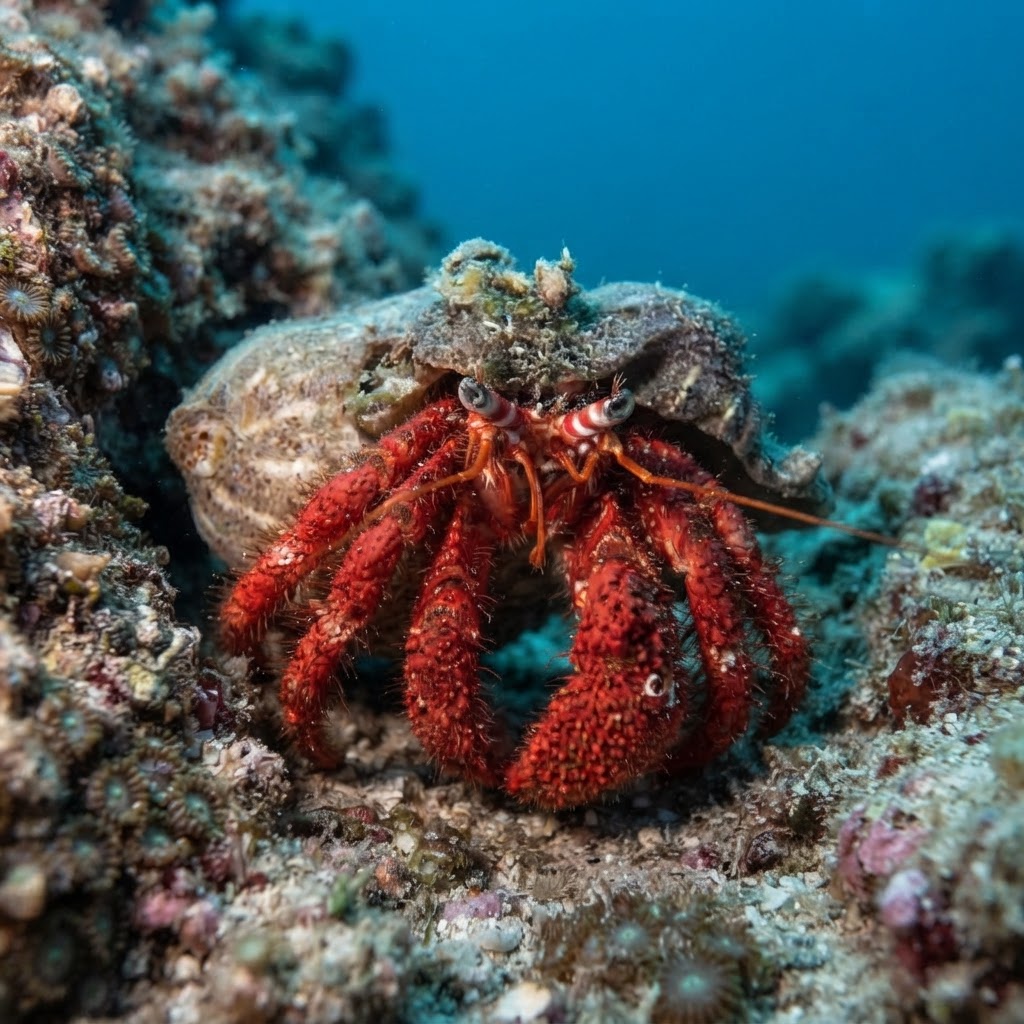
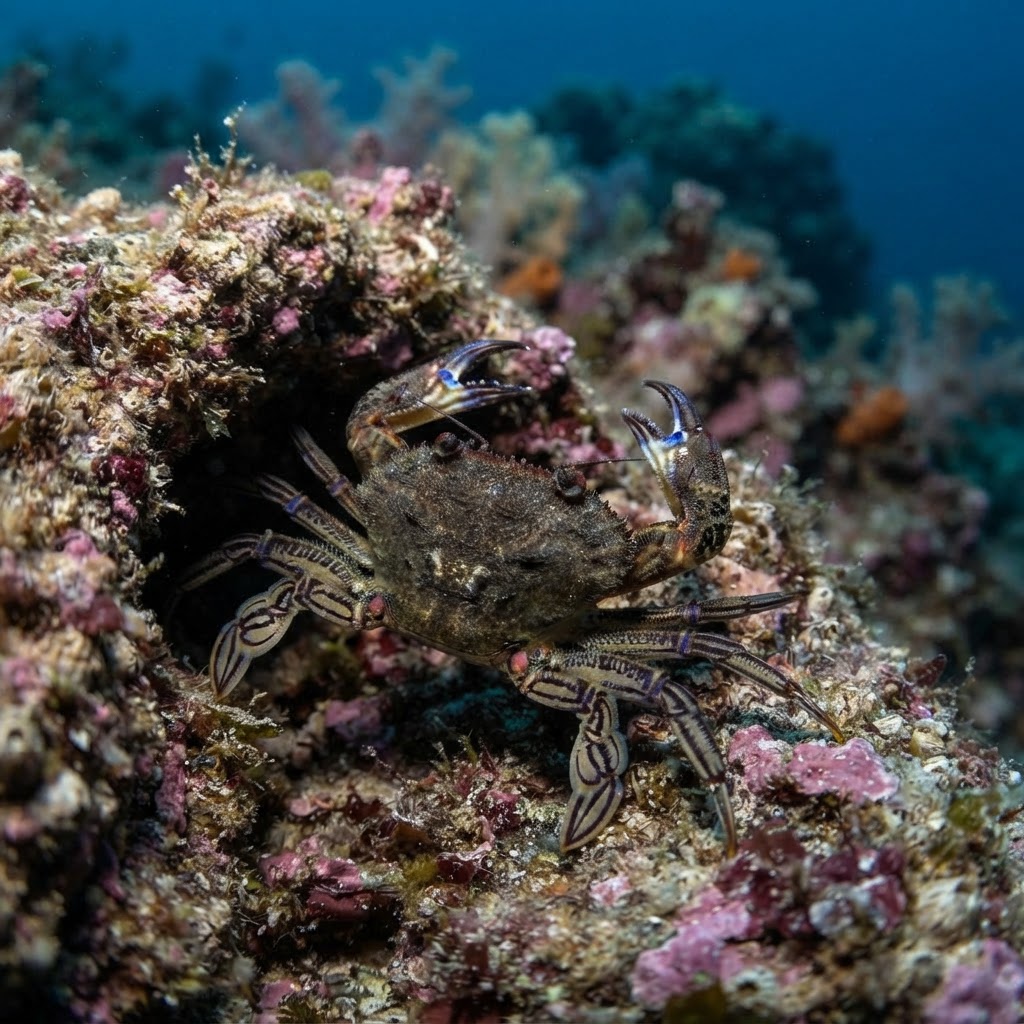
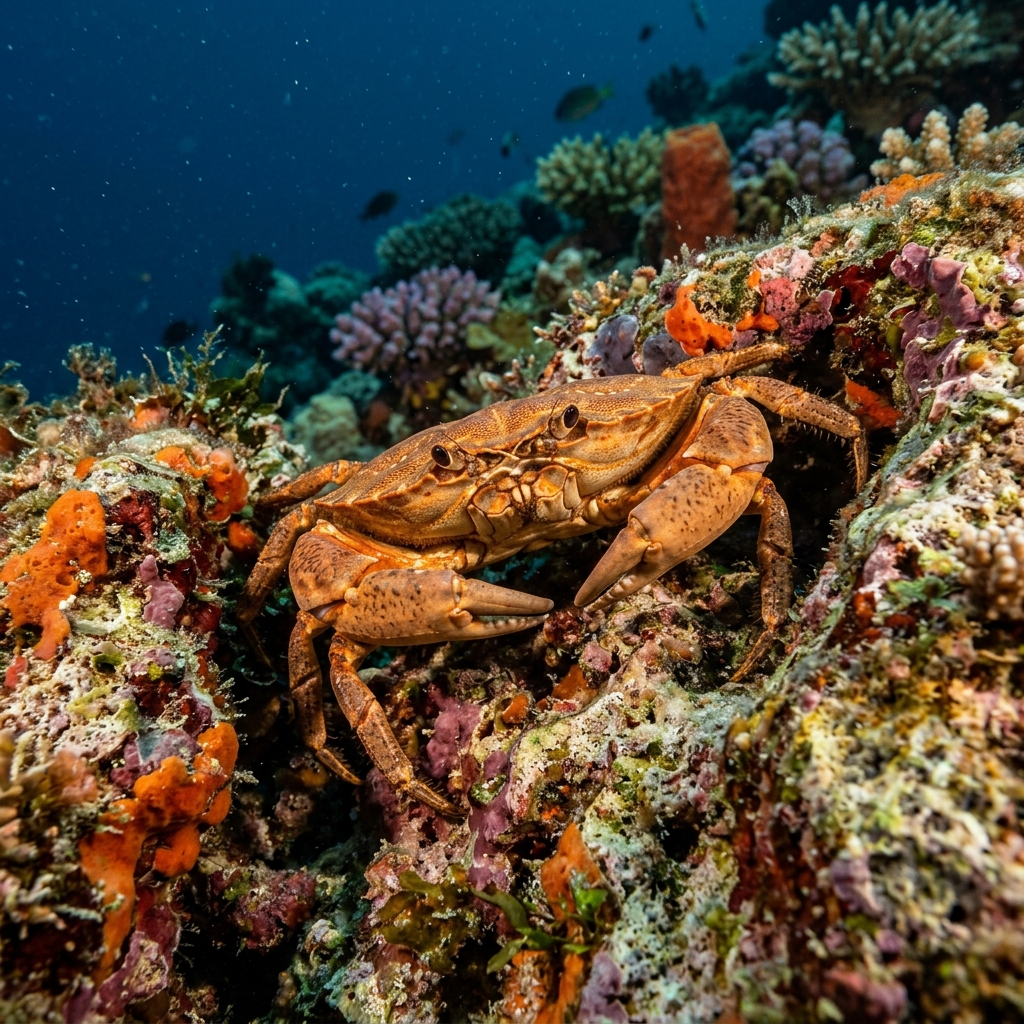
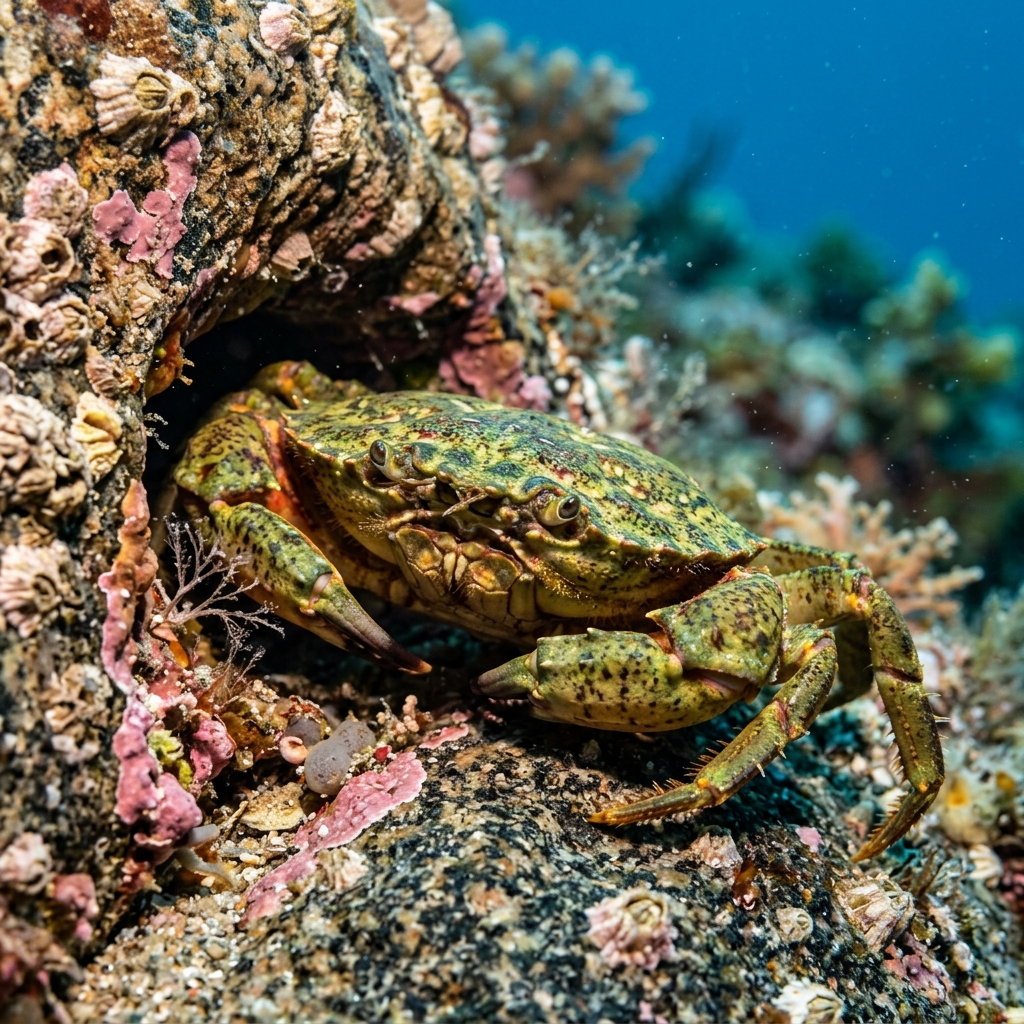
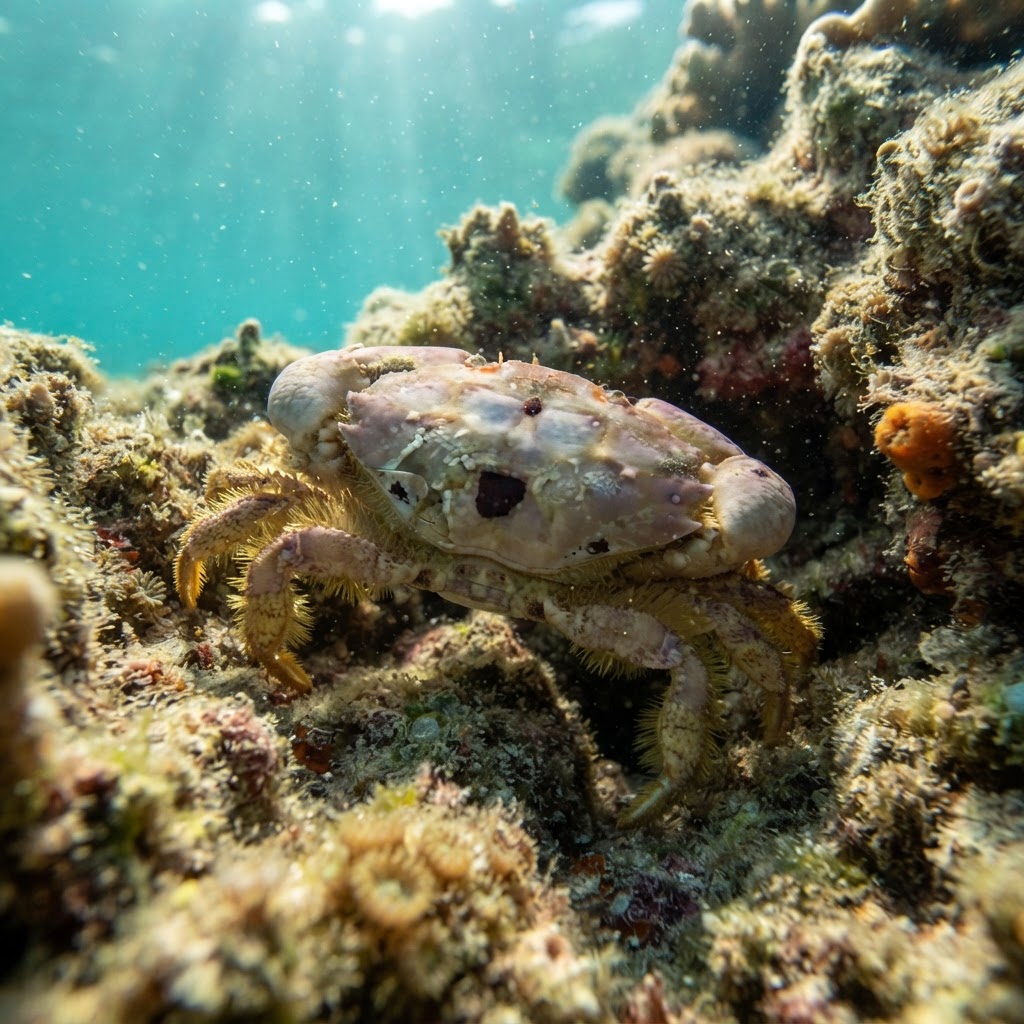
Look for a rounded, robust shell with a granular, warty texture rather than a smooth carapace, usually in shades of reddish-brown to purplish-grey. The claws are thick and unequal in size, and the shell margin has short, blunt teeth rather than sharp spines. It sits low and tucked into rock crevices rather than swimming or scuttling in the open, so divers usually spot it as a still, chunky shape rather than movement.
Divers usually find this crab wedged into a crevice or under a rock ledge on cold-water reefs, sitting motionless rather than foraging in the open. It tends to hold its ground when a torch beam passes over it, relying on its shell texture and low profile to blend into the surrounding rock rather than fleeing. Most sightings come from careful reef and rock-scanning rather than mid-water encounters.
That warty, granular shell texture is a real camouflage tool against encrusting algae and coralline growth on cold-water rock, which is a big part of why it reads as uncommon: divers likely swim past far more than they log.
No clear seasonal pattern shows up in the data, and with a temperature niche of 9 to 15C it's built for cool water year-round, so Brittany and UK divers can reasonably look for it on any dive within that range rather than a specific month.
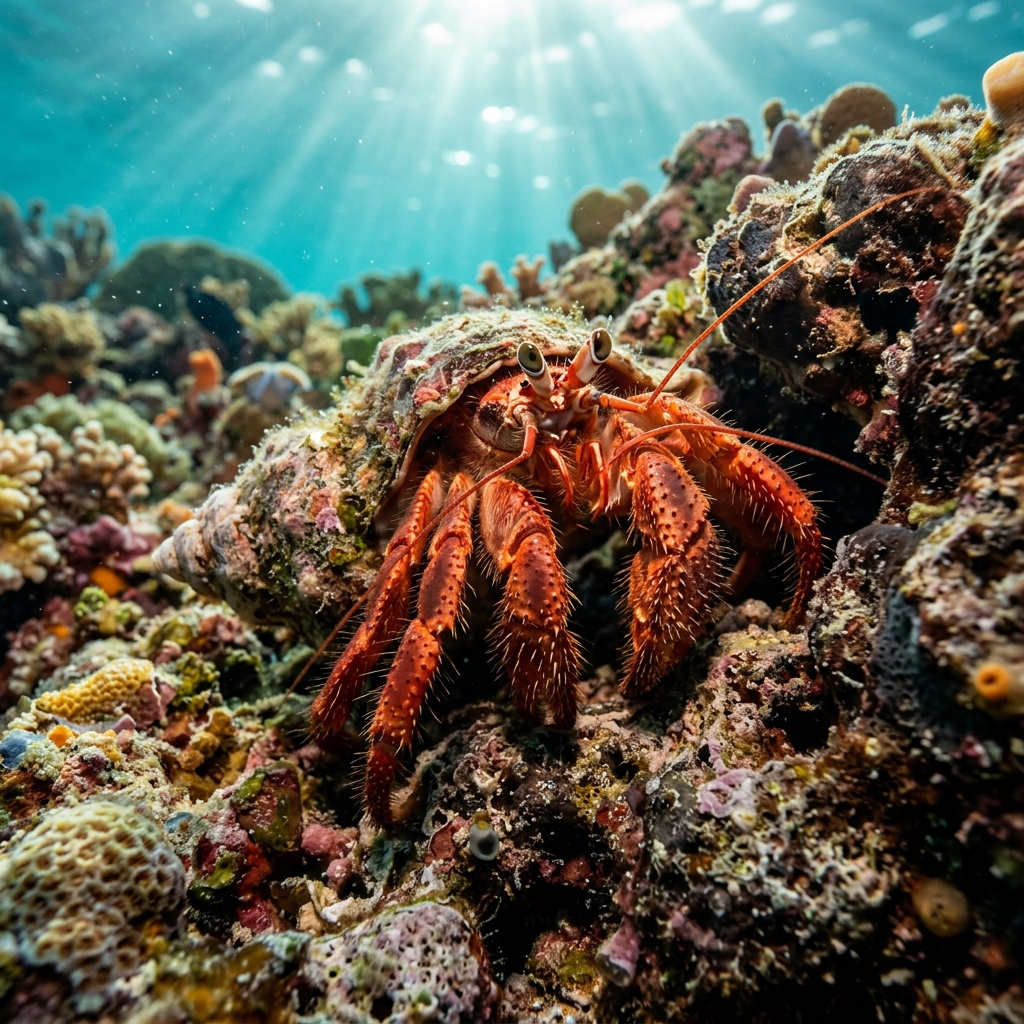
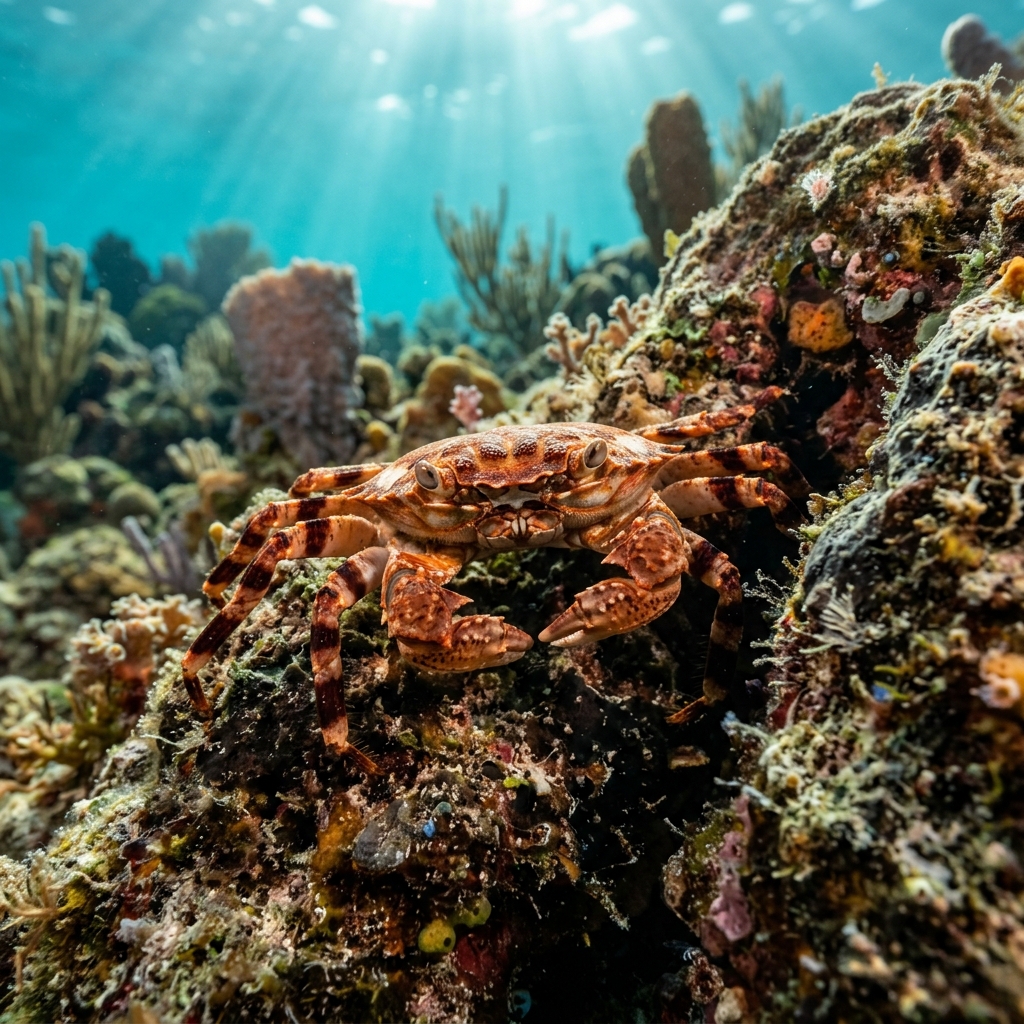
Reef neighbours a diver could mistake it for. Use the identification notes above to tell them apart.
Brittany in France is the strongest area for this species, with England close behind, particularly along the south and southwest coasts, and it also turns up in Northern Ireland. Across all these sites it's logged mostly as uncommon or rare, so treat any sighting as a real find rather than a given on a cold-water rocky dive.
Mapping where Risso's Crab is logged…
Brittany in France is the best-documented area, followed by England, especially the south coast, with occasional sightings in Northern Ireland. It favours cold-water rocky reef habitat in these regions.
There's no strong seasonal signal in the sighting data, and its temperature niche of 9 to 15C spans most of the diving year in Brittany and the UK, so it's realistically a year-round find rather than a seasonal one.
Look for a rounded, warty-textured shell in reddish-brown to grey tones, thick unequal claws, and a low, wedged posture in rock crevices. It rarely moves much when disturbed, which helps separate it from faster-moving swimming crabs.
No. It's not considered dangerous to divers and simply holds its position in rock crevices when approached.
Exact size data isn't confirmed for this species, but as a xanthid crab it's a small to modest-sized rock crab, comparable in scale to other crevice-dwelling crabs on cold-water reefs.
Site and sighting data is aggregated from diver logs, iNaturalist and GBIF. For taxonomy and conservation status:
European Green Crab
2,469 sites