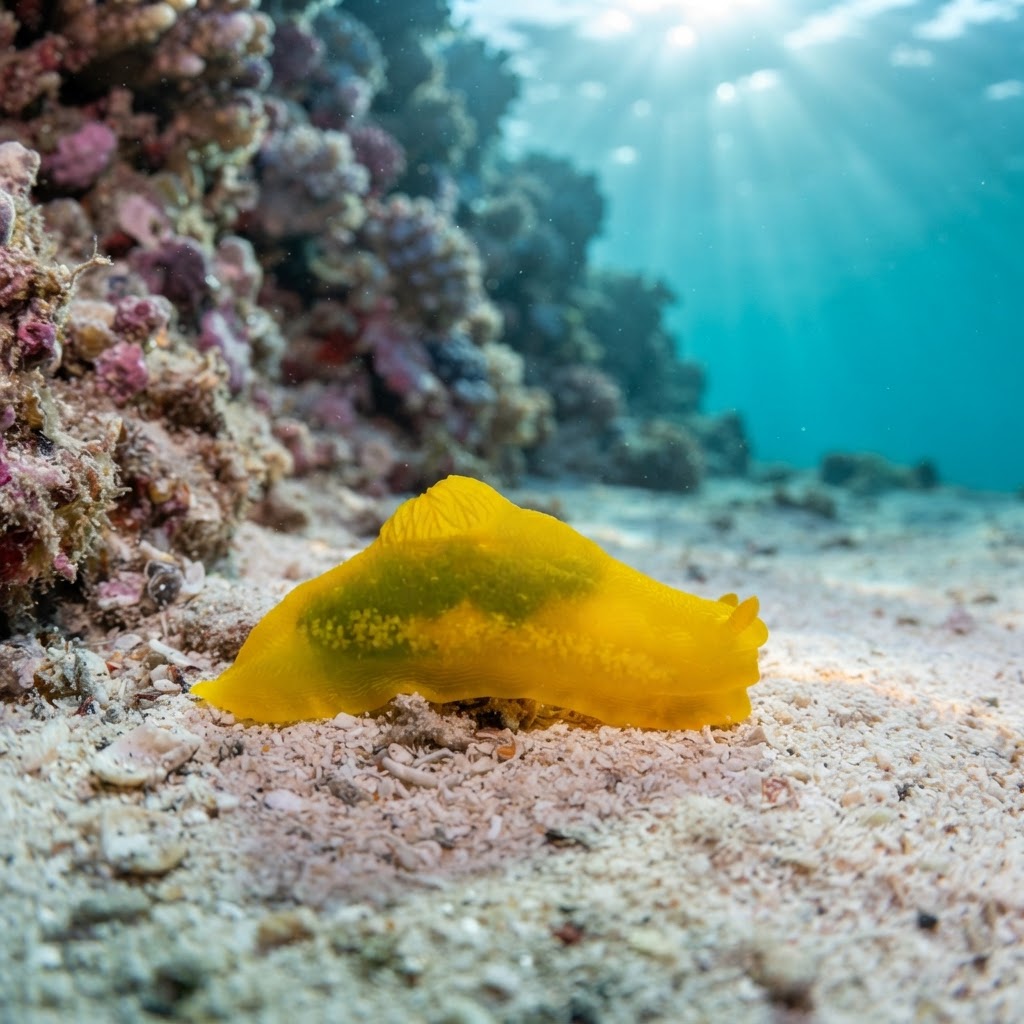
Gymnodoris crocea
Common on reefs across the Visayas, this orange-and-white nudibranch hunts other sea slugs year-round in warm 25-31C water.
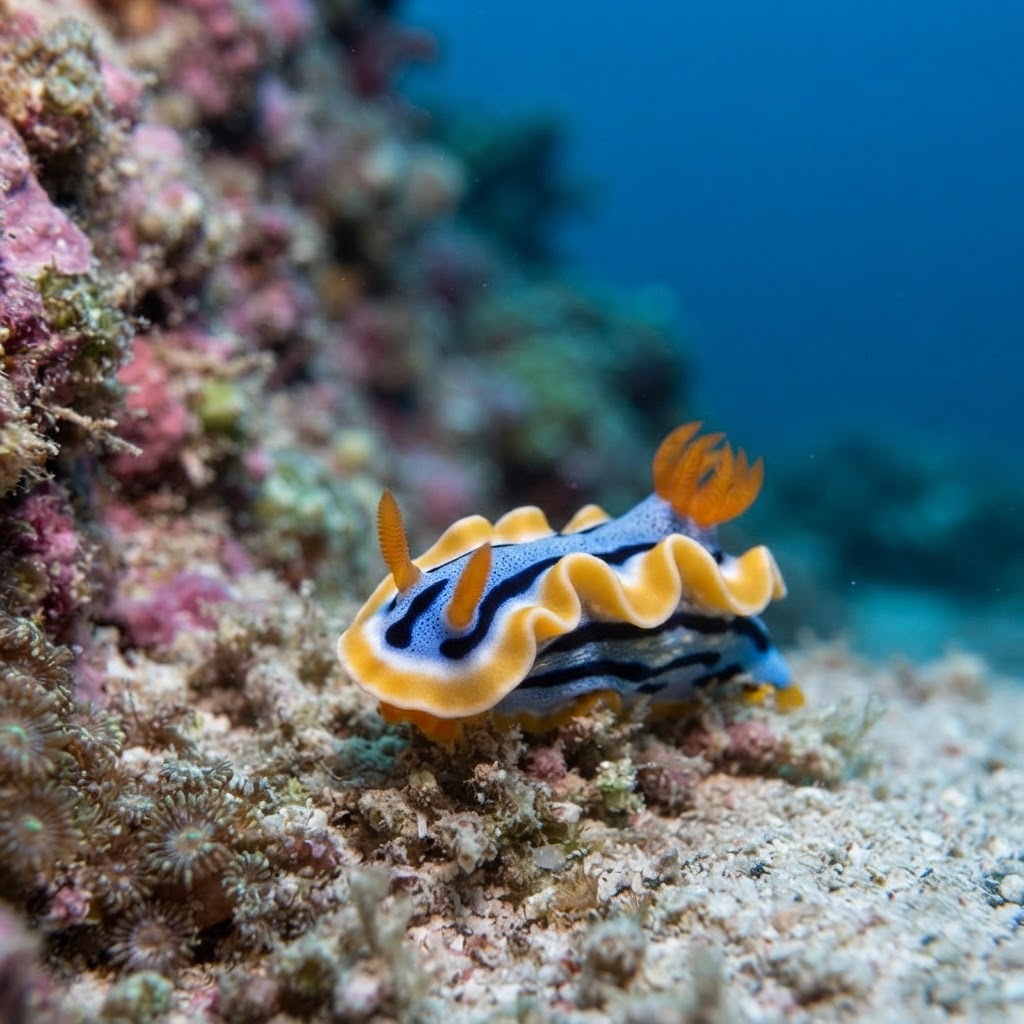
Look for a slug with a translucent-to-orange body and a raised, ridged edge running along the mantle, often with a pale or white margin. It sits low and elongated on the substrate rather than balled up, and the rhinophores (the small head tentacles) are usually a contrasting darker shade. Size is on the small side for the genus, so divers usually spot it while scanning rubble and dead coral rather than open sand.
Divers most often find this one slowly working its way across rubble and dead coral patches, hunting rather than resting in the open. Like other Gymnodoris species it is a predator of other nudibranchs and small slugs, so a sighting is often on or near a patch with other slug species nearby. It shows no reaction to divers and is easy to approach and photograph without disturbing it.
Gymnodoris crocea belongs to one of the few nudibranch genera that actively hunts and eats other nudibranchs and sea slugs, rather than grazing on sponges or hydroids like most of its relatives.
Sightings show no detectable seasonal pattern, and water temperatures logged with this species range from 25.4 to 31.4C, comfortably within tropical reef norms year-round. Plan a Visayas trip whenever suits you rather than chasing a particular month.
Reef neighbours a diver could mistake it for. Use the identification notes above to tell them apart.
This is very much a Philippines species on the current data, with sightings concentrated across the Visayas region. Divers looking for it should focus muck and reef sites in that part of the country rather than elsewhere, since no other country shows up in the logged observations yet.
Mapping where Ridged Gymnodoris is logged…
Sightings are concentrated in the Philippines, particularly across the Visayas region, where it turns up regularly on rubble and reef macro dives. It has not been logged elsewhere in significant numbers, so the Visayas is the place to target it.
There is no clear seasonal pattern in the sightings, and it has been logged in water from 25.4 to 31.4C, which covers most of the year on Philippine reefs. It is treated as a year-round find rather than a seasonal one.
Check for an elongated, low-profile slug with an orange to translucent body and a ridged, pale-edged mantle margin. It is usually seen crawling on rubble or dead coral rather than in the open, hunting rather than resting.
No. It poses no risk to divers and can be observed and photographed up close without any need for caution.
It is a predator that hunts and eats other nudibranchs and sea slugs, which is unusual behaviour within the wider nudibranch world where most species graze on sponges or hydroids.
Site and sighting data is aggregated from diver logs, iNaturalist and GBIF. For taxonomy and conservation status:
Light-spotted Aegires
3,168 sites