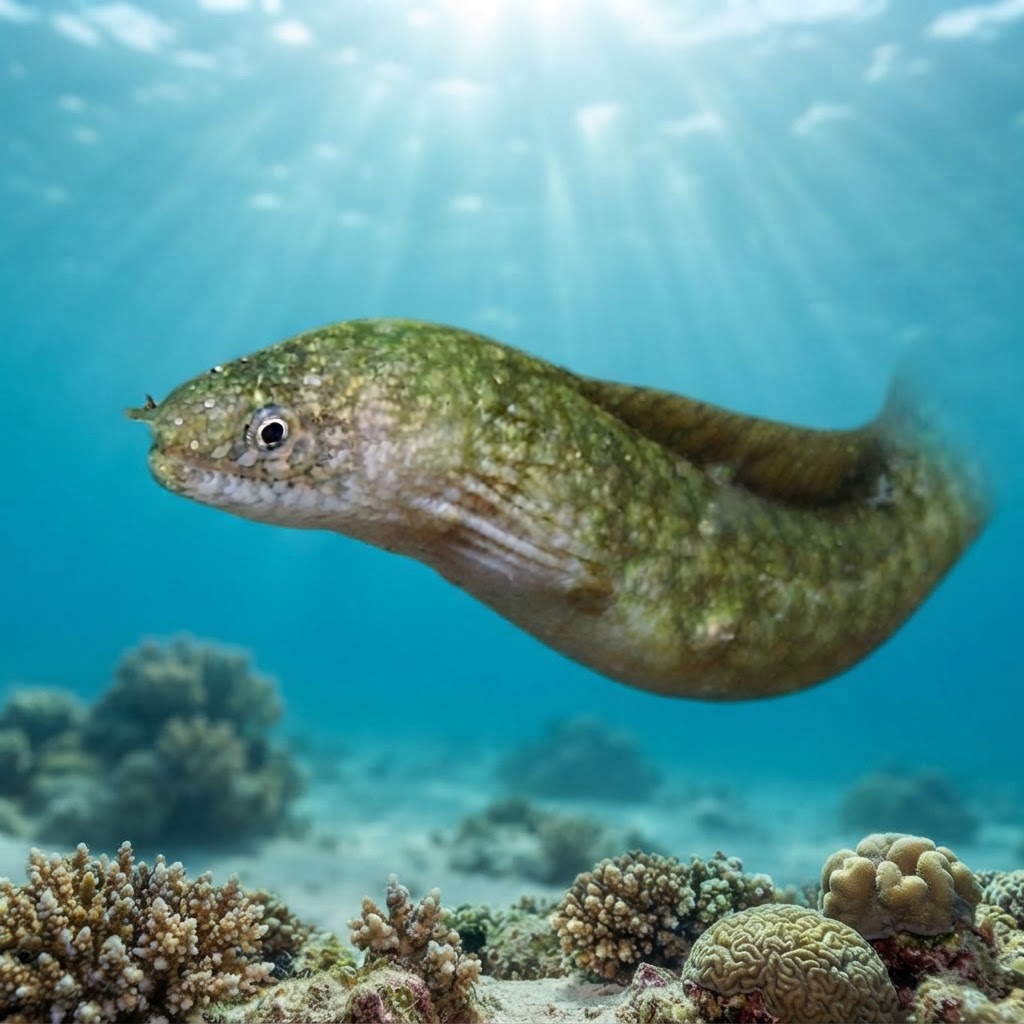
Gymnothorax richardsonii
A small, secretive moray logged mostly in the Visayas, Philippines, living in warm 25 to 29 C reef crevices year-round.
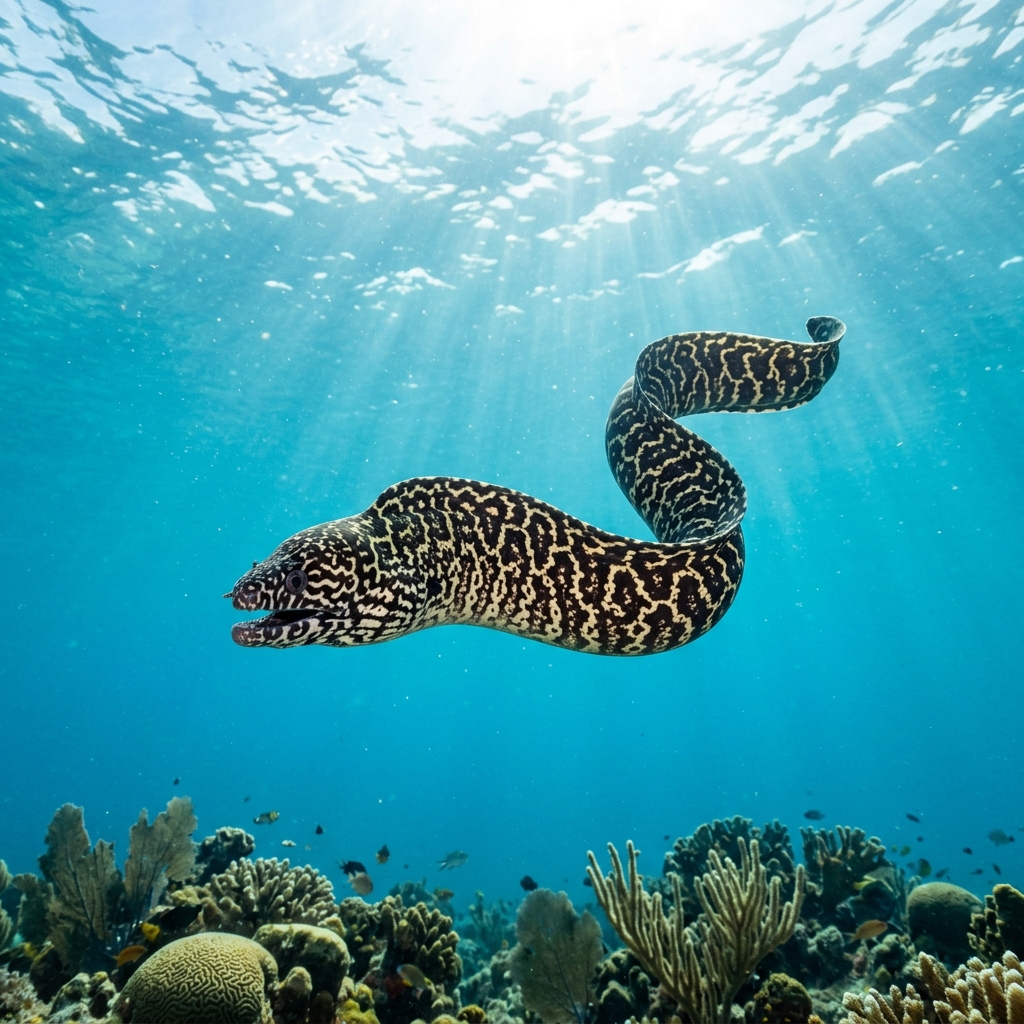
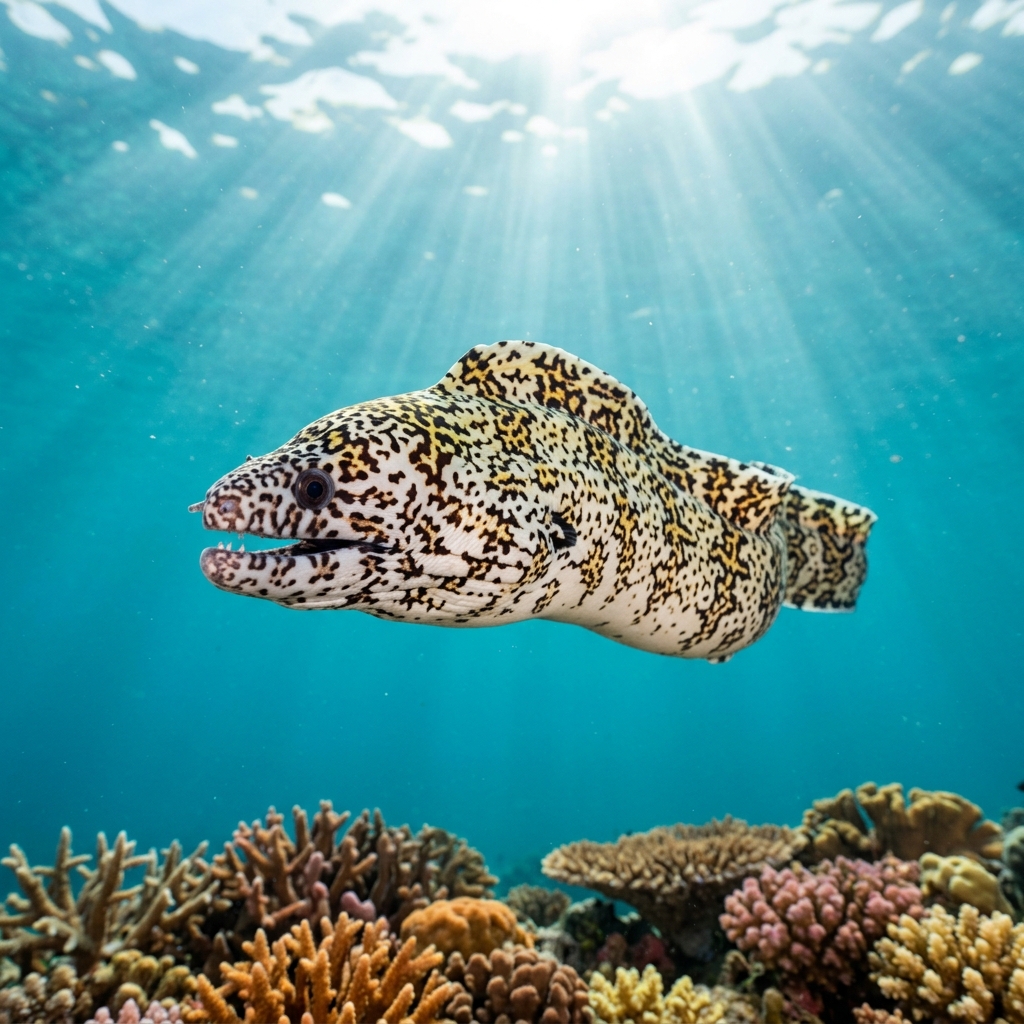
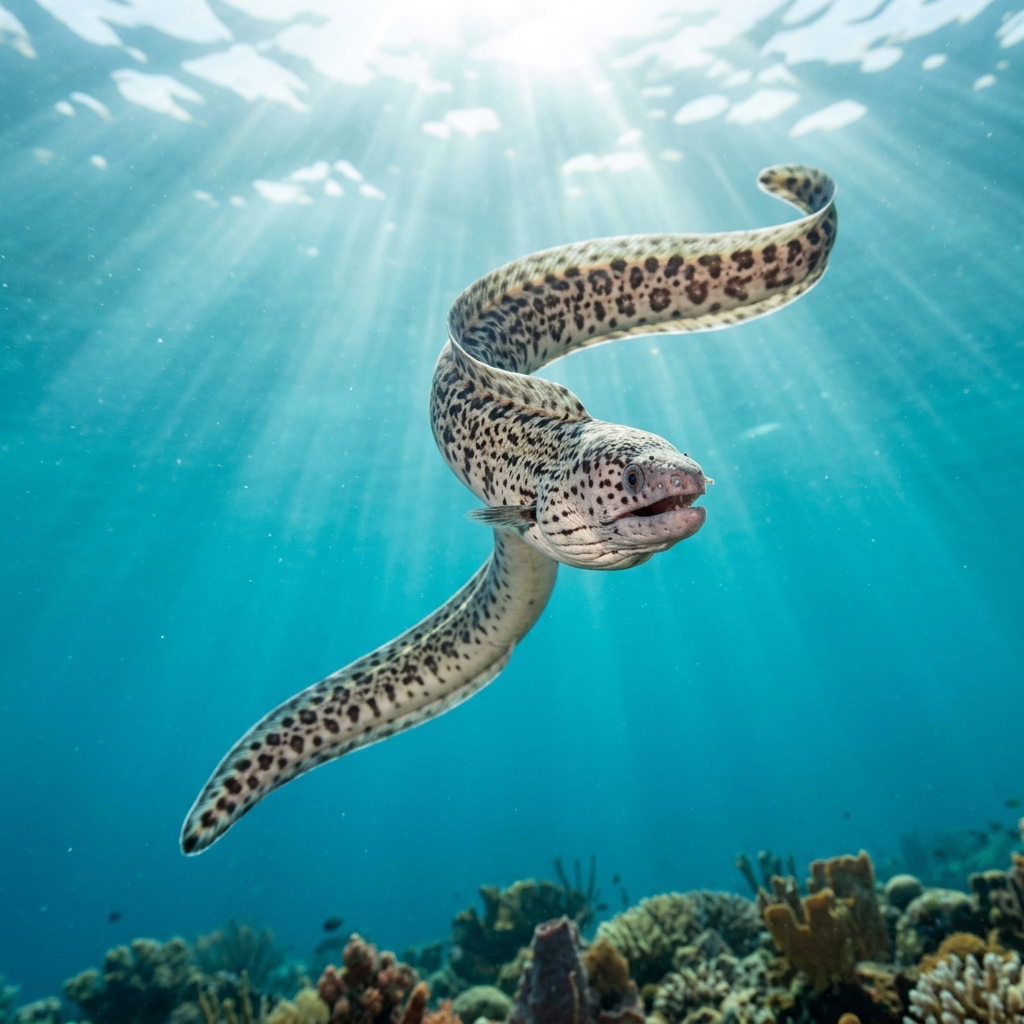
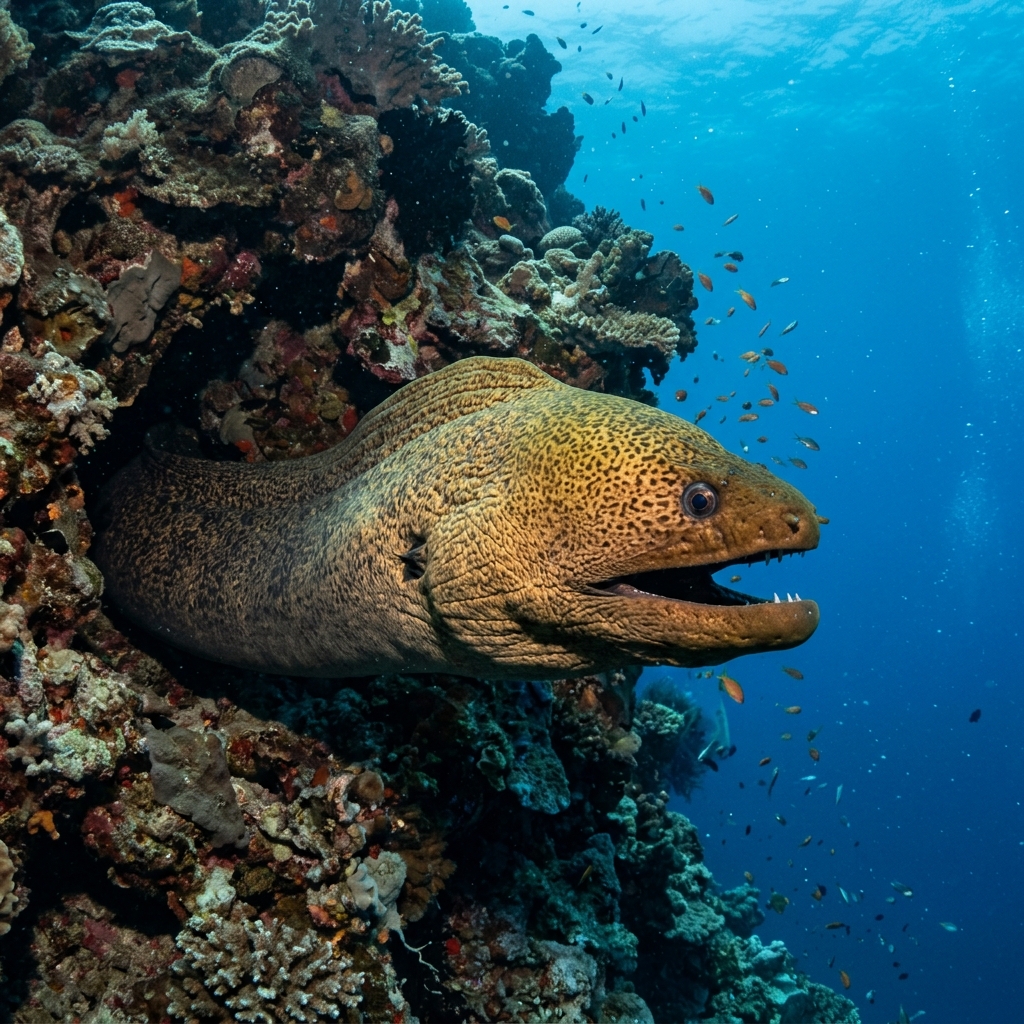
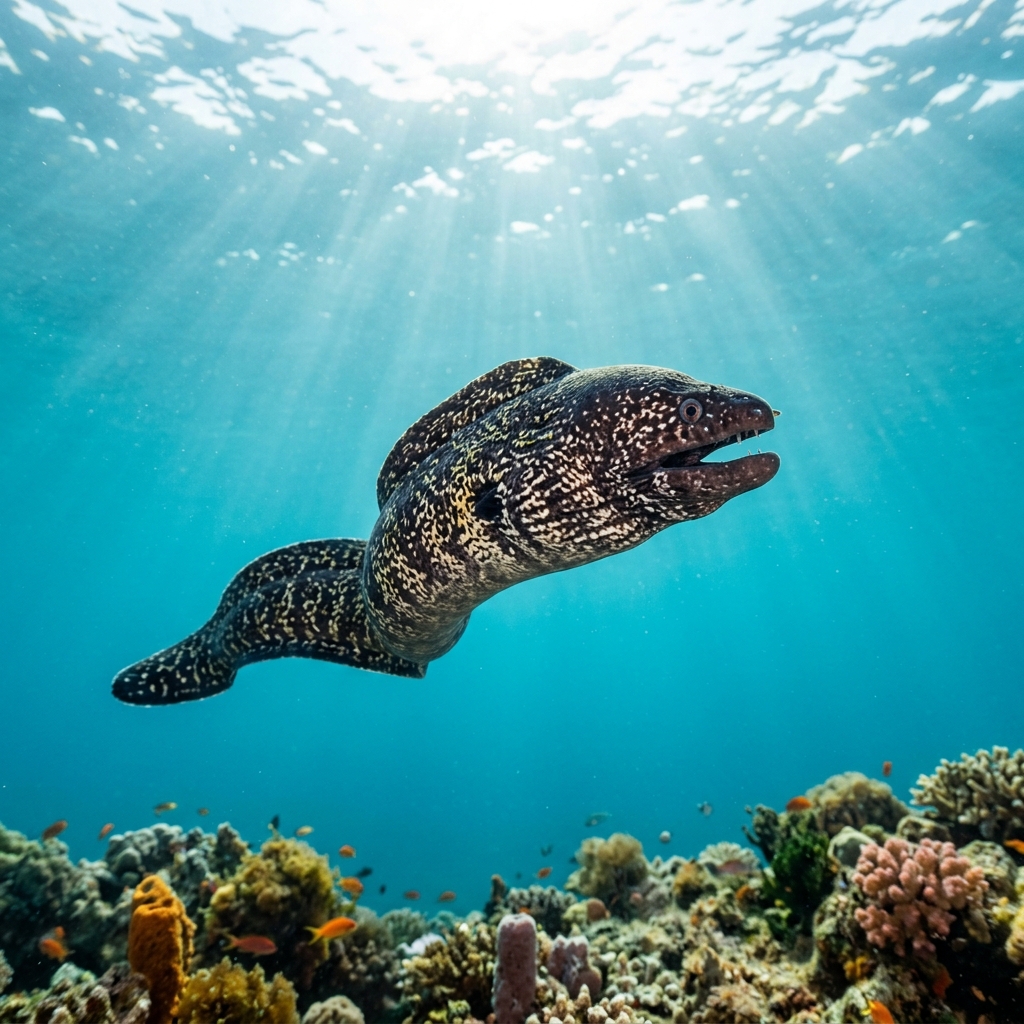
A small eel, topping out around 24 cm, so it is easy to miss among reef rubble and coral rock. Look for a slender body with a dark brown to black background covered in fine pale speckling or mottling, giving a peppered look rather than bold bands or spots. It usually shows just the head and a short length of body poking from a crevice, with a narrow face and small eyes typical of moray eels.
Expect to find it wedged into a small crevice or gap in coral rubble, often with just its head visible, rather than out cruising the reef. It is logged as uncommon to rare at almost every site where divers find it, so a sighting usually means a slow, careful look along broken reef and rocky patches rather than open sand or big walls. Like most small morays it tends to stay put when approached, relying on its hiding spot rather than fleeing.
Its small adult size and speckled camouflage make it one of the more overlooked morays on Indo-Pacific reefs, more often noticed by divers deliberately scanning crevices than by chance.
Sightings show no clear seasonal pattern, so treat this as a year-round find on tropical reefs. It sits comfortably in water between 25.1 and 29.3 C, which matches the warm, stable conditions found across its range for most of the year.
Reef neighbours a diver could mistake it for. Use the identification notes above to tell them apart.
This one is most reliably found in the Philippines, especially across the Visayas, which accounts for the bulk of logged sightings. Smaller but consistent numbers turn up in Bali, Indonesia, along the Zanzibar coast of Tanzania, in Sabah, Malaysia, and occasionally in the Andaman Islands, India. Divers doing reef and rubble dives in these regions have the best odds of spotting it tucked into a hole.
Mapping where Richardson's Moray is logged…
The strongest sightings come from the Visayas region of the Philippines, with additional records from Bali in Indonesia, Zanzibar in Tanzania, Sabah in Malaysia, and the Andaman Islands in India.
There is no strong seasonal pattern in the sightings data, so it is considered a year-round species on the warm reefs it inhabits, which sit between roughly 25 and 29 C.
Look for a small eel, no more than about 24 cm, with a dark body covered in fine pale speckling rather than bold spots or bands. It typically shows only its head from a crevice in coral rubble or reef rock.
It stays small for a moray, typically reaching around 24 cm in length, which is part of why it is easy to overlook on a reef.
No, it is not considered dangerous to divers. It stays hidden in crevices and shows no aggressive behaviour toward divers who leave it alone.
Site and sighting data is aggregated from diver logs, iNaturalist and GBIF. For taxonomy and conservation status:
Garden Eel
2,448 sites