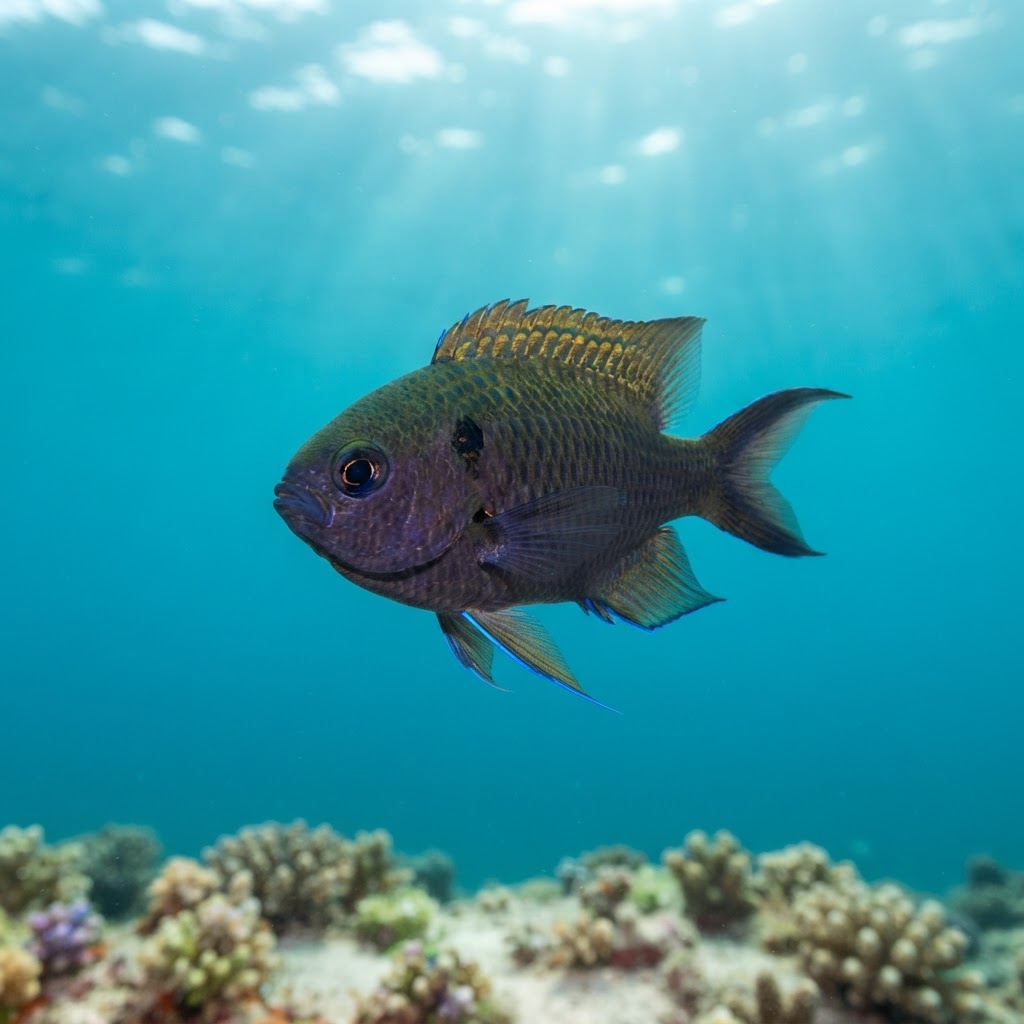
Neopomacentrus cyanomos
Small blue-black damsel with a yellow tail, most reliably logged around Oman's Daymaniyat Islands and Raja Ampat year-round.
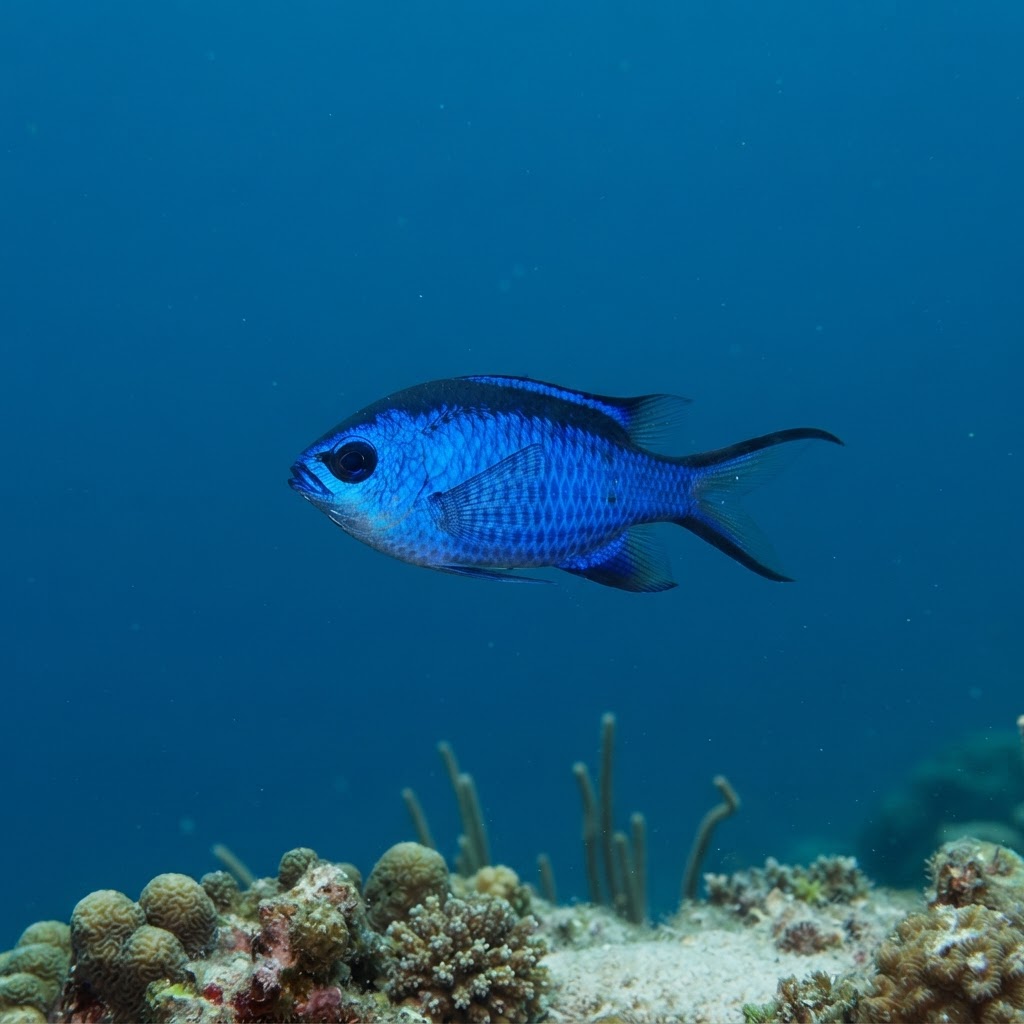
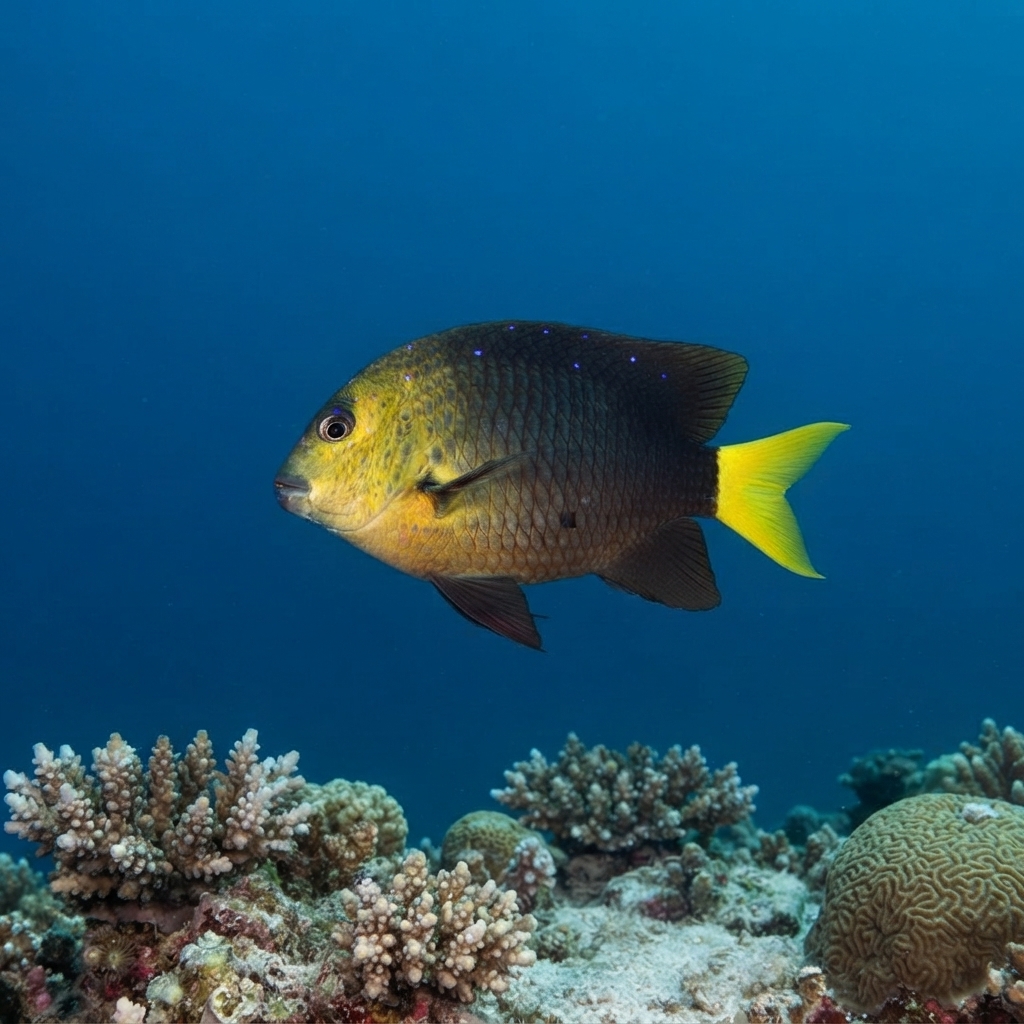
A slim, deep-bodied little fish topping out around 7 cm, easy to overlook in a swirling cloud of similar shapes. Body is dark blue to blackish with a faint metallic sheen, and the tail (caudal fin) is noticeably pale to yellowish, which is the quickest field mark against plainer dark damsels. It usually hangs in loose, nervous schools just off the reef rather than sitting alone.
Look for it hovering in loose aggregations just above coral heads or rubble patches, picking plankton out of the water column rather than grazing the reef itself. It's a jumpy little fish that tends to dart back into cover when divers get close, then re-emerges once you've moved past. Most sightings are casual, in-passing spots rather than the kind of fish you'd plan a dive around.
Like most damselfish, it feeds mainly by snatching drifting plankton out of open water, which is why you'll usually see it schooling in midwater over the reef rather than nosing around the substrate.
No clear seasonal pattern shows up in the sightings, so treat it as a year-round fish on the reefs where it's found. It's logged across a water-temperature range of roughly 25 to 29 C, comfortably within tropical reef conditions most of the year.
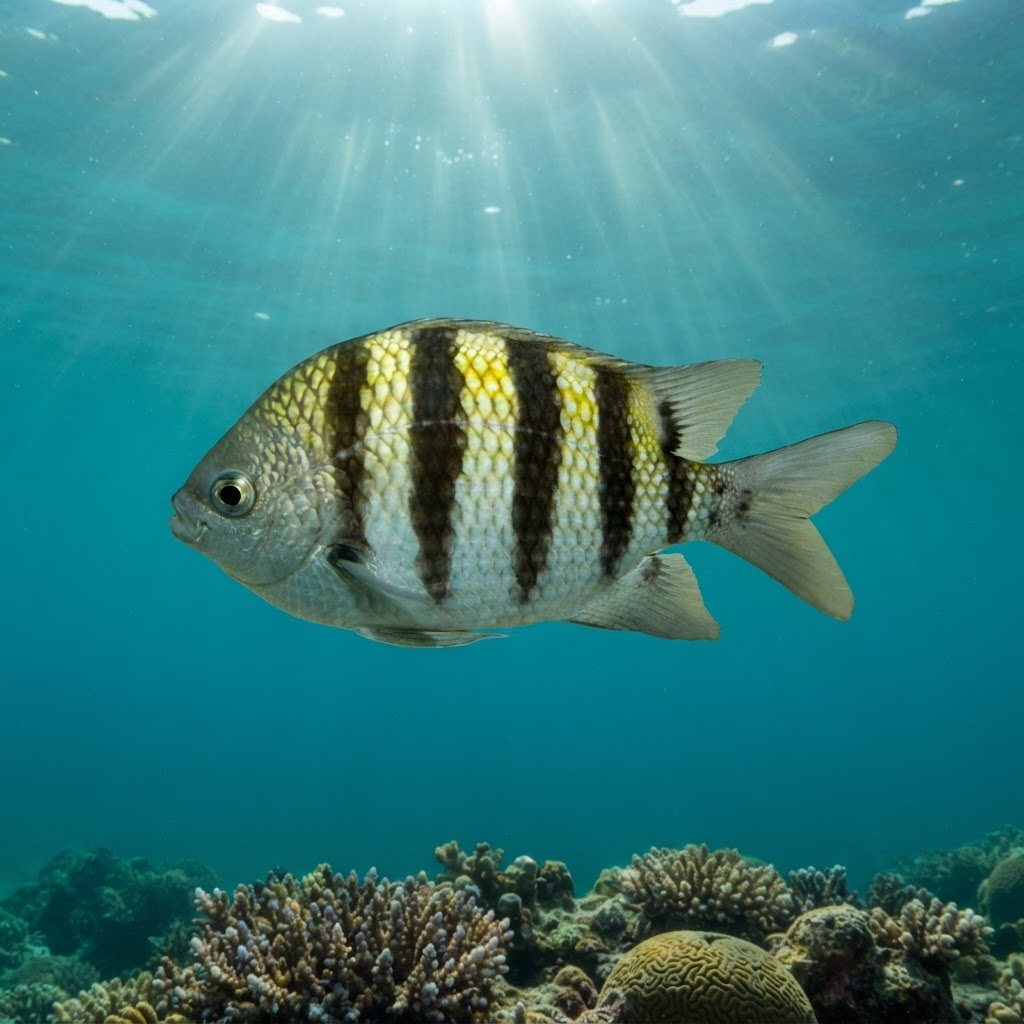
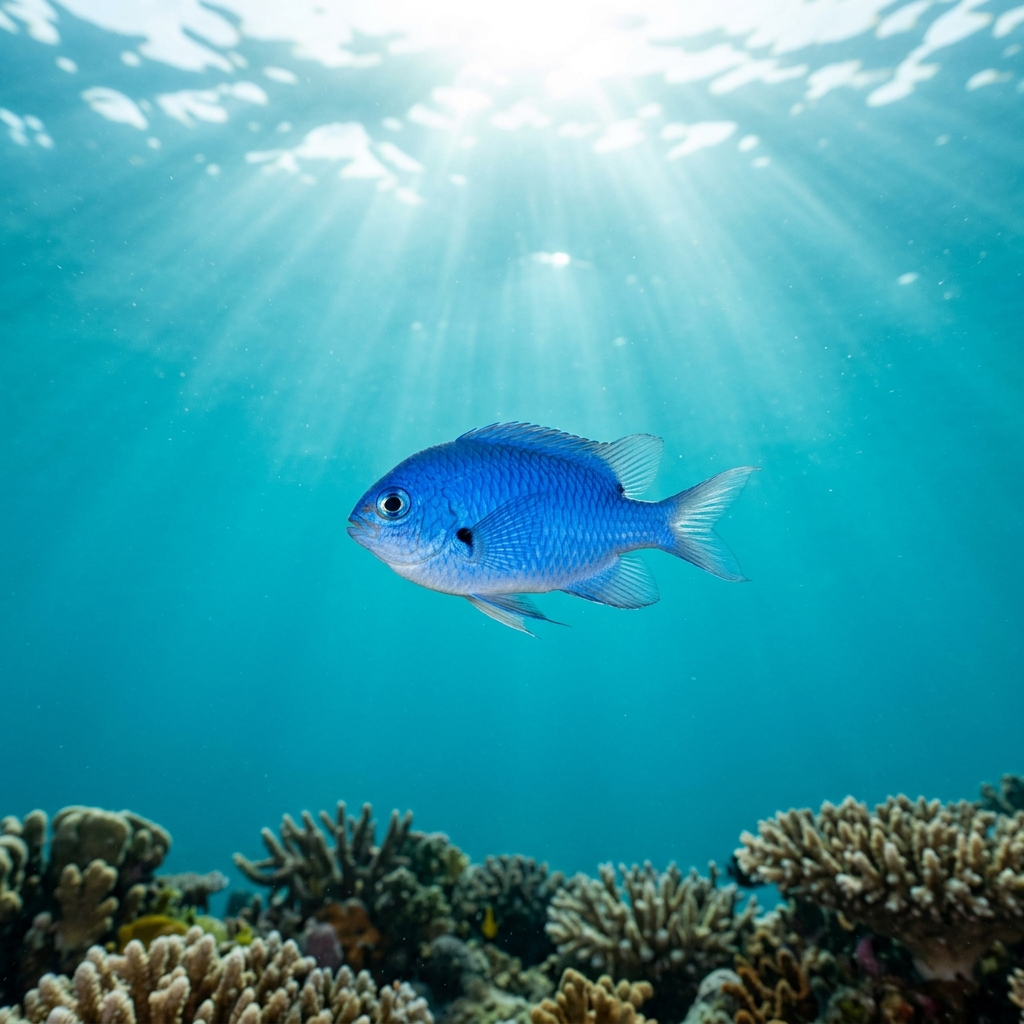
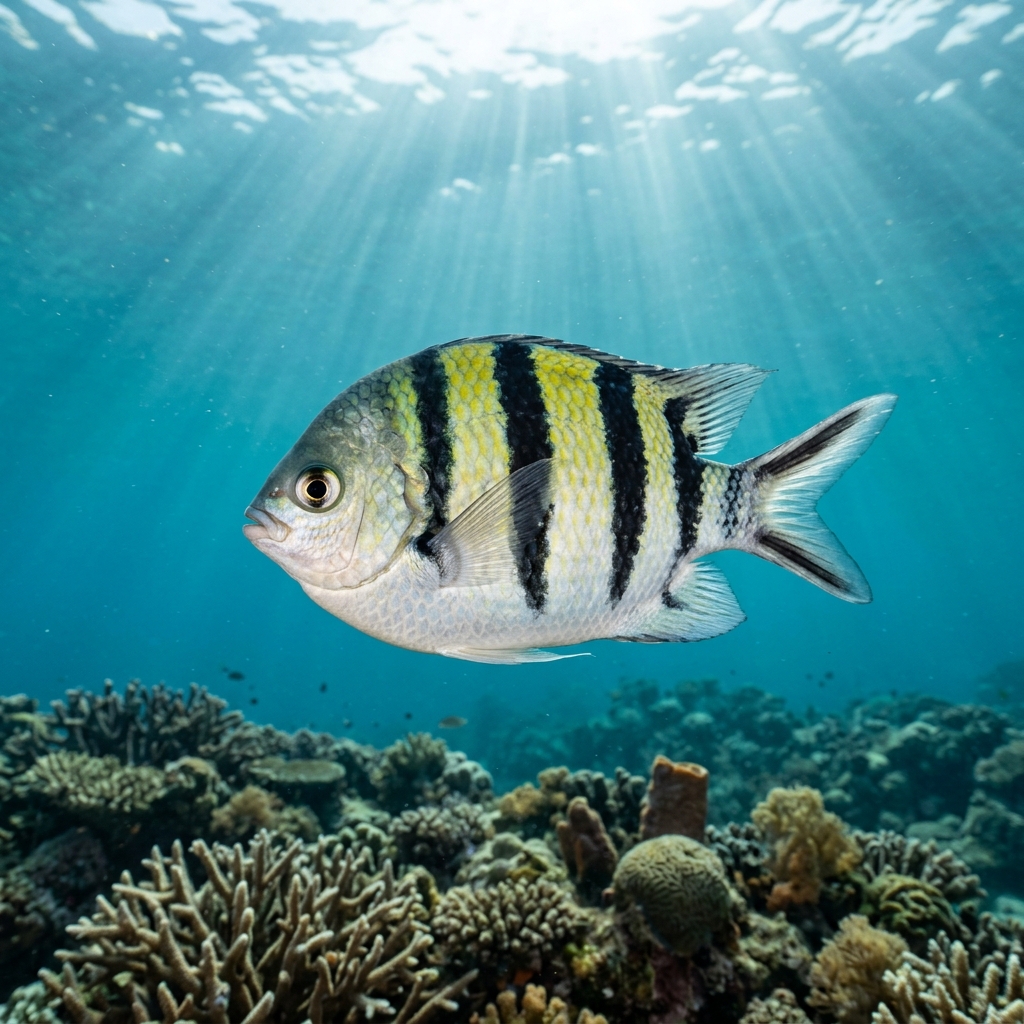
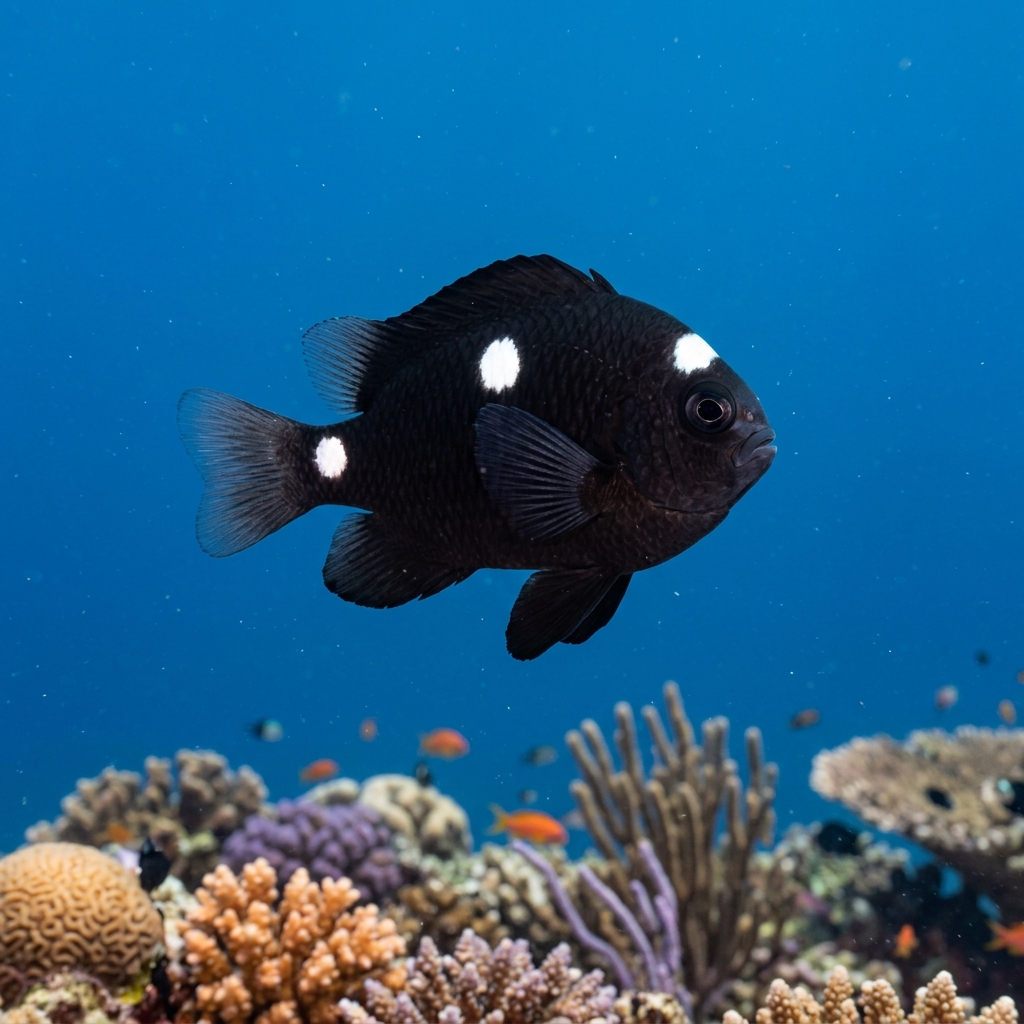
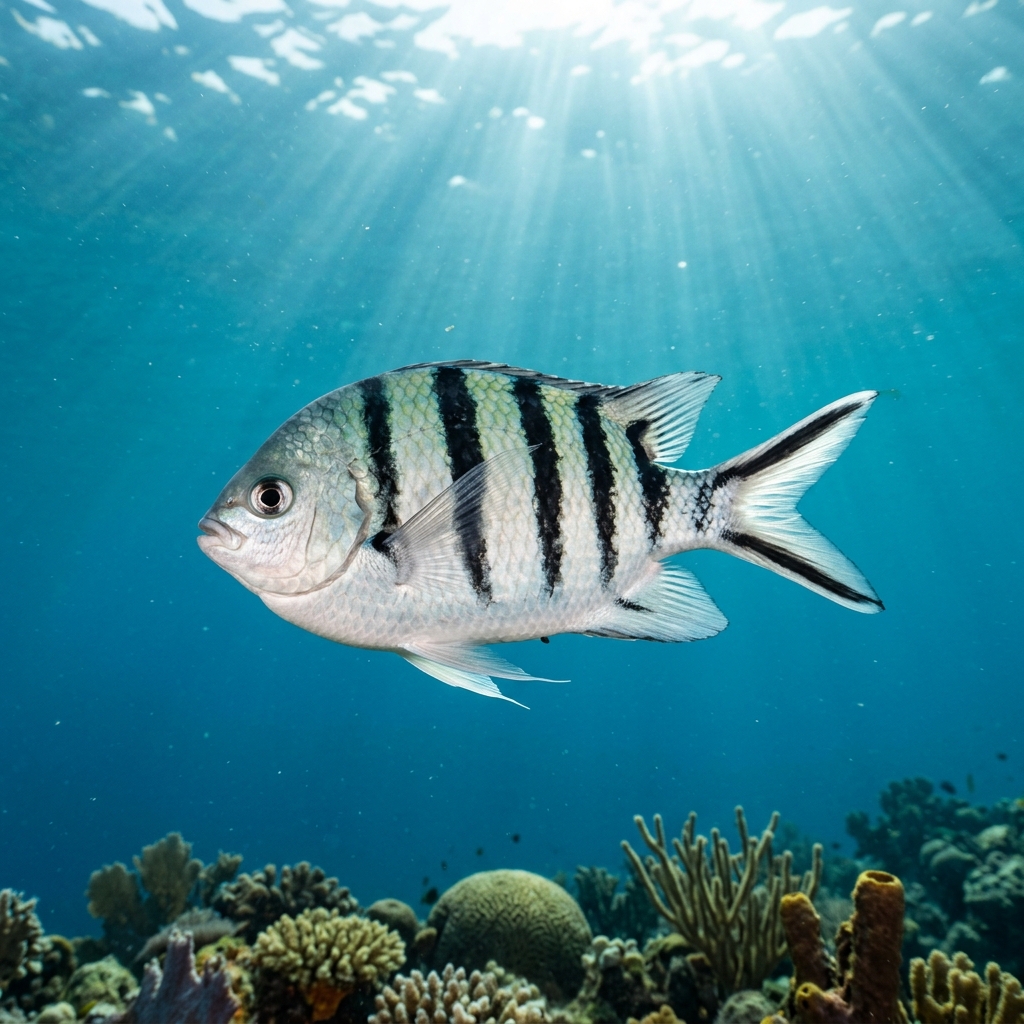
Reef neighbours a diver could mistake it for. Use the identification notes above to tell them apart.
Most reliably found around Oman's Daymaniyat Islands, where it turns up at more logged sites than anywhere else in the data, and it's also a solid sighting in Raja Ampat, Indonesia. Divers in Goa and Karnataka in India, Unawatuna in Sri Lanka, and Sai Kung in Hong Kong log it too, usually as an uncommon but expected extra on the reef rather than a headline sighting.
Mapping where Regal Damselfish is logged…
The strongest sightings come from Oman's Daymaniyat Islands, with further reliable records from Raja Ampat in Indonesia, Goa in India, and Unawatuna in Sri Lanka.
There's no strong seasonal signal in the data, so it's considered a year-round sighting on the reefs where it occurs, consistent with the warm 25 to 29 C water it favours.
Look for a small, deep-bodied fish under 10 cm with a dark blue-black body and a pale to yellowish tail, often hovering in loose schools just off the reef.
They're small, typically reaching around 7 cm, so they're often spotted in groups rather than as a single standout fish.
No, they pose no danger to divers and simply dart for cover if you approach too closely.
Site and sighting data is aggregated from diver logs, iNaturalist and GBIF. For taxonomy and conservation status:
Dascyllus
3,697 sites