Dascyllus spp.
Small black-and-white damselfish clustered over coral in the Maldives, Red Sea and Indonesia, common year-round in 24 to 29C water.
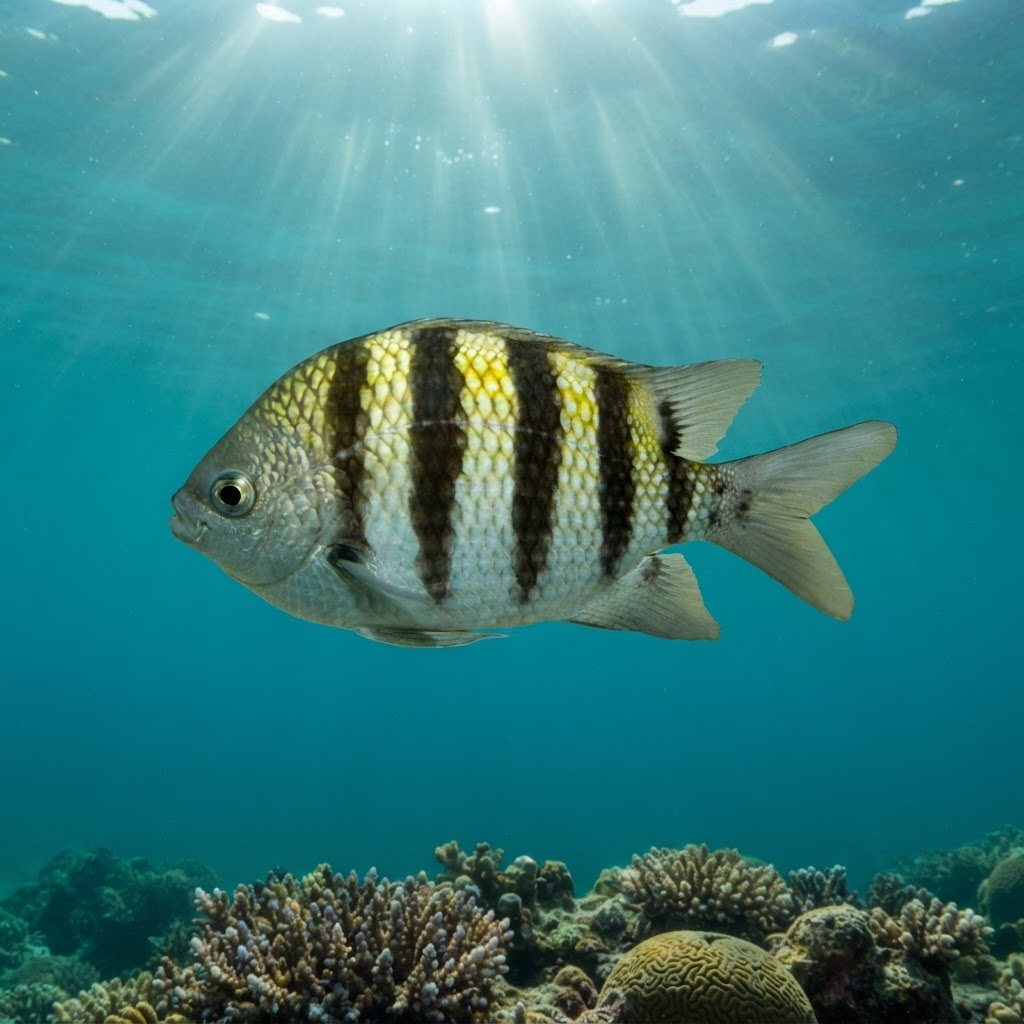
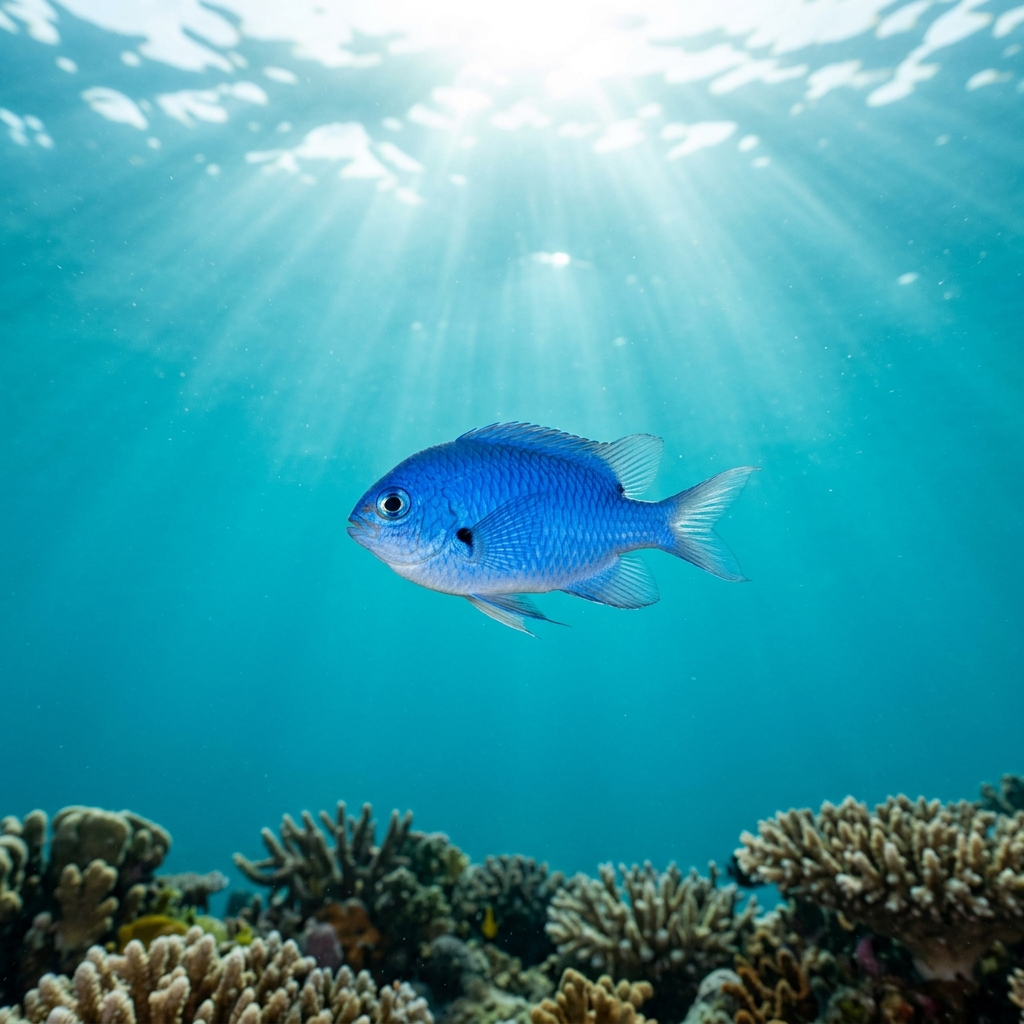
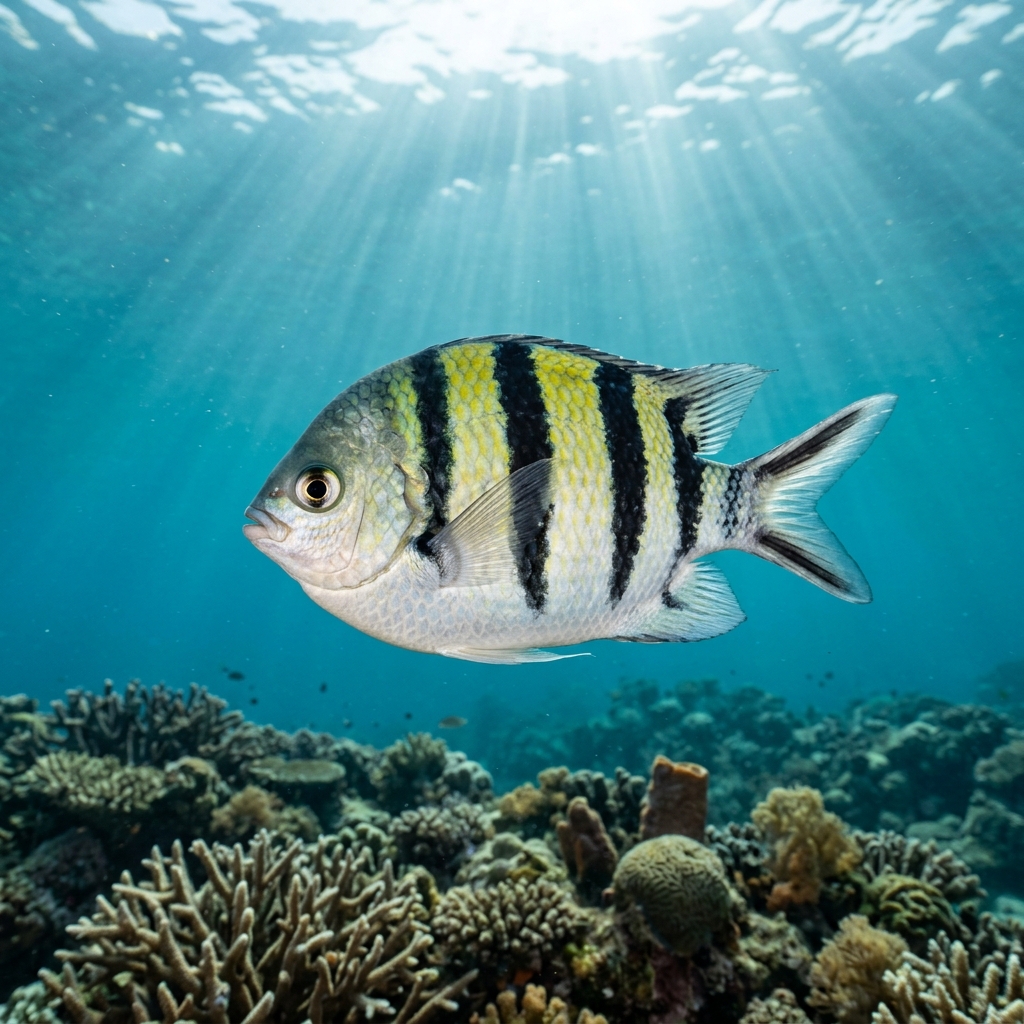
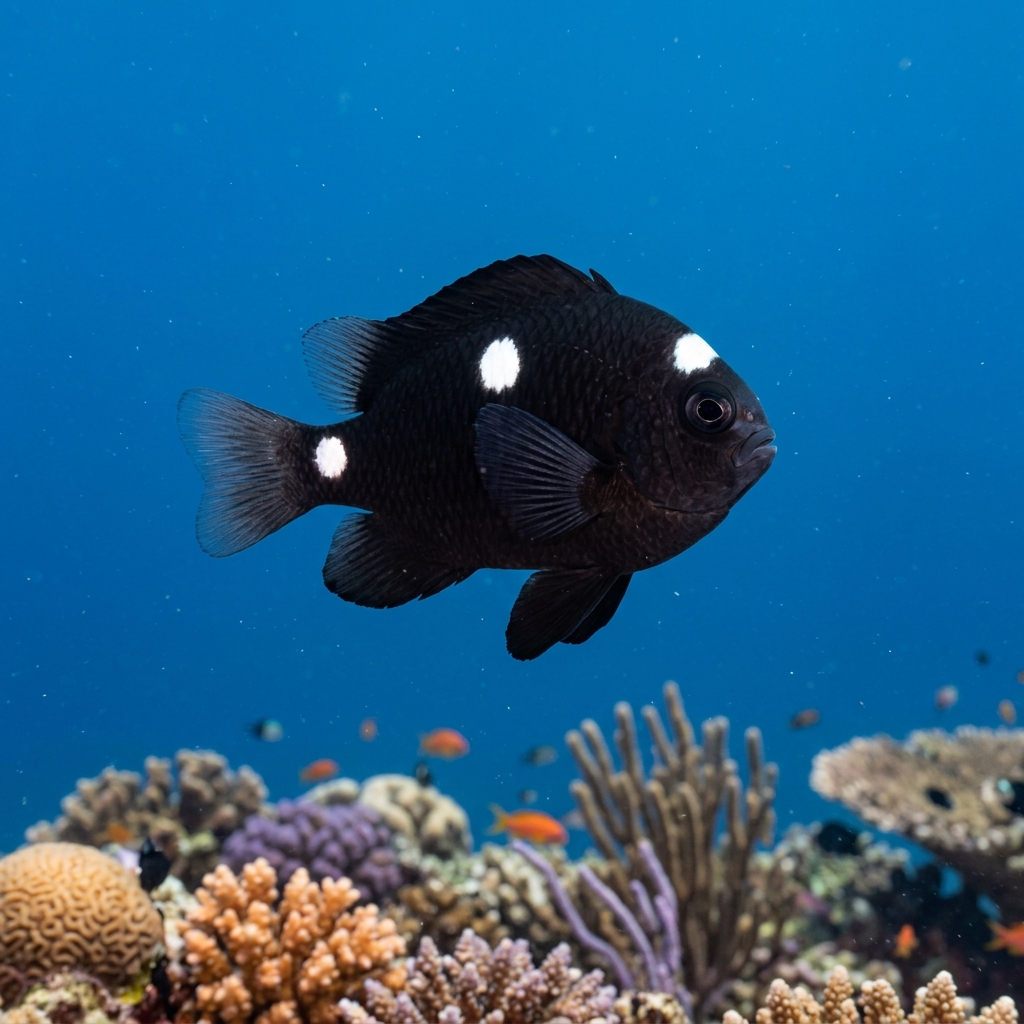
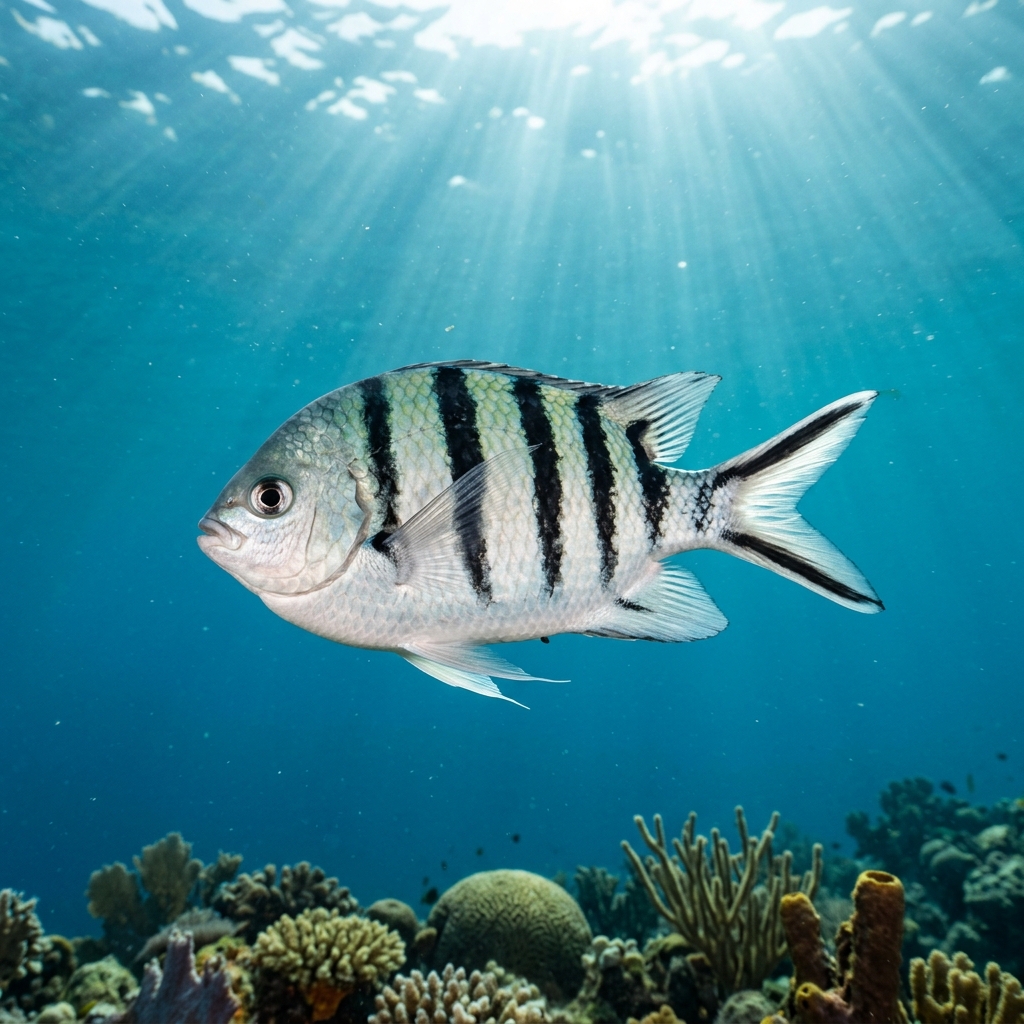
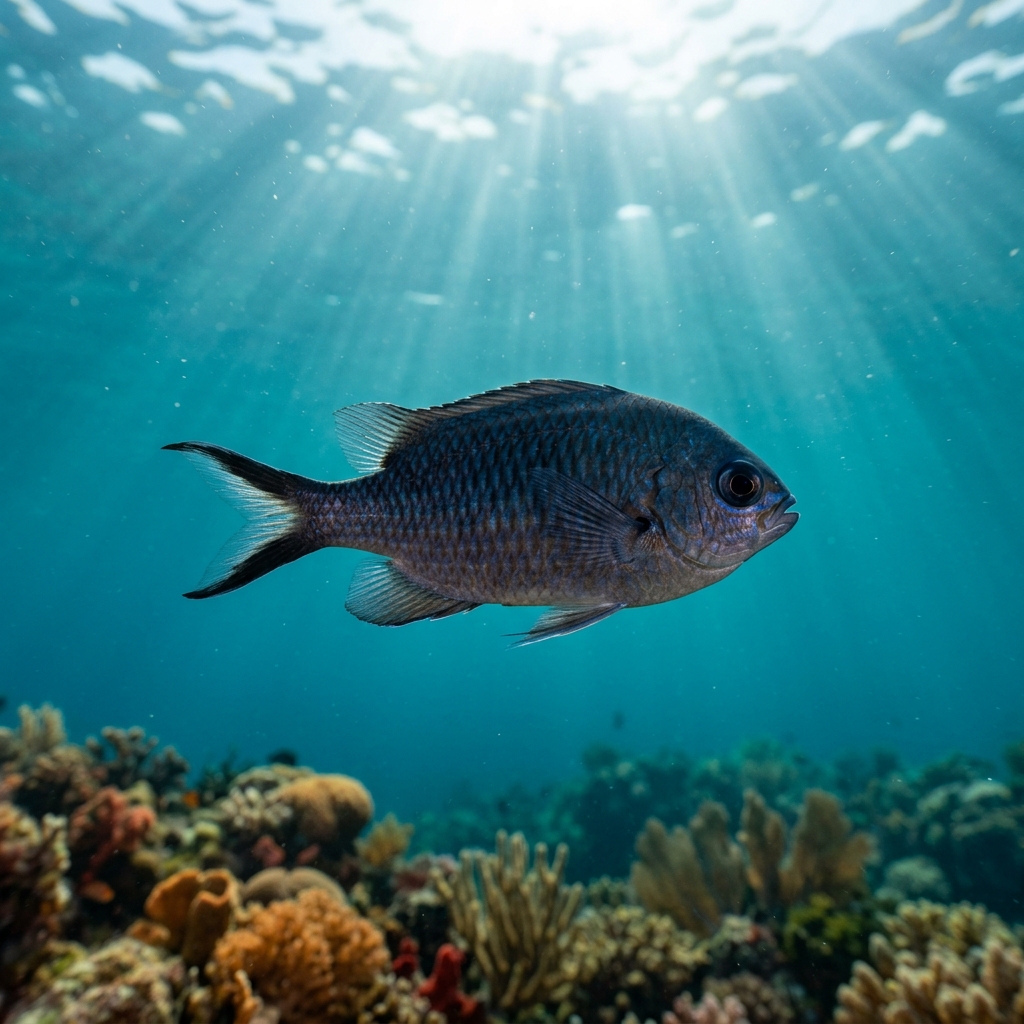
Small, deep-bodied damselfish, usually only a few centimetres long, often seen hovering in a loose cloud just above a single coral head. Most species show a boldly patterned black-and-white or black-and-grey body, sometimes with a pale saddle or a white bar across the back half, giving them a checkerboard look against the reef. They dart back into the coral branches the instant a shadow passes overhead, then reappear seconds later.
Look for tight little colonies hovering a body-length above a single coral head or bommie, often several individuals sharing the same patch of branching coral as a base. They feed on drifting plankton in the water column just above the reef, darting out to snatch food then retreating into the coral the moment a diver gets close or a shadow moves overhead. Most sightings are during the day on shallow to mid-depth reef, where the fish stay loosely associated with one coral colony rather than roaming.
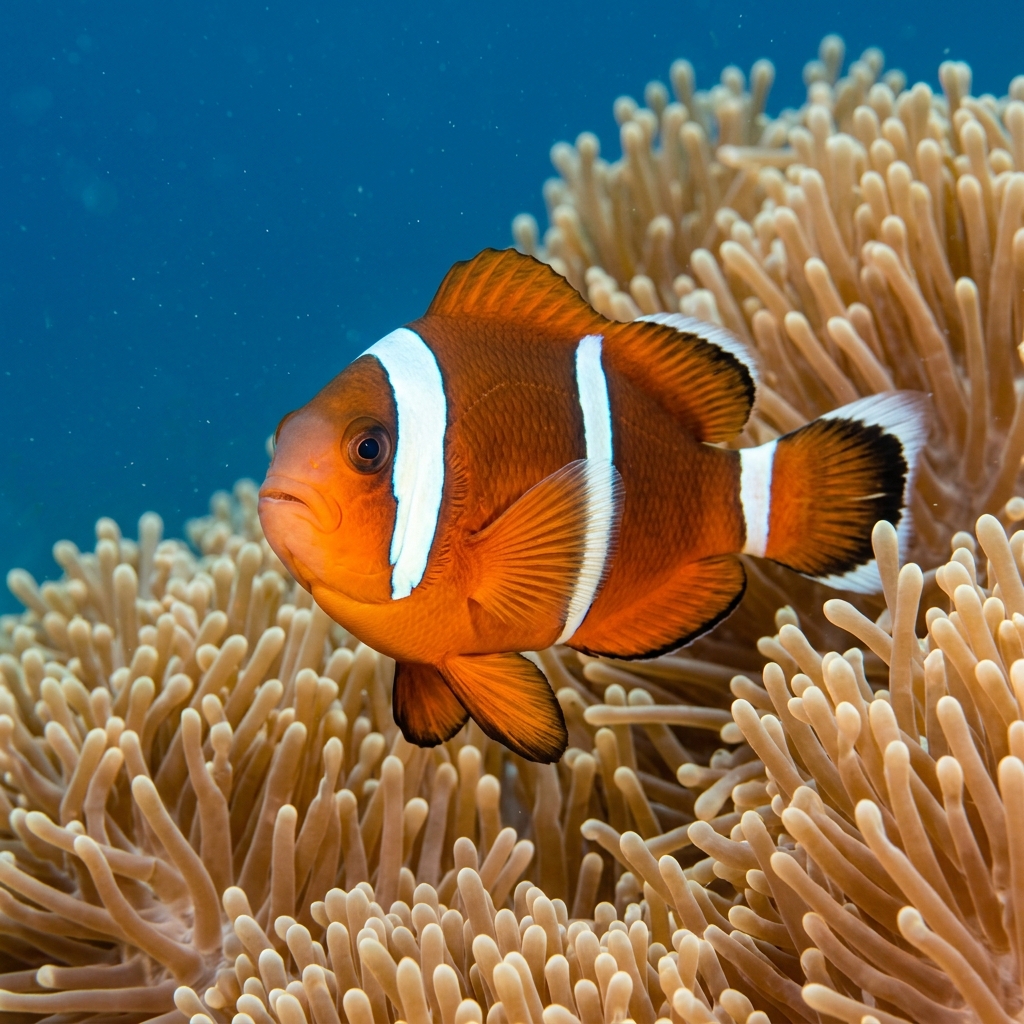
Several Dascyllus species live in a mutual arrangement with branching corals, using the coral skeleton as an instant refuge, and some are also known to shelter among anemone tentacles alongside true anemonefish without being stung.
No real seasonal pattern shows up in the data, and with a comfortable range of 23.7 to 29.3C, these fish sit on the reef year-round rather than turning up for a season.
Reef neighbours a diver could mistake it for. Use the identification notes above to tell them apart.
Most commonly logged in the Maldives, particularly the Central and Northern Atolls, and across the Egyptian Red Sea around Marsa Alam and South Sinai. Also a reliable sighting in Indonesia (especially Sulawesi), the Philippines, French Polynesia's Society Islands, Australia's Queensland coast, Thailand and Sabah in Malaysia.
Mapping where Dascyllus is logged…
They turn up on reef dives across the Maldives, the Egyptian Red Sea, Indonesia, the Philippines, French Polynesia and Australia's Queensland coast. The Maldives' Central and Northern Atolls and Egypt's Marsa Alam and South Sinai regions log the most sightings.
Any time of year works. There is no detected season in the sighting data, and the water temperatures they are found in, roughly 24 to 29C, are typical of tropical reefs all year round.
Look for small, deep-bodied damselfish in bold black-and-white or black-and-grey patterns, hovering in loose groups just above a single coral head. They retreat into the coral branches the instant you approach and pop back out shortly after.
They stay small, typically only a few centimetres long as adults, which is part of why they cluster in groups over one coral head rather than patrolling open reef.
Not typically. Most Dascyllus species associate with branching coral heads rather than anemones, though a few are known to shelter among anemone tentacles without being harmed, similar to true anemonefish.
No. They are harmless to divers and will simply dart into the coral if you get too close.
Site and sighting data is aggregated from diver logs, iNaturalist and GBIF. For taxonomy and conservation status:
Yellowtail Clownfish
3,526 sites