Dascyllus trimaculatus
Spot the Three-spot Dascyllus on reefs from the Philippines to the Red Sea. Year-round presence, bold territorial behaviour, and a jet-black juvenile that surprises divers.
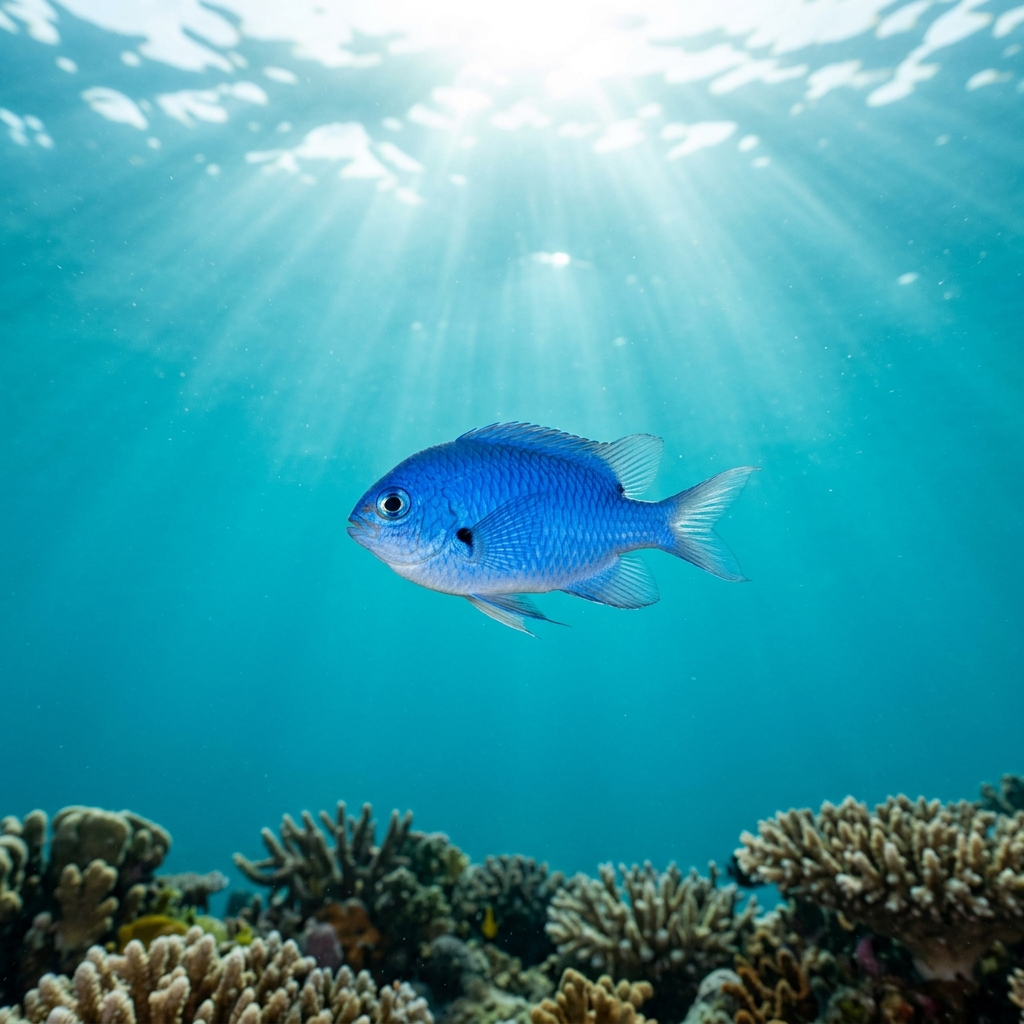
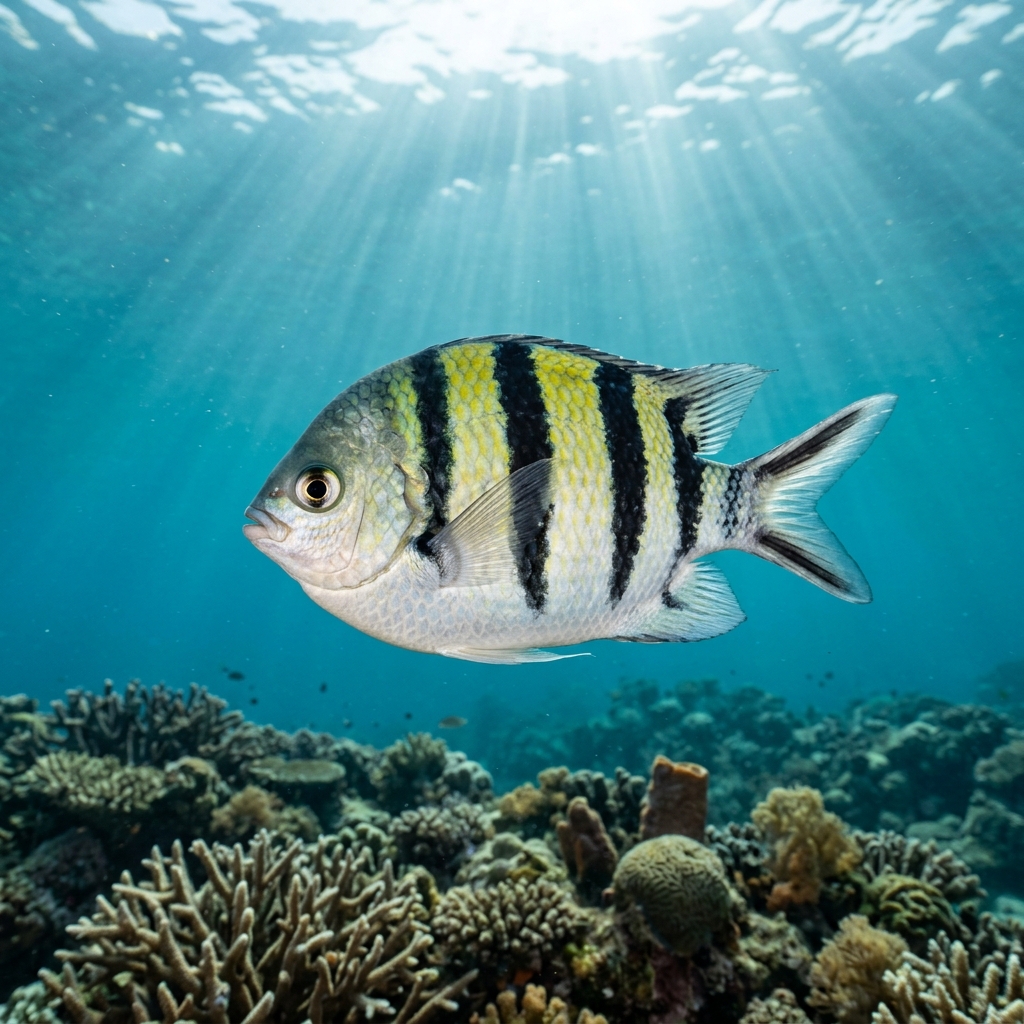
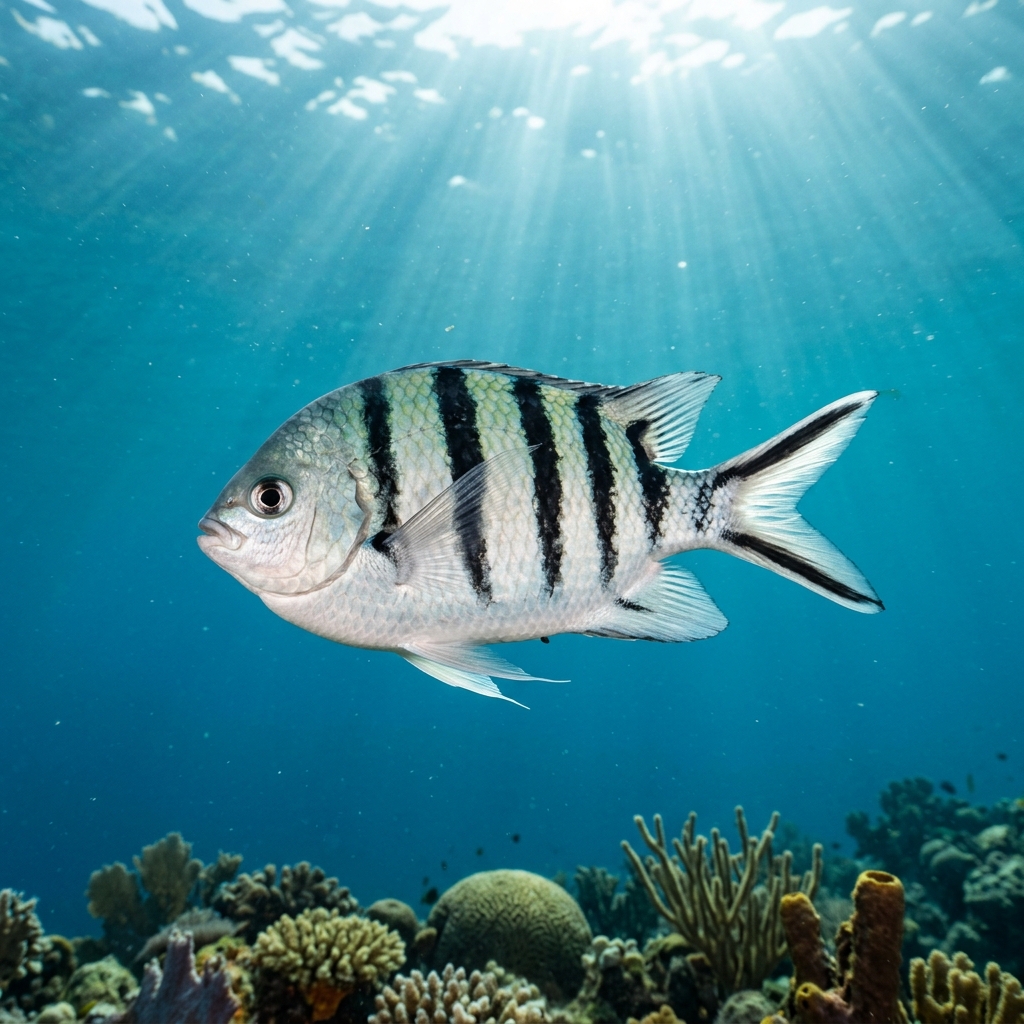
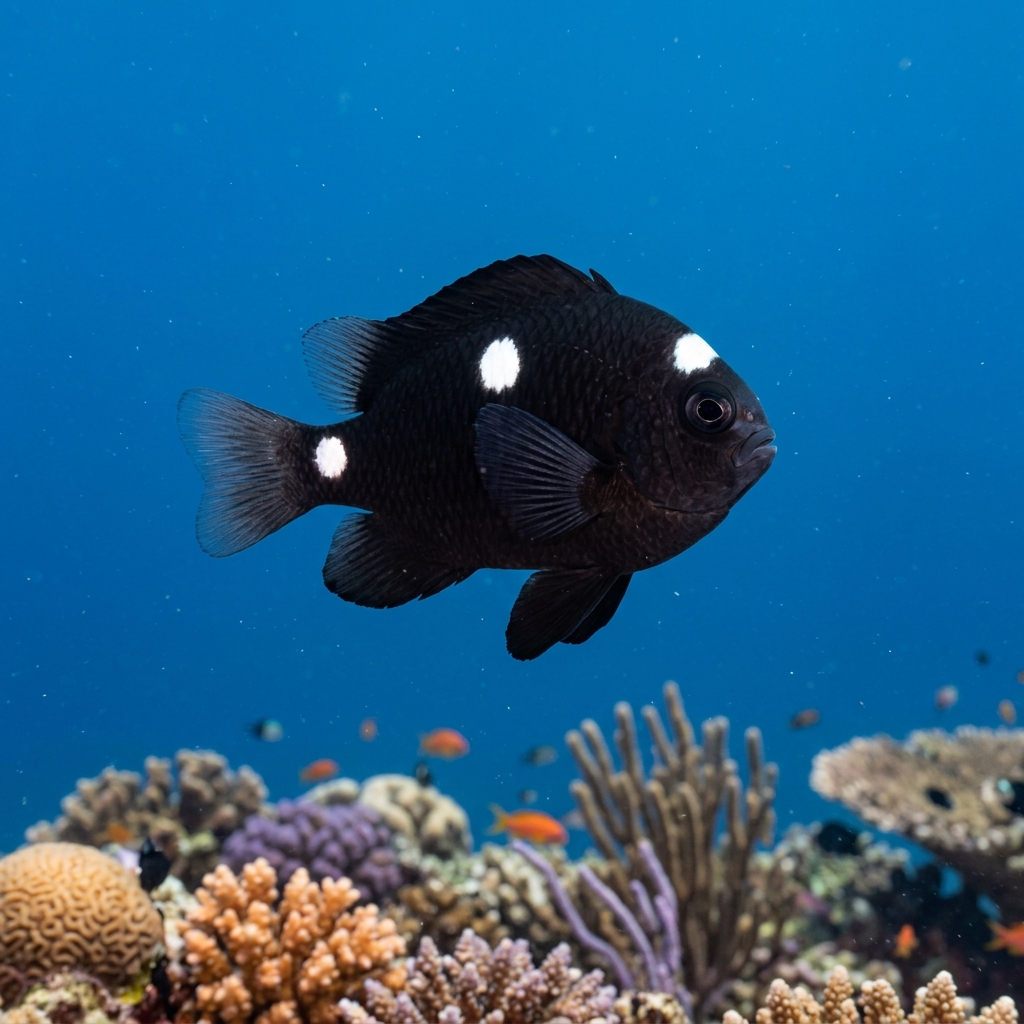
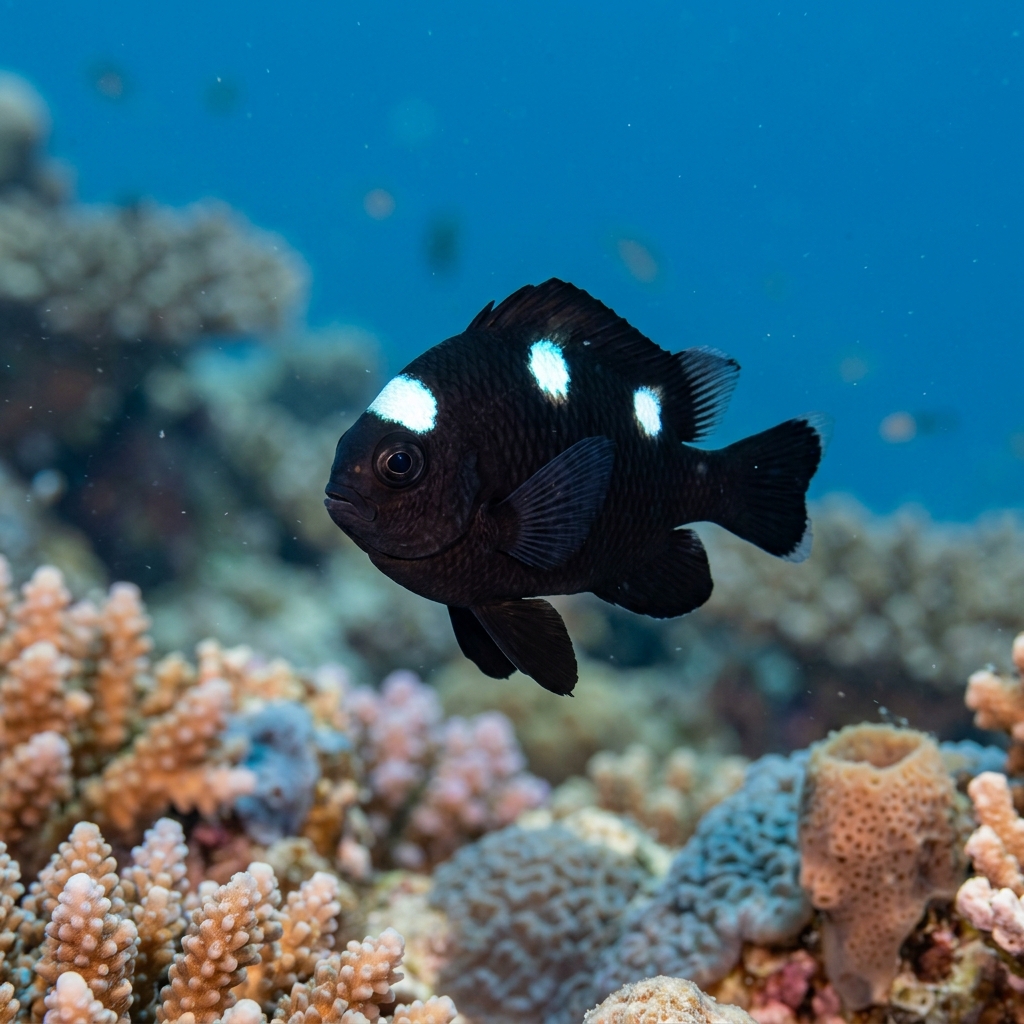
Adults are pale grey to whitish with a single white spot on each upper flank and a faint white forehead spot, making that three-spot pattern the instant field mark. At around 9 cm they are compact and oval-bodied, typical damselfish shape, and almost always seen hovering just above their host coral head rather than roaming open water. Juveniles look strikingly different: jet black with three vivid white or iridescent blue spots that pop against the dark body.
You will almost always find them hovering just above a coral head or anemone, darting out aggressively to chase off neighbouring fish before snapping straight back to cover. They are bold around divers rather than shy, but their attention is really on defending territory from other fish, so a calm approach lets you watch their social sparring up close. Activity is diurnal (daytime), and they feed on algae and small invertebrates without straying far from their chosen shelter.
Juveniles have a well-documented association with large sea anemones, living among the tentacles much like clownfish do, which is why black juveniles hovering in an anemone are sometimes misidentified as juvenile clownfish.
Present year-round in both hemispheres with no concentrated season, which tracks with its temperature niche of 24 to 29 °C across permanently warm tropical reef systems.
Most commonly logged across the Philippines and Indonesia, with the Visayas and Bali standing out as the top regions by sheer number of recorded sites. Strong populations are also well documented across the Maldives, Thailand, Malaysia, the Egyptian Red Sea around Sharm el Sheikh, and Queensland, Australia, reflecting a broad Indo-Pacific distribution.
Mapping where Three-spot Dascyllus is logged…
They are logged across a wide stretch of the Indo-Pacific and Red Sea. The Philippines (particularly the Visayas), Bali in Indonesia, the Maldives, Thailand, and the Egyptian Red Sea around Sharm el Sheikh are among the strongest regions. Queensland in Australia and Okinawa in Japan also have solid records.
Any time of year. Sighting data from both hemispheres shows no concentrated season. The species sits comfortably in water between 24 and 29 °C, which describes most tropical reef destinations year-round.
Look for a small oval damselfish, around 9 cm, that is pale grey to whitish with a white spot on each upper flank and a fainter one near the forehead. The three-spot pattern is the key mark. Juveniles are jet black with three bright white or blue spots, making them look like a completely different fish.
Adults typically reach about 9 cm, so roughly the length of your index finger. Their compact oval shape makes them look even smaller when hovering close to coral.
Yes. Juveniles regularly shelter among the tentacles of large sea anemones, a behaviour more commonly associated with clownfish. A jet-black juvenile with blue-white spots hovering in an anemone is easy to mistake for a juvenile clownfish at first glance.
Site and sighting data is aggregated from diver logs, iNaturalist and GBIF. For taxonomy and conservation status:
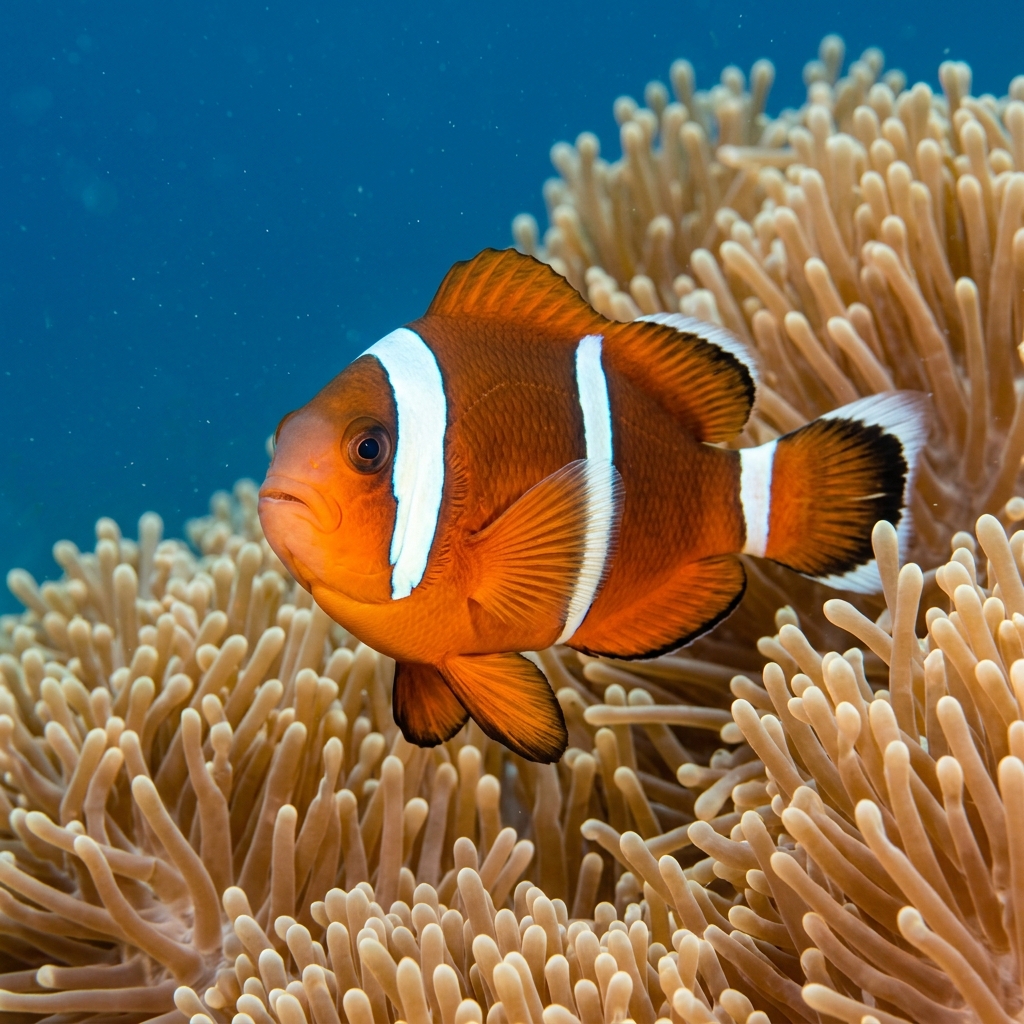
Yellowtail Clownfish
3,526 sites