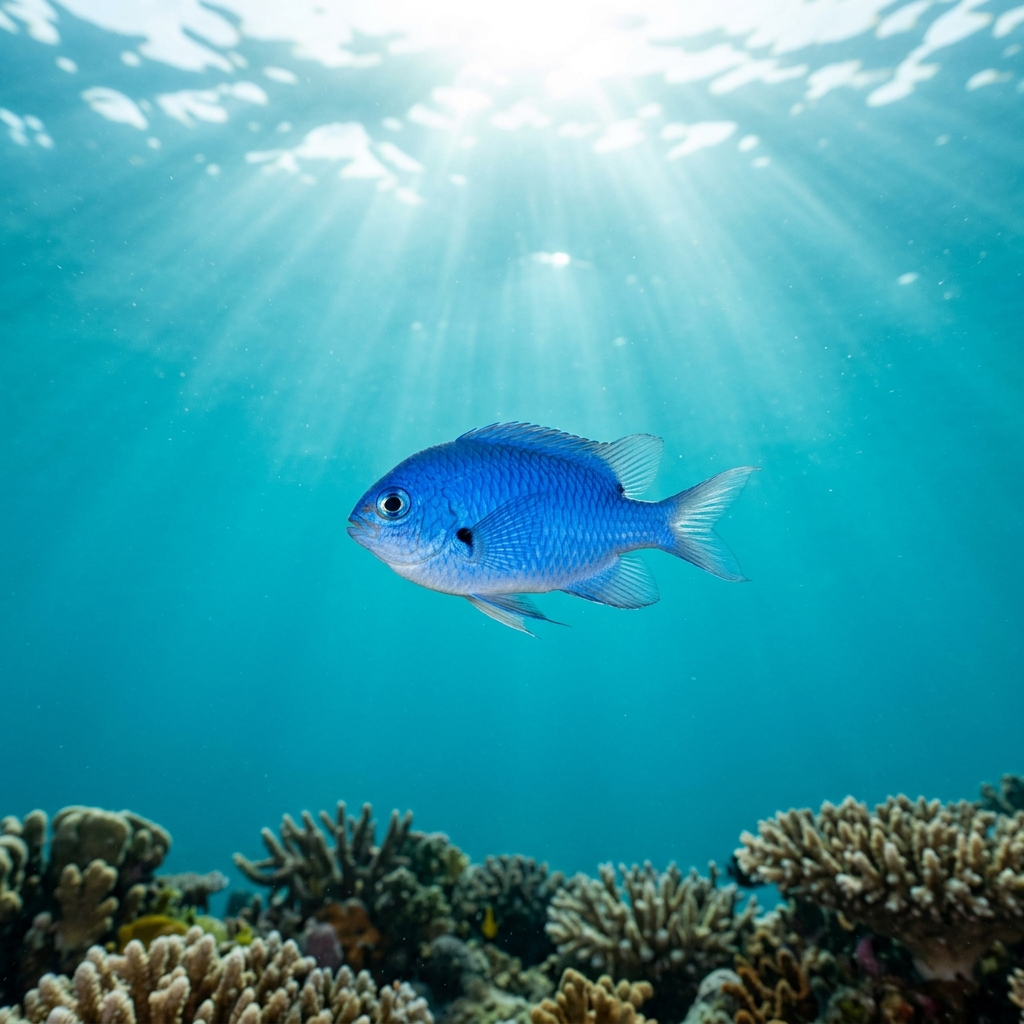
Chromis spp.
Chromis school over reefs from the Maldives to the Great Barrier Reef. Find where to see them, how to tell them apart, and when to dive year-round.
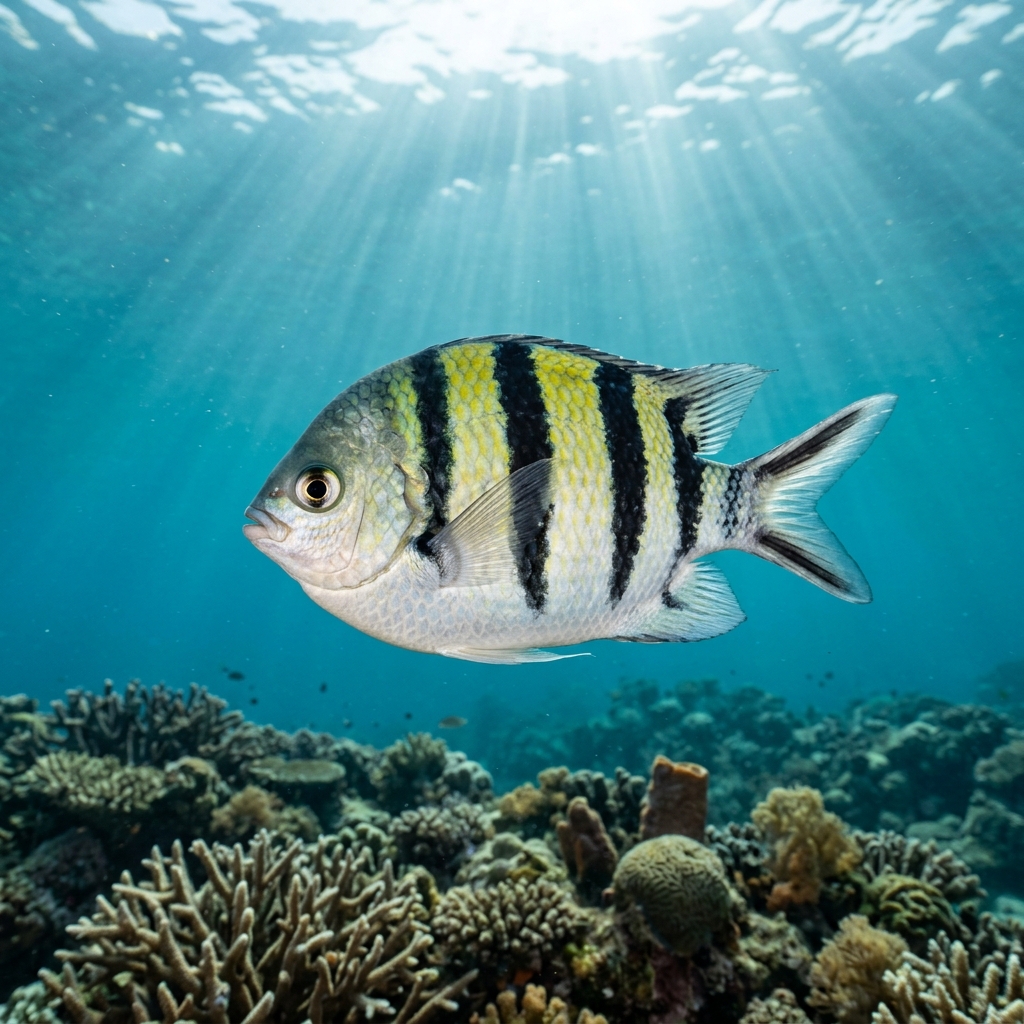
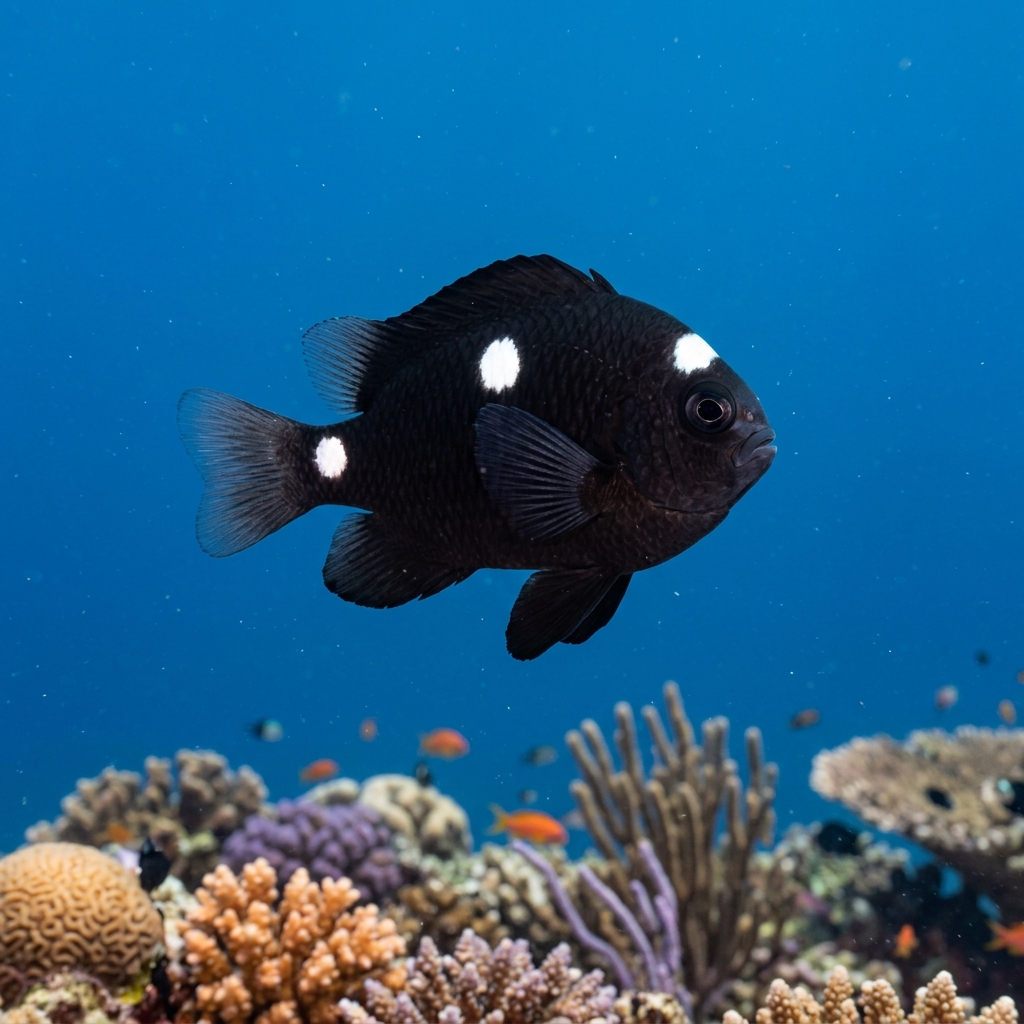
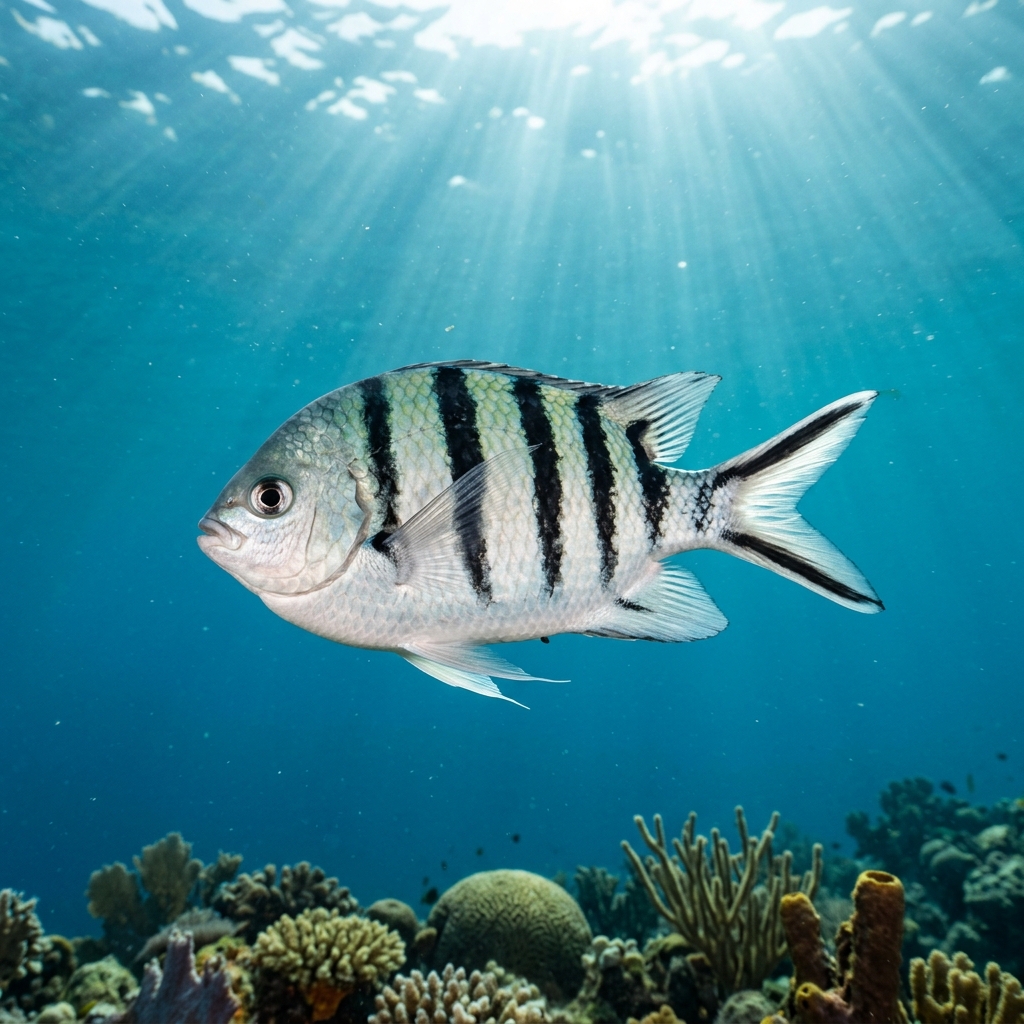
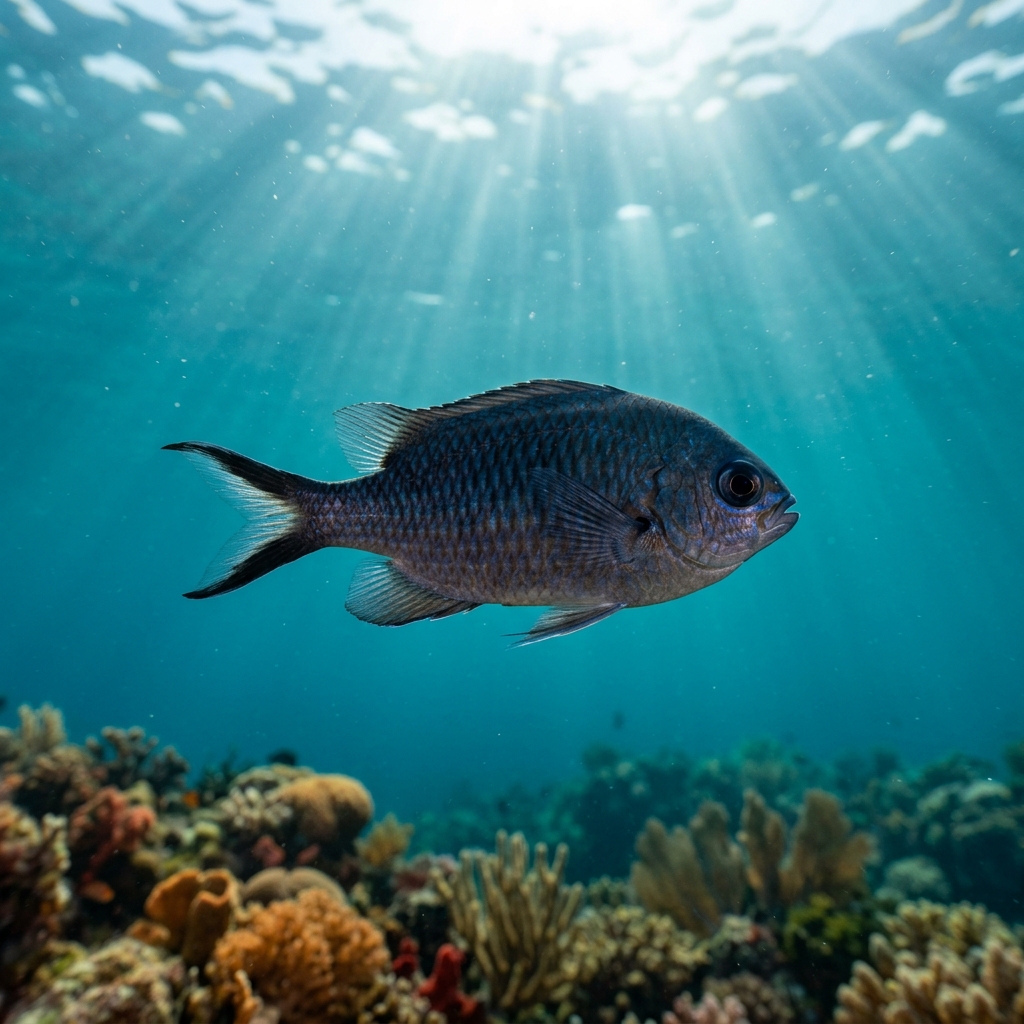
Chromis are small, slender damselfish with distinctively forked tails that set them apart from the chunkier, rounder-tailed damsels sharing the same reef. Depending on species, they range from pale silver-blue and yellow-green to dark brown or near-black, often with a subtle iridescent sheen when light catches them. They typically hang in loose schools or tight shoals just above coral heads or rocky outcrops, which is one of the most reliable visual cues underwater. Most species sit in the 5 to 15 cm range, making them noticeably smaller than the other Pomacentridae they swim alongside.
Most encounters involve a school hovering in mid-water just above the reef crest or among branching corals, picking zooplankton out of the current. They are generally unbothered by divers, holding their position or drifting slightly away before reforming the school nearby. At night or when threatened, many species retreat into coral branches, so early morning dives before they spread out can offer the densest aggregations.
Male Chromis are active nest-guarders: during breeding they defend a small patch of bare substrate, fan the eggs with their fins to keep them oxygenated, and aggressively chase away intruders several times their own size, including curious divers who stray too close.
Chromis are present year-round in both hemispheres with no concentrated season, which reflects their tolerance of water temperatures ranging from around 14 °C in temperate zones up to 29 °C on tropical reefs. Pick your destination by conditions rather than chasing a peak month.
Chromis are among the most widely distributed reef fish in the world, logged across tropical and warm-temperate seas from Australia, Indonesia and the Philippines in the Indo-Pacific through to Egypt's Red Sea coast, the Maldives, and the United States including both Florida and the Pacific seaboard. In terms of sheer site coverage, Australia, Indonesia and the Philippines lead the tally, with strong showings in Queensland, Bali and the Visayas. The Red Sea around Sharm el Sheikh and the Male and Ari Atolls in the Maldives are also reliable hotspots.
Mapping where Chromis is logged…
Chromis are logged at dive sites across a huge sweep of the globe. The strongest coverage is in the Indo-Pacific, particularly around Australia (especially Queensland), Indonesia (Bali and beyond), the Philippines (Visayas), and the Maldives. Egypt's Red Sea coast around Sharm el Sheikh and sites along Florida and the US Pacific Coast are also well-represented. Essentially, if you are diving a coral or rocky reef in warm to temperate water, Chromis are likely present.
There is no single peak season. Chromis are recorded year-round in both the Northern and Southern Hemisphere, and their wide temperature tolerance (observed from about 14 °C to 29 °C) means they occupy everything from tropical reef crests to cooler temperate rocky walls. Choose your dive destination based on visibility and weather rather than trying to time Chromis specifically.
Look for small, slender fish with a clearly forked tail hanging in schools above the reef, often facing into the current. Colour varies by species from pale silver-blue and yellow-green to dark charcoal-brown, but the schooling mid-water behaviour and forked tail are the most reliable field marks. The forked tail distinguishes them from most other damsels, which tend to have rounder or only slightly notched tails.
Most Chromis species encountered by divers are small, typically in the 5 to 15 cm range. Their slender build makes them look even more delicate in the water, and this small size is part of what lets them exploit the planktonic food drifting just above the reef.
Despite their modest size, male Chromis are surprisingly bold nest-guarders. A breeding male will clear a small patch of reef, attract a female to spawn there, then fan and defend the eggs until they hatch, actively chasing off fish and divers alike that wander into his territory. This is a striking contrast to the relaxed schooling behaviour you see the rest of the time.
No, Chromis pose no meaningful risk to divers. A breeding male may dart towards you if you hover over his nest, but this is purely a bluff and he will not bite hard enough to cause harm. Standard good practice of not touching or hovering directly over reef surfaces is all that is needed.
Site and sighting data is aggregated from diver logs, iNaturalist and GBIF. For taxonomy and conservation status:
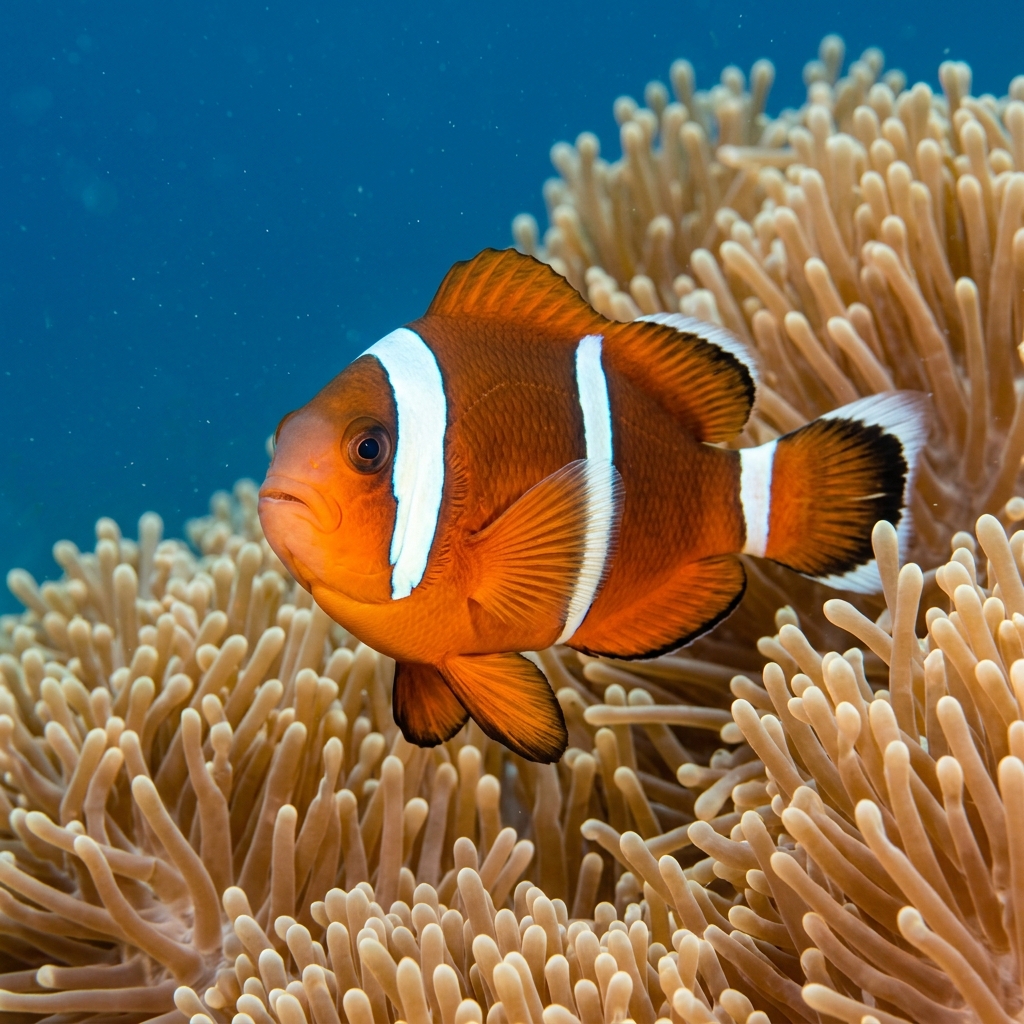
Yellowtail Clownfish
3,526 sites