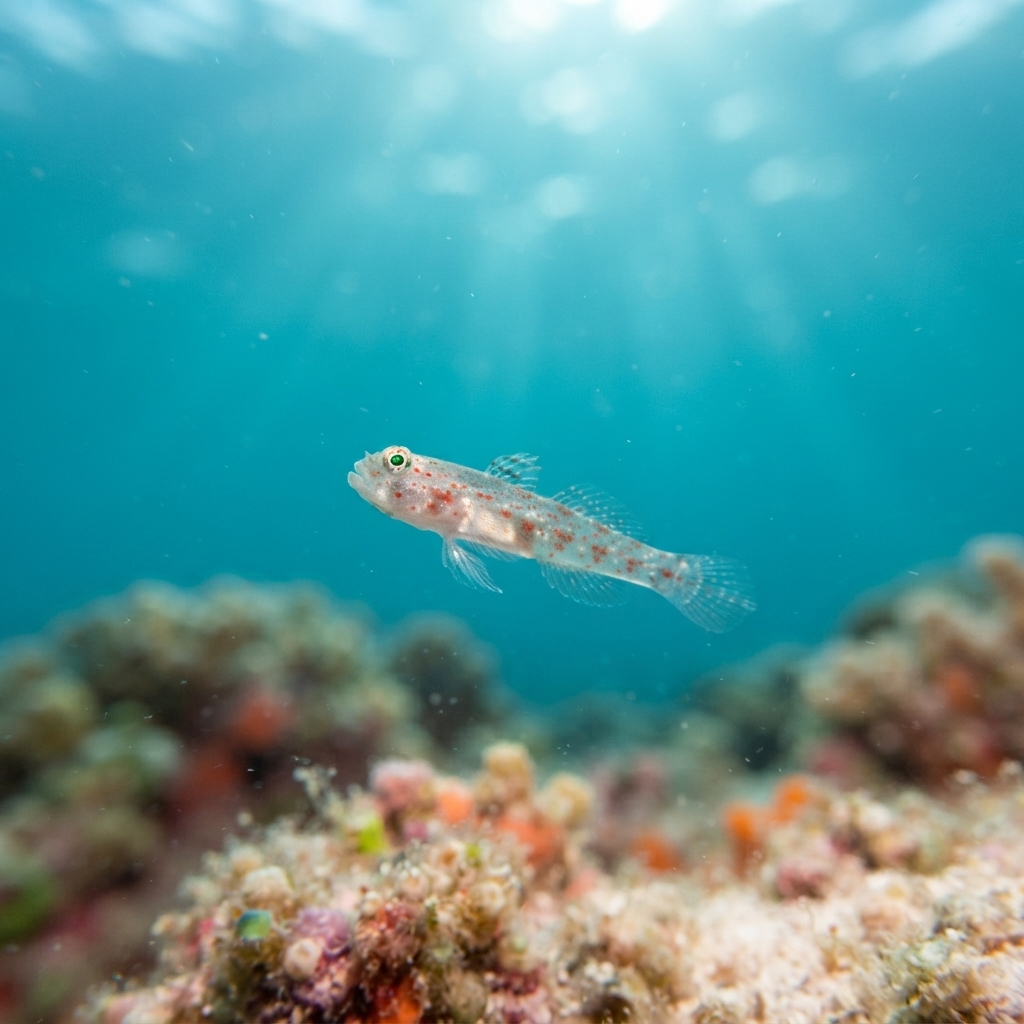
Eviota rubrisparsa
A pinhead-sized goby logged as common on Milne Bay reef sites at 27 to 28 C, year-round if you know where to look.
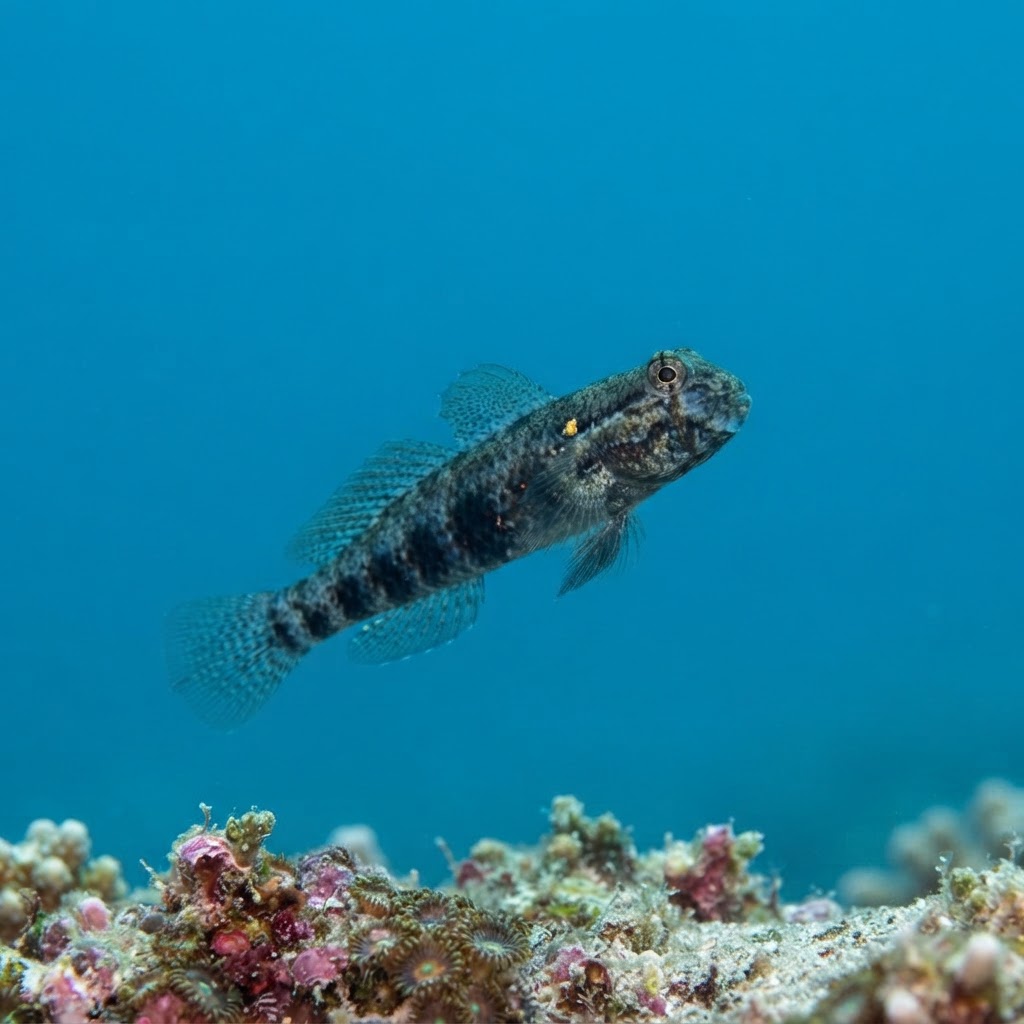
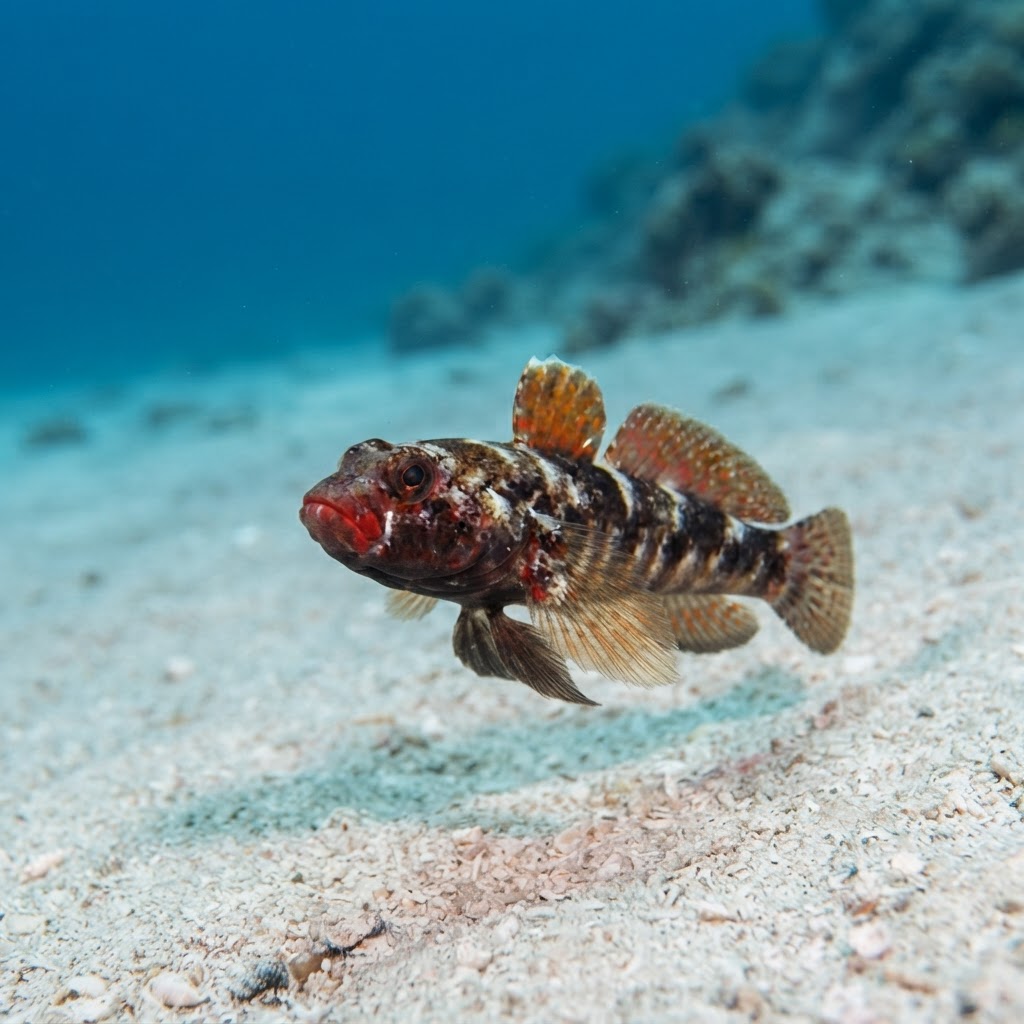
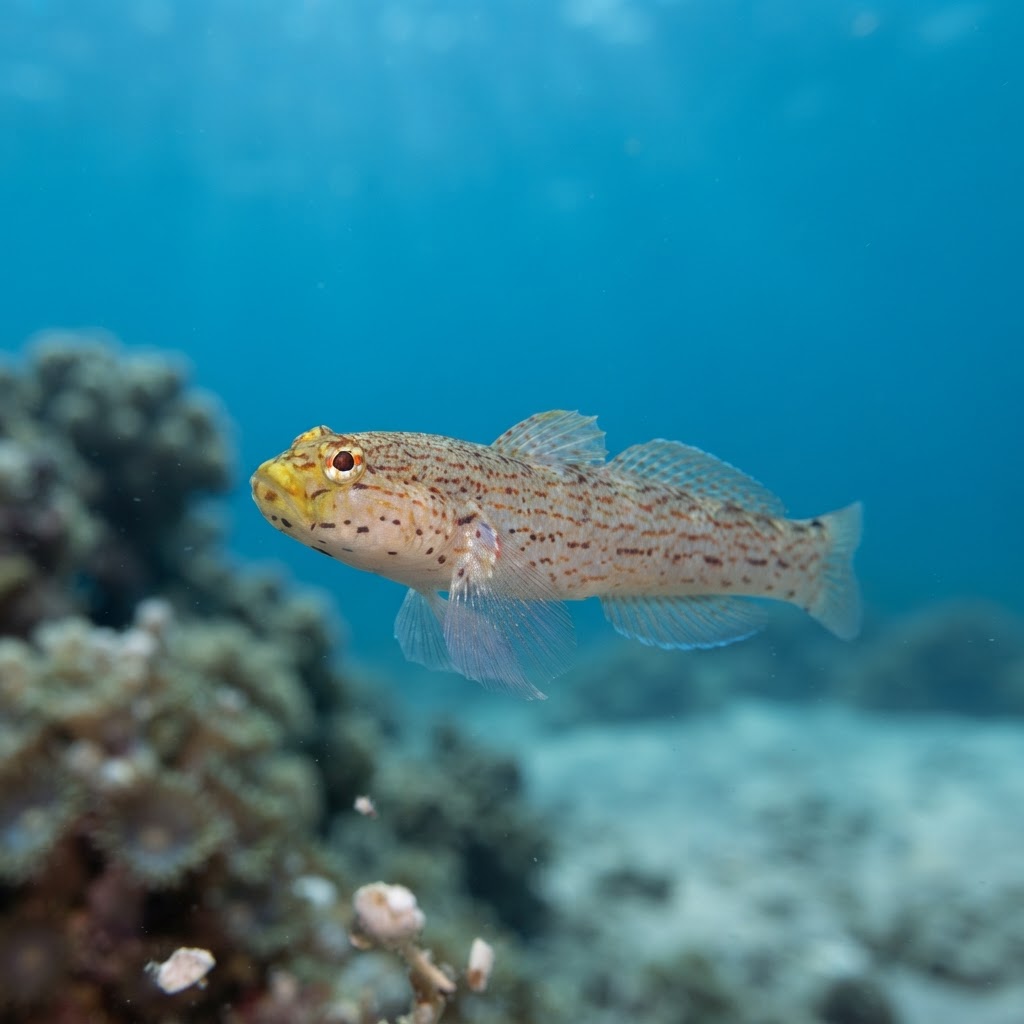
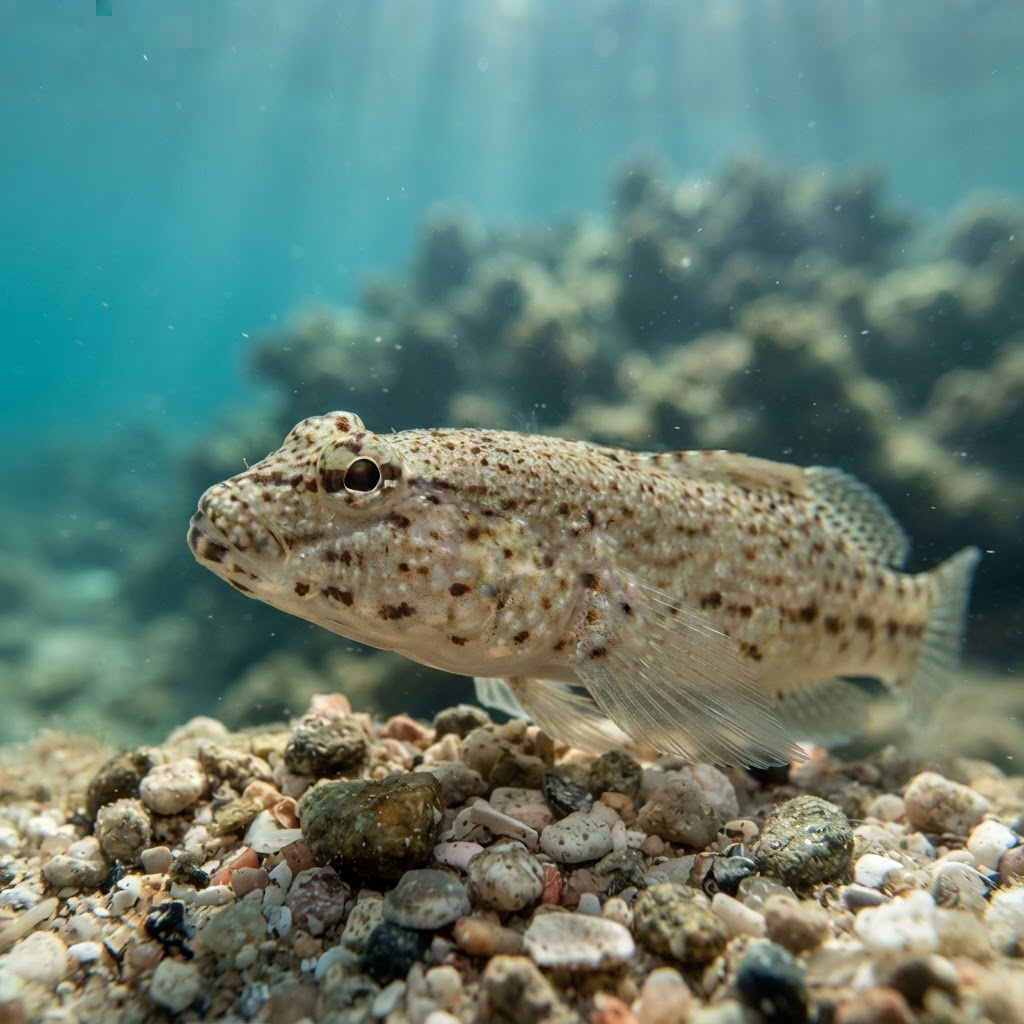
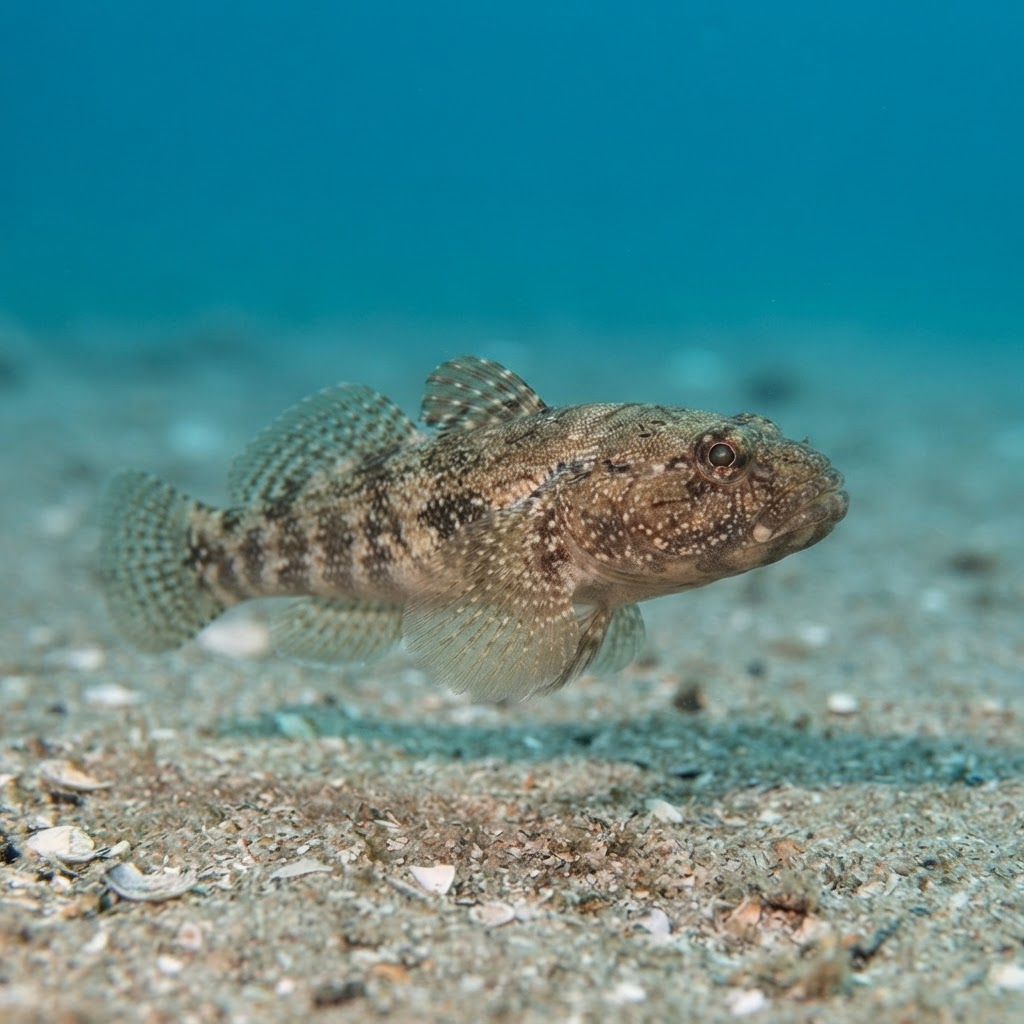
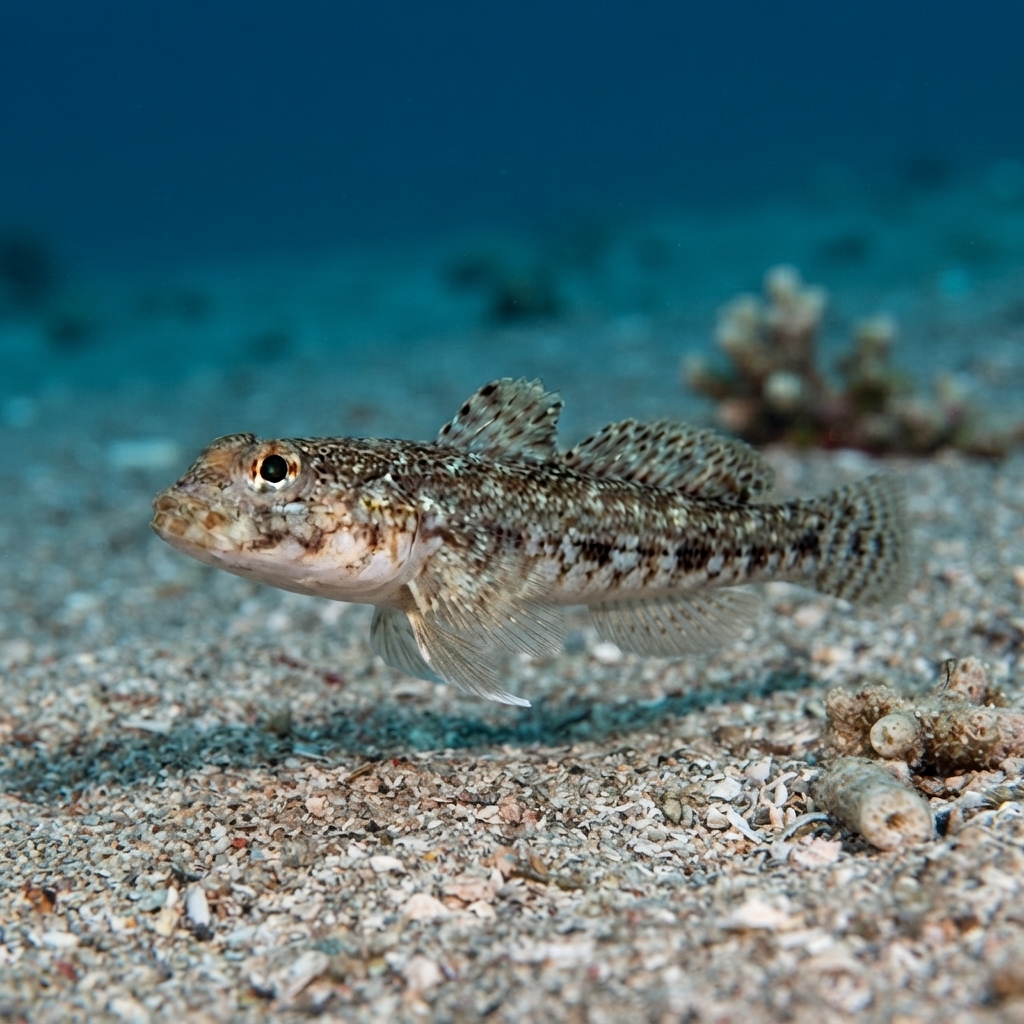
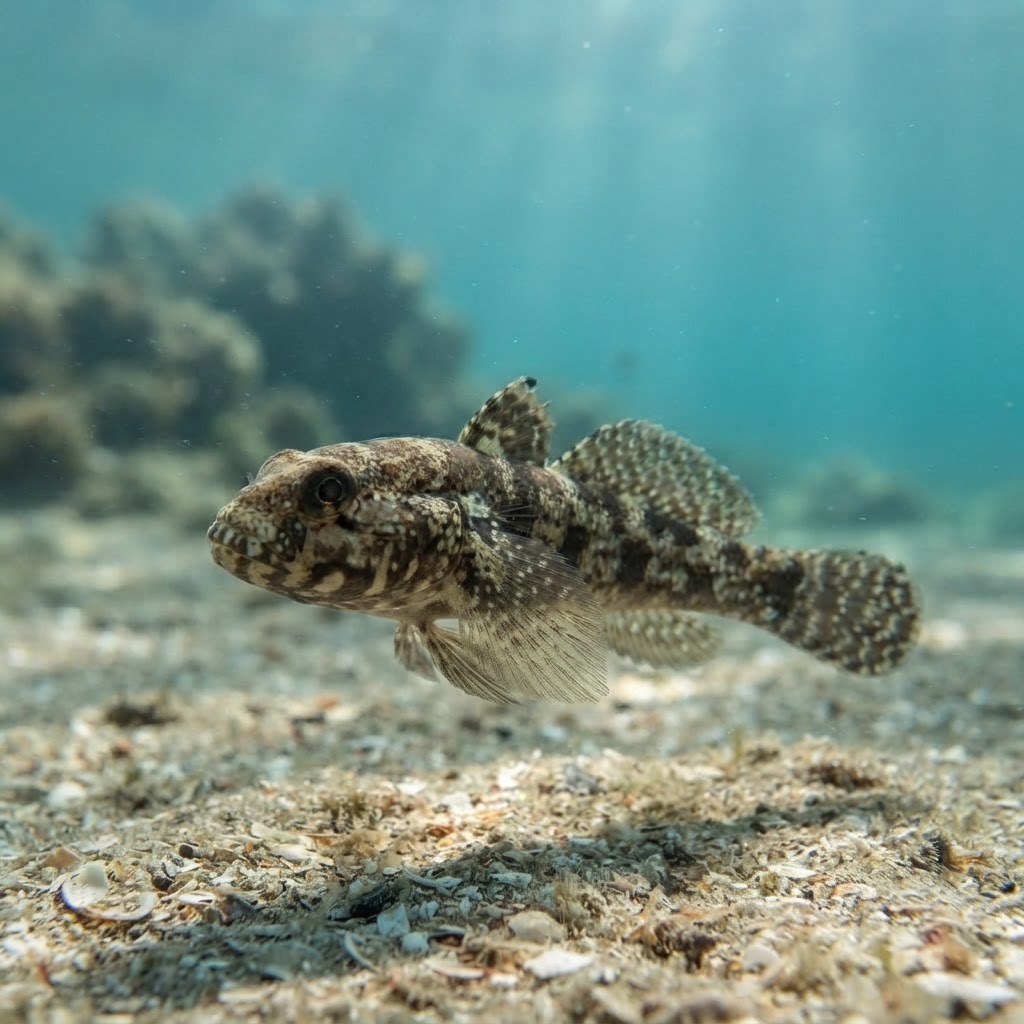
At barely a centimetre long, this goby is a macro-lens target more than a swim-by sighting: look for a translucent to pale body scattered with fine reddish-brown speckles rather than bold bars or stripes. It perches motionless on coral rubble, sponge, or dead coral heads rather than swimming in open water, which is often the giveaway before you can even see the markings clearly. Body shape is classic goby: elongated, blunt-headed, with fused pelvic fins it uses to prop itself against the substrate.
Divers find it sitting still on small patches of rubble or coral debris, using its fused fins to anchor rather than actively swimming around. It doesn't flee readily from a slow, careful approach, which is why macro photographers can get close, but sudden movement or a bumped fin will send it darting into a crevice. Look for it during normal daylight reef dives rather than night dives, scanning low over the substrate rather than the water column.
Gobies in the Eviota genus are among the smallest and shortest-lived reef vertebrates known, with some species completing their whole life cycle in a matter of weeks, which is part of why they're logged as common in the exact spots they're found but easy to miss everywhere else.
Sightings don't show a clear seasonal pattern, and the water temperature it's been logged in (27.2 to 28.3 C) is Milne Bay's normal year-round range, so there's no obvious best month to plan around. Go whenever you're diving Milne Bay and put in slow, close-focus time on rubble and coral heads.
Reef neighbours a diver could mistake it for. Use the identification notes above to tell them apart.
Every logged sighting so far comes from Papua New Guinea, concentrated in Milne Bay, which is currently the place to search for this species. There is no confirmed record elsewhere in the data, so Milne Bay's reef sites are the safest bet if you want to tick this one off.
Mapping where Redspeckled Dwarfgoby is logged…
All current sightings are from Milne Bay in Papua New Guinea, where it's logged as a common find on reef rubble and coral heads. No other region has confirmed records yet.
There's no detected season, so it's effectively a year-round find in Milne Bay's warm water (around 27 to 28 C). Plan around good Milne Bay diving conditions rather than a specific month.
Look for a pinhead-sized goby, about 1 cm long, with a pale to translucent body covered in fine reddish speckles. It sits still on rubble or coral debris rather than swimming, which is often how divers spot it first.
It tops out at around 1 centimetre, making it one of the smallest reef fish a diver can realistically log, and a serious test of macro spotting skills.
No. It's a harmless, tiny reef goby with no sting, bite, or venom of concern to divers.
Site and sighting data is aggregated from diver logs, iNaturalist and GBIF. For taxonomy and conservation status:
Slender Goby
806 sites