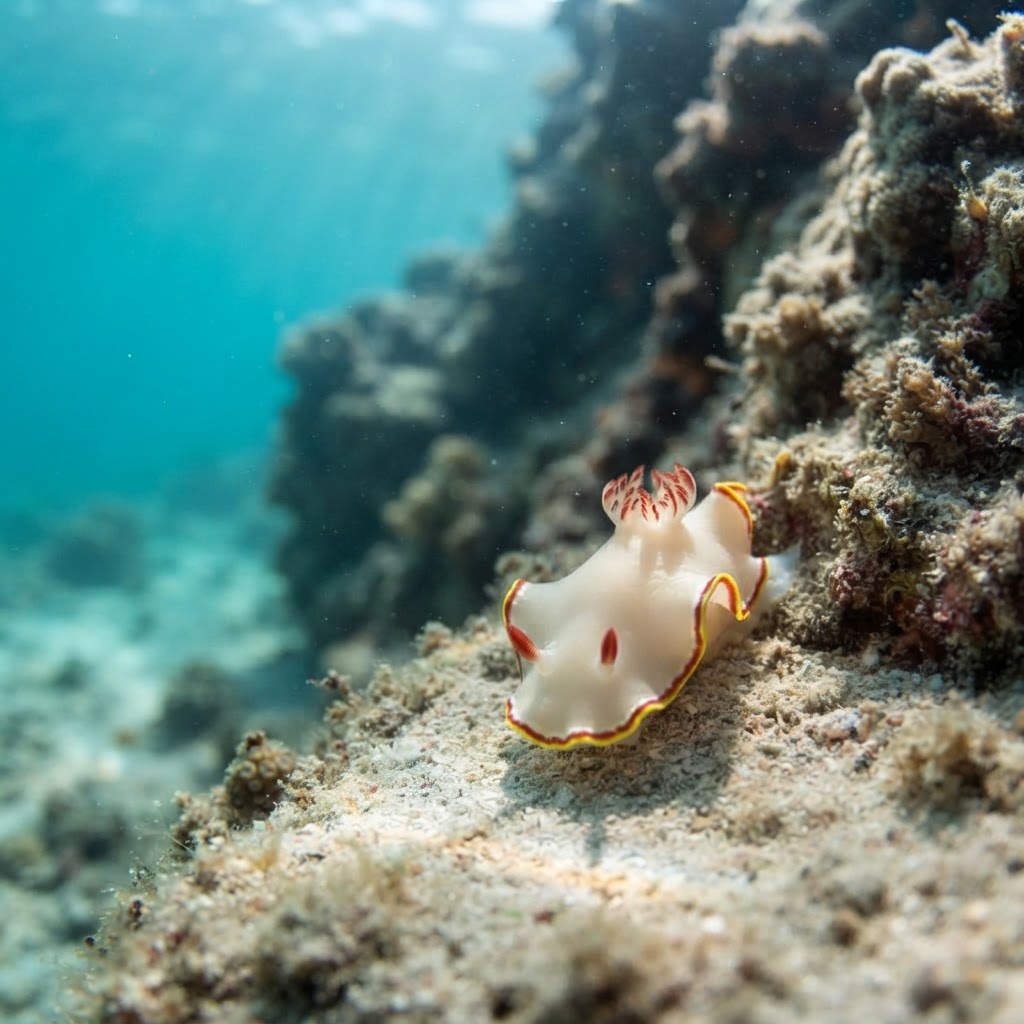
Chromolaichma sedna
Uncommon nudibranch logged across Baja California and Guanacaste, Costa Rica, in warm 24-30C water year-round.
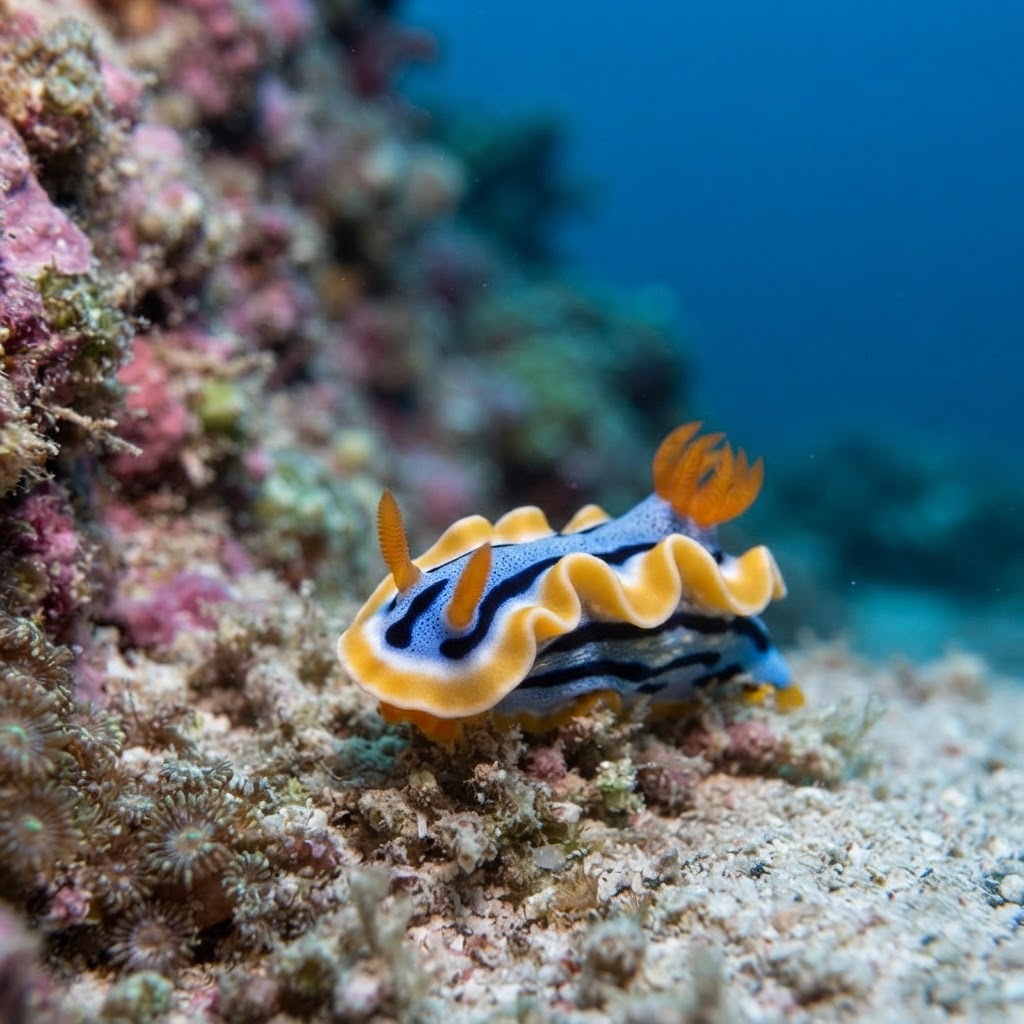
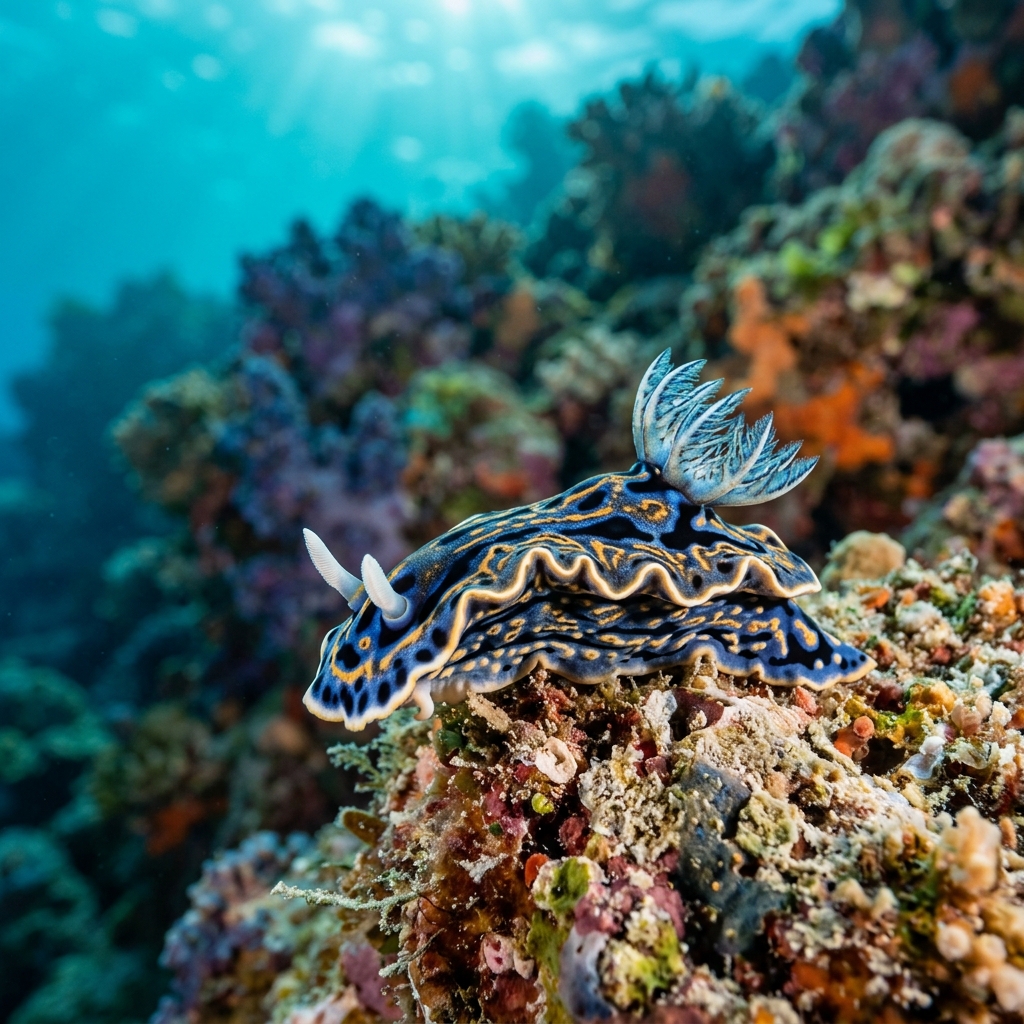
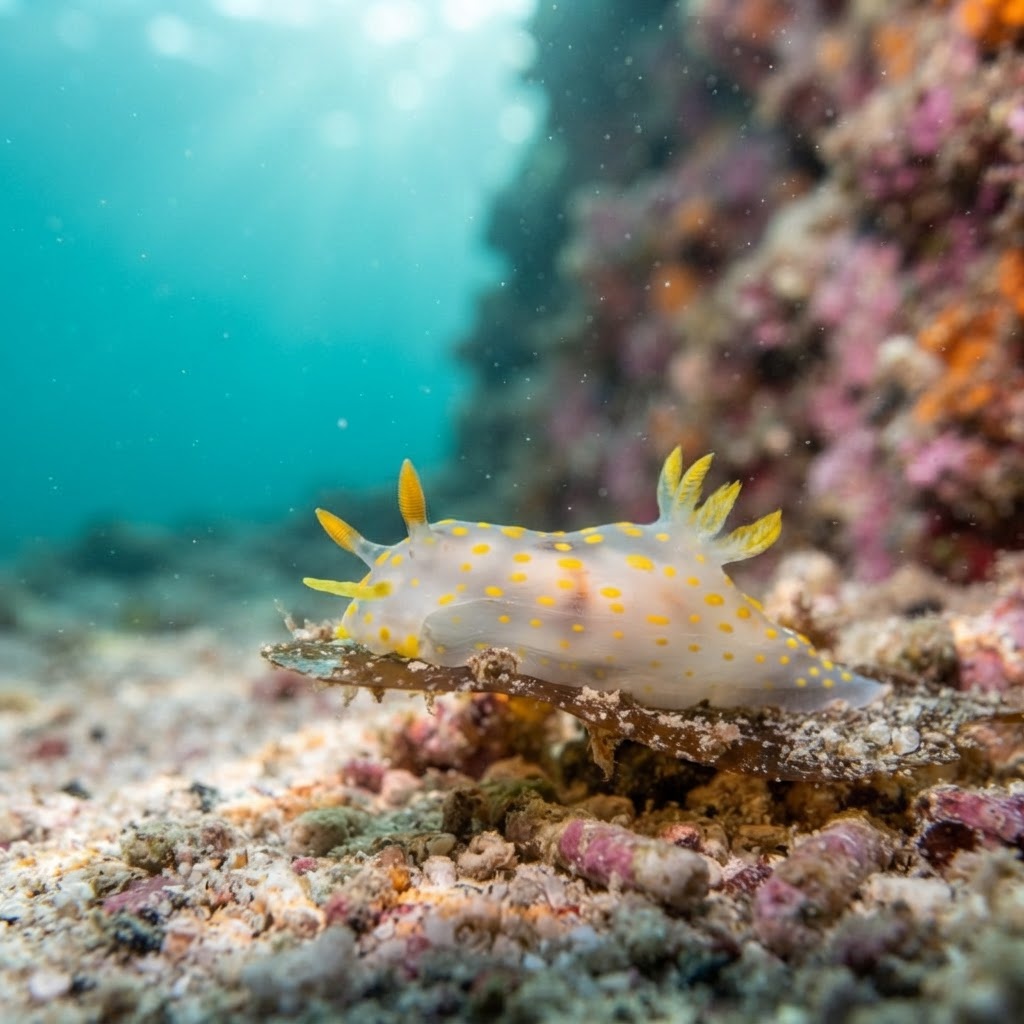
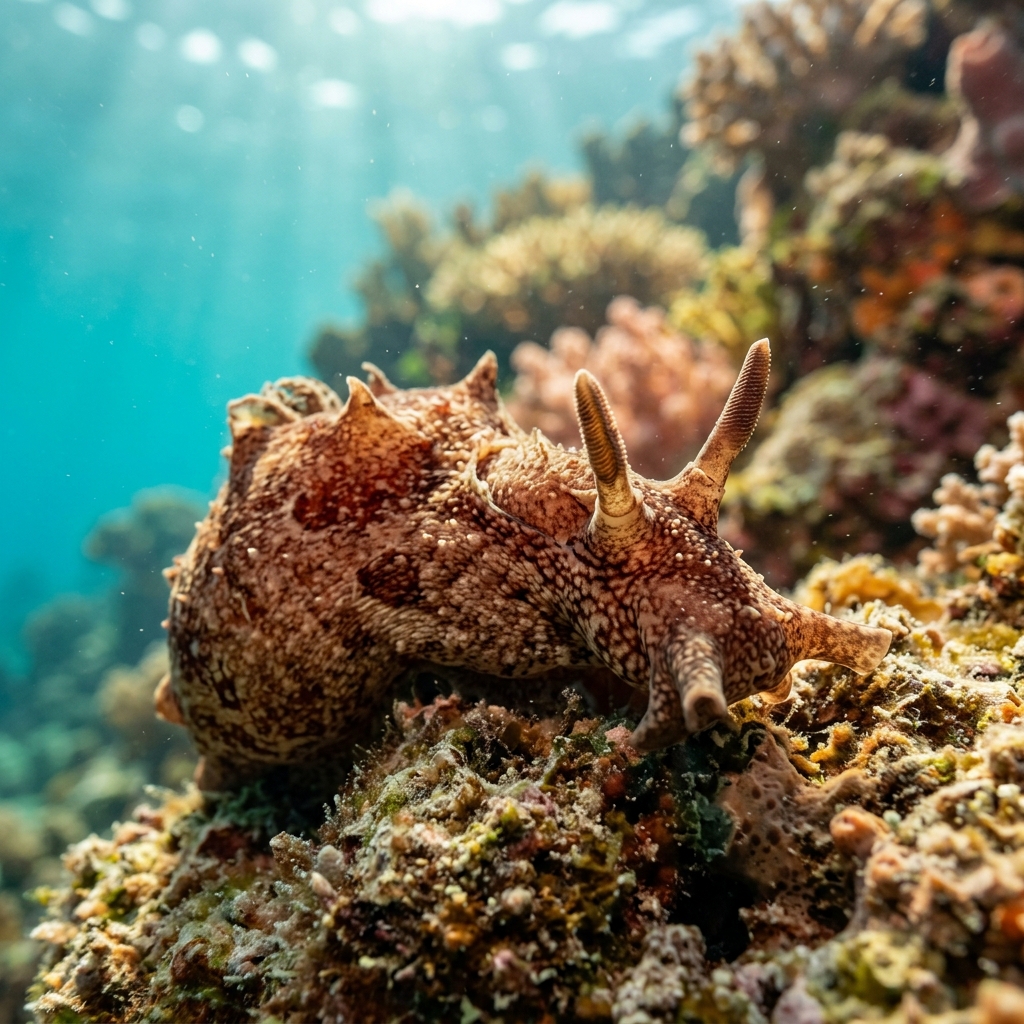
A small sea slug (nudibranch) with a translucent to pale body and red or orange tips along the mantle edge and along the feathery gill cluster on its back. The rhinophores (the paired sensory horns on the head) usually carry the same red tipping, which is the quickest cue divers use to pick it out from plainer chromodorids. It moves slowly across rock and rubble, low to the substrate, rarely more than a few centimetres long.
Divers typically spot it grazing slowly across rock faces and rubble patches, often tucked into cracks or moving over sponge-covered surfaces where it feeds. It shows no reaction to divers beyond its usual crawl, making it an easy macro subject once you slow down and scan low on the reef. Most sightings come from close-focus looks during a normal reef dive rather than a dedicated night dive, though like most nudibranchs it can turn up at any hour.
Like other dorid nudibranchs, it likely feeds on sponges and stores their chemical compounds in its tissue as a defence, which is part of why its colours stay bold despite having no shell to hide in.
No clear seasonal pattern shows up in the sighting data, and its comfort range of roughly 24 to 30C covers most of the year across these Pacific coast sites, so it is a reasonable year-round find rather than a seasonal target.
Reef neighbours a diver could mistake it for. Use the identification notes above to tell them apart.
Most reliably found in Mexico, with strong site counts along Baja California and the Pacific Coast, and a solid second population in Guanacaste, Costa Rica. A handful of records also come from the South Pacific coast of Costa Rica and the Galapagos Islands in Ecuador, so it is worth a slow look on any east Pacific rocky reef.
Mapping where Red-tipped Sea Goddess is logged…
It is most commonly logged in Mexico, particularly around Baja California and the Pacific Coast, with a second reliable population in Guanacaste, Costa Rica. Scattered records also exist from Costa Rica's South Pacific coast and the Galapagos Islands.
There is no strong seasonal signal in the sightings, and it turns up across a warm 24 to 30C range, so divers see it year-round rather than during one particular season.
Look for a small, pale-bodied nudibranch with red or orange tips along the mantle edge and on the head horns and back gills. It moves slowly over rock and rubble and rarely grows large, so a close look is usually needed to catch the colour detail.
Exact size data is not confirmed for this species, but like most members of its nudibranch family it stays small, typically a few centimetres in length, and is easy to swim past without noticing.
No. It poses no risk to divers and can be safely observed and photographed at a normal, respectful distance without touching it.
Site and sighting data is aggregated from diver logs, iNaturalist and GBIF. For taxonomy and conservation status:
Light-spotted Aegires
3,168 sites