Cronius ruber
Reddish, fast-moving swimcrab logged across Gran Canaria and Tenerife in 20-26C water, year-round, usually tucked under rock ledges.
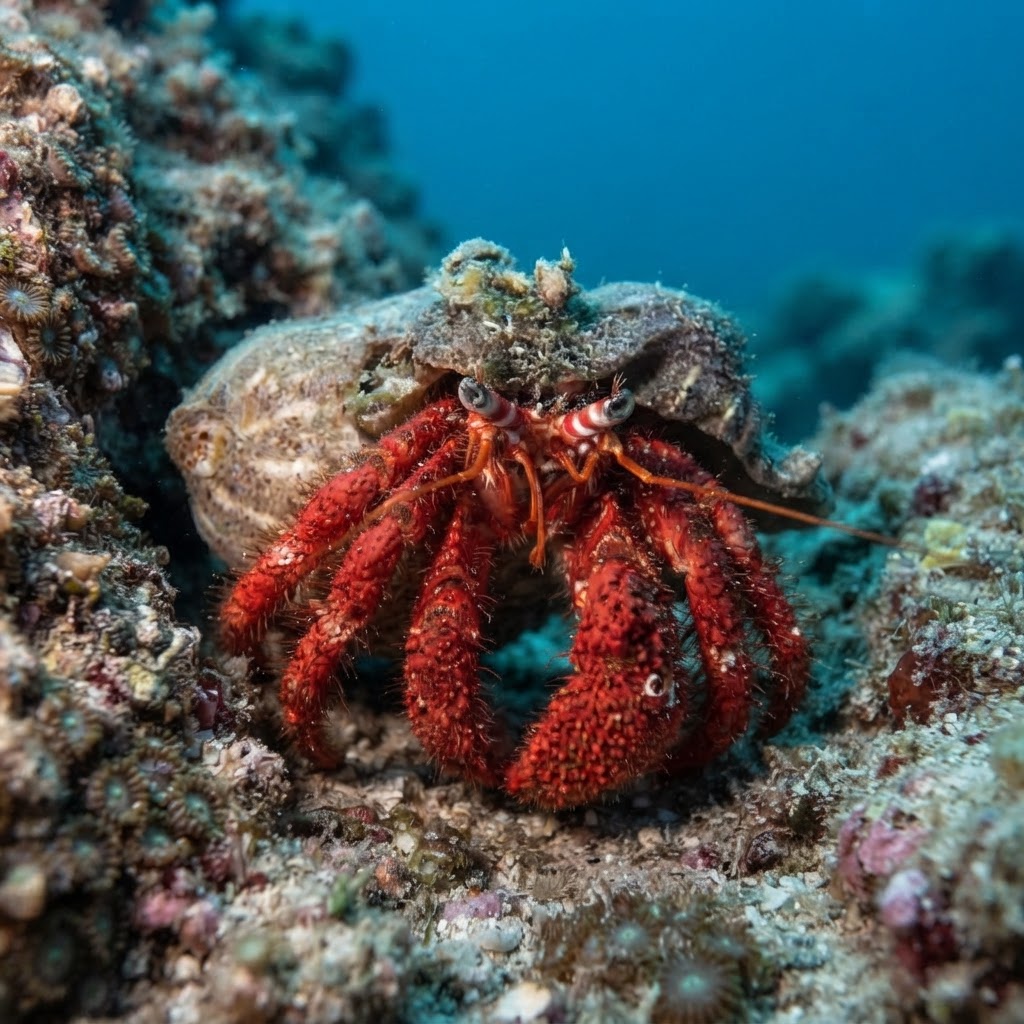
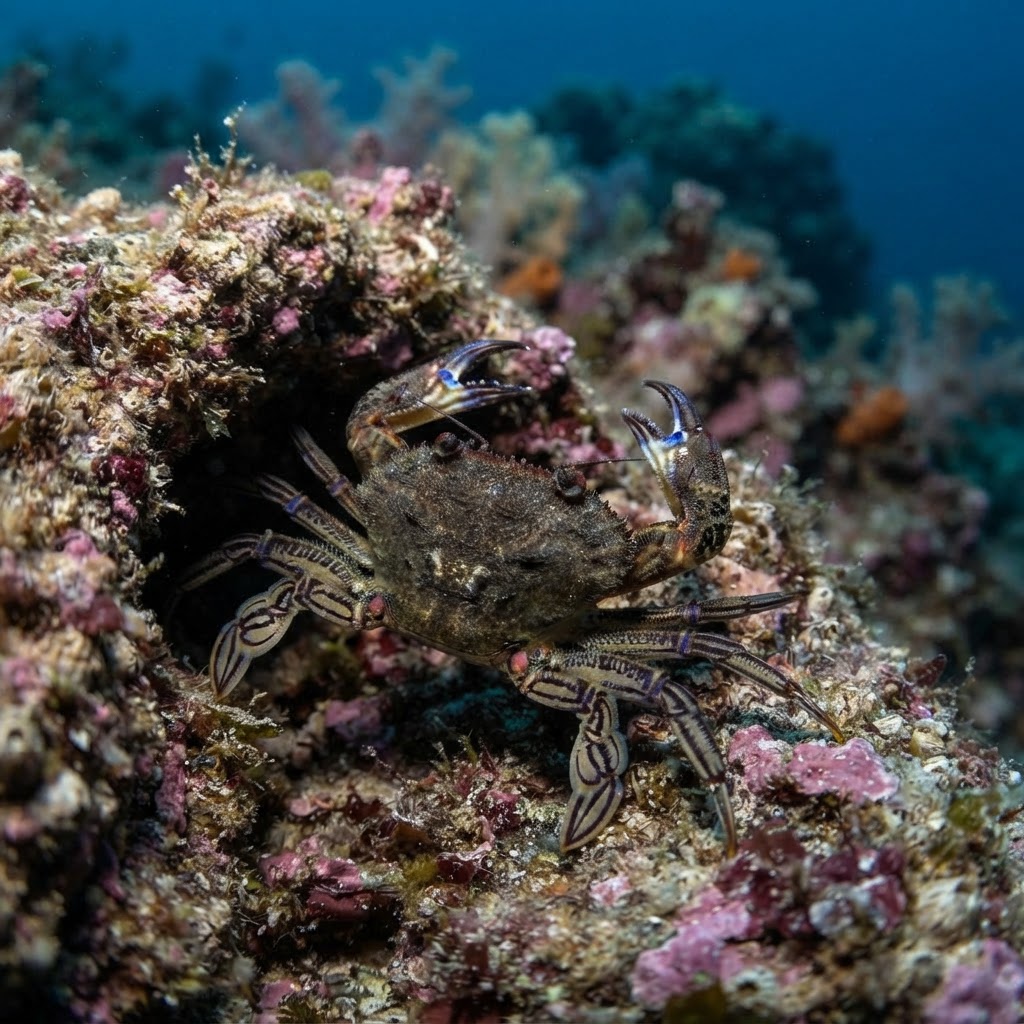
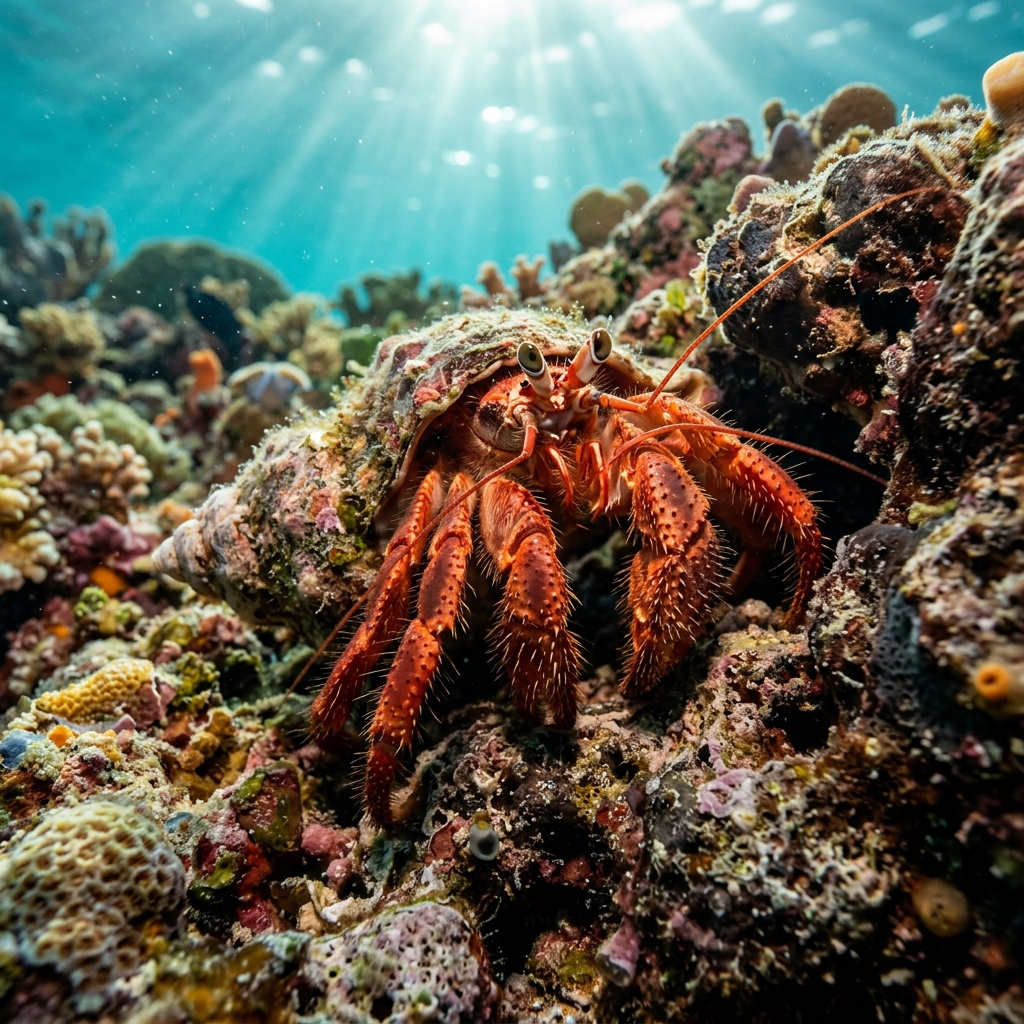
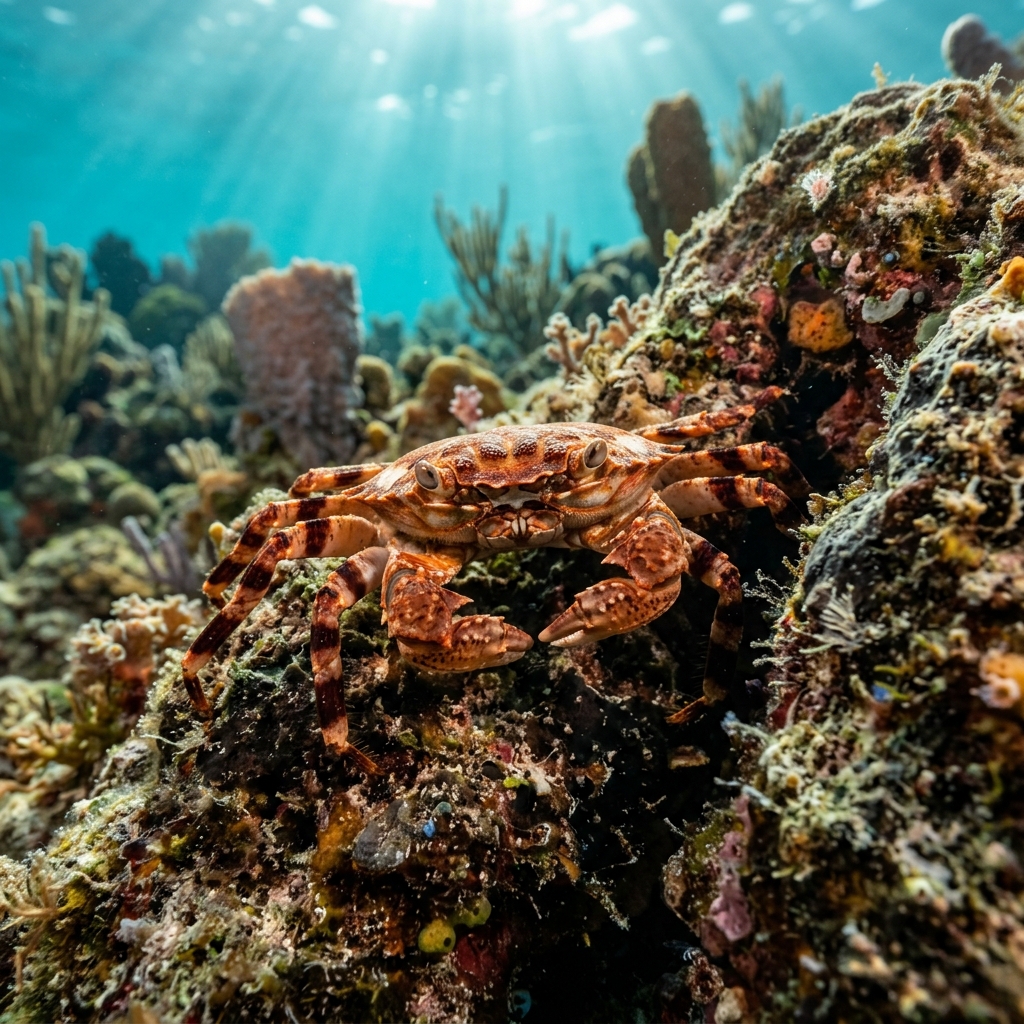
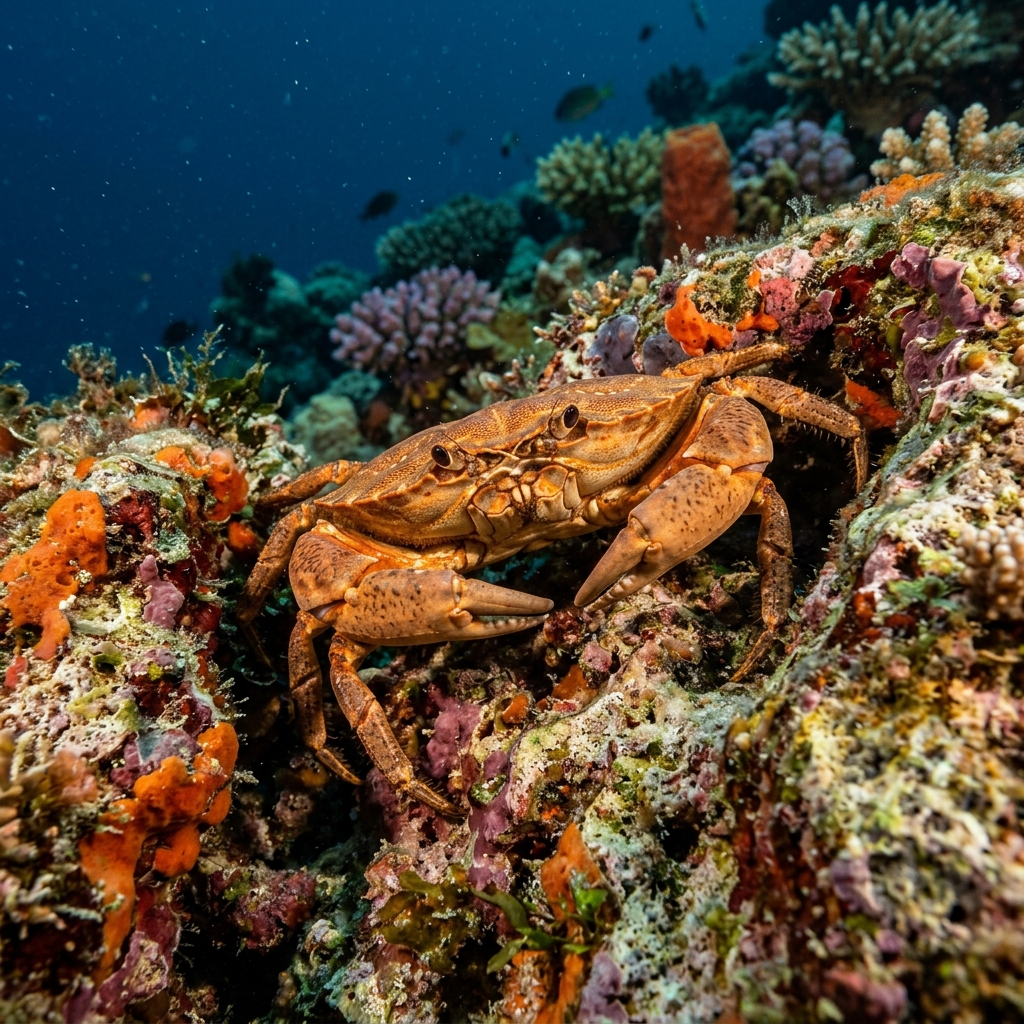
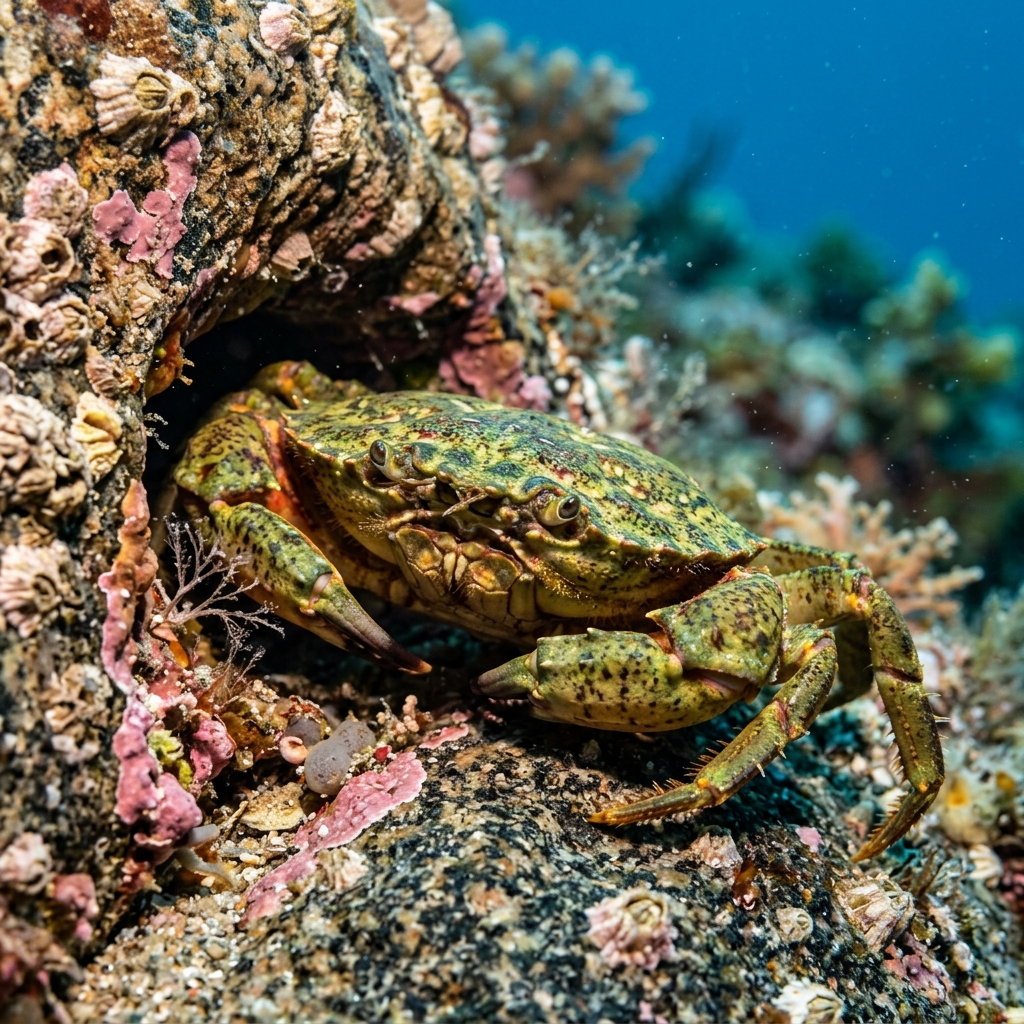
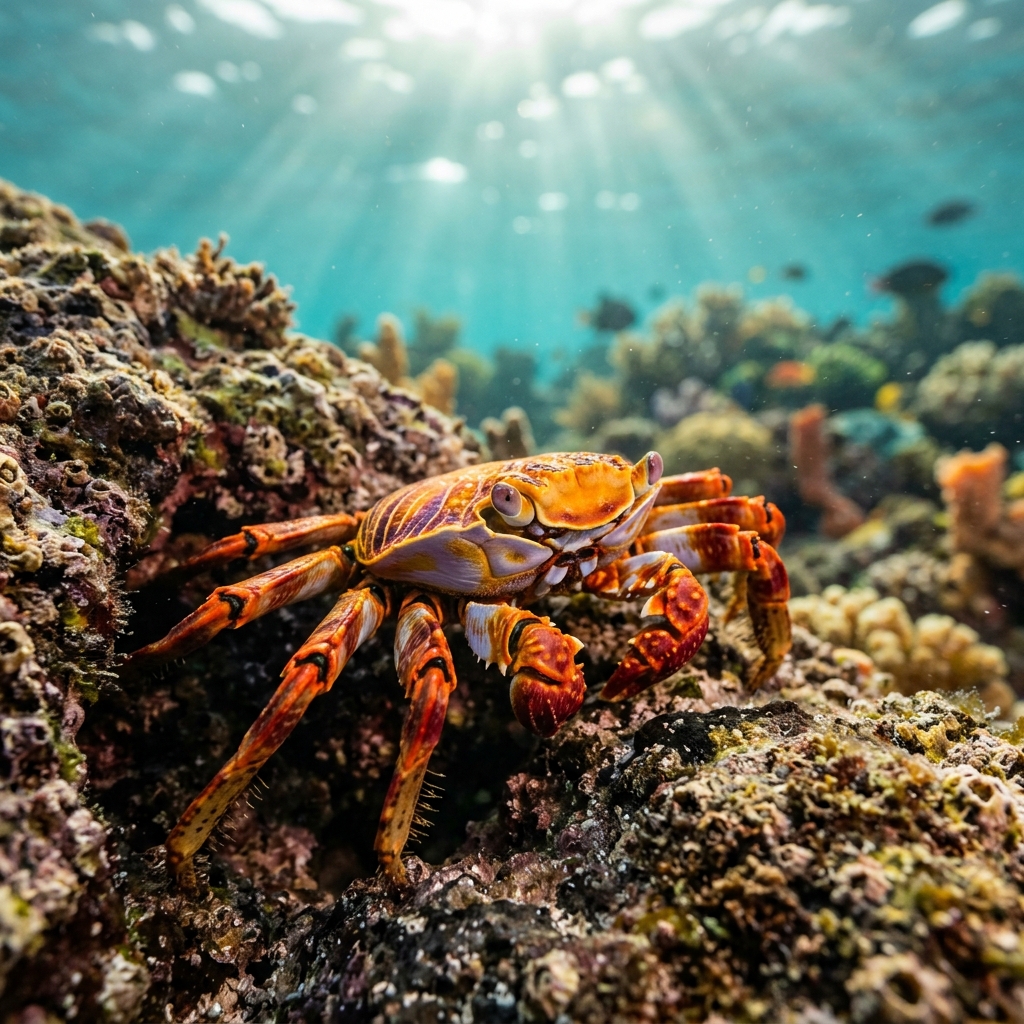
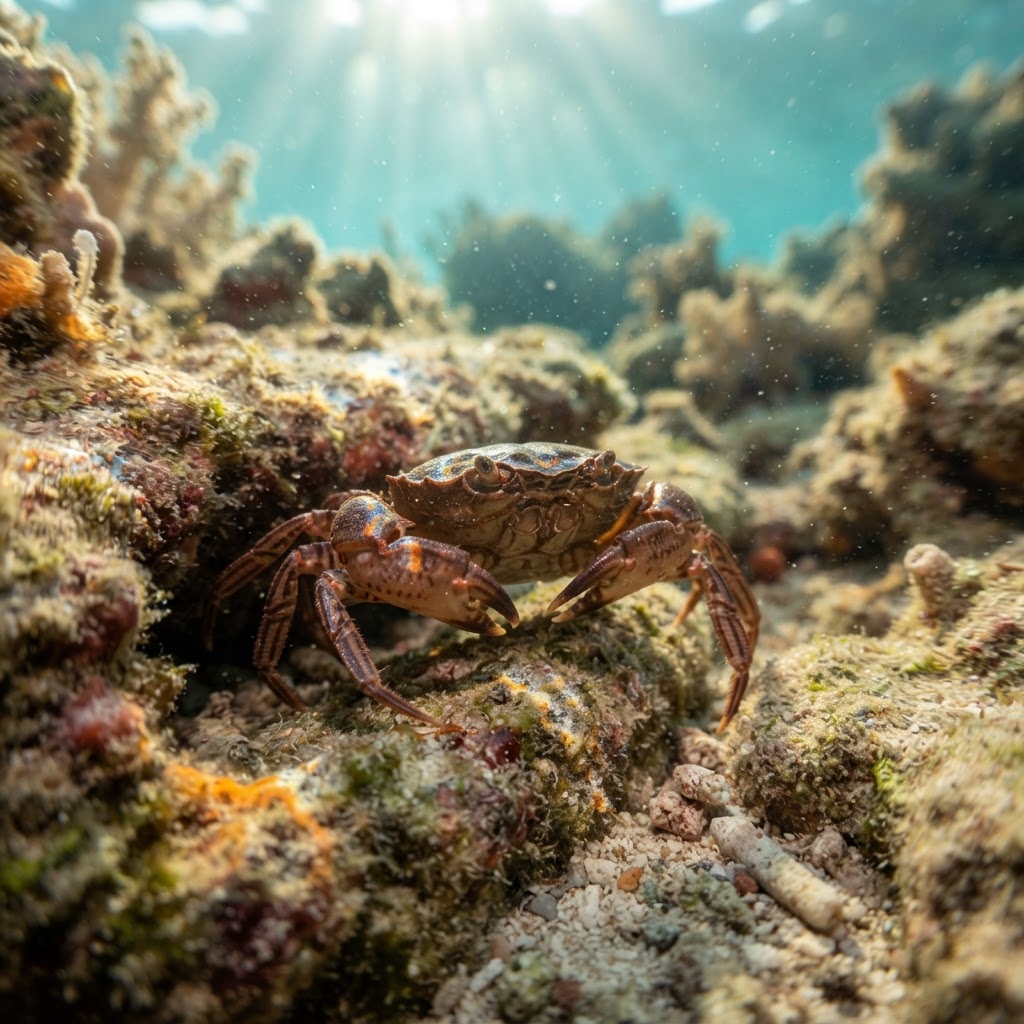
Small, roughly palm-sized crab around 4 cm across, with a mottled reddish-brown to rust-coloured shell that blends into volcanic rock and rubble. Look for the flattened, paddle-shaped last pair of legs typical of swimming crabs, used for quick bursts across open sand rather than sustained swimming. The claws are stout and often held forward when it senses a diver nearby, and the shell has a slightly hexagonal, wide outline rather than a rounded one.
Divers most often find it wedged under a rock ledge or in a crevice on volcanic reef, staying still until approached and then darting sideways for cover rather than swimming off into open water. It tends to turn and face divers claws-first if cornered, a standard swimcrab bluff rather than a real threat. Most sightings are on rubble and boulder terrain rather than open sand or coral.
Like other swimming crabs in the Portunidae family, it relies on speed and a defensive claw stance rather than shell armour, using its flattened rear legs for short sideways sprints across the seabed rather than true swimming.
No clear seasonal pattern shows up in the sighting data, and it's recorded in water from about 20 to 26C, so treat it as a year-round find on Canary Islands dives.
Reef neighbours a diver could mistake it for. Use the identification notes above to tell them apart.
This is very much a Canary Islands crab, most commonly logged in Gran Canaria and Tenerife, with a solid number of sightings too in El Hierro and fewer in La Palma. A couple of sightings also come from the Galápagos Islands in Ecuador, but the Canaries are where you have by far the best odds of finding one.
Mapping where Red Swimcrab is logged…
The Canary Islands are the reliable spot, especially Gran Canaria, Tenerife and El Hierro, with fewer records from La Palma. It has also been logged around the Galápagos Islands in Ecuador.
There's no strong seasonal signal in the sightings, so it turns up year-round in the Canary Islands' 20 to 26C waters. Any month of diving there gives a reasonable shot at spotting one.
Look for a small, reddish-brown crab about 4 cm across with a wide, hexagonal shell and flattened, paddle-shaped rear legs. It's usually tucked under a rock ledge rather than out in the open.
They're small, typically around 4 cm across the shell, easy to miss unless you're checking ledges and crevices closely.
No, they pose no danger to divers. They may raise their claws defensively if cornered, but this is just a bluff and they'll usually retreat rather than engage.
Site and sighting data is aggregated from diver logs, iNaturalist and GBIF. For taxonomy and conservation status:
European Green Crab
2,469 sites