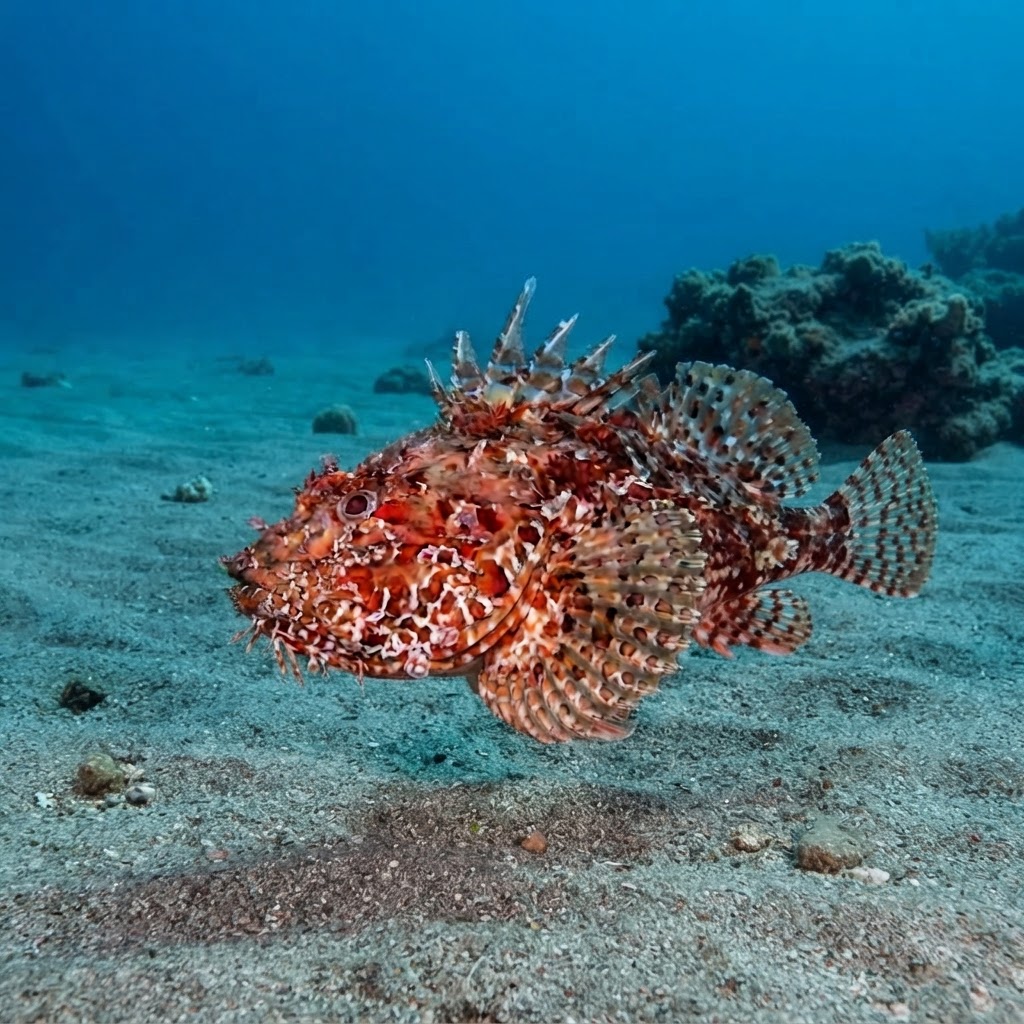
Scorpaena scrofa
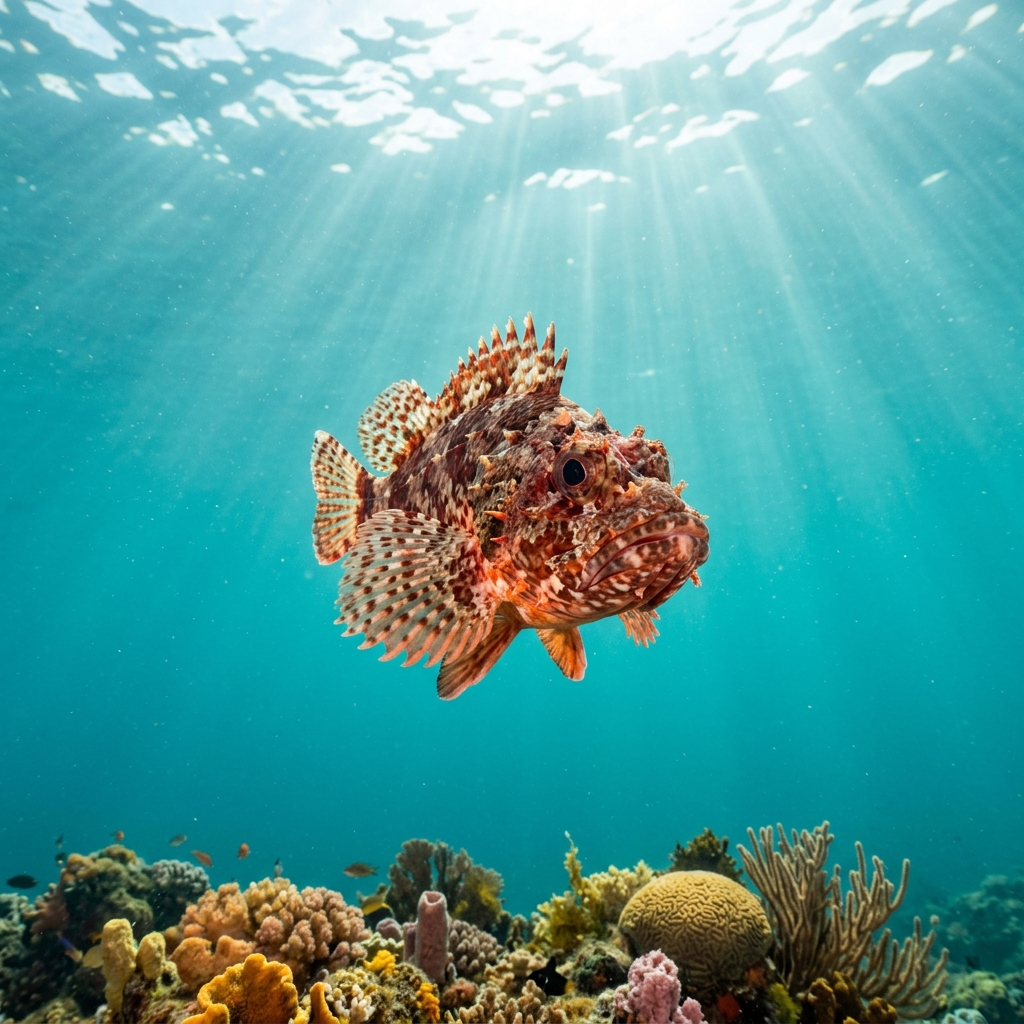
Bumpy, red-mottled and dead still on the rock, red scorpionfish turn up on nearly half the reefs in Catalonia and the French Riviera.
Safety warning
Dorsal, anal and pelvic fin spines carry venom and a sting from mishandling or an accidental knee or hand on the rock can cause serious pain and swelling. Keep hands and fins off ledges and rubble patches where it likes to sit, and never touch or move one for a photo.
If you're stung
Venomous spinesGeneral first-aid guidance, not a substitute for professional medical care. In an emergency, call your local emergency number.
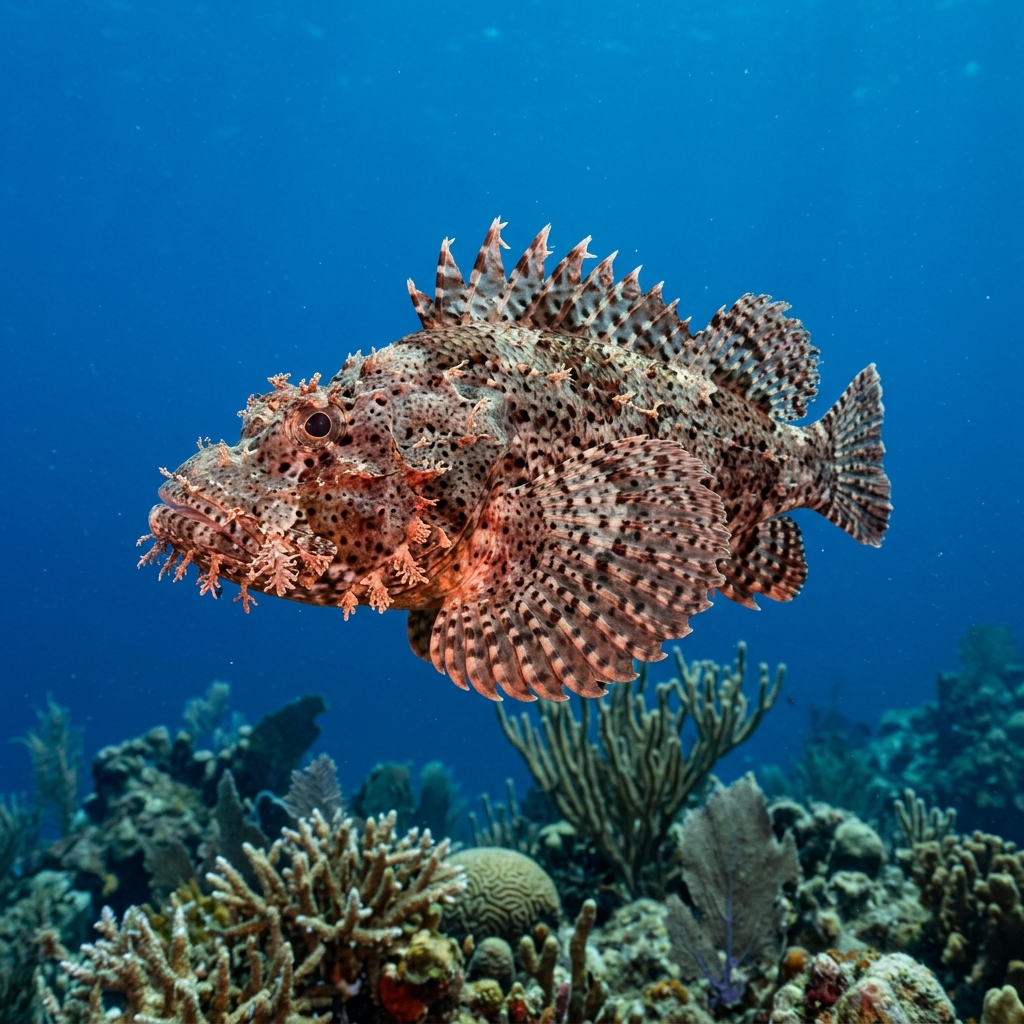
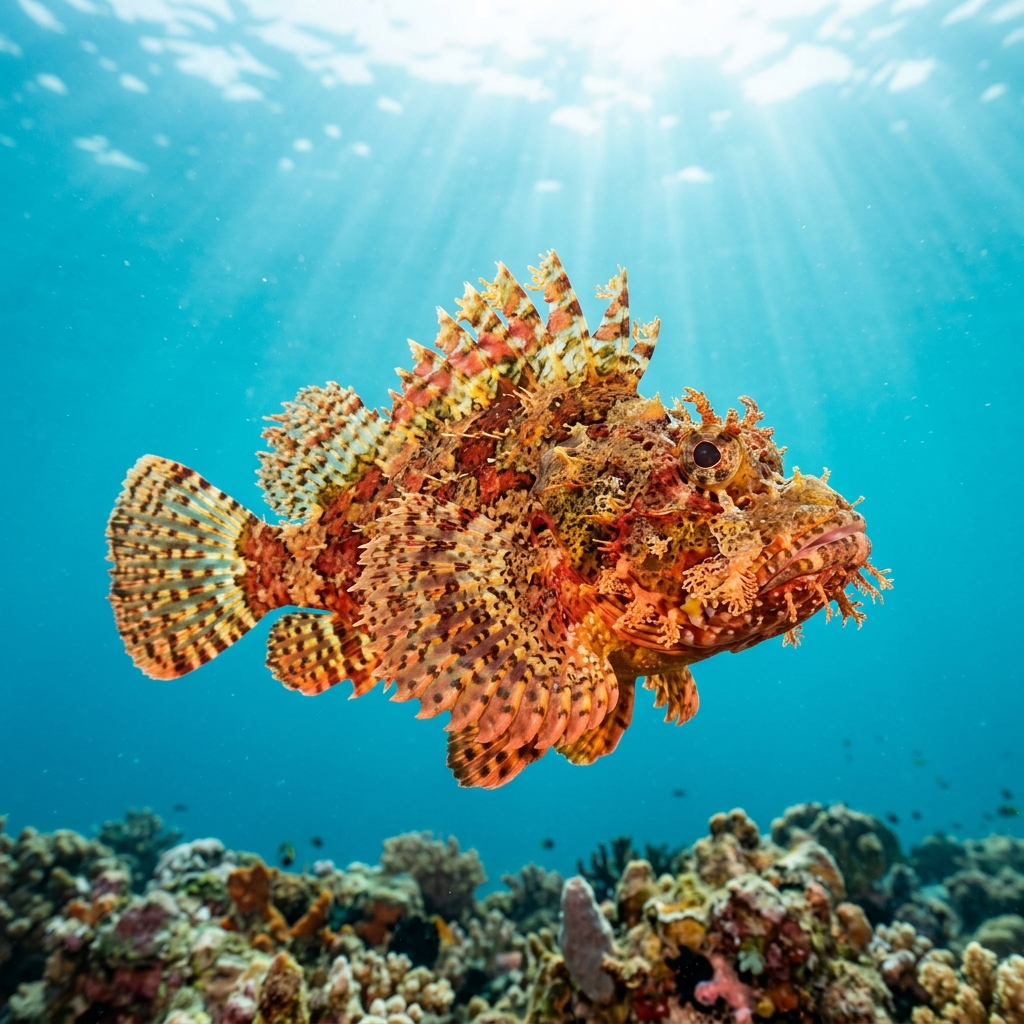
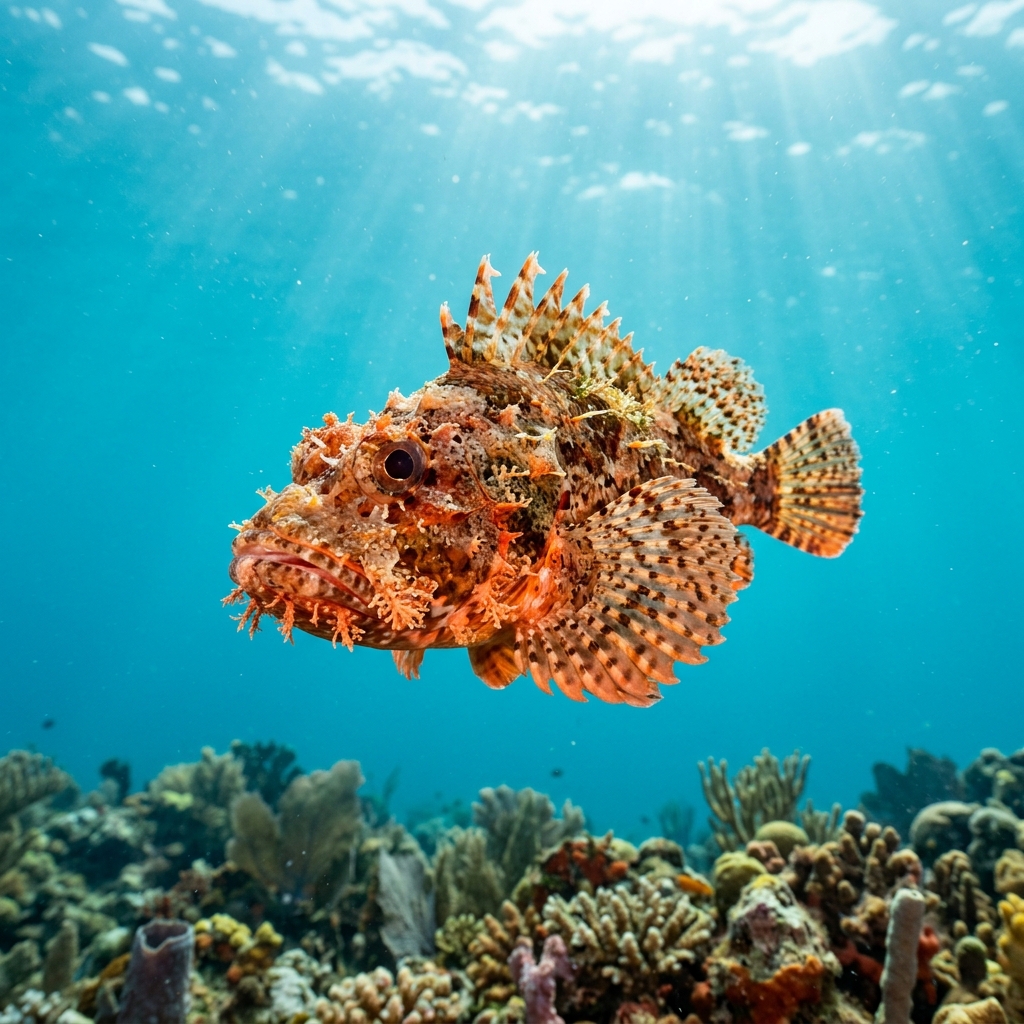
Look for a squat, heavy-headed fish about 35 cm long, sitting motionless on rock or rubble rather than swimming. Its skin is mottled red, brown and pink with a bumpy, almost bearded texture, including fleshy tabs above the eyes that help it disappear against sponge and algae-covered rock. The pectoral fins are broad and fan-like, and the whole outline is spiny rather than sleek, which is the biggest tell against a sleeker reef fish.
Expect to find it parked on a rock ledge, sandy patch or among weed, blending in so well that most divers spot it only once they've stopped and looked closely. It rarely bolts when approached, relying on camouflage rather than flight, though it may flick away a short distance if crowded. Most encounters happen on slow bottom time or during a careful look along a wall rather than in open water.
Its skin texture and colour can shift slightly to match the local rock and algae, which is a big part of why it's logged as uncommon rather than obvious even at sites where it's actually present in good numbers.
Sightings show no clear seasonal pattern, and with a comfort range of roughly 11 to 18 C it seems to tolerate the Mediterranean's cooler water as readily as its summer warmth, so it's a fair bet on any dive through the year.
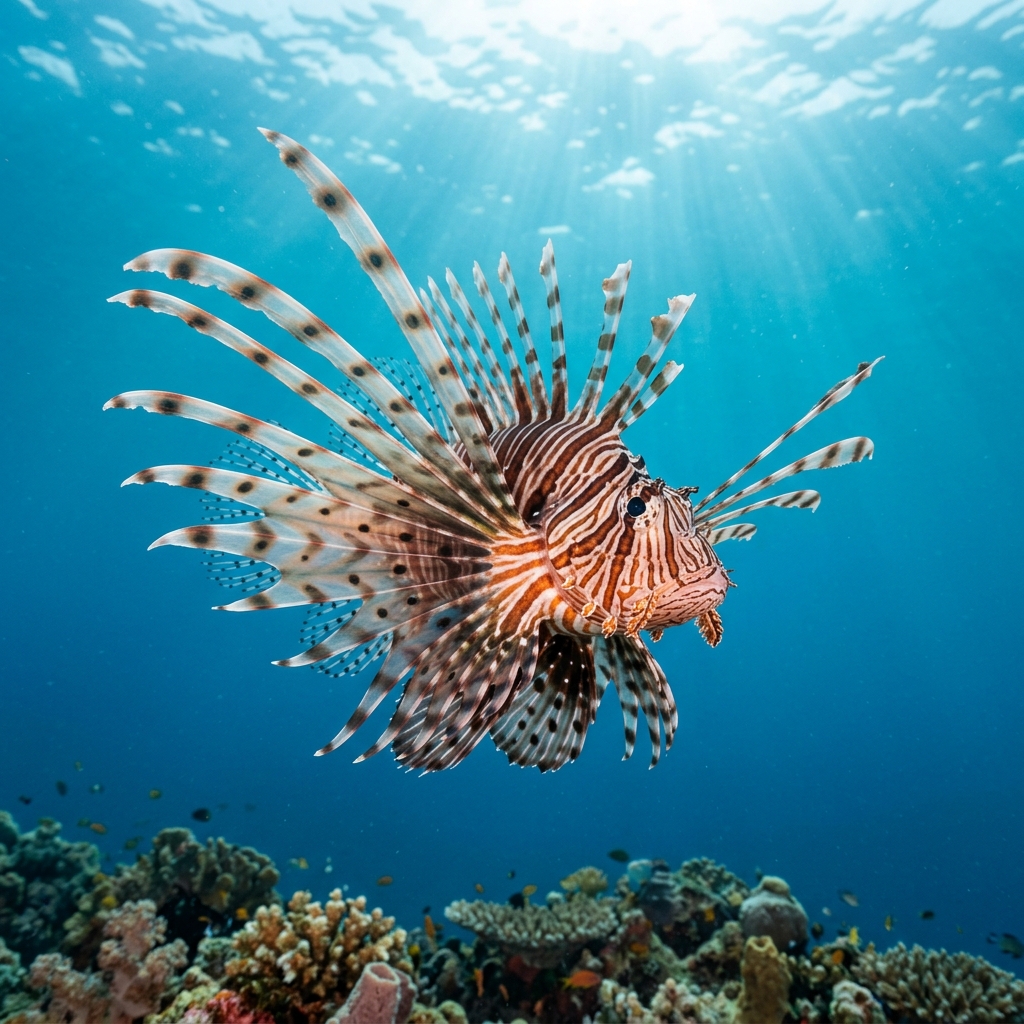
Reef neighbours a diver could mistake it for. Use the identification notes above to tell them apart.
This is a Mediterranean regular, most reliably logged along the French Riviera and Provence and in Catalonia, with strong numbers also in the Balearic Islands, Valencia and Murcia in Spain. Italy's Liguria and Tuscany, Croatia's Kvarner region, Malta and Greece all produce steady sightings too, and it also turns up around the Canary Islands and the Azores in the Atlantic.
Mapping where Red Scorpionfish is logged…
The French Riviera and Provence and Catalonia are the most reliable spots, with good numbers also in the Balearic Islands, Valencia, Murcia, Liguria, Kvarner, Malta and Greece.
There's no strong season in the sighting data, and it tolerates a wide temperature range from around 11 to 18 C, so it's seen year-round across Mediterranean dive sites.
Yes, their fin spines are venomous and a sting from an accidental brush or grab can be very painful. They won't attack, so the risk is almost always from a diver's hand or knee landing on one while it sits camouflaged on rock.
Look for a squat, spiny, red-and-brown mottled fish about 35 cm long lying still on rock or rubble, with bumpy skin and fleshy tabs over the eyes. It looks more like a lump of encrusted rock than a fish until it moves.
They typically reach around 35 cm, making them one of the larger scorpionfish divers encounter in the Mediterranean.
Their mottled, bumpy skin can shift subtly to match local rock and algae, giving them camouflage good enough that divers often swim right past one sitting in plain sight.
Site and sighting data is aggregated from diver logs, iNaturalist and GBIF. For taxonomy and conservation status:
Madeira Rockfish
2,773 sites