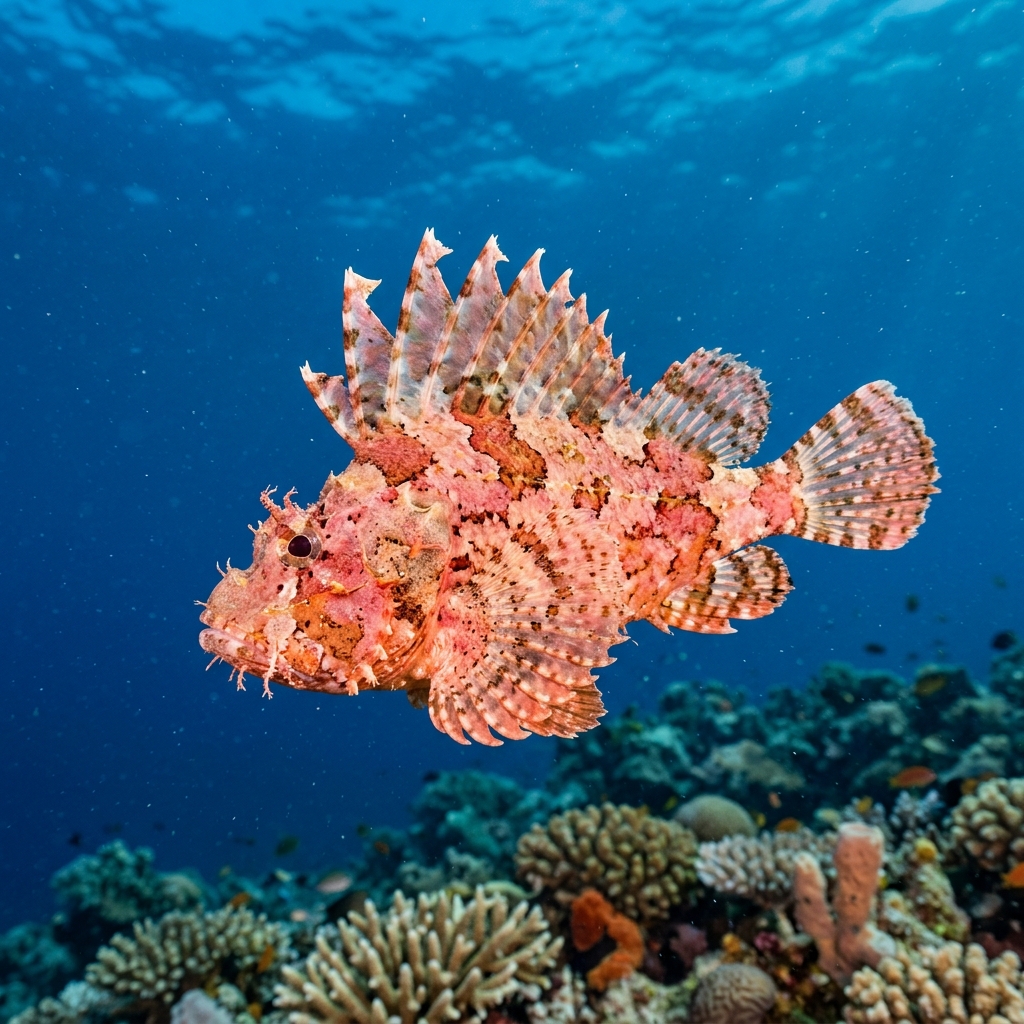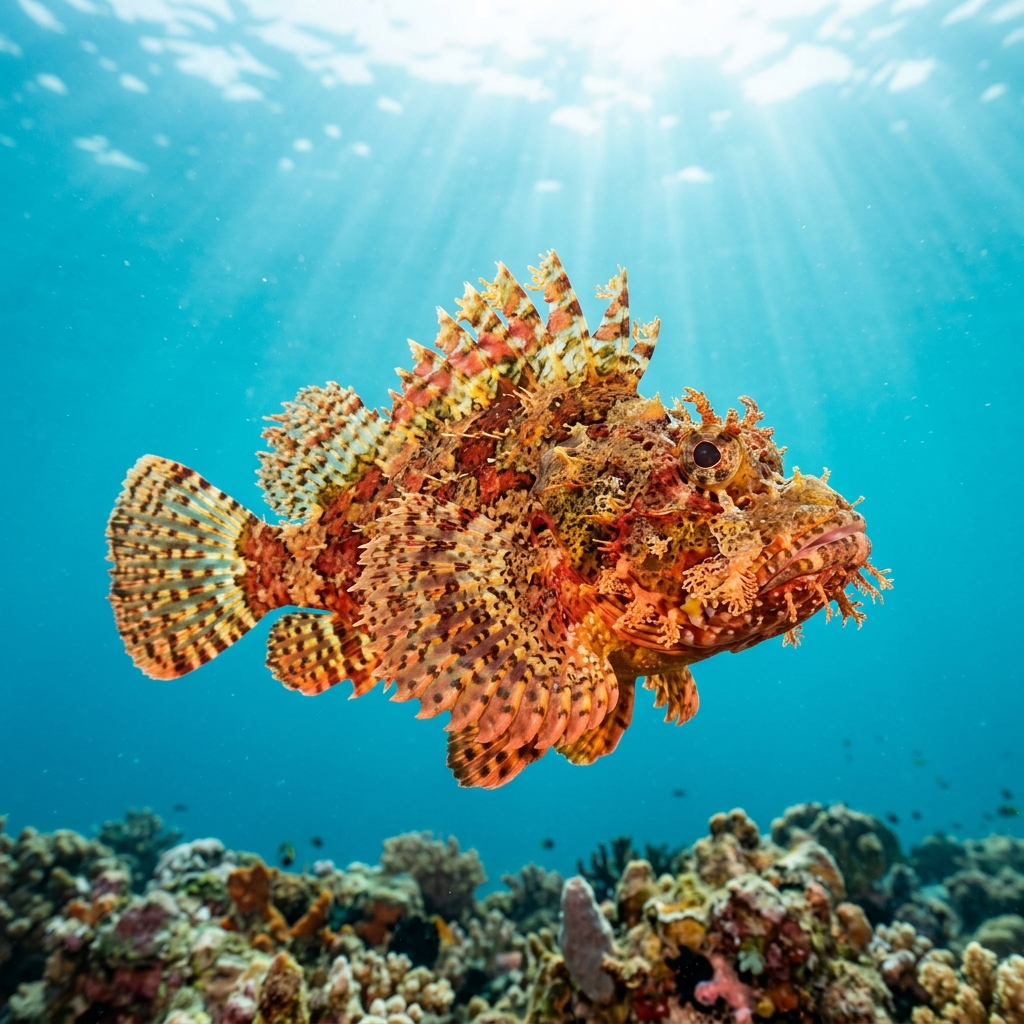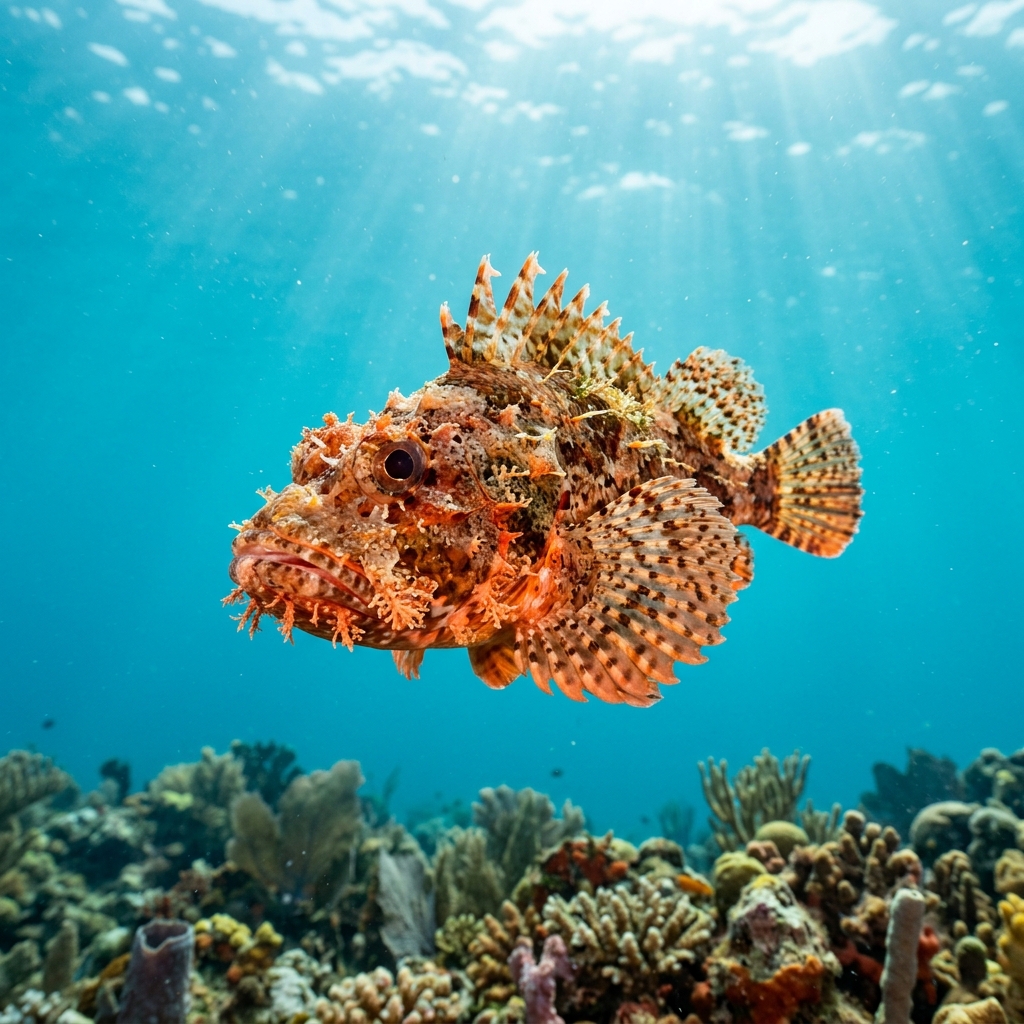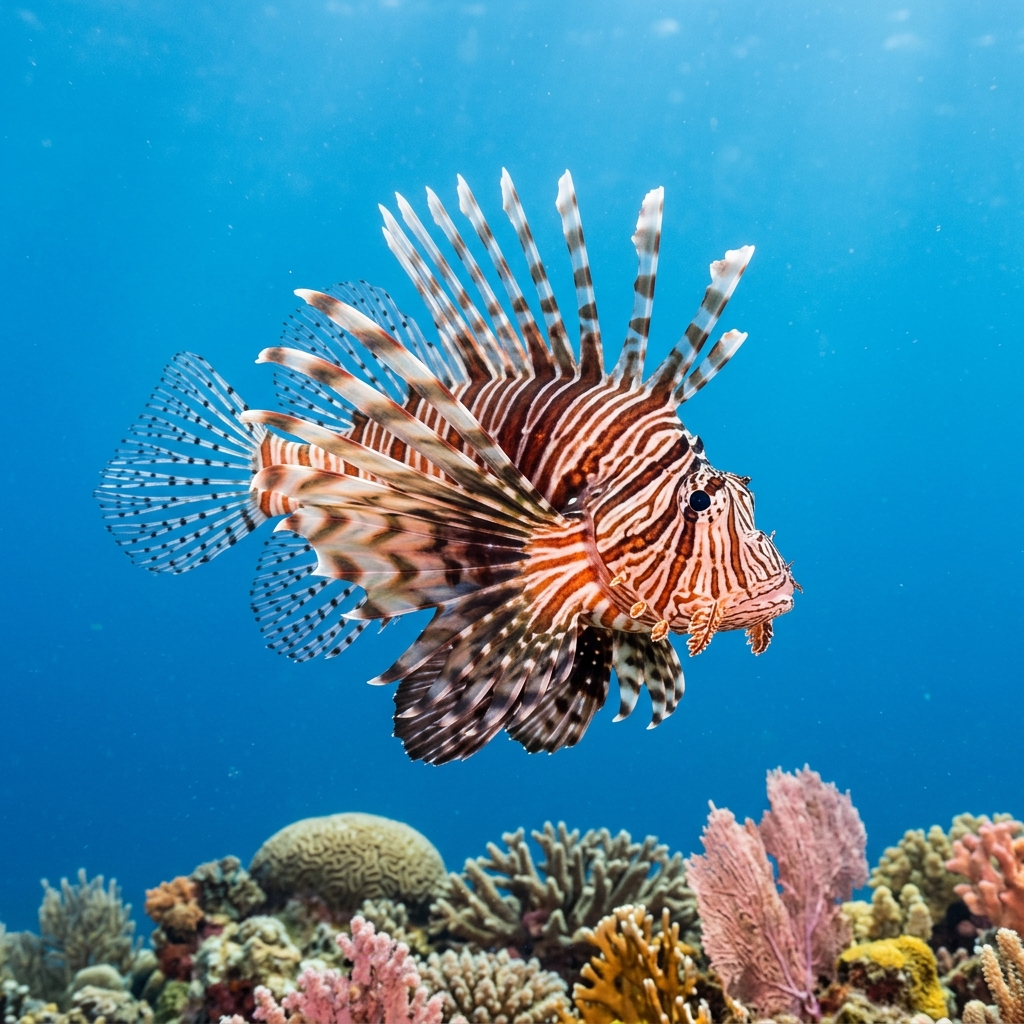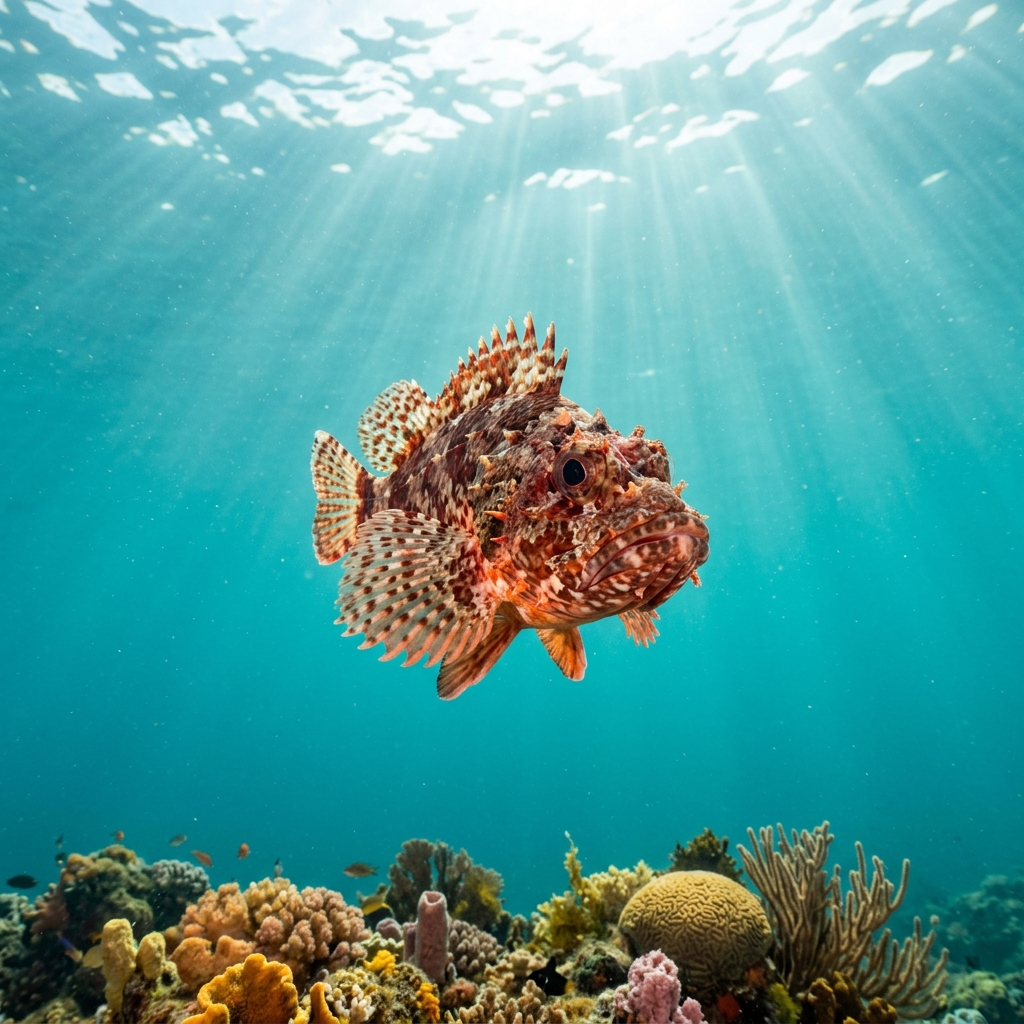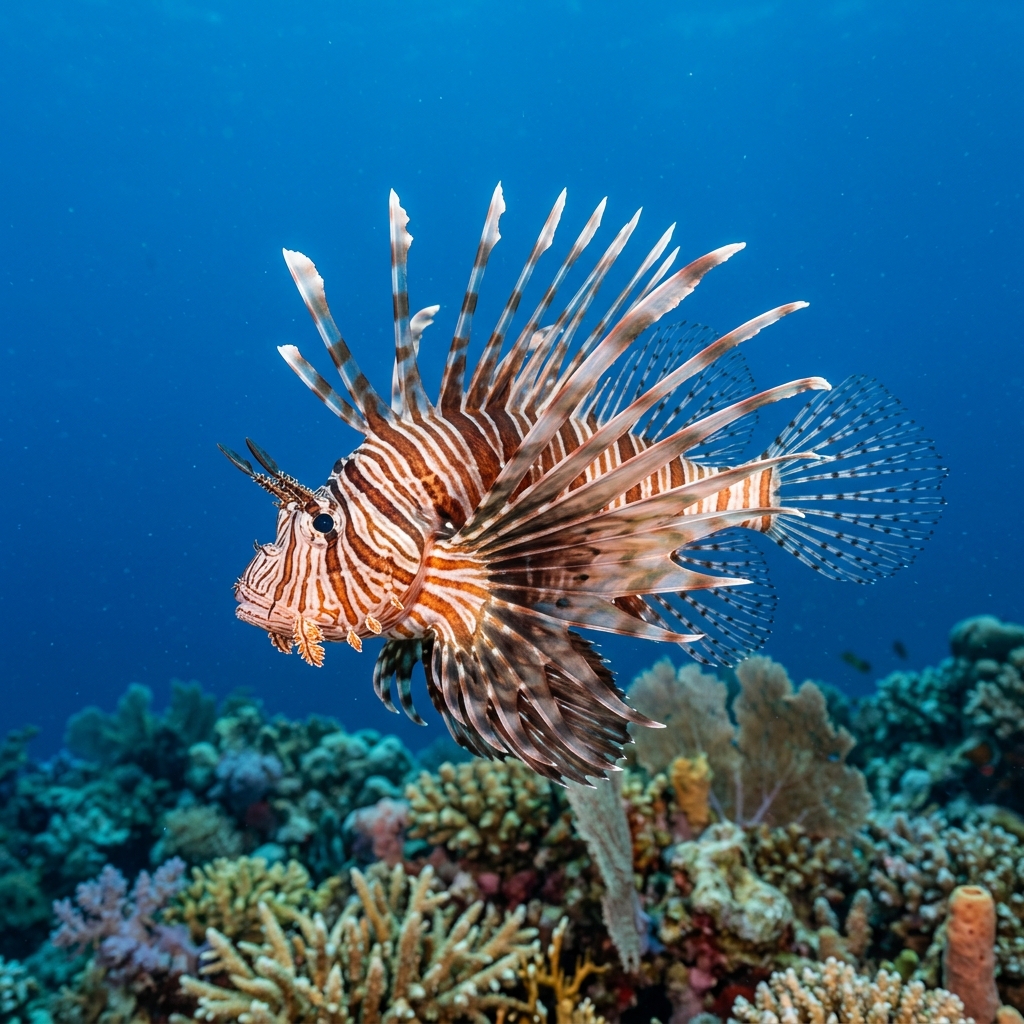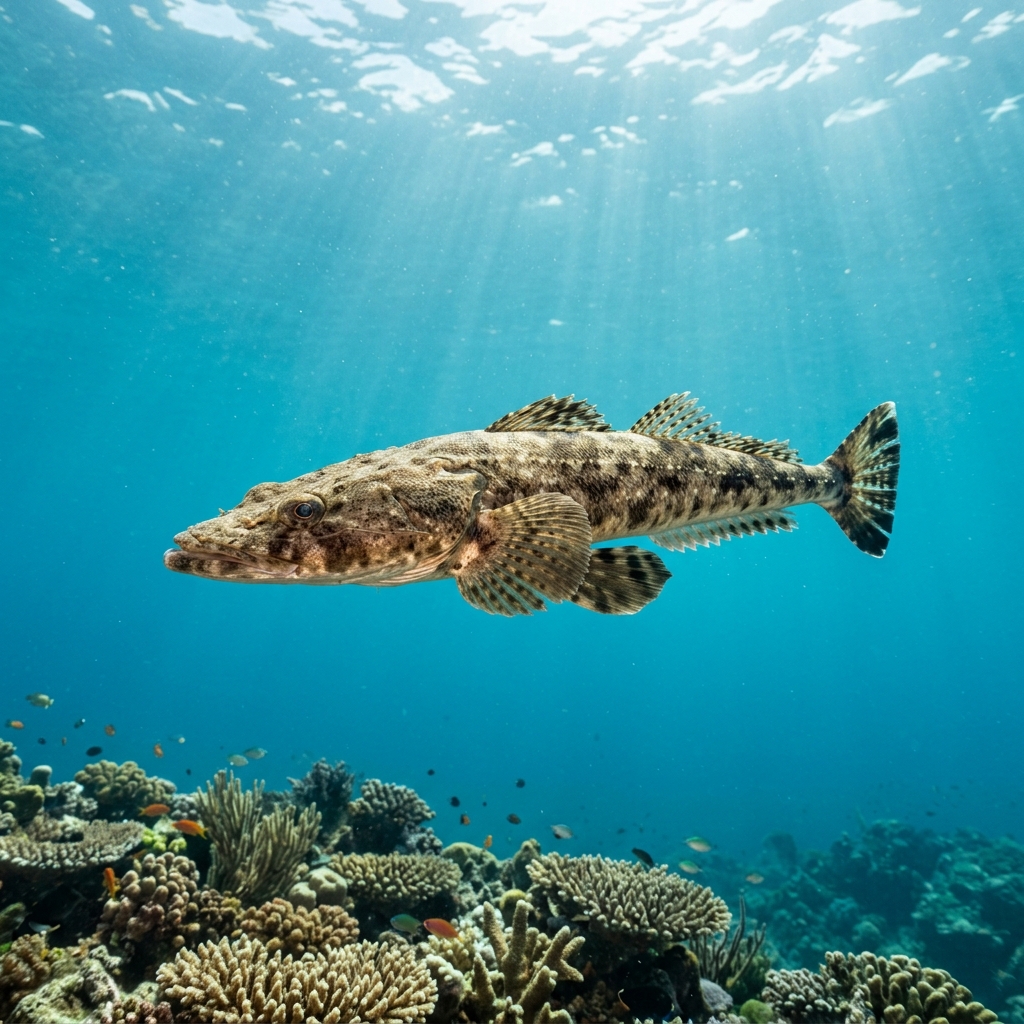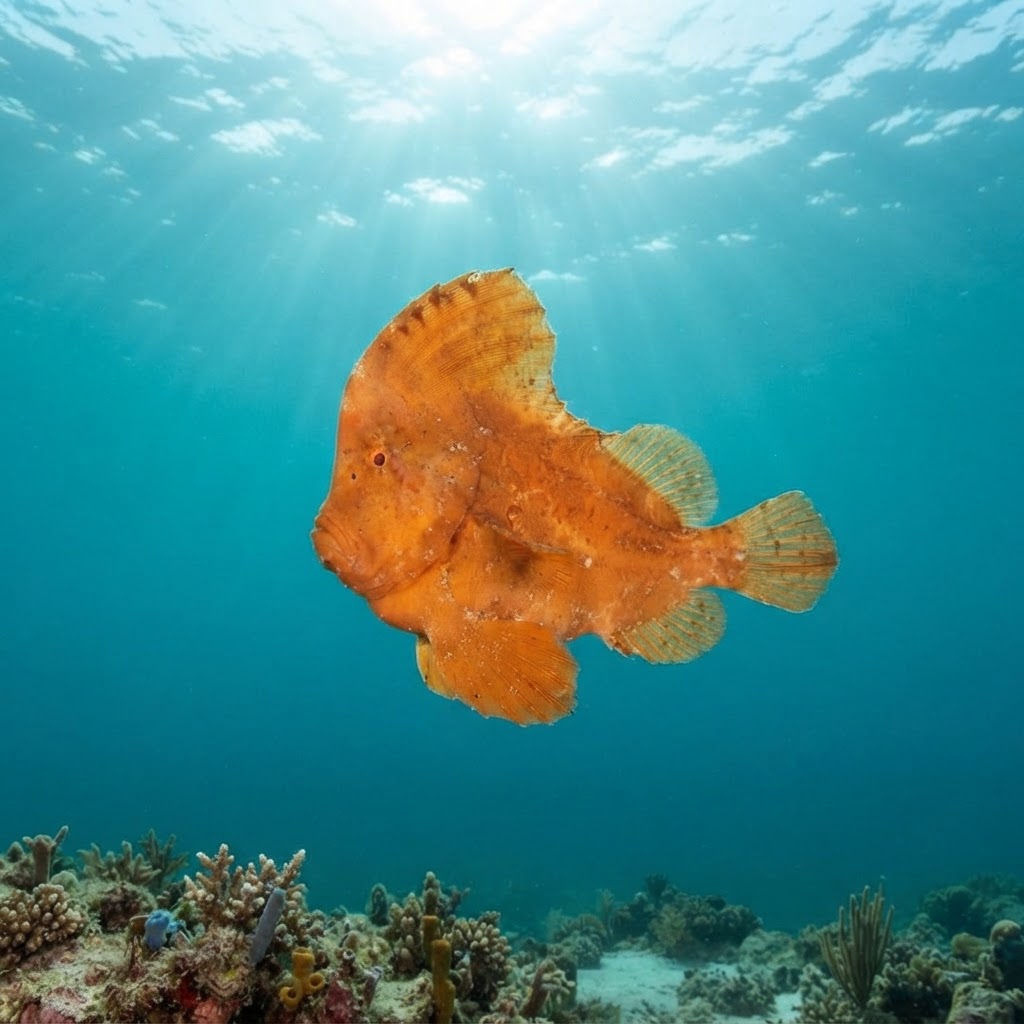
Pataecus fronto
Odd, upright, fin-walking fish found on rocky reefs in New South Wales, in water from 16.6 to 22.5 C. Here's how to spot one.
Safety warning
Related to stonefish and other Scorpaenoidea, so treat any spines with respect and avoid touching or handling it. It is not aggressive and gives divers no reason for concern if you keep hands off the reef and watch where you place them.
If you're stung
Venomous spinesGeneral first-aid guidance, not a substitute for professional medical care. In an emergency, call your local emergency number.
Stands almost vertically on its lower fins like a small propped-up leaf, rather than lying flat on the substrate the way most bottom-dwelling fish do. Body is narrow, deep and laterally flattened, usually a dull red to reddish-brown or mottled colour that blends with sponge and weed cover. Grows to around 19 cm, small enough to swim past without noticing, and the face has a blunt, almost puppet-like profile with small eyes set high on the head. Its odd, tail-down posture is the single biggest giveaway once you know to look for it.
Found propped upright on the reef, tail-end down, using its fins almost like stubby legs rather than swimming freely. It relies on stillness and camouflage against sponge and algae rather than fleeing, so divers who move slowly and scan low ledges and rubble patches have the best chance. It tends to stay put once spotted, making it a good subject for a careful, unhurried look rather than a chase.
That fin-walking, upright stance is shared with its Pataecidae family relatives and is a real adaptation for staying wedged and camouflaged among sponges rather than swimming in open water.
Sightings show no clear seasonal pattern, and with a comfortable range of roughly 16.6 to 22.5 C it's reasonable to treat this as a year-round find on NSW reefs rather than a seasonal one.
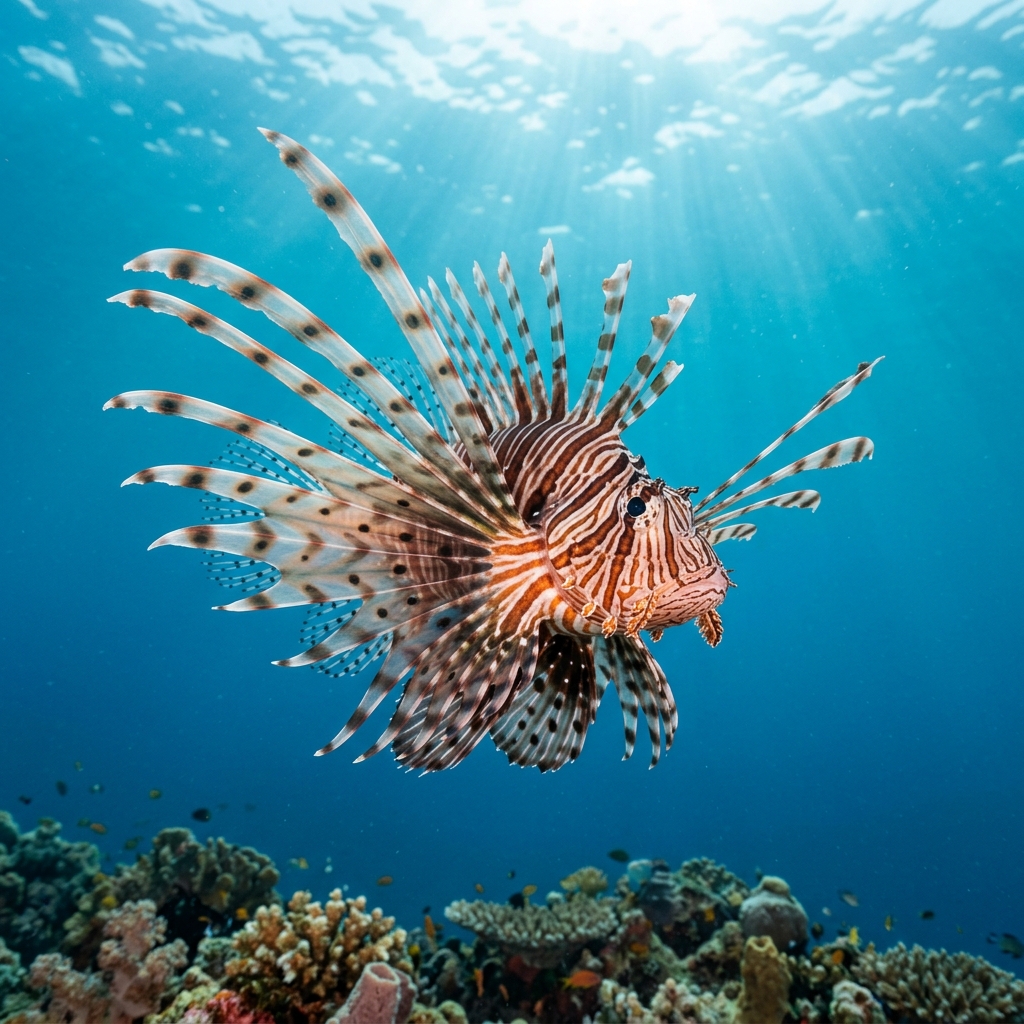
Reef neighbours a diver could mistake it for. Use the identification notes above to tell them apart.
Every logged sighting in the data comes from New South Wales, Australia, which is currently the only confirmed region for divers wanting to find this species. Within NSW it turns up on rocky reef sites where sponge and weed growth gives it something to disappear against.
Mapping where Red Indianfish is logged…
All confirmed sightings come from New South Wales, Australia, on rocky reef sites with sponge and weed cover for it to blend into.
There's no detected season in the sighting data, and its temperature range of roughly 16.6 to 22.5 C suggests it can be found on NSW reefs throughout the year.
Look for a small, narrow, reddish fish propped upright on its lower fins rather than lying flat, with a blunt head and small high-set eyes. The upright fin-walking posture is the clearest ID clue.
They reach around 19 cm, small enough to overlook if you're not scanning ledges and sponge patches closely.
They carry venomous spines like other members of the scorpionfish family, so avoid touching them, but they are not aggressive towards divers.
Instead of swimming or lying flat, they prop themselves upright on their fins like a small stand, using stillness and camouflage against sponges to avoid notice.
Site and sighting data is aggregated from diver logs, iNaturalist and GBIF. For taxonomy and conservation status:
Madeira Rockfish
2,773 sites