Neopetrolisthes maculatus
Find dotted anemone crabs in the Visayas and Sipadan in warm 27-29 °C water. Tips on ID, best season, and where sightings concentrate.
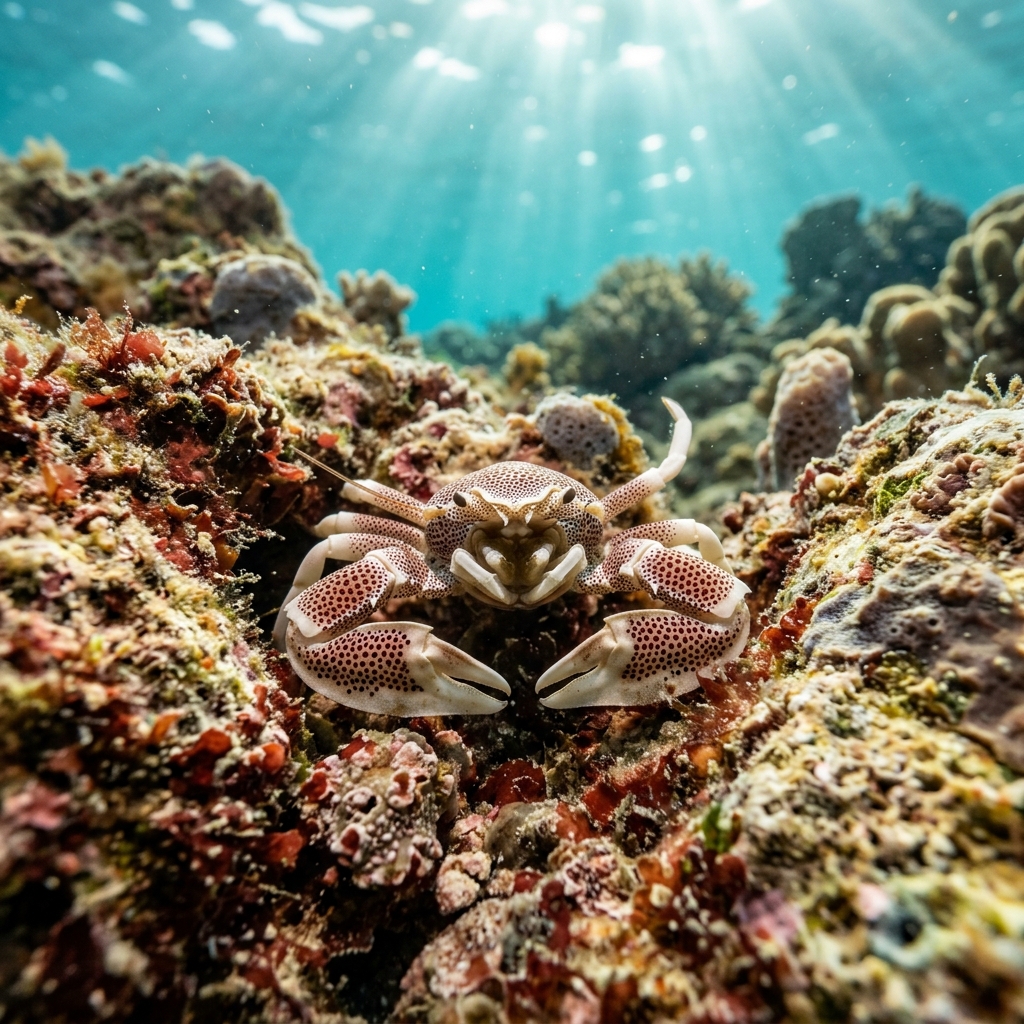
Look for a small, flattened porcelain crab (porcelain crabs are broader and rounder than true crabs, with fan-like feeding appendages) sitting directly on the fleshy column or tentacles of a host anemone. The body is pale cream to white, densely covered in reddish-brown or orange spots that give the species its name. The claws are notably broad and flat compared with the body, also marked with spots. If you see a crab this small apparently living inside an anemone and refusing to budge, it is almost certainly this species.
Almost every sighting is on an anemone: the crab perches on the column or base, using the stinging tentacles as protection and rarely straying more than a body-length away. When approached by divers it typically hunkers down and presses tight against the anemone rather than fleeing, making it easier to observe but harder to photograph against the textured background. It feeds by sweeping fine particles from the water with its feathery mouthparts, a behaviour you may catch if you watch quietly for a minute without disturbing it.
Despite the name 'crab', porcelain crabs are more closely related to squat lobsters than to true crabs. They are notable for readily autotomising (voluntarily dropping) a claw when threatened, then regrowing it over subsequent moults, so missing or asymmetric claws on an individual are not unusual.
In the northern hemisphere, sightings concentrate from November through June, so the cool-dry season across the Philippines, Malaysia, and Thailand is the peak window. Southern hemisphere sites such as Tanzania and Mozambique see the most records from October through May.
The dotted anemone crab is most consistently logged across the Philippines and Indonesia, with the Central Visayas, particularly around Cebu and Bohol, and East Sabah, including the waters around Sipadan, standing out as the strongest regions. Sulawesi, Bali, and the Lombok area of Indonesia are also reliable, and there are solid records from Phuket and Phi Phi in Thailand, as well as from East African reef systems in Tanzania and Mauritius.
Mapping where Dotted Anemone Crab is logged…
The Central Visayas in the Philippines and the waters around Sipadan in Malaysian Sabah are the most reliable places to find them. Strong populations are also recorded across Sulawesi and Bali in Indonesia, around Phuket and Phi Phi in Thailand, and on the East African reefs of Tanzania and Mauritius.
For north-hemisphere destinations like the Philippines and Thailand, November to June is the peak period. For East African sites such as Tanzania and Mozambique, October through May sees the most sightings. The species lives in warm 27-29 °C water, so it is present year-round on suitable tropical reefs.
Look for a small, flat, cream-to-white crab covered in reddish-brown spots, sitting directly on a sea anemone. Its claws are notably broad and paddle-like. The combination of host anemone, spotted pattern, and reluctance to swim away makes it fairly distinctive once you know what to look for.
Dotted anemone crabs are small, typically around 1 to 2 centimetres across the carapace (shell). They can be easy to overlook because they sit tight against the anemone and their spotted pattern helps them blend in at a glance.
No, they belong to the family Porcellanidae, which makes them porcelain crabs and closer relatives of squat lobsters than of true crabs. A key giveaway is the broad, fan-like third pair of mouthparts they use to filter food from the water, a feature true crabs do not share.
Site and sighting data is aggregated from diver logs, iNaturalist and GBIF. For taxonomy and conservation status:
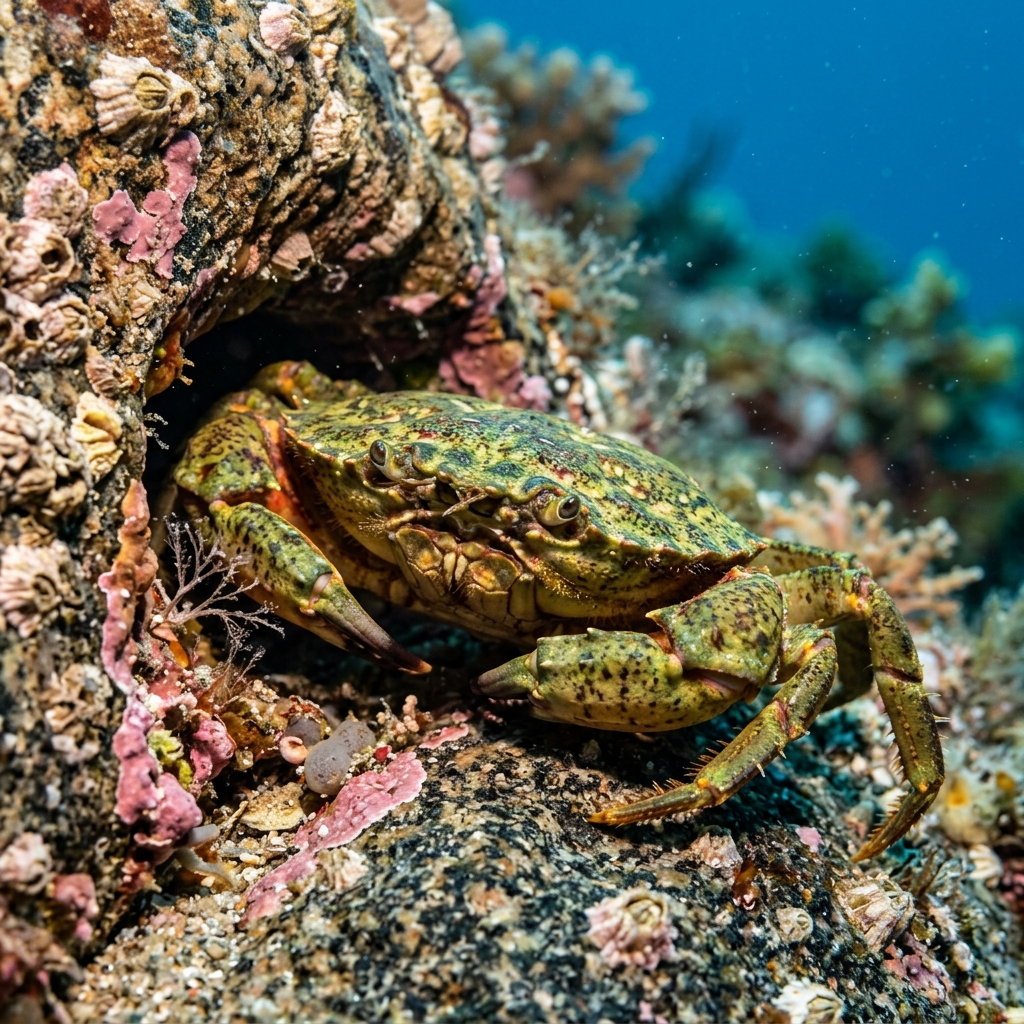
European Green Crab
2,469 sites