Gorgoniidae spp.
Red gorgonians colour reefs from Florida to the Costa Brava. Learn where to find them, what temperatures they prefer, and how to tell them apart.
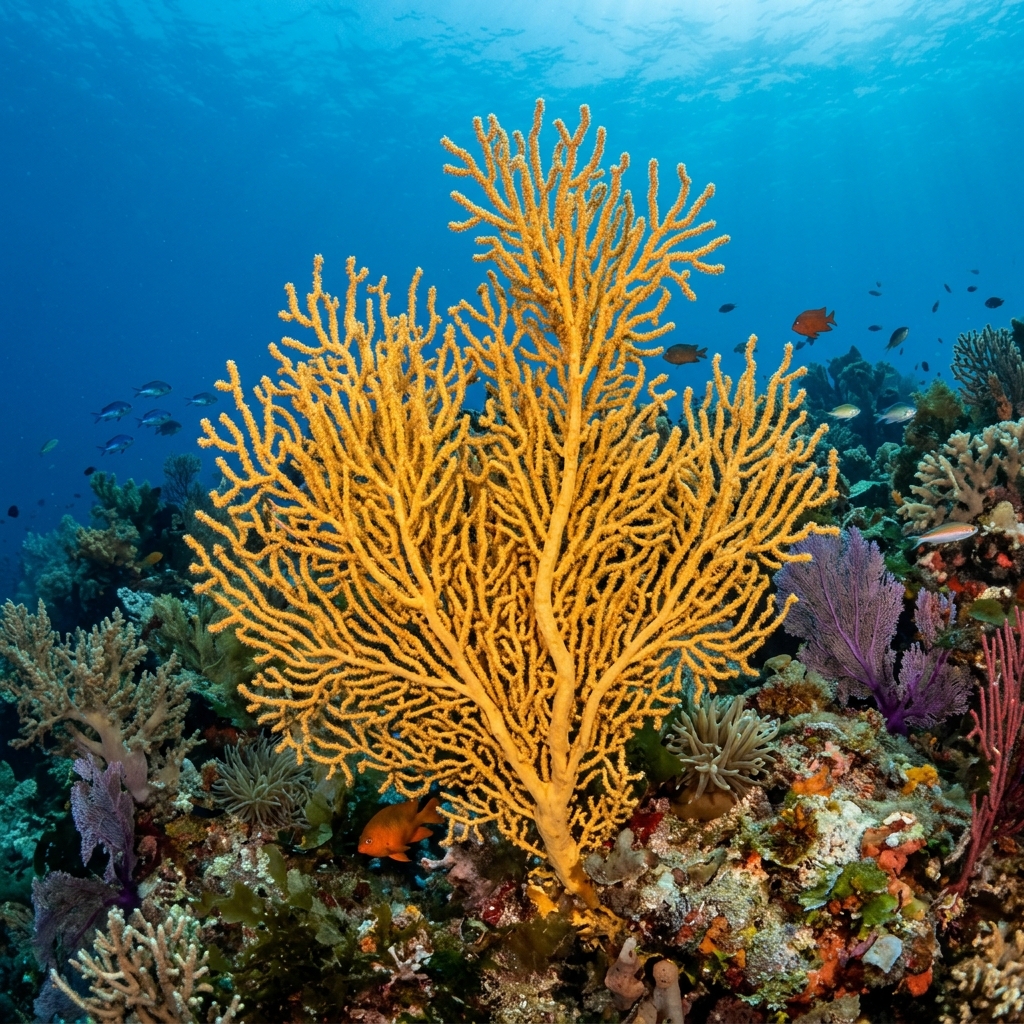
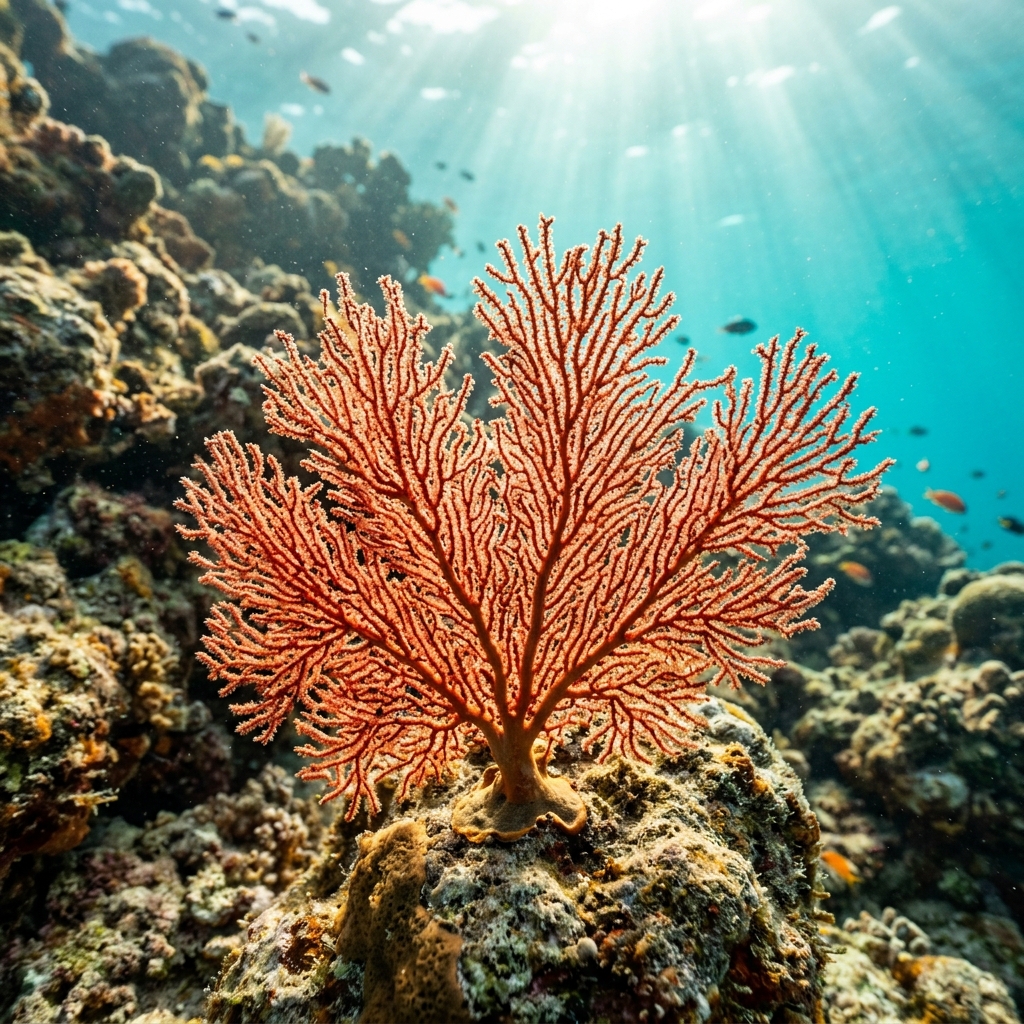
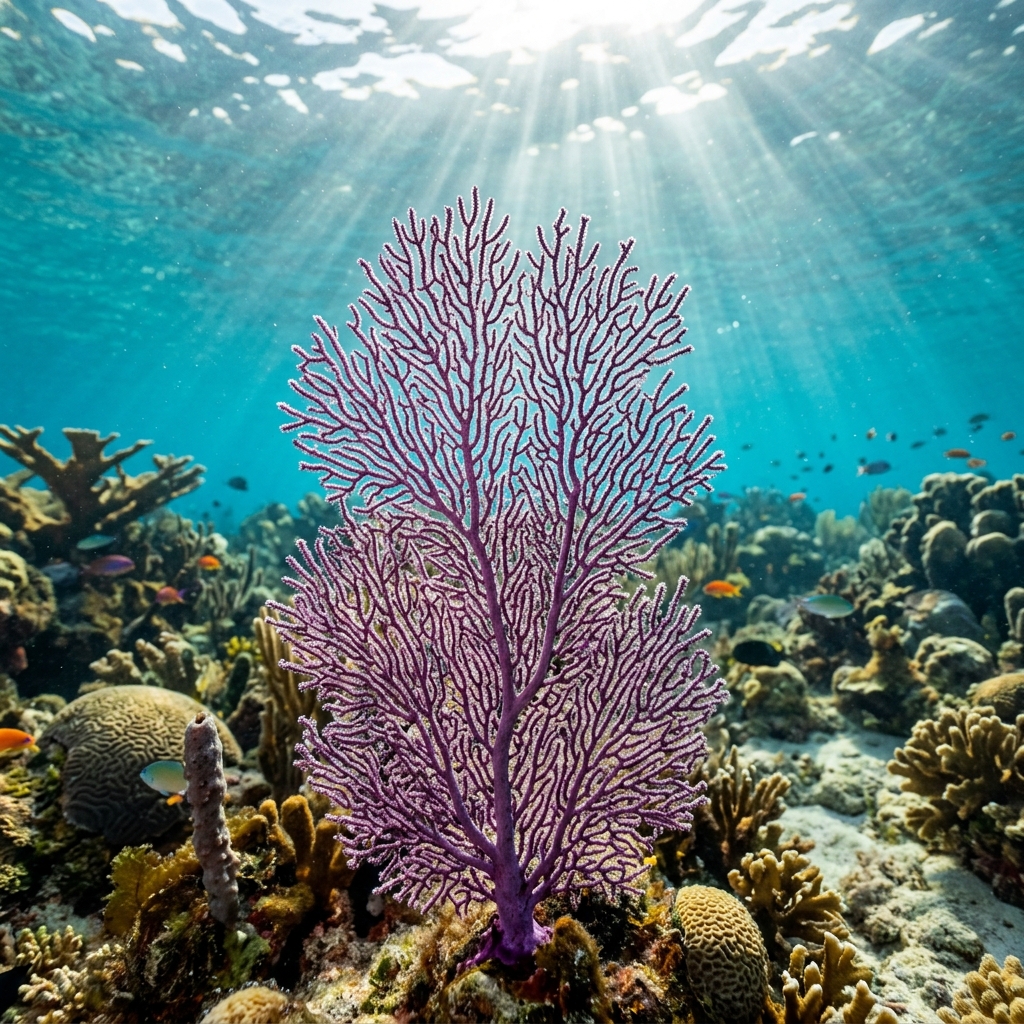
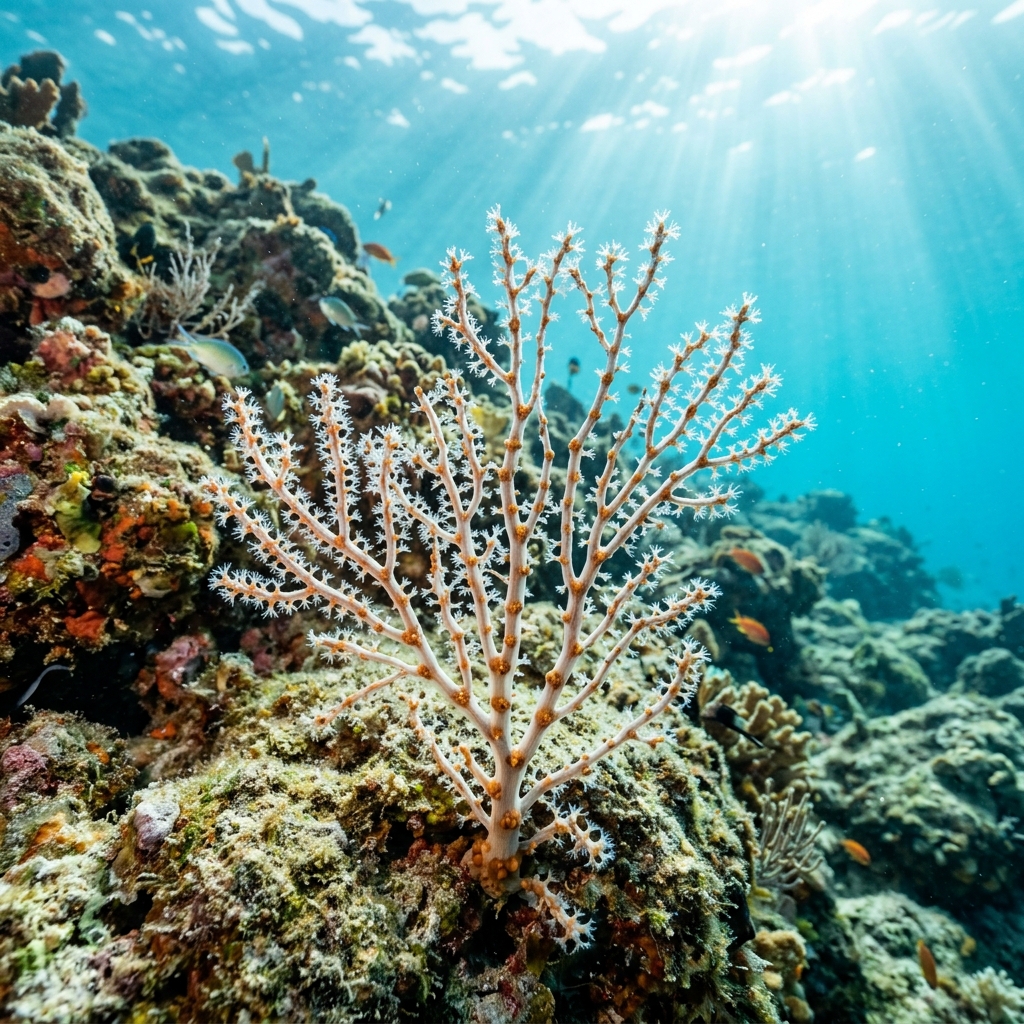
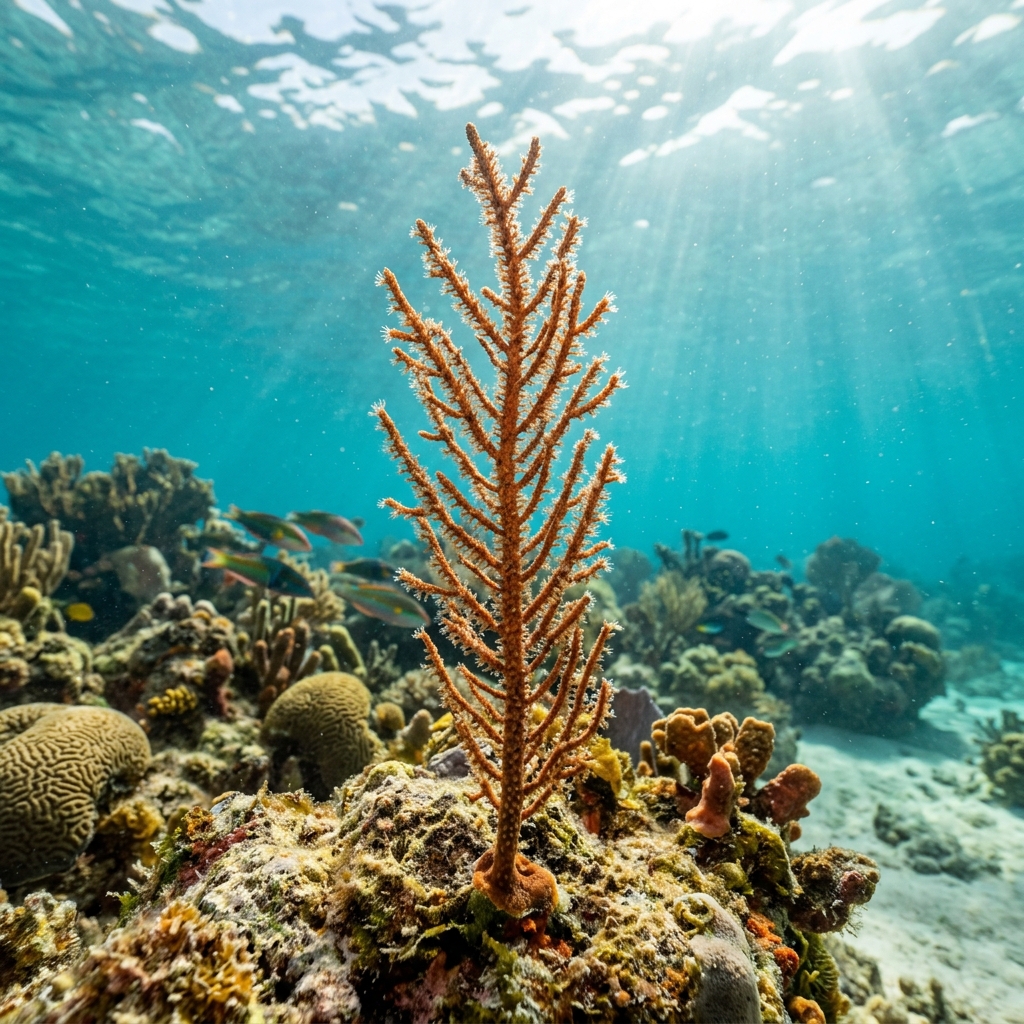
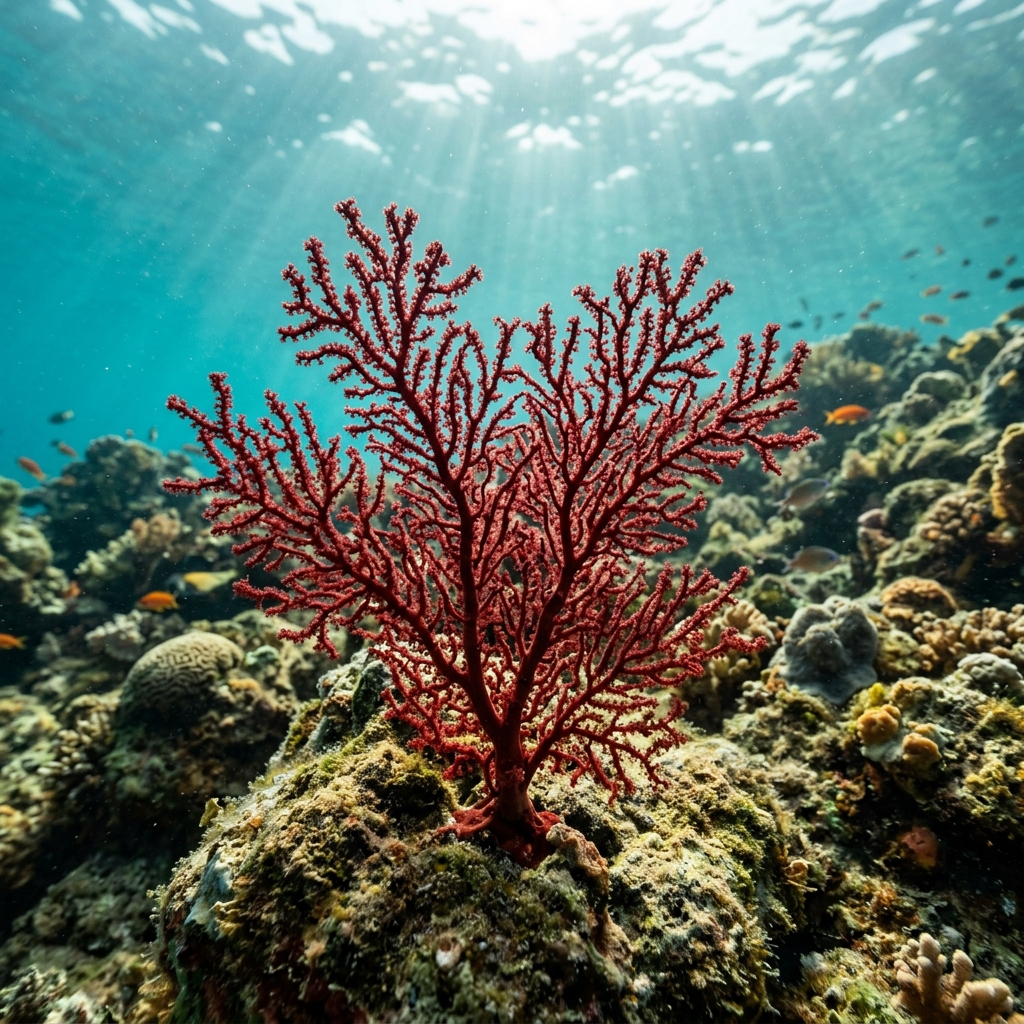
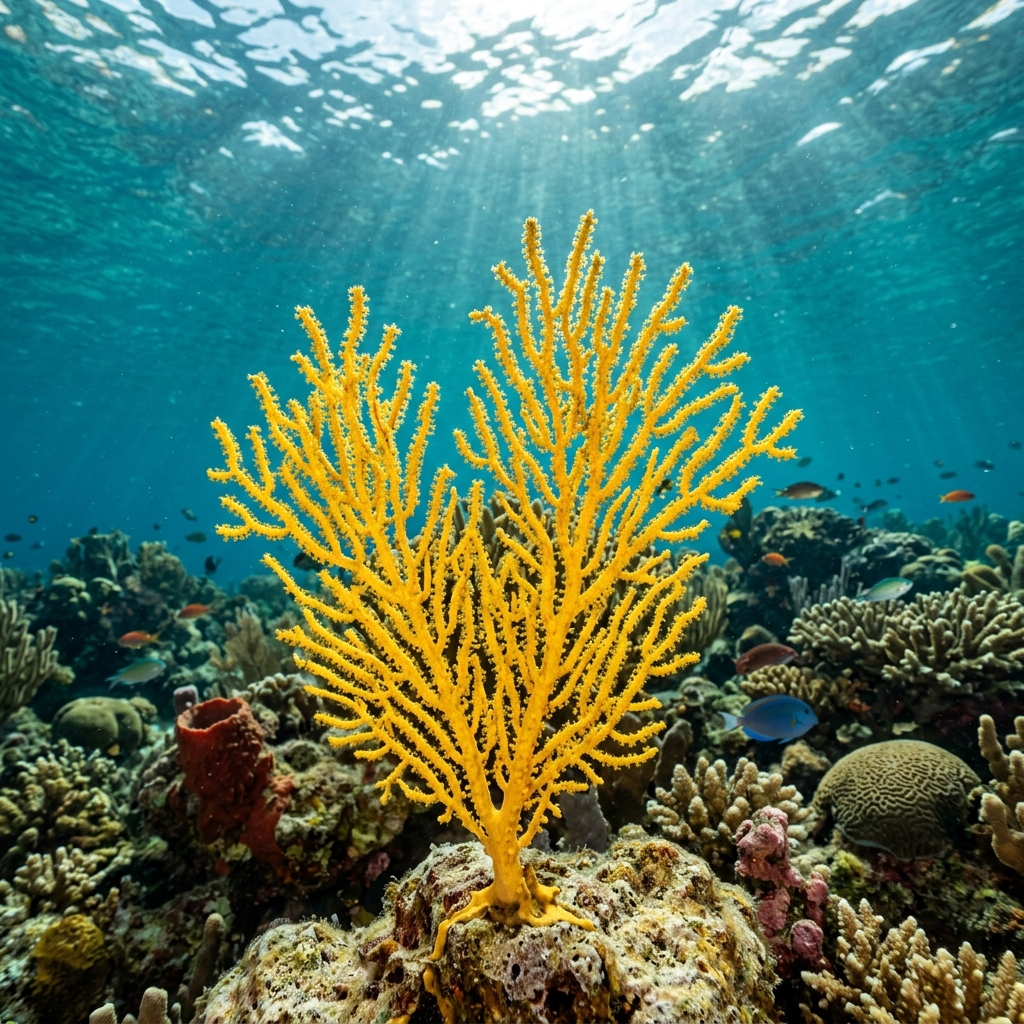
Bold, fan-shaped colonies of branching red to deep-orange polyp-covered branches are the key marker underwater. The lattice or tree-like branching pattern typically spreads in a single plane, oriented perpendicular to the prevailing current to maximise filter feeding. Colonies range from palm-sized to well over a metre across, and the colour holds true even at depth where reds can otherwise wash out. Look for white or pale polyps extended from the branches when the animal is actively feeding.
Red gorgonians are sessile (fixed in place) filter feeders, so what you see is the colony orientated into the current with polyps extended, passively catching plankton as it flows past. They do not react to divers, but colonies on current-swept walls and slopes are the most likely to have polyps deployed and look their best. Slow, neutrally buoyant approaches avoid the surge that can damage branches.
The rigid internal skeleton of a gorgonian is made from a protein called gorgonin, which can be laid down in annual growth rings, meaning large colonies may be decades or even centuries old. A broken colony does not simply regrow quickly.
In the Northern Hemisphere, sightings are recorded throughout the year with no concentrated season, reflecting the group's wide temperature tolerance from around 11 to 24 degrees Celsius. Southern Hemisphere records are limited but cluster around April, so austral autumn is your best window in those locations.
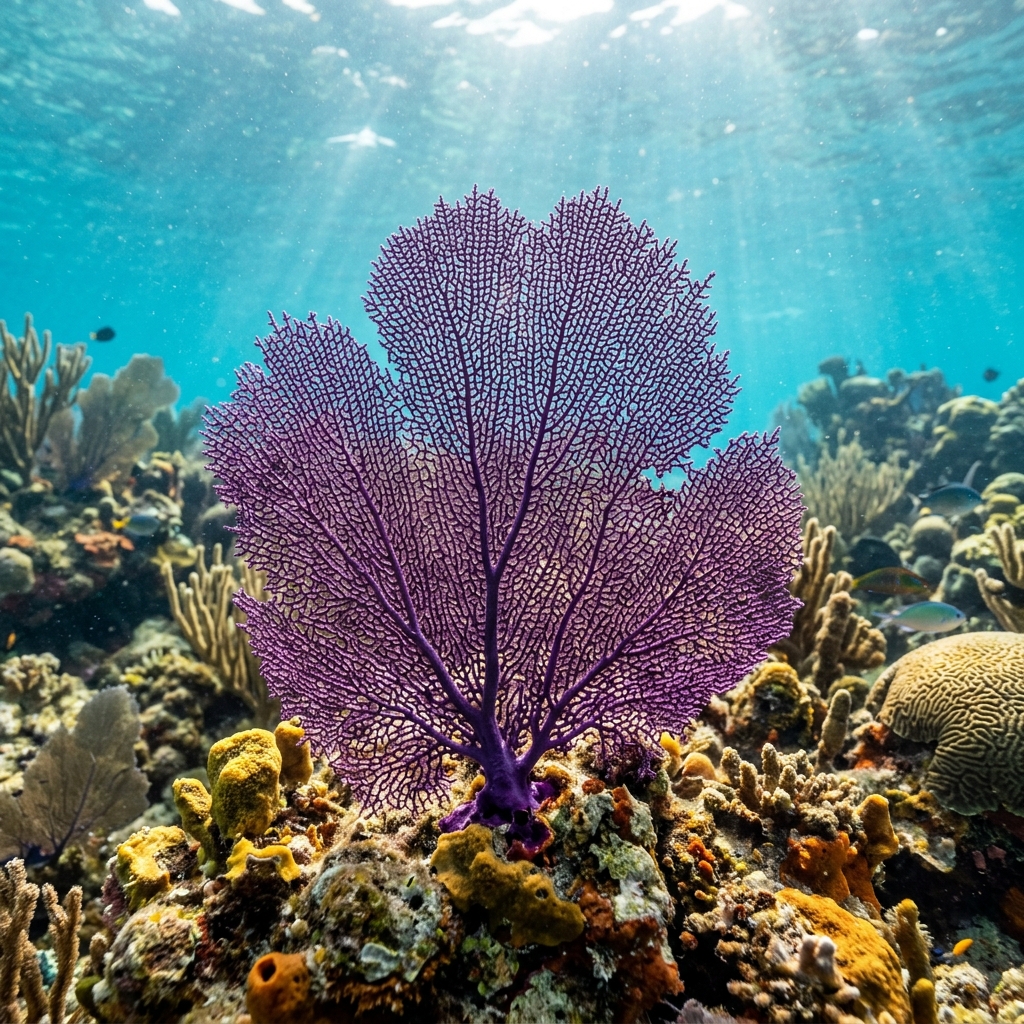
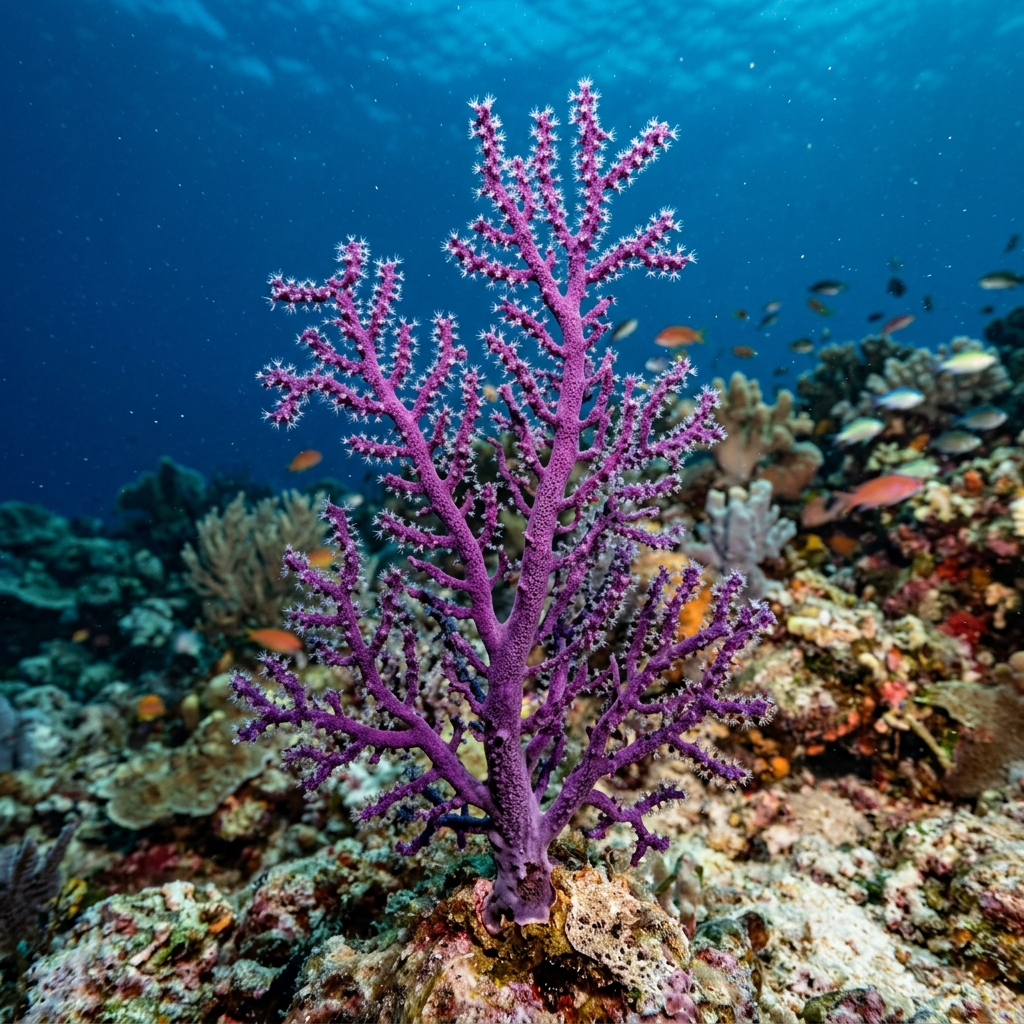
Reef neighbours a diver could mistake it for. Use the identification notes above to tell them apart.
Red gorgonians are most commonly logged across the Mediterranean, with the Costa Brava, French Riviera, and the coasts of Italy and Greece all showing strong populations. In the Atlantic, Florida and the broader US Southeast coast are the top hotspot, and the UK and Brittany also produce reliable sightings in cooler water. Spain, France, Italy, the United States, and Greece account for the largest share of records globally.
Mapping where Red Gorgonian is logged…
The Mediterranean is the most reliable region, with strong sightings along the Costa Brava, French Riviera, and the coasts of Italy, Greece, and Croatia. Florida and the US Southeast are the top Atlantic hotspot, and cooler-water sites in the UK and Brittany also produce records.
In the Northern Hemisphere they are present year-round, so there is no single best month. The group tolerates water temperatures from roughly 11 to 24 degrees Celsius, which covers both Mediterranean summers and chilly Atlantic winters. In the Southern Hemisphere, the handful of logged sightings concentrate in April.
Look for a fan-shaped colony with a branching lattice structure spreading in one flat plane, coloured red to deep orange. The branches are firm and slightly flexible, and when feeding conditions are good, tiny pale polyps extend along every branch. Orientation into the current is a reliable behavioural cue.
At most sites where they are recorded, red gorgonians are considered uncommon rather than common. You are unlikely to see them on every dive, but sites on current-swept rocky walls and slopes in the Mediterranean give the best odds. They are rarely absent entirely from suitable reef structures in their core range.
Site and sighting data is aggregated from diver logs, iNaturalist and GBIF. For taxonomy and conservation status:
Eunicella cavolini
Sea Whip
3,016 sites