Ellisellidae spp.
Long, whip-like coral colonies found across tropical reefs from Florida to the Philippines. Best logged in Jul in northern waters. Here's where to find them.
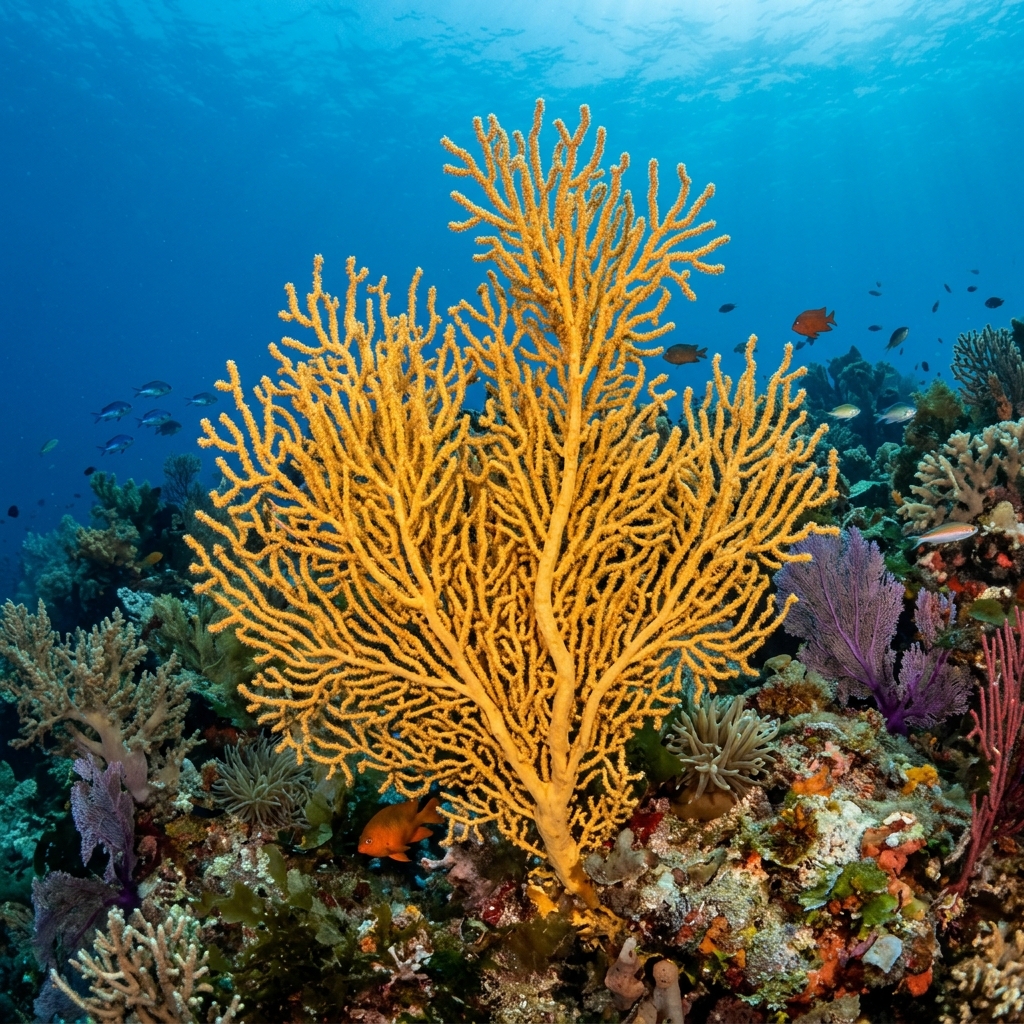
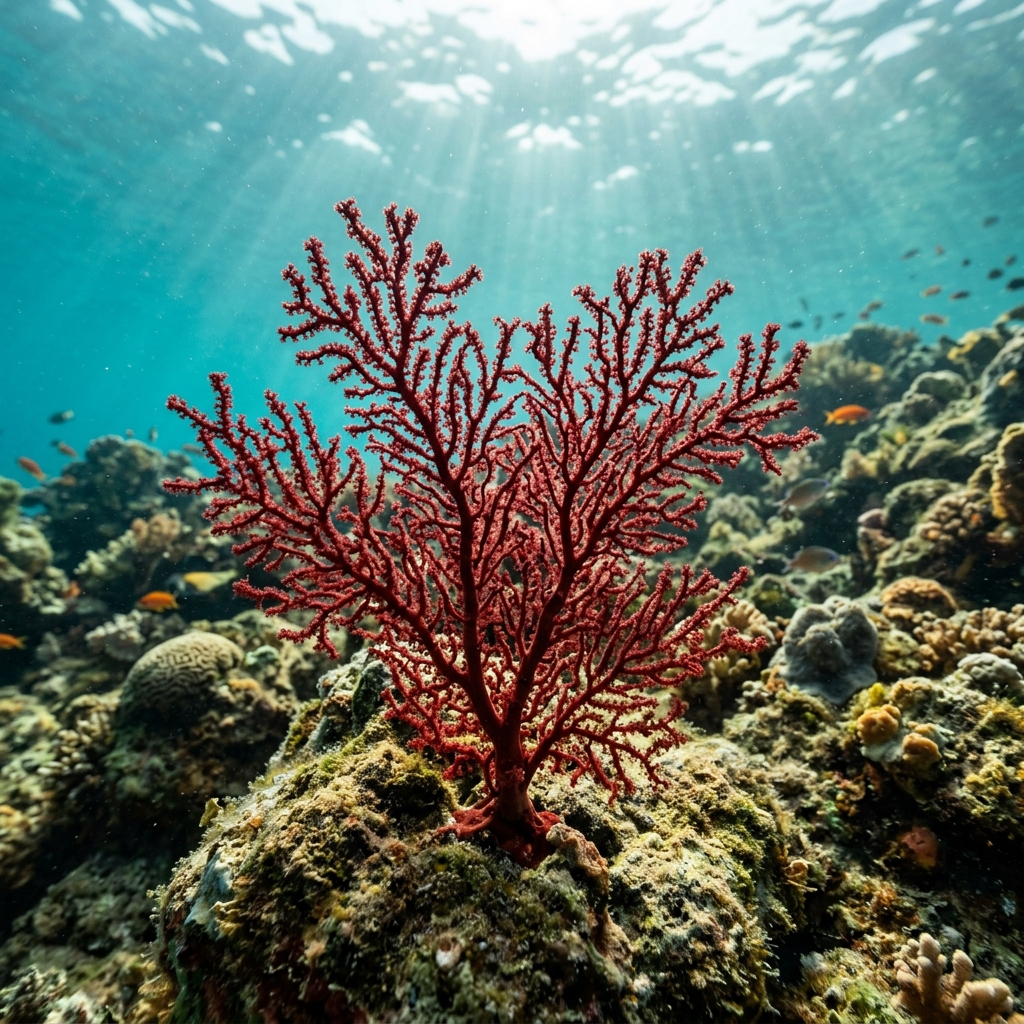
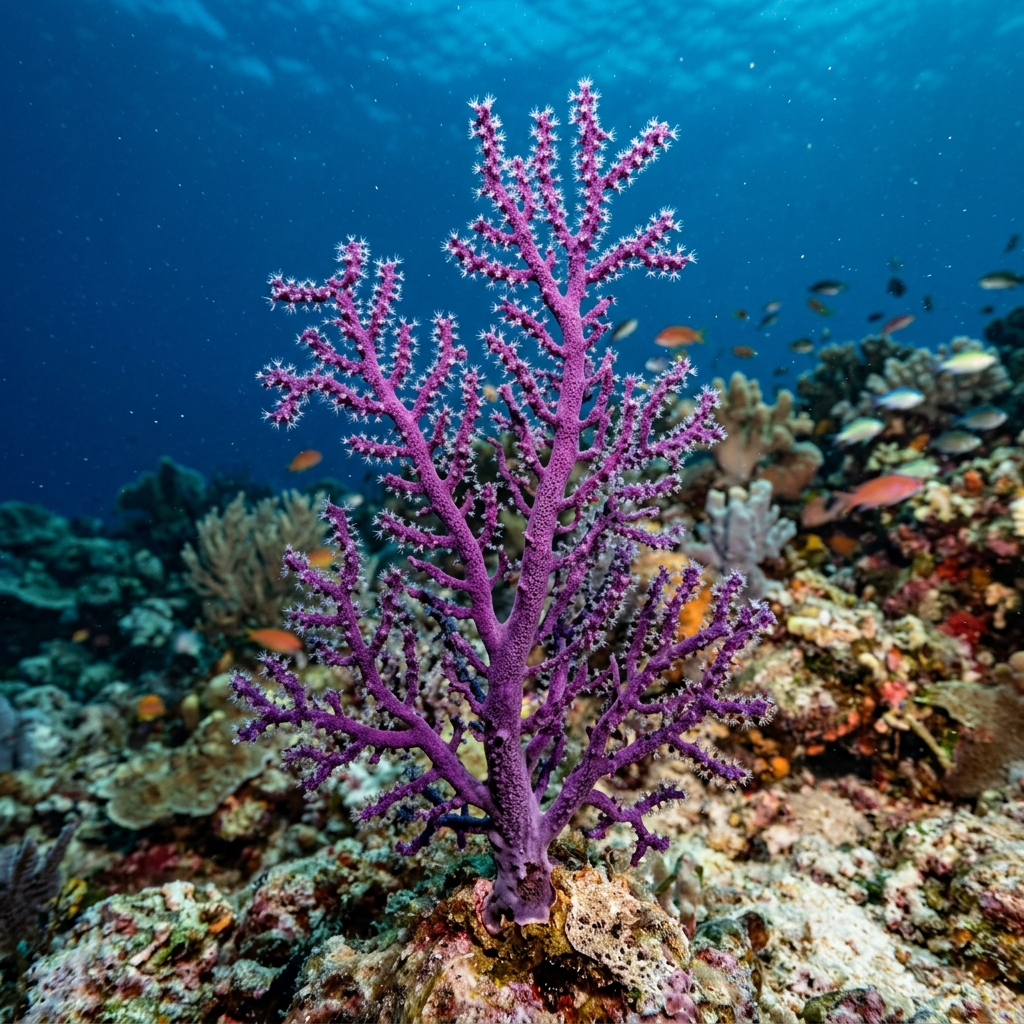
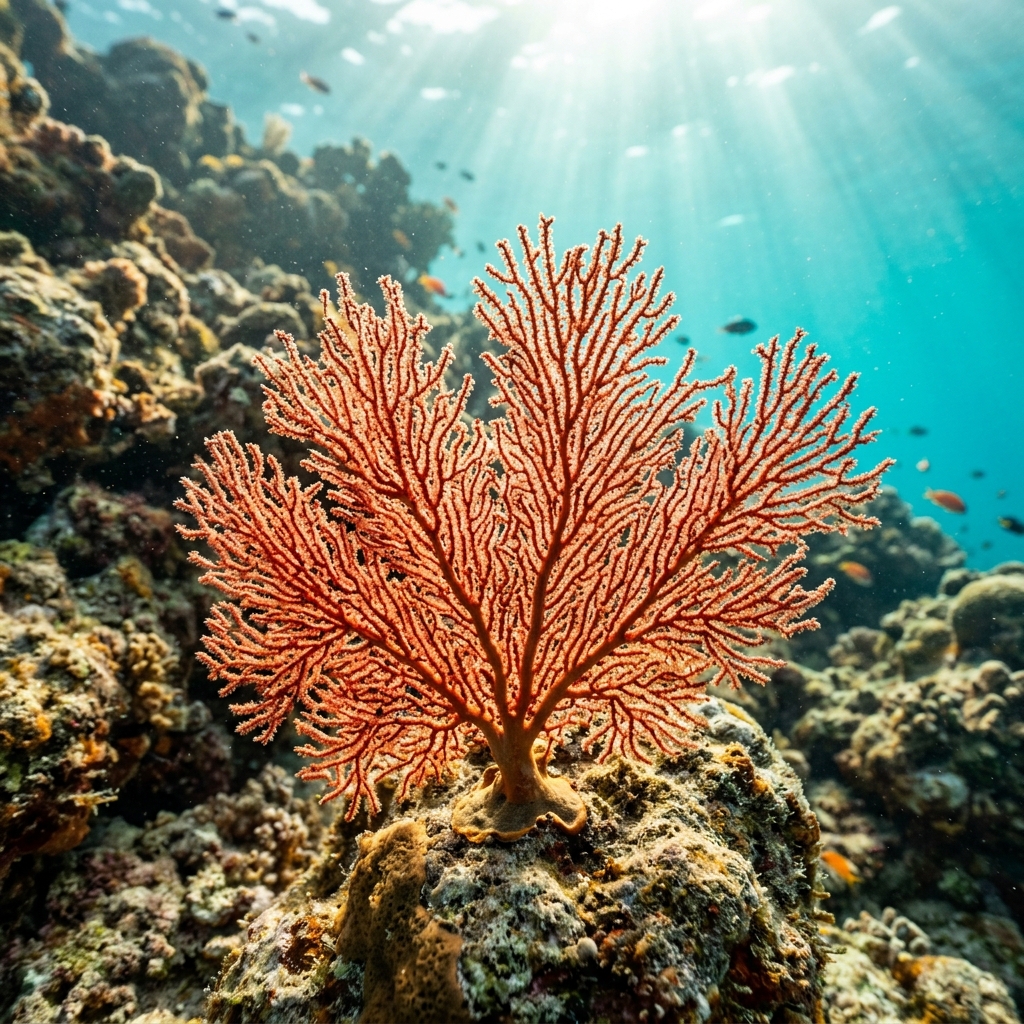
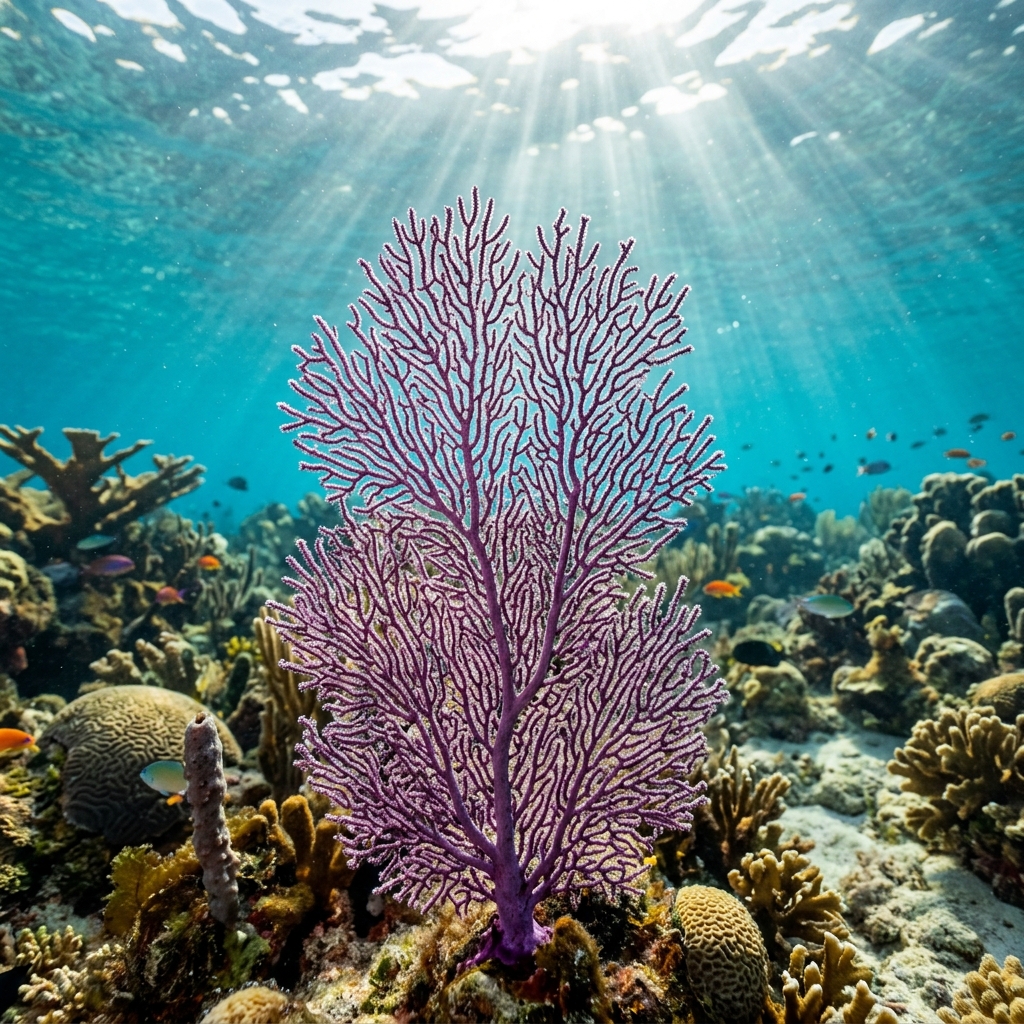
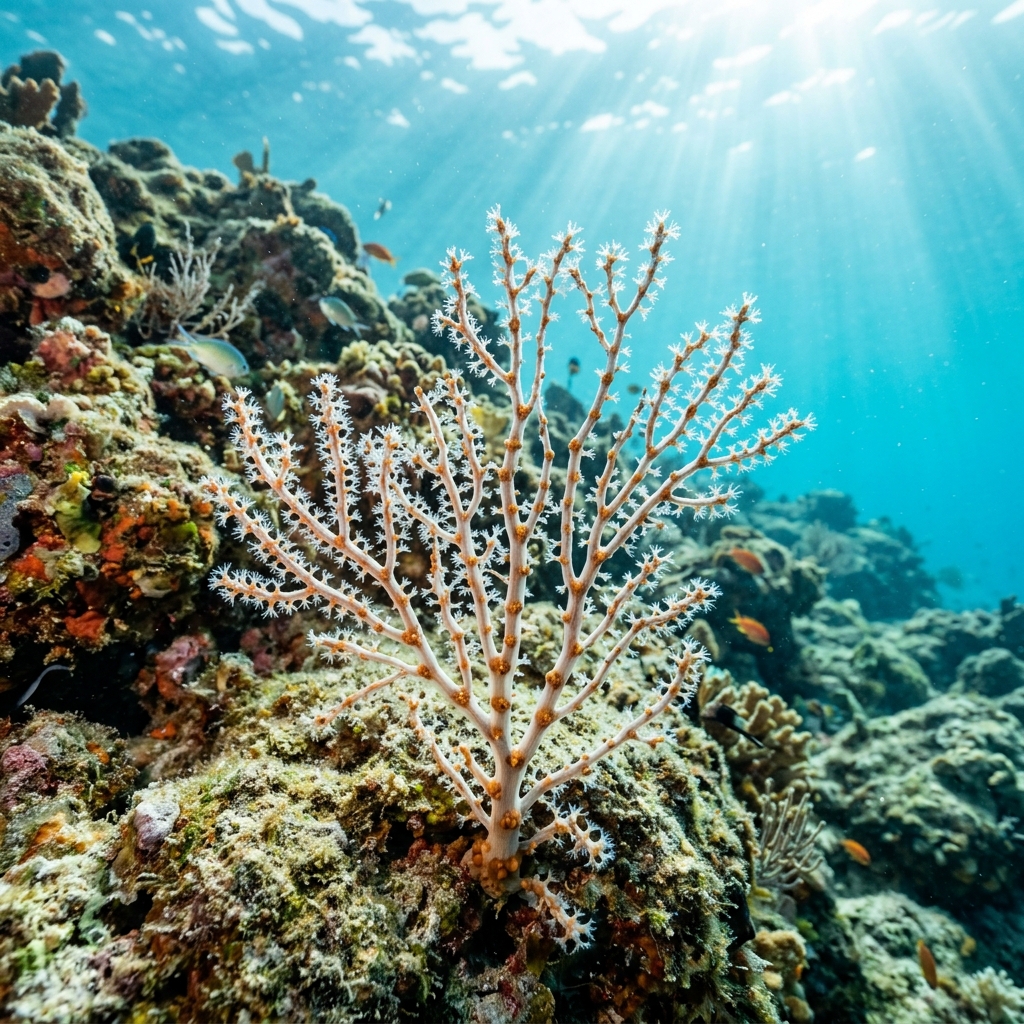
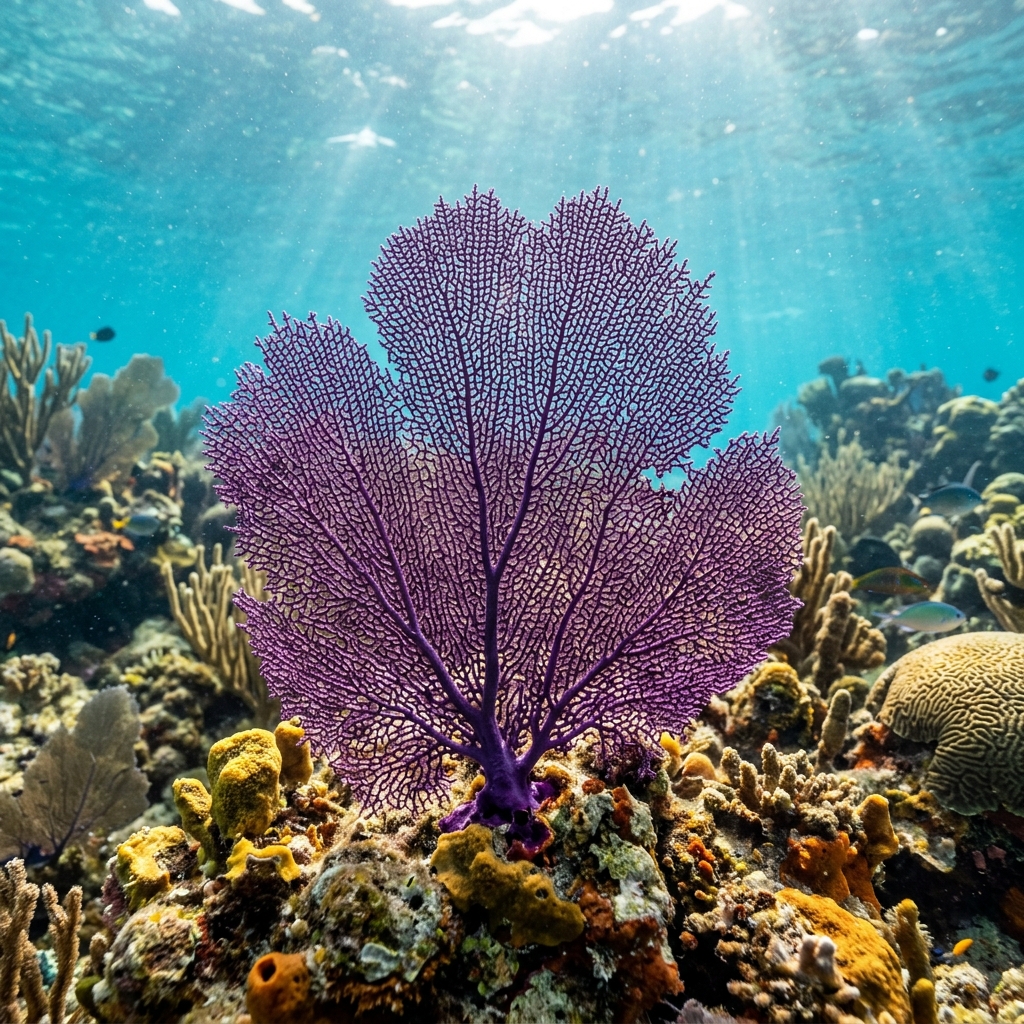
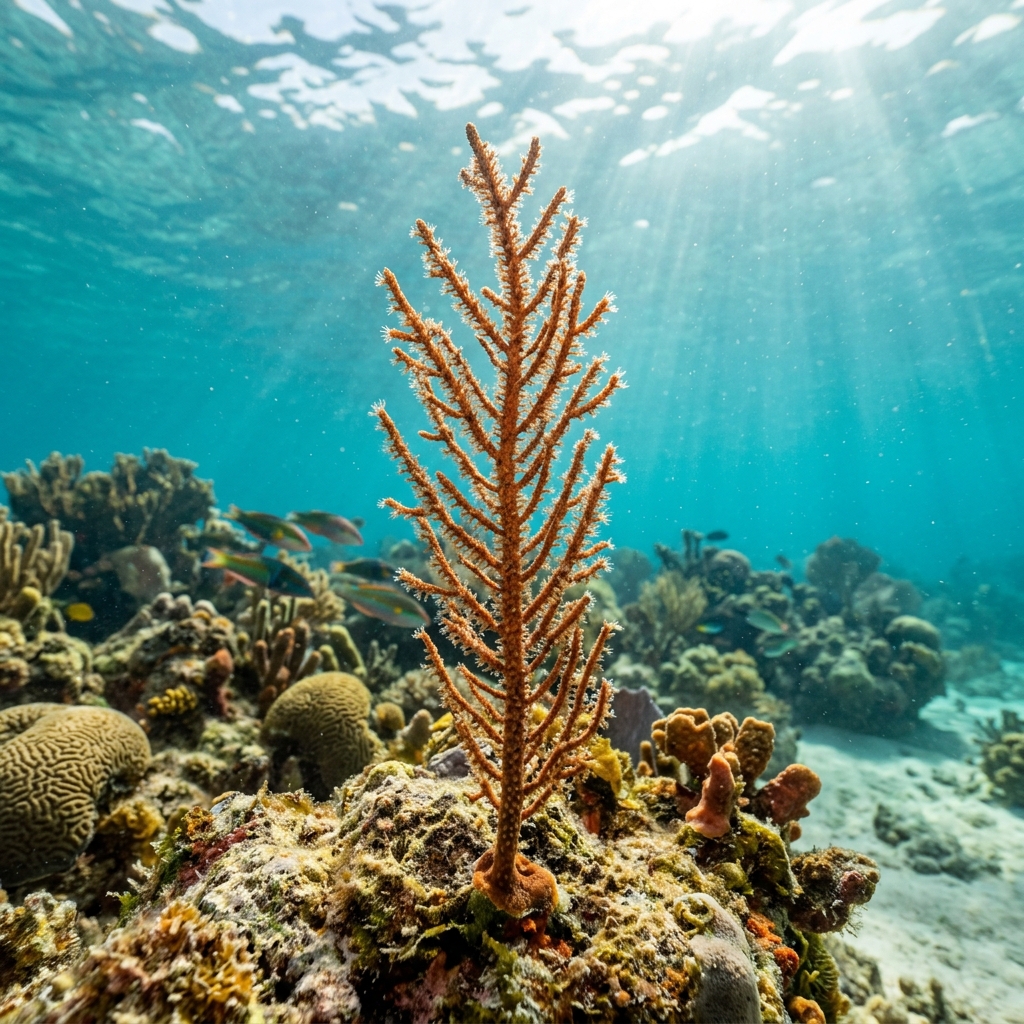
Sea whips grow as long, slender, unbranched or sparsely branched colonies that extend outward from the reef like flexible rods or wires, often reaching well over a metre in length. Colours range across orange, yellow, red, purple, and white depending on the species and depth. Unlike broader gorgonian fans, the silhouette is narrow and whip-like rather than fan-shaped, which is the key underwater cue. Tiny polyps (the individual feeding animals) line the stem and are usually visible as small bumps or extended fronds when the colony is actively feeding.
Sea whips orient themselves to face prevailing currents, positioning their polyps to catch passing plankton as it drifts by. You will most often spot them on reef walls, slopes, and current-swept channels where water movement is reliable. They are sessile (fixed in place) and do not react to diver approach, but colonies are fragile and can break from accidental contact, so keep good buoyancy control when diving near them.
Sea whips are colonial animals, not plants. Every bump along the stem is a tiny coral polyp with its own mouth and tentacles, and the whole colony is built on a flexible internal skeleton made of a protein called gorgonin, which allows it to bend in surge without snapping.
Northern Hemisphere sightings concentrate in July, which aligns with peak dive season and best visibility in many temperate-to-tropical regions. Their observed temperature range of roughly 22 to 29 °C means they are present year-round on warm tropical reefs across the Indo-Pacific and Caribbean.
Reef neighbours a diver could mistake it for. Use the identification notes above to tell them apart.
Sea whips are most consistently logged across the Indo-Pacific, with strong representation in the Philippines (particularly the Visayas and Palawan), Indonesia, the Maldives, and throughout the waters of Queensland and Western Australia. In the Atlantic, Florida and the broader Southeast United States account for the largest number of recorded sites, and significant sightings also come from Cuba and northeast Brazil.
Mapping where Sea Whip is logged…
Sea whips are recorded across a wide spread of tropical and subtropical regions. Top spots include the Philippines (Visayas, Palawan), Indonesia, the Maldives, and Australia (Queensland and Western Australia). In the Atlantic, Florida leads, with solid sightings also from Cuba and northeast Brazil.
In the Northern Hemisphere, diver sightings peak in July. On Indo-Pacific tropical reefs within the 22 to 29 °C temperature band, sea whips are present year-round, so there is no strict off-season if you are diving in warm water.
Look for a long, slender colony growing outward from the reef like a flexible rod or wire. Unlike fan-shaped gorgonians, sea whips have a narrow, whip-like profile and may be orange, red, yellow, purple, or white. Tiny polyps along the stem are visible as bumps or extended tentacles when the animal is feeding.
They are animals. Sea whips are colonial corals, each colony made up of hundreds of tiny polyps sharing a flexible skeleton. They feed on plankton carried by the current, and despite looking like a plant, they belong to the same group as hard corals and jellyfish.
Site and sighting data is aggregated from diver logs, iNaturalist and GBIF. For taxonomy and conservation status:
Red Gorgonian
3,278 sites