Isididae spp.
Find Gorgonian Coral from Florida's reefs to Norway's cold waters. ID tips, best dive regions, and what to expect at depth.
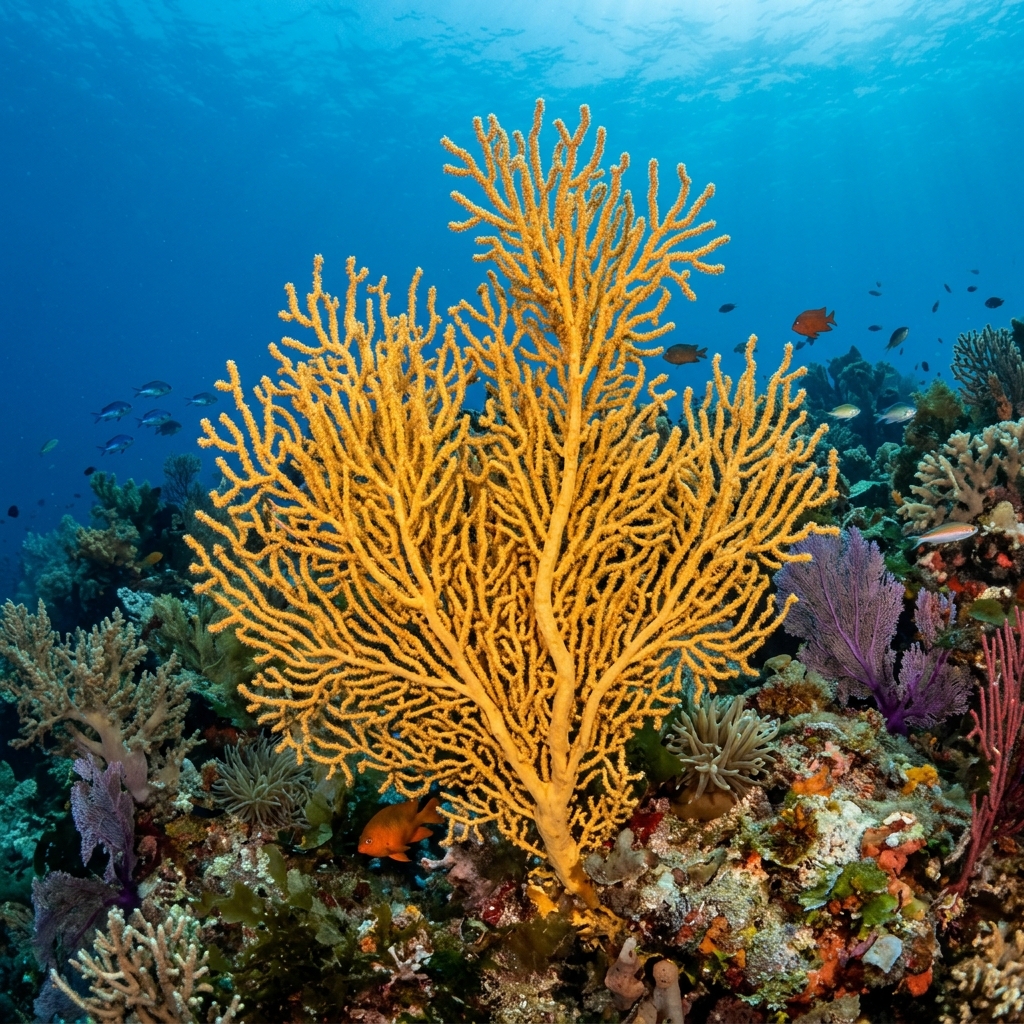
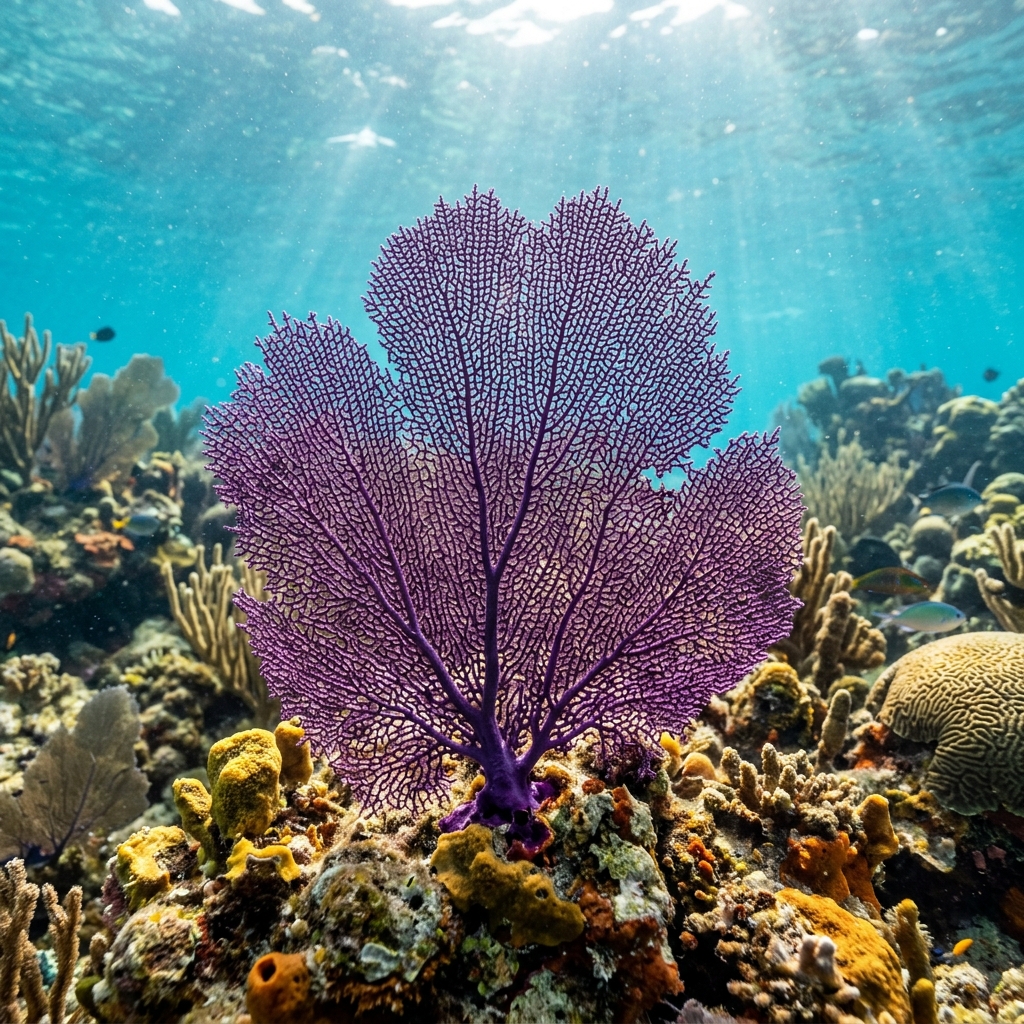
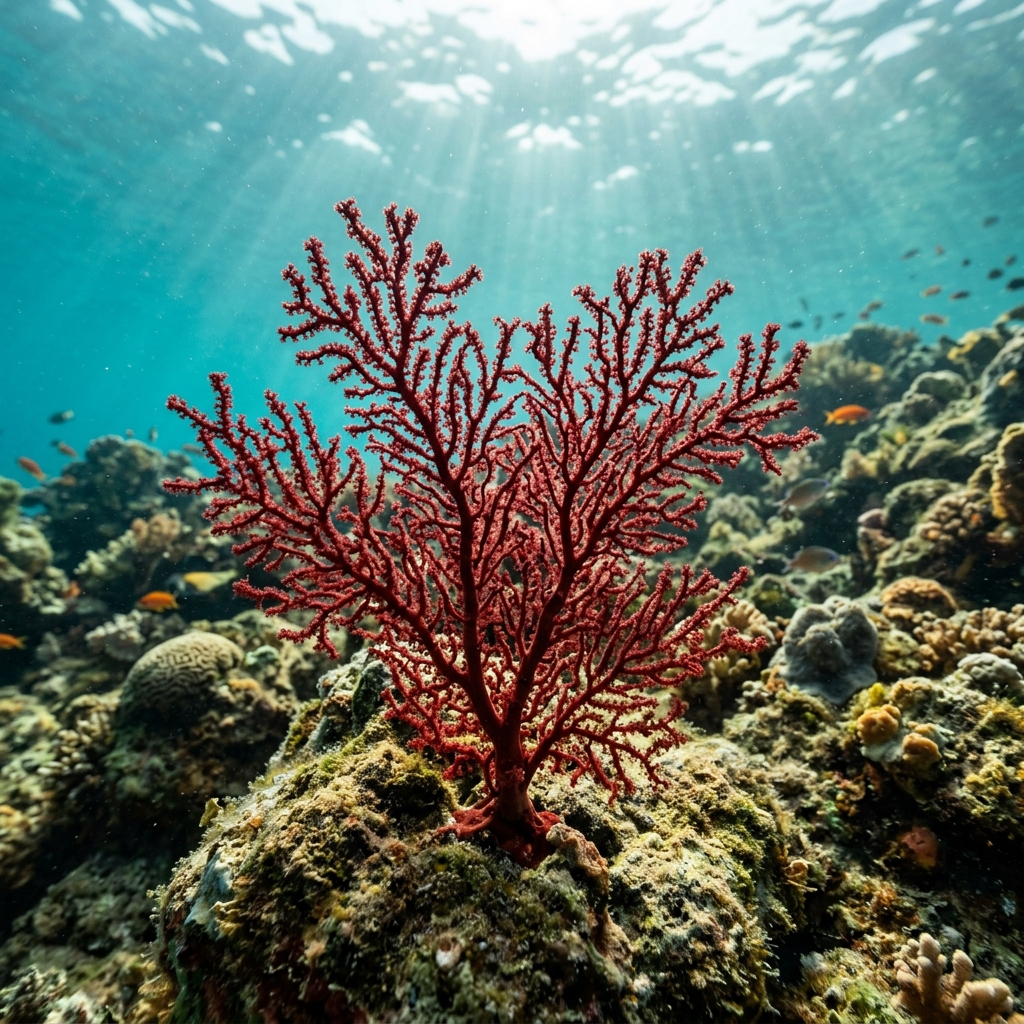
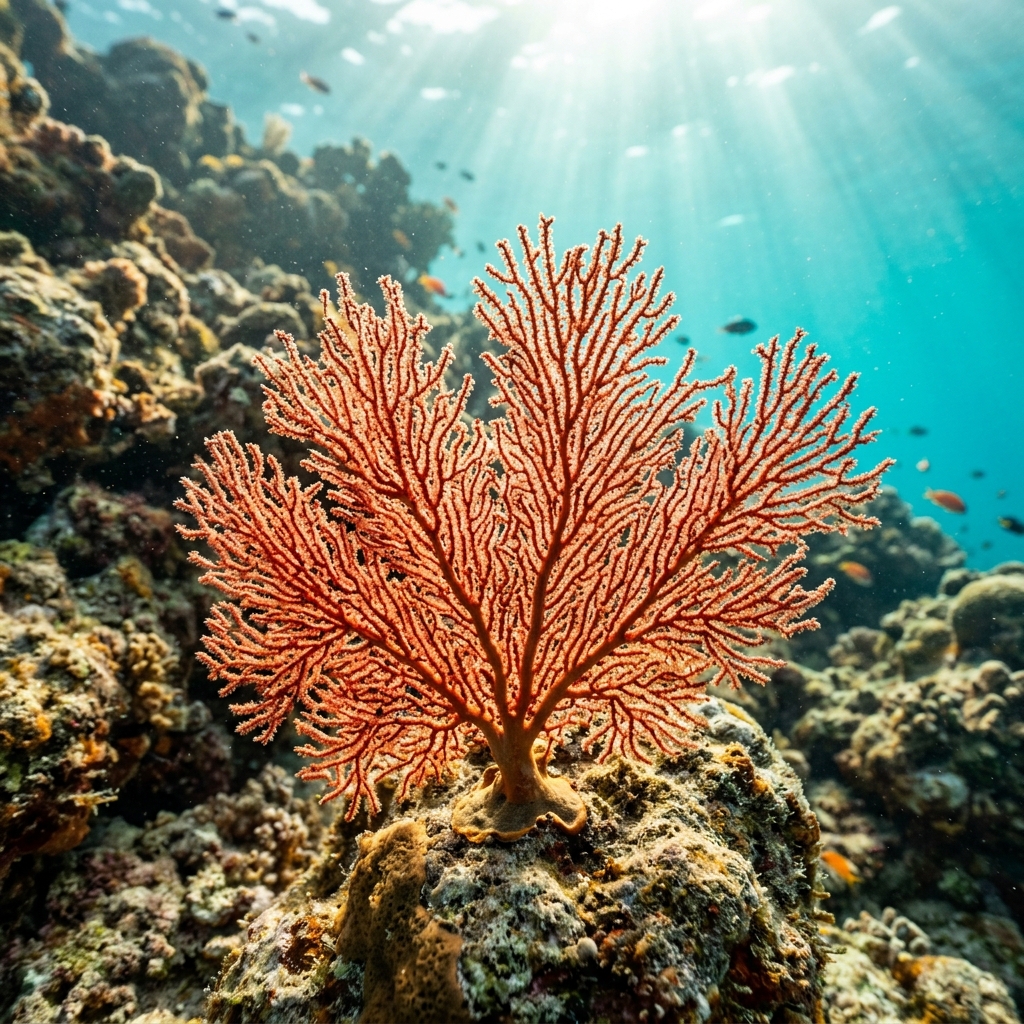
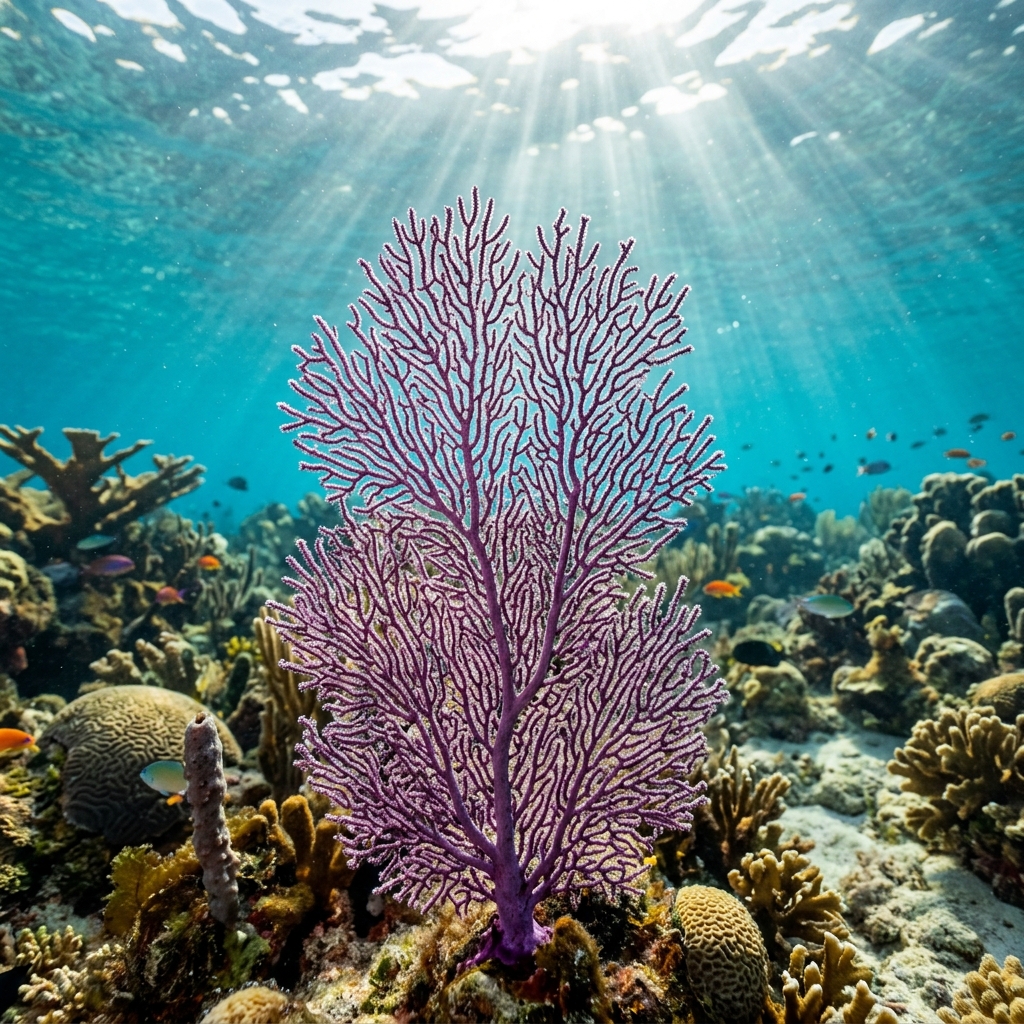
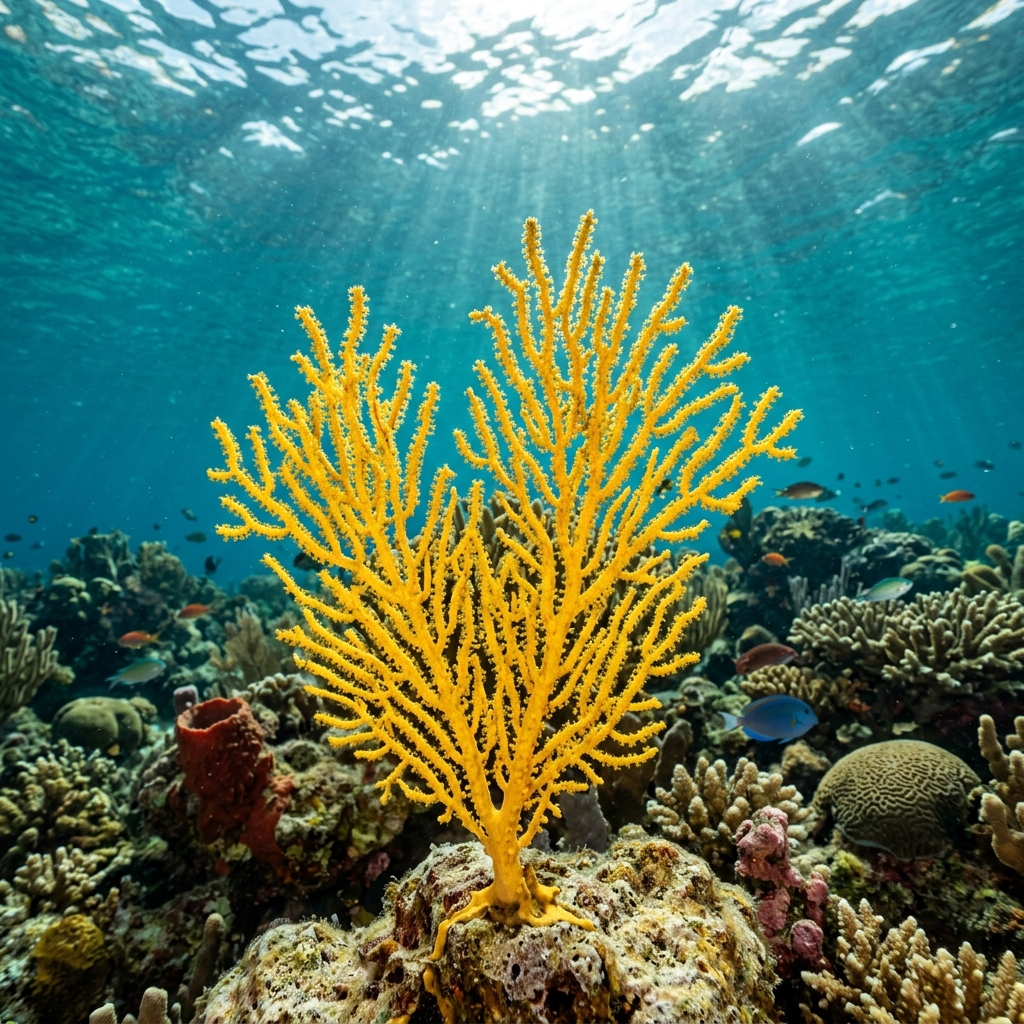
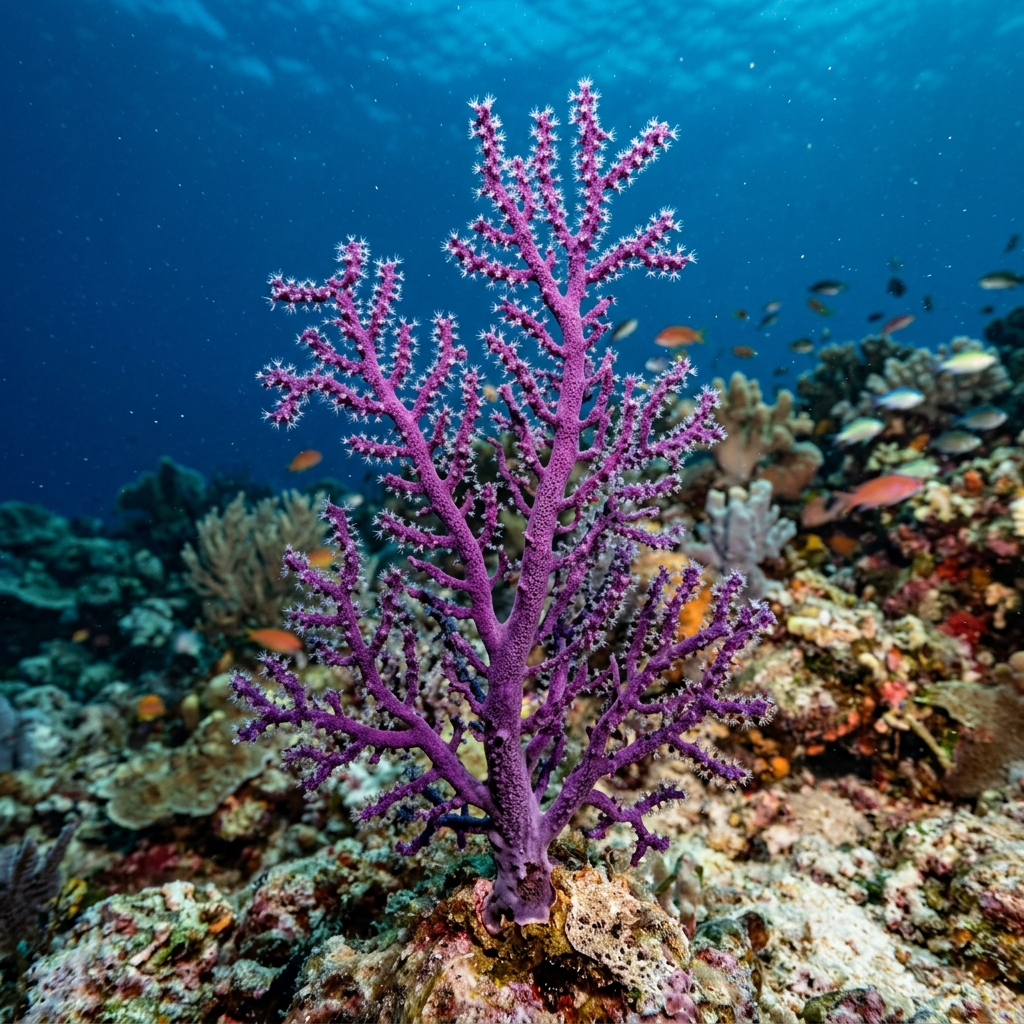
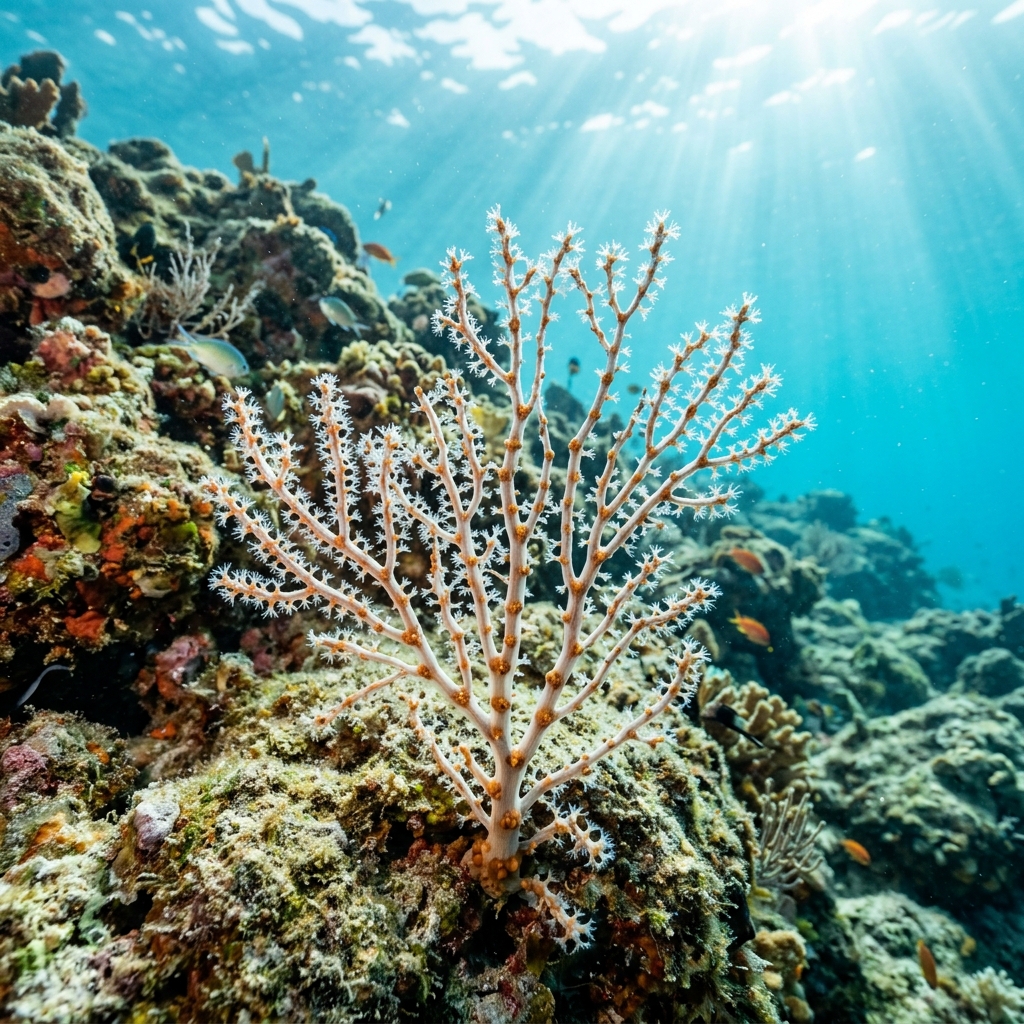
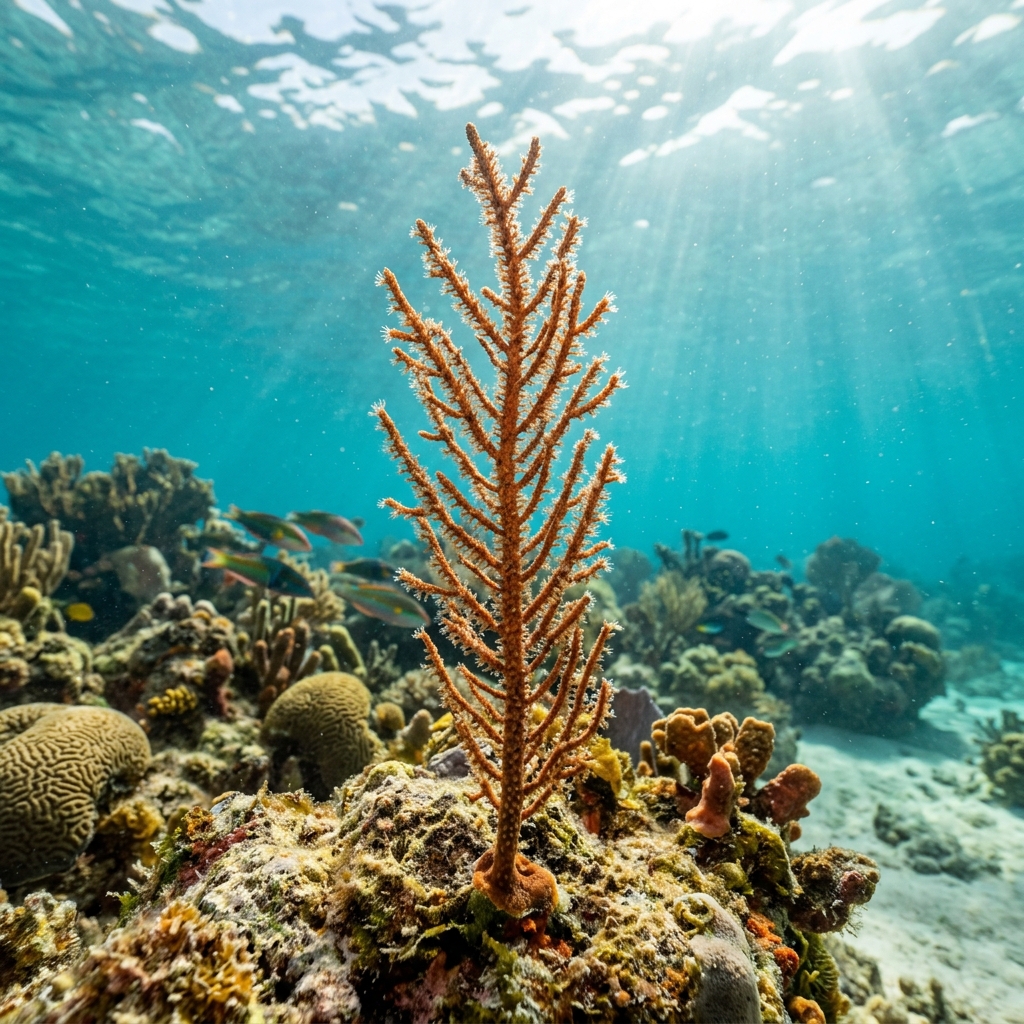
Isididae gorgonians grow as stiff, fan-shaped or bushy colonies built from alternating segments of hard calcite and flexible protein, giving the branches a distinctly jointed, bamboo-like appearance that sets them apart from other sea fans. Colouration ranges from white and cream to pale orange or grey depending on species and depth. The colonies typically orient themselves perpendicular to prevailing currents to maximise feeding, so look for them on walls, rocky outcrops, and current-swept slopes where their flat or multi-branched silhouettes stand out clearly. Tiny polyps (the individual feeding animals) line the branches and may be extended during active feeding, giving the colony a fuzzy texture.
Gorgonians are sessile (permanently fixed) suspension feeders, so they do not move away from divers, but they are fragile; even gentle contact can snap branches or strip polyps. You will typically find them anchored to hard substrate on walls or current-exposed ledges, oriented broadside to the flow. At night or during strong current, the polyps extend fully to feed, making colonies look noticeably fluffier than during slack water.
The jointed skeleton that gives Isididae their common name 'bamboo corals' is not just structural, it makes these colonies remarkably flexible under surge and current, allowing them to survive in high-flow environments where rigid corals would break.
No strong seasonal pattern has emerged from diver records, so this group can be treated as year-round across its range. The observed water-temperature niche runs from 7.5 to 28.9 C, meaning colonies are present on both tropical and cold-water reefs regardless of season.
Reef neighbours a diver could mistake it for. Use the identification notes above to tell them apart.
Isididae gorgonians are most commonly logged in the United States, Australia, and the Philippines, with particularly strong representation across Florida and the Southeast, Queensland, Western Australia, and Palawan and Apo Reef. In Europe, Brittany and Normandy in France and the south coast of England are reliable cold-water sites. The group also shows a notable presence in Norway and along the southwest coast of Ireland, reflecting its tolerance for cold temperate and even sub-polar conditions.
Mapping where Gorgonian Coral is logged…
Isididae gorgonians are logged at dive sites across a wide range of countries. Top spots include Florida and the Southeast in the US, Queensland and Western Australia in Australia, and Palawan and Apo Reef in the Philippines. In Europe, Brittany and Normandy in France, the south coast of England, Norway, and Ireland's southwest coast all have recorded sightings.
There is no defined season for this group. Diver records suggest year-round availability, which makes sense given the family's wide temperature tolerance, from cold 7.5 C temperate waters right up to 28.9 C tropical reefs. Pick your destination and dive when conditions suit.
Look for stiff, fan-shaped or bushy colonies with a distinctive jointed, bamboo-like branching pattern. Isididae alternate hard calcite nodes with flexible protein segments along each branch, which is visible up close. Colouration is typically white, cream, or pale orange. Colonies sit perpendicular to current on walls and rocky slopes.
Colony size varies considerably across the family. Many Isididae form modest bushy colonies of 20 to 50 cm, while some deeper-water bamboo corals can grow into tall fans exceeding a metre in height over many decades of slow growth.
The defining feature is the segmented skeleton: hard calcite 'internodes' alternate with flexible protein joints along every branch, resembling bamboo cane. This unique structure makes Isididae more mechanically flexible than most gorgonians and has also made deep-sea species useful to scientists studying growth rings for ocean climate records.
No, they pose no threat to divers. The risk actually runs the other way: gorgonian branches are brittle and a fin-kick or accidental brush can cause damage that takes years to regrow. Good buoyancy control and a no-touch approach are essential around any coral colony.
Site and sighting data is aggregated from diver logs, iNaturalist and GBIF. For taxonomy and conservation status:
Ellisellidae spp.
Sea Whip
3,016 sites