Pseudanthias huchtii
Small reef fish common across the Visayas and Raja Ampat, hovering over reefs at 26.6-28.9C year-round.
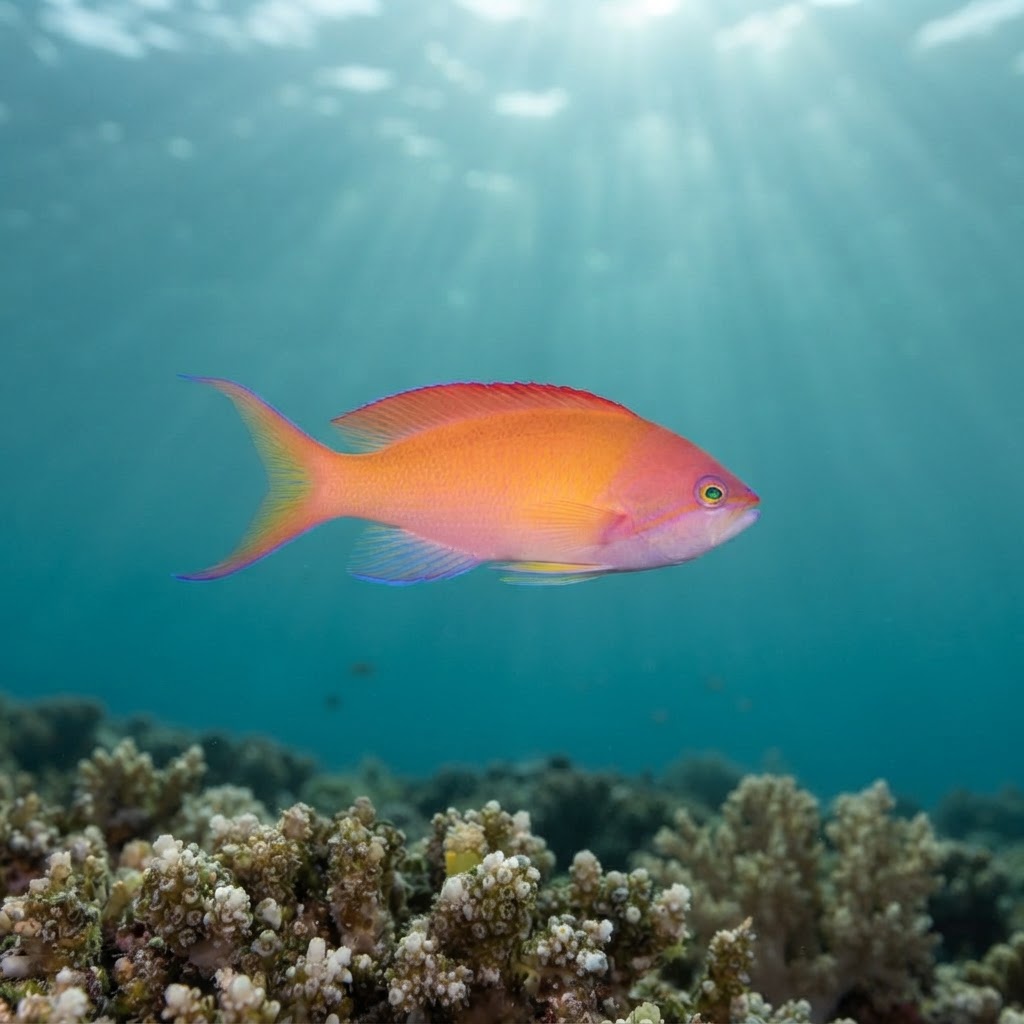
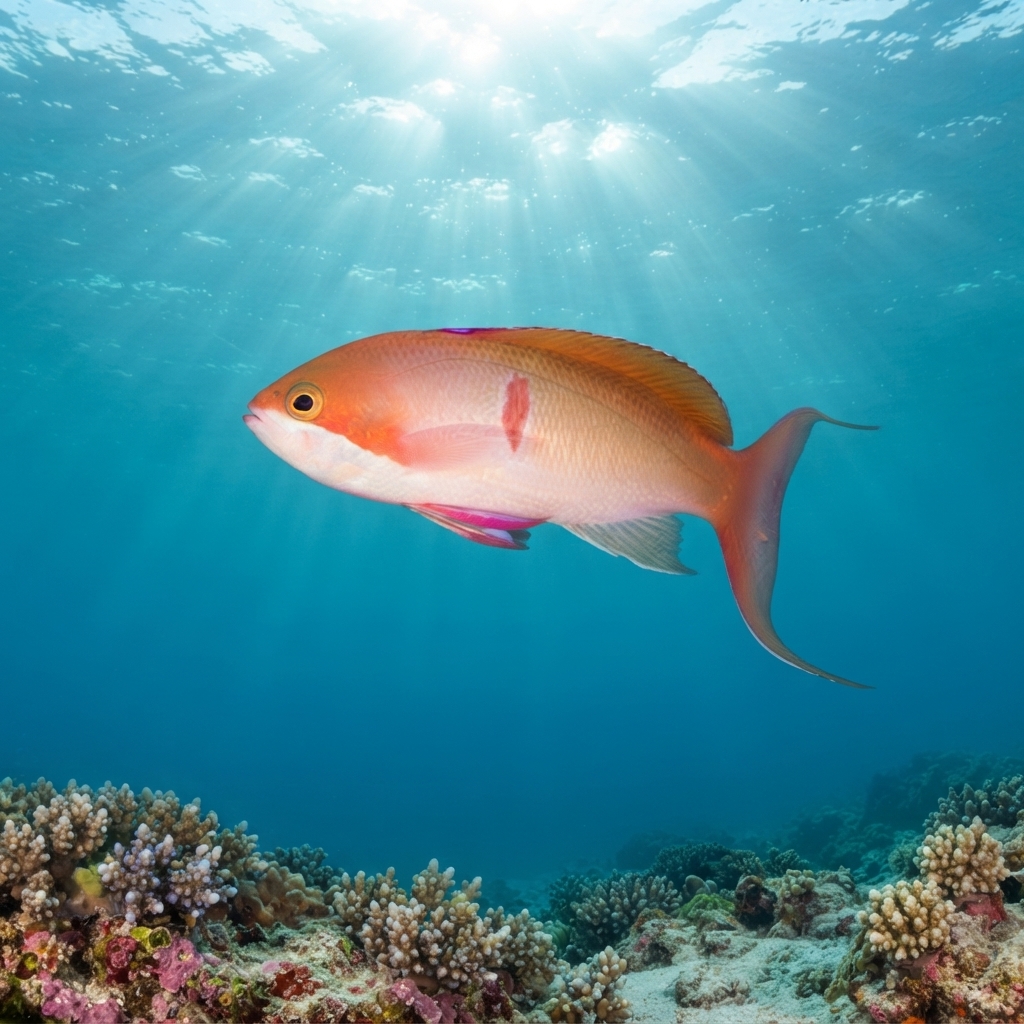
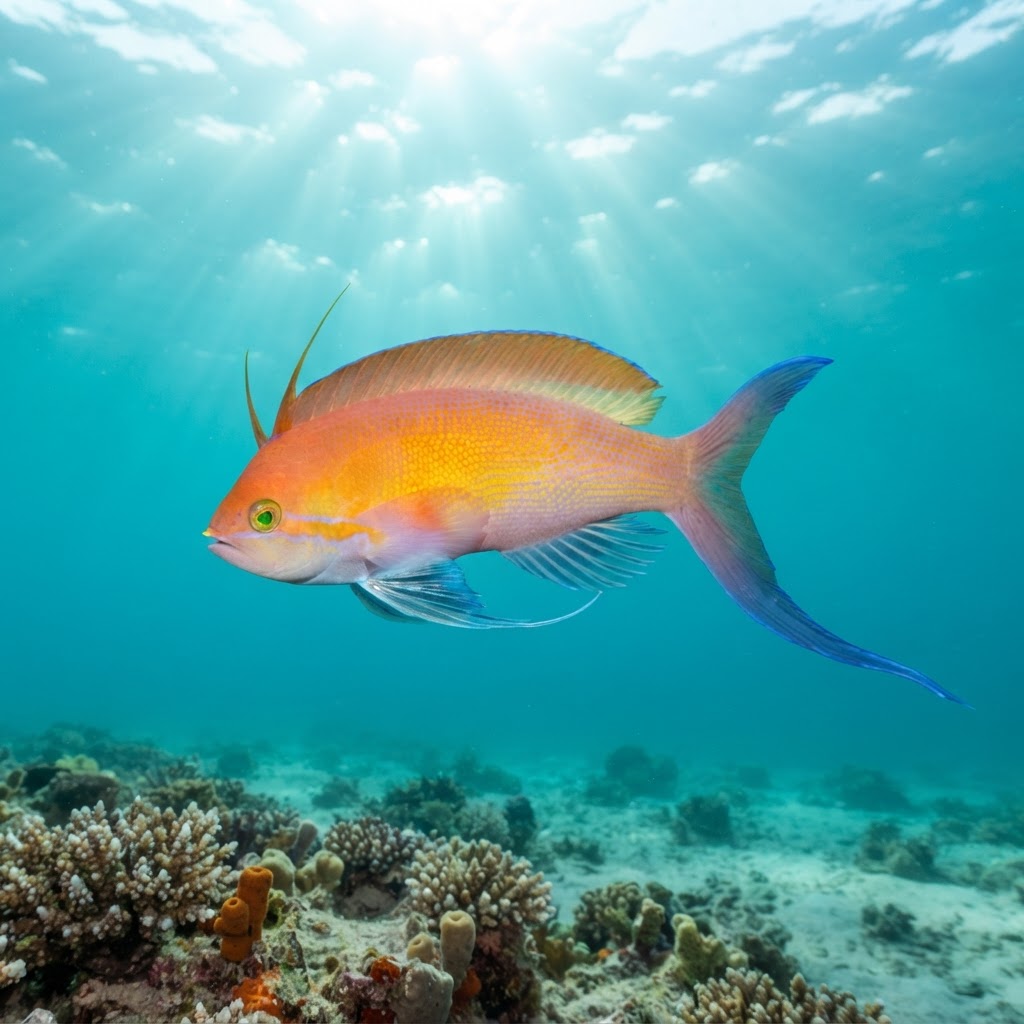
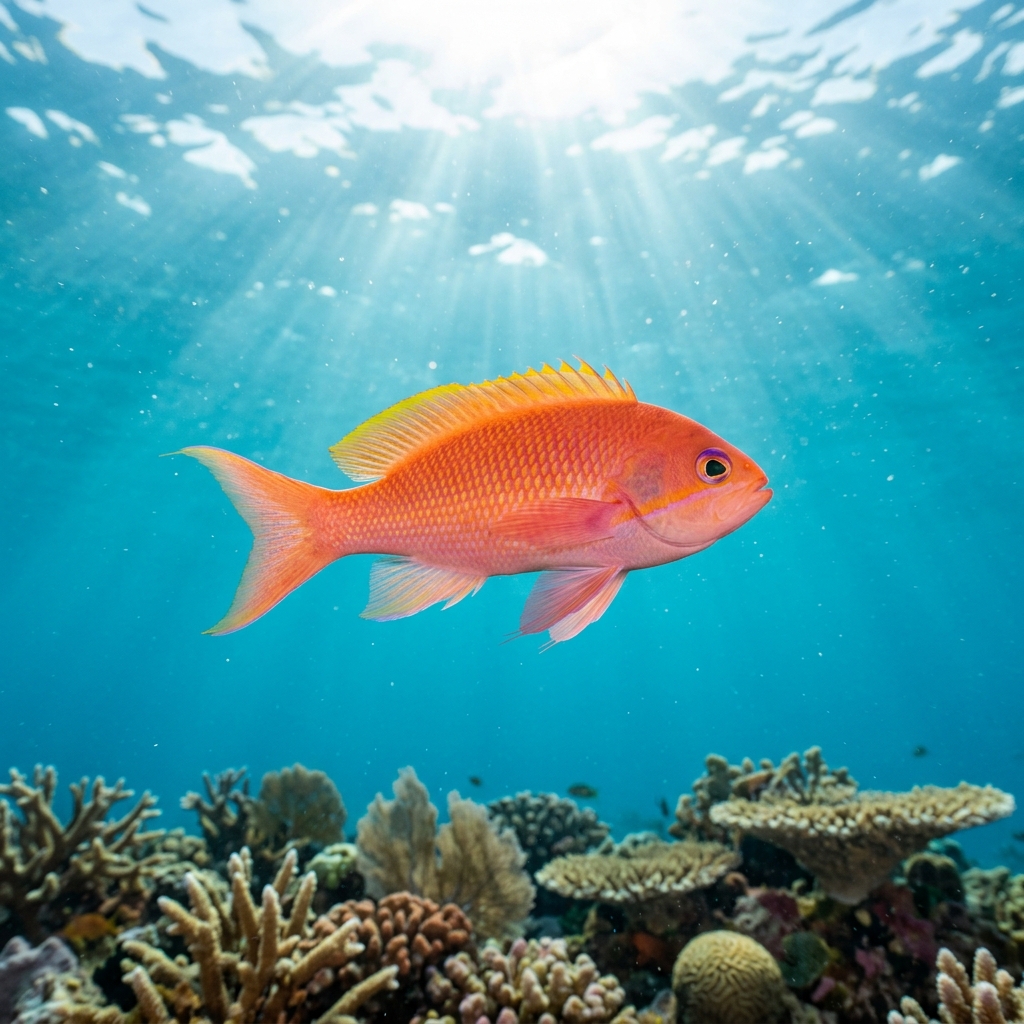
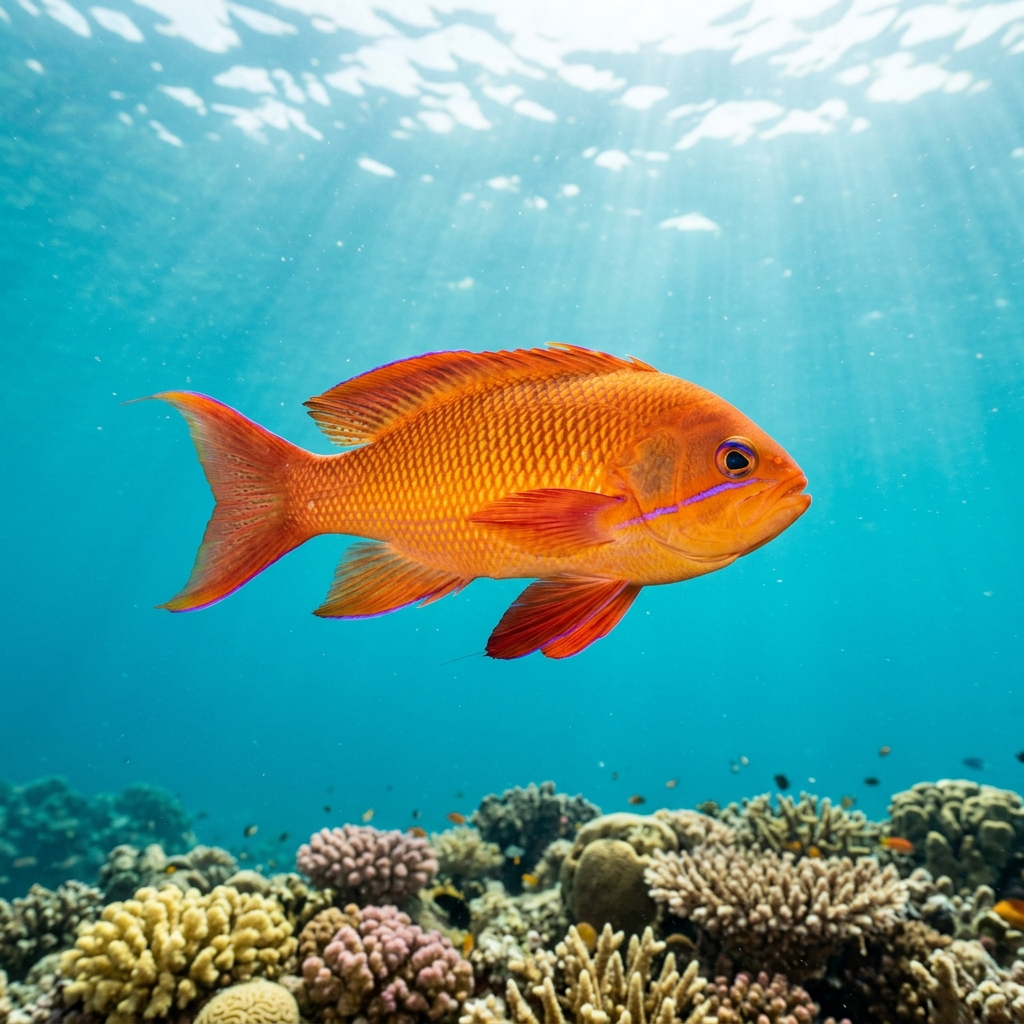
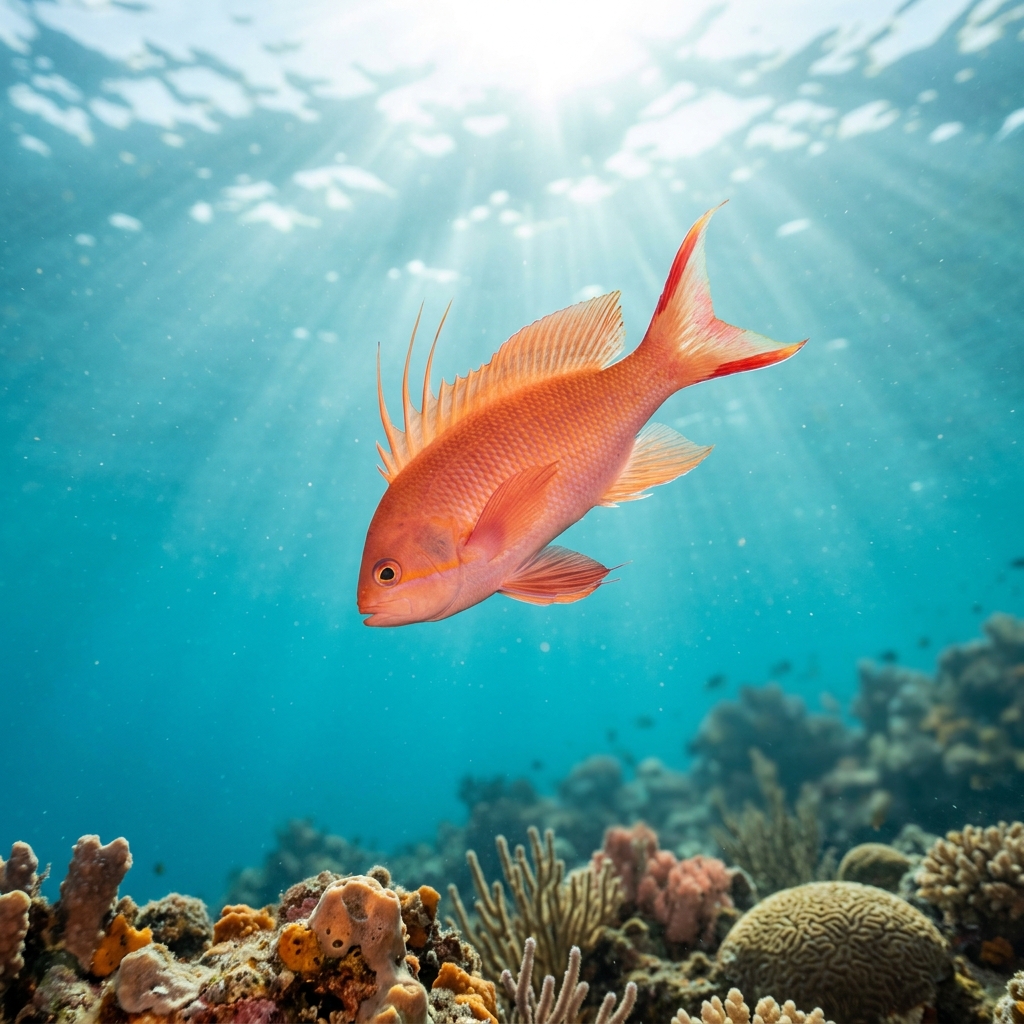
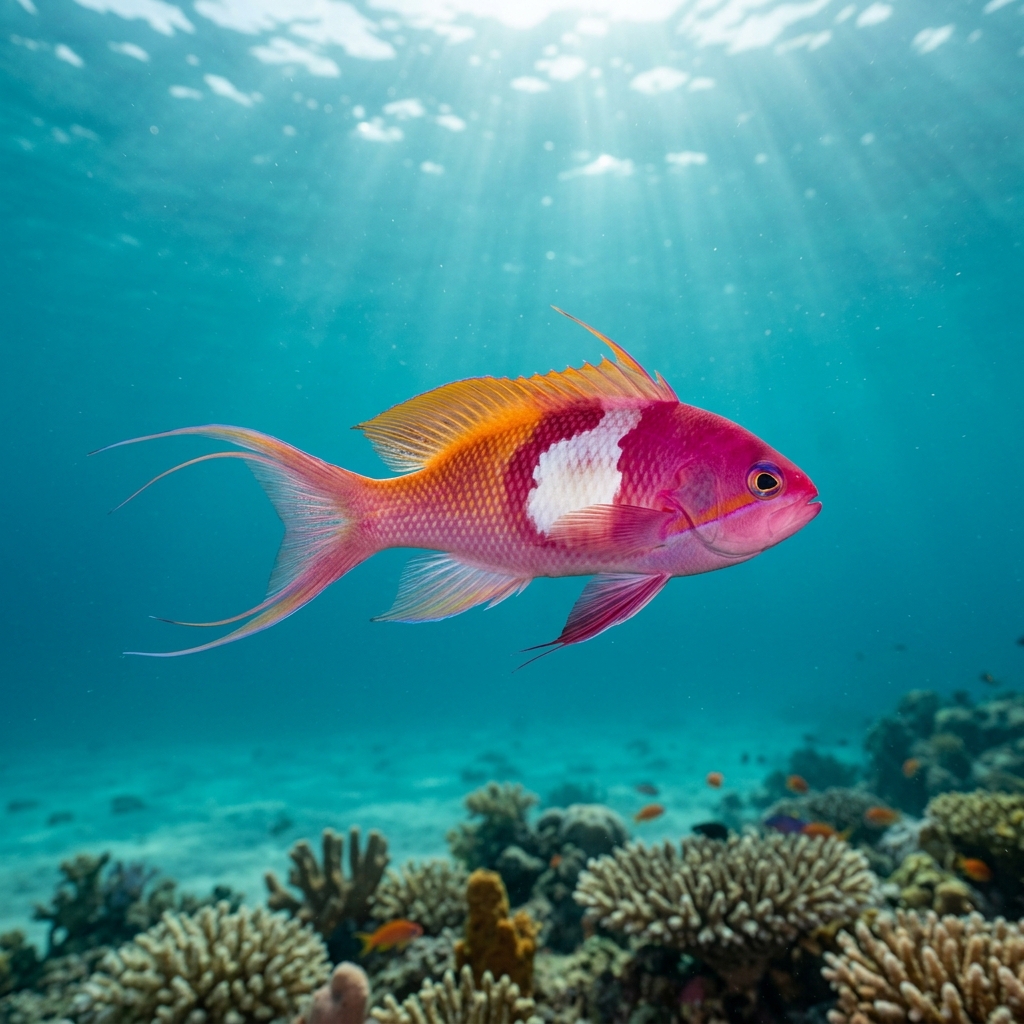
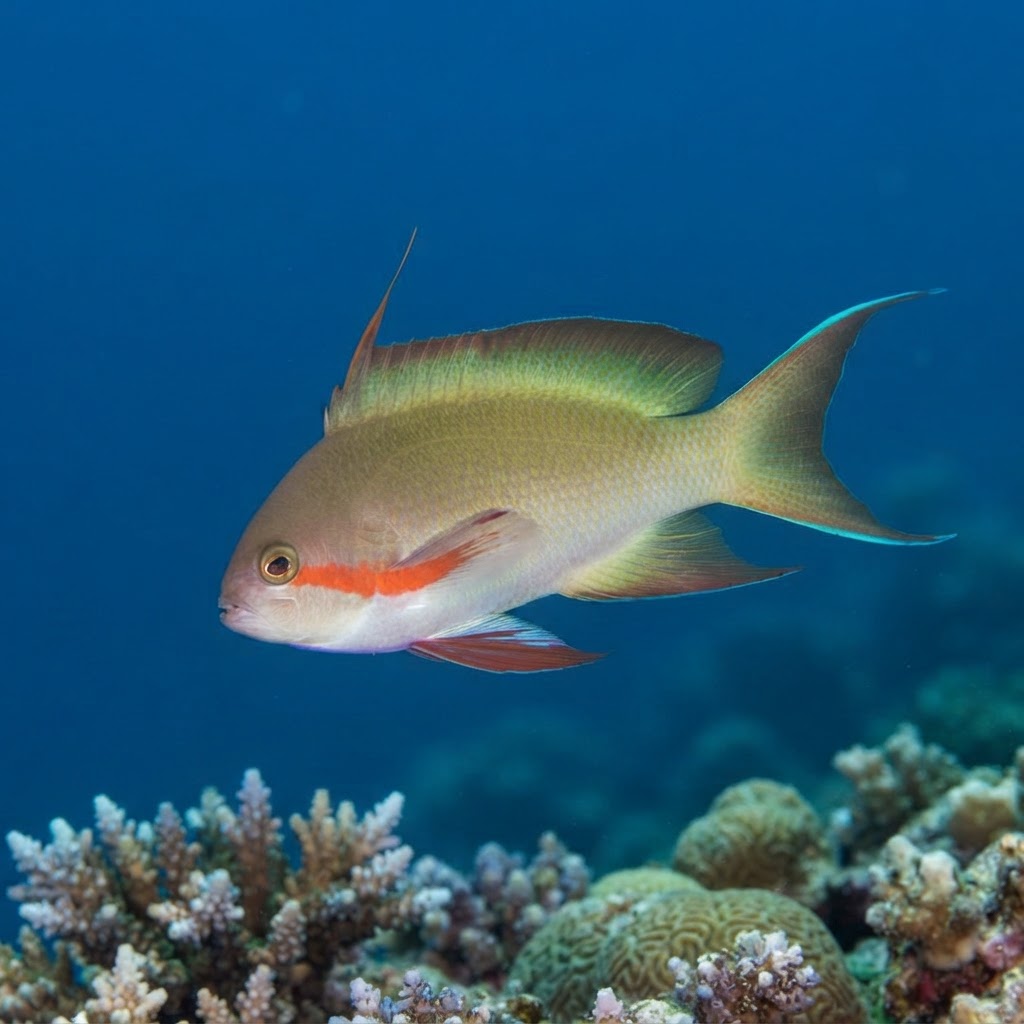
A slim, torpedo-shaped fish about 8 cm long, usually seen hovering in loose groups just off the reef face. Body colour runs pale orange to peach with a soft pink-red blush on the cheek, which is the easiest single mark to key on. Males often show a longer, more pointed tip to the dorsal fin than females, and colour can look brighter under a torch or strobe than in ambient light.
Look for it hanging in loose, hovering groups a metre or two above the reef, picking at plankton drifting past in the current. It keeps a polite distance from divers, drifting back toward cover rather than bolting, and tends to sit higher off the substrate on slopes and drop-offs than in the reef itself. Most sightings come from daytime dives on the upper reef, from about 3 to 30 metres.
Like other anthias, it lives in harem groups with one dominant male over several females, and a female can change sex and take over as the group's male if he disappears.
No clear seasonal pattern shows up in the sightings, and with a comfortable 26.6 to 28.9C temperature niche it stays on these reefs year-round. Plan around good visibility and calm currents rather than a particular month.
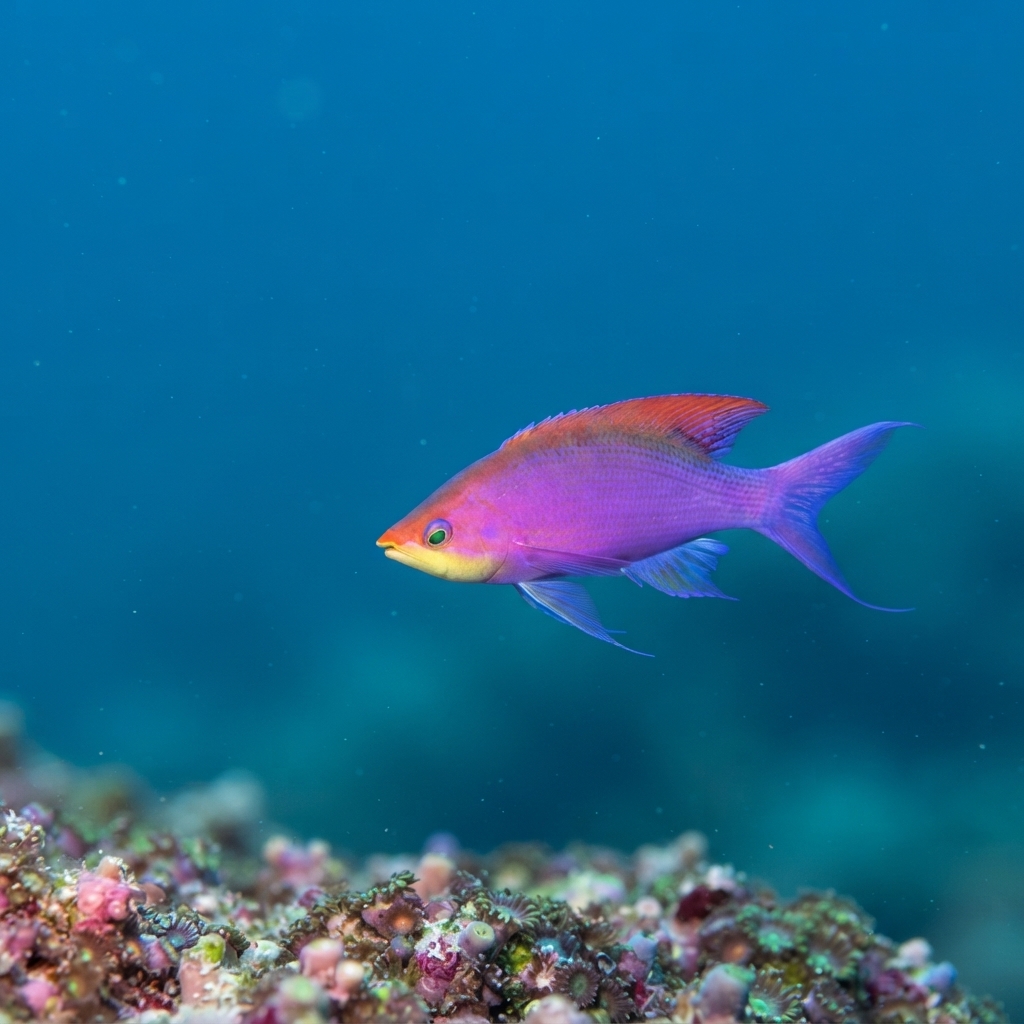
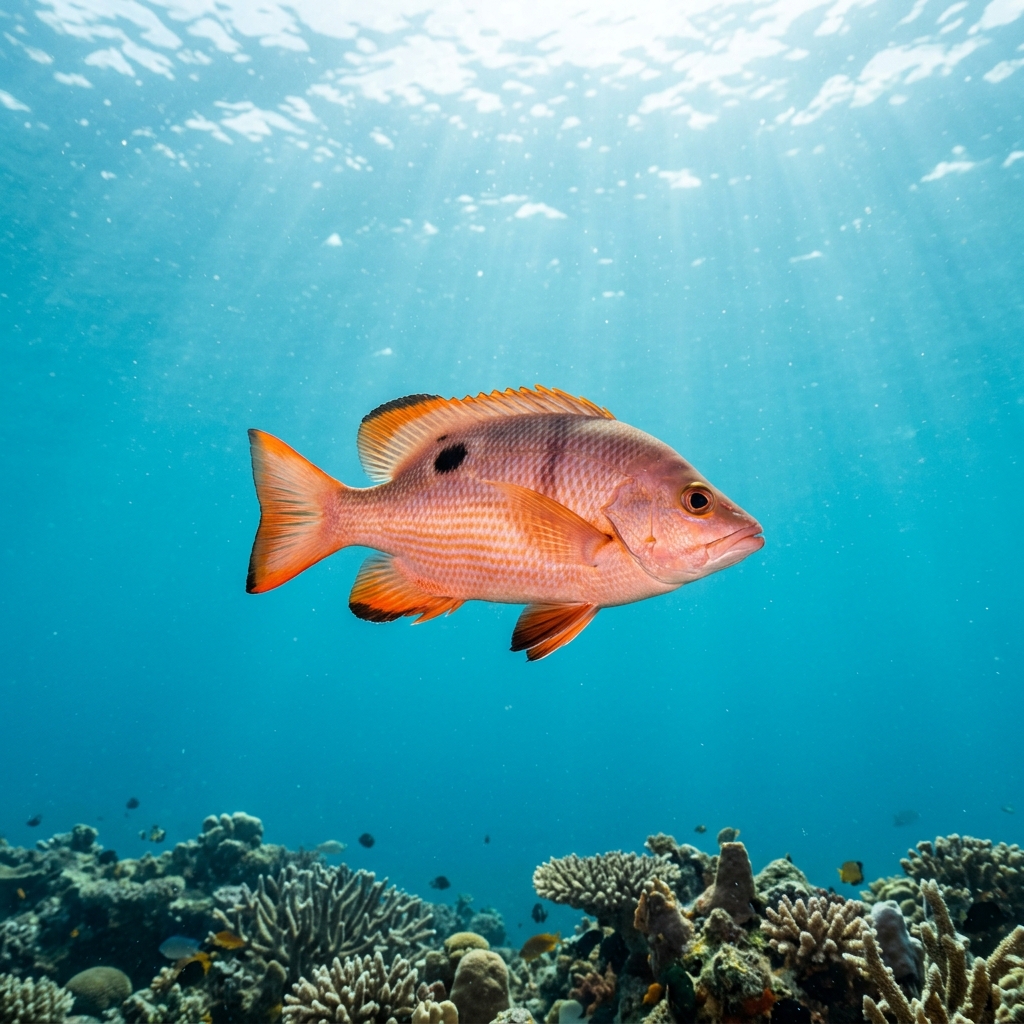
Reef neighbours a diver could mistake it for. Use the identification notes above to tell them apart.
Most reliably logged across the Visayas in the Philippines, where sightings are dense, with strong secondary populations in Raja Ampat, Sulawesi, and Nusa Tenggara in Indonesia. Smaller but consistent numbers turn up in Sabah, Malaysia and around Timor-Leste, so it's a fair bet on almost any healthy reef slope across the Coral Triangle.
Mapping where Red-cheeked Anthias is logged…
The Visayas in the Philippines is the most consistent spot, with Raja Ampat, Sulawesi, and Nusa Tenggara in Indonesia also holding strong numbers. It also shows up in Sabah, Malaysia and around Timor-Leste.
There's no strong seasonal signal in the data, and its 26.6 to 28.9C comfort range matches these reefs all year, so it's a year-round sighting rather than a seasonal one.
Look for a small, slender fish around 8 cm with a peach-orange body and a rosy patch on the cheek, usually hovering in loose groups just off the reef. Males show a slightly longer point on the dorsal fin than females.
They stay small, typically reaching around 8 cm in length, which is part of why they're easy to overlook against a busy reef backdrop.
Yes. They live in harem groups led by one male, and if that male dies or leaves, the dominant female in the group can change sex and take over his role.
Site and sighting data is aggregated from diver logs, iNaturalist and GBIF. For taxonomy and conservation status:
Purple Queenfish
254 sites