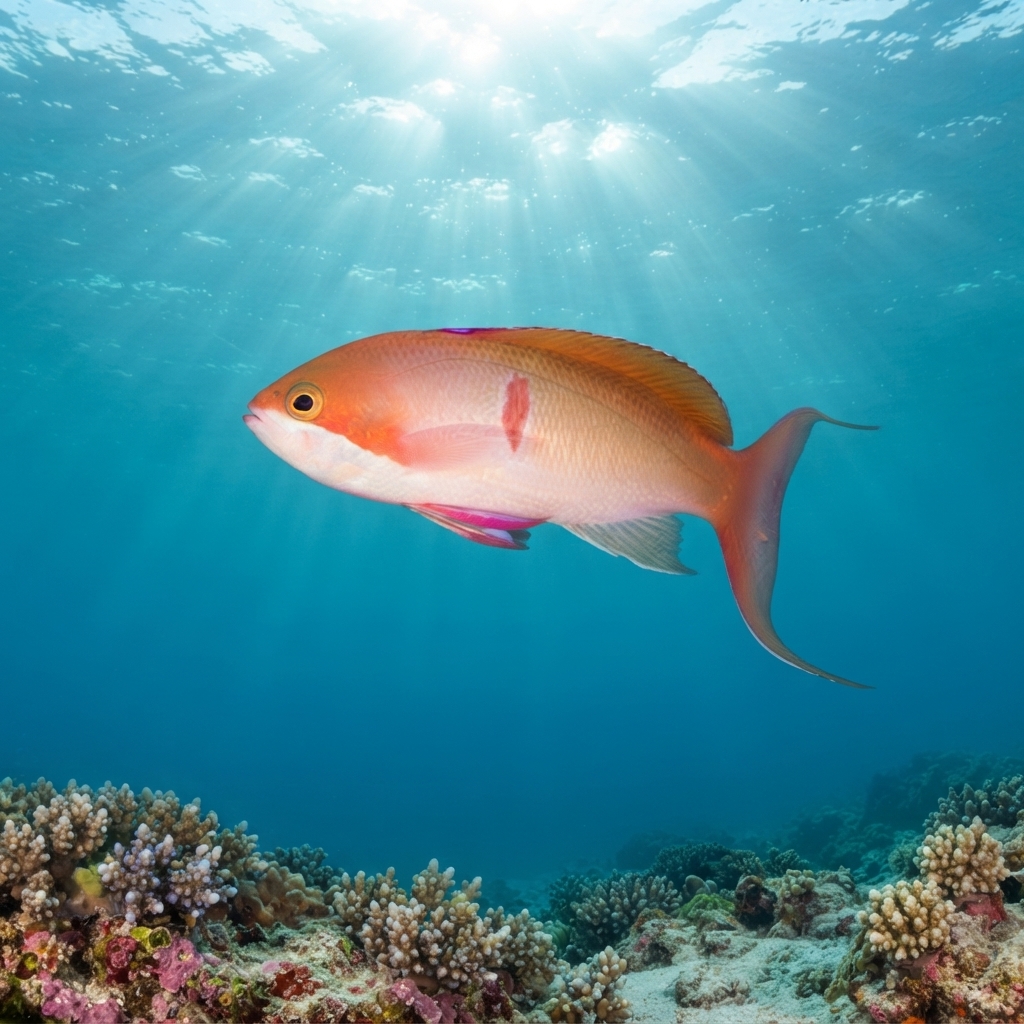
Pseudanthias cooperi
Small red-striped anthias common in Grand Baie, Mauritius and KwaZulu-Natal reefs at 25-29C, present year-round.
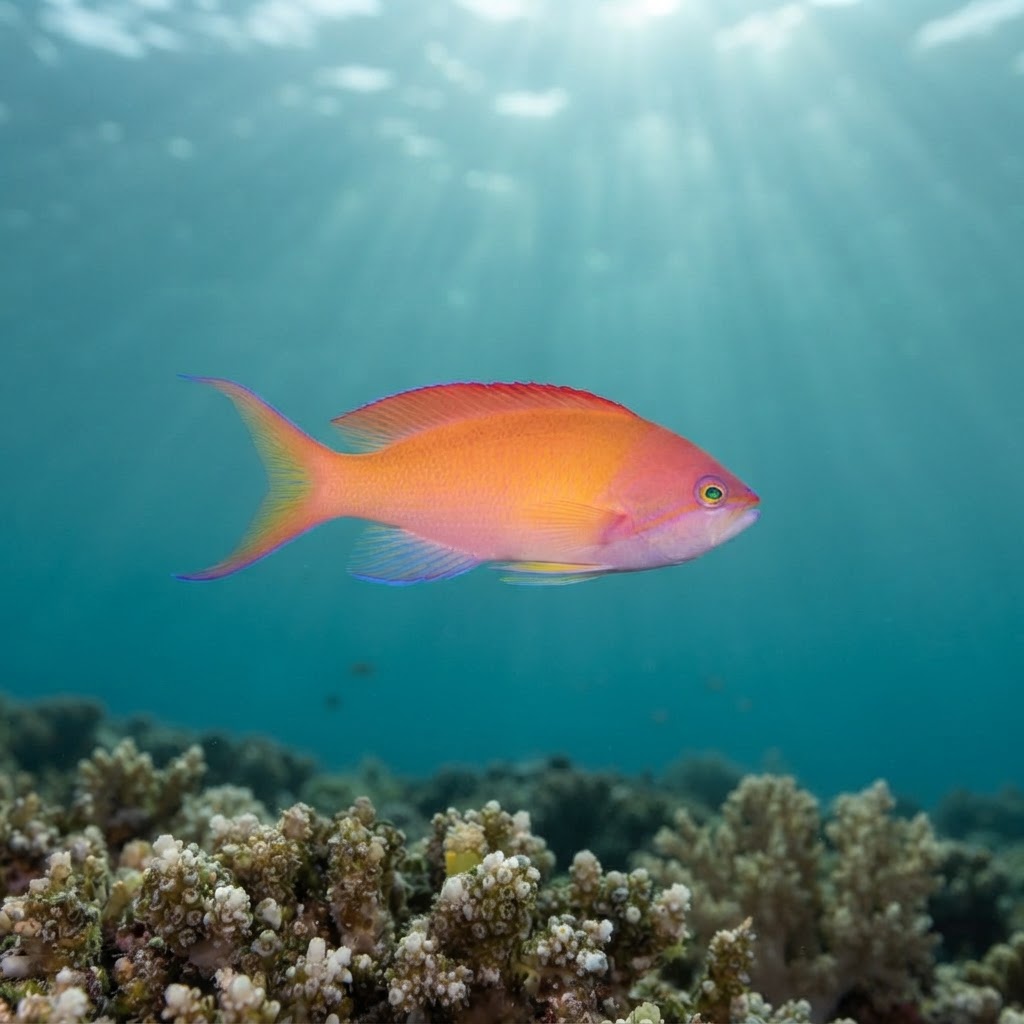
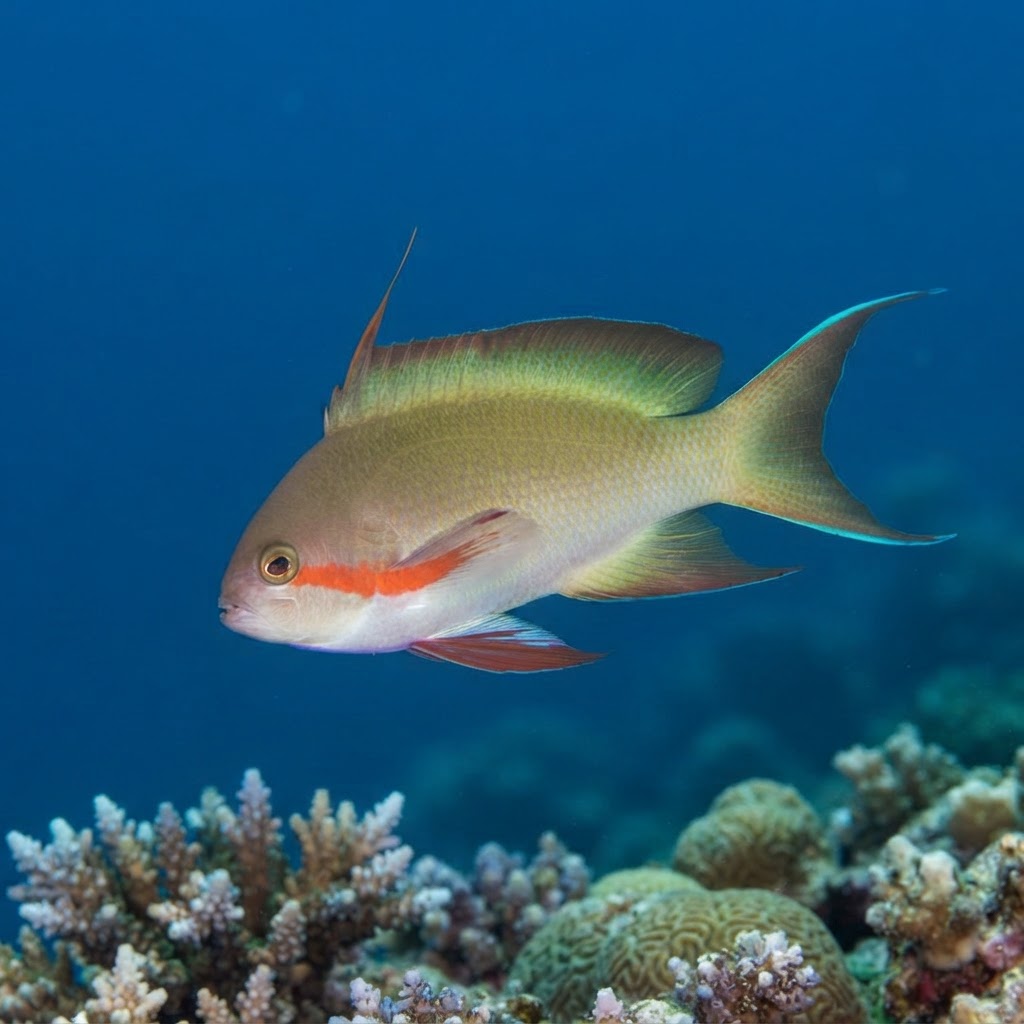
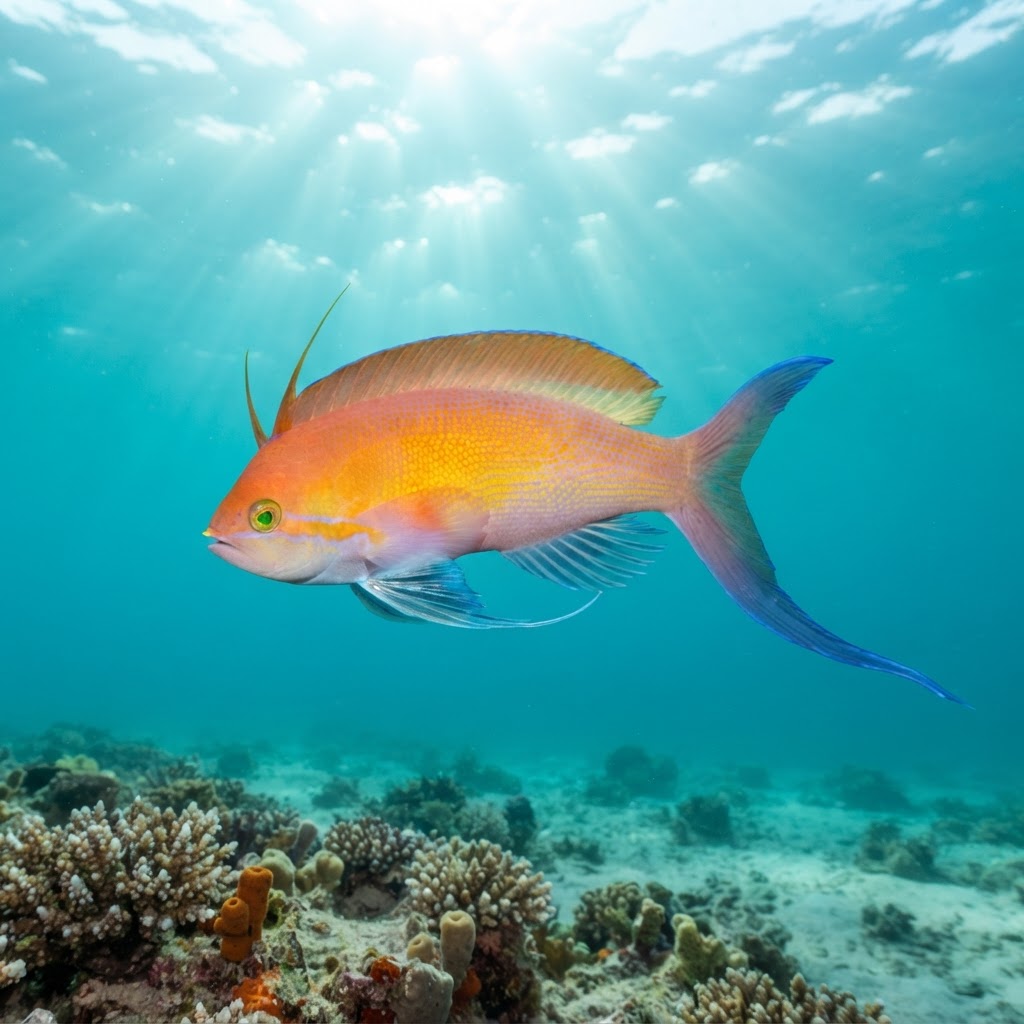
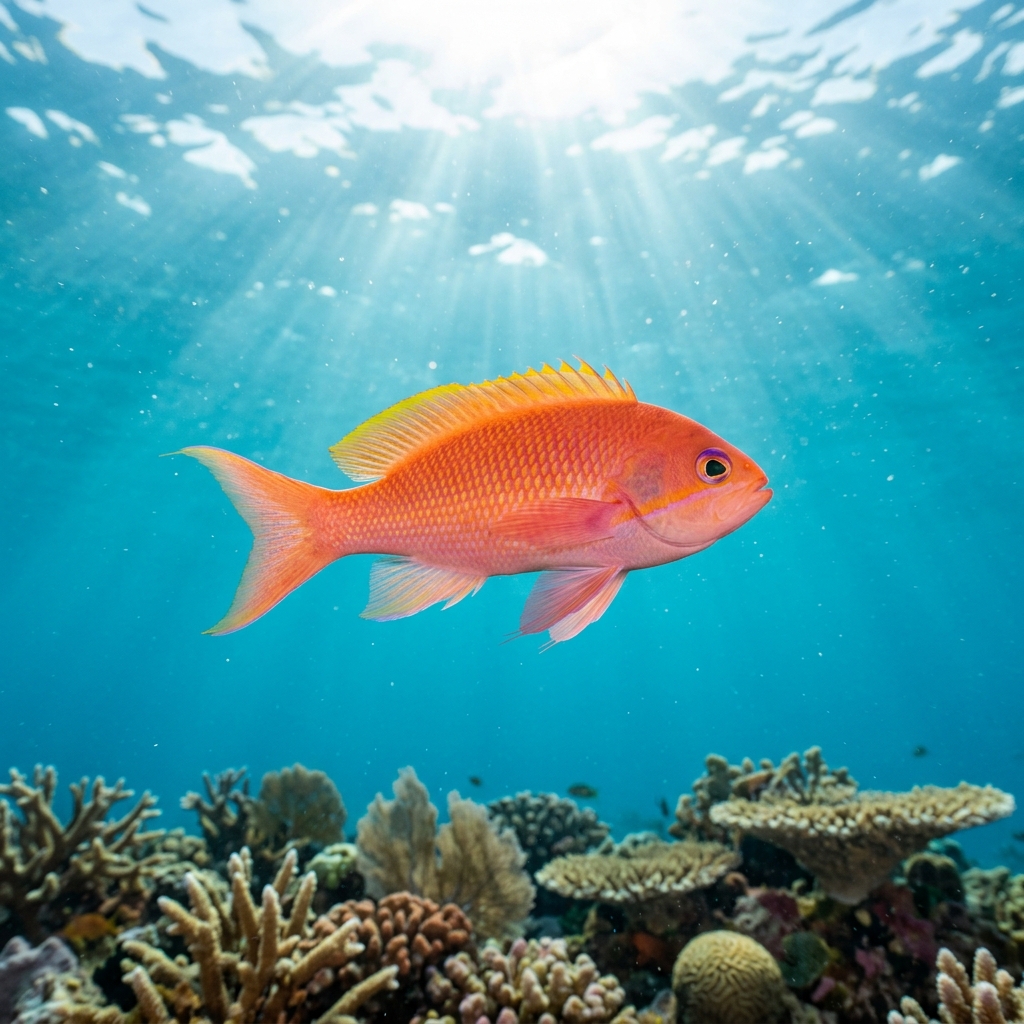
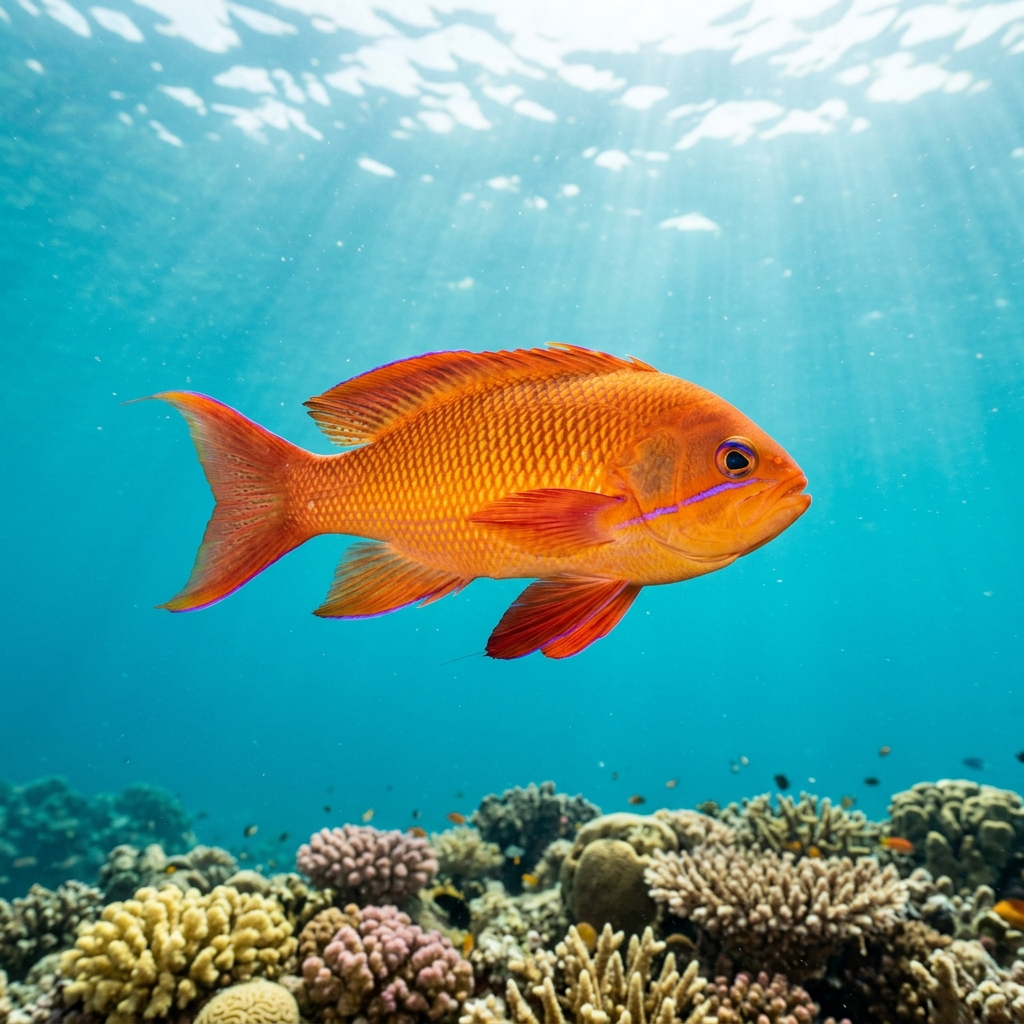
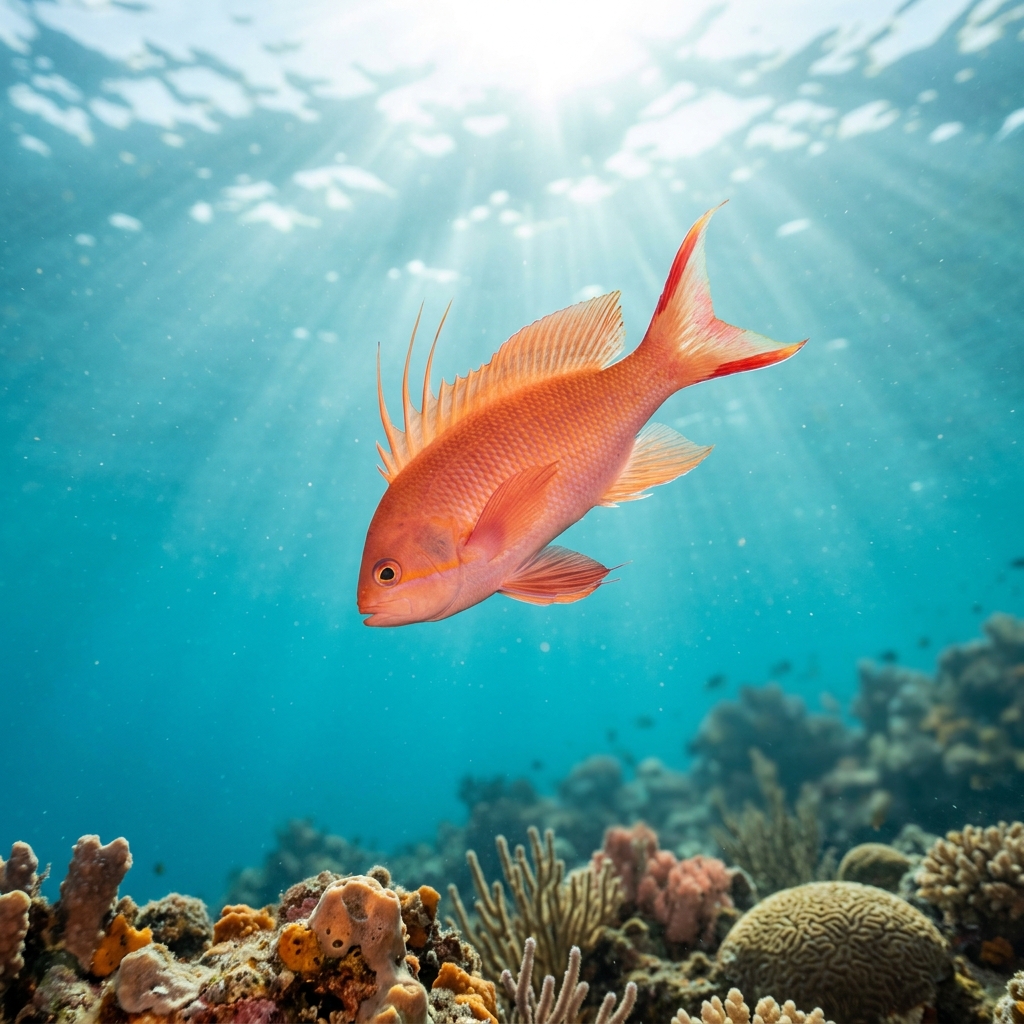
A small, torpedo-shaped fish around 10 cm, usually pinkish to pale orange with a distinct reddish diagonal bar running across the body behind the head. Males tend to show a more vivid red bar and slightly elongated dorsal fin spines than females, which look plainer and more uniformly pale. Look for it hovering in loose groups just above the reef rather than tight against it.
Divers typically find it hovering in loose aggregations over reef slopes and drop-offs, picking at plankton drifting past in the current. It tends to hang at mid-water rather than hugging the substrate, and stays fairly relaxed around divers, drifting off a short distance rather than bolting for cover. Most sightings come from daylight reef dives rather than night dives.
Like other anthias, it lives in harems where one dominant male oversees a group of females, and if that male disappears one of the females can change sex and colour to take his place.
No clear seasonal pattern shows up in the data, and with a comfortable range of roughly 25 to 29C it turns up on these reefs year-round rather than during a specific window.
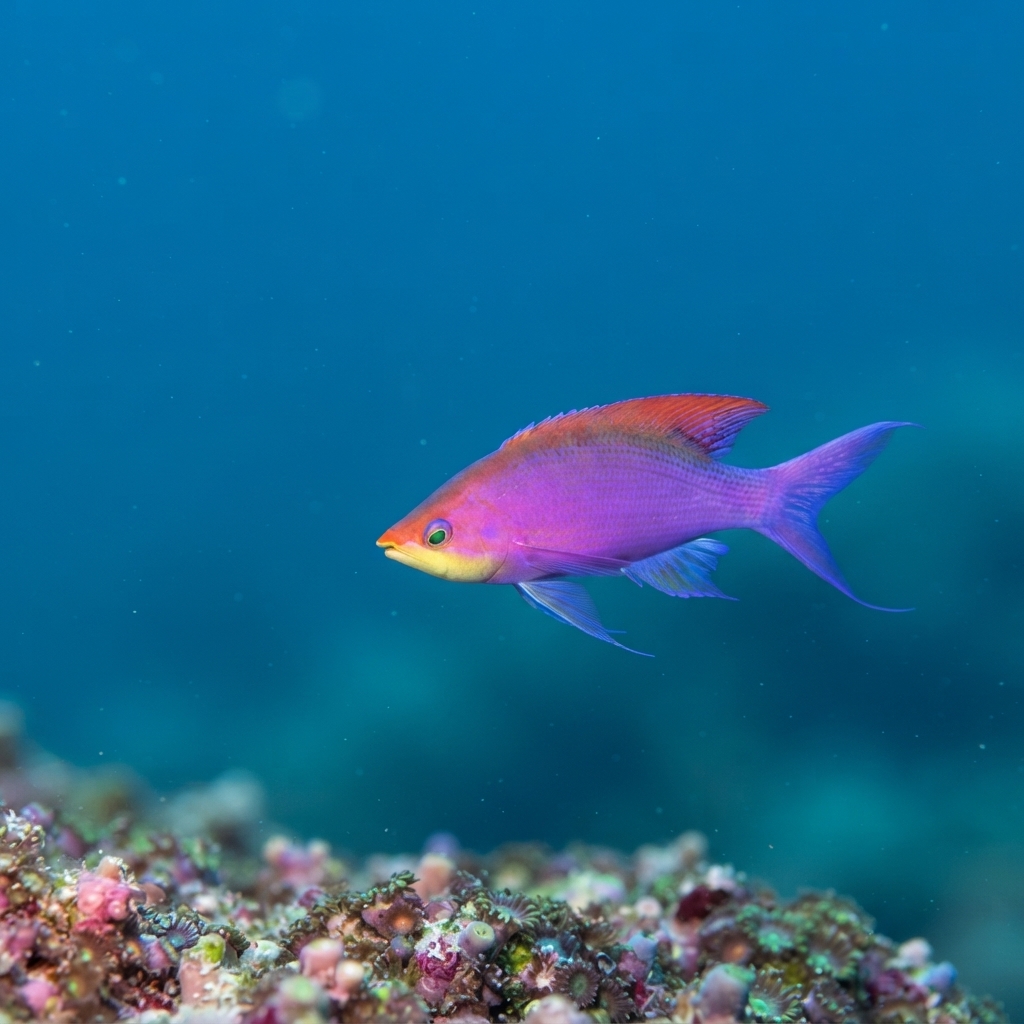
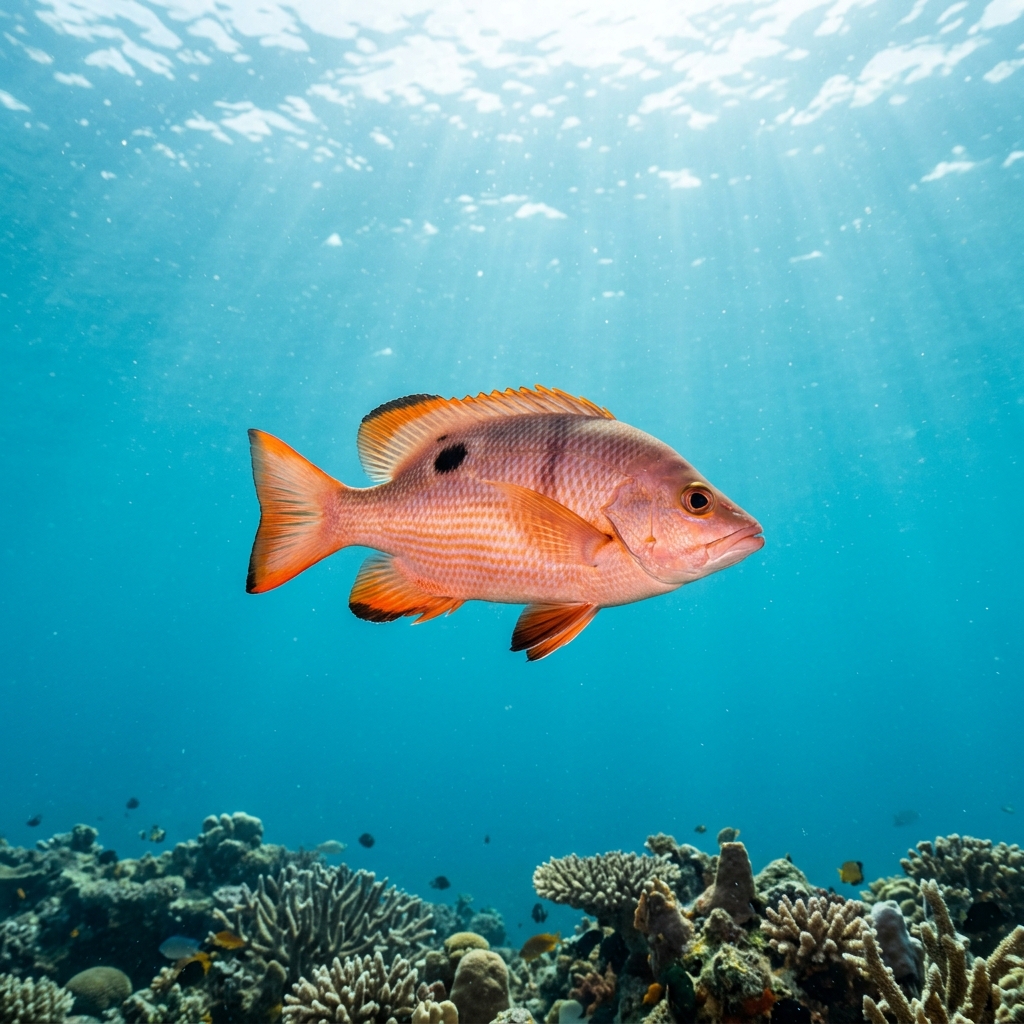
Reef neighbours a diver could mistake it for. Use the identification notes above to tell them apart.
Most reliably logged in Mauritius, especially around Grand Baie and Trou aux Biches, with strong numbers also reported from KwaZulu-Natal in South Africa and the Tuamotu Islands in French Polynesia. Smaller but consistent sightings come from New South Wales in Australia, with occasional records from New Caledonia and Fiji.
Mapping where Red-bar Anthias is logged…
Mauritius is the strongest spot, particularly Grand Baie and Trou aux Biches, with good numbers also seen in KwaZulu-Natal, South Africa and the Tuamotu Islands in French Polynesia. It also turns up on reefs in New South Wales, Australia.
There is no strong seasonal signal in the sighting data, and given its comfortable 25 to 29C temperature range it is generally present on these reefs throughout the year.
Look for a small, slender reef fish around 10 cm with a pale pinkish body and a reddish diagonal bar crossing behind the head. It usually hovers in loose groups over the reef rather than sitting on the bottom.
They stay small, reaching only around 10 cm in length, so they are easy to overlook among busier reef fish.
Yes, they live in harem groups led by one male, and if he is lost a female in the group can change sex and colouring to take over as the dominant male.
Site and sighting data is aggregated from diver logs, iNaturalist and GBIF. For taxonomy and conservation status:
Red-cheeked Anthias
425 sites