Caesioperca lepidoptera
Spot butterfly perch in Tasmania, South Australia and New Zealand's Northland between December and April in cool 14-18°C waters.
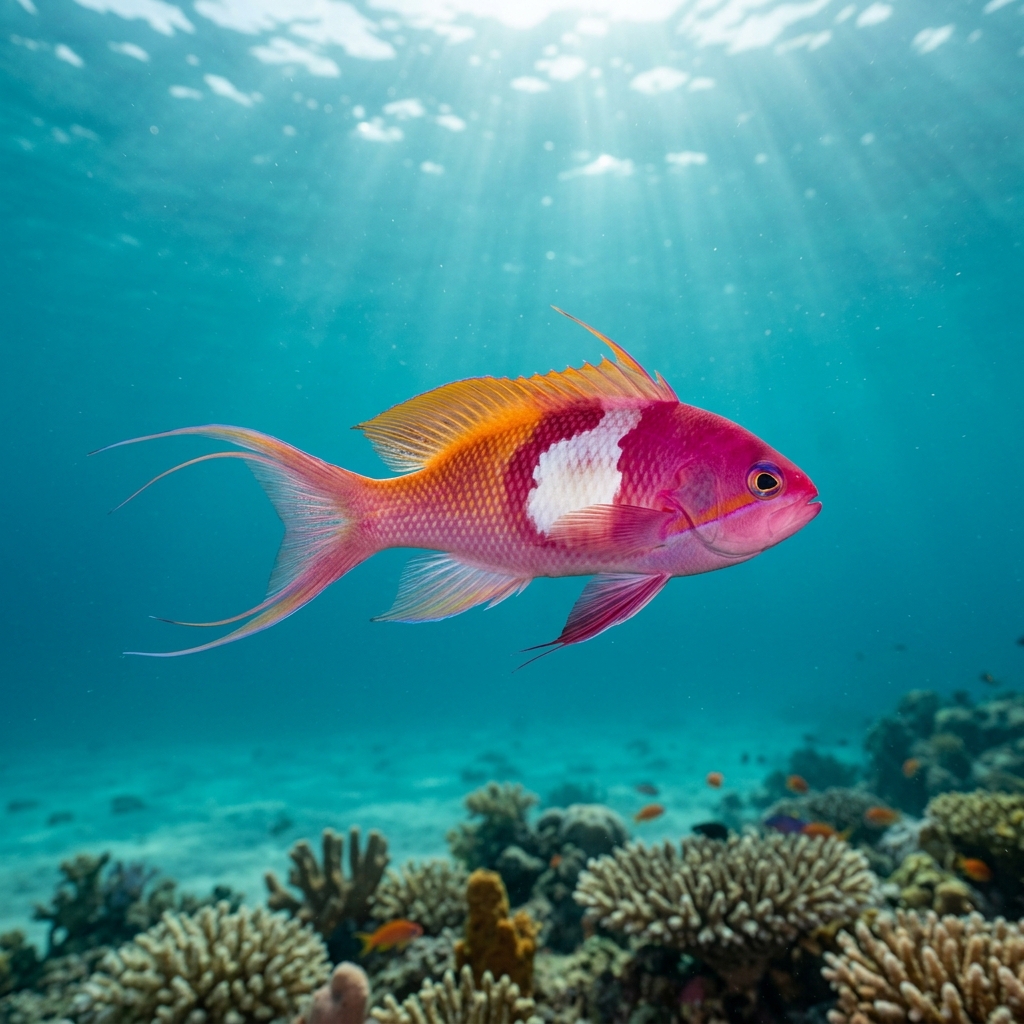
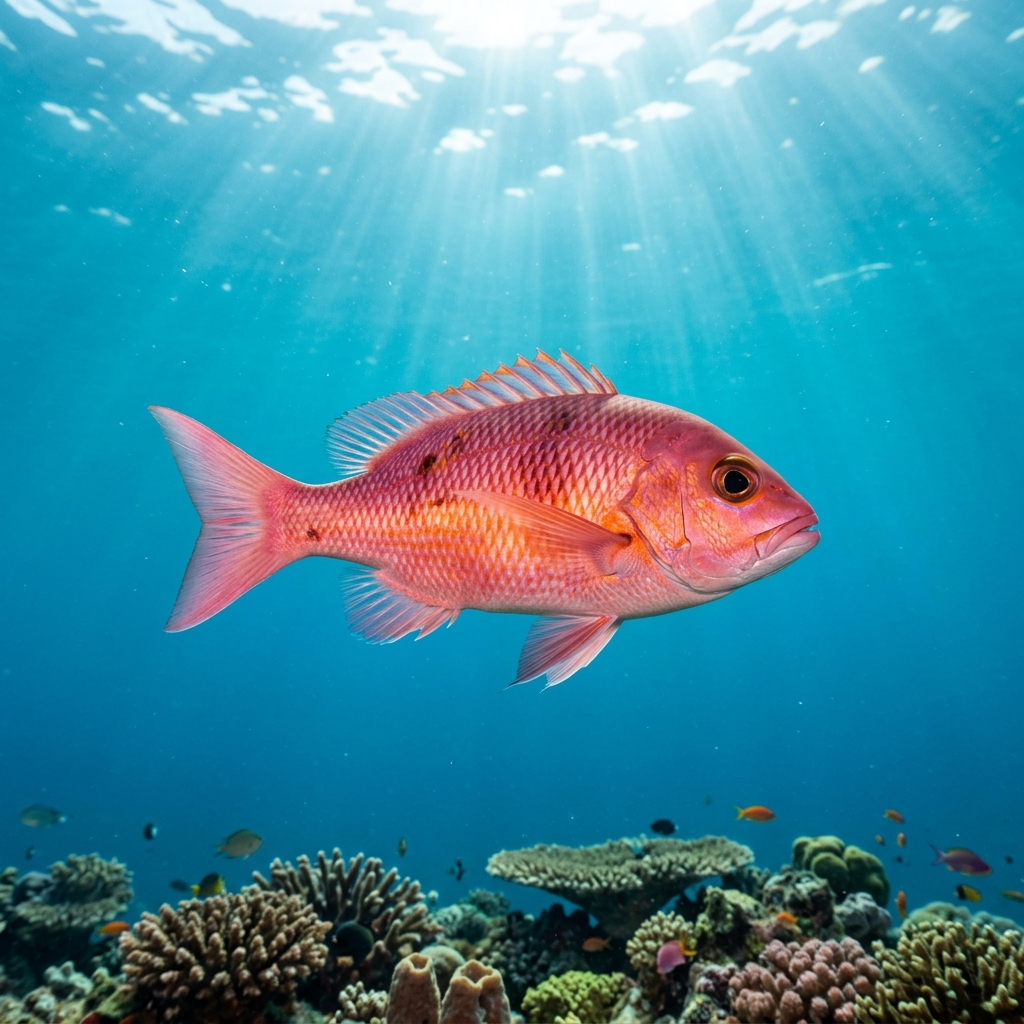
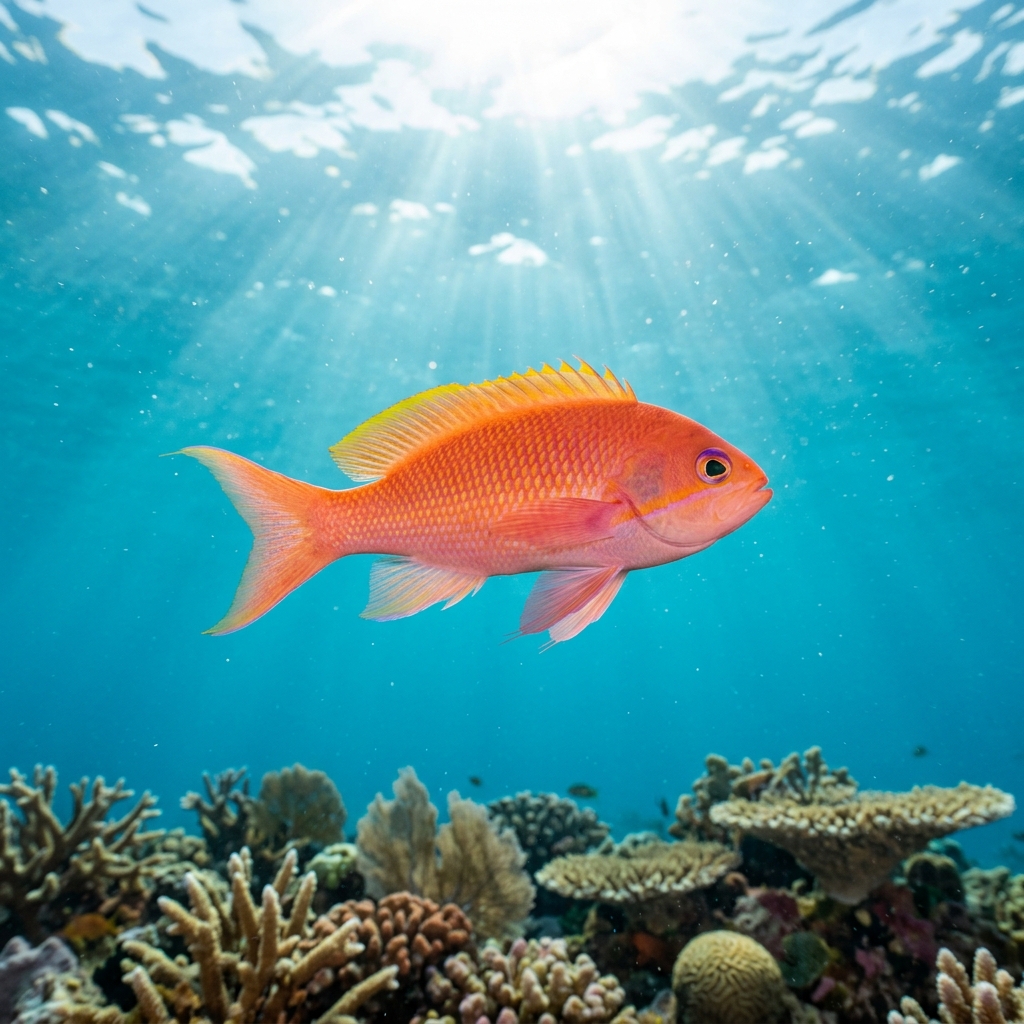
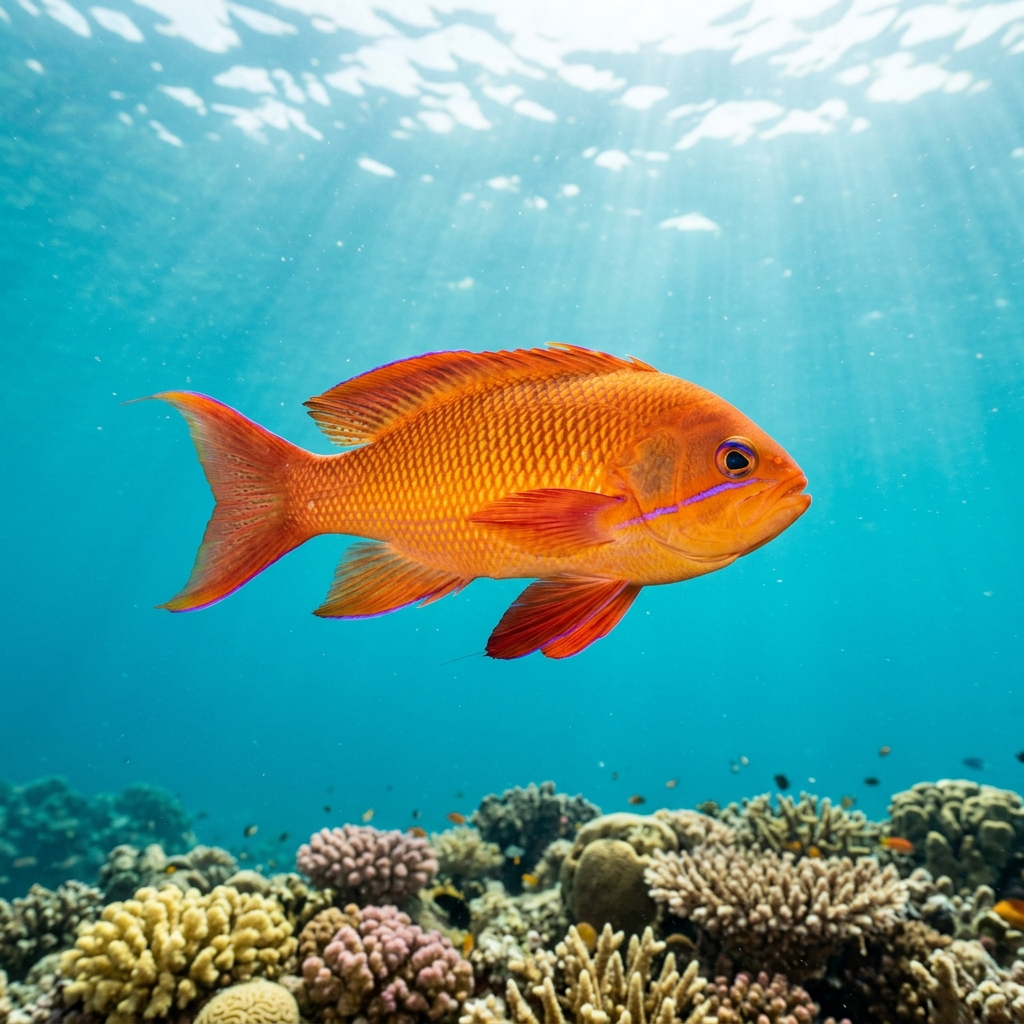
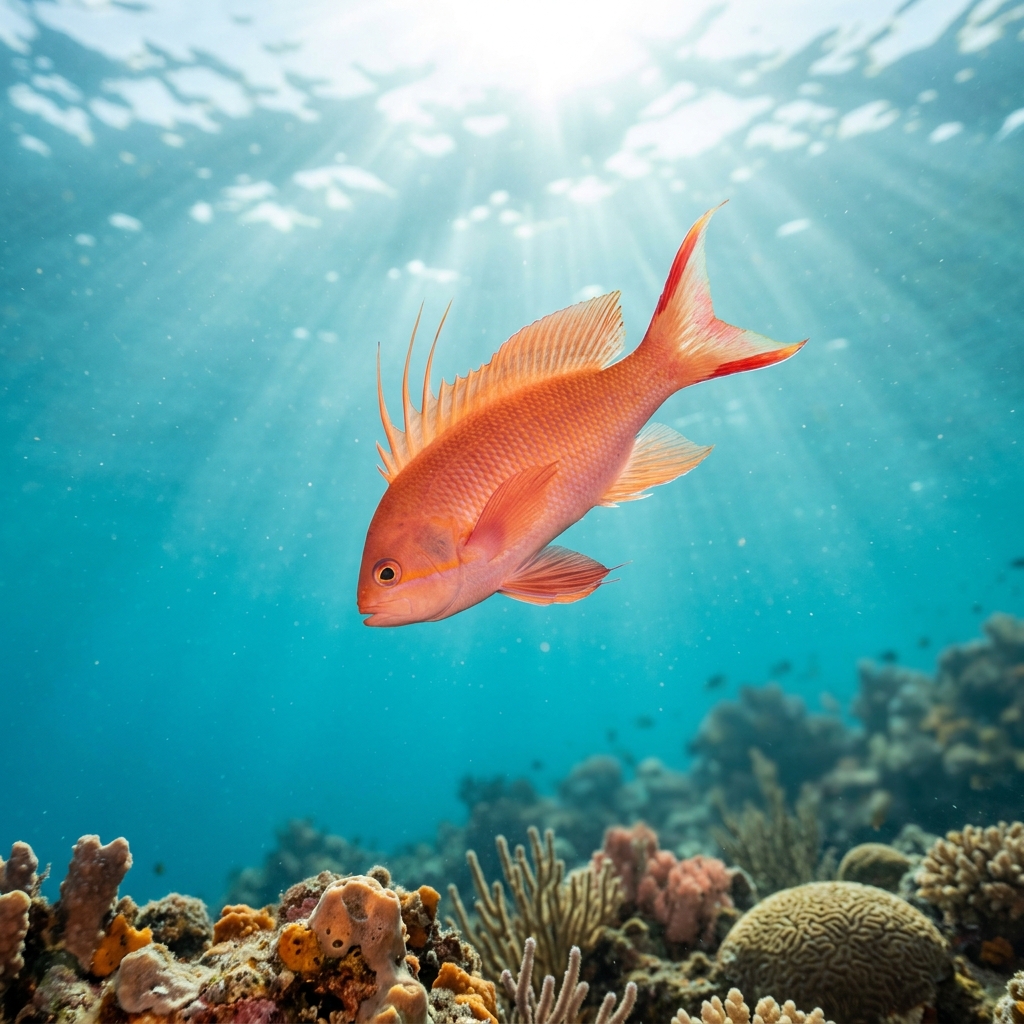
A compact, deep-bodied fish around 20 cm long, butterfly perch show warm reddish-orange to pink colouration across the upper body fading to paler tones below, often with a subtle iridescent sheen. The rounded caudal fin (tail) and relatively large eye are useful pointers underwater. Males run noticeably richer in colour, with deeper reds and more pronounced fin tones, while females are paler and slightly smaller-bodied. They typically hover in loose aggregations just above rocky reef, which makes them easier to scan and count than solitary species.
Butterfly perch tend to hover in mid-water aggregations close to rocky reefs and walls, facing into the current to pick off passing zooplankton. They are not particularly wary of divers and will often hold position if you approach slowly, making observation straightforward. Most sightings occur on exposed reef structures and drop-offs rather than in sheltered shallows.
Like many anthiadids, butterfly perch are protogynous hermaphrodites, meaning dominant females can transition into males if the social hierarchy demands it. This means the boldly coloured male in a group may well have started life as a female.
Sightings concentrate between December and April in the Southern Hemisphere, aligning with the warmer end of their cool-water temperature range of roughly 14 to 18°C.
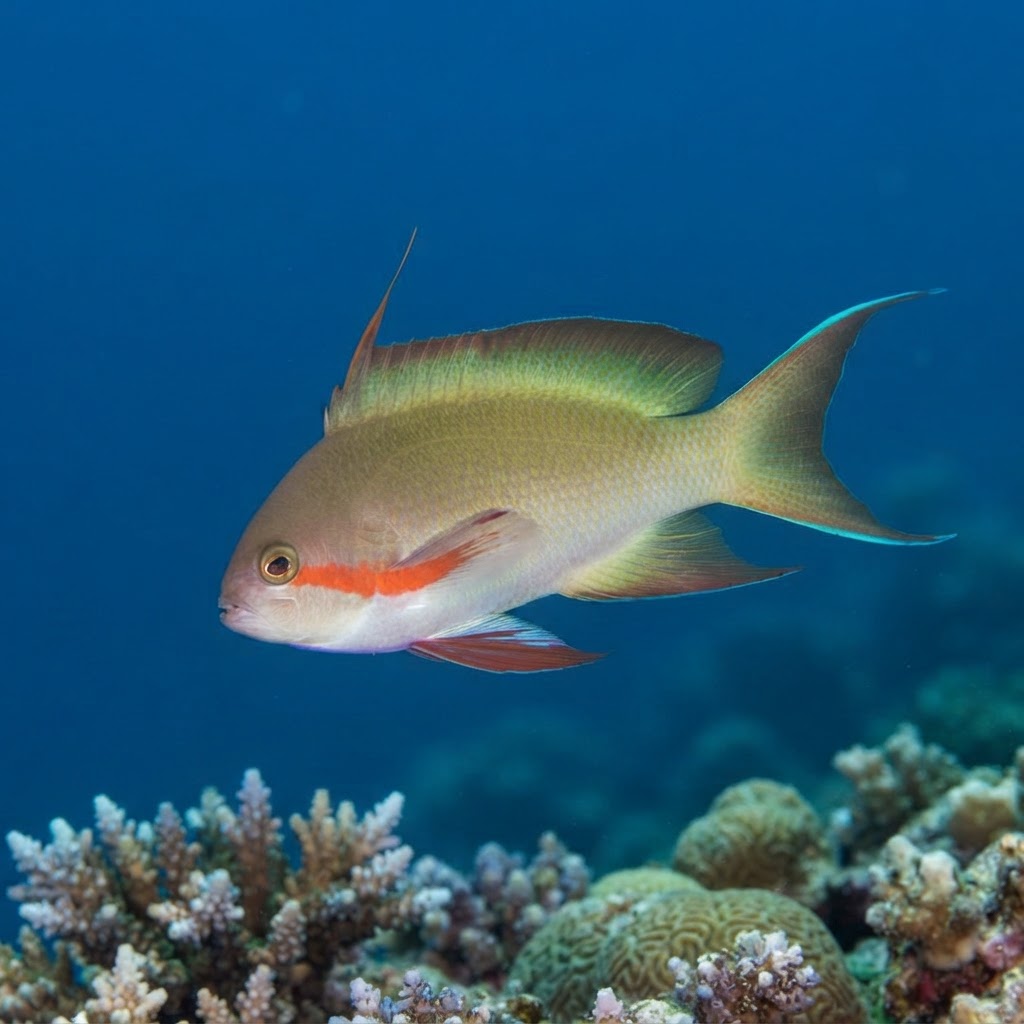
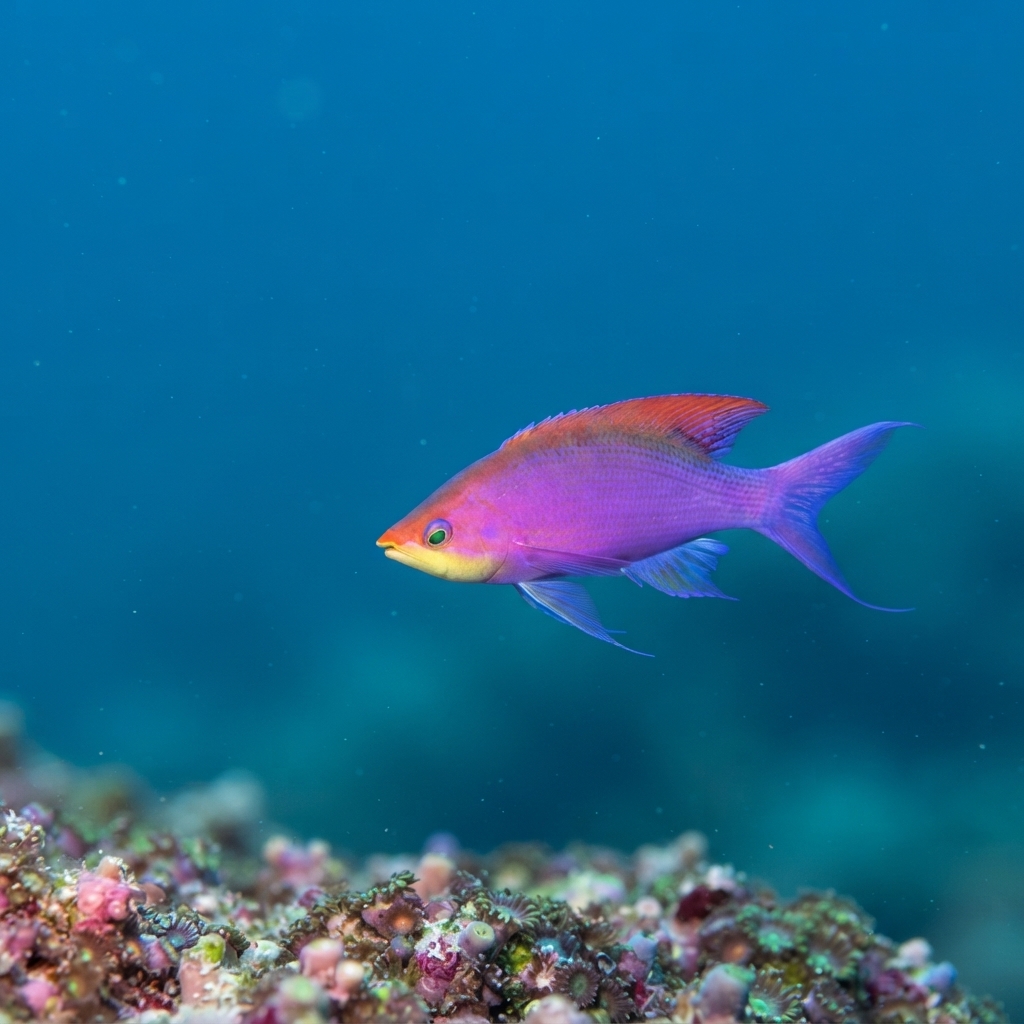
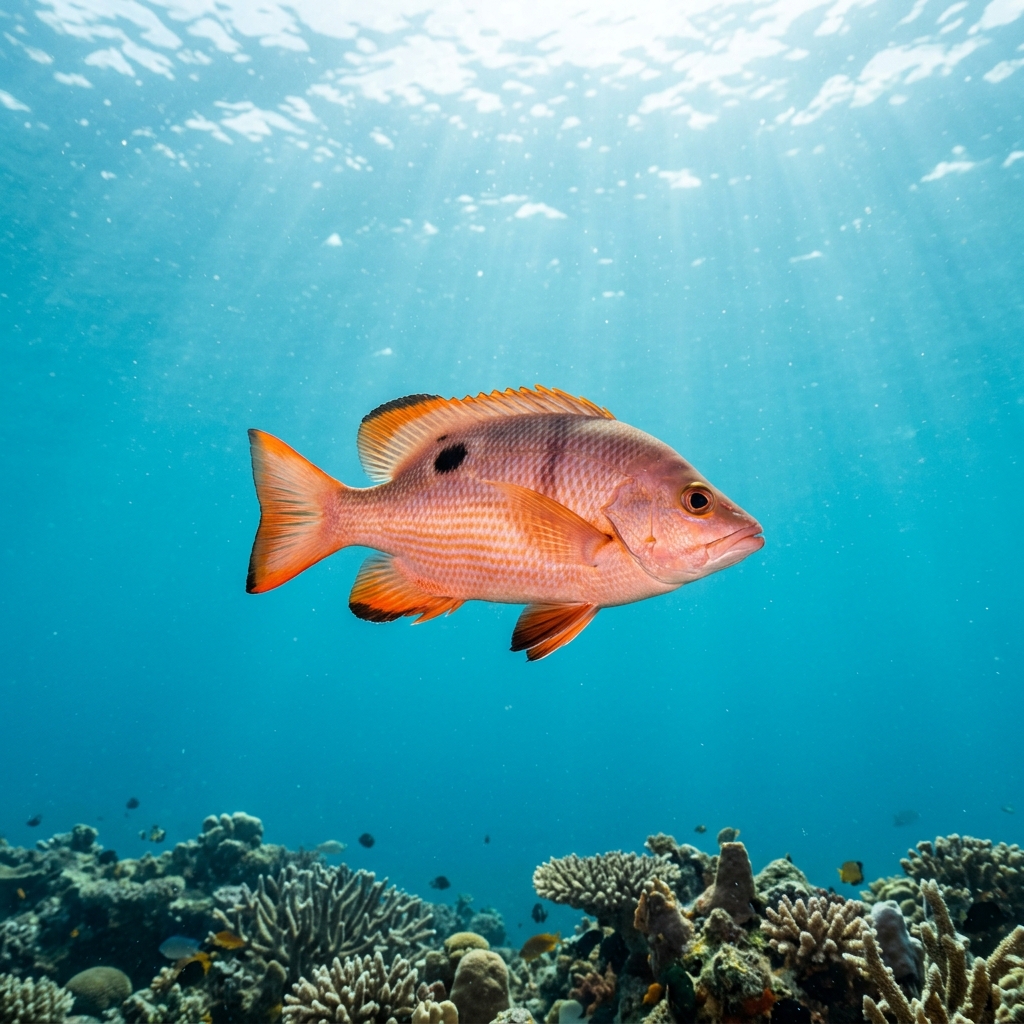
Reef neighbours a diver could mistake it for. Use the identification notes above to tell them apart.
Butterfly perch are logged across Australia and New Zealand, with the strongest representation in Tasmania, South Australia, and Victoria on the Australian side. In New Zealand, Northland and Auckland lead sightings, followed by Central New Zealand and the Coromandel and Bay of Plenty coasts. Fiordland and Stewart Island also produce records for divers willing to head south.
Mapping where Butterfly Perch is logged…
Butterfly perch are most reliably found along the temperate coasts of southern Australia and New Zealand. Top regions include Tasmania, South Australia, Victoria, and on the New Zealand side, Northland, Auckland, the Coromandel and Bay of Plenty, and Fiordland.
Sightings peak between December and April in the Southern Hemisphere. This summer-to-autumn window corresponds to when water temperatures sit at the warmer end of the species' cool-water range, roughly 14 to 18°C.
Look for a small, deep-bodied fish around 20 cm long with reddish-orange to pink colouration on the upper body and a paler belly, often hovering in loose groups above rocky reef. Males are noticeably more intensely coloured than females. The rounded tail and large eye help distinguish them from similar species.
Butterfly perch typically reach around 21 cm in length. They are a small, compact species, which is worth keeping in mind when scanning reef, they can be easy to overlook among larger reef fish.
Yes. Butterfly perch are protogynous hermaphrodites, meaning females can transition into males when social conditions require it, such as when a dominant male disappears from the group. The boldly coloured males you see may well have started life as females.
Site and sighting data is aggregated from diver logs, iNaturalist and GBIF. For taxonomy and conservation status:
Red-cheeked Anthias
425 sites