Pseudanthias pleurotaenia
Spot the Mirror Basslet across Sulawesi, Sipadan, and Palau in warm 27-29 °C waters. ID tips and top dive regions inside.
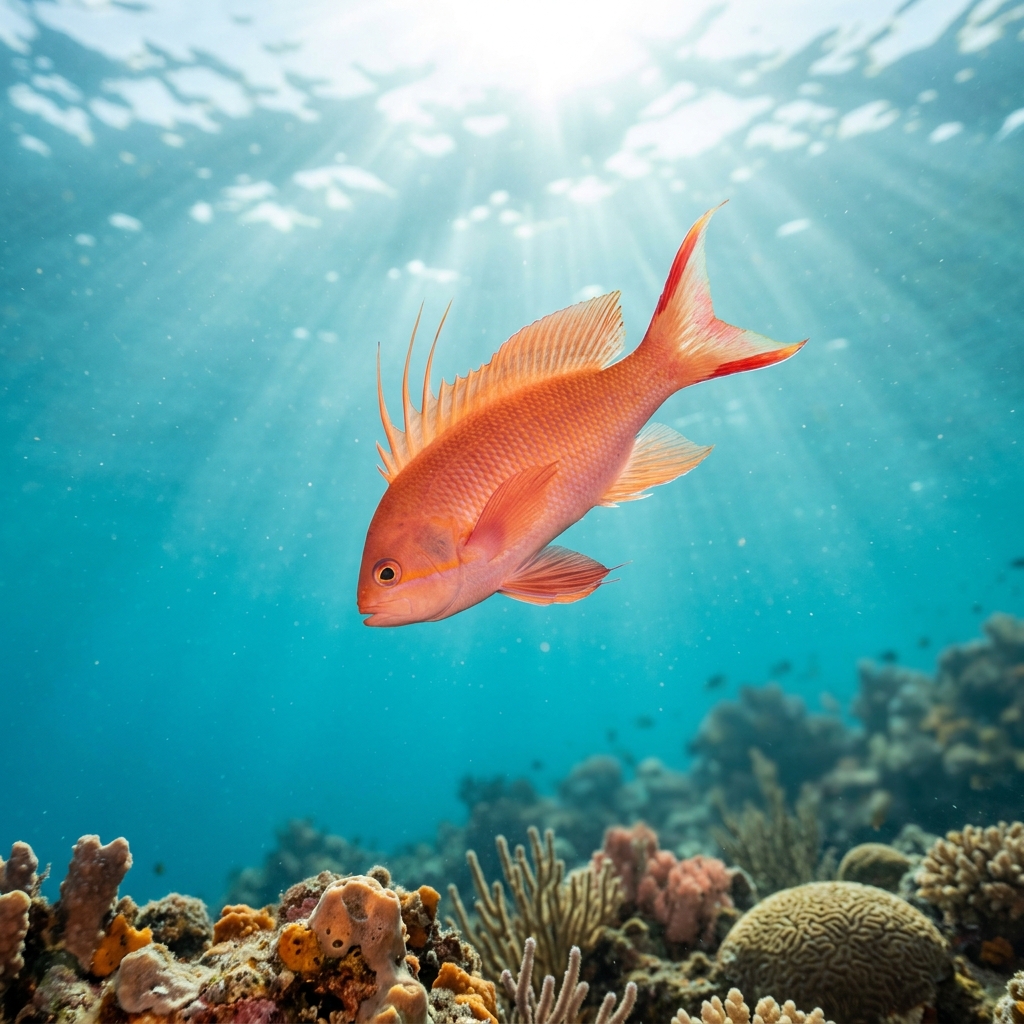
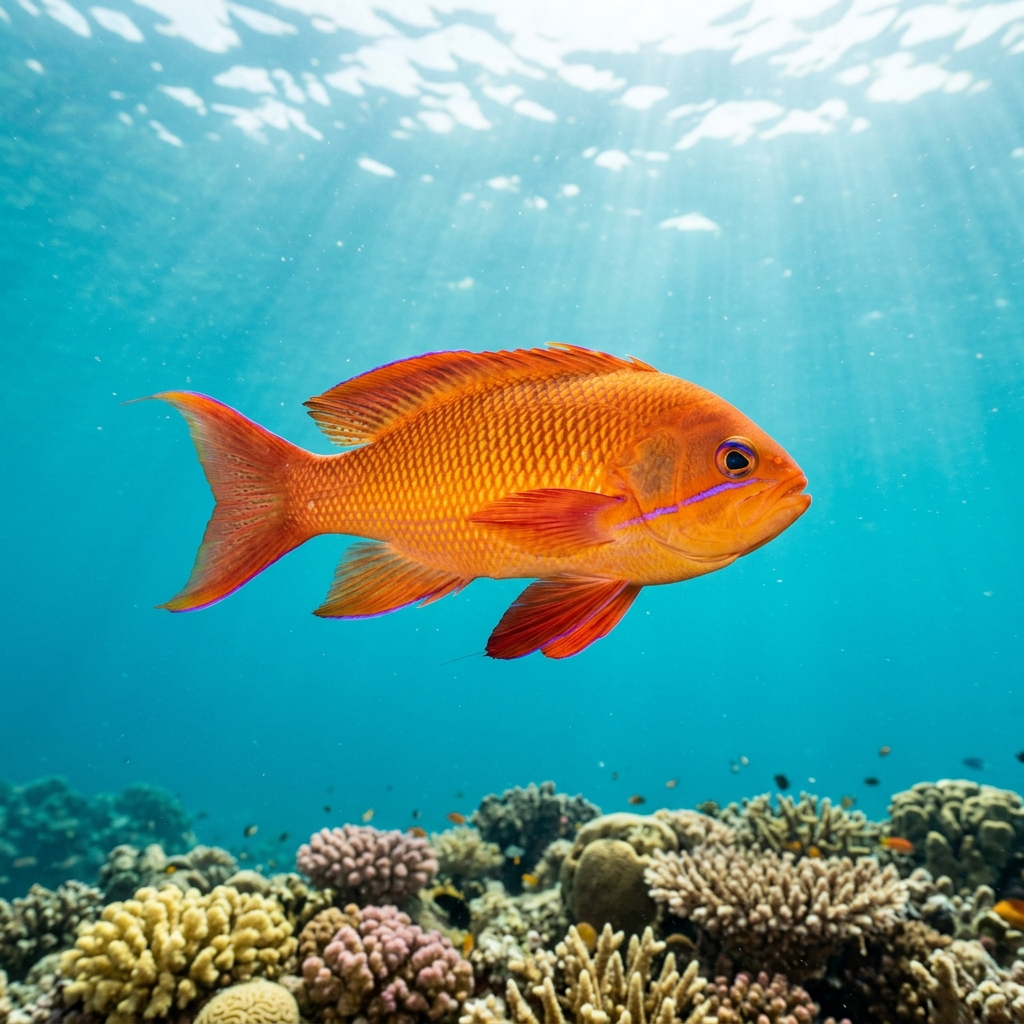
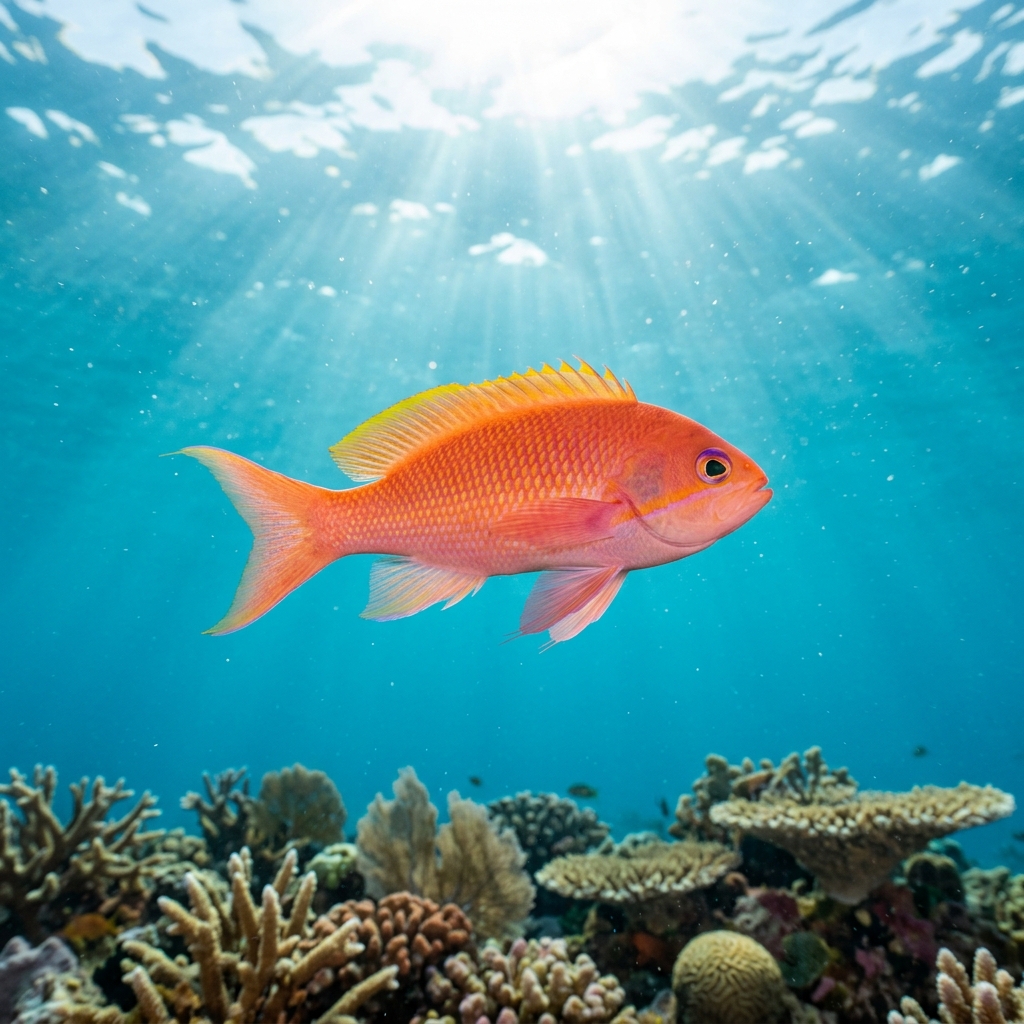
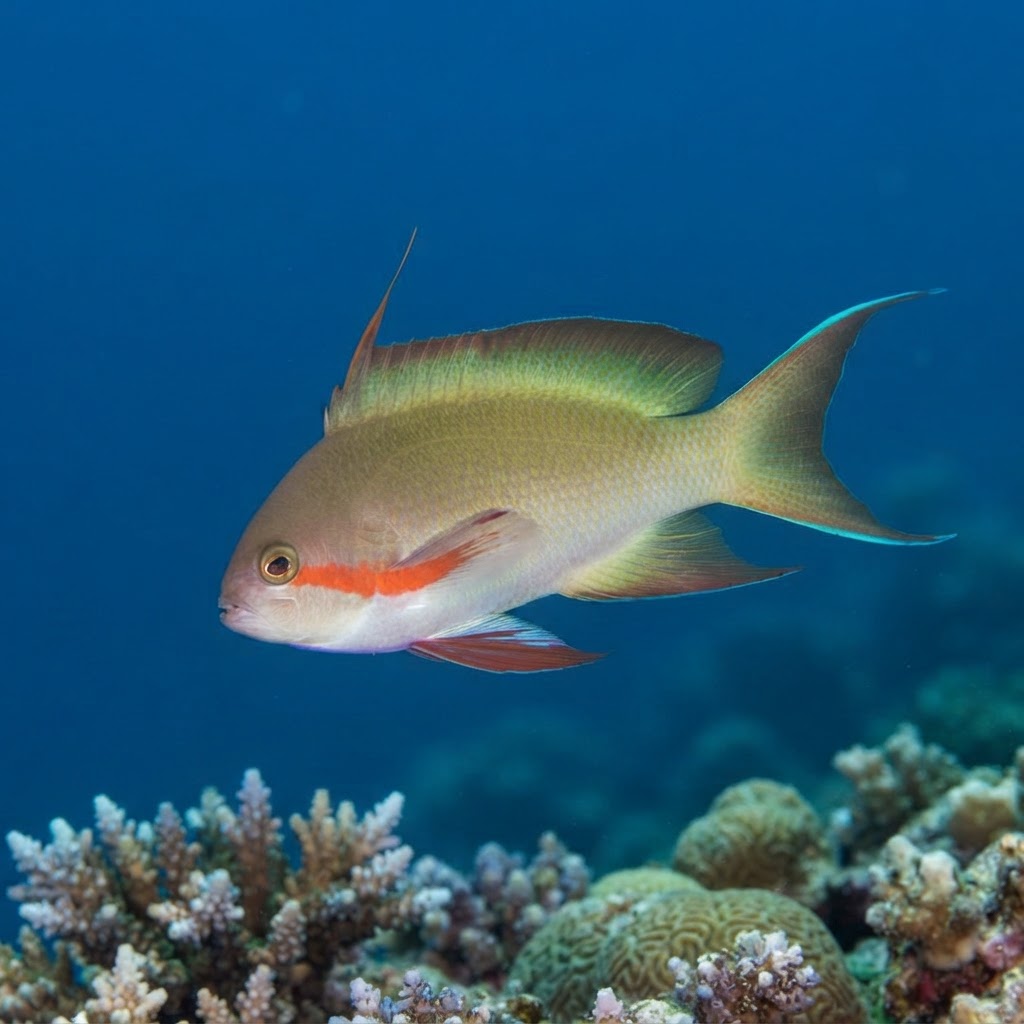
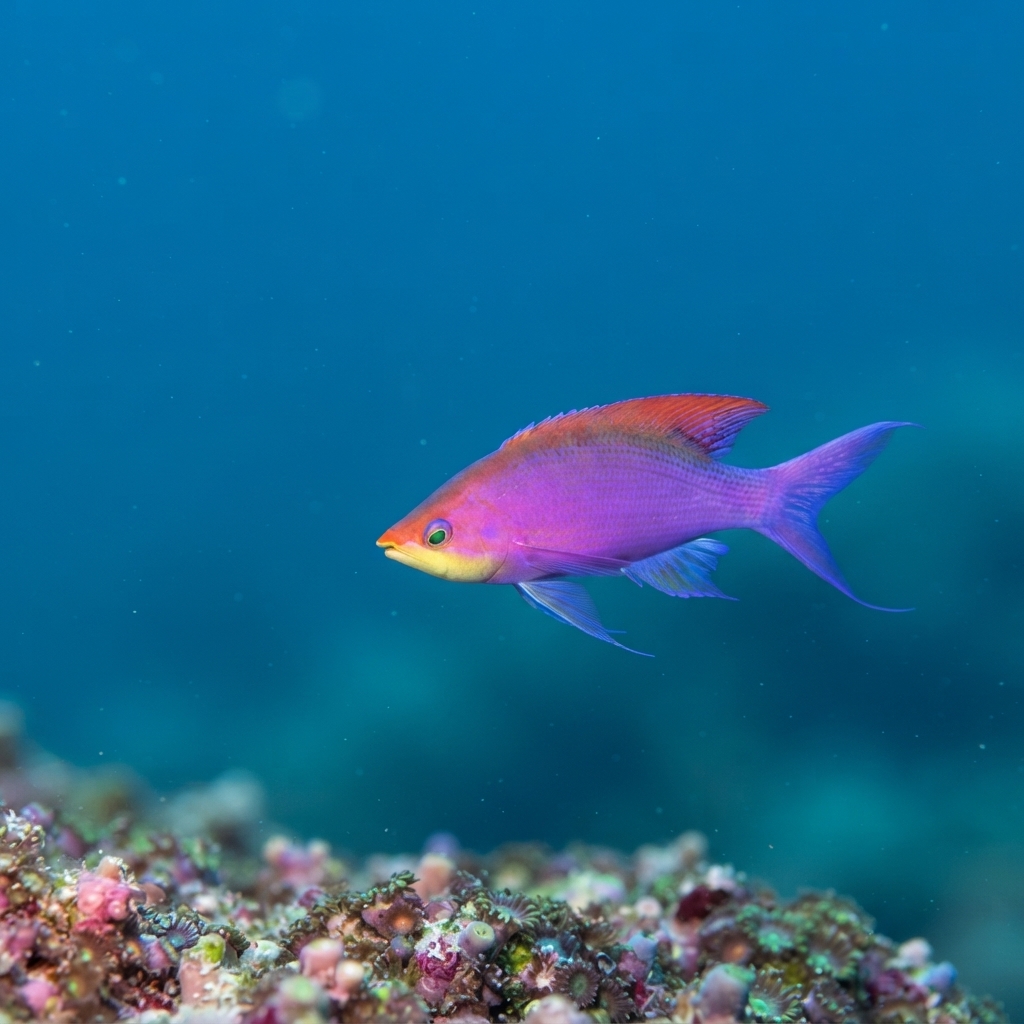
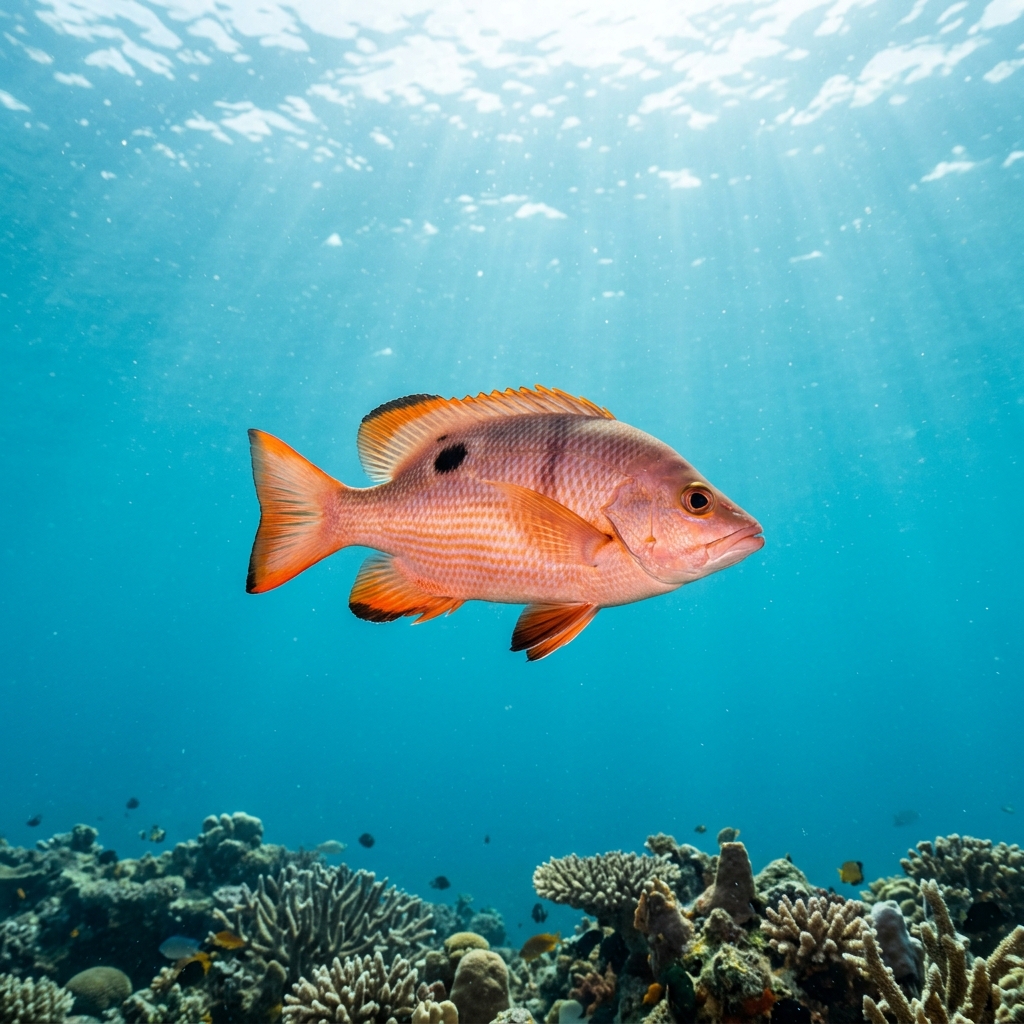
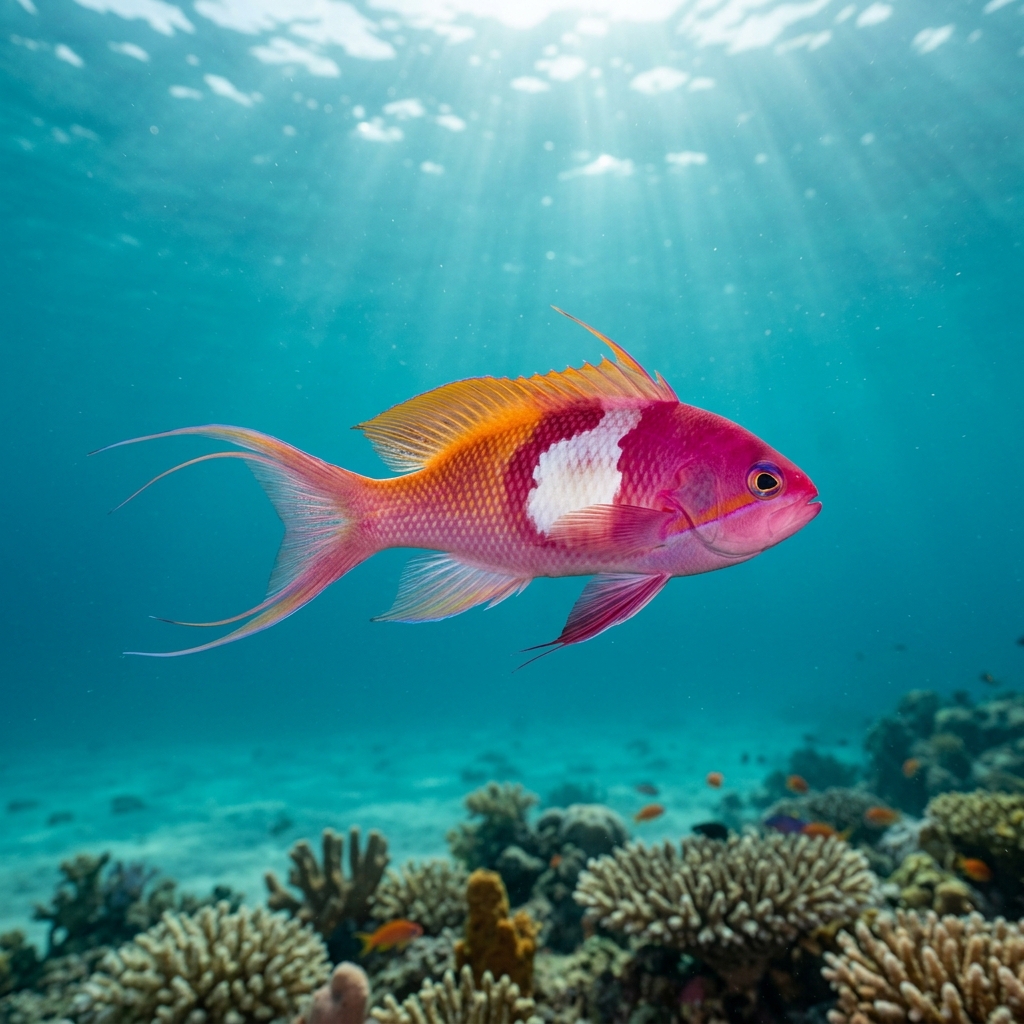
That bold, mirror-like rectangular silver or white patch on the mid-flank is the single best field mark, males display it against a deep magenta-to-violet body, making them unmistakable when they catch the light. Females are typically more uniformly orange-yellow and lack the conspicuous flank patch. Body shape is the classic compressed, deep-bodied anthias profile, and the species is usually seen mid-water above reef slopes and drop-offs.
Mirror basslets school in the water column above coral slopes and walls, often alongside mixed anthias aggregations, where they feed on zooplankton drifting in the current. Males actively patrol and display within the school, and the reflective flank patch appears especially vivid when they angle towards the light. They are not particularly wary of divers, but the school tends to compress or drop slightly towards the reef when approached too quickly, so a slow, horizontal approach gives the best views.
Like most anthias, mirror basslets are protogynous hermaphrodites, if the dominant male disappears, the largest female in the group will change sex and take his place, a transition that can be completed in a matter of weeks.
No strong seasonal peak has emerged from the sighting data, so this is effectively a year-round target wherever it occurs. The observed water temperatures of 27 to 29 °C point squarely at tropical reef conditions, meaning consistency rather than a narrow window is the norm.
Reef neighbours a diver could mistake it for. Use the identification notes above to tell them apart.
Indonesia dominates the records by a wide margin, with Sulawesi and the Nusa Tenggara and Banda Sea regions producing the most sightings; Bali also contributes regularly. Outside Indonesia, Sipadan and East Sabah in Malaysia, the Ngemelis Islands in Palau, and Taveuni in Fiji are the next most reliable areas, with further records from Timor-Leste and the Philippines rounding out the Coral Triangle range.
Mapping where Mirror Basslet is logged…
The strongest populations are in Indonesia, particularly around Sulawesi and the Banda Sea, with Bali sites also producing regular sightings. Sipadan in Malaysian Borneo, the Ngemelis Islands in Palau, and Taveuni in Fiji are the next most reliable locations, all within the Coral Triangle and western Pacific.
Sighting data shows no concentrated seasonal peak, so they are considered a year-round target at sites where they occur. They favour warm tropical water around 27 to 29 °C, which is stable throughout the year across most of their range.
Look for the distinctive large, rectangular silver or white patch on the mid-flank of the male, no other common anthias has a mark this bold and mirror-like. The rest of the body is deep magenta to violet. Females lack the patch and are mostly orange-yellow, resembling other anthias, so focus on males for a confident ID.
Mirror basslets reach around 15 to 20 cm in the wild, which is notably larger than many of their anthias relatives. In the water they look stocky and deep-bodied compared to the slender sea goldie.
Yes. All mirror basslets are born female, and when the dominant male of a group disappears, the largest remaining female transitions into a fully functional male, including developing the vivid violet colouration and the reflective flank patch. This sex-change process can happen within a few weeks.
Site and sighting data is aggregated from diver logs, iNaturalist and GBIF. For taxonomy and conservation status:
Red-cheeked Anthias
425 sites