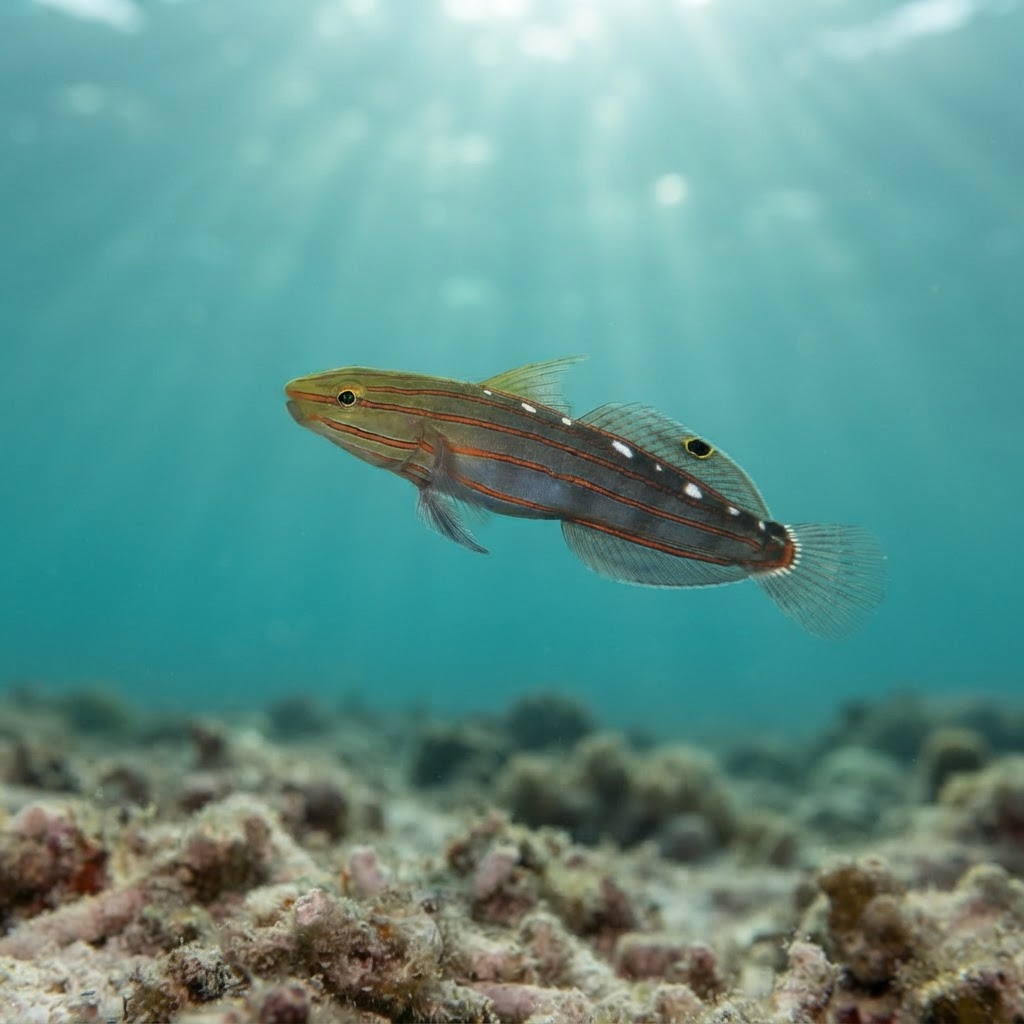
Koumansetta rainfordi
Watch for a striped 6cm goby perched on rubble in Raja Ampat or Queensland, water around 26 to 29C, spotted year-round.
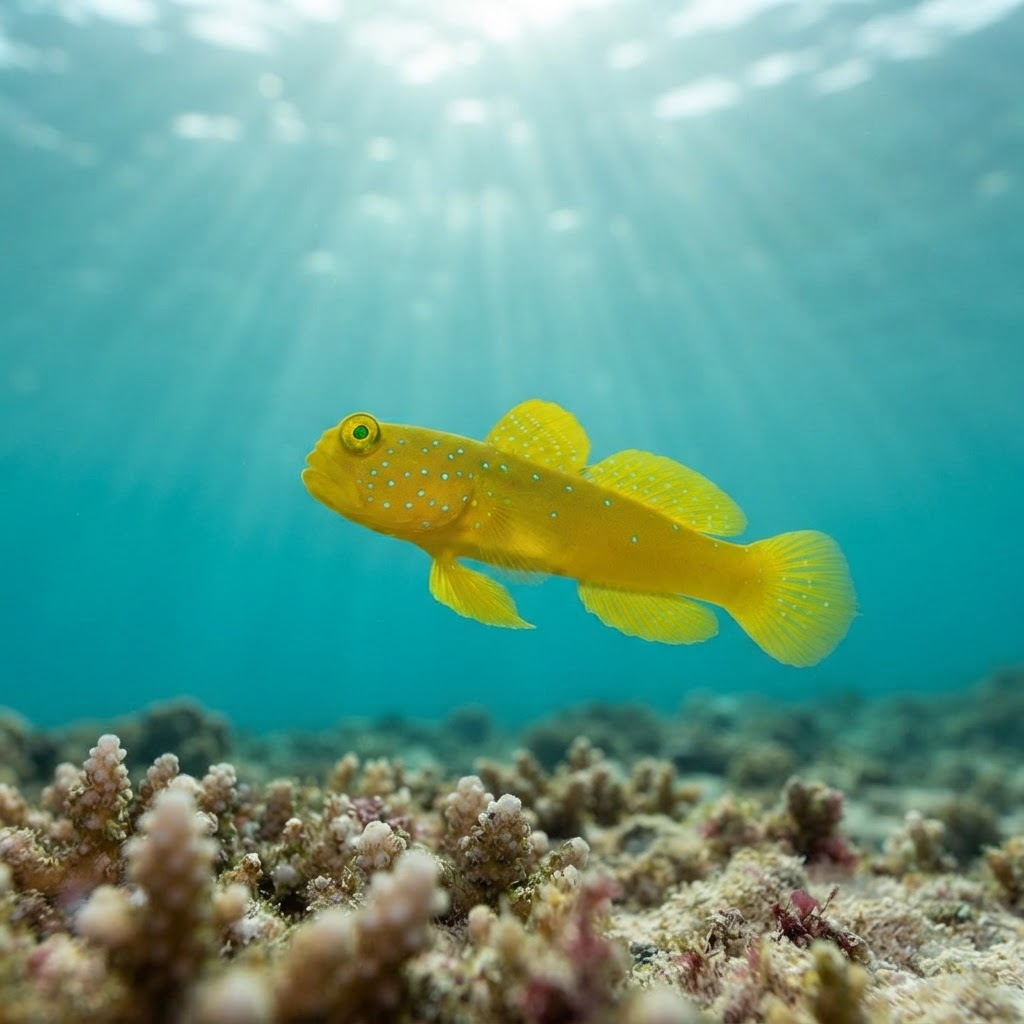
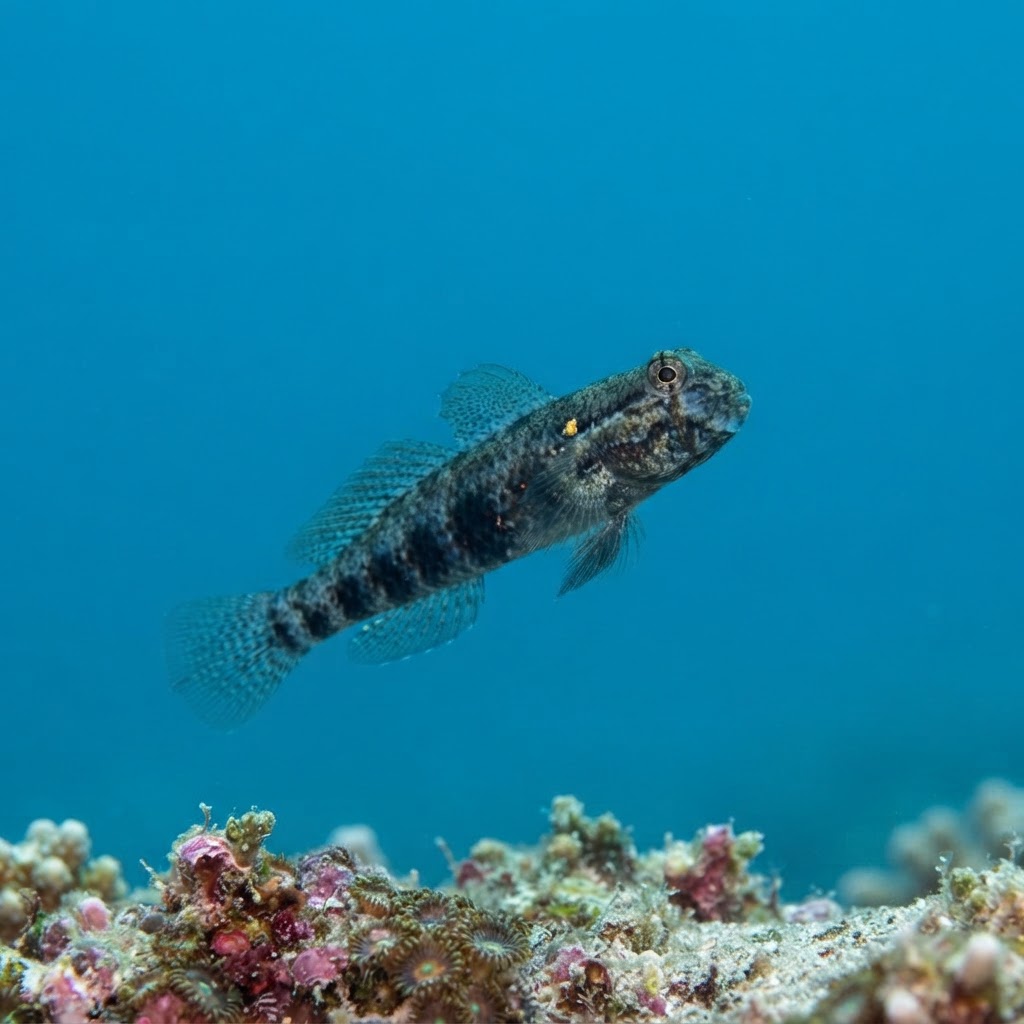
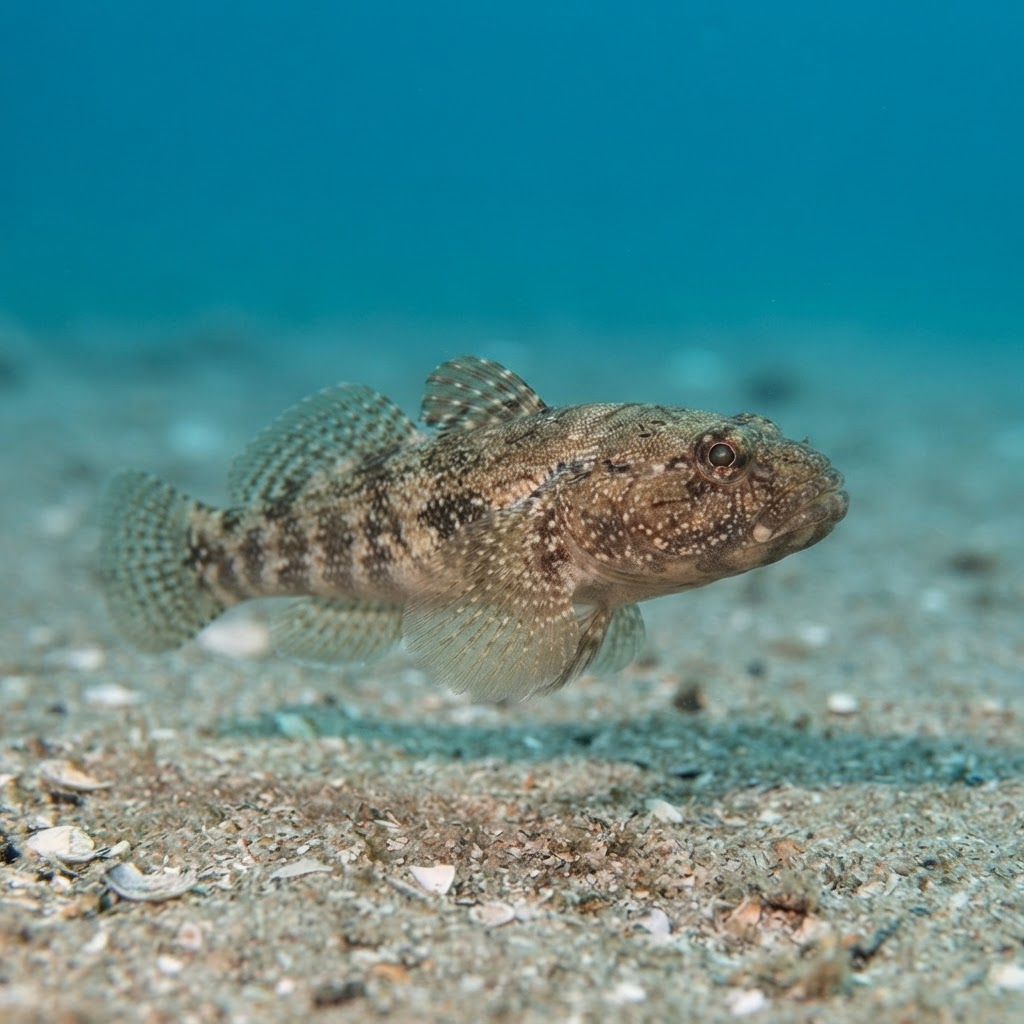
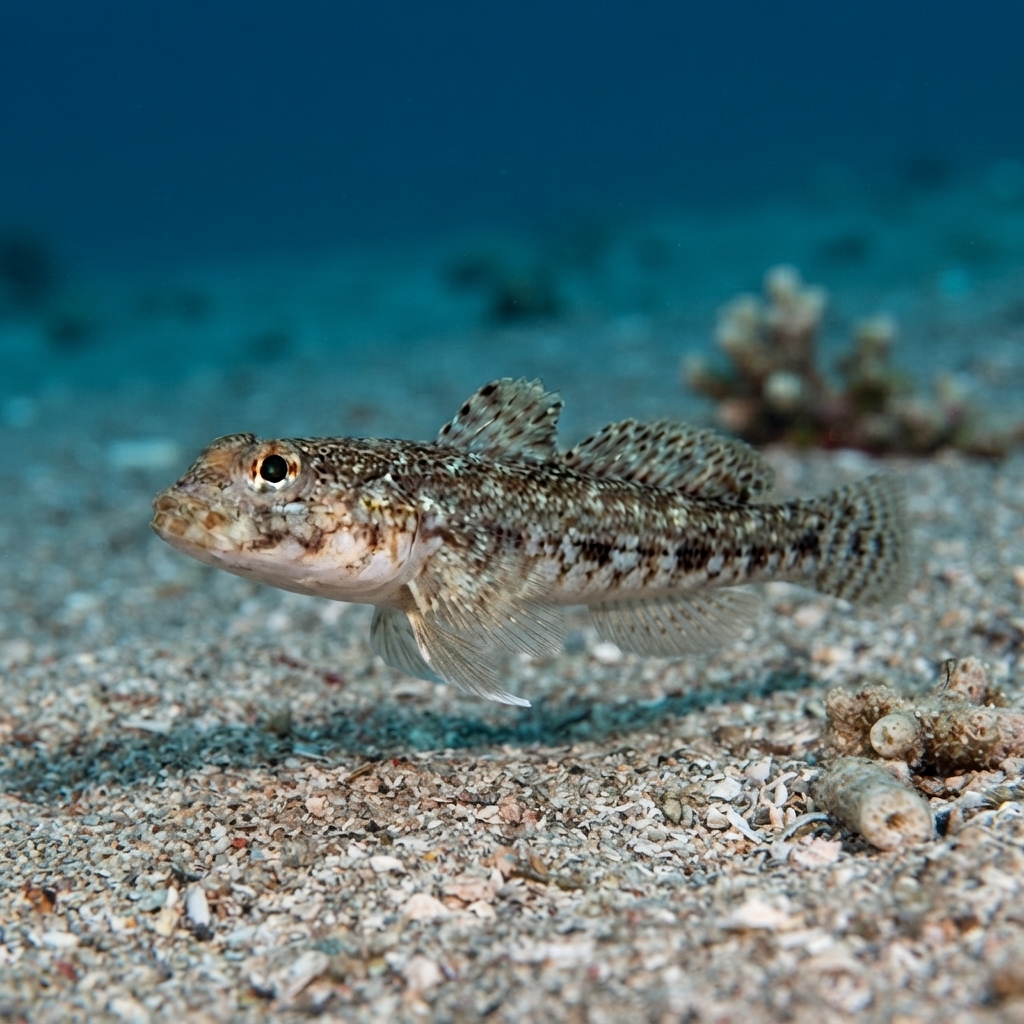
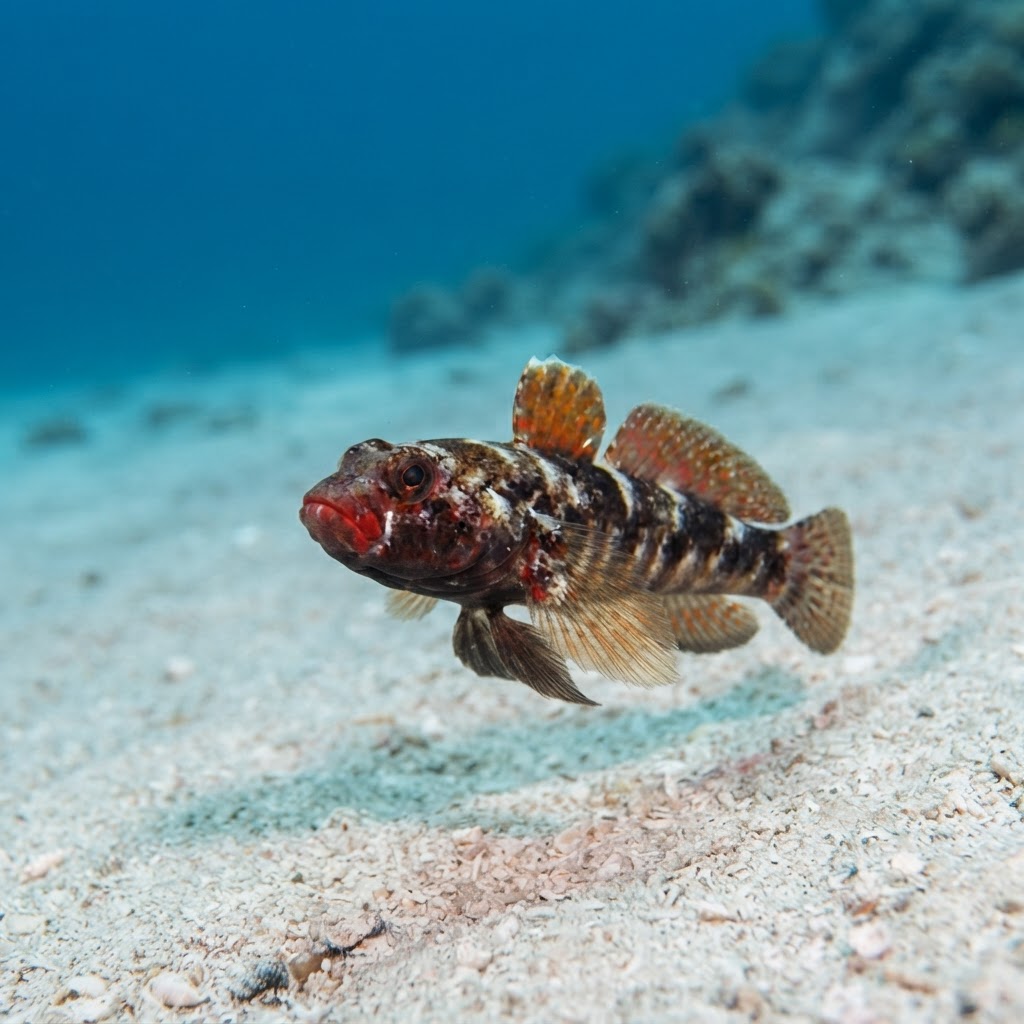
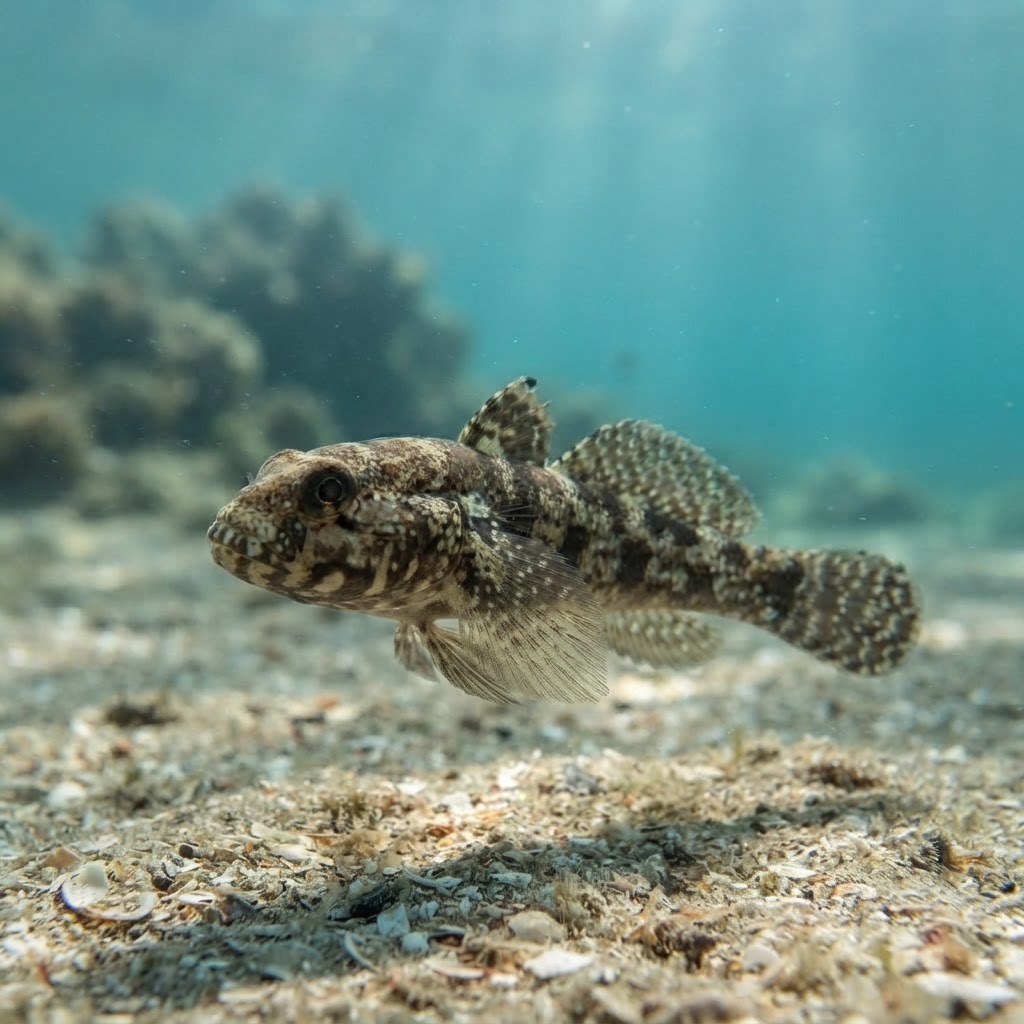
A small, slender goby around 6 cm long, usually seen perched motionless on rubble or coral rather than swimming in open water. Look for alternating green and orange-red horizontal stripes running down the body, with a black-and-yellow eyespot near the front of the raised dorsal fin. The fins often have a fine yellow edge that catches the light when the fish flicks them upright.
Spends most of its time perched on coral rubble or low reef structure, propped up on its pelvic fins and holding still while scanning for tiny invertebrate prey. It tends to sit tight rather than dart off when divers approach, though it will retreat into a crevice if you get too close or move too fast. Most sightings come from slow, close-focus looks at rubble patches and reef bases rather than open water.
Like many small gobies it forms a loose partnership with the reef substrate rather than a burrow-sharing shrimp, relying on rubble cover and its own stillness for protection instead of active flight.
No clear seasonal pattern shows in the sightings, and its comfort range of roughly 26 to 29C matches warm tropical reefs year-round, so any month is workable. Plan around the season and conditions at the region you are visiting rather than around this fish.
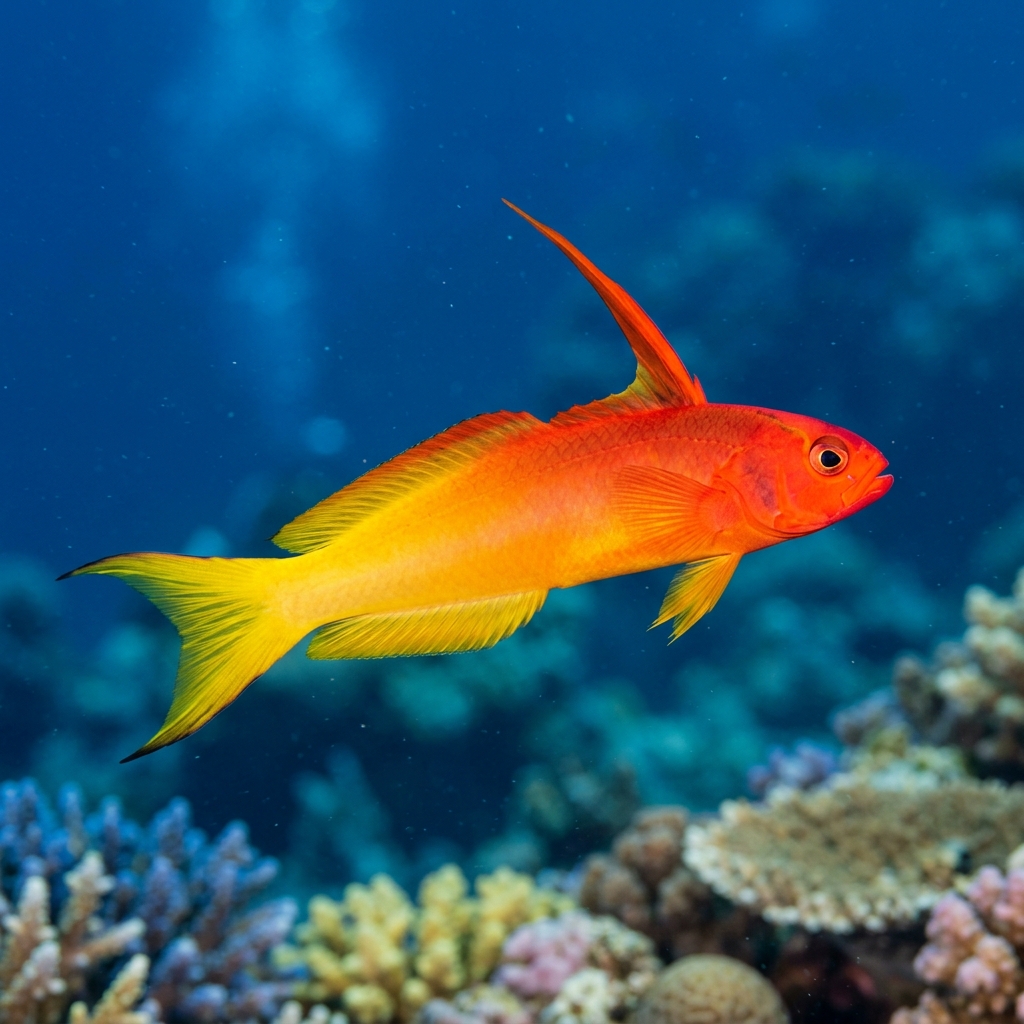
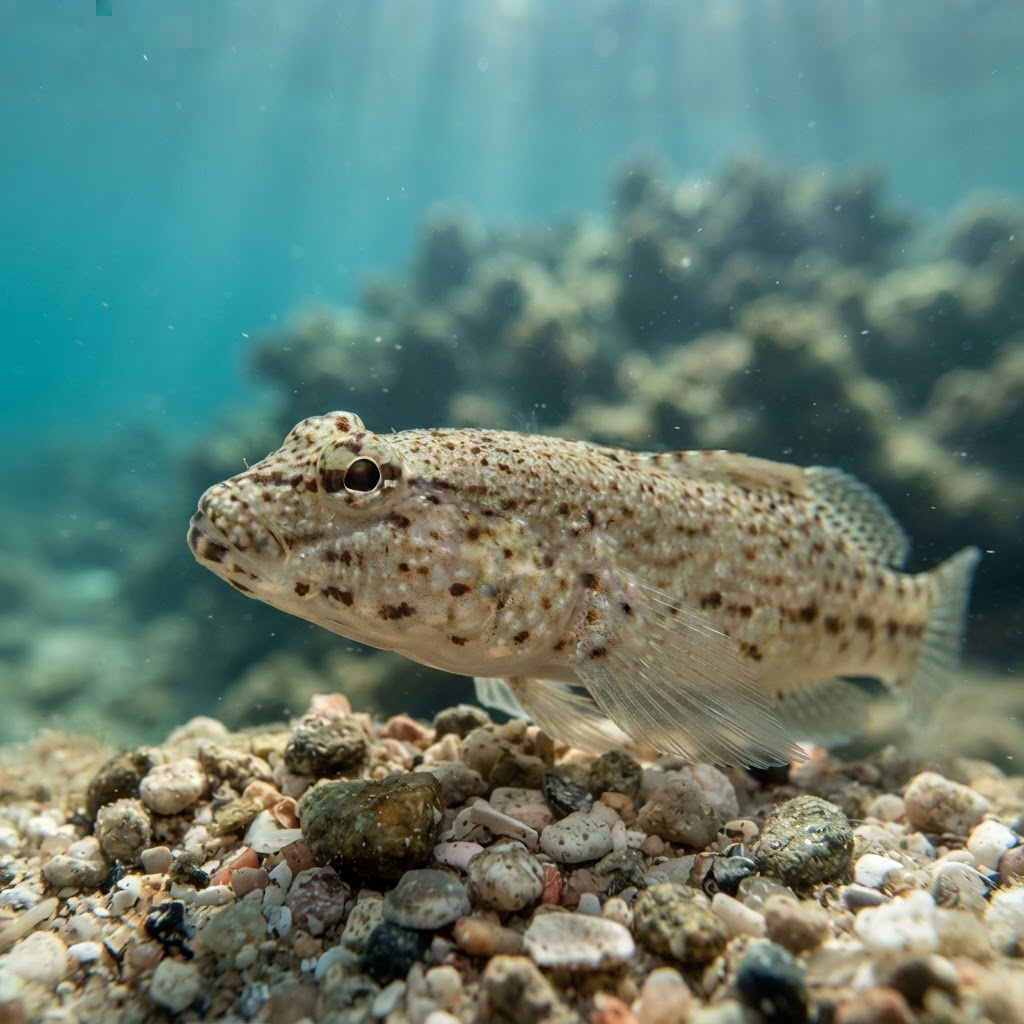
Reef neighbours a diver could mistake it for. Use the identification notes above to tell them apart.
Most reliably logged on reefs in Queensland, Australia and Raja Ampat, Indonesia, with further sightings around Nouméa in New Caledonia, Dili in Timor-Leste and Tufi in Papua New Guinea. It turns up as an uncommon find scattered across Indo-Pacific reef and rubble patches rather than concentrated at one famous site.
Mapping where Rainford's Goby is logged…
Queensland in Australia and Raja Ampat in Indonesia have the strongest records, with additional sightings around Nouméa in New Caledonia, Dili in Timor-Leste and Tufi in Papua New Guinea. It is logged as an uncommon find at most of these sites rather than a guaranteed sighting.
There is no detected seasonal pattern, and its preferred water temperature of roughly 26 to 29C is available on tropical reefs throughout the year. Treat it as a year-round possibility wherever it is recorded.
Check for a slim 6 cm body with green and orange-red stripes running lengthwise, a raised dorsal fin marked with a black-and-yellow eyespot, and a habit of perching still on rubble rather than swimming freely.
Around 6 cm long, making it one of the smaller reef gobies divers photograph up close with a macro lens.
No. It is a tiny, harmless reef fish that poses no risk to divers and simply retreats into cover if approached too closely.
Site and sighting data is aggregated from diver logs, iNaturalist and GBIF. For taxonomy and conservation status:
Slender Goby
806 sites