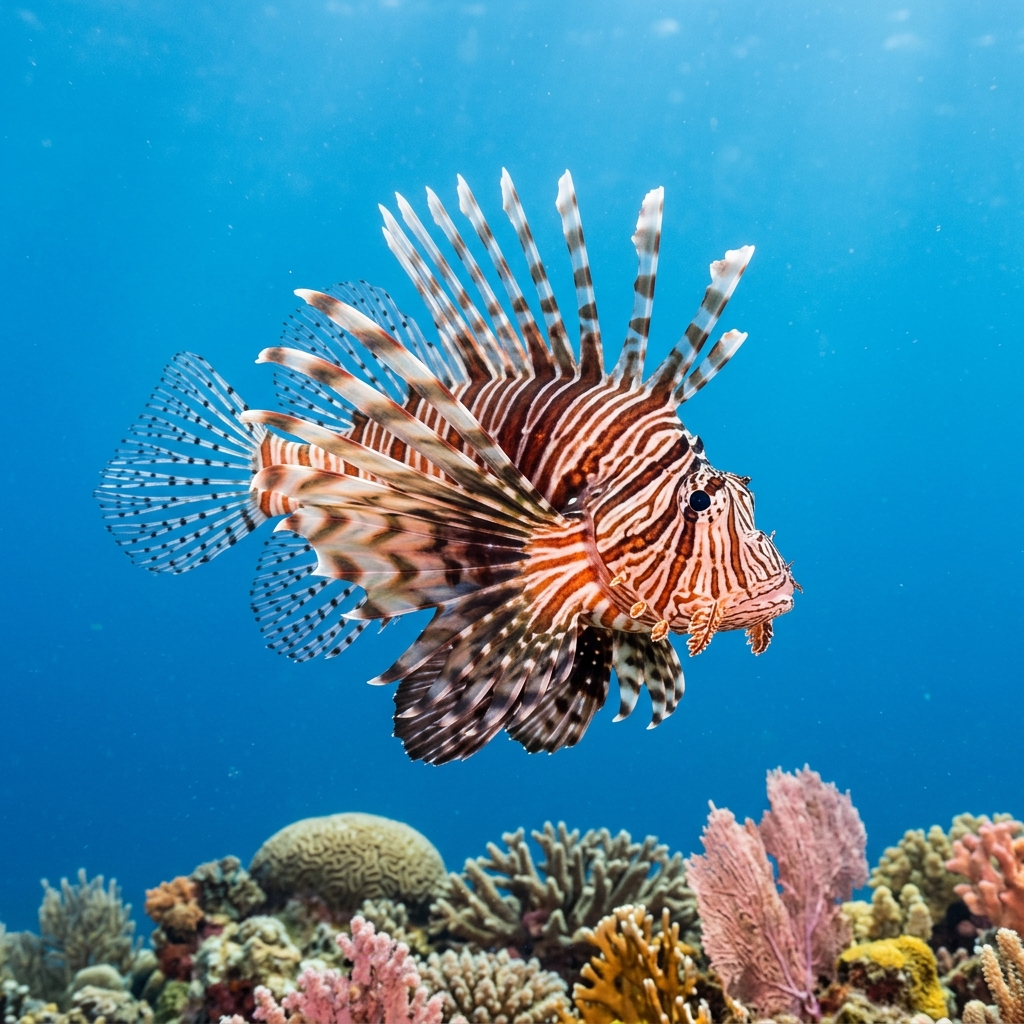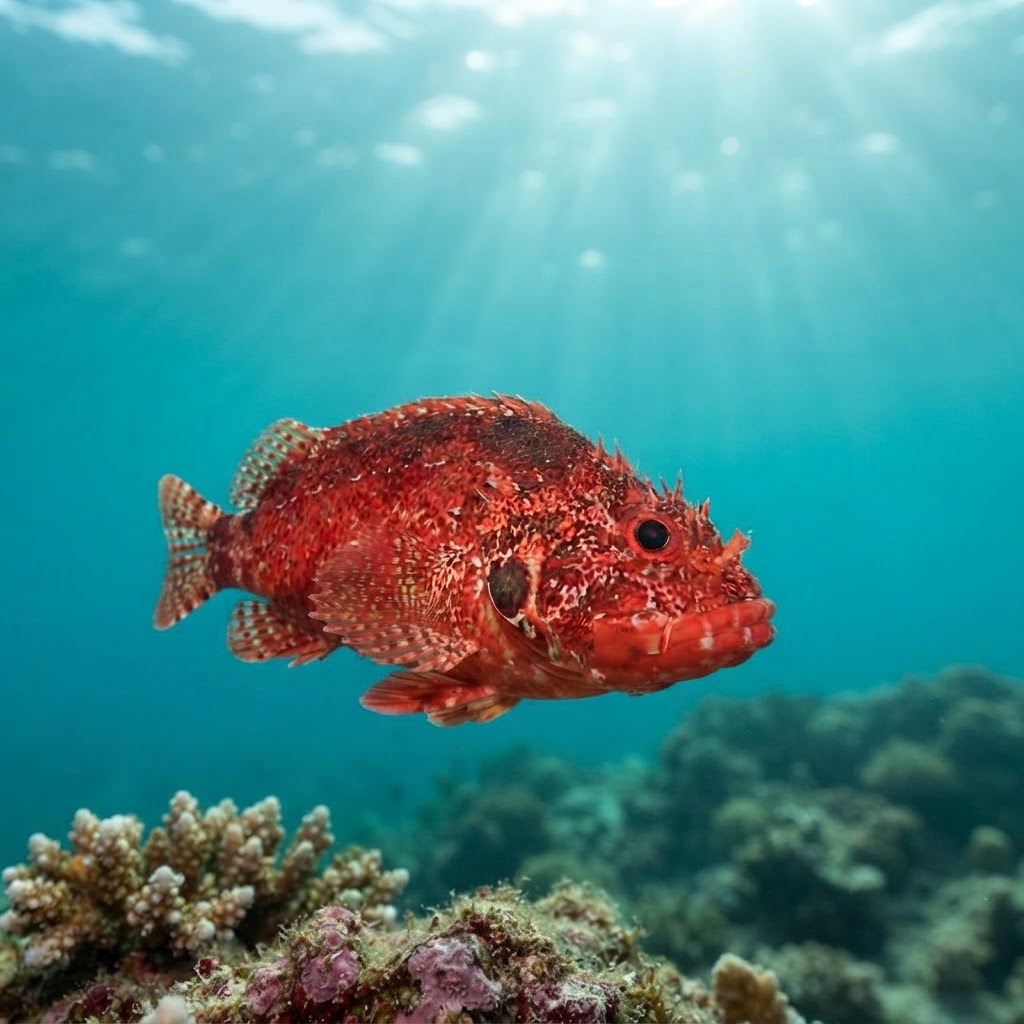
Scorpaenodes xyris
Tiny reef-hugger logged mostly in California waters at 21 to 29 C, rare almost everywhere it's found. Here's how to actually spot one.
Safety warning
Its dorsal spines carry venom delivered through a defensive jab, not an attack, so stings happen when a diver puts a hand or knee down on rock without checking first. Keep buoyancy control tidy near rubble and rocky ledges, avoid touching the substrate blind, and treat any sting as a medical issue requiring hot-water immersion and evaluation.
If you're stung
Venomous spinesGeneral first-aid guidance, not a substitute for professional medical care. In an emergency, call your local emergency number.
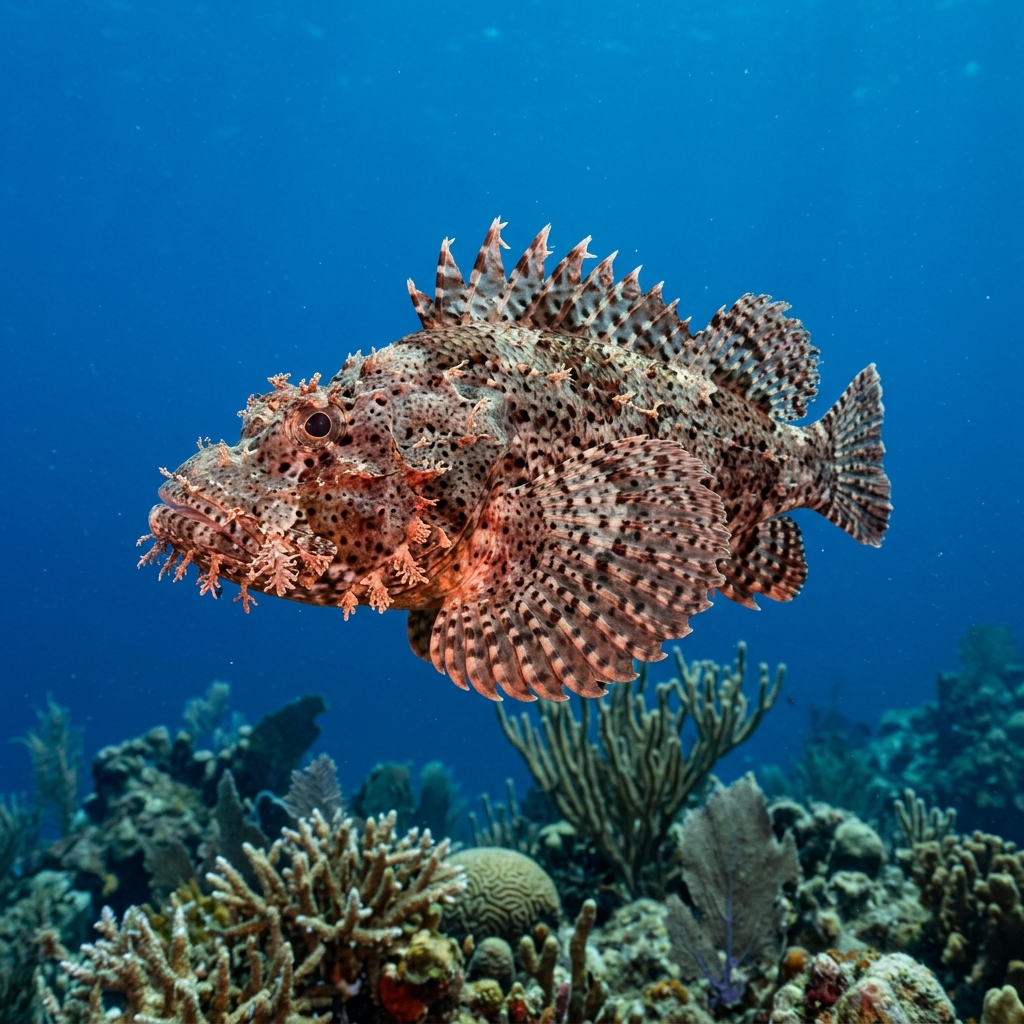
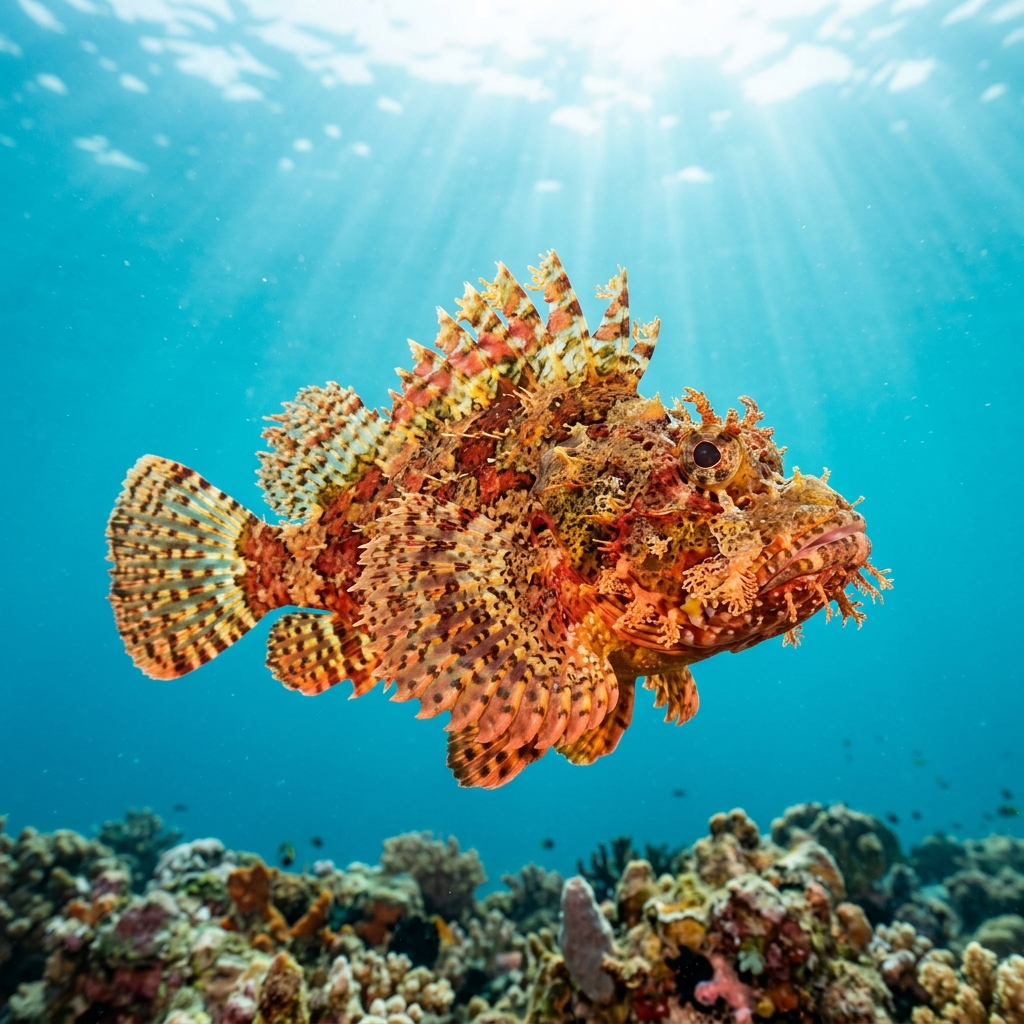
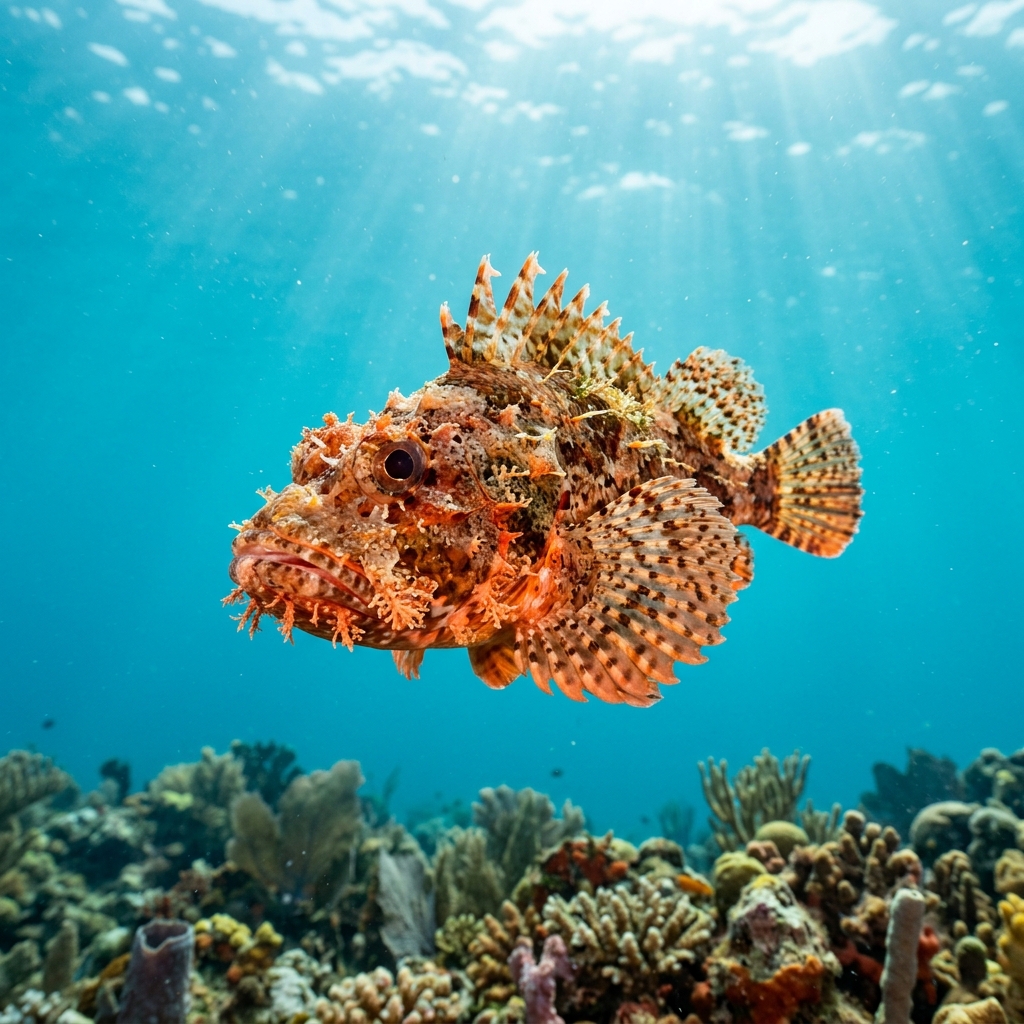
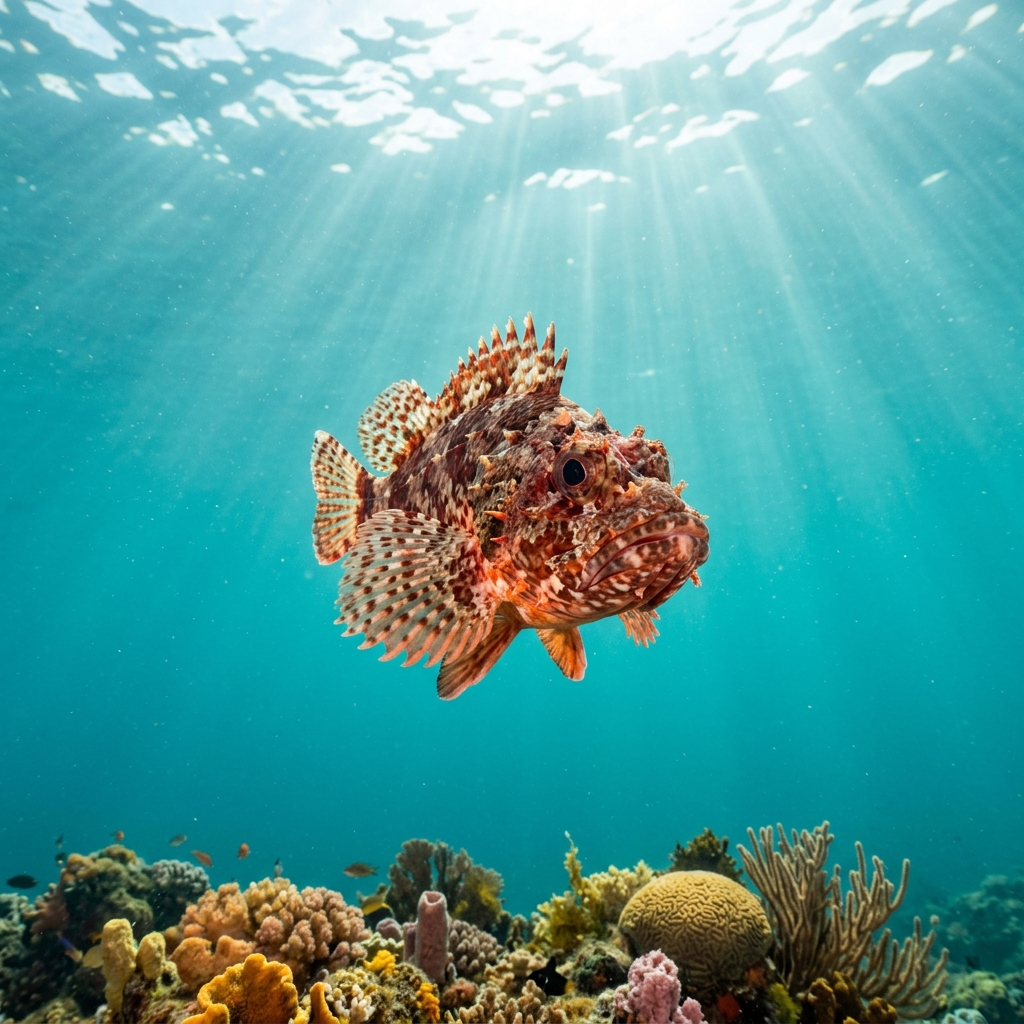
Barely bigger than a hand at 10 cm, this scorpionfish wears a mottled wash of reds, browns and pale blotches that breaks up its outline against rock and rubble. Look for the heavy, spine-crowned head and the way the pectoral fins fan out low and wide, propping the body at an angle rather than lying flat. It sits dead still, which is usually the giveaway; the colour pattern alone rarely stands out from a distance.
Expect to find it wedged motionless into a crevice or sitting on rubble and low rocky ledges, relying on camouflage rather than movement to avoid notice. Divers who do log it usually spot it by chance on a slow, close look at the substrate rather than mid-water. It shows little reaction to divers unless disturbed, staying put until something brushes too close.
Its blotchy, weed-like colouring lets it disappear against algae-covered rock so completely that most divers who log it admit they nearly put a hand down beside it before noticing.
No clear season shows up in the sightings, and with a comfortable range of 21.3 to 29.1 C it can turn up year-round wherever that rocky-reef habitat holds steady temperatures.
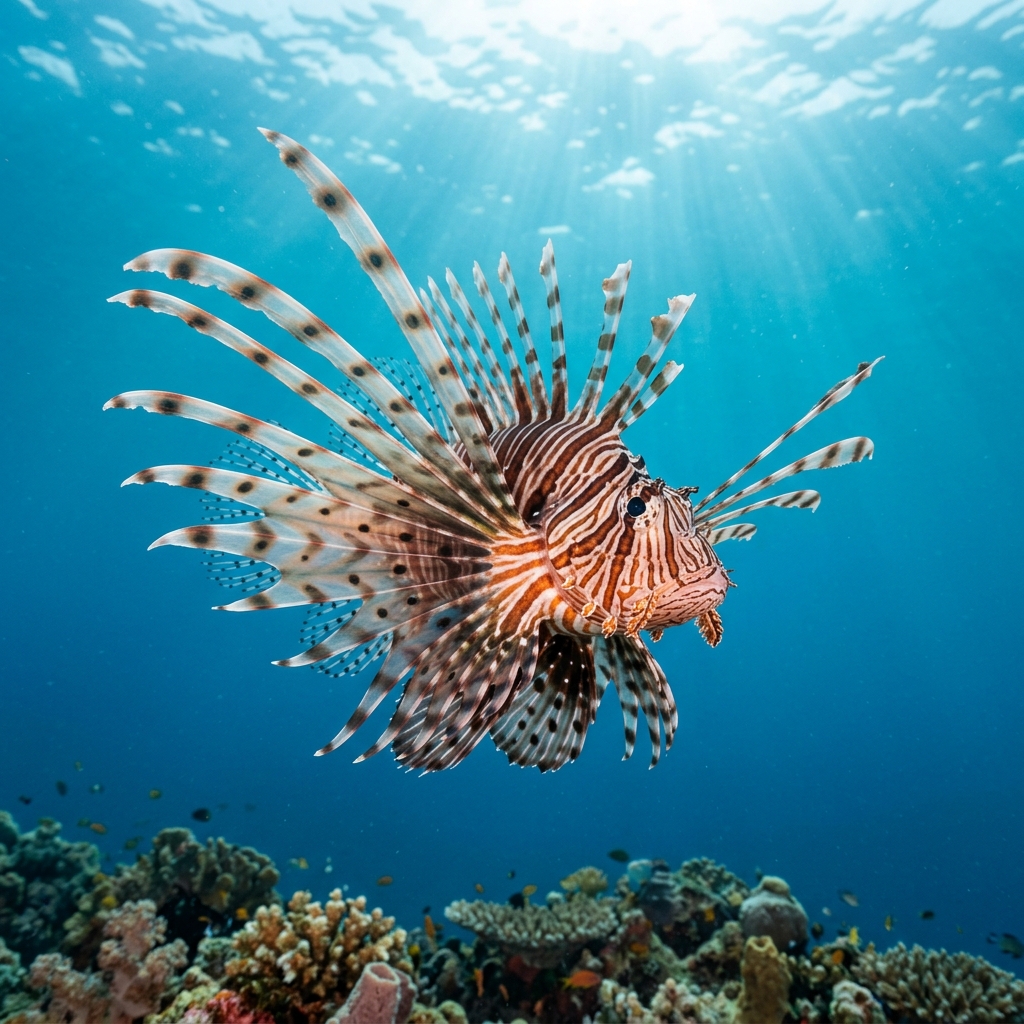
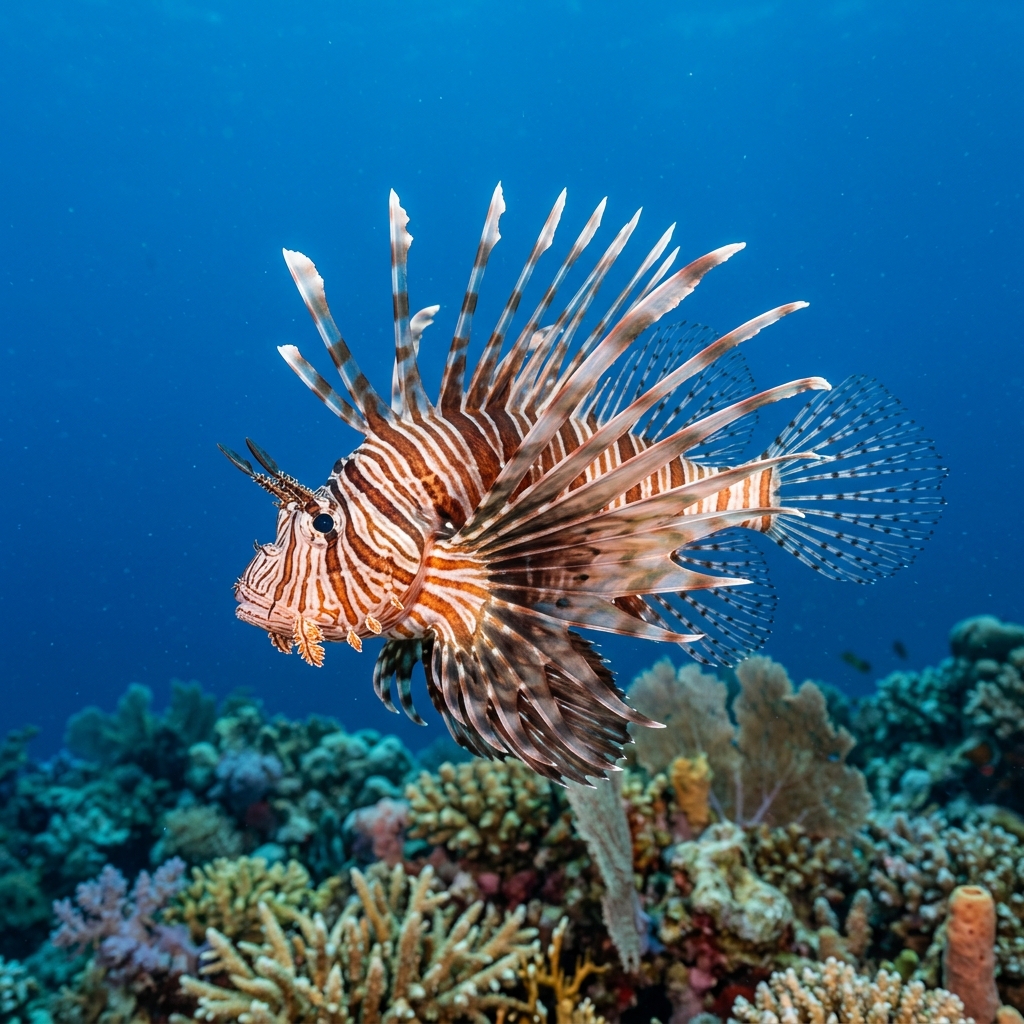
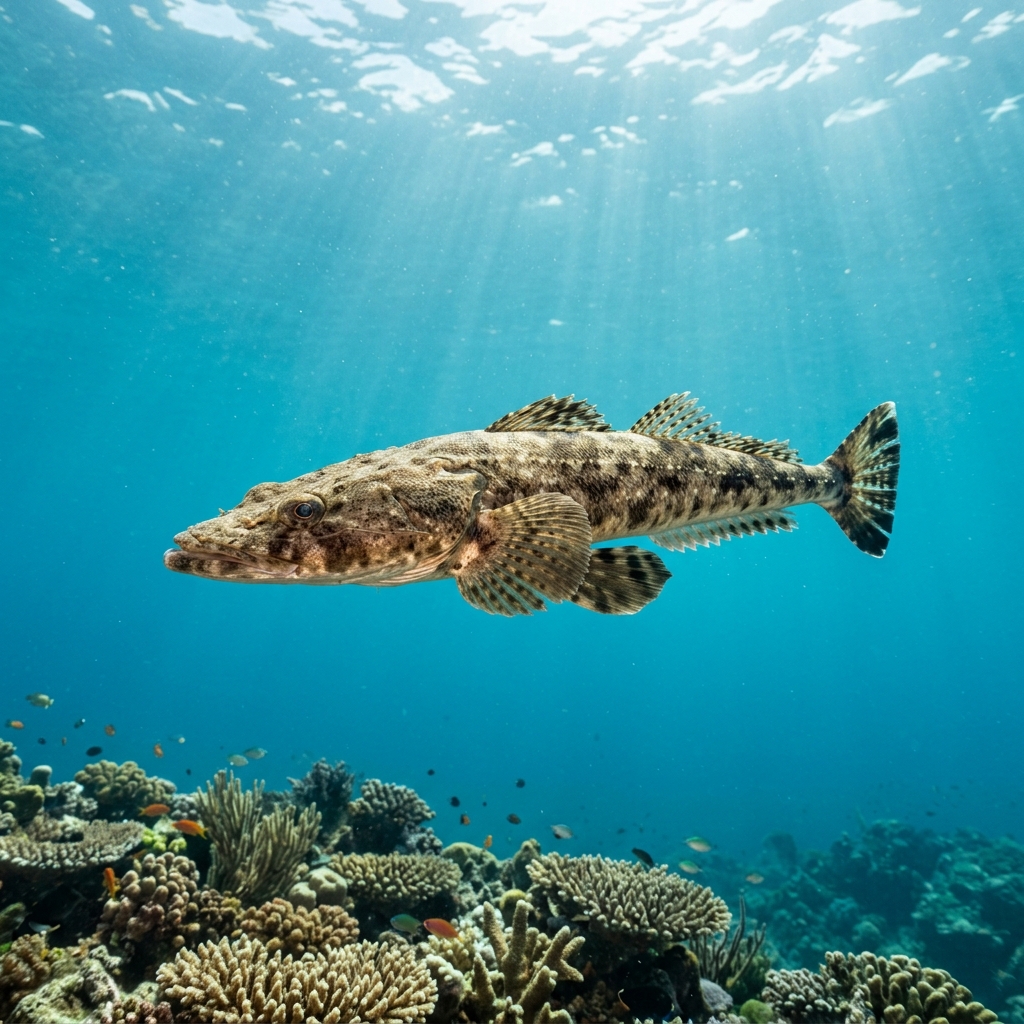
Reef neighbours a diver could mistake it for. Use the identification notes above to tell them apart.
California is by far the strongest region for this species, with most logged sightings coming from its rocky reefs and kelp-edged sites. Smaller but reliable numbers turn up around the Galápagos Islands in Ecuador and Baja California in Mexico, so the Eastern Pacific rocky coast is the place to search.
Mapping where Rainbow Scorpionfish is logged…
California is the standout region, with the Galápagos Islands in Ecuador and Baja California in Mexico also producing sightings. Look on rocky reef and rubble habitat rather than sand or open water.
There's no detected season, and its temperature range of 21.3 to 29.1 C spans most of the year in these regions, so sightings are possible any month.
Yes, its dorsal spines are venomous and can deliver a painful sting if touched or knelt on. It won't chase or attack, so the real risk is an accidental hand or knee on the reef.
Look for a small, mottled red-brown fish about 10 cm long, sitting still on rock or rubble with spiny fins and a heavy head. Its camouflage means you'll usually spot it by close inspection rather than movement.
They stay small, typically around 10 cm, making them easy to miss against rocky, algae-covered substrate.
Yes, most sites that log it record it as a rare find, with only a handful of sites reporting it as uncommon or common. Finding one usually takes a slow, deliberate search of rocky ledges.
Site and sighting data is aggregated from diver logs, iNaturalist and GBIF. For taxonomy and conservation status:
Madeira Rockfish
2,773 sites