Hypselodoris regina
A rare find off Ponta do Ouro and KwaZulu-Natal, this nudibranch turns up year-round in warm 21-27C water.
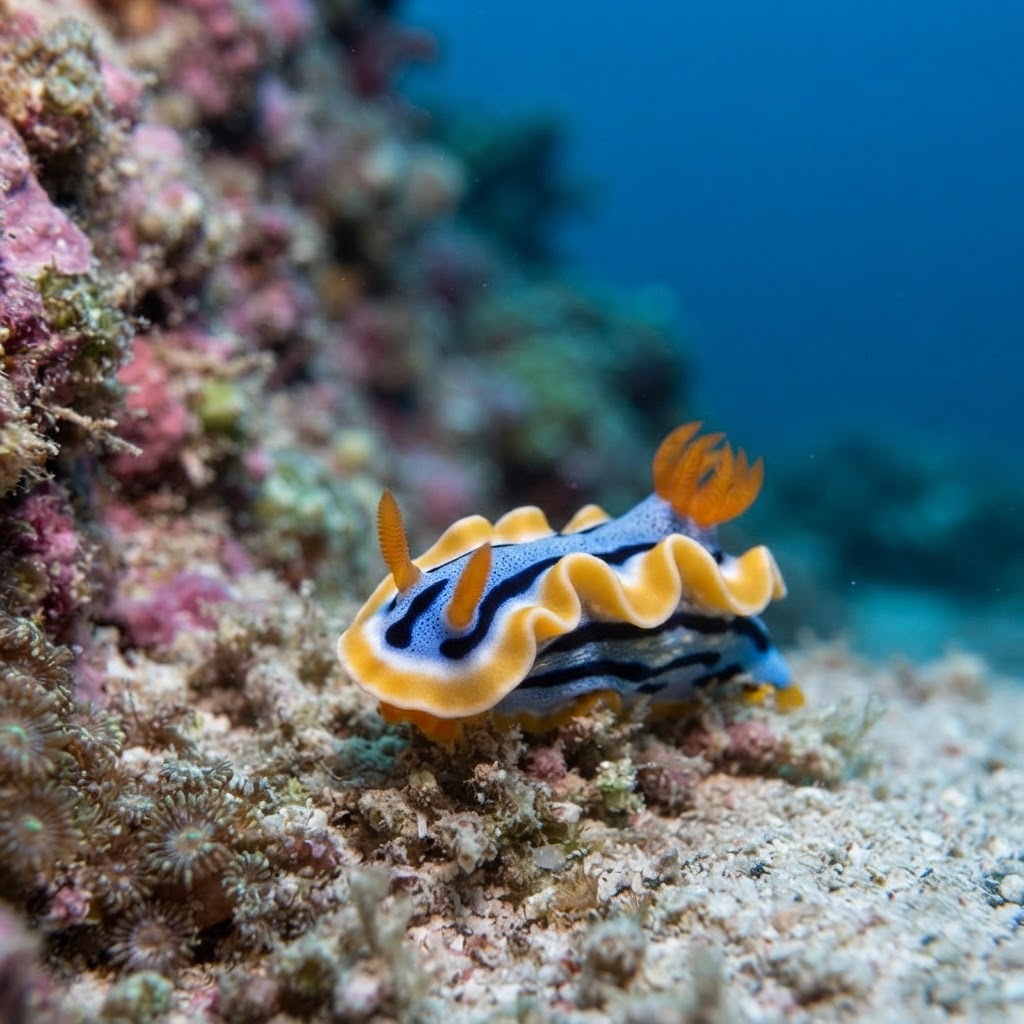
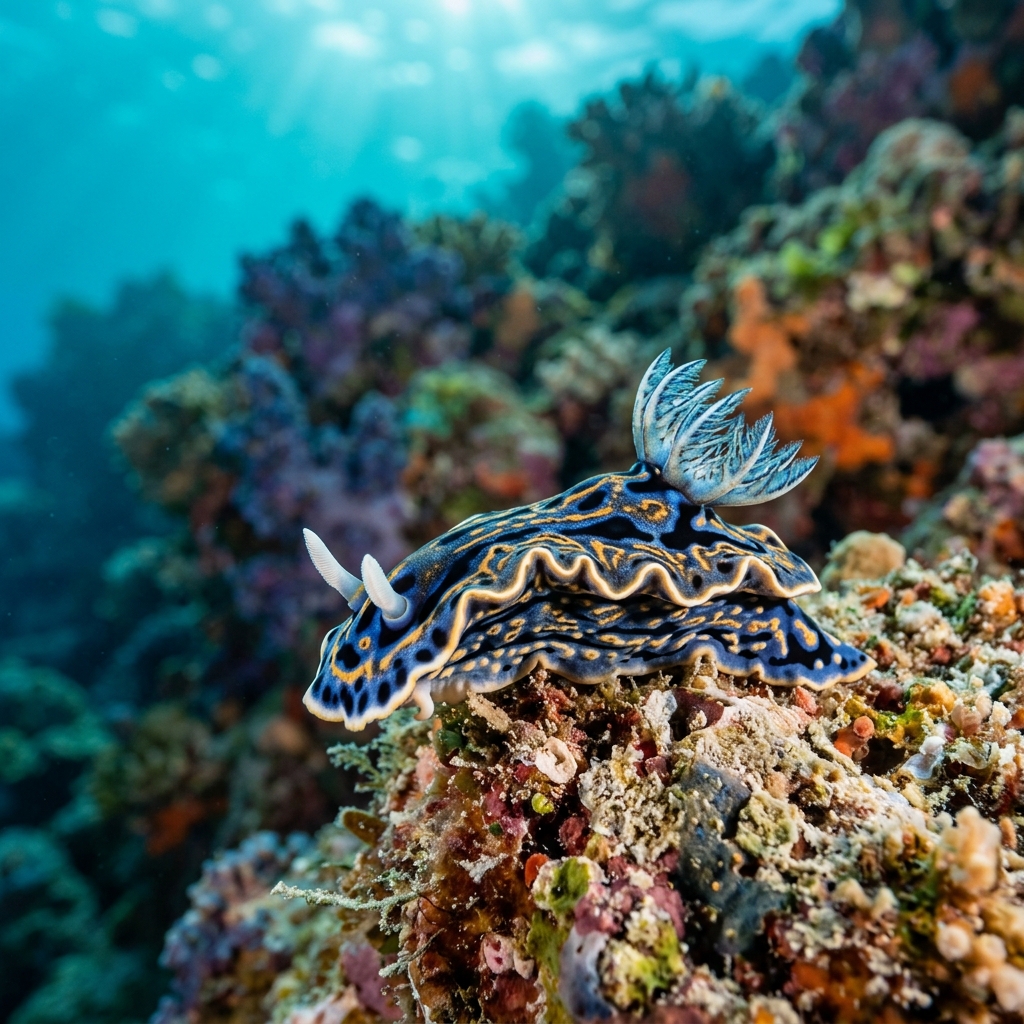
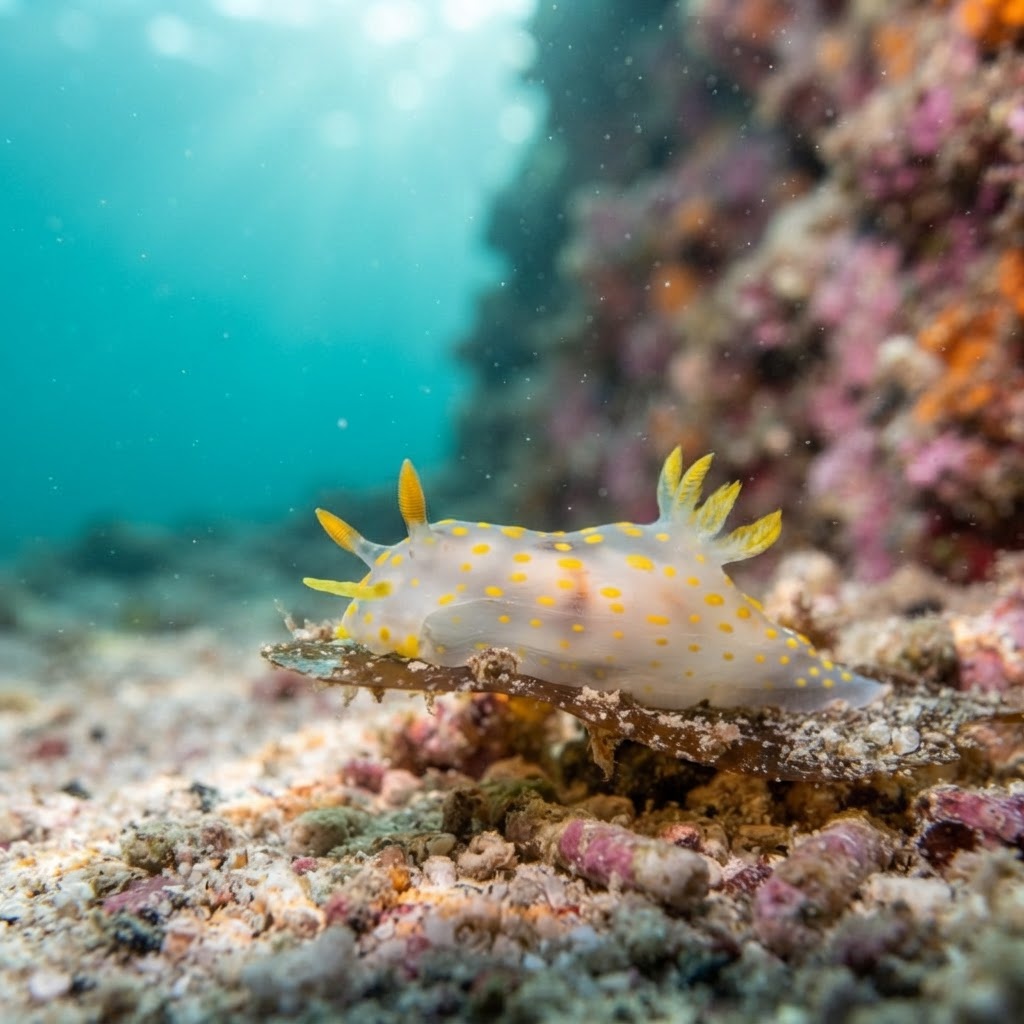
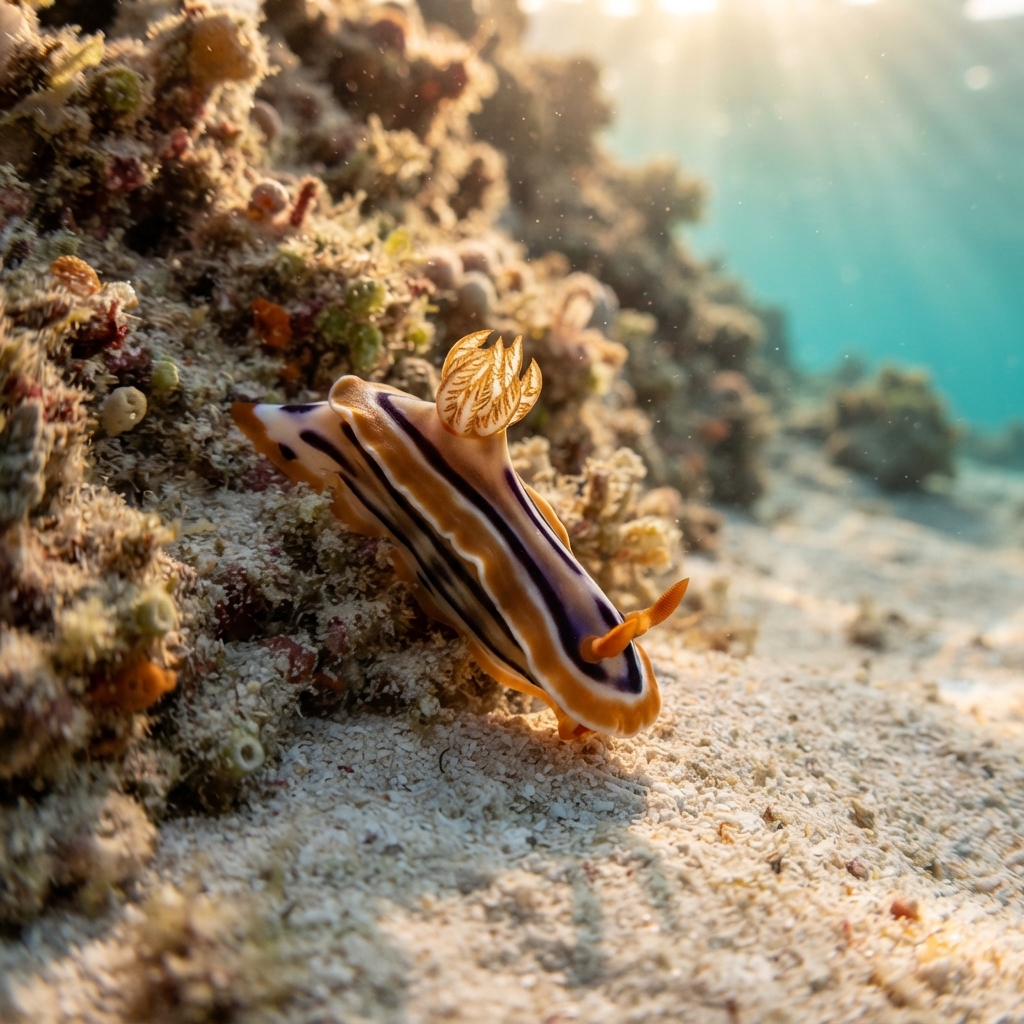
A small sea slug (nudibranch) recognised by its smooth, glossy mantle and the vivid contrast typical of Hypselodoris species, usually spotted moving slowly across reef rubble or sponge-covered rock. Look closely at the edge of the mantle and the exposed gill cluster (the feathery tuft near the rear) for the fine detail that separates it from other similarly coloured dorids in the same habitat. Size in the water tends toward small, so divers often find it only when actively scanning the substrate rather than swimming past.
Divers find it grazing slowly over rubble and encrusted rock, doing what most dorid nudibranchs do: creeping along at its own pace while feeding, largely indifferent to a diver hovering nearby with a torch or camera. It shows no flight response and won't react to being approached, making it an easy subject once spotted, though its small size and rarity mean most divers need a guide who already knows the exact patch of reef to check.
Like other chromodorid nudibranchs, it likely feeds on specific sponges and stores or repurposes chemical compounds from that diet as a defence against predators, which is part of why its colours read as a warning rather than camouflage.
No clear seasonal pattern shows up in the sighting data, and with a comfortable range of 21.1 to 27.1C it's realistic to look for it across the year on Mozambique and KwaZulu-Natal reefs rather than targeting a specific month.
Reef neighbours a diver could mistake it for. Use the identification notes above to tell them apart.
This is very much a southern African species on current logs, most reliably found around Ponta do Ouro in Mozambique and along KwaZulu-Natal in South Africa. Sites in both regions produce sightings, though it stays rare at most of them, so it rewards divers who dive these coasts repeatedly rather than a single trip.
Mapping where Queen Split-tooth Dorid is logged…
It's most consistently logged around Ponta do Ouro in Mozambique and along the KwaZulu-Natal coast of South Africa. Outside these two regions it hasn't been reliably recorded, so southern African diving is your best bet.
There's no detected seasonal peak, and it tolerates a fairly wide 21.1 to 27.1C range, so sightings are spread across the year rather than tied to one season.
Look for a small, slow-moving nudibranch on rubble or sponge-covered reef, checking the mantle edge and gill tuft closely since several similarly coloured dorids share the same habitat. It's easiest to confirm with a close photo rather than a quick glance.
Exact size isn't well documented for this species, but like most Hypselodoris nudibranchs it stays small, generally in the centimetre-scale range typical of the family.
No, it poses no risk to divers. It has no means of harming a diver and simply continues feeding when approached.
As a chromodorid, it likely feeds on particular sponges and uses compounds from that diet for chemical defence, which is a big part of why nudibranchs in this family display such bold colouring.
Site and sighting data is aggregated from diver logs, iNaturalist and GBIF. For taxonomy and conservation status:
Blue Dragon
3,163 sites