Poroderma africanum
Striped, slow-moving, and built for cool water, find pyjama sharks in the Western Cape and Eastern Cape of South Africa, peaking Jan to Jun.
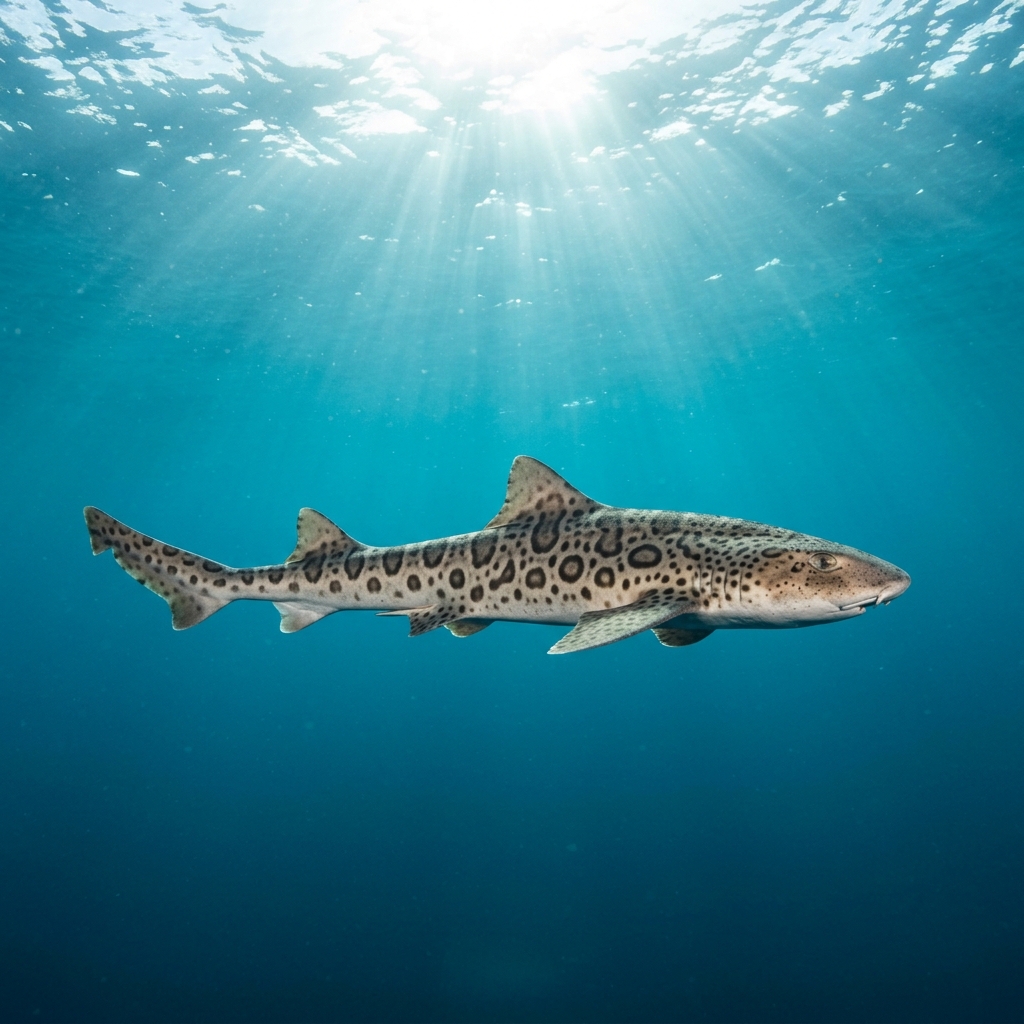
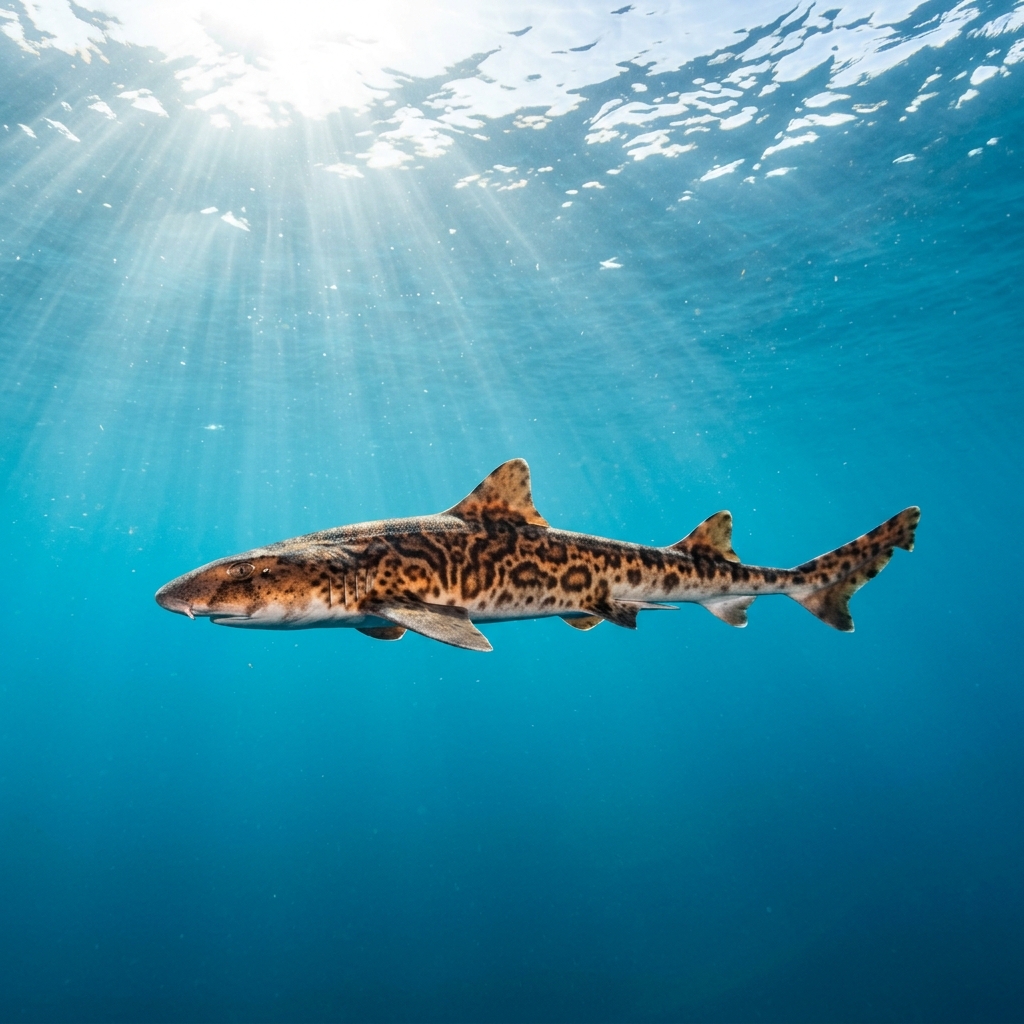
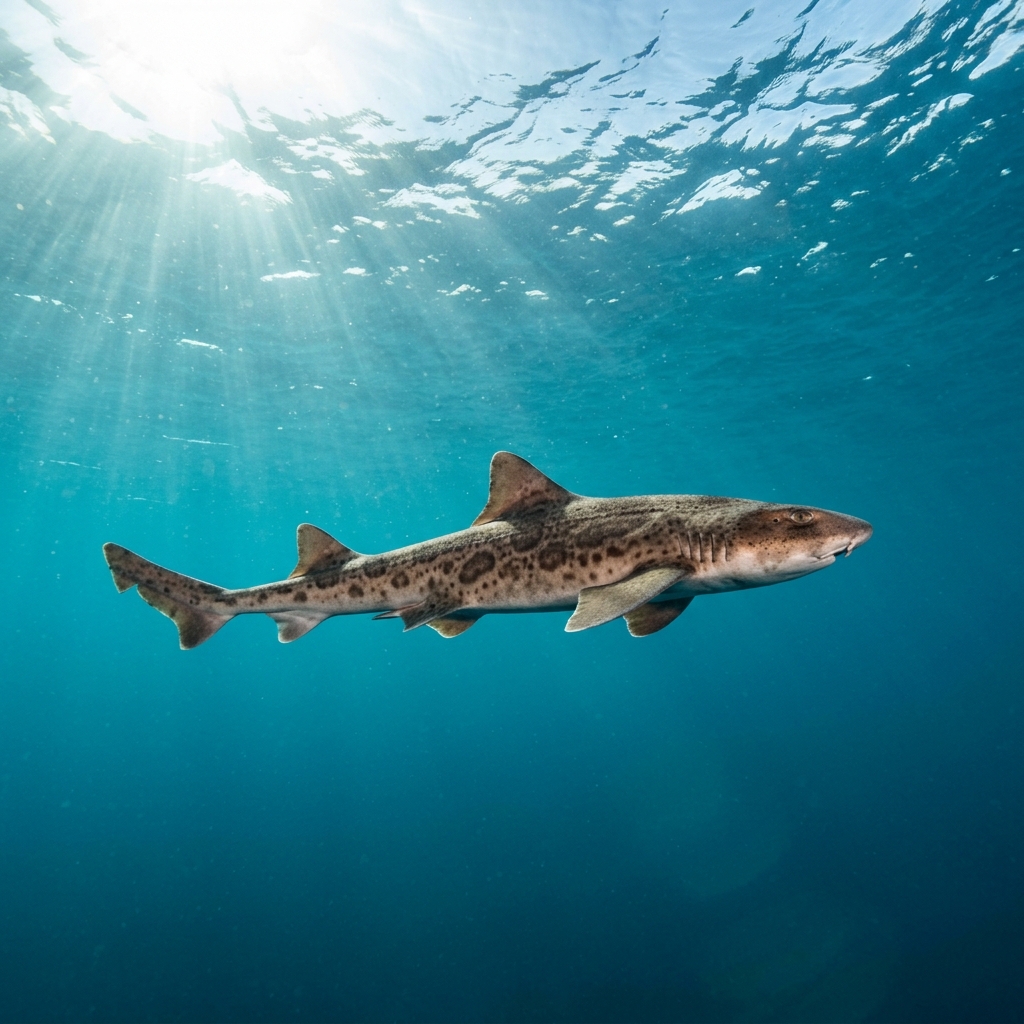
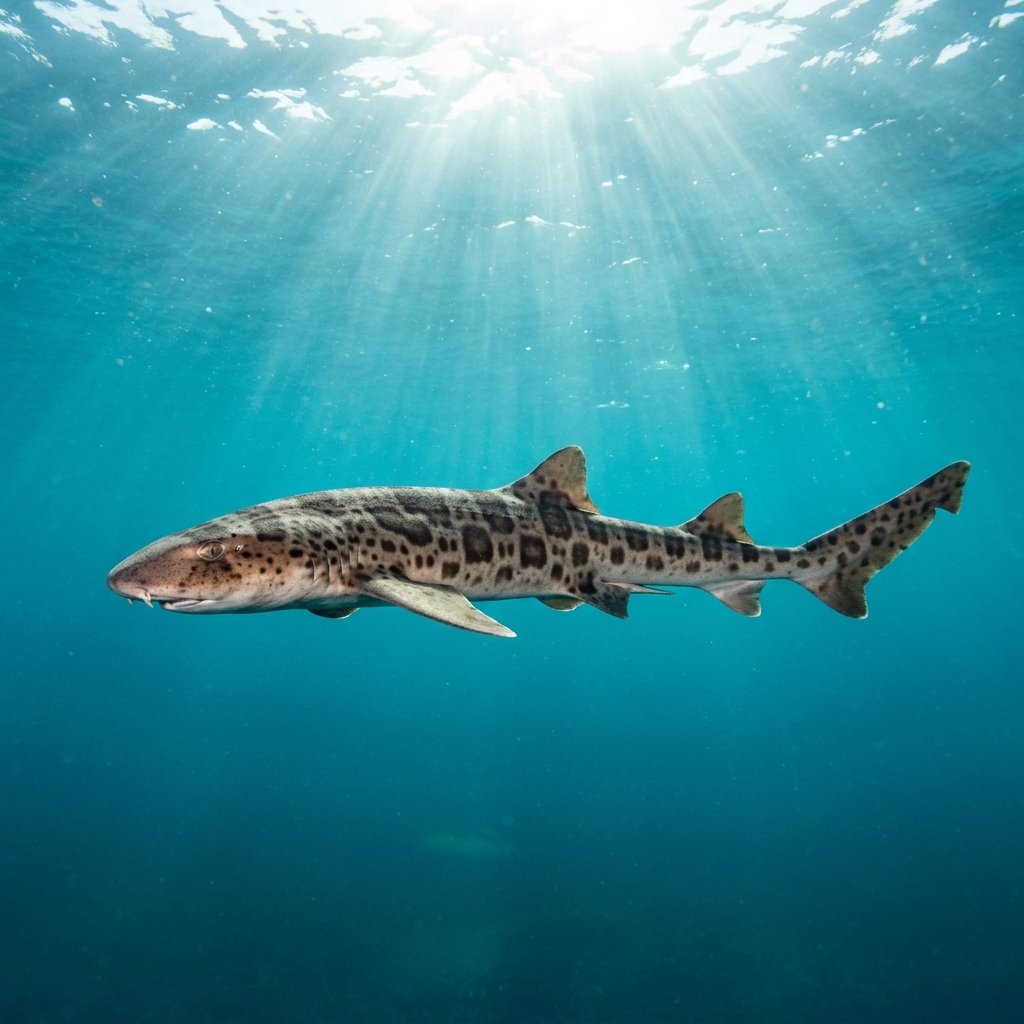
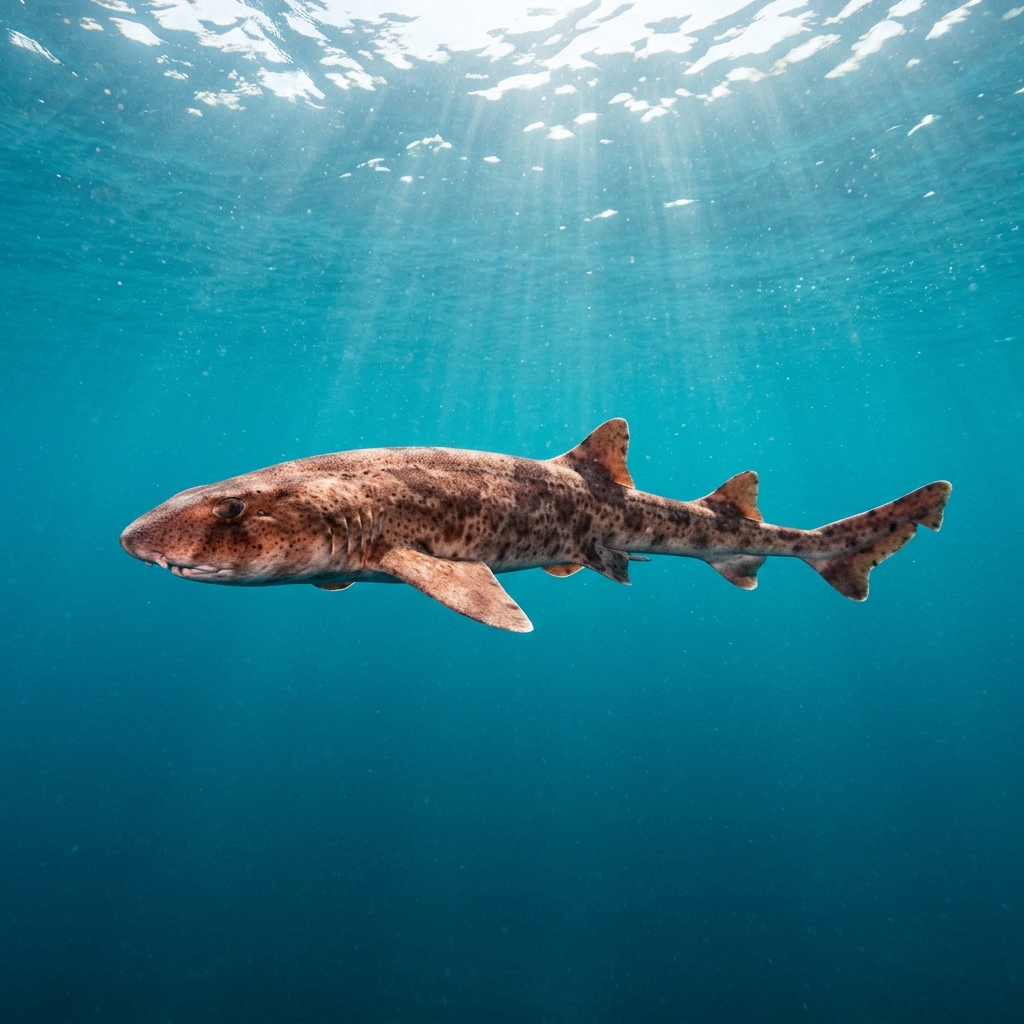
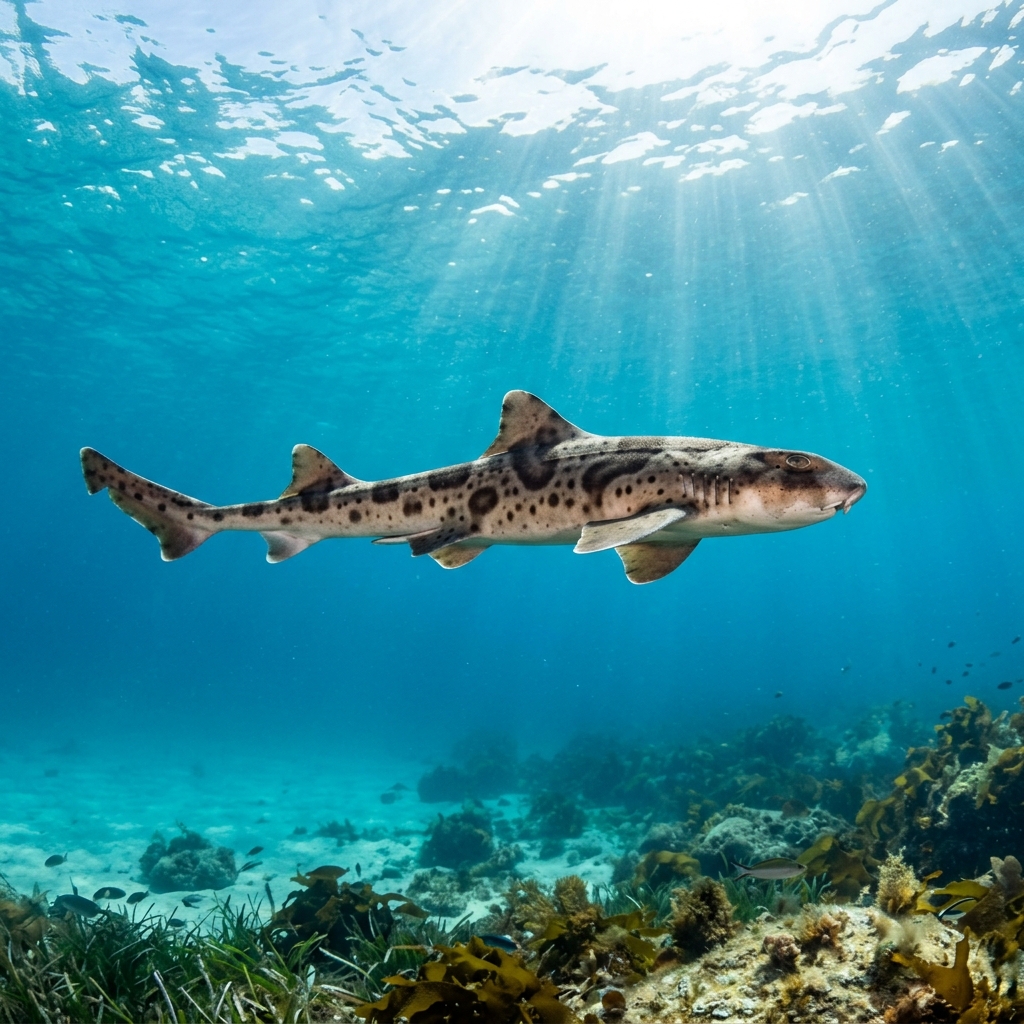
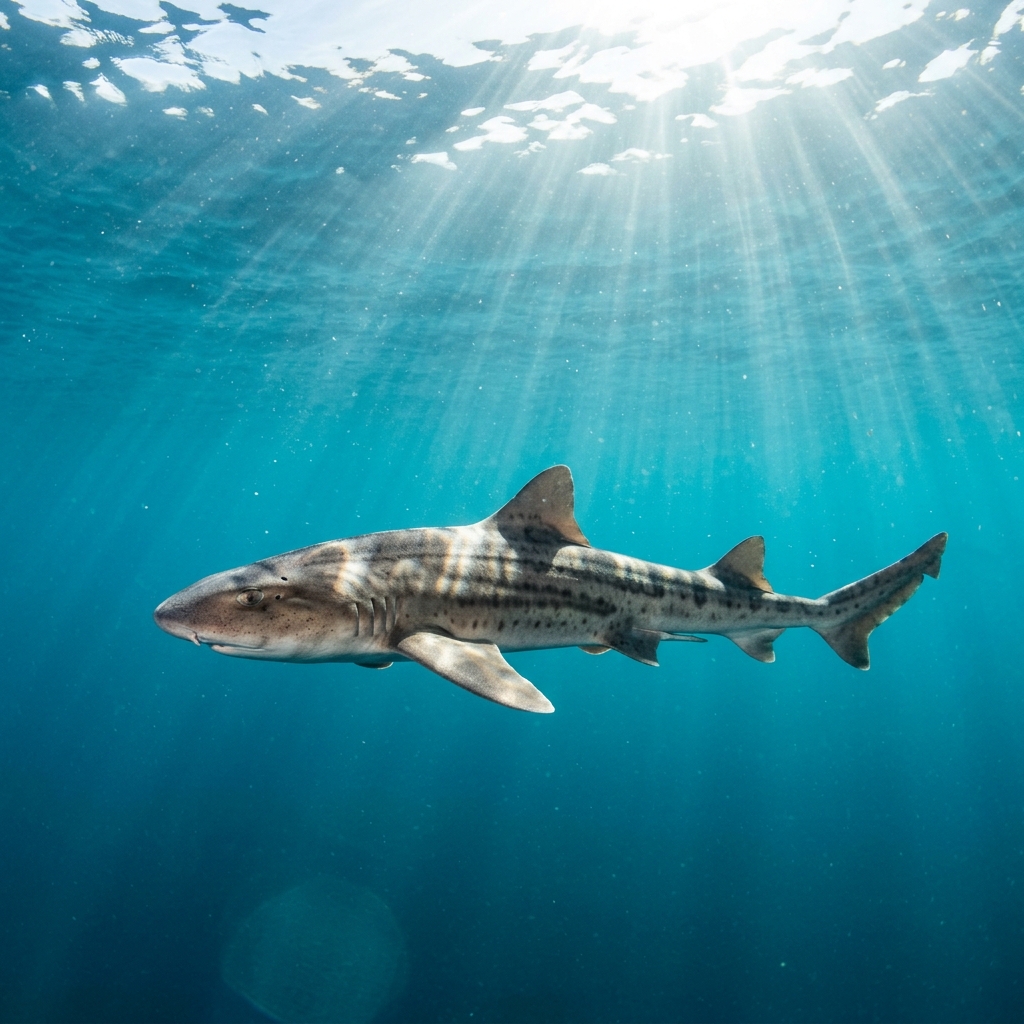
Bold, continuous dark stripes running the full length of the body on a pale cream or grey background make this one of the easiest catsharks to name at a glance. At around 70 cm it sits comfortably in your field of view, long and slender rather than stocky. Look for the elongated, flattened head and the striped pattern that extends right through to the tail, which no other common South African catshark replicates so strongly.
Pyjama sharks are demersal (bottom-dwelling) and spend most of their time resting on rocky reef, under ledges, or tucked into crevices, often curled up and apparently unconcerned by divers. They are active hunters at night, so daytime encounters are almost always of a stationary animal. They show little alarm response and will typically hold position unless physically disturbed.
Females lay rectangular, leathery egg cases (sometimes called mermaid's purses) that they may anchor to kelp or rocky substrate. Finding an egg case wedged into a reef crack is a reliable sign the species is breeding in that area.
Sightings concentrate from January through June, which covers the Southern Hemisphere summer into autumn. Water temperatures in the 16 to 22 °C range suit this species year-round in the Cape, but encounter rates appear highest in the first half of the year.
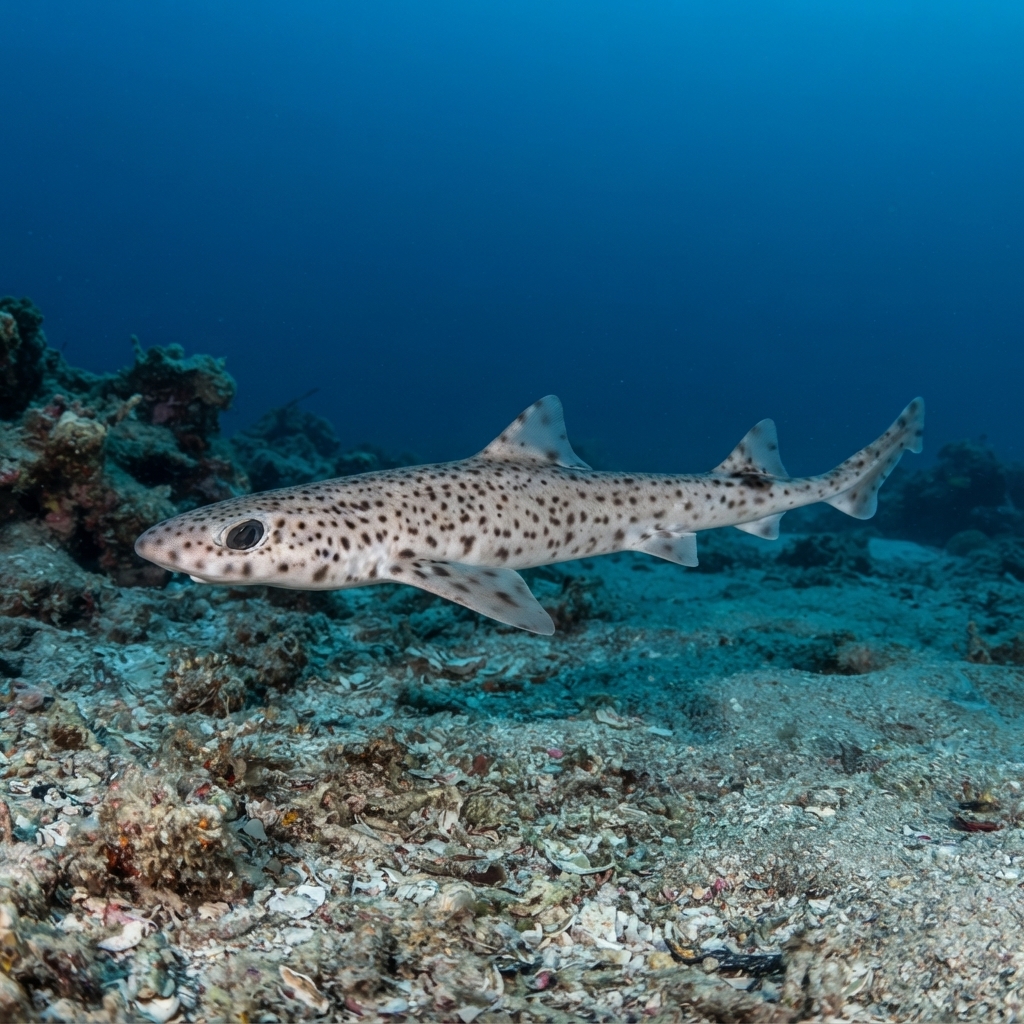
Reef neighbours a diver could mistake it for. Use the identification notes above to tell them apart.
Nearly all logged sightings come from South Africa, with the Western Cape accounting for the overwhelming majority of sites followed by the Eastern Cape. A single site in Namibia rounds out the range, but South Africa, particularly the kelp reefs and rocky outcrops of the Western Cape, is where you realistically plan a trip to find one.
Mapping where Pyjama Shark is logged…
South Africa is the place to go, with the Western Cape holding the strongest concentration of sites by far, and the Eastern Cape offering additional options. Almost all real diver observations come from South African waters, so plan around Cape Town or the Garden Route for the best chance of an encounter.
Logged sightings peak between January and June in the Southern Hemisphere. This covers summer and autumn in South Africa, when dive conditions along the Cape coast are often at their most settled.
Look for the unmistakable pattern of bold, continuous dark stripes running from head to tail on a pale body. No other common South African catshark carries such clean, unbroken longitudinal lines. At around 70 cm it is slender and elongated, and it is almost always seen resting motionless on the bottom.
Adults typically reach around 70 cm. That makes them a medium-small shark, slender and elongated rather than bulky, roughly the length of your arm from fingertip to shoulder.
No. Pyjama sharks pose no meaningful threat to divers. They are small, slow-moving, and generally rest passively on the reef. They will usually stay put when approached calmly and will move away rather than towards a diver if they do react at all.
Site and sighting data is aggregated from diver logs, iNaturalist and GBIF. For taxonomy and conservation status:
Swell Shark
108 sites