Haploblepharus edwardsii
Spot puffadder shyshark in the Western Cape, South Africa, in cool 13-20 °C water. Peak sightings Feb, Apr. ID tips and top dive sites inside.
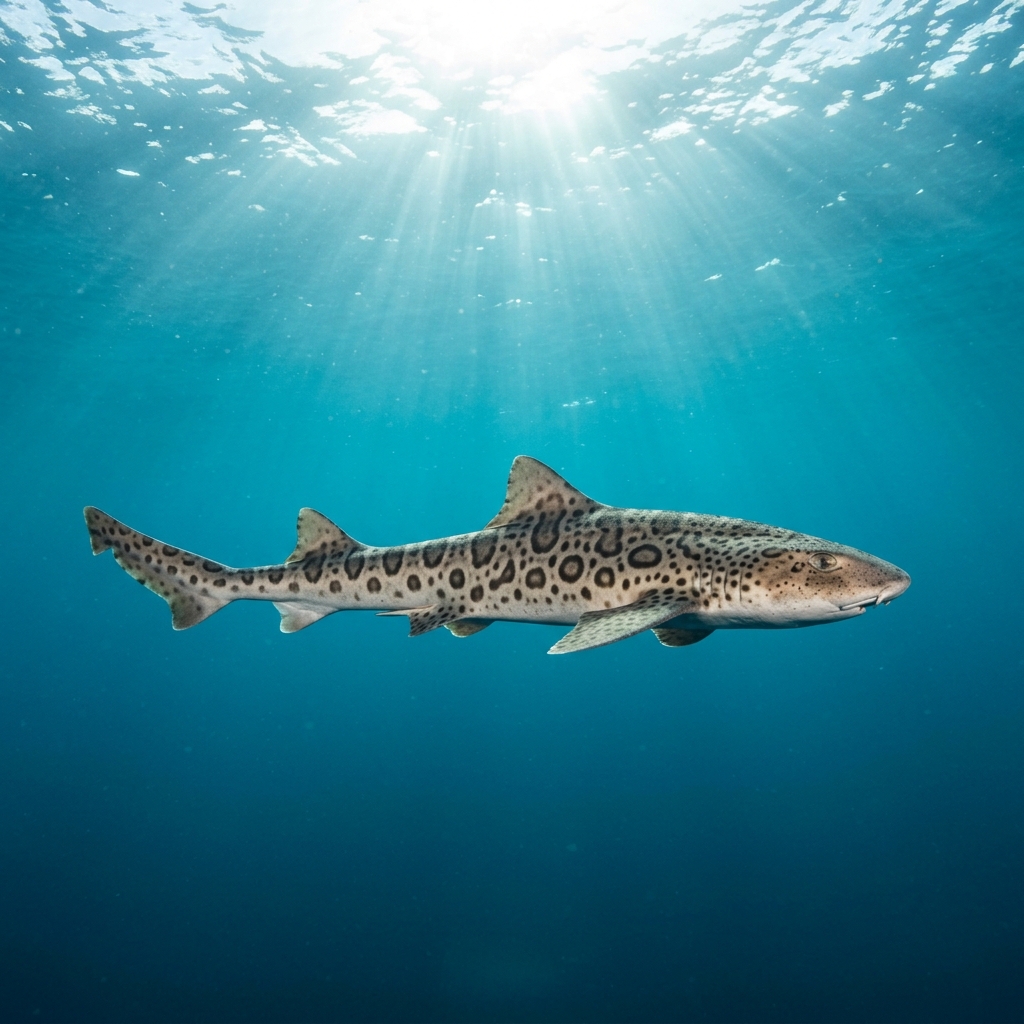
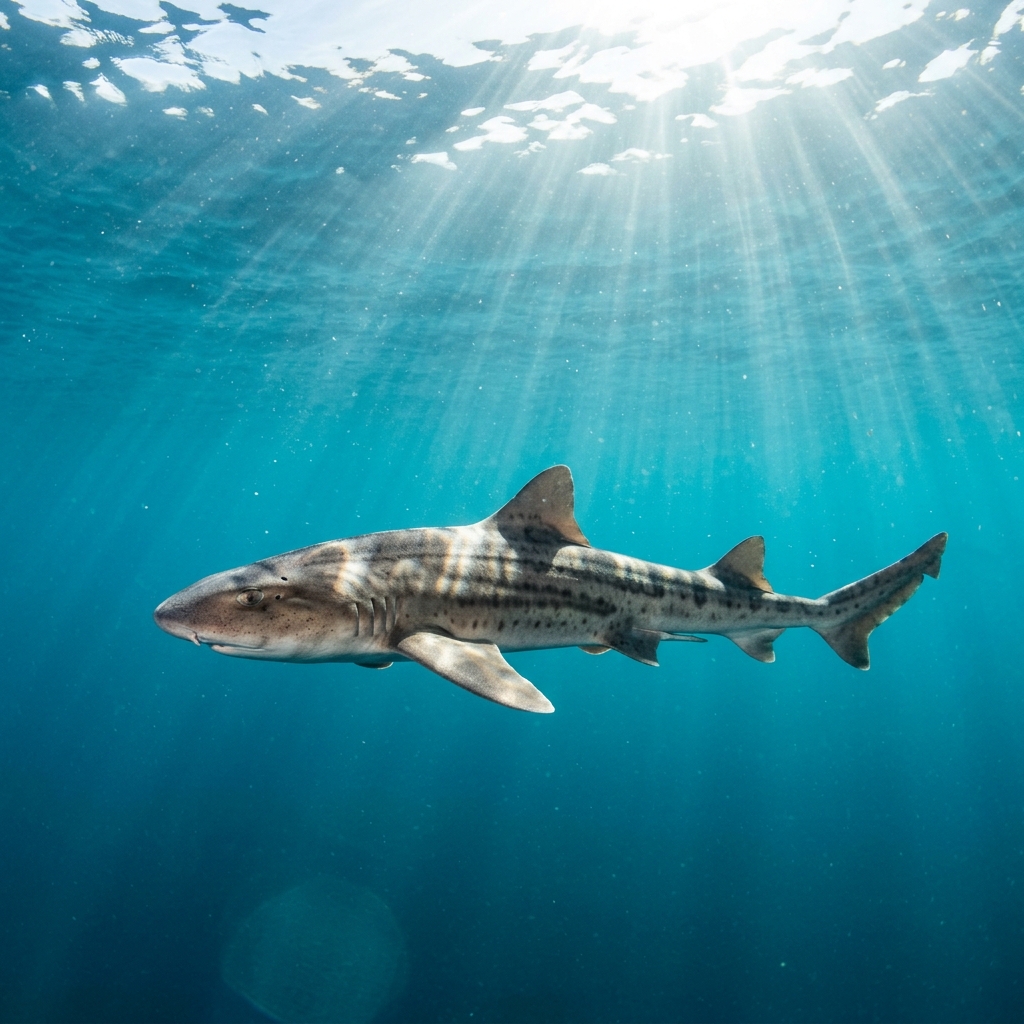
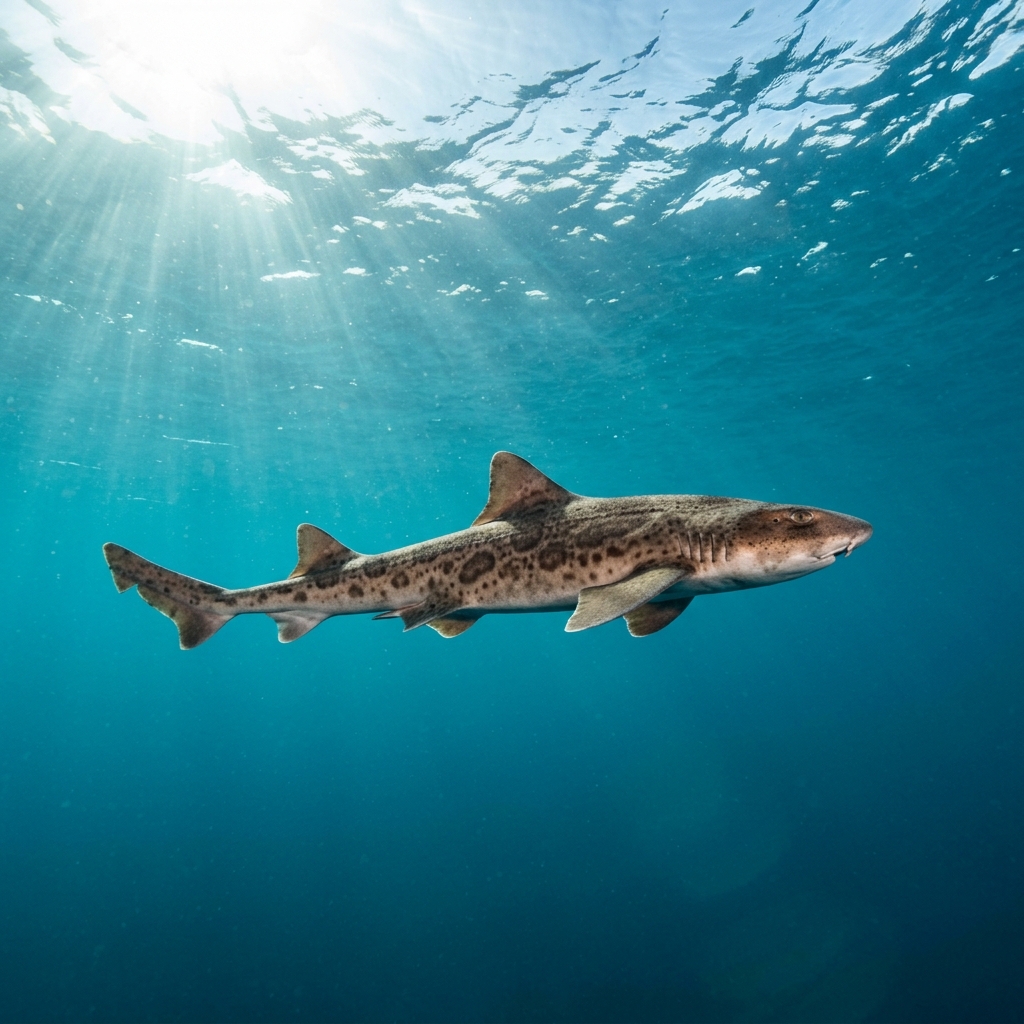
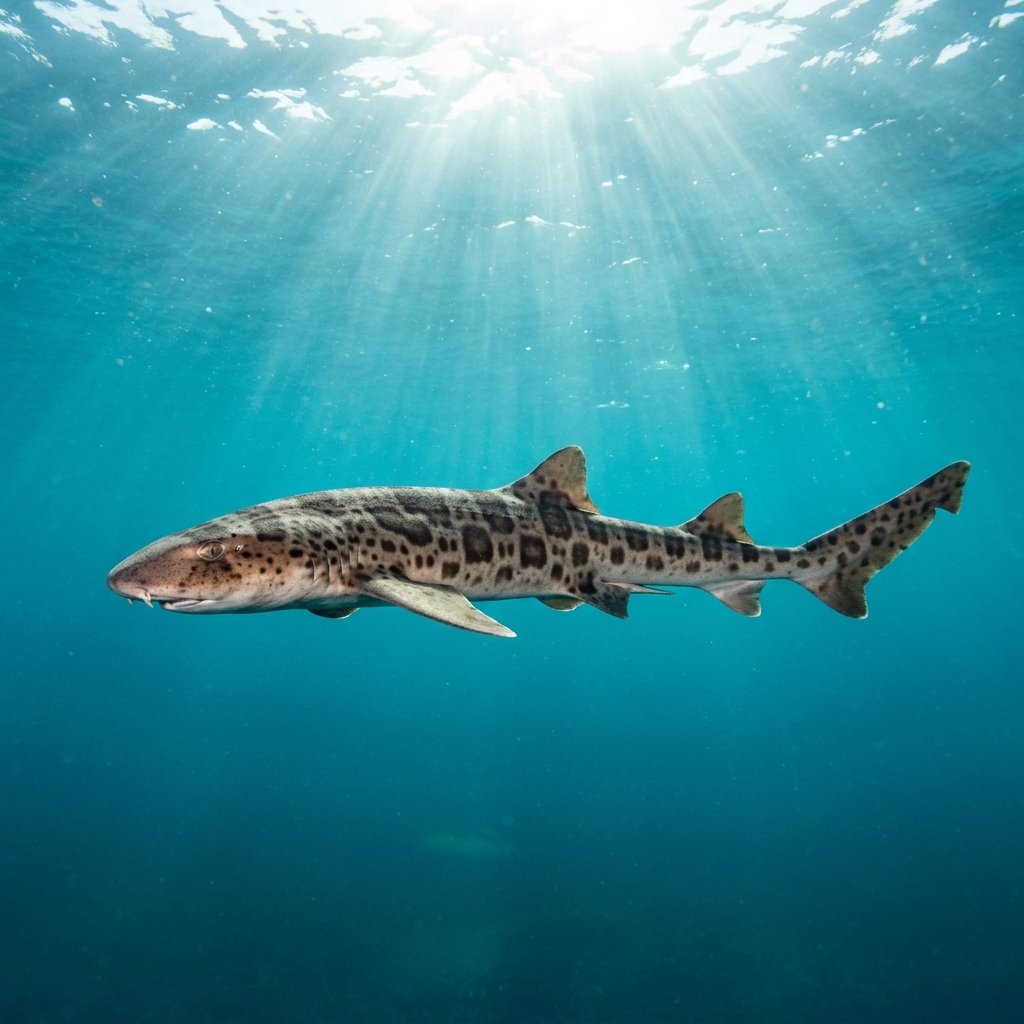
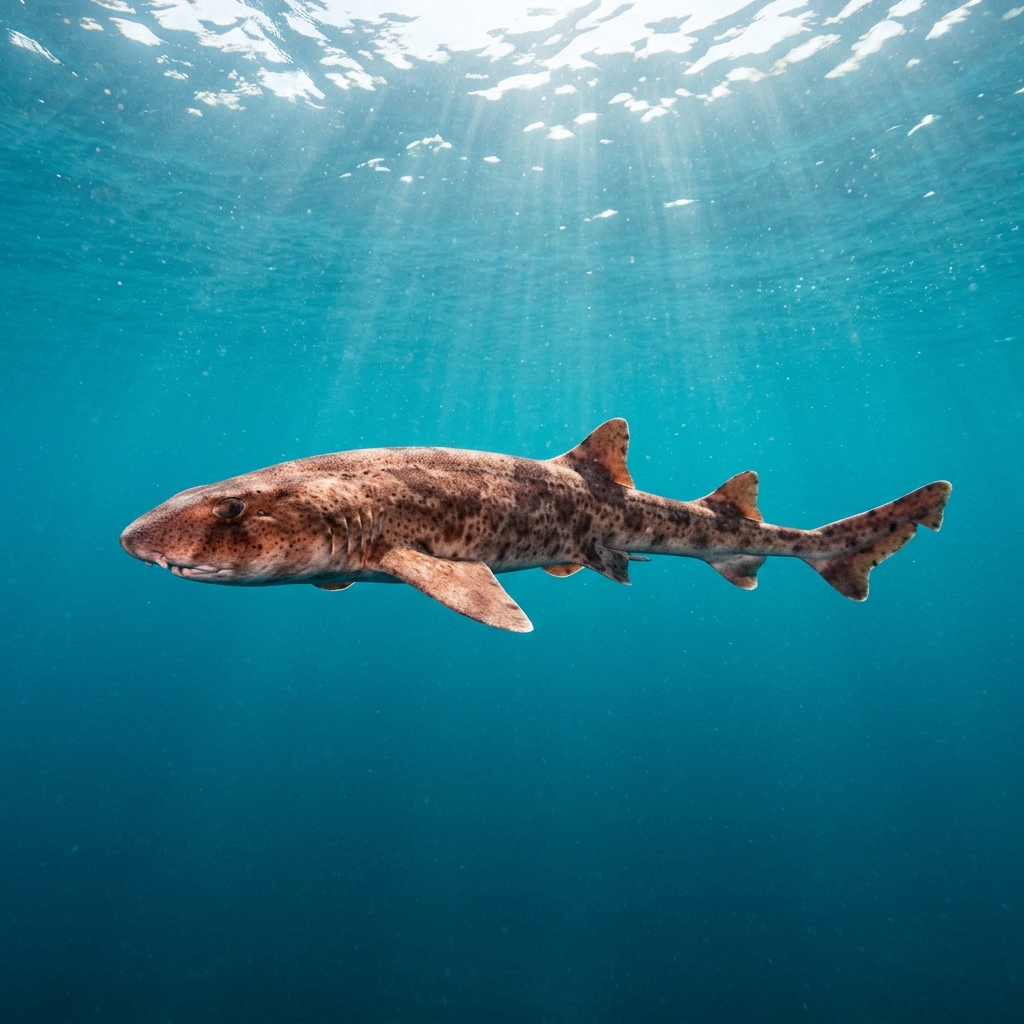
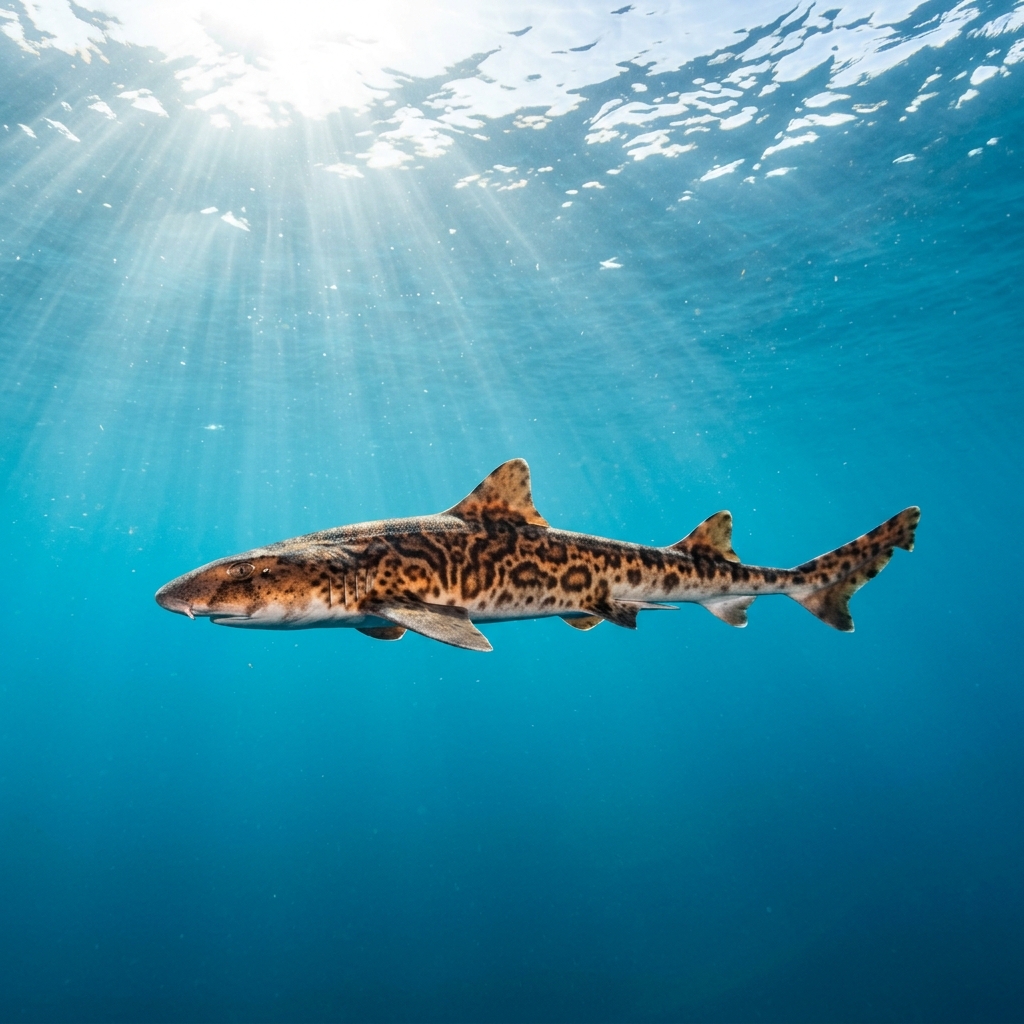
A small, slender catshark around 40 cm long with a very distinctive pattern of dark reddish-brown saddles edged in white and scattered pale spots along the flanks, markings that give it the same visual punch as the puffadder snake it's named after. The head is broad and somewhat flattened, and the eyes are large relative to the body, set close together. It typically rests motionless on rocky or sandy substrate, making the patterning your main field mark at a glance.
Puffadder shysharks are bottom-dwellers, usually found resting among rocky reefs, under ledges, or on sandy patches in shallow to moderate depths. True to the 'shy' in their name, they have a well-known defence of curling into a tight circle with their tail over their eyes when disturbed, a posture thought to protect the eyes and make the animal harder to grab. Divers who approach slowly and avoid touching them will sometimes observe them for extended periods without triggering this curl.
When threatened, the puffadder shyshark rolls into a tight doughnut shape, covering its eyes with its tail. This 'eye-hiding' curl is one of the more distinctive defensive behaviours seen in any small shark and is reliably observed on dives.
At sites with seasonal data, sightings cluster between February and April, the tail end of the Southern Hemisphere summer and the start of autumn. The species occupies cool water between roughly 13 and 20 °C, consistent with the Cape's year-round cold conditions.
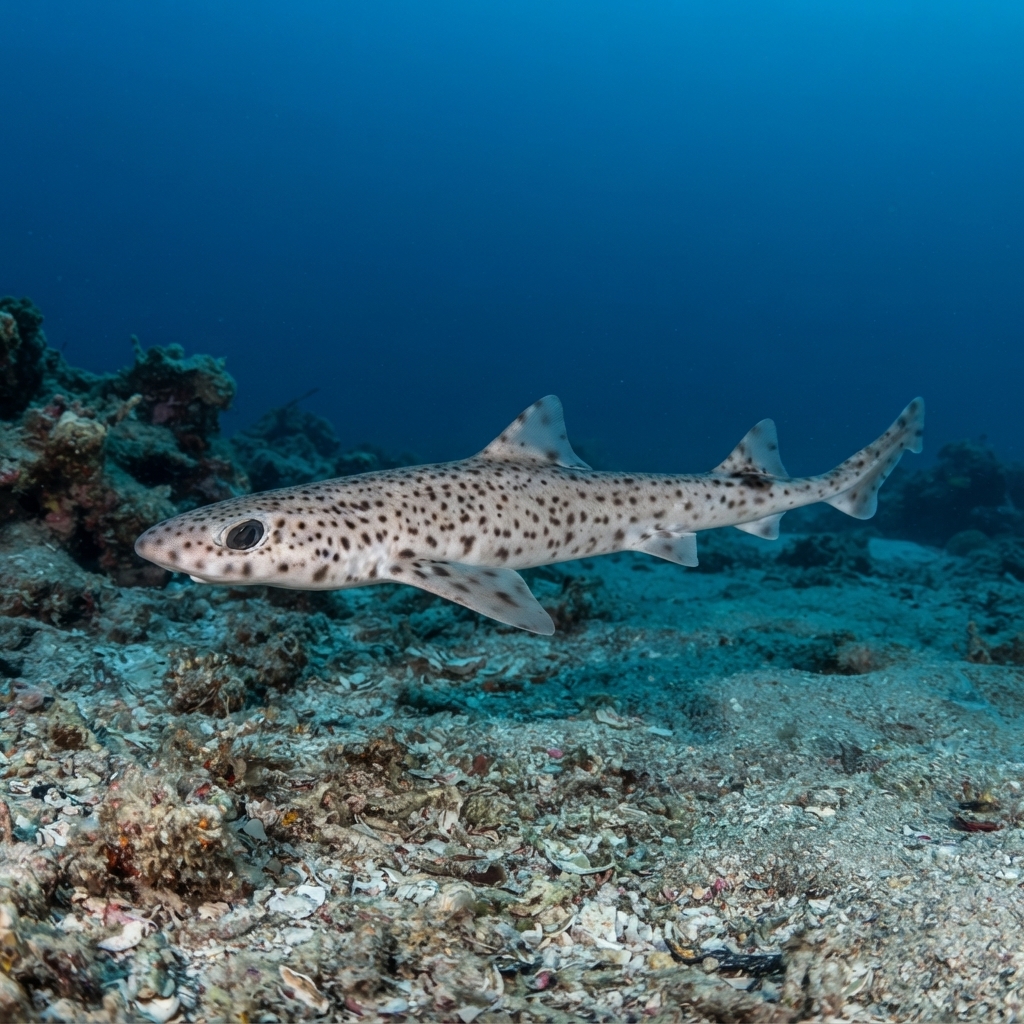
Reef neighbours a diver could mistake it for. Use the identification notes above to tell them apart.
Overwhelmingly a South African endemic, the vast majority of logged sightings come from the Western Cape, making this one of the Cape Peninsula's signature small sharks. A handful of records also come from the Eastern Cape. One range-model site extends to Namibia, but diver observations are almost entirely concentrated along South Africa's southwestern coast.
Mapping where Puffadder Shyshark is logged…
Almost all diver sightings are from South Africa, with the Western Cape, particularly around the Cape Peninsula, by far the most reliable region. A small number of records exist from the Eastern Cape. This is essentially a South African endemic, so there is no meaningful alternative destination.
Logged sightings peak between February and April, which corresponds to late summer and early autumn in the Southern Hemisphere. The species prefers cool water between about 13 and 20 °C, which is characteristic of the Western Cape coast for much of the year.
Look for a small shark, around 40 cm, resting on the bottom with bold reddish-brown saddle markings edged in white and pale spots along the body. The pattern is distinctive and unlike the striped pyjama shark or the more spotted leopard catshark. If it curls into a ball covering its eyes, identification is virtually certain.
Adults typically reach around 41 cm in total length, making them one of the smaller catsharks. At that size they are easy to overlook against patterned rocky substrate, so slow, attentive diving pays off.
Yes, they are currently classified as Endangered. Their naturally restricted range along a small stretch of South African coastline makes the population vulnerable to localised threats. Divers can help by not handling them and reporting sightings through citizen-science platforms to support population monitoring.
The Puffadder Shyshark is listed as endangered by the IUCN. Observe from a distance, avoid touching or feeding it, and report sightings to local marine research organisations.
The puffadder shyshark is listed as Endangered, largely because its range is almost entirely restricted to a small stretch of South African coastline and it faces ongoing pressure from habitat degradation and bycatch. Divers should avoid touching or handling individuals, and never provoke the curl response unnecessarily, as repeated disturbance can affect resting and feeding behaviour.
Site and sighting data is aggregated from diver logs, iNaturalist and GBIF. For taxonomy and conservation status:
Swell Shark
108 sites