Poroderma pantherinum
Spot leopard catsharks in Western Cape, South Africa between March and May in cool 15-18 °C waters. Here's where divers actually find them.
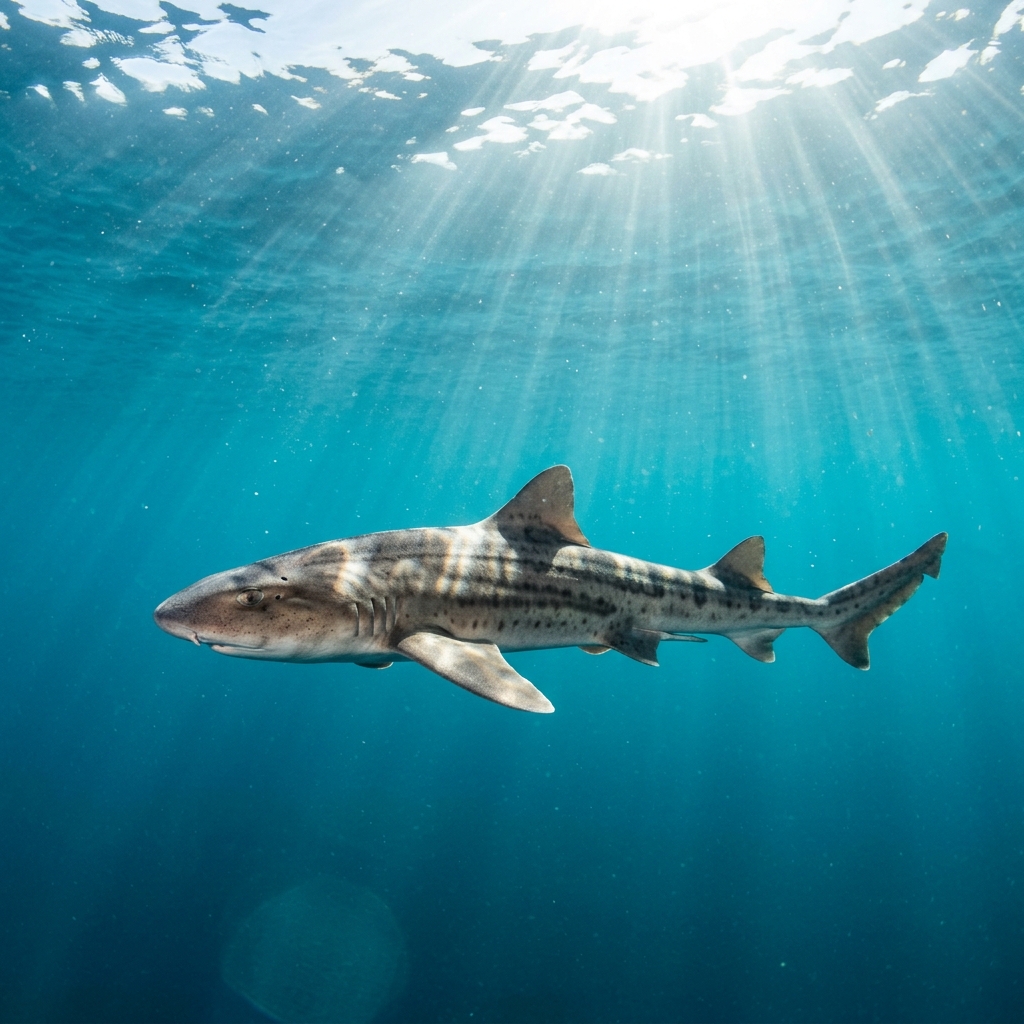
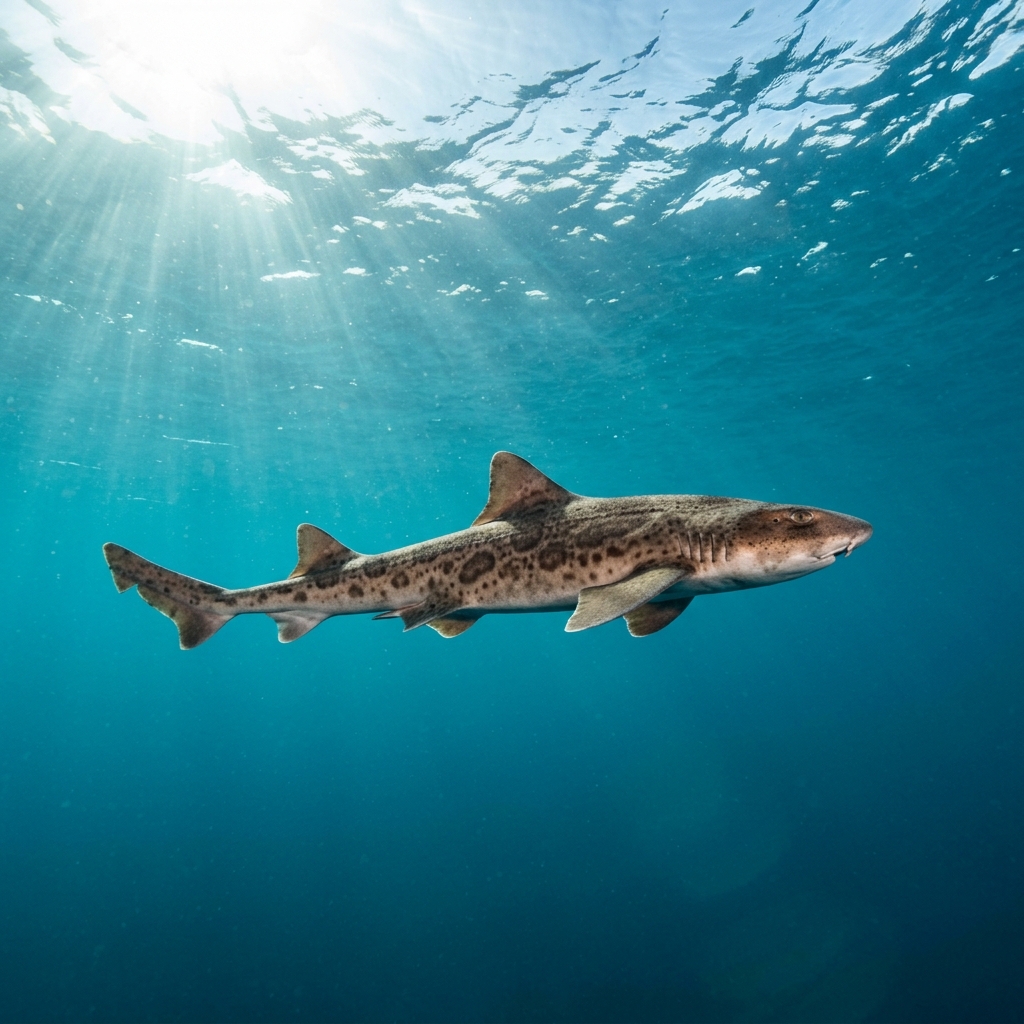
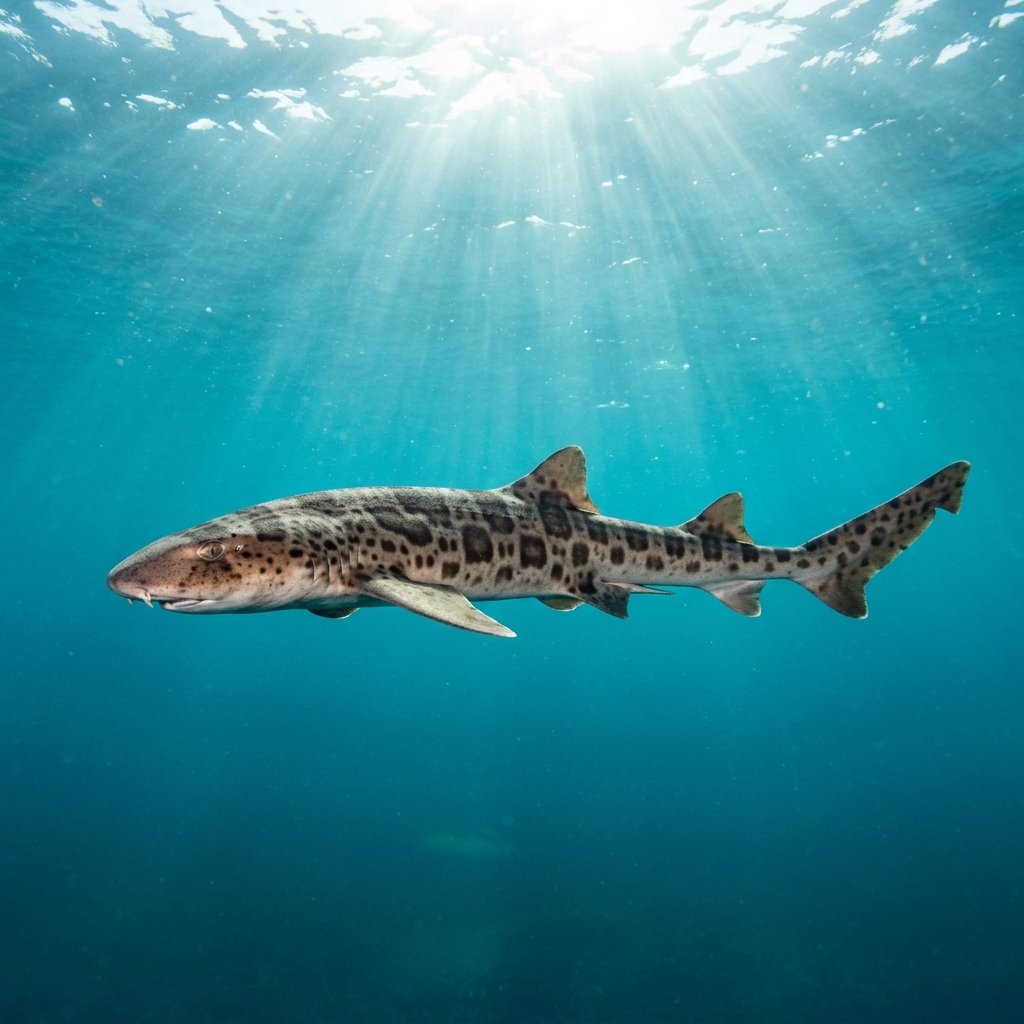
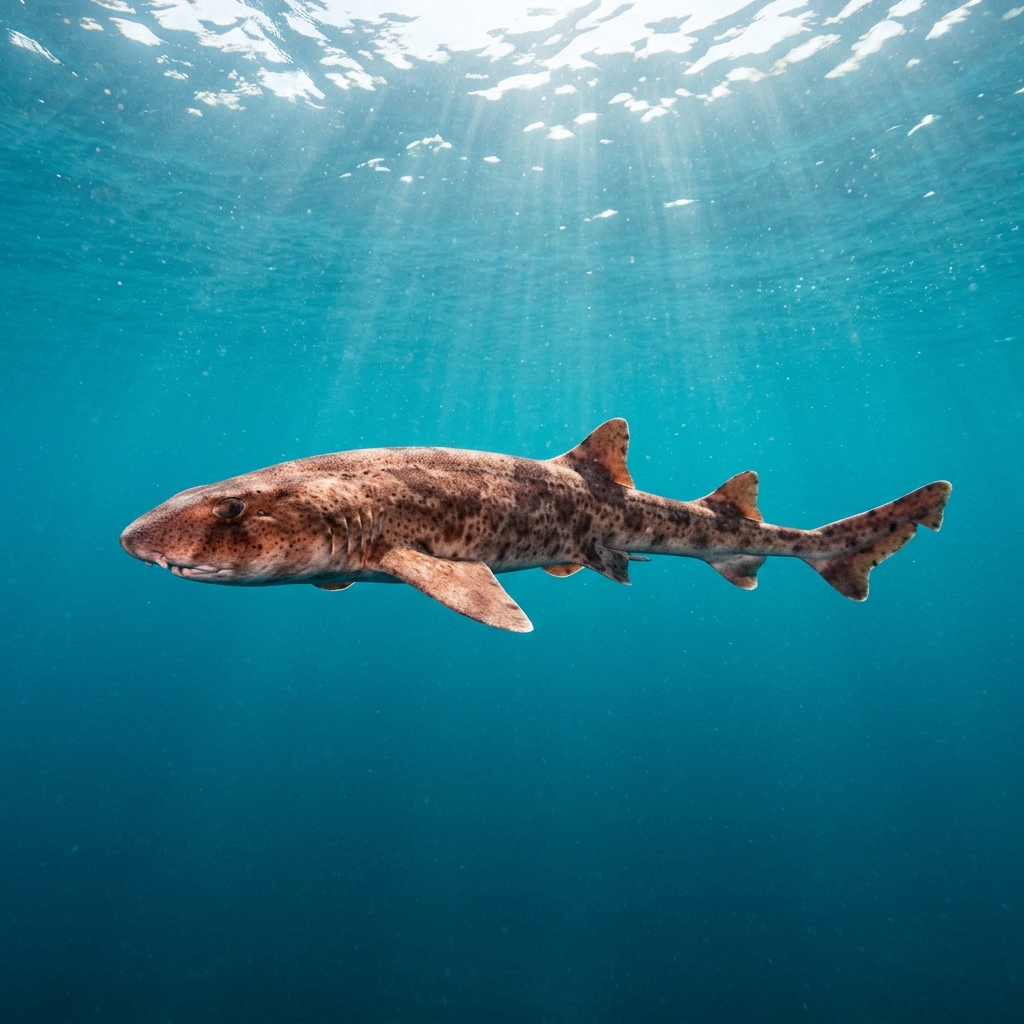
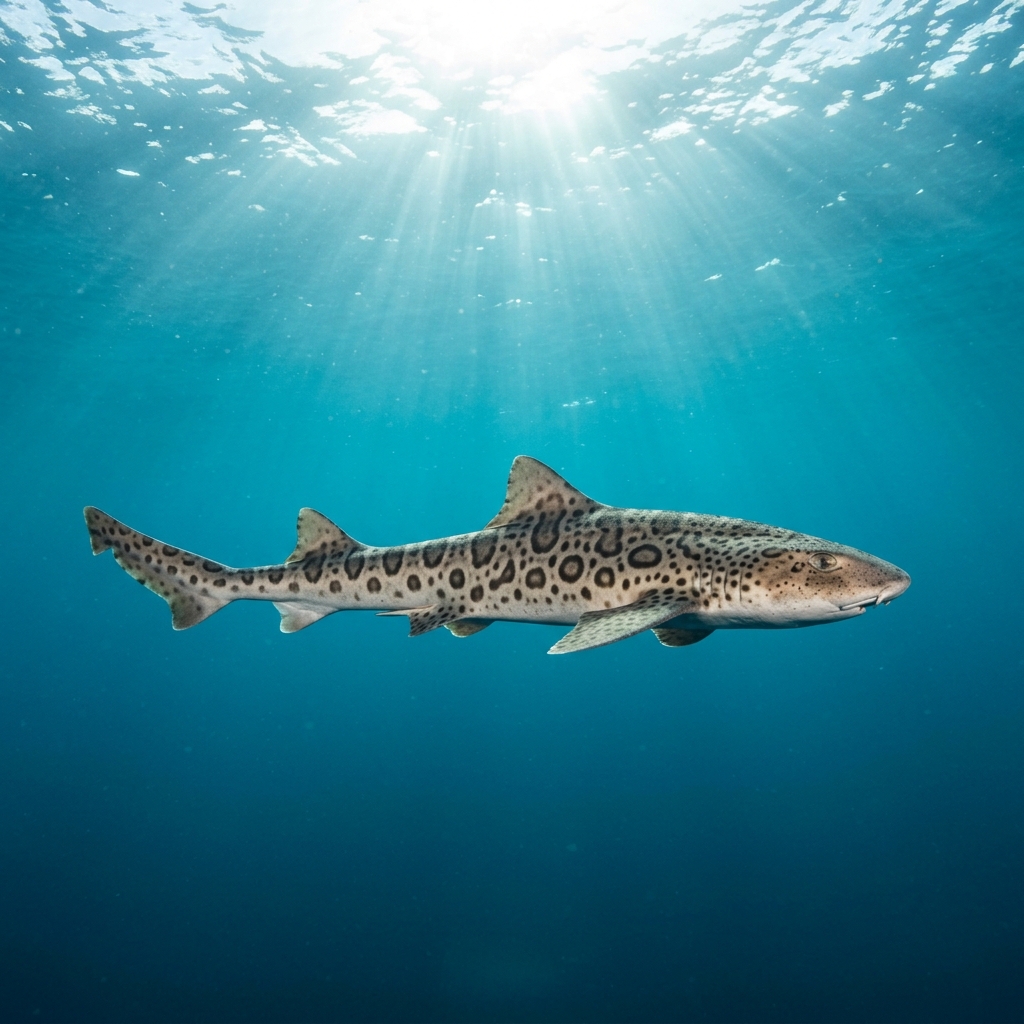
Bold, high-contrast patterning is the giveaway: a pale grey or cream body covered in dark spots that cluster into rosette-like rings, giving it the leopard name that fits perfectly. It is a slender, elongated shark with a long tail and two small dorsal fins set well back toward the rear of the body. Underwater, the dense spotted pattern stands out sharply against rocky reef, making it one of the easier South African catsharks to tell apart from its relatives once you know what to look for.
Leopard catsharks are typically encountered resting or slowly cruising close to the reef, often tucked into rock crevices or lying on the substrate. They are not bothered by calm divers and will generally stay put if approached without sudden movement. Sightings tend to be solitary rather than grouped, and most encounters happen during daytime dives on shallow to mid-depth rocky reefs.
Like other catsharks, leopard catsharks lay tough, rectangular egg cases sometimes called mermaid's purses, which are anchored to reef structure and left to develop without parental care. Finding an egg case attached to kelp or rock is a sign the sharks are actively using that site.
Sightings in the Western Cape concentrate between March and May, South Africa's autumn months. Water temperatures at those times sit in the 15-18 °C range, so a 5 mm wetsuit or drysuit is sensible.
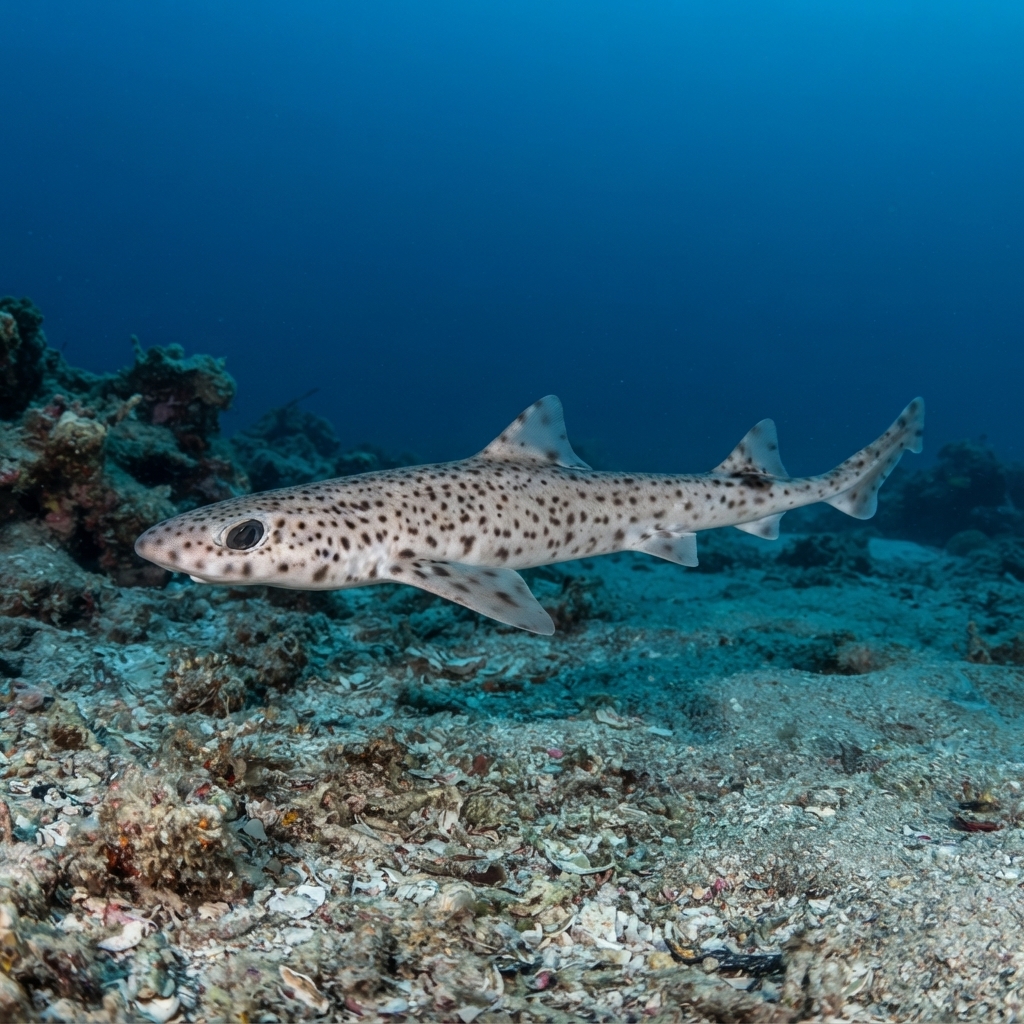
Reef neighbours a diver could mistake it for. Use the identification notes above to tell them apart.
Every sighting on record comes from South Africa, with all logged dive sites concentrated in the Western Cape. This is essentially a Cape endemic for divers, with the best chances at sites around the Western Cape coastline where cool, nutrient-rich water supports healthy rocky reef habitat.
Mapping where Leopard Catshark is logged…
Leopard catsharks are found exclusively in South Africa based on diver sightings, with all records coming from the Western Cape. If you want to see one, plan a dive along the Cape coastline on rocky reef habitat.
Diver observations in the Western Cape cluster in March, April, and May. These are South African autumn months with water temperatures typically between 15 and 18 °C, so plan for cool-water kit.
Look for a slender shark covered in dark spots that group into ring or rosette patterns on a pale background. The two small dorsal fins are set far back on the body. The bold, leopard-like spotting is distinctive and unlike any other catshark in the Cape region except, at a glance, the pyjama shark, which has broad longitudinal stripes rather than spots.
No. Leopard catsharks pose no threat to divers. They are small, docile sharks that typically rest on the reef and ignore calm observers. No special precautions are needed beyond normal respectful wildlife behaviour.
Leopard catsharks are a relatively small species, typically reaching around 84 cm in total length as adults. Underwater they feel slim and unimposing, more like a large eel in body plan than anything formidable.
Site and sighting data is aggregated from diver logs, iNaturalist and GBIF. For taxonomy and conservation status:
Swell Shark
108 sites