Cephaloscyllium ventriosum
Spot swell sharks along the Pacific Coast of the US and Baja California. A demersal catshark found in cool to warm water, year-round.
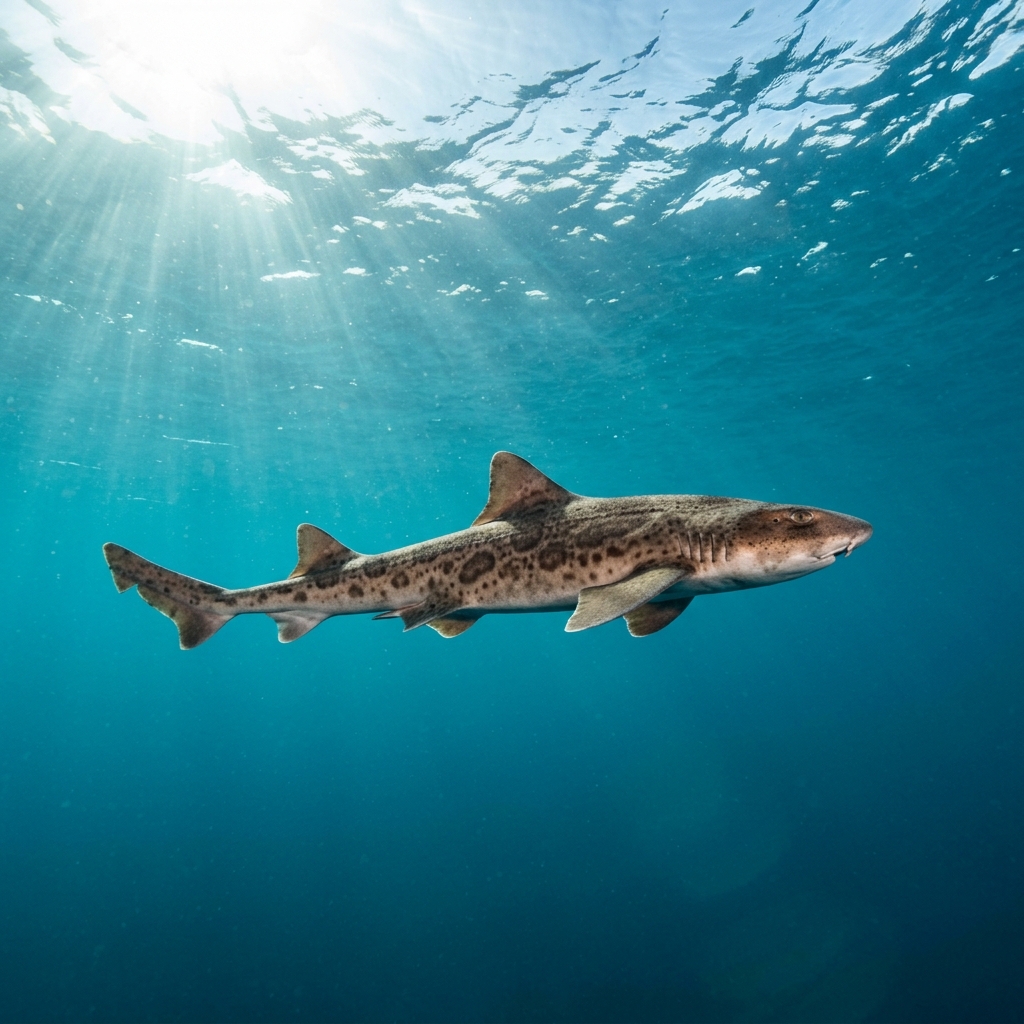
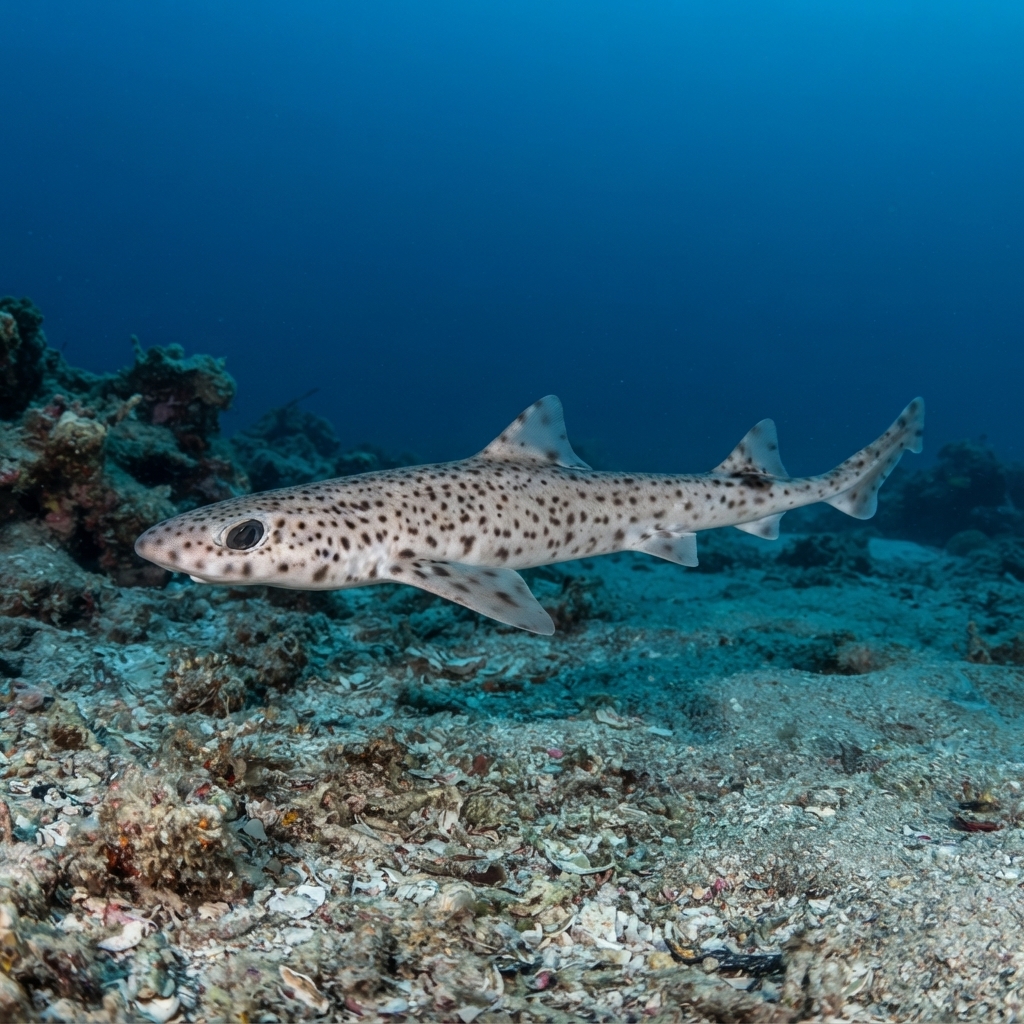
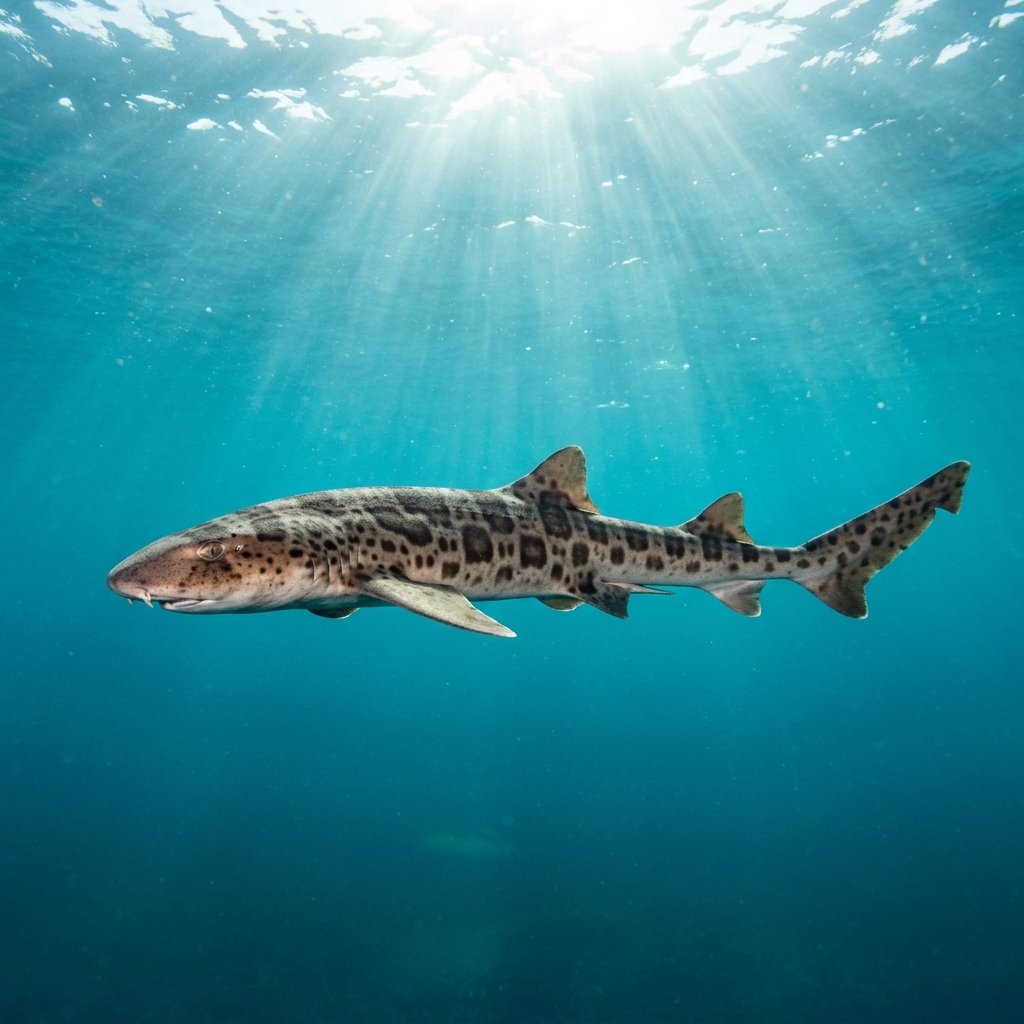
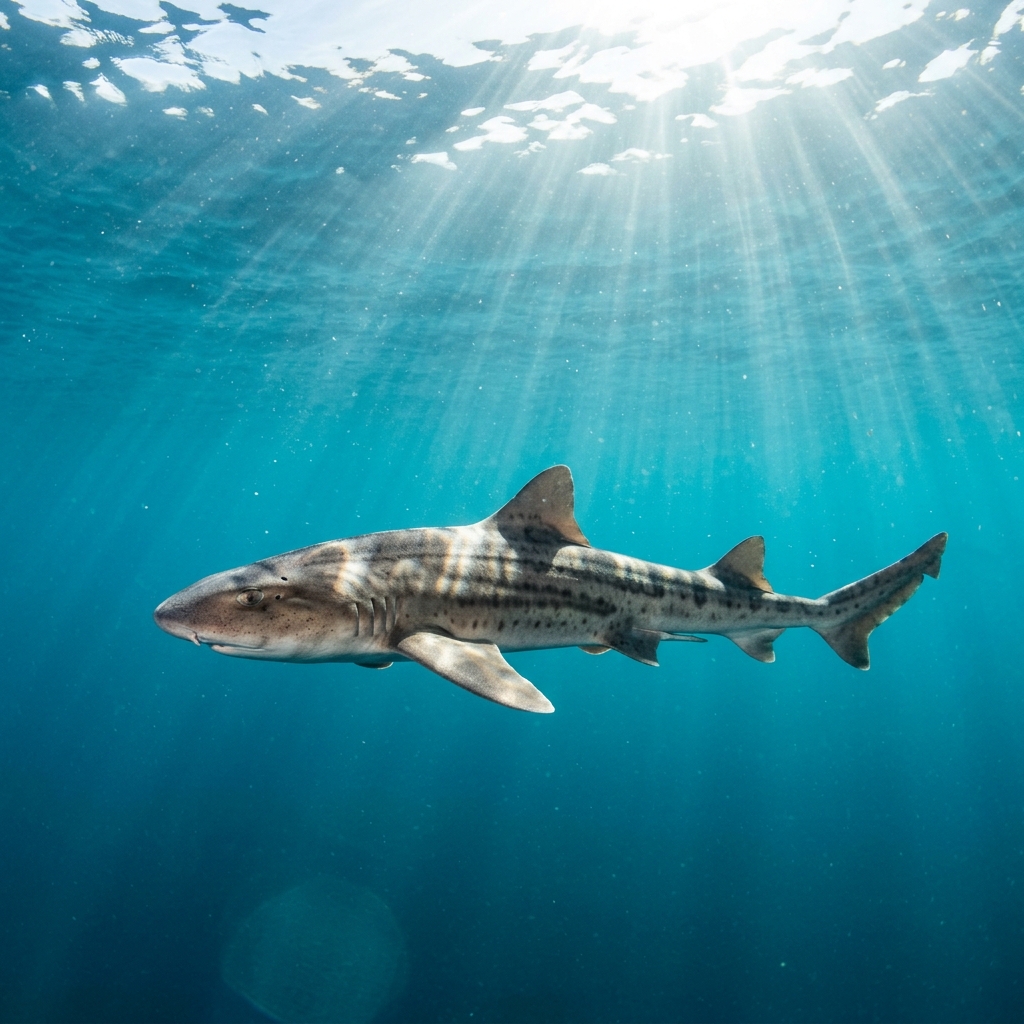
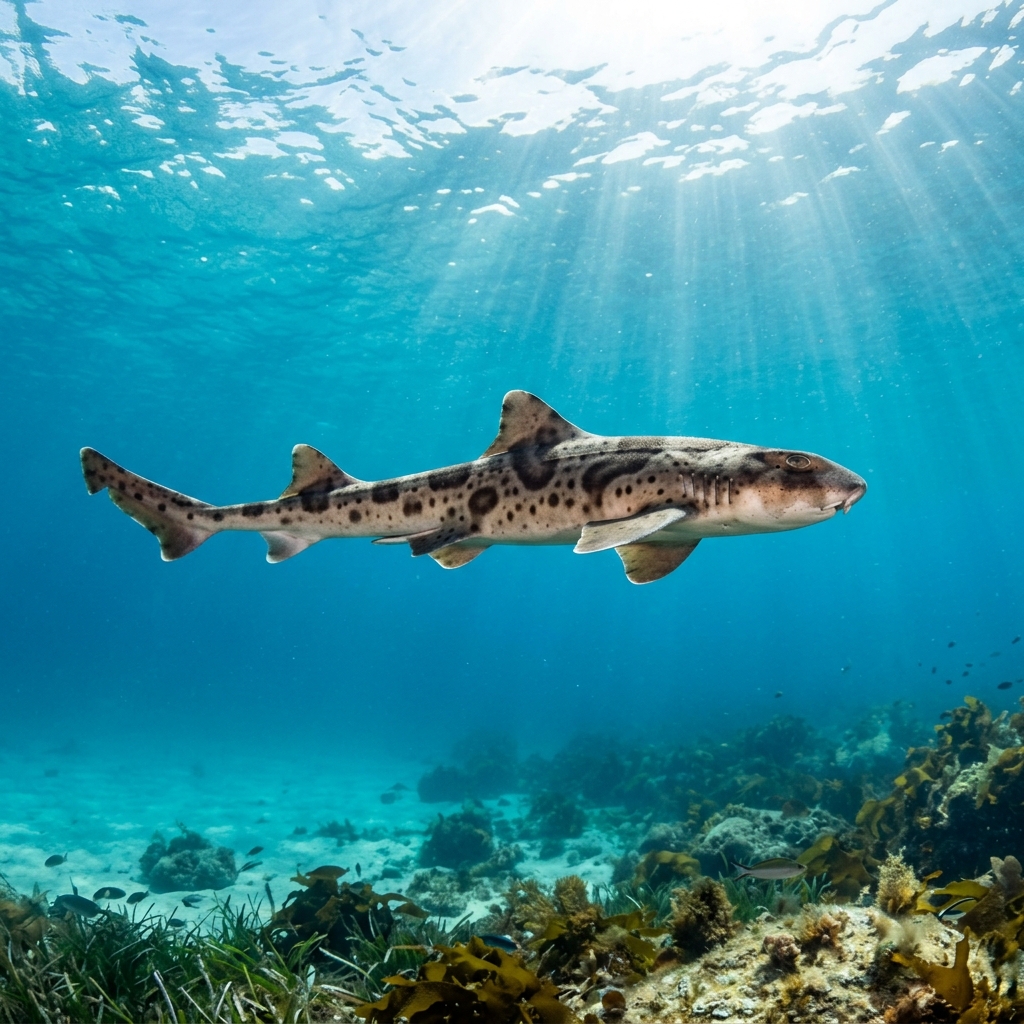
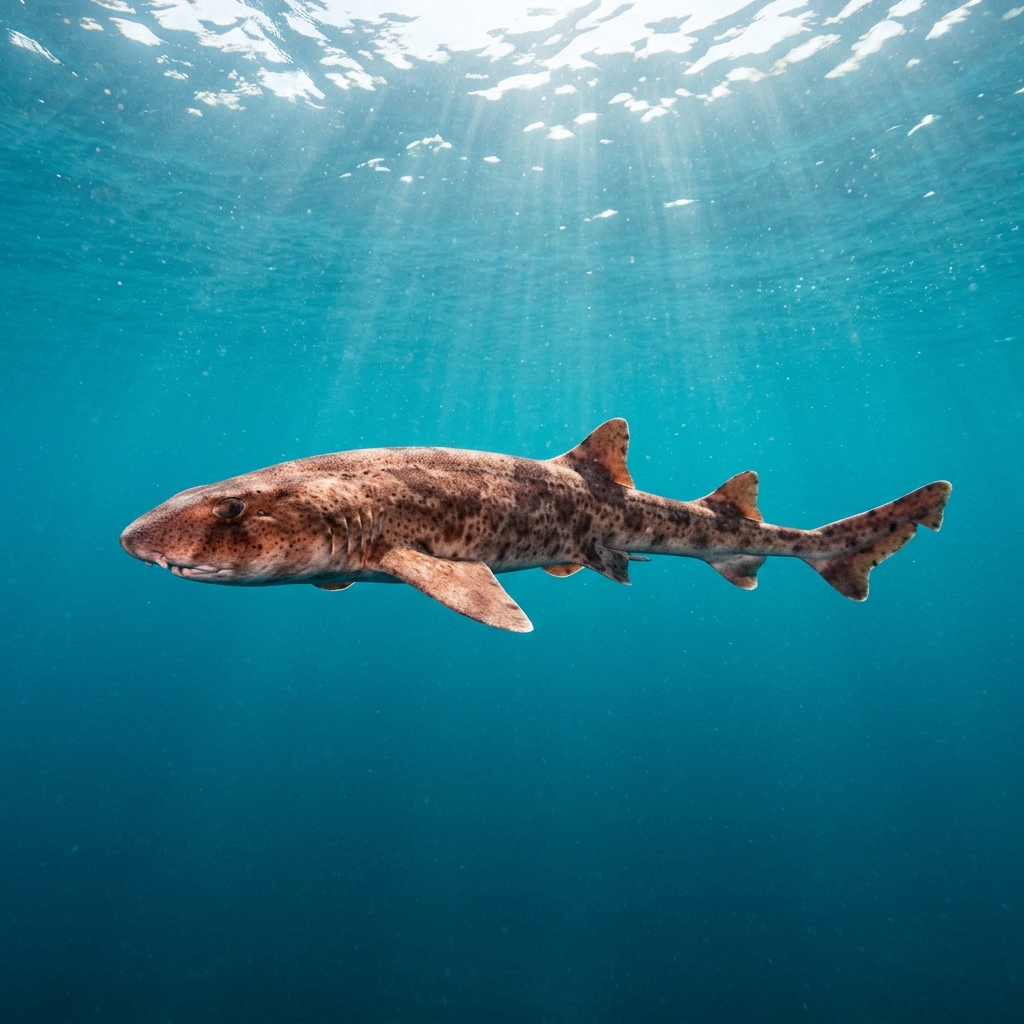
A stocky, blunt-headed catshark that typically reaches about 77 cm, with a pale yellowish-brown or tan body patterned with dark brown saddles and irregular blotches, and scattered small white spots. That chunky, rounded snout and the broad, wide-set eyes give it a distinctive broad-faced look that separates it from slimmer catsharks. Look for it resting motionless on rocky or sandy substrate, often tucked into a crevice or kelp wrack. When threatened it can curl into a loop and inflate its stomach with water or air, which is the behaviour that gives it its name.
Almost every diver encounter involves a swell shark sitting completely still on the bottom, wedged into a rocky crevice or lying flat on sand among kelp, often with its tail curled around its body. It is primarily nocturnal, so dawn and dusk dives, or night dives on rocky reefs, improve your odds considerably. When approached, it tends to stay put rather than bolt, which makes for excellent close observation, but if cornered it may inflate itself to lock into a crack, a defence mechanism unique among catsharks in its range.
Its famous defence trick is to curl into a doughnut shape and gulp in water or air, dramatically increasing its girth so it jams tightly into a reef crevice and cannot be pulled out by a predator.
No clear seasonal peak has emerged from the sighting data, so this species is treated as present year-round at its known sites. It tolerates a wide temperature range of roughly 15 to 28 degrees Celsius, which is consistent with a year-round residency in temperate Pacific waters.
Most sightings come from the Pacific Coast of the United States, particularly in California, and from Baja California in Mexico, making these two regions the most reliable places to look. A strong cluster of range-model sites also sits around Japan's Izu Peninsula and Hachijojima, and along the South Korean east coast, suggesting the species has a broader north Pacific presence than is often appreciated. Divers primarily encounter it in the eastern Pacific, where rocky reefs and kelp forest dives give the best chance of a sighting.
Mapping where Swell Shark is logged…
The most reliable dive sites are along the Pacific Coast of the United States, particularly California, and in Baja California, Mexico. Sightings also come from Japan's Izu Peninsula and the east coast of South Korea, though encounters there are less frequently logged by recreational divers.
There is no defined season in the current data, so they can be encountered year-round at their known sites. Night dives or dusk dives on rocky reefs and kelp beds give you the best chance, as the species is predominantly nocturnal.
No. Swell sharks pose no threat to divers. They are slow-moving, bottom-resting fish that are more likely to inflate themselves and wedge into a crevice than to swim away, let alone approach a diver.
Key features are the broad, rounded snout, wide-set eyes, and a pale tan body with dark brown saddle-shaped blotches and small white spots. Its stocky build and habit of lying completely motionless on the reef bottom make it look more like a rock than a shark at first glance.
Swell sharks typically reach around 77 cm in length. They are a relatively small shark, roughly the length of a human arm, which contributes to how easily they can hide in reef crevices.
When threatened and unable to flee, a swell shark curls into a loop and gulps in water or air, swelling its stomach to lock itself firmly inside a rock crevice. This makes it very difficult for a predator to extract. It is one of only a handful of sharks known to use this inflation defence.
Site and sighting data is aggregated from diver logs, iNaturalist and GBIF. For taxonomy and conservation status:
Pyjama Shark
91 sites