Haploblepharus pictus
Small, curled-up catshark common in the Western Cape's cold kelp forests, 16 to 21C, year-round on night and day dives.
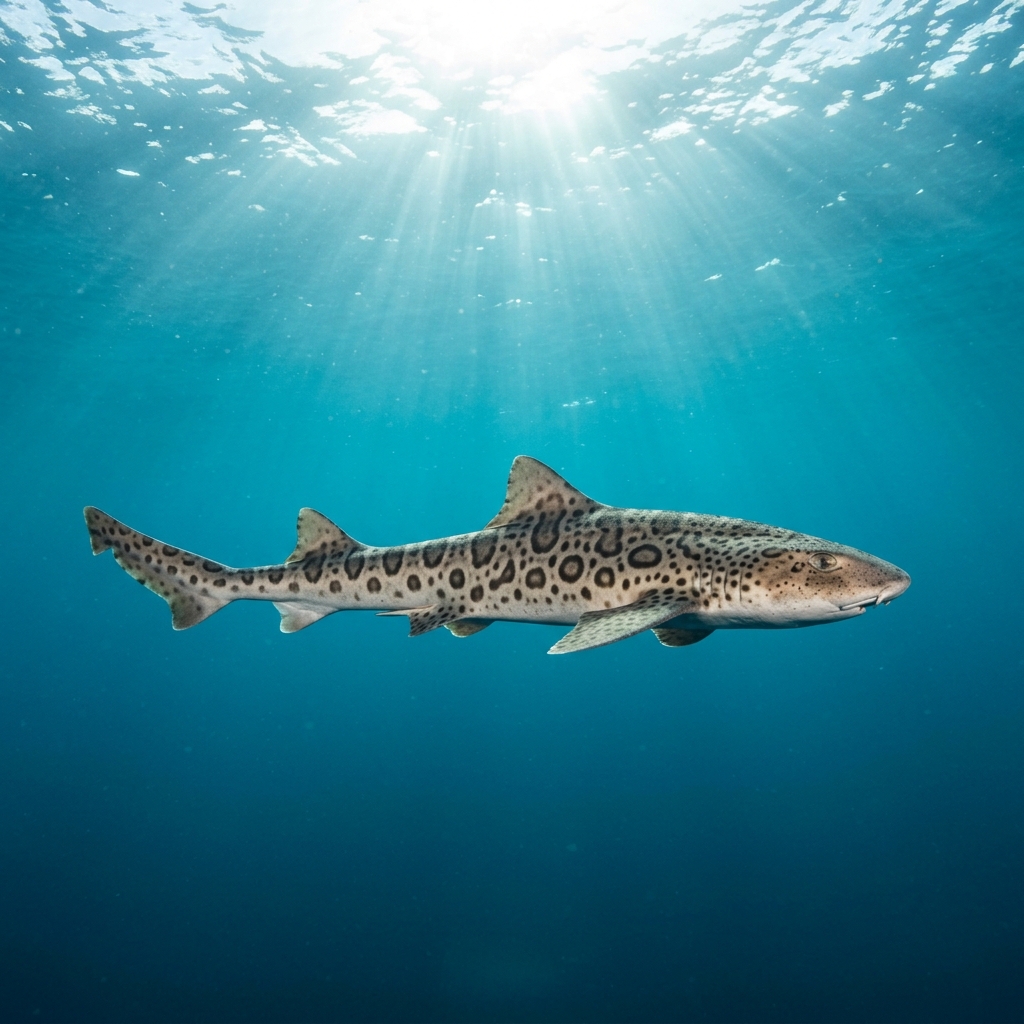
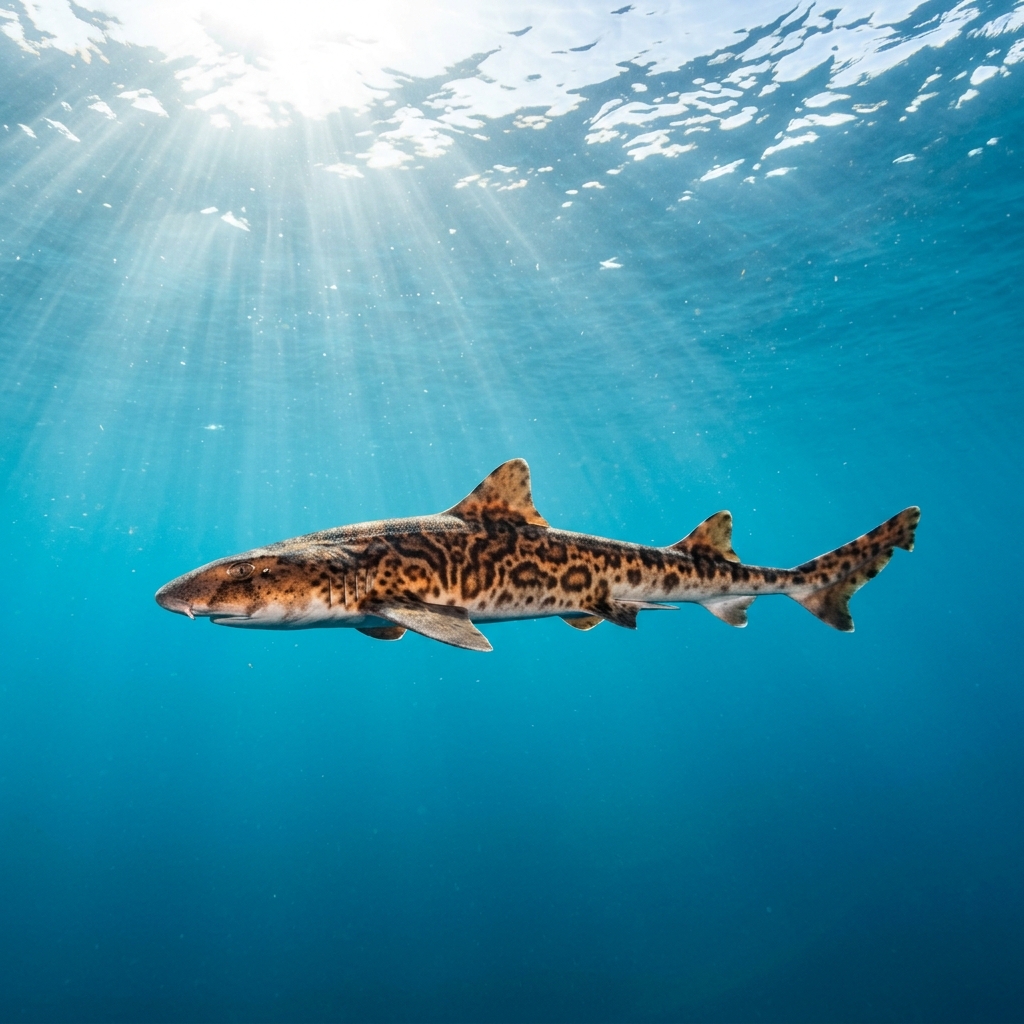
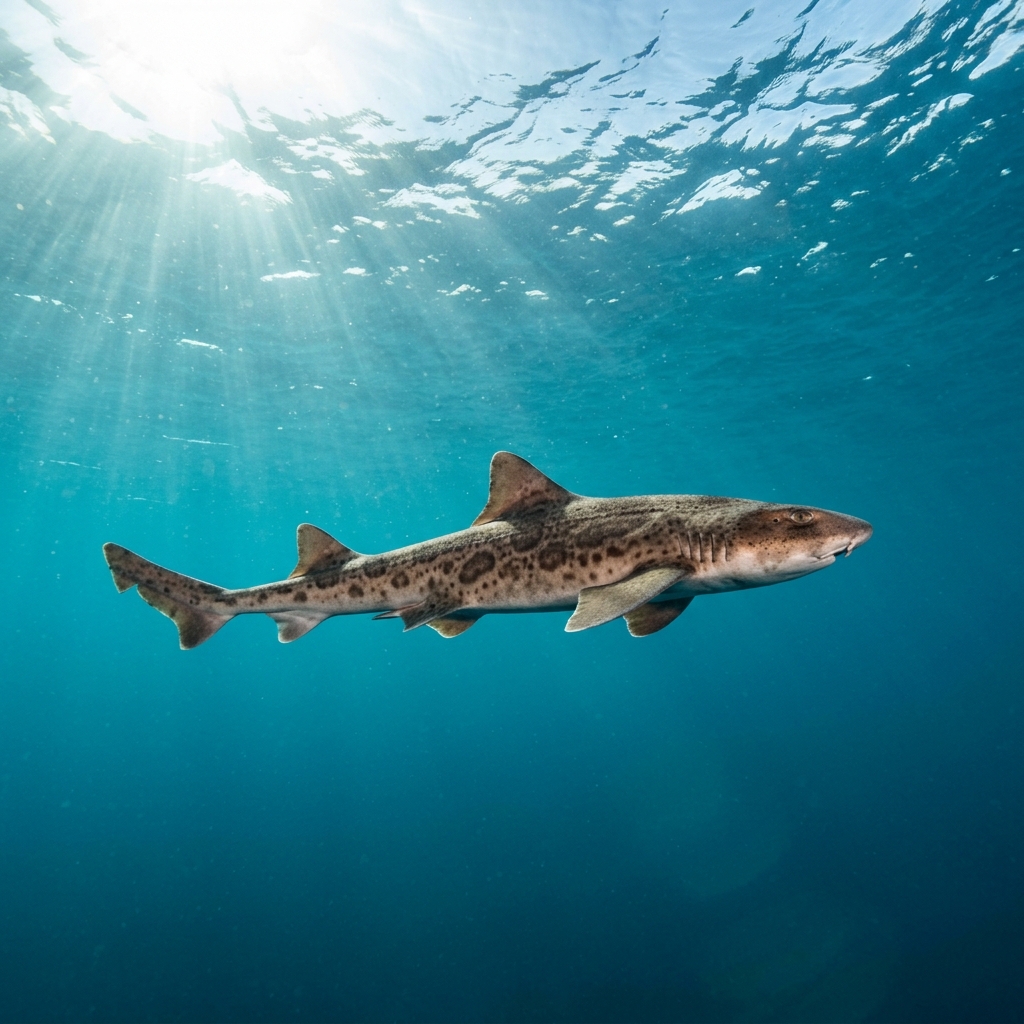
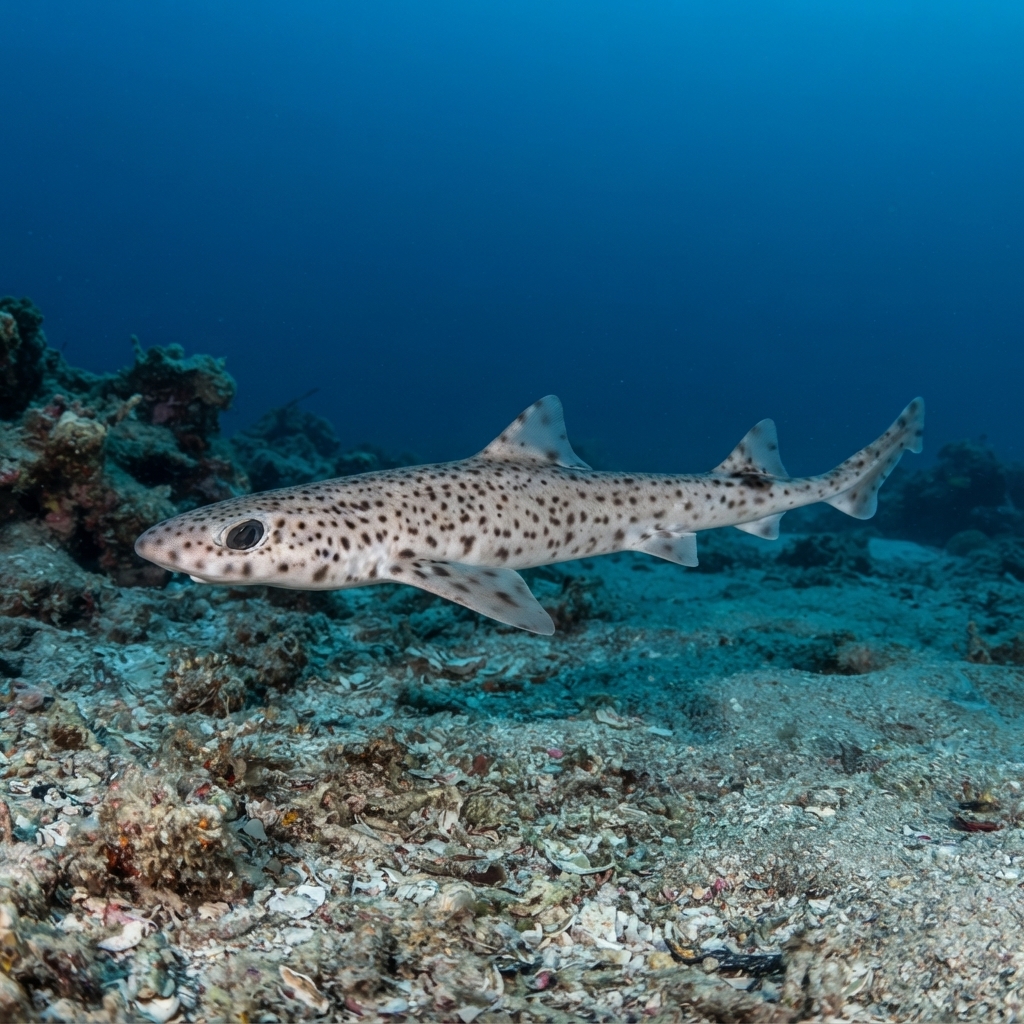
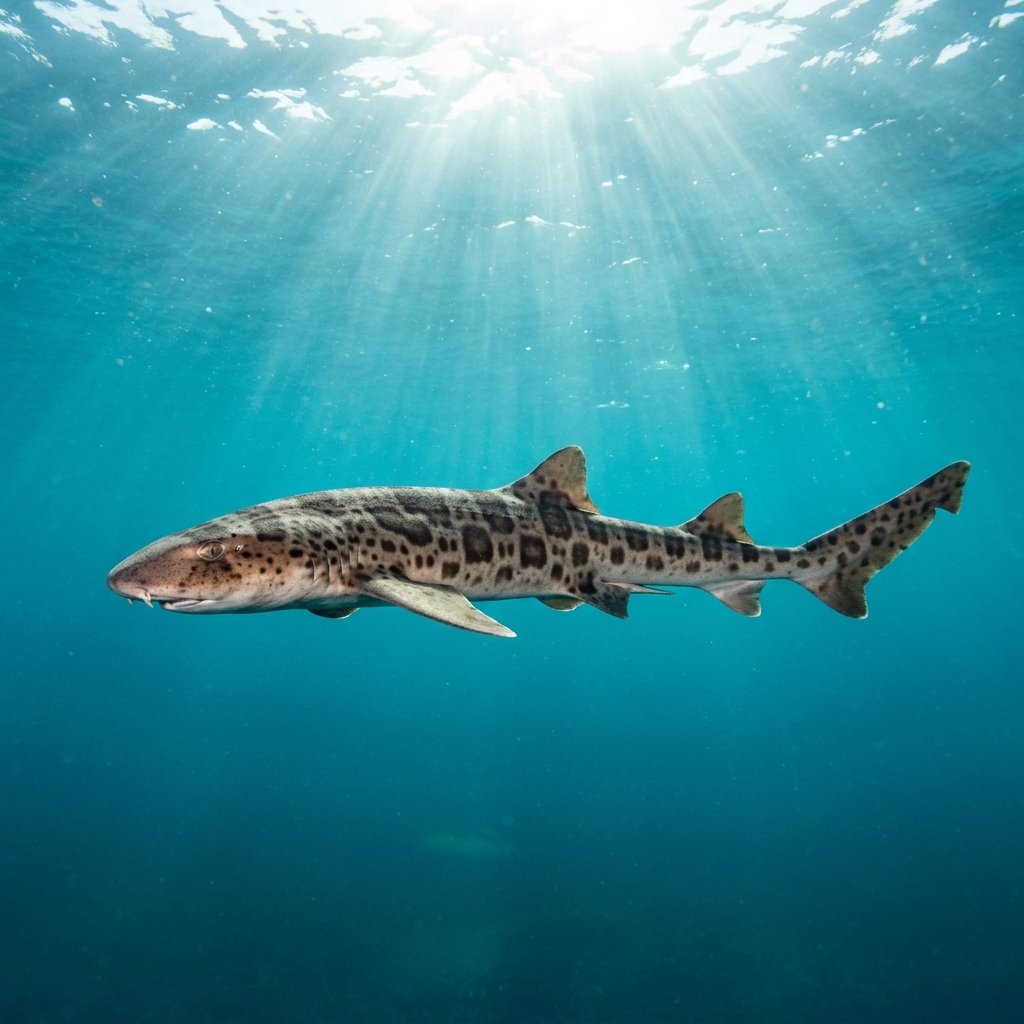
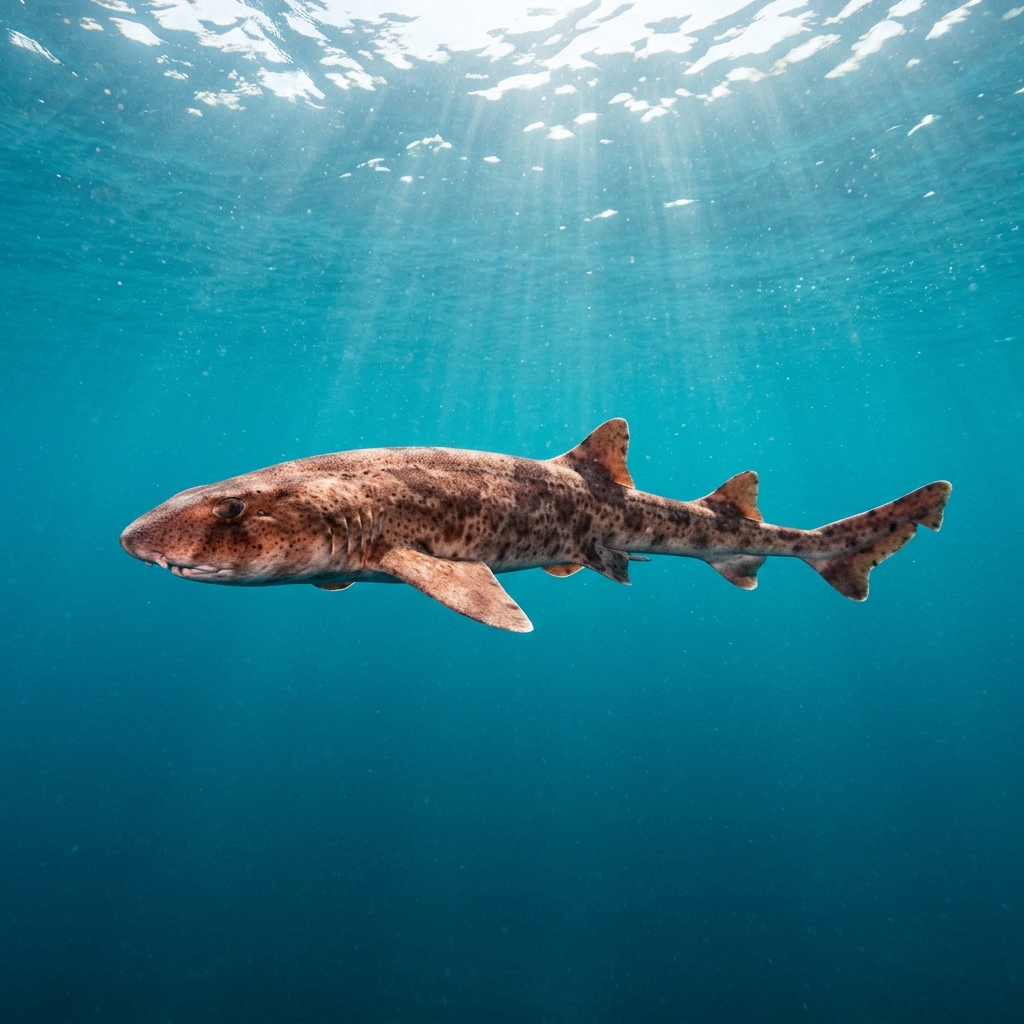
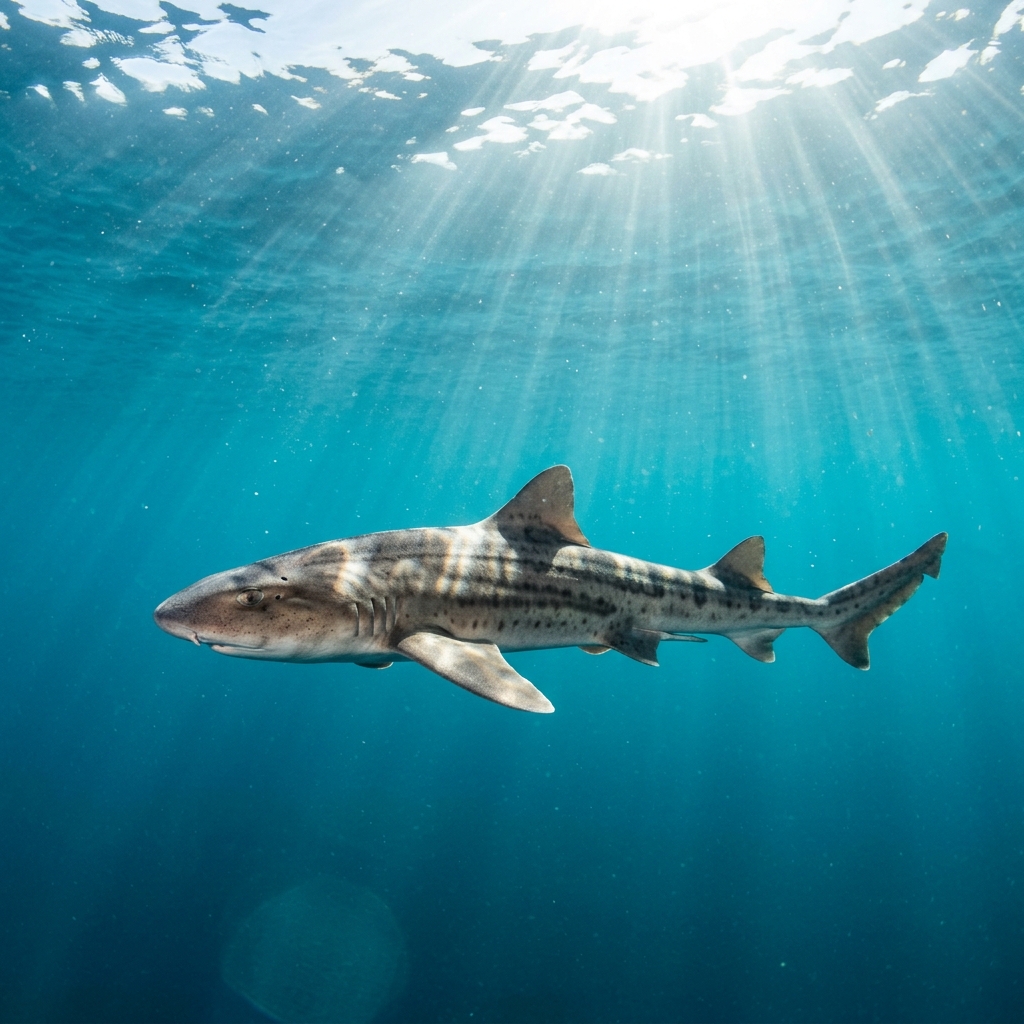
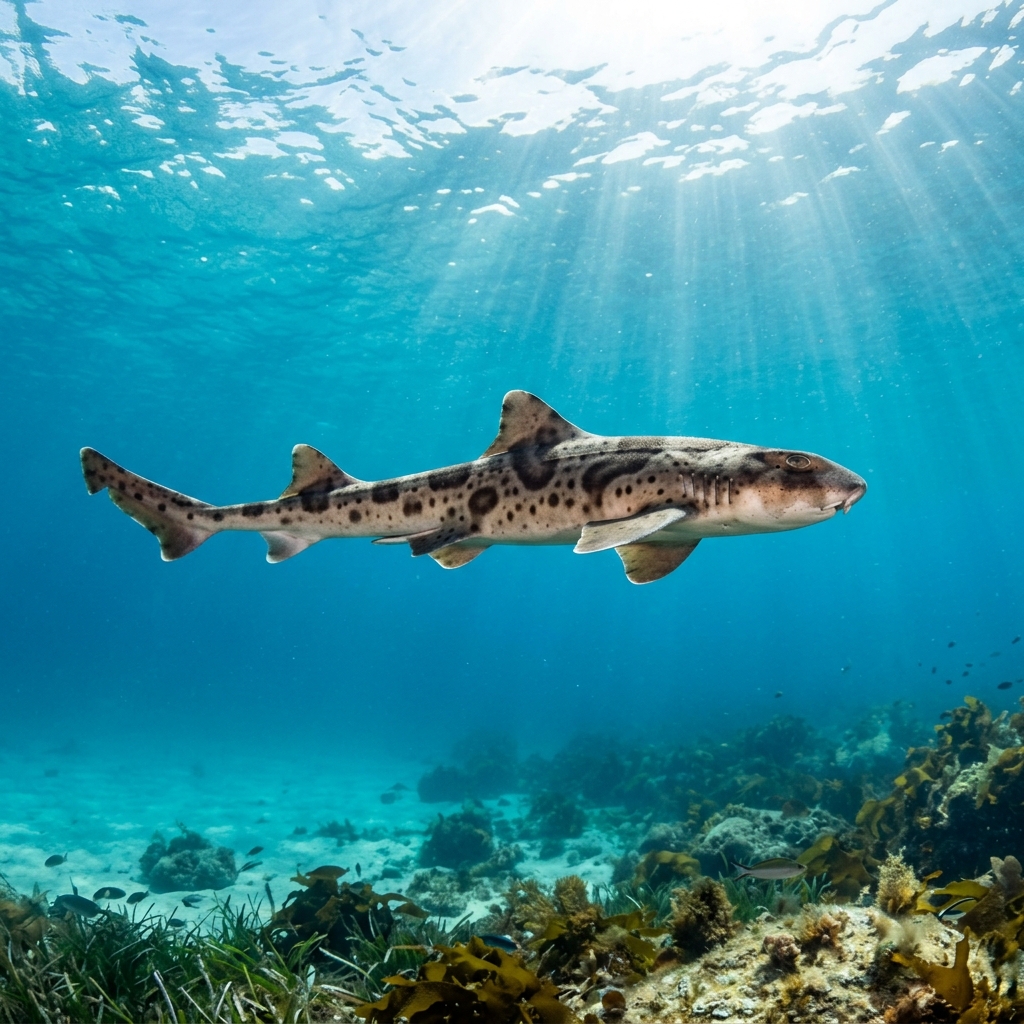
A small, slender catshark that rarely tops 40 cm, usually seen resting on sand or tucked under a ledge with its tail curled over its head and eyes, a defensive habit that gives the shyshark family its name. Look for a dark brown to grey body scattered with lighter spots and a few darker saddle-shaped blotches along the back. The head is short and blunt with cat-like eyes set high, and the whole animal has a low, flattened profile against the reef.
Expect to find it lying still on sand, gravel or low reef, often half-hidden under a rock ledge or in kelp holdfasts, more active after dark on night dives. It is not a swimmer you chase down mid-water; divers typically spot it by scanning the bottom slowly, and once found it tends to sit tight rather than bolt. When it does feel threatened it curls its tail forward over its head and eyes, a distinctive defensive posture unique to shysharks.
That tail-over-the-eyes curl isn't just a quirky pose, it is thought to protect the shark's most vulnerable parts and make it a less appealing mouthful for predators like larger sharks and seals.
No clear seasonal pattern shows up in the sighting data, and with a comfortable range of 16 to 21C it is logged as a year-round find on Western Cape reefs and kelp forests.
Reef neighbours a diver could mistake it for. Use the identification notes above to tell them apart.
This is very much a Western Cape speciality, with the great majority of logged sightings coming from sites around that region in South Africa, and a smaller number further east along the Eastern Cape. Outside South Africa it turns up only occasionally, with scattered records from Namibia and a handful of far-flung sites in the US, France, Italy and Australia likely reflecting related or misidentified shysharks rather than a wider range.
Mapping where Dark Shyshark is logged…
Almost all reliable sightings come from South Africa's Western Cape, with fewer records further along the Eastern Cape. It is considered a common find at many Western Cape dive sites, particularly in kelp forest and reef habitat.
There is no strong seasonal signal in the data, so it is logged year-round in the Western Cape's cool water, typically between 16 and 21C.
Look for a small, slim catshark under 40 cm resting on sand or reef, dark brown to grey with light spots and darker saddle blotches, and a high-set pair of cat-like eyes. If disturbed it curls its tail up over its head, a giveaway shyshark trait.
They are a small catshark species, typically reaching around 39 cm in length, so most divers encounter fully grown adults well within reach of a single camera frame.
No, they pose no danger to divers. They are small, slow-moving bottom dwellers that rely on hiding and their tail-curl defence rather than any aggression.
Site and sighting data is aggregated from diver logs, iNaturalist and GBIF. For taxonomy and conservation status:
Swell Shark
108 sites