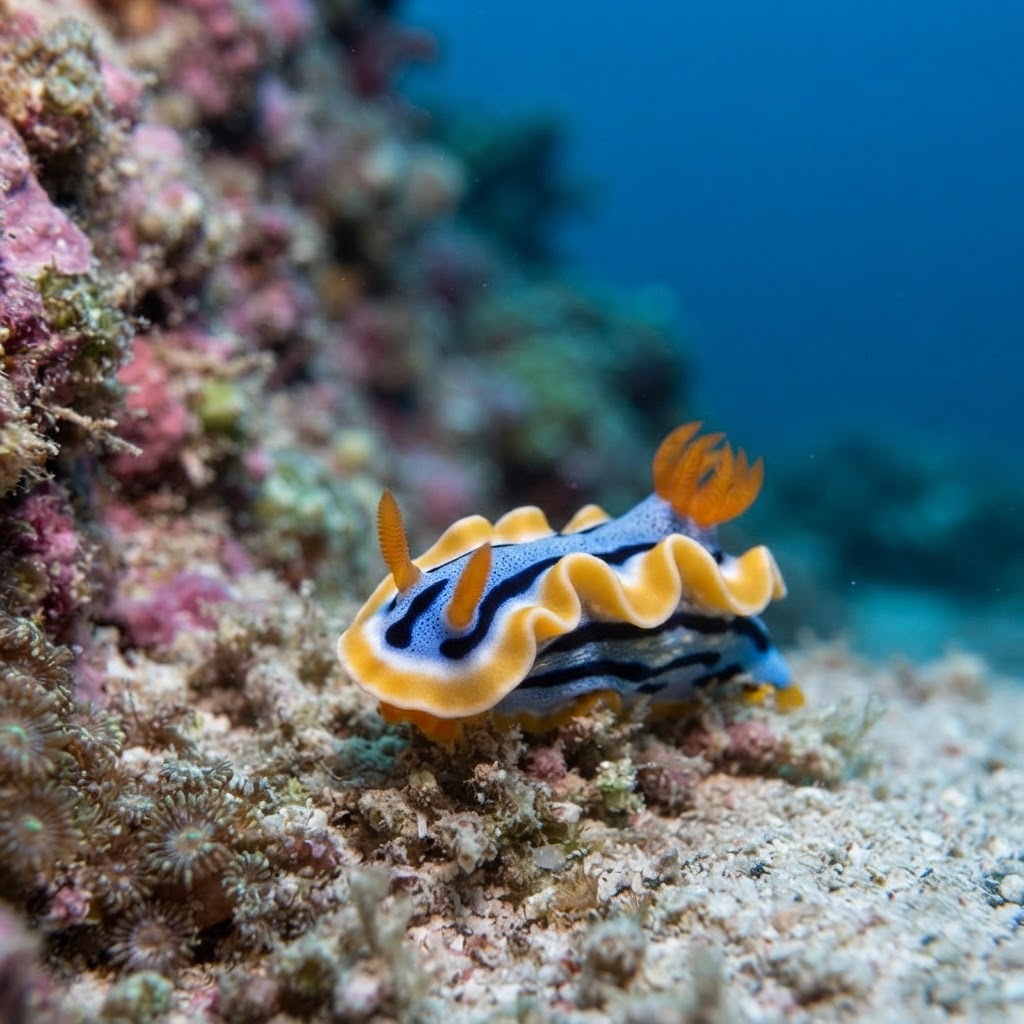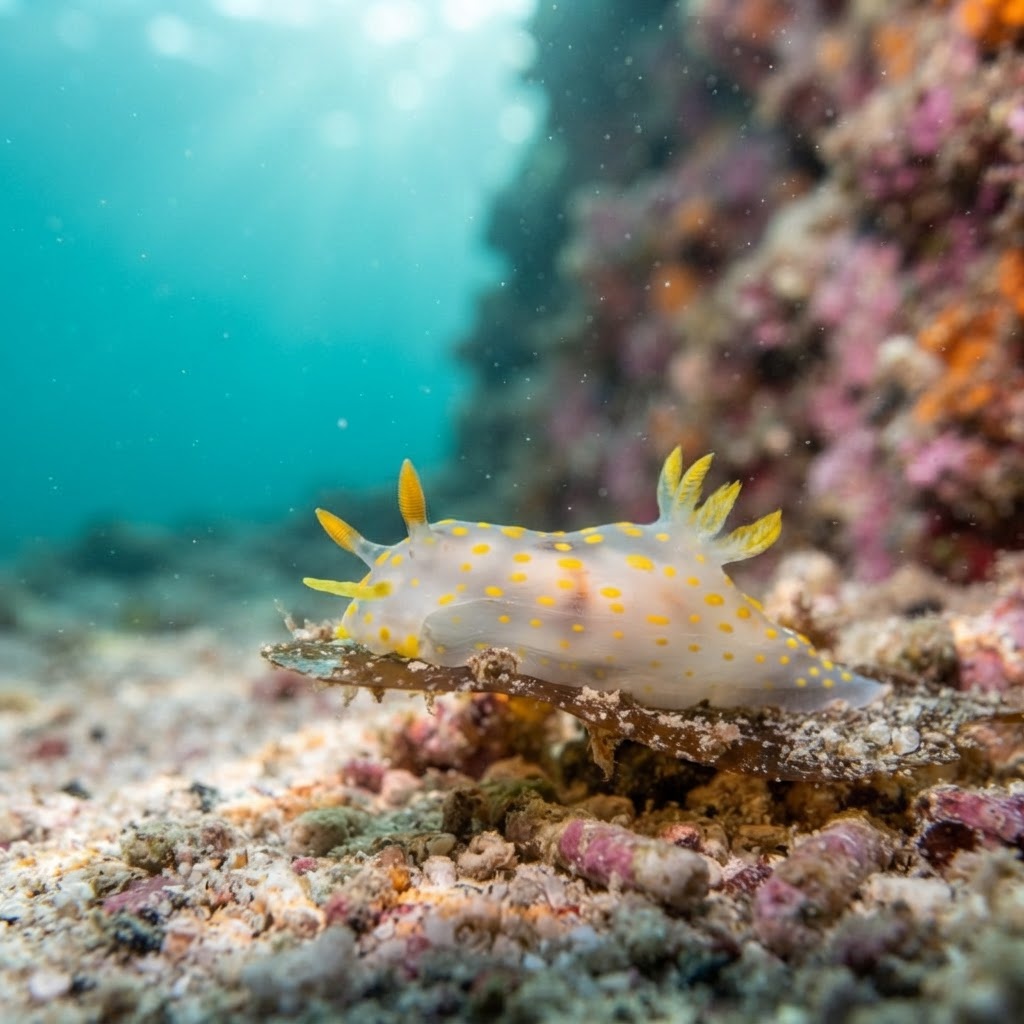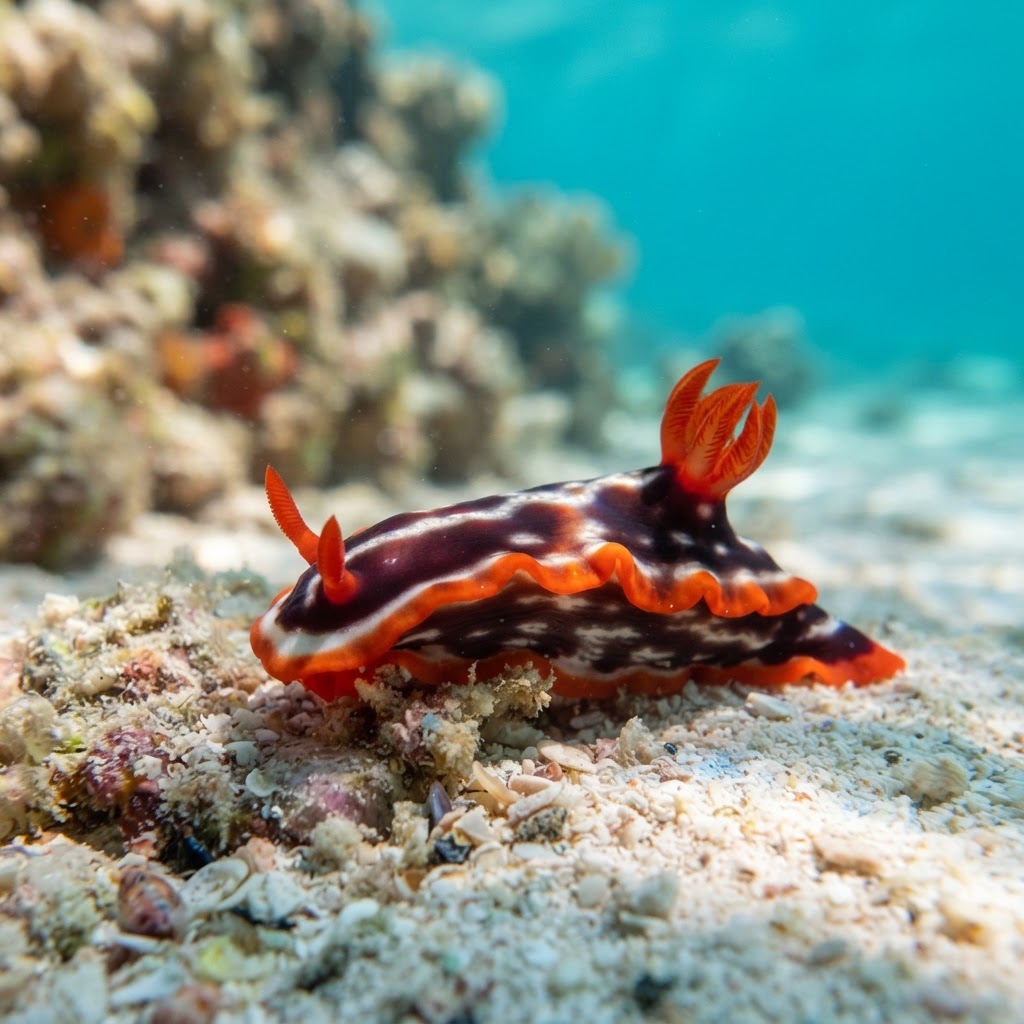
Hypselodoris purpureomaculosa
A Green Island, Taiwan speciality nudibranch, uncommon but year-round in warm 23-29C reef water.
A small, elongated nudibranch with a pale to translucent mantle scattered with distinct purple spots that give it its name. Like other Hypselodoris species, it carries feathery gills and a pair of rhinophores (sensory tentacles) at the rear and front of the mantle, both usually tinted to match the spotting. It moves slowly across rock and reef surfaces, so once spotted it is easy to watch closely for the spot pattern that separates it from plainer chromodorid nudibranchs.
Divers typically find it grazing slowly over rock and reef substrate, tucked into crevices or moving across exposed surfaces where its sponge food is likely present. It shows no reaction to divers beyond its usual unhurried pace, making it a straightforward subject for close-focus photography once located. Most logs describe it as an uncommon find, so a slow, methodical scan of the substrate on a macro-focused dive gives the best odds.
Like other members of the Chromodorididae family, it almost certainly stores chemical compounds from the sponges it feeds on and repurposes them as a chemical defence, which is why its bright colouring can be a warning rather than decoration.
Sightings show no detected seasonal pattern, and with a comfortable range of roughly 23 to 29C it likely turns up on these reefs year-round rather than in a narrow window. Plan around good visibility and site conditions rather than a specific month.
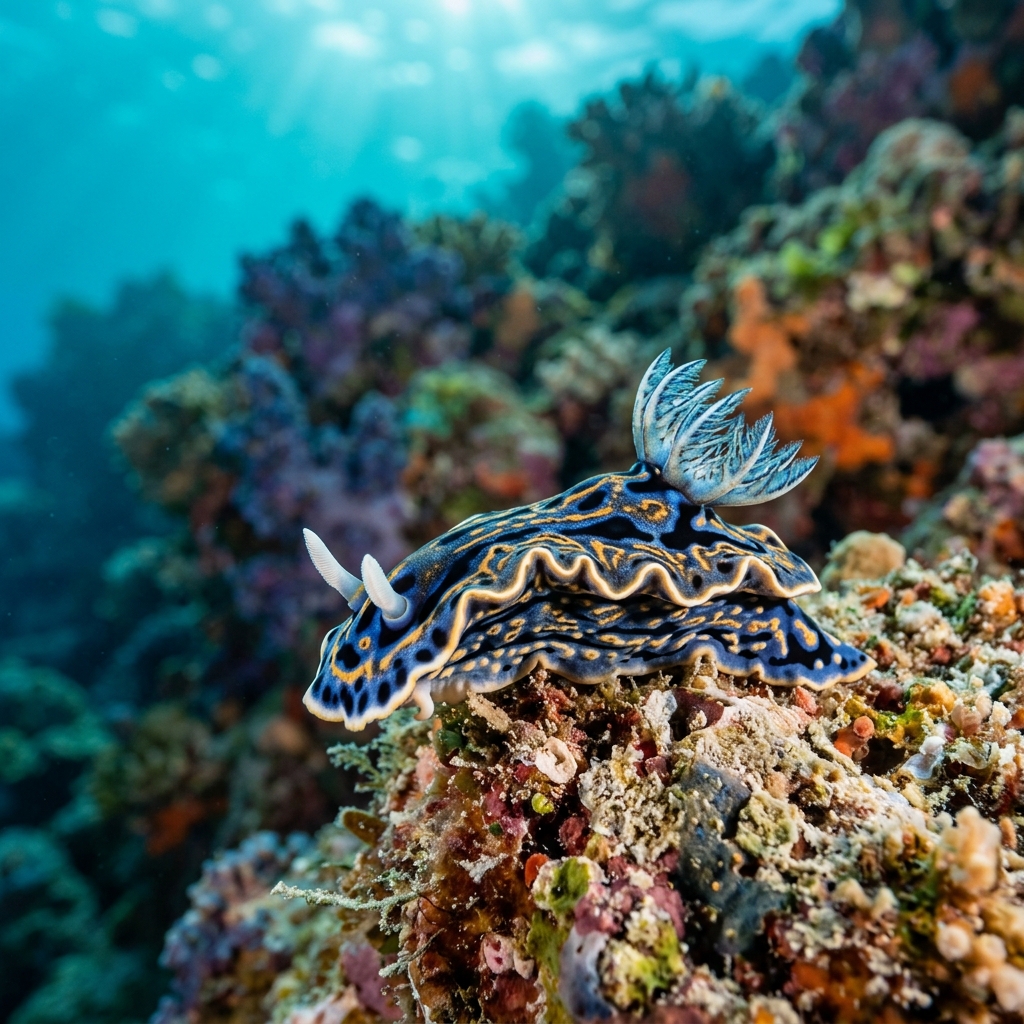
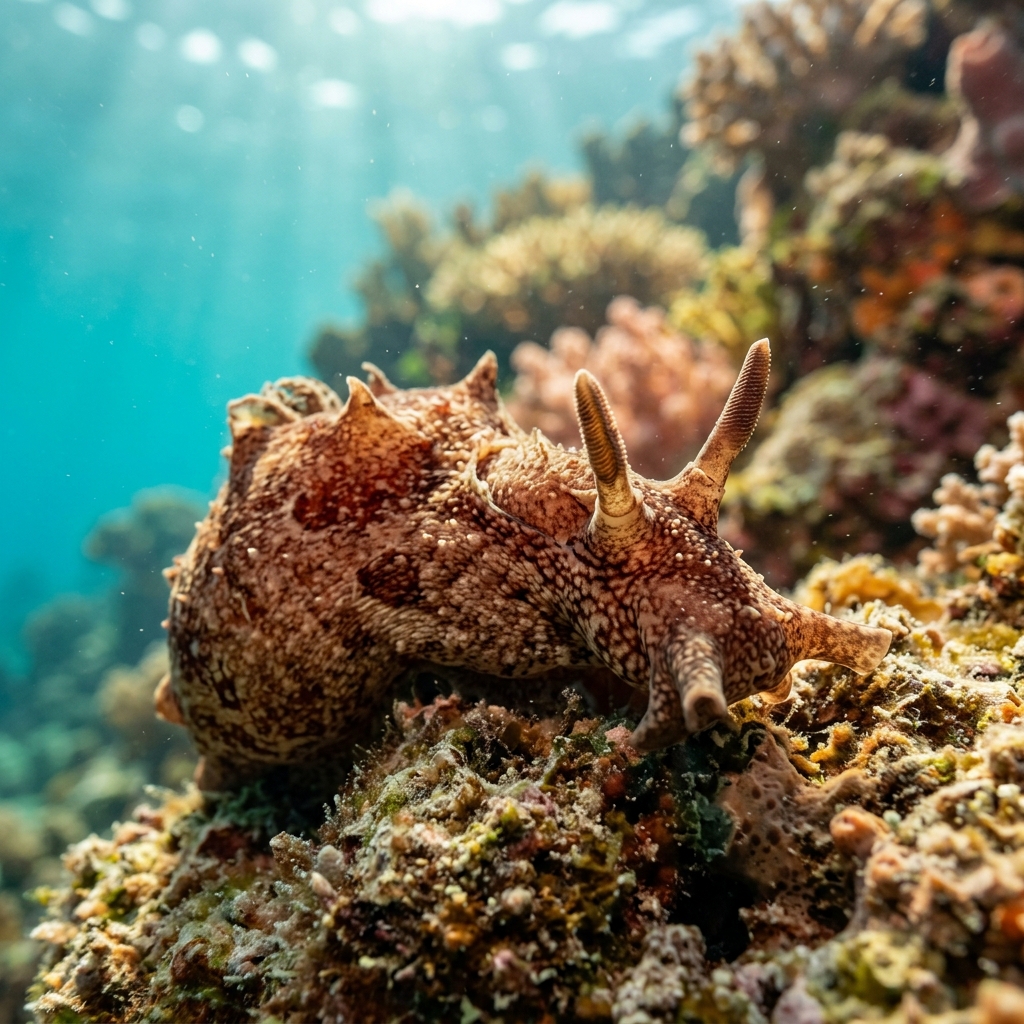
Reef neighbours a diver could mistake it for. Use the identification notes above to tell them apart.
Most reliably logged around Green Island, Taiwan, which accounts for the bulk of recorded sightings, with a smaller scatter of records from the Visayas region in the Philippines. Outside these two countries it has not been documented, so Green Island is the strongest bet for a targeted search.
Mapping where Purple-spotted Hypselodoris is logged…
Green Island in Taiwan is the most consistent location, with additional records from the Visayas region of the Philippines. It has not been documented outside these two countries.
There is no detected seasonal pattern, and its warm-water tolerance of roughly 23 to 29C suggests it is present on these reefs throughout the year.
Look for a small, slow-moving nudibranch with a pale mantle covered in distinct purple spots, plus feathery gills and rhinophores at either end of the body. The spotting pattern is the key giveaway against similar chromodorid species.
No, it poses no danger to divers. It has no means of stinging or biting and simply grazes slowly across the reef, making it safe to observe and photograph up close.
Exact size data is not recorded for this species, but like most Hypselodoris nudibranchs it is likely a small, macro-scale subject best appreciated with a close-focus lens.
Site and sighting data is aggregated from diver logs, iNaturalist and GBIF. For taxonomy and conservation status:
Light-spotted Aegires
3,168 sites