Tetraodontidae spp.
Pufferfish turn up year-round from Sharm el Sheikh to the Philippines. Here's where divers log them most, how to spot them, and which look-alikes to watch for.
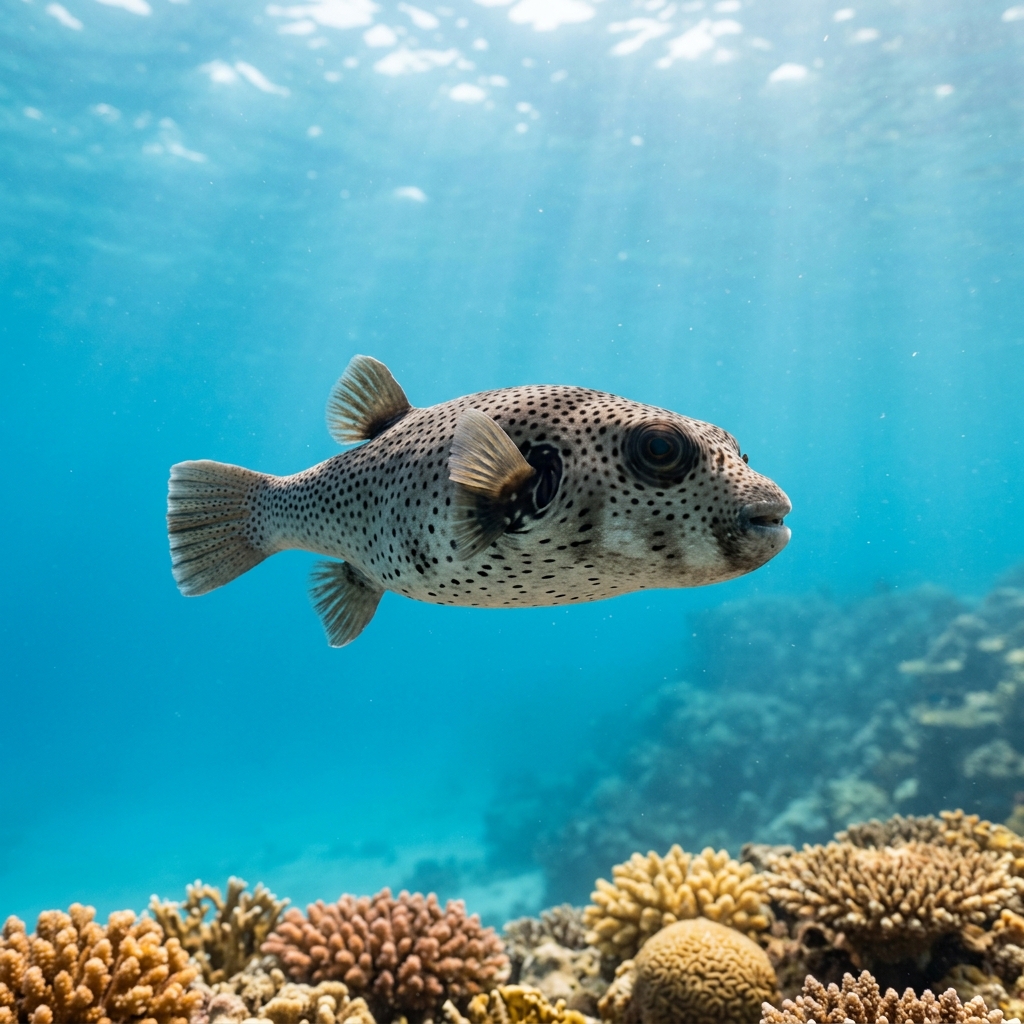
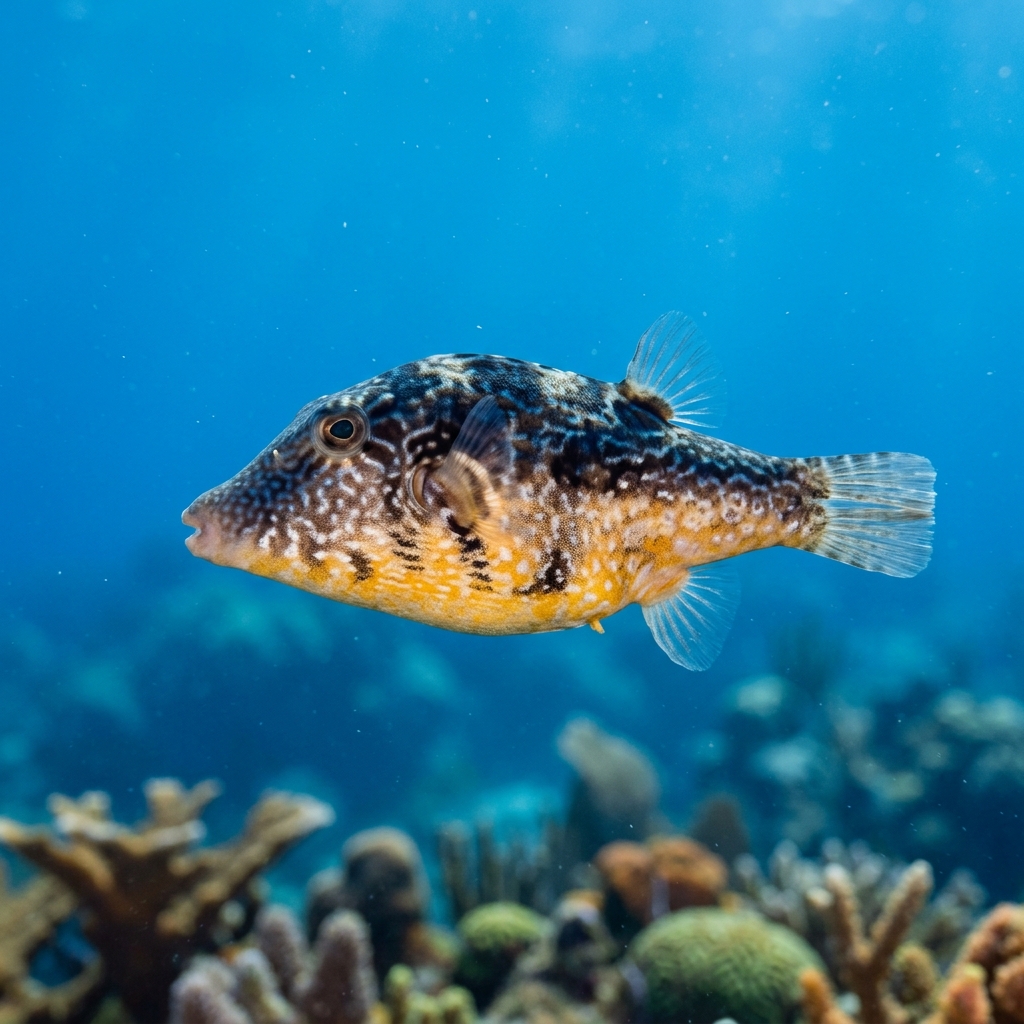
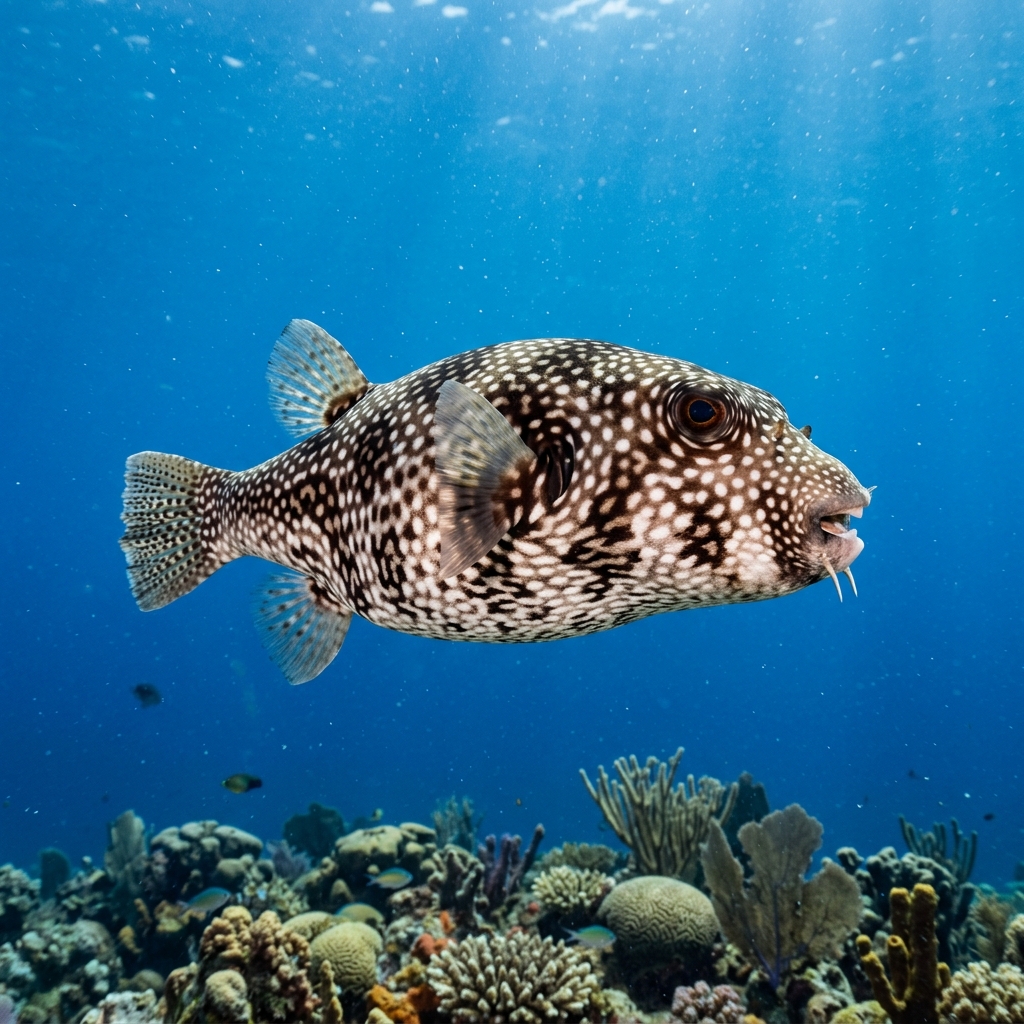
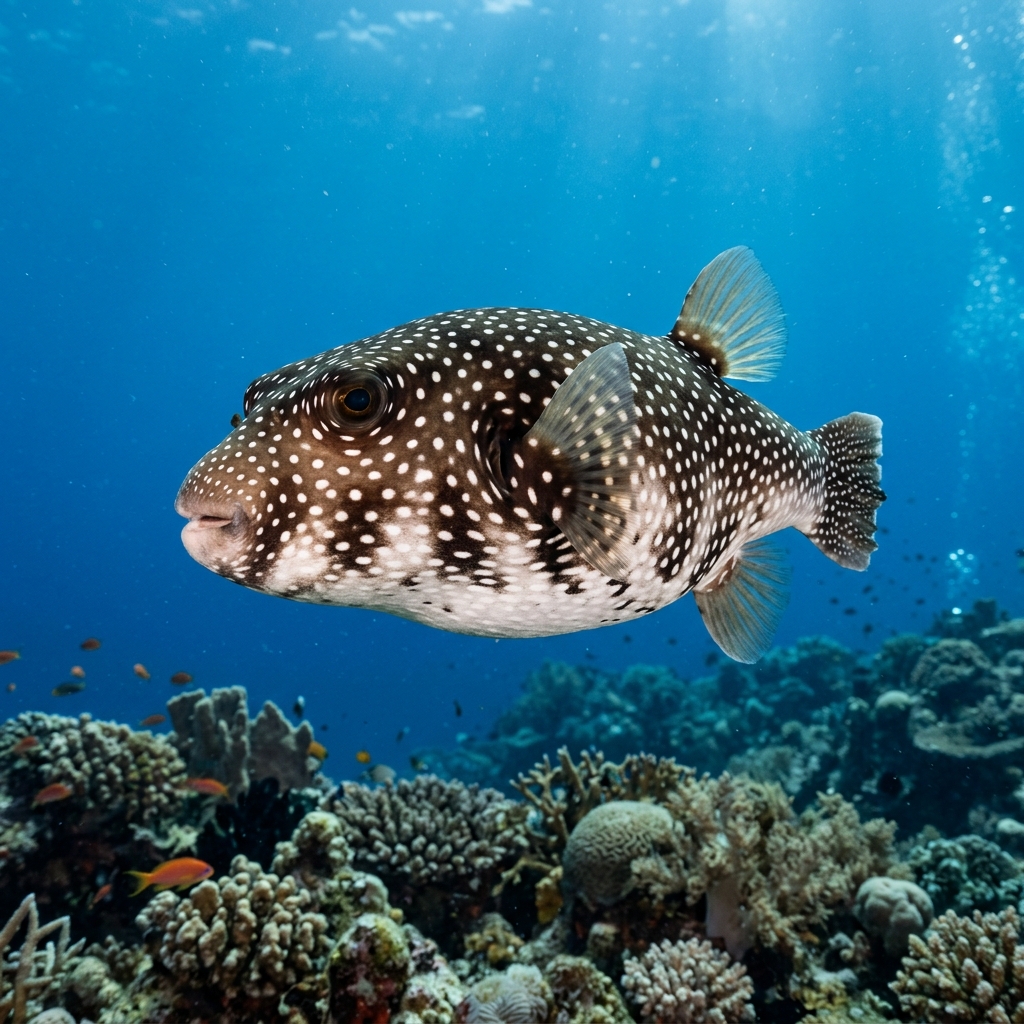
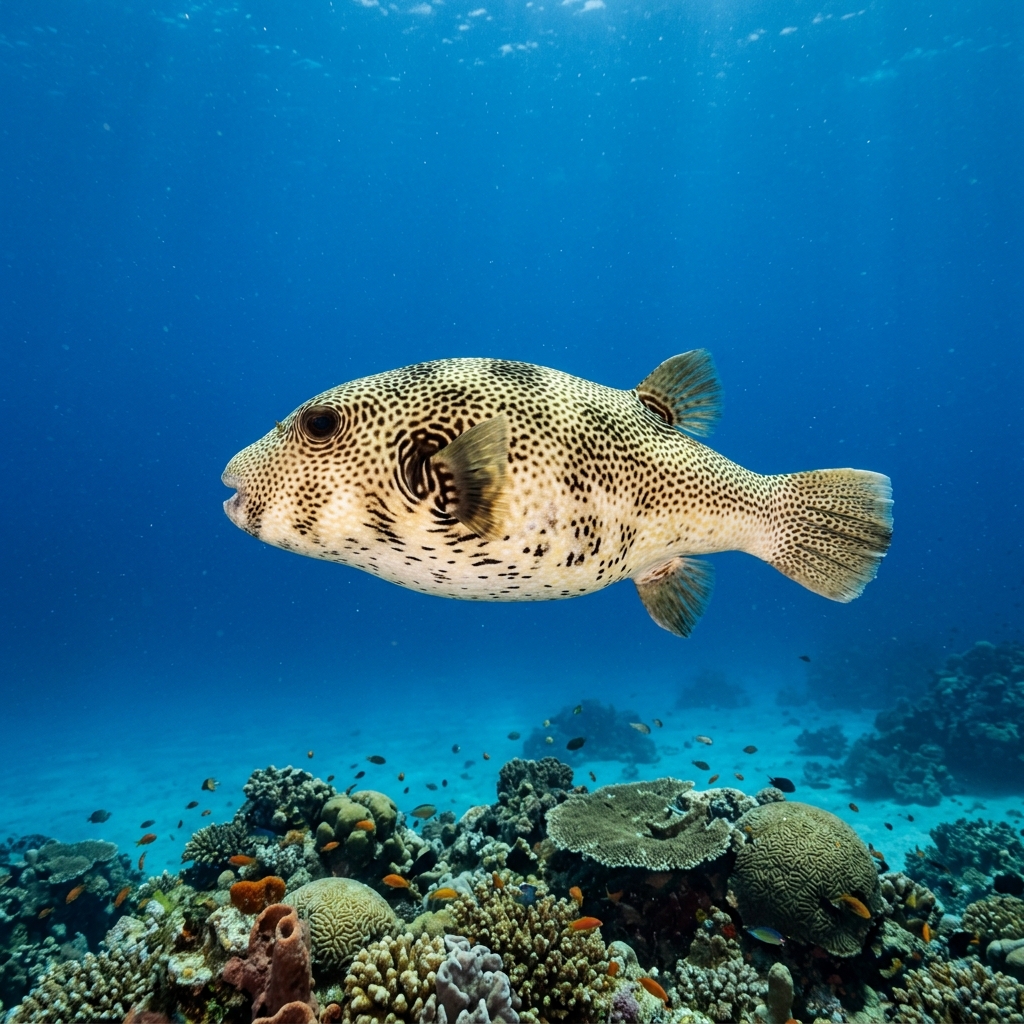
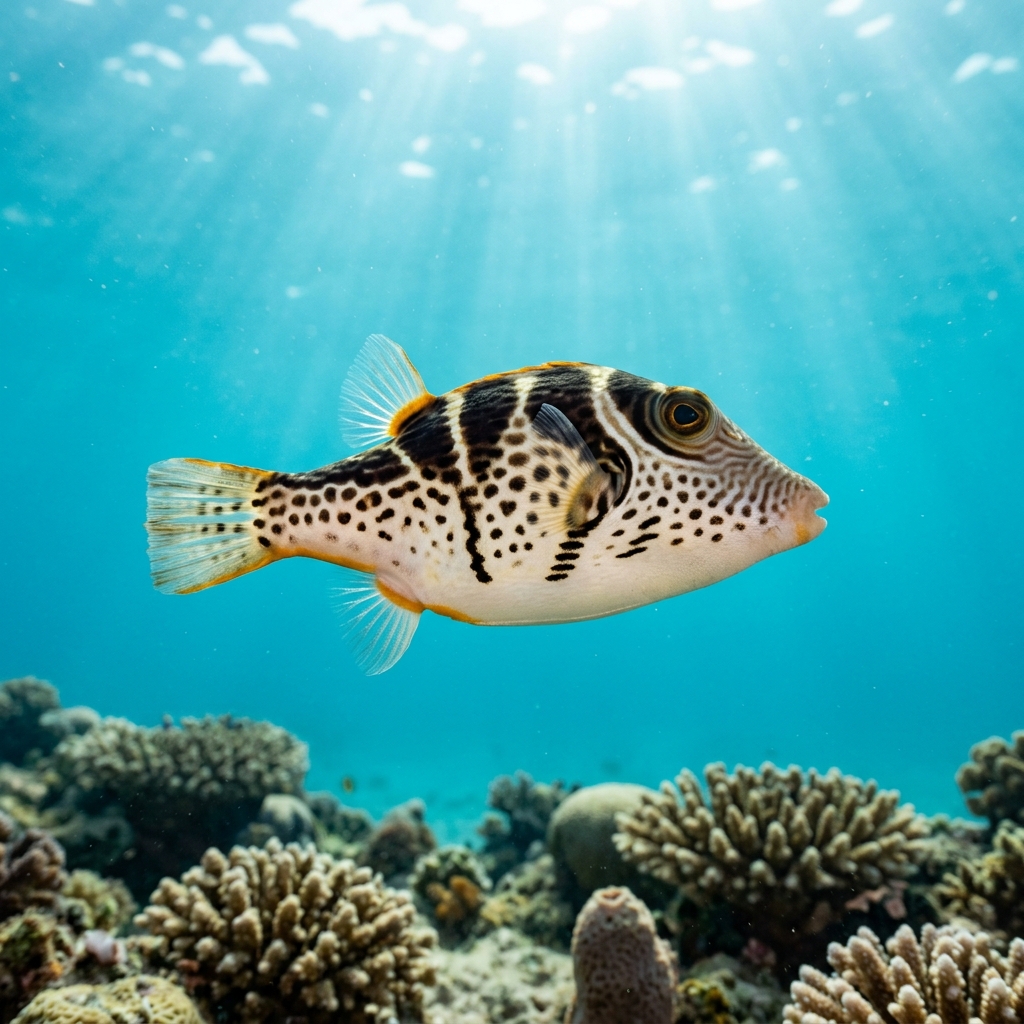
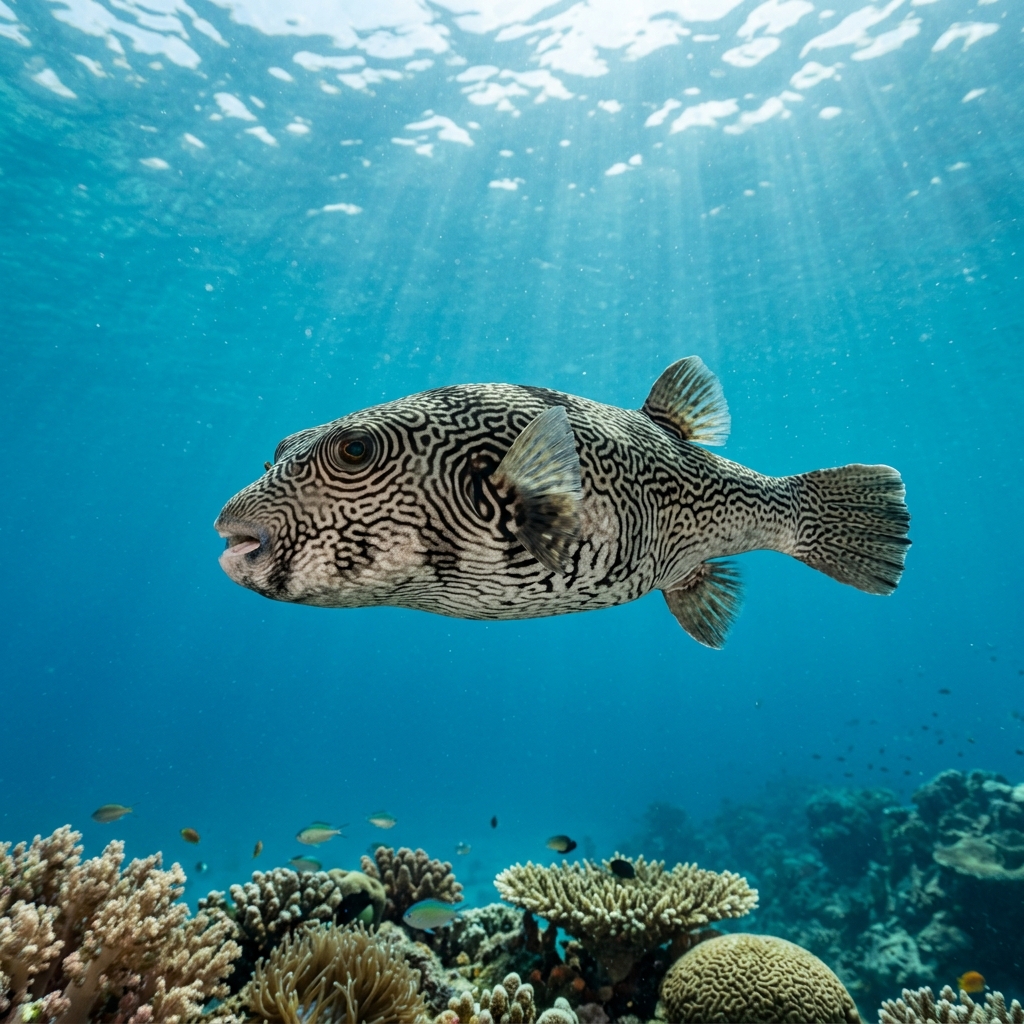
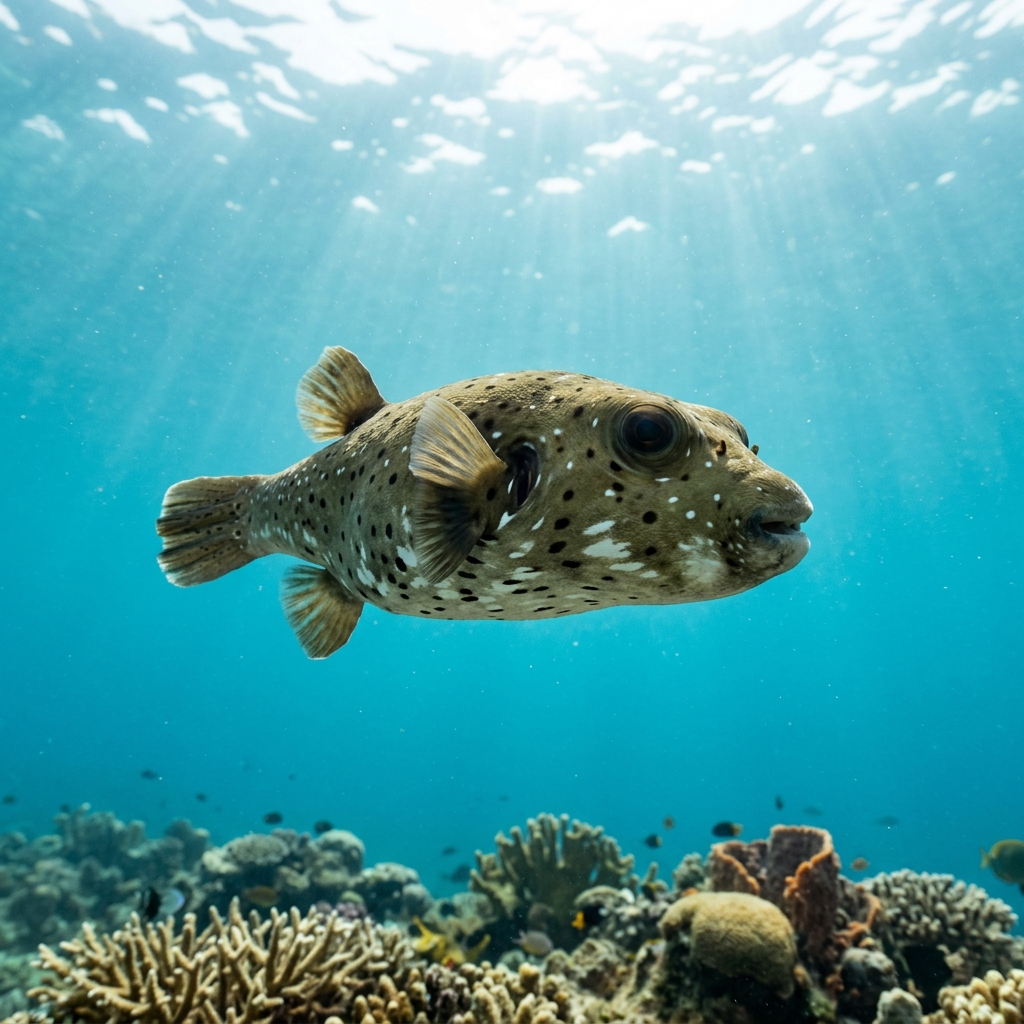
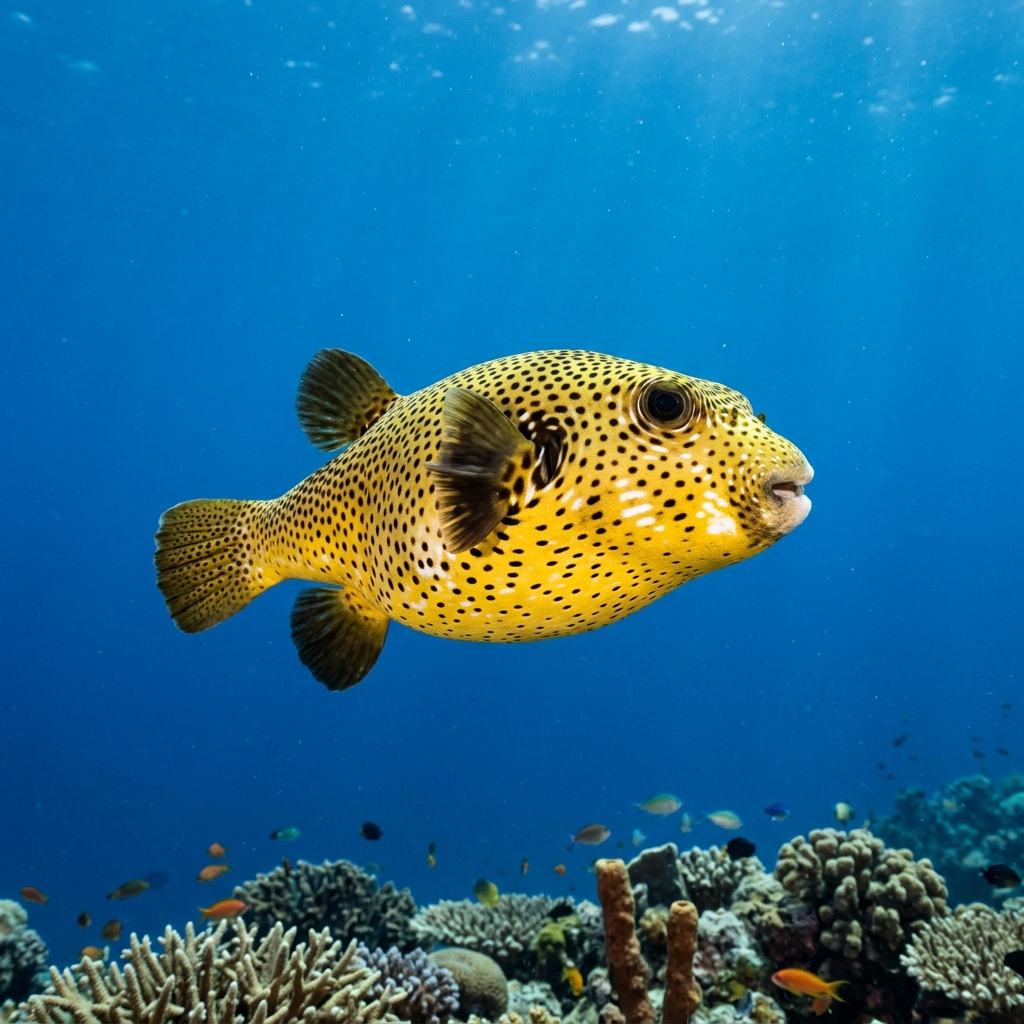
Pufferfish are hard to mistake for most other fish: a rounded, almost boxy body, a small beak-like fused mouth, and skin that ranges from spotted to mottled depending on species. At rest they look almost comically compact, with tiny fins that flutter rapidly to hold position. When threatened, the body inflates noticeably, turning the fish into a tight sphere covered in short spines. Colour and pattern vary widely across the family, from the bold orange-spotted Guineafowl Puffer to subtly checkered or plain brown species.
You will most often find pufferfish moving slowly and purposefully over the reef, using their fused beak to pick at hard corals, sponges, and invertebrates. They are generally unfazed by divers at a respectful distance, though a startled individual may puff up slightly and retreat into a crevice. Some species are more active at dawn and dusk, but encounters during daytime dives are routine.
The inflation behaviour pufferfish are famous for is not a neat trick: it is a last-ditch defence that stresses the fish significantly. Divers should never chase or touch a pufferfish to provoke inflation.
Pufferfish are present year-round in both hemispheres, with no concentrated season recorded. They are observed across a water temperature range of roughly 18 to 29°C, so they turn up on subtropical as well as tropical reefs throughout the calendar year.
Reef neighbours a diver could mistake it for. Use the identification notes above to tell them apart.
Pufferfish are most consistently logged across the Indo-Pacific, with the Philippines (especially Central Visayas), Indonesia (Bali and Sulawesi), and the Egyptian Red Sea (Sharm el Sheikh and Marsa Alam) returning the strongest sighting records. Strong numbers also appear in the Canary Islands, Hawaii, Florida, and Malaysia, making this a family divers can realistically expect to encounter on almost any warm-water trip.
Mapping where Pufferfish is logged…
Pufferfish are logged across a huge range of destinations. The most reliable spots are Central Visayas in the Philippines, Bali and Sulawesi in Indonesia, Sharm el Sheikh and Marsa Alam in Egypt, and the Canary Islands. They also turn up regularly in Hawaii, Florida, and Malaysian waters.
There is no single best season. Pufferfish are recorded year-round in both the northern and southern hemispheres, and divers encounter them across a wide temperature band from around 18°C to 29°C. Plan your dive for the destination that suits you and expect a reasonable chance of a sighting regardless of month.
Pufferfish pose no direct threat to divers. They do not bite unprovoked and are not venomous to touch. The well-known toxin (tetrodotoxin) they carry is only a risk if the fish is consumed, which is not relevant underwater. Give them space and avoid provoking inflation, which stresses the animal.
Look for the distinctive rounded body, tiny rapidly fluttering fins, and a small beak-like mouth. Skin texture is often rough or spiny rather than scaled. Because there are many species in the family, pattern and colour vary widely, but the body shape alone sets pufferfish apart from most reef fish. Toadfish look superficially similar but are flatter and bottom-dwelling.
Size varies considerably across the family. Small species like the Valentini Pufferfish reach only around 10 cm, while larger species such as the Map Pufferfish or Starry Puffer can exceed 50 cm. Most pufferfish divers encounter on the reef fall somewhere in the 15 to 35 cm range.
Inflation is a defence mechanism. When threatened, a pufferfish rapidly swallows water (or air at the surface) to expand its elastic stomach, making itself too large and spiky for most predators to swallow. It is physically taxing for the fish, so the behaviour is reserved for real threats rather than mild disturbance.
Site and sighting data is aggregated from diver logs, iNaturalist and GBIF. For taxonomy and conservation status:
Arothron meleagris
Valentini Pufferfish
2,830 sites