Arothron stellatus
Spot the Starry Puffer in Sharm el Sheikh or the Maldives between May and February. Learn its white-spotted markings and reef behaviour.
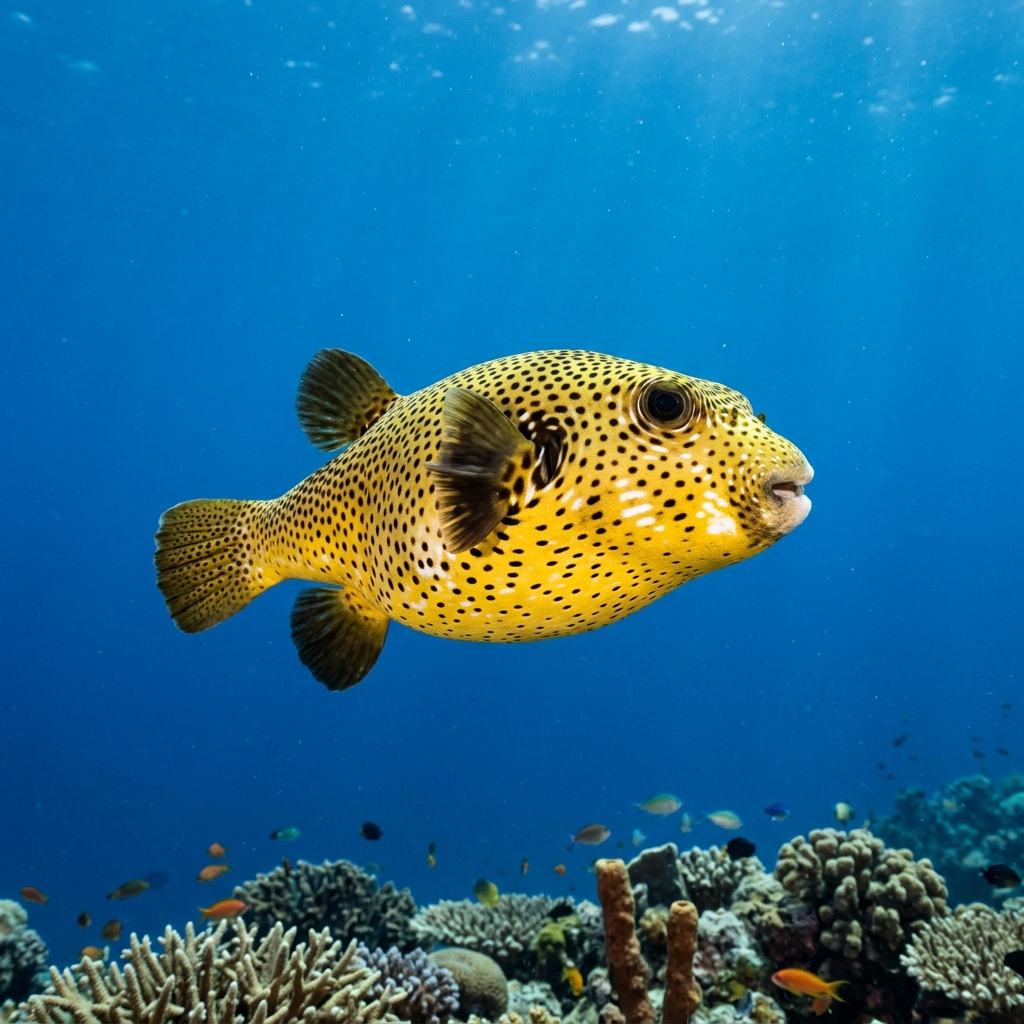
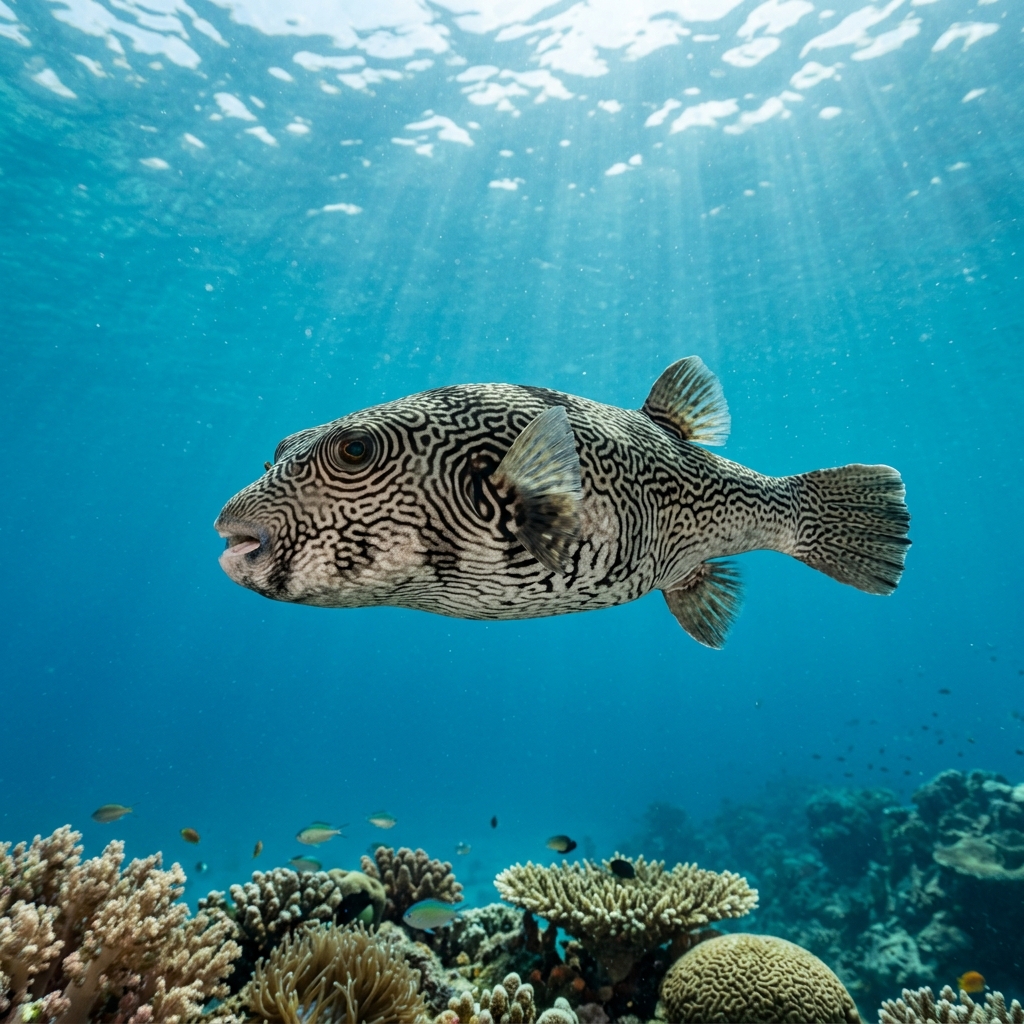
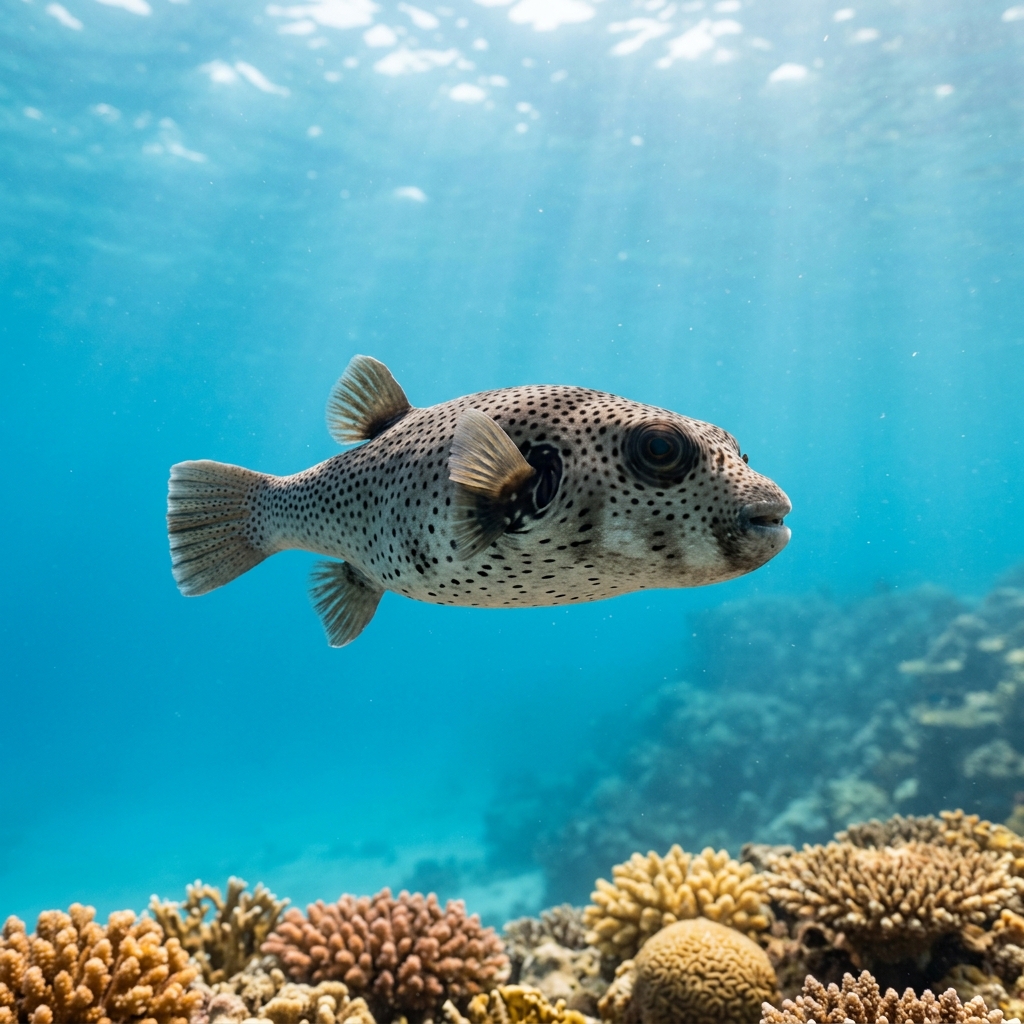
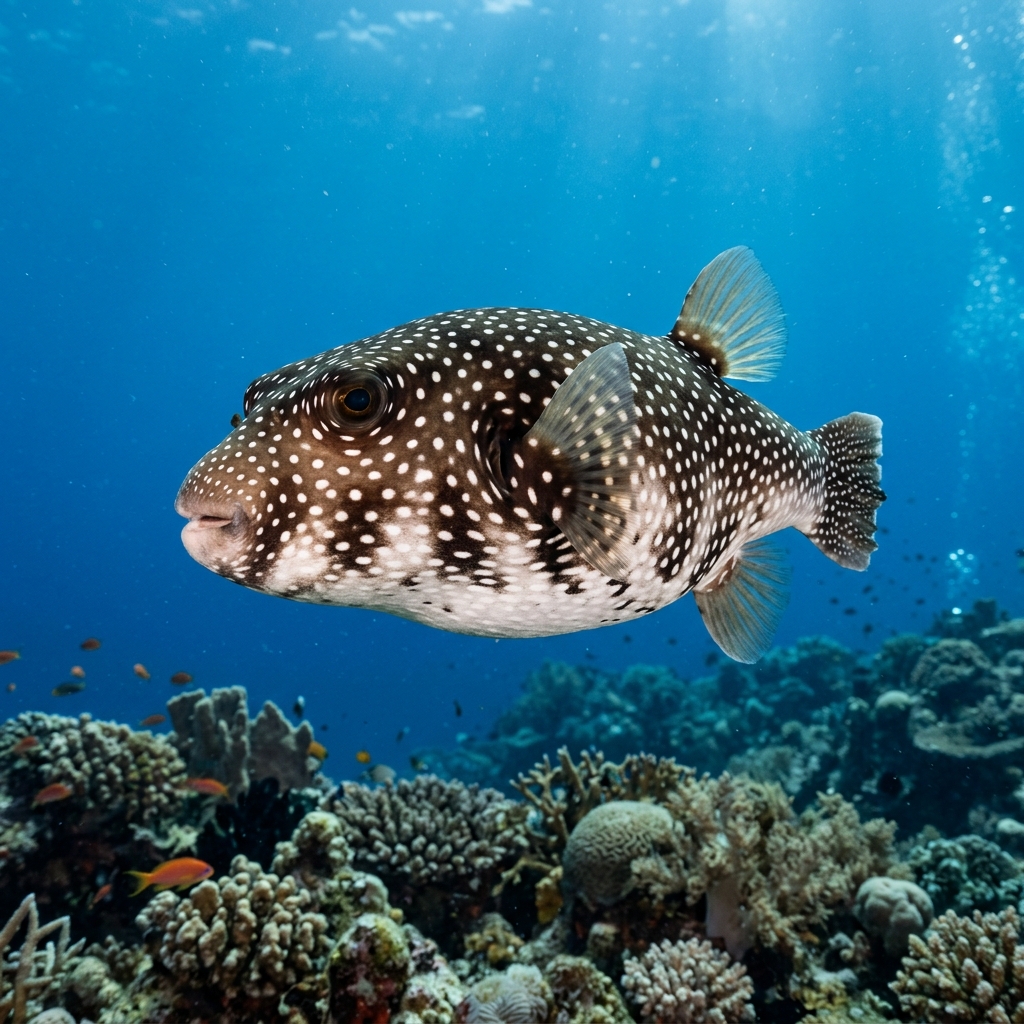
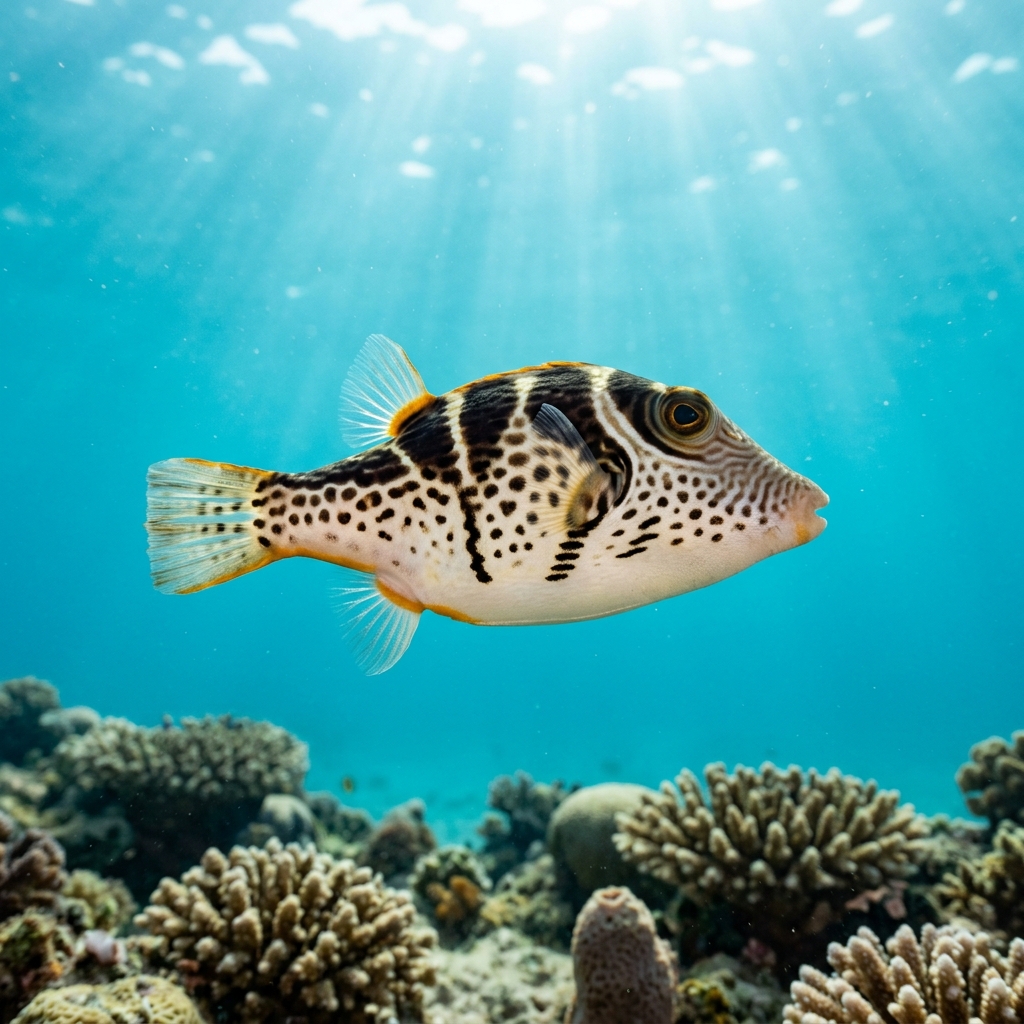
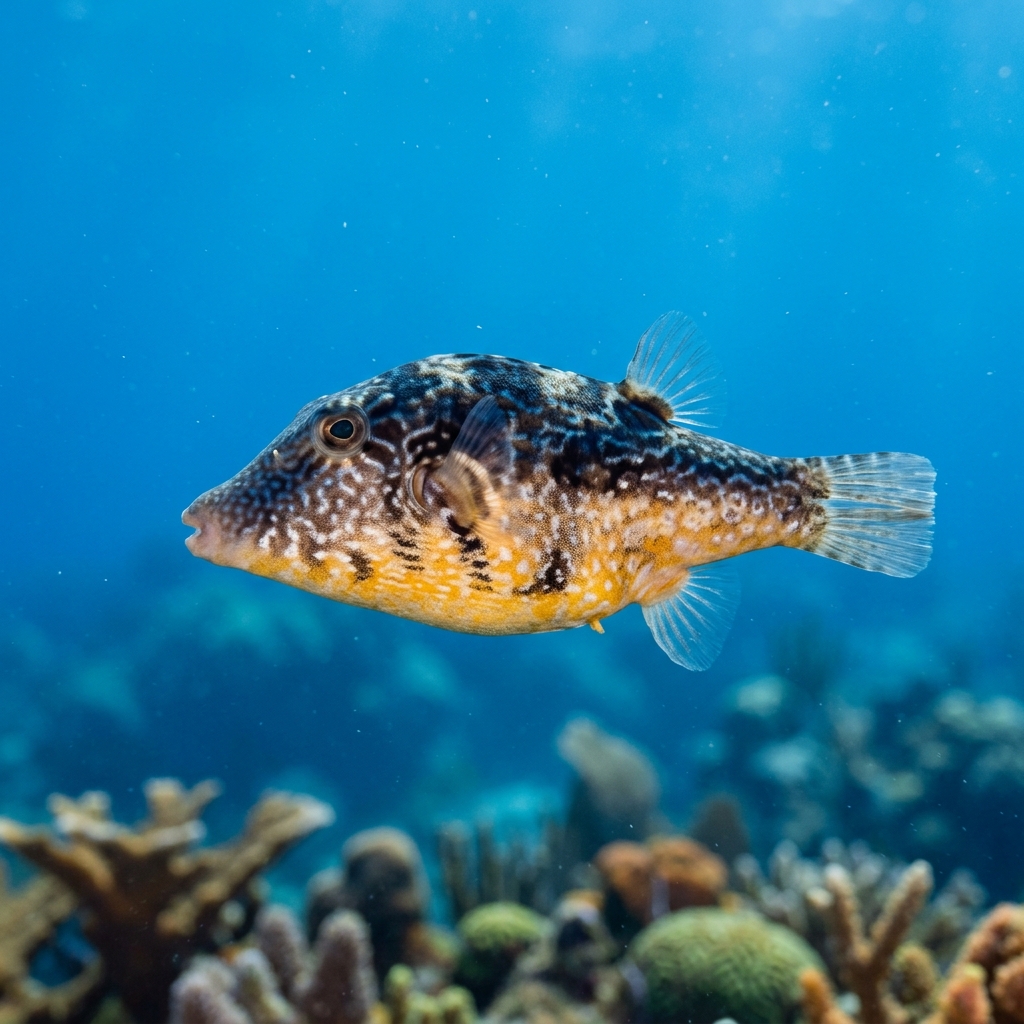
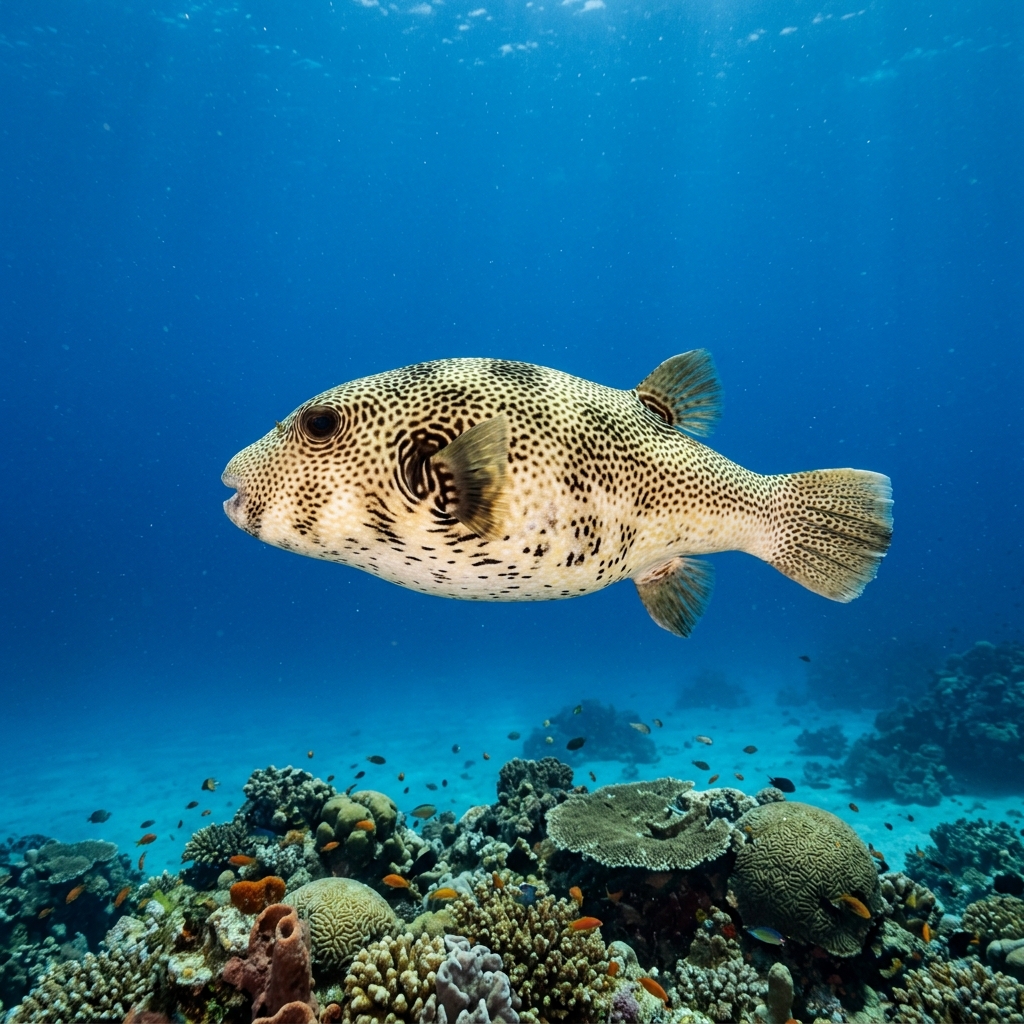
One of the largest pufferfish you will encounter on a reef, reaching well over half a metre and looking almost comically round when inflated. Adults are dark grey to brownish with white spots scattered across the body and fins, which is the key underwater feature to lock onto. The belly is pale and the skin has a rough, leathery texture that sets it apart from smaller puffers. Juveniles are orange with black spots and look dramatically different from adults.
Most often seen cruising slowly and deliberately along the reef, pausing to investigate sponges, crustaceans, and other invertebrates with its strong beak-like teeth. Around divers it tends to be calm but cautious, typically keeping a respectful distance and moving away if approached too closely. Watch for it working over rocky or coral substrate in shallow to mid-water depths, particularly in areas with mixed reef structure.
Like all pufferfish, the starry puffer can inflate itself by rapidly drawing in water, making its body nearly spherical as a defence against predators. It also carries tetrodotoxin (a powerful neurotoxin) in its internal organs, making it toxic to animals that eat it.
In Northern Hemisphere destinations such as Egypt, the Maldives, and Malaysia, sightings concentrate from May through February, making that a long and productive window. Southern Hemisphere sites such as Queensland, Australia see sightings peak between July and September.
Reef neighbours a diver could mistake it for. Use the identification notes above to tell them apart.
Most commonly logged in Egypt, the Philippines, Australia, Indonesia, and the Maldives, with particularly strong sighting records around Sharm el Sheikh and Marsa Alam in the Egyptian Red Sea, and across the North and Central Atolls of the Maldives. The Perhentian and Redang islands in Malaysia and Queensland, Australia are also reliable areas to look. It has been recorded across a wide spread of Indo-Pacific and Red Sea sites.
Mapping where Starry Puffer is logged…
The starry puffer is most reliably logged in the Egyptian Red Sea, particularly around Sharm el Sheikh and Marsa Alam, as well as the Maldives, Philippines, Indonesia, and Malaysia. It has a wide Indo-Pacific distribution and appears at sites from Queensland, Australia to the waters around Pulau Tioman in Malaysia.
In Northern Hemisphere destinations, sightings are strongest from May through February, covering much of the year. Divers visiting Queensland and other Southern Hemisphere sites will find the best window between July and September. Its comfortable water temperature range of 22 to 29 degrees Celsius means it is present on tropical reefs for much of the year.
Look for a very large, round-bodied fish with dark grey to brownish skin covered in white spots. At over 80 cm, it is noticeably bigger than most other puffers you will encounter. Juveniles are strikingly different, being orange with black spots. The sheer size combined with the white-spotted pattern is usually enough to confirm the ID.
The starry puffer is the largest pufferfish species, reaching up to around 120 cm in total length, though the typical size encountered by divers is closer to 84 cm. Even at that size it is a noticeably large, bulky fish on the reef.
Starry puffers are not considered dangerous to divers. They are calm and tend to move away rather than confront. However, like all pufferfish they carry tetrodotoxin in their organs, so this is a species to observe and never handle or harass. Give them space and they will generally go about their business without concern.
Site and sighting data is aggregated from diver logs, iNaturalist and GBIF. For taxonomy and conservation status:
Caribbean Sharpnose Puffer
2,190 sites