Arothron mappa
Spot Map Pufferfish in the Visayas, Sulawesi, and Sipadan year-round. Learn the maze-like skin pattern that sets it apart from similar pufferfish.
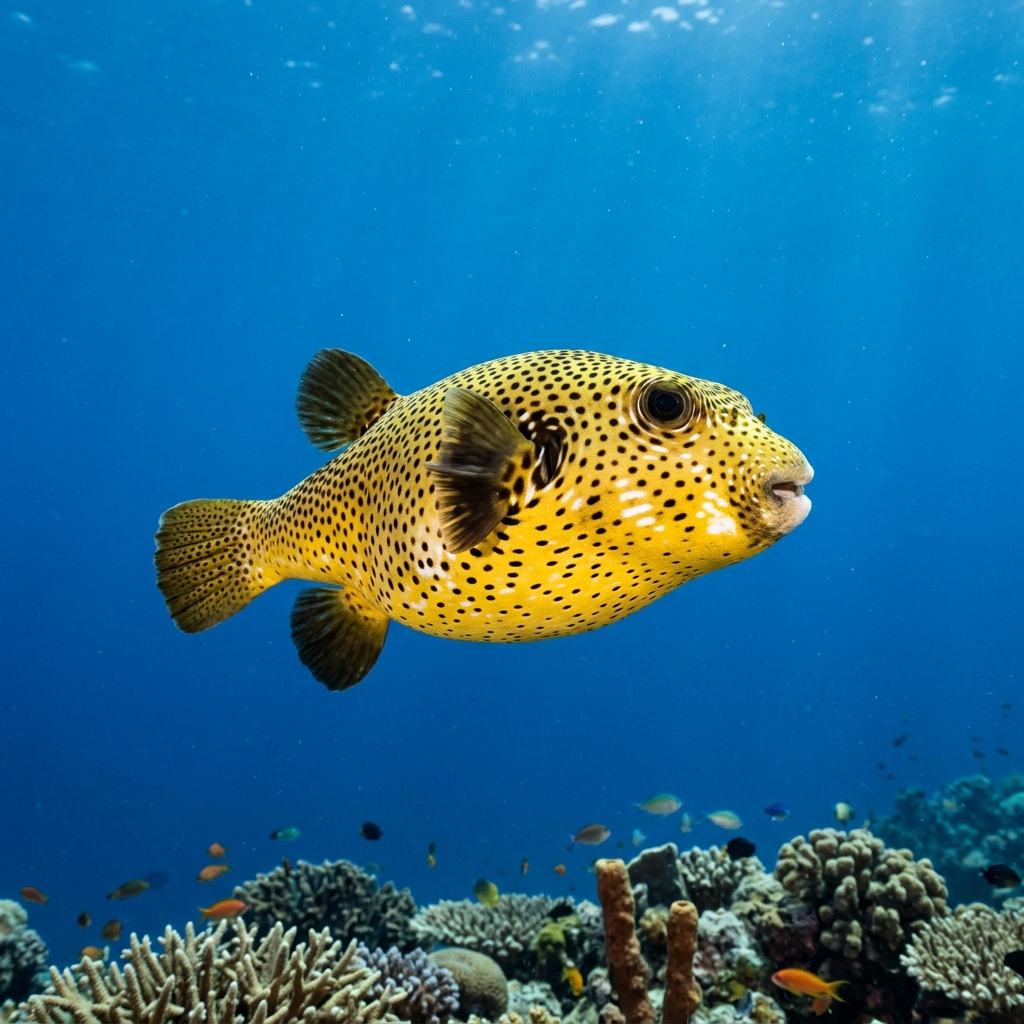
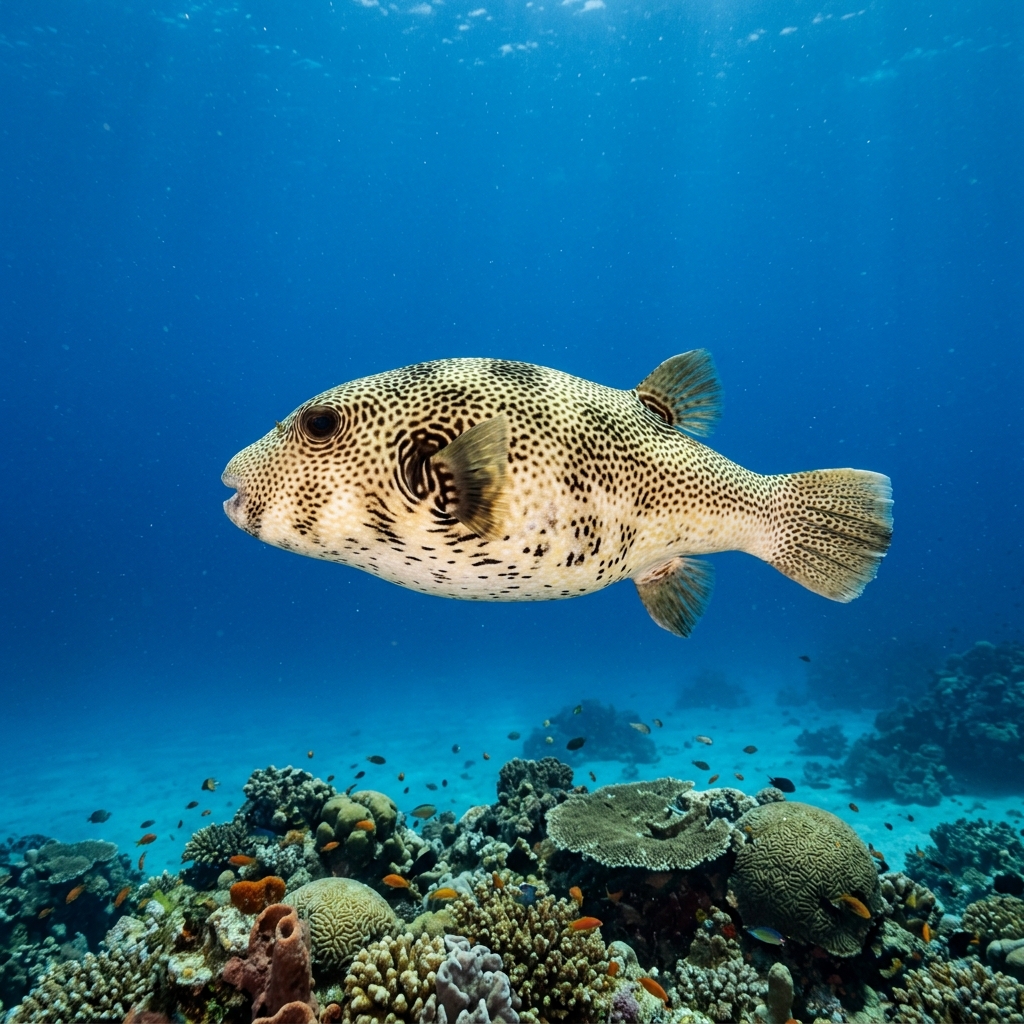
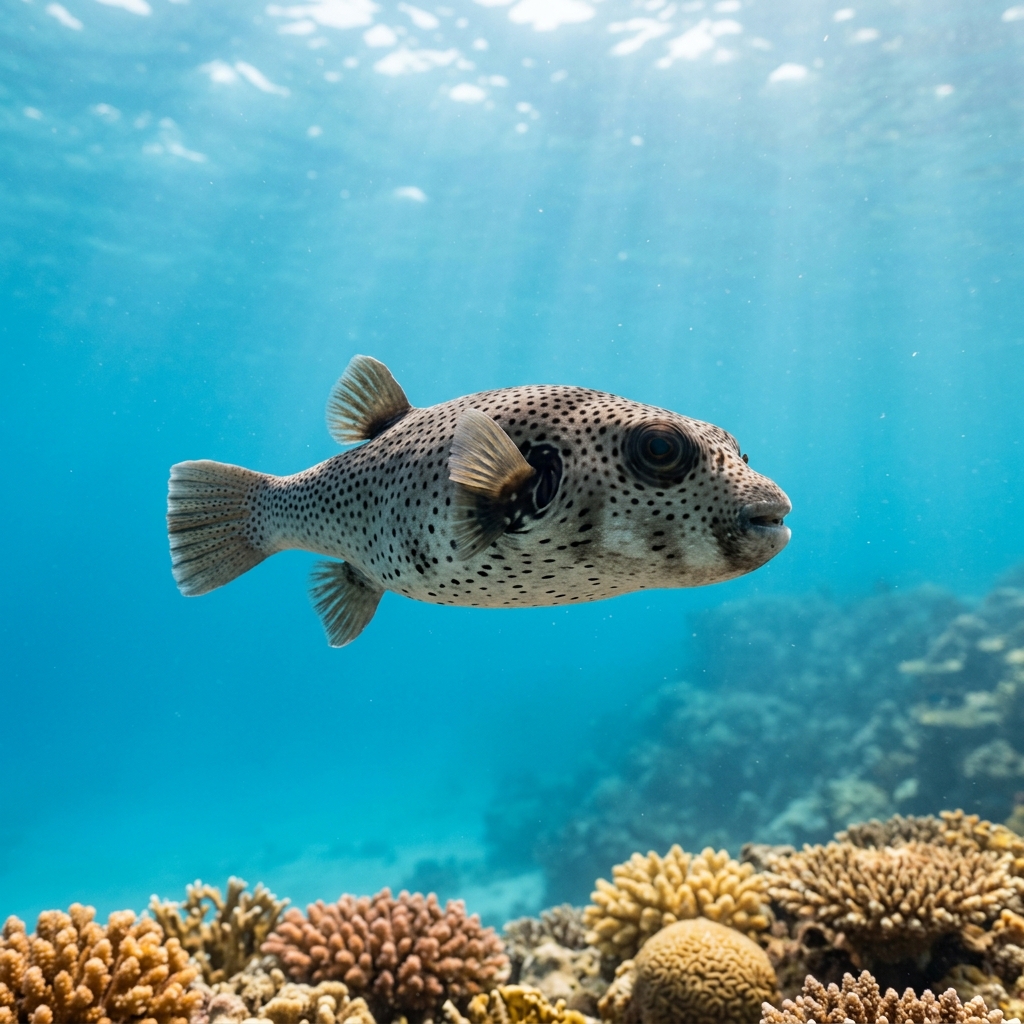
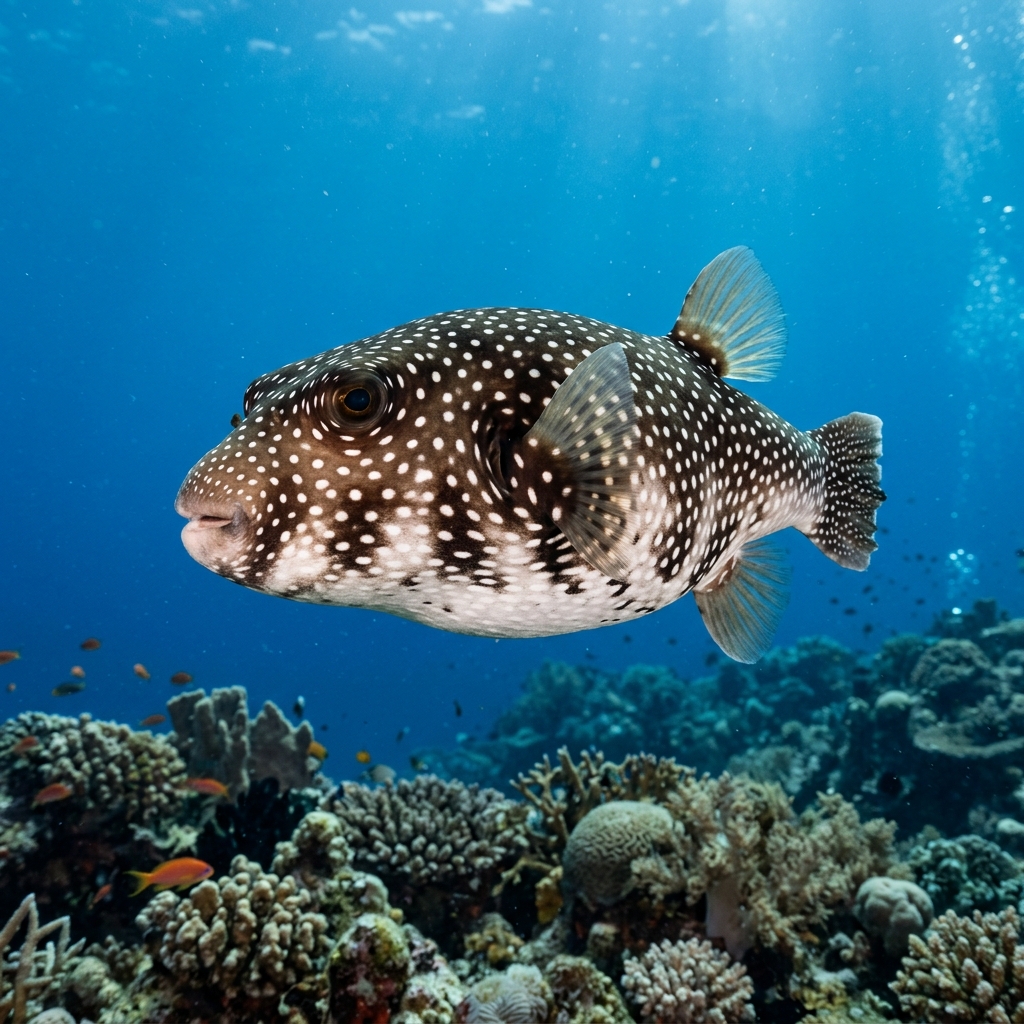
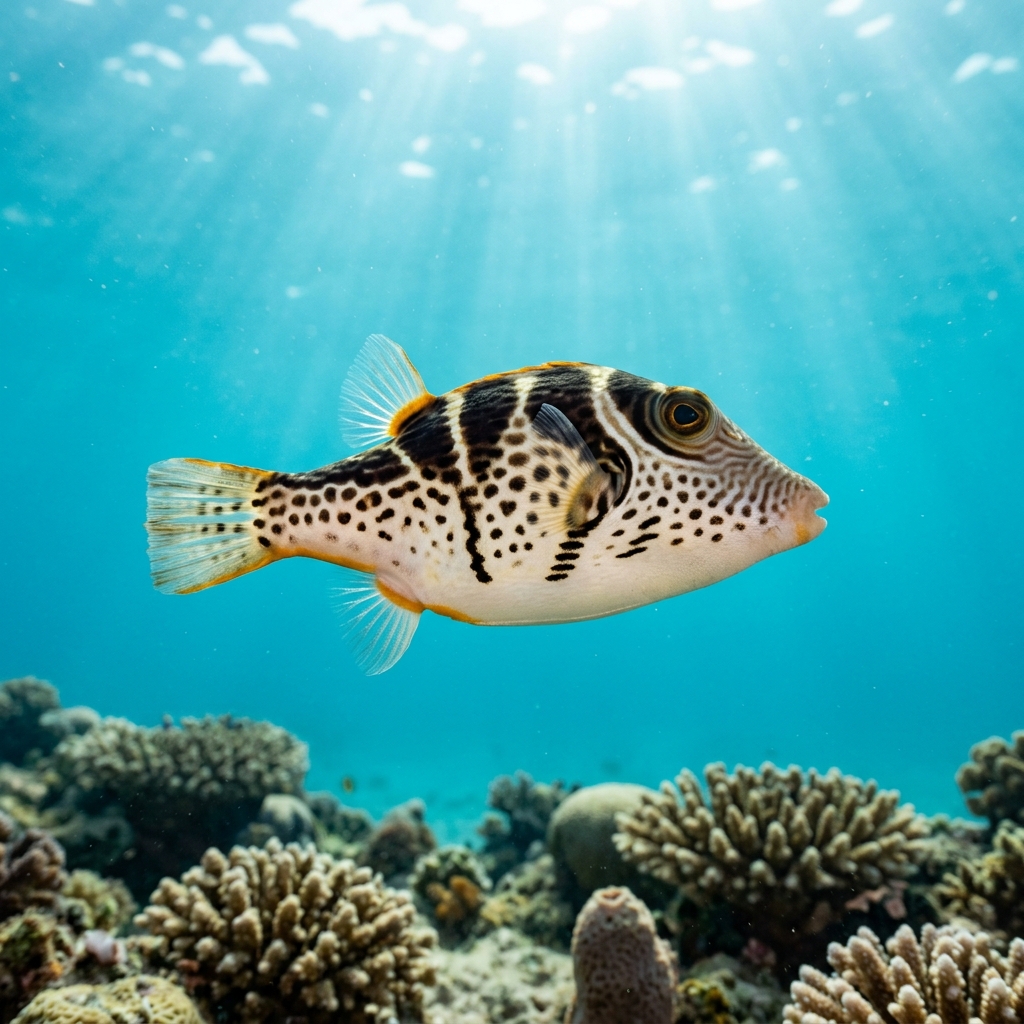
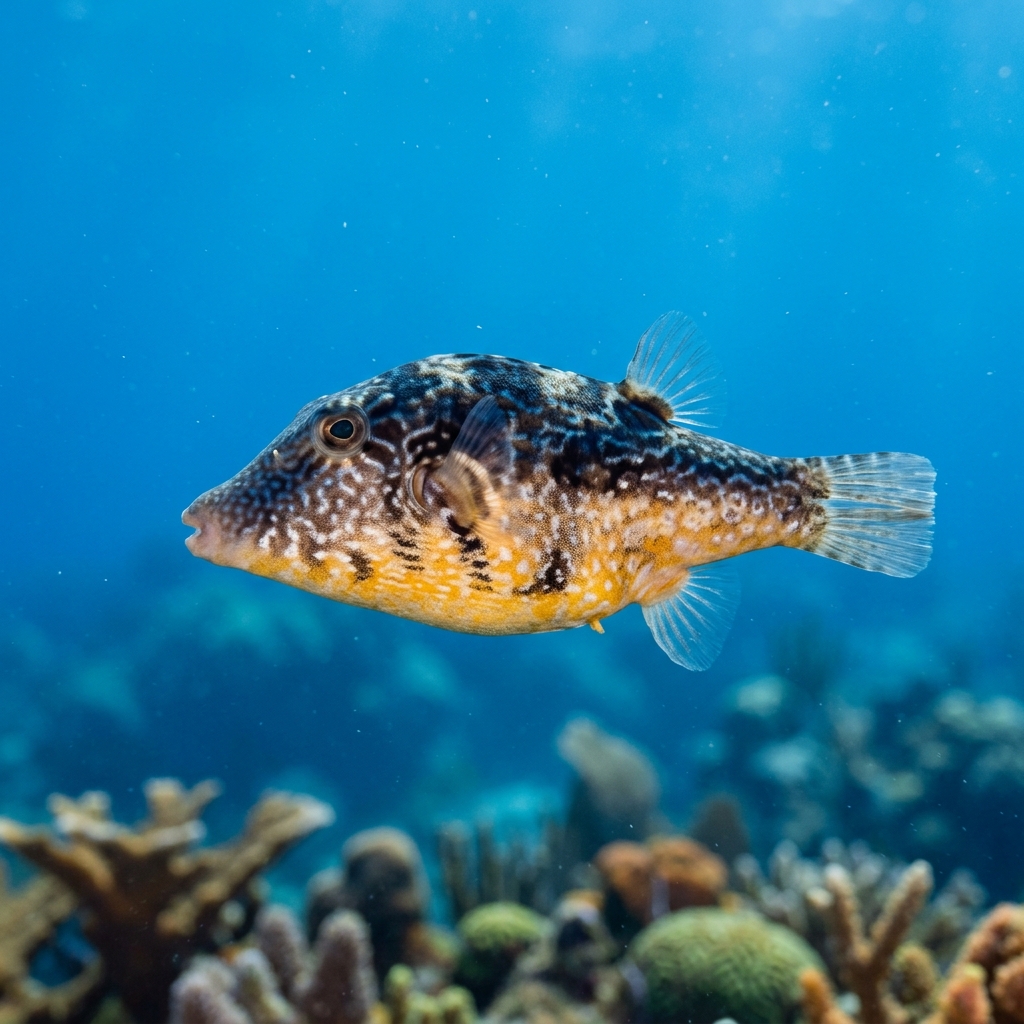
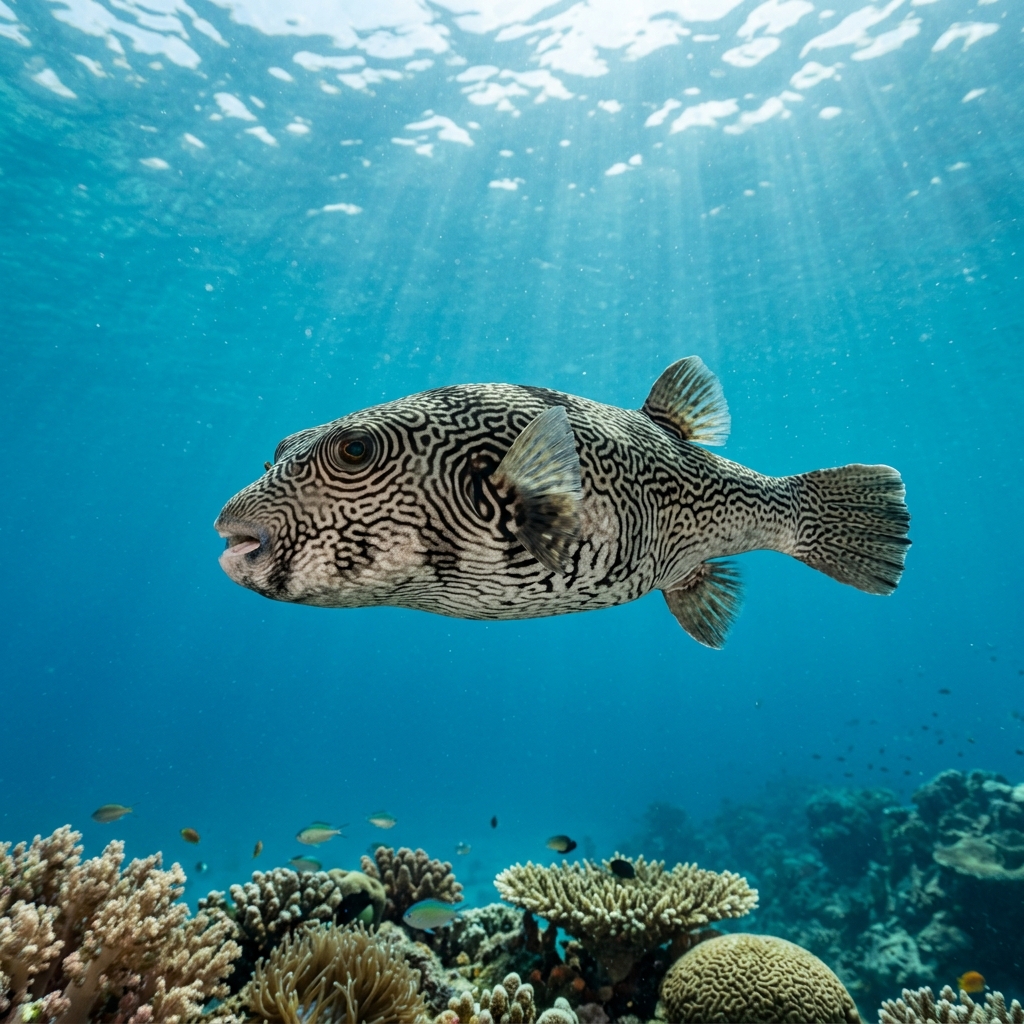
A large, rounded pufferfish covered in a distinctive network of dark, maze-like lines and blotches on a pale yellowish or whitish base, resembling a contour map, which is where the name comes from. The skin also carries scattered small dark spots, and the belly is typically lighter than the dorsal surface. In the water it appears noticeably bulky and moves with the slow, almost hovering fin-sculling typical of pufferfish.
Map pufferfish are typically encountered cruising slowly over or around coral reef structures, often near overhangs, rubble patches, or reef walls. They tend to be tolerant of diver presence, continuing their unhurried patrol without bolting, though they may turn away if approached too closely. Like other pufferfish, they are most active during daylight hours and are not schooling animals, you will nearly always see one alone.
As a member of the pufferfish family, it carries tetrodotoxin, a potent neurotoxin concentrated in the skin, liver, and gonads, which functions as a powerful chemical deterrent against predators. This defence is why it can afford to move so slowly and openly across the reef.
In Northern Hemisphere tropical waters it is present year-round with no concentrated season, sitting comfortably within its observed temperature range of roughly 25 to 29 °C. In Southern Hemisphere sites, sightings concentrate between June and January.
Reef neighbours a diver could mistake it for. Use the identification notes above to tell them apart.
Most consistently logged across the Indo-Pacific, with the strongest representation in the Philippines, particularly the Visayas and Palawan, and in Indonesia, especially Sulawesi, Maluku, and Bali. Malaysia's Sipadan and East Sabah coast is another reliable area, and it is also recorded regularly in the Maldives, Micronesia, and along Australia's tropical north.
Mapping where Map Pufferfish is logged…
The Philippines and Indonesia together account for the vast majority of logged sightings, with the Visayas, Sulawesi, Maluku, and Bali being particularly productive regions. Strong records also exist for Sipadan and East Sabah in Malaysia, the Maldives, Micronesia, and Australia's tropical north.
In the Northern Hemisphere tropics, where most sightings occur, it can be encountered any time of year. In Southern Hemisphere locations, sightings tend to concentrate between June and January.
Look for a large, oval-bodied pufferfish with a pale body covered in a distinctive dark maze-like network of lines and blotches, the pattern that gives it its name. It is bulkier and more intricately marked than most similar species, and the reticulated lines cover most of the body rather than appearing as isolated spots.
Across the sites where it is recorded, the Map Pufferfish is most often rated as uncommon, a sighting that rewards attention rather than something you can count on every dive. At a small number of sites it is considered common, but rare ratings are also frequent, so managing expectations is sensible.
No, they pose no direct threat to divers. Like all pufferfish they carry tetrodotoxin in their tissues, but this is only relevant if the animal is handled or consumed, neither of which applies to a normal reef dive. Simply observe from a respectful distance and they will generally ignore you.
Site and sighting data is aggregated from diver logs, iNaturalist and GBIF. For taxonomy and conservation status:
Valentini Pufferfish
2,830 sites