Protoreaster nodosus
Spot the bold black-knobbed Chocolate Chip Sea Star across the Philippines and Indonesia. Best sightings Nov, Jun in warm 26-29 °C Indo-Pacific shallows.
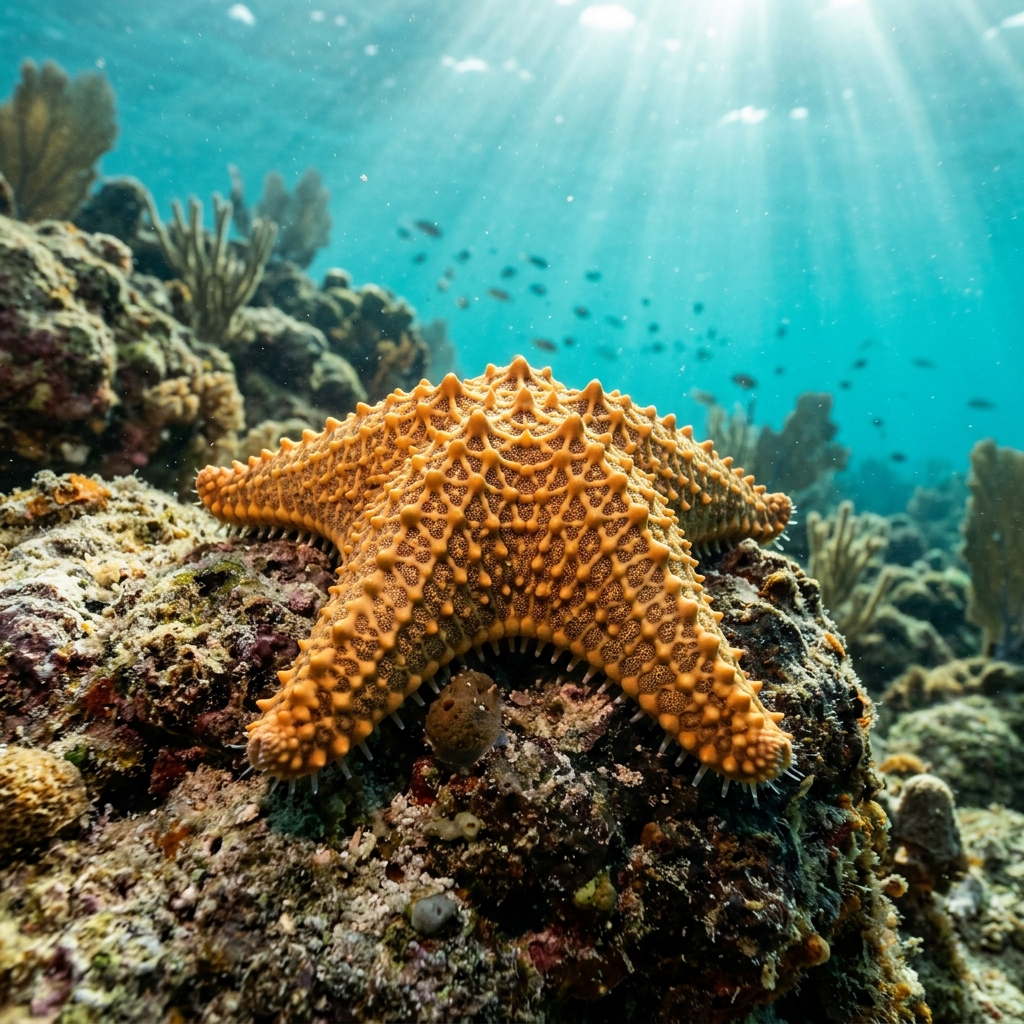
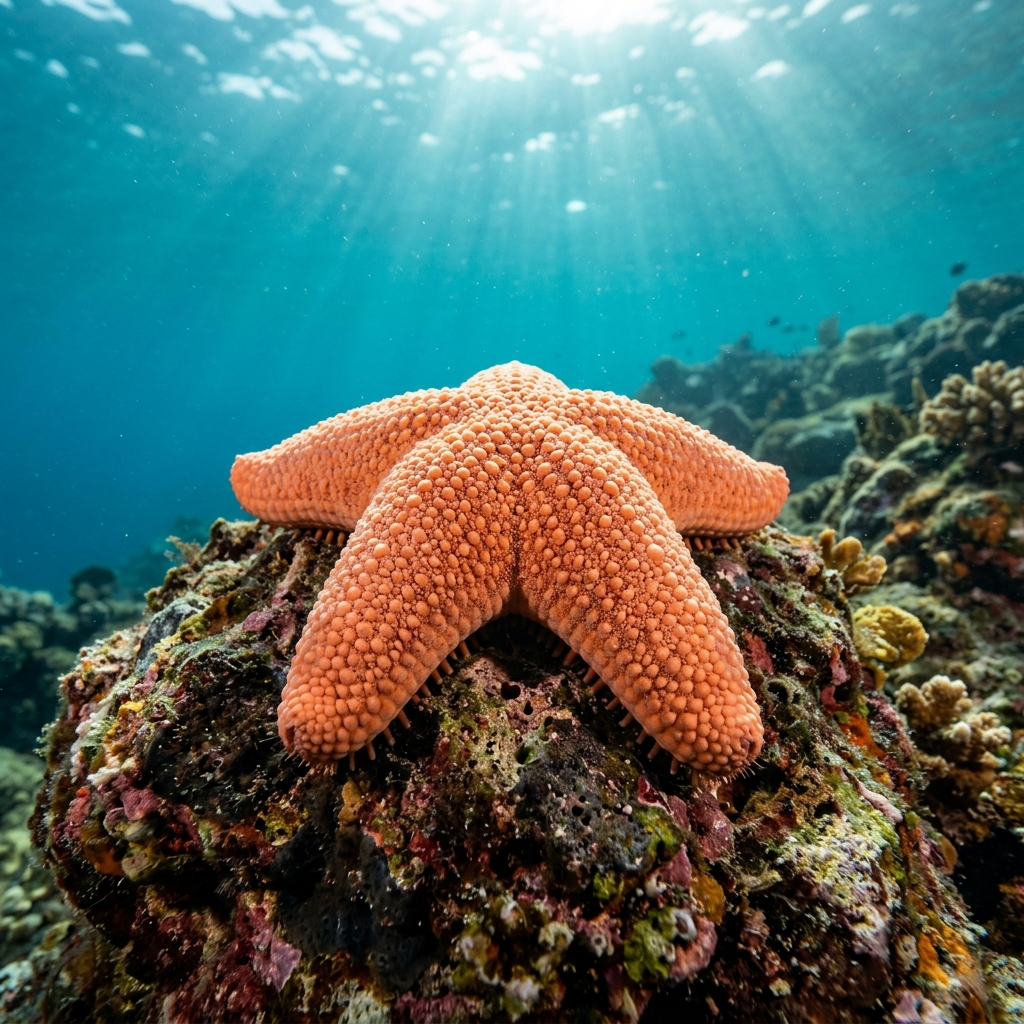
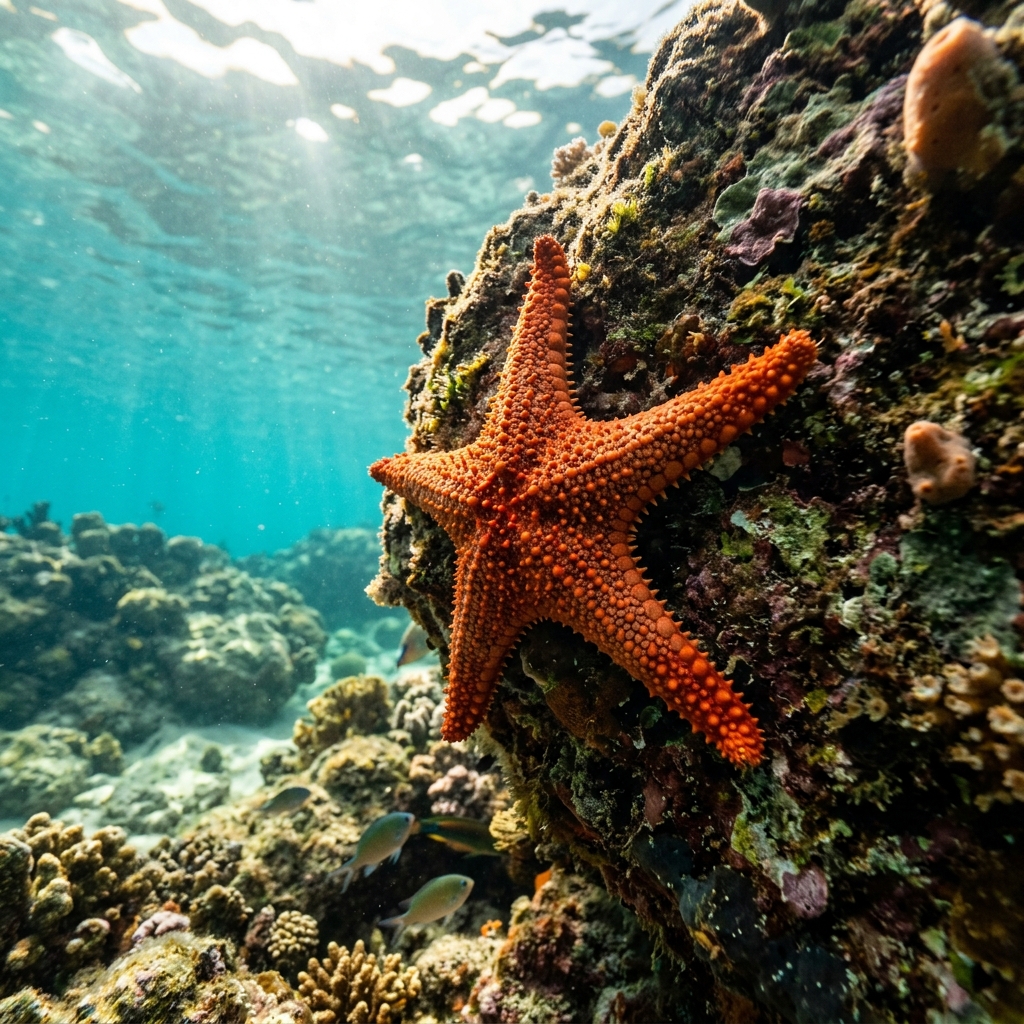
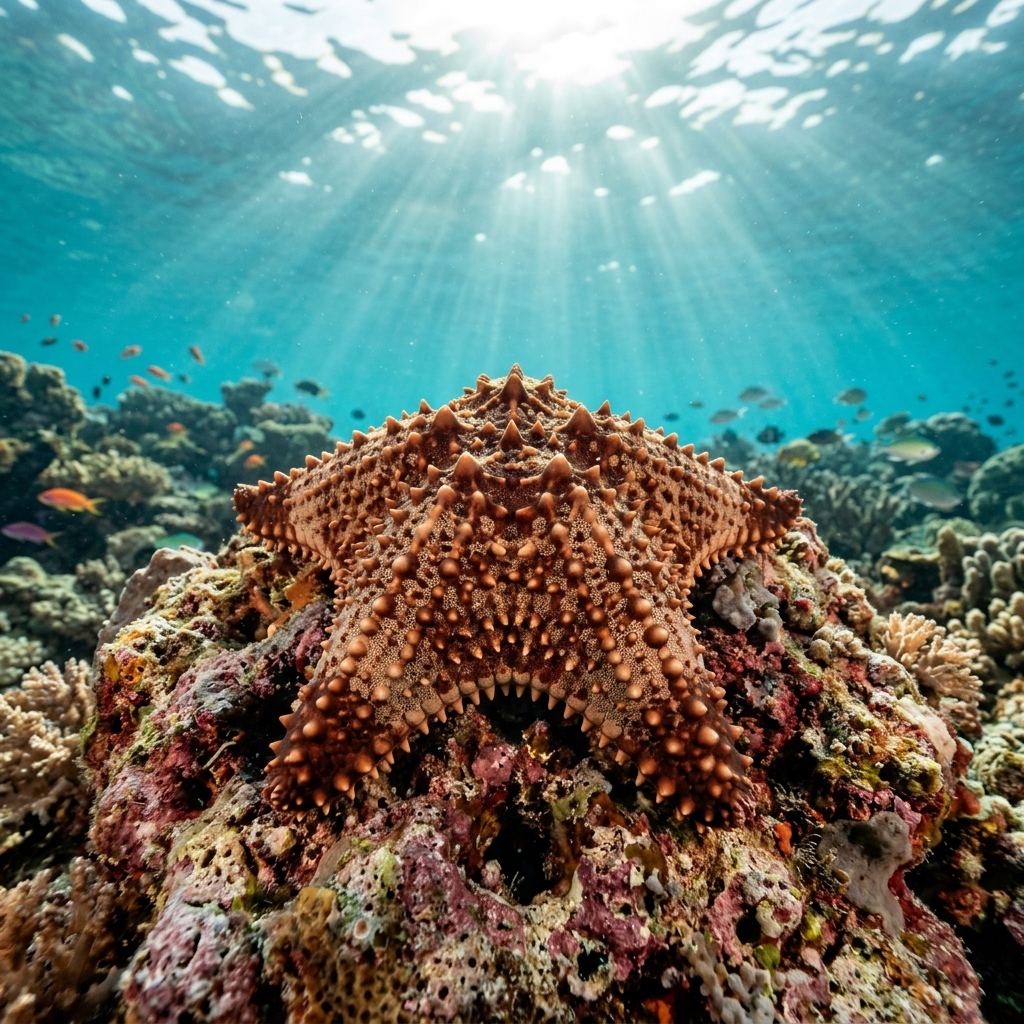
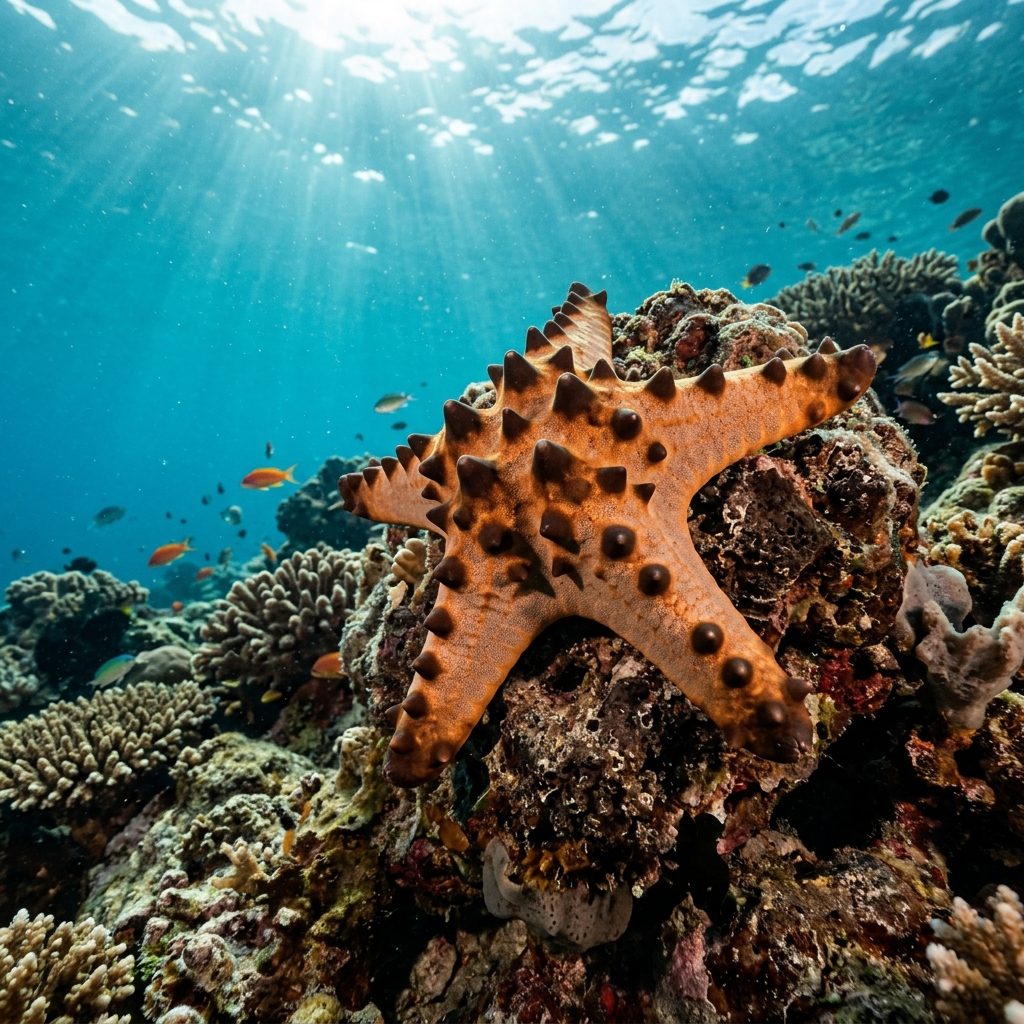
Those raised, dark brown to black conical knobs (tubercles) arranged in rows across a cream or tan body are the signature feature, making this sea star unmistakable at a glance. It typically spans 20-40 cm across five broad, tapering arms. The contrast between the pale base colour and the dark spines is visible even in murky water. No other common Indo-Pacific sea star combines this chunky, knobbled texture with that colouration.
You will most often find it moving slowly across sandy or rubble reef flats and seagrass beds, occasionally on coral rubble, using its tube feet to forage on algae, detritus, and encrusting organisms. It tends to be indifferent to divers and will not flee, so you have time to observe it at close range. Sightings are typically in relatively shallow, warm water where sunlit sandy patches border the reef.
Like many sea stars, it can evert (push out) its stomach directly onto prey, digesting a meal externally before drawing the nutrients back in, which means it can consume items too large to fit inside its body.
In the Northern Hemisphere (Philippines, Indonesia, Malaysia, Cambodia), sightings concentrate from November through June. In the Southern Hemisphere (New Caledonia), July to October is the more productive window.
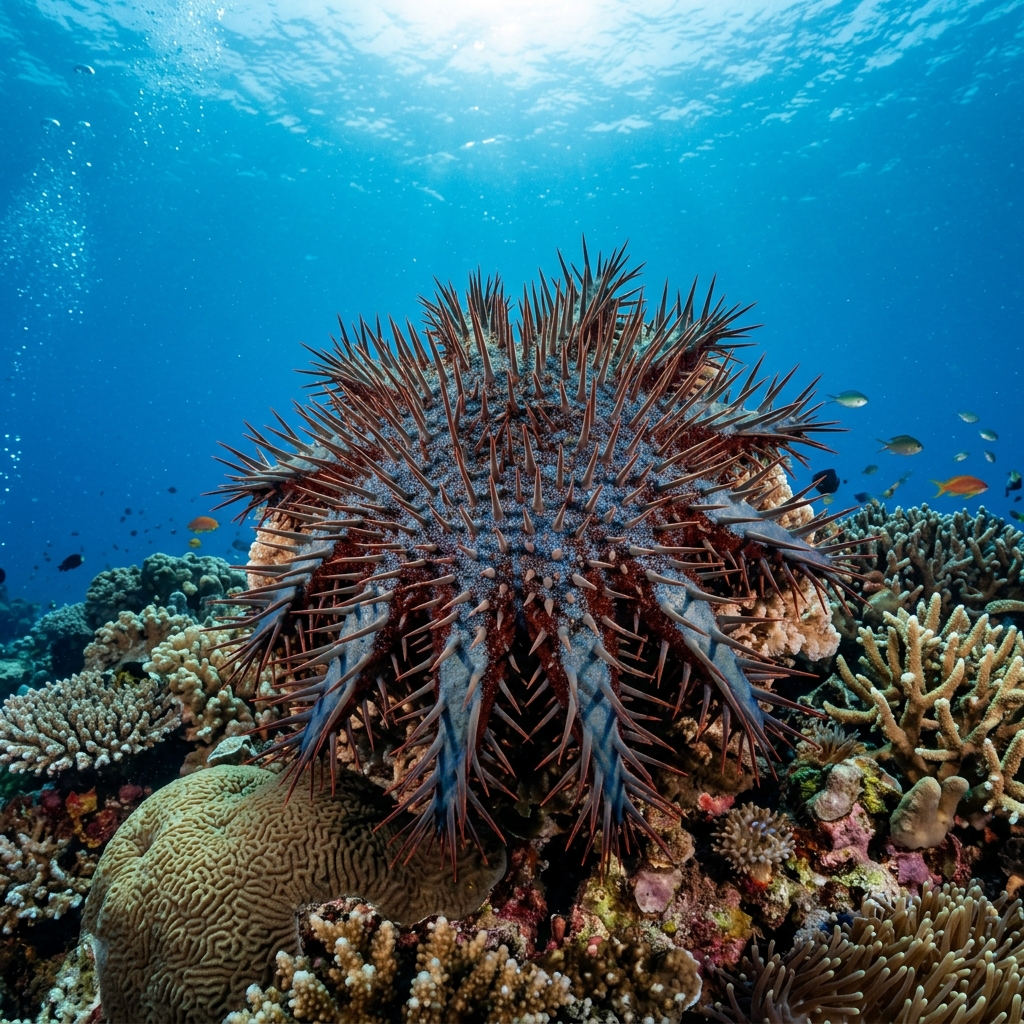
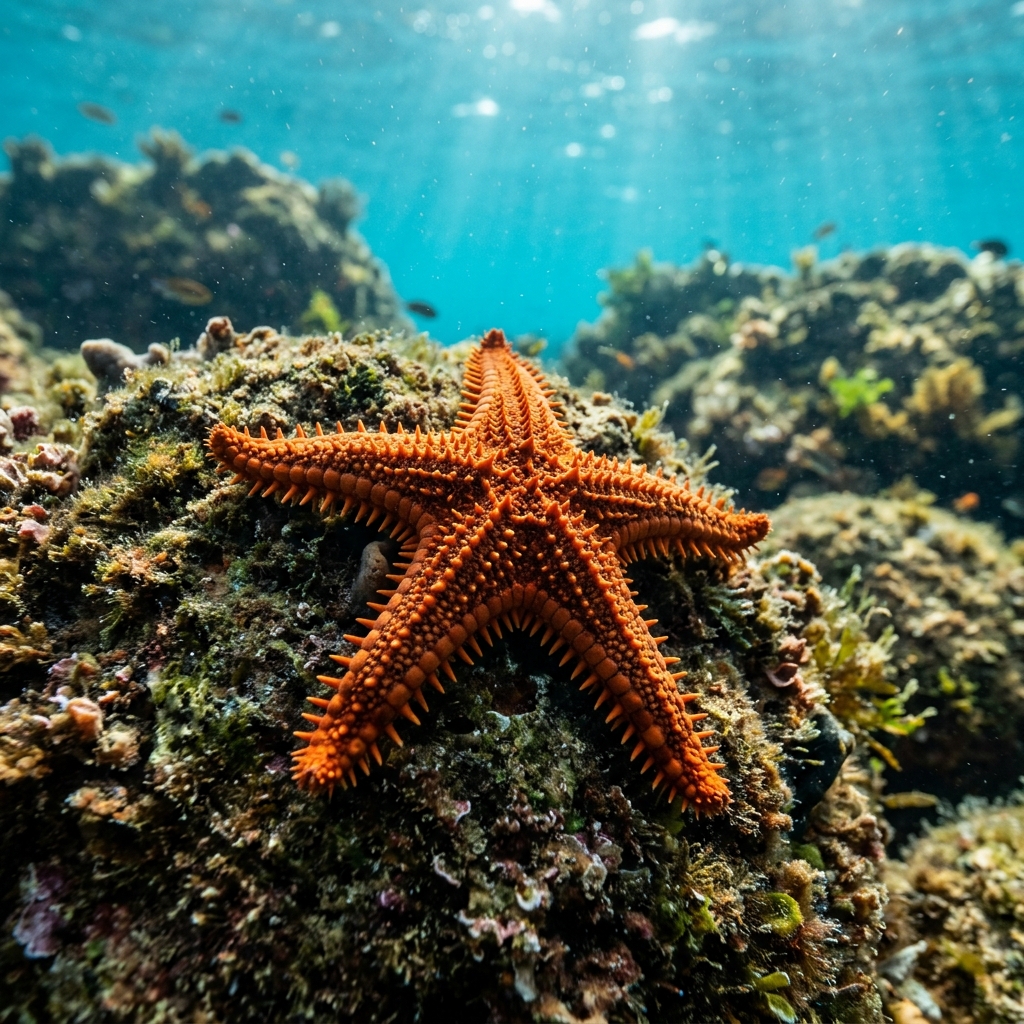
Reef neighbours a diver could mistake it for. Use the identification notes above to tell them apart.
Most consistently logged in the Philippines, particularly across the Visayas and Palawan, which together account for the majority of recorded sightings in the region. Indonesia is the next stronghold, with strong populations around Sulawesi and Bali, followed by Sipadan and East Sabah in Malaysia. Smaller but reliable populations have also been reported in Cambodia's Koh Rong Archipelago and in New Caledonia.
Mapping where Chocolate Chip Sea Star is logged…
The best-documented diving for this species is in the Philippines, especially across the Visayas and Palawan, and in Indonesia around Sulawesi and Bali. Malaysia's Sipadan and East Sabah, Cambodia's Koh Rong Archipelago, and New Caledonia also have verified sightings. It is an Indo-Pacific species tied to warm, shallow tropical reefs.
In the Philippines, Indonesia, Malaysia, and Cambodia (Northern Hemisphere), sightings are most frequent from November through June. In New Caledonia and other Southern Hemisphere locations, July to October is the productive season. It favours water temperatures between roughly 26 and 29 °C, keeping it present on tropical reefs for much of the year.
Look for a cream or tan five-armed sea star covered in prominent rows of large, dark brown to black conical spines, the feature that gives it its name. The bold colour contrast between the pale body and dark knobs sets it apart from most other sea stars in the region. It sits on sandy or rubble substrate in shallow tropical water.
Adults commonly reach 20-40 cm across from arm tip to arm tip, though some individuals can be larger. Underwater, they appear substantial and are easy to spot against pale sandy substrate even from a metre or two away.
They are opportunistic predators and scavengers that feed on algae, sponges, detritus, and encrusting organisms. Like other sea stars they can evert their stomach outside their body to digest prey externally, which allows them to consume items larger than their actual mouth. You may observe them moving slowly over sandy or rubble areas as they forage.
Site and sighting data is aggregated from diver logs, iNaturalist and GBIF. For taxonomy and conservation status:
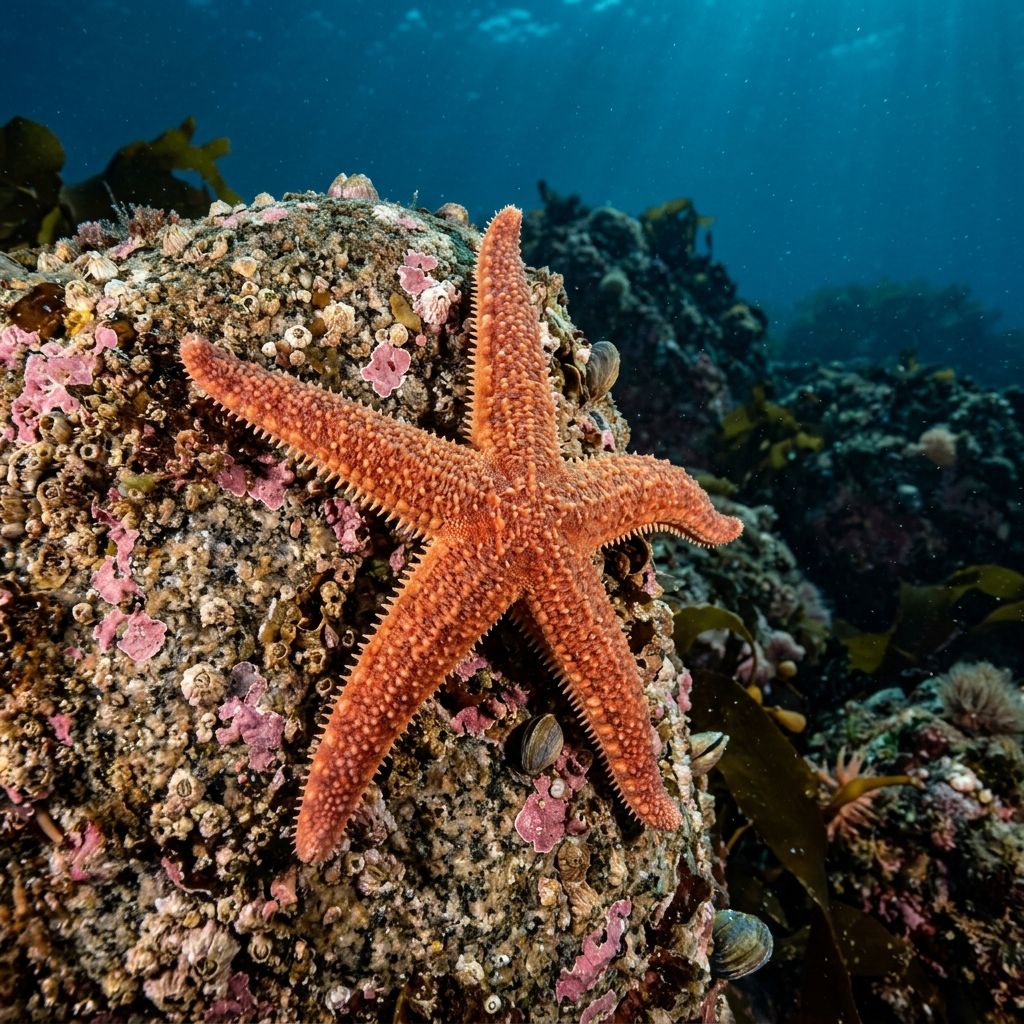
Common Sea Star
2,271 sites