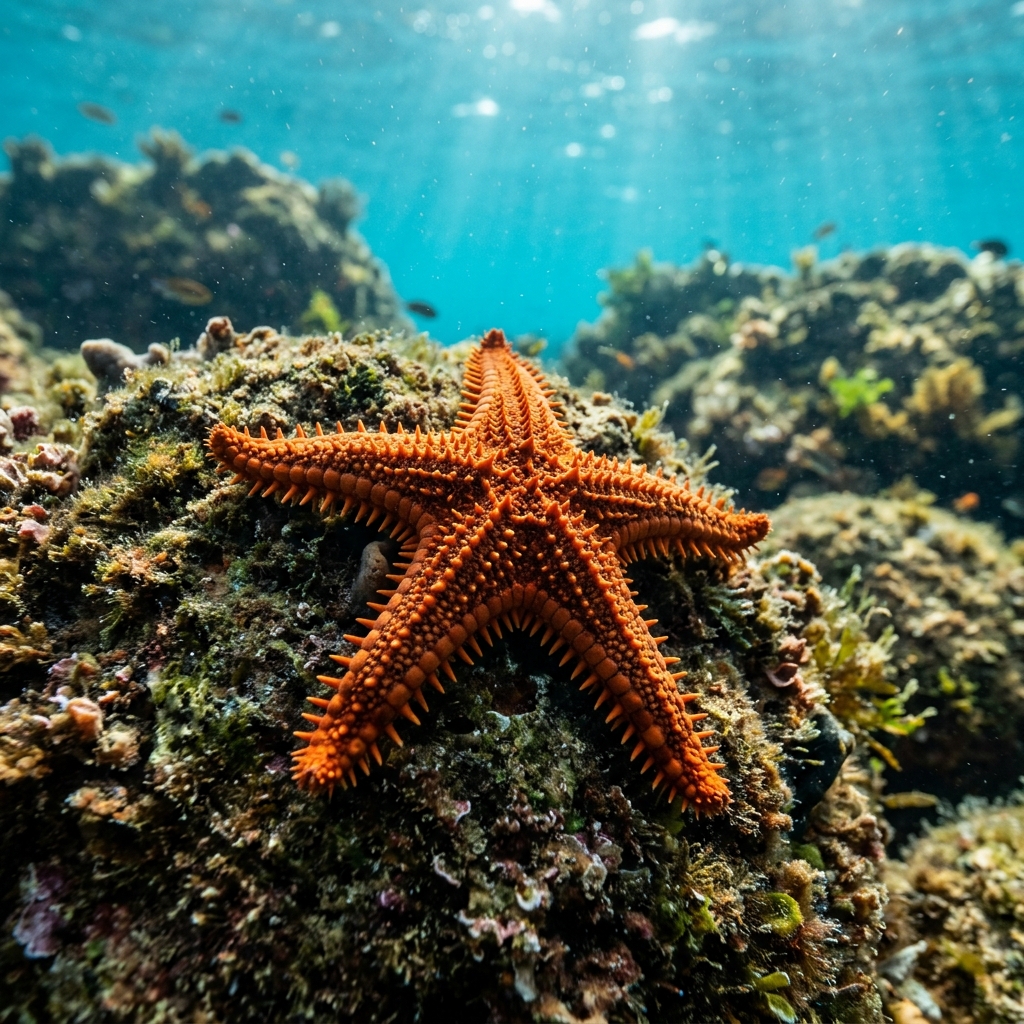
Choriaster granulatus
Spot the Grainy Cushion Star across the Maldives, Philippines and Indonesia in warm 27-29 °C water. ID tips, best seasons and top dive sites inside.
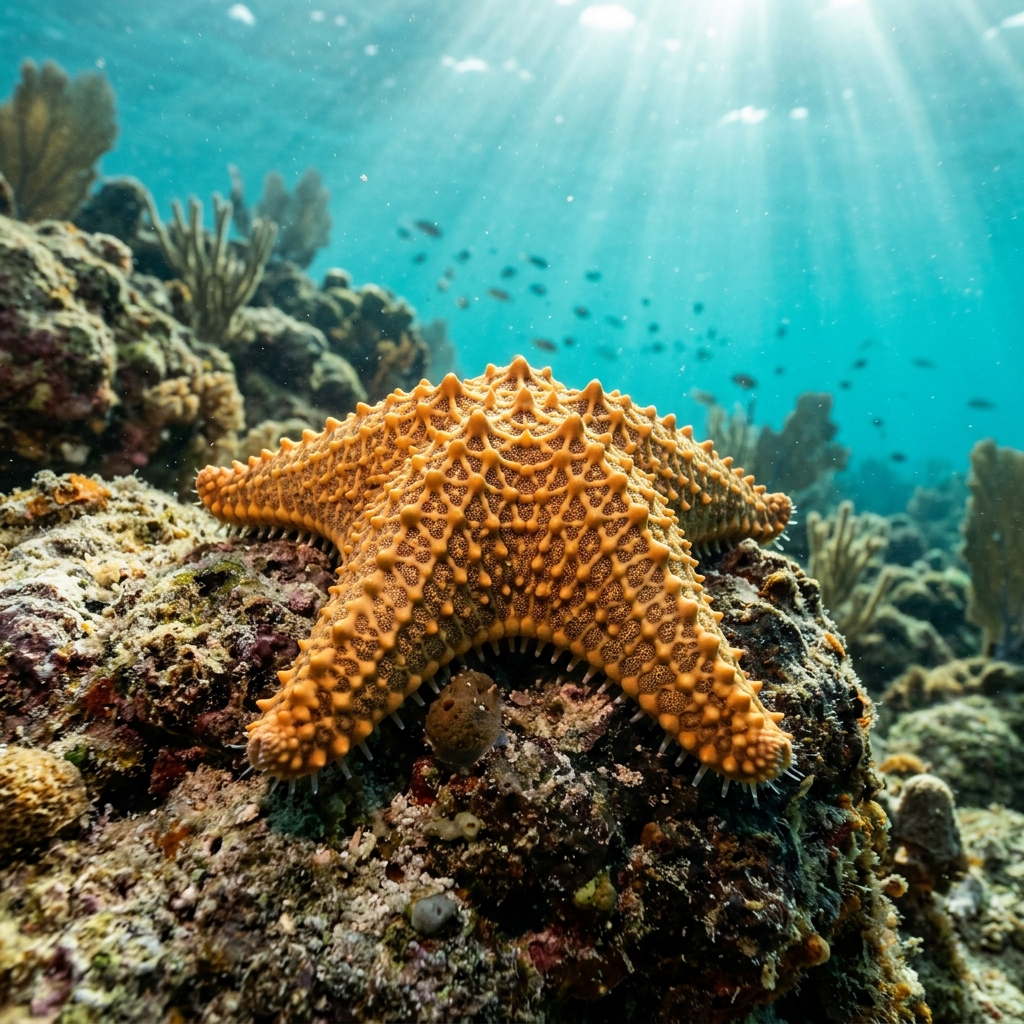
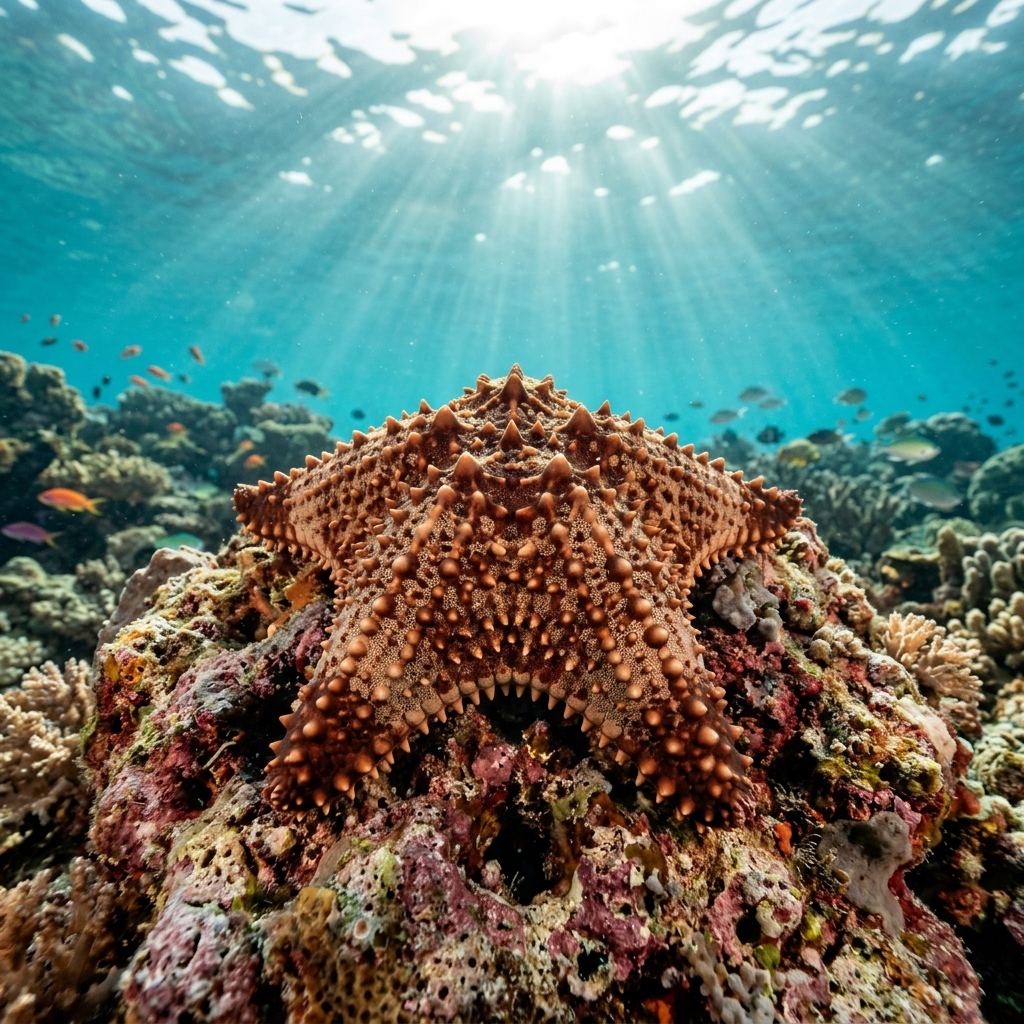
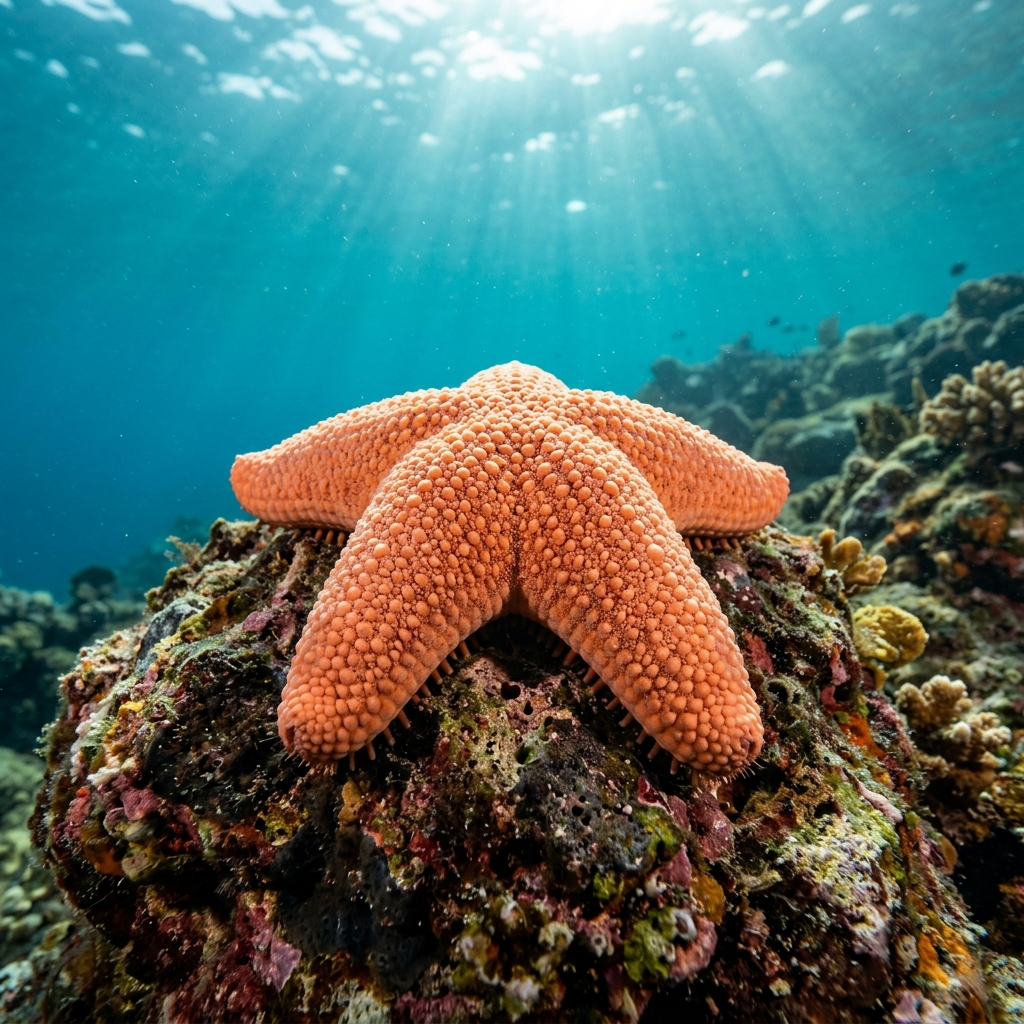
Unmistakably puffy and rounded, this sea star has five short, fat arms so swollen they give the whole animal a cushion-like silhouette. Colouration runs from pale pink to salmon or cream, and the entire upper surface is covered in small, granular bumps that give it a rough, almost pebbly texture when lit by a torch. It sits openly on reef flats and rubble slopes rather than hiding, which makes it one of the easier Indo-Pacific sea stars to spot once you know the shape. No dramatic difference between individuals has been recorded, though colour tone can vary slightly between specimens.
You will typically find one sitting motionless or moving slowly across rubble, sandy patches, or hard coral slopes, grazing on organic material on the substrate. It shows little reaction to divers and does not retreat when approached, making photography straightforward. Most logged sightings are solitary animals out in the open, usually in relatively shallow, warm reef zones.
Like many oreasterid sea stars, the grainy cushion star feeds by everting its stomach directly over the substrate, digesting algae, detritus and organic films externally before absorbing the nutrients, a feeding strategy you can occasionally observe if you watch patiently without disturbing it.
Sightings recorded across the northern hemisphere span November through September, suggesting it is present for most of the year on these tropical reefs. Its narrow warm-water preference of 27-29 °C ties it firmly to year-round tropical conditions, so there is no single peak month, plan your dive trip around site access and visibility rather than season.
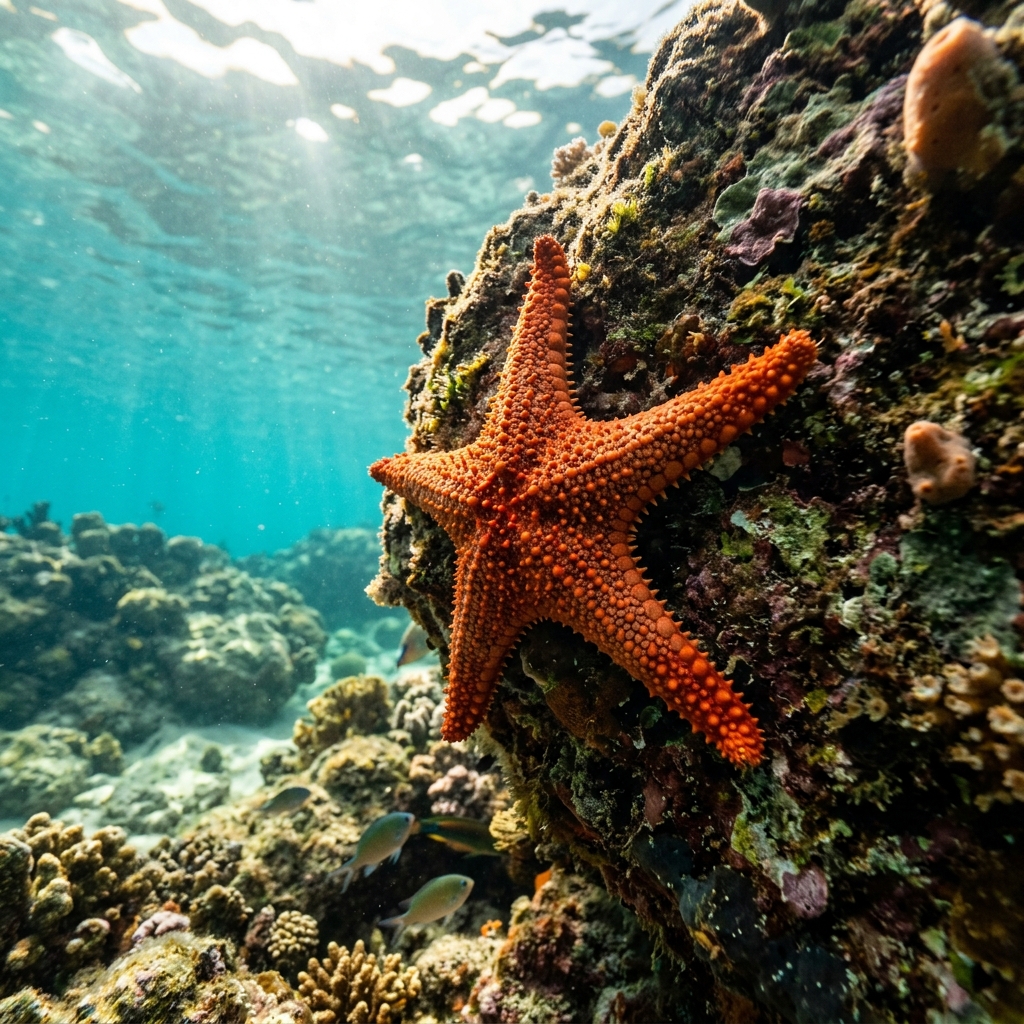
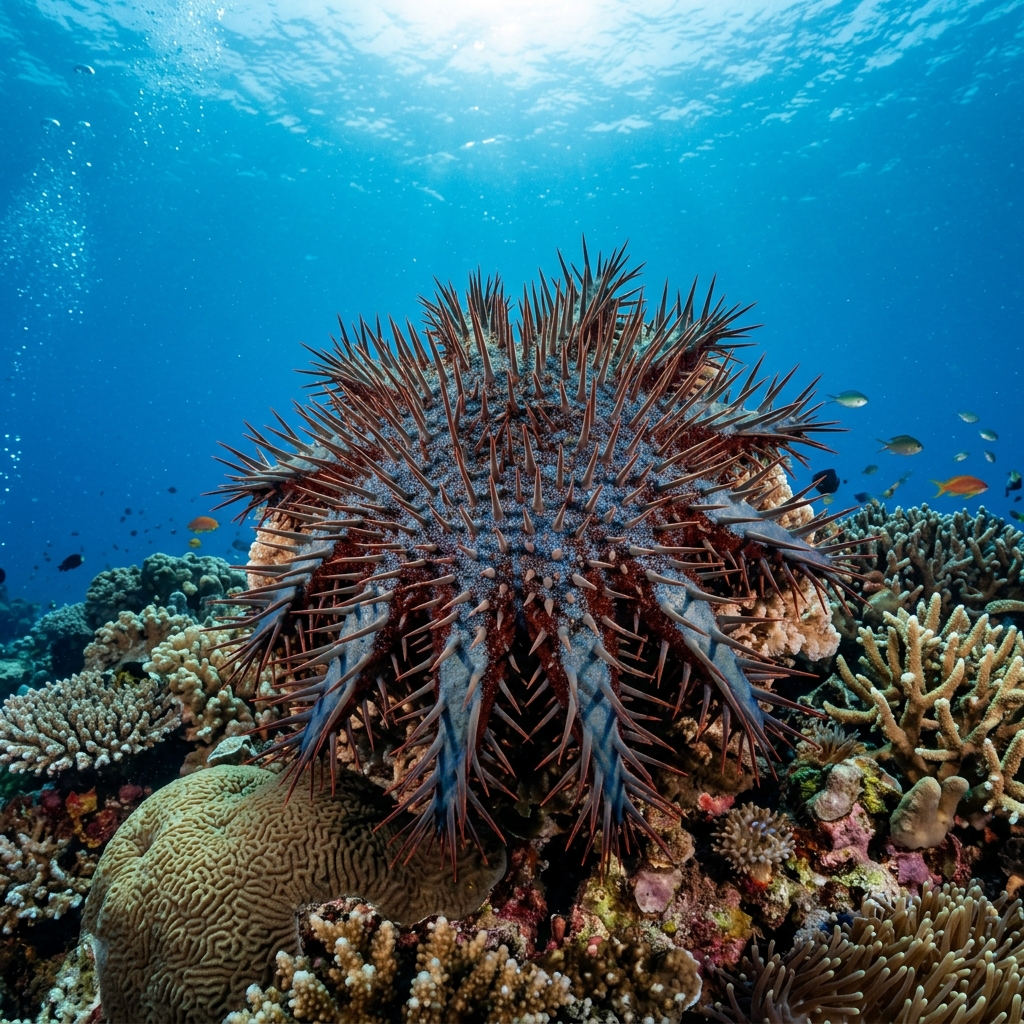
Reef neighbours a diver could mistake it for. Use the identification notes above to tell them apart.
Most consistently logged in the Maldives, particularly the Male and Ari Atolls, and across the Philippine Visayas, both central and eastern regions. Strong populations also appear throughout Bali, Lombok and Java in Indonesia, and reliable sightings come from Sipadan and East Sabah in Malaysia, the Andaman North sites in Thailand, Praslin and La Digue in the Seychelles, and Zanzibar in Tanzania. Palau rounds out the list of solid destinations if you are heading to Micronesia.
Mapping where Grainy Cushion Star is logged…
The Maldives leads the records, especially around the Male and Ari Atolls. The Philippine Visayas, both central and eastern, are the next most productive, followed by Bali, Lombok and Java in Indonesia. Further afield, Sipadan in Malaysia, Zanzibar in Tanzania, and Praslin and La Digue in the Seychelles all have confirmed sightings.
Sightings are recorded across most of the year, broadly November through September in northern hemisphere destinations. Because this species sticks to warm water in the 27-29 °C range, it stays on tropical reefs year-round. Pick your trip based on dive conditions at your chosen site rather than chasing a specific month.
Look for a very plump, rounded star with five short, inflated arms that give it an almost spherical, cushion-like profile. The pinkish-to-salmon colouration and distinctly granular, pebbly upper surface distinguish it from most other sea stars on the reef. It tends to sit out in the open, which helps.
Precise size data for this species is limited in diver records, but adult grainy cushion stars are among the larger Indo-Pacific sea stars, commonly reaching around 25-30 cm across. Their inflated arms make them look even bulkier underwater than that measurement suggests.
No. Grainy cushion stars pose no risk to divers. They move slowly, do not bite or sting, and have no venomous spines. As with any reef invertebrate, you should avoid touching or handling them, as contact can damage their skin and stress the animal.
Site and sighting data is aggregated from diver logs, iNaturalist and GBIF. For taxonomy and conservation status:
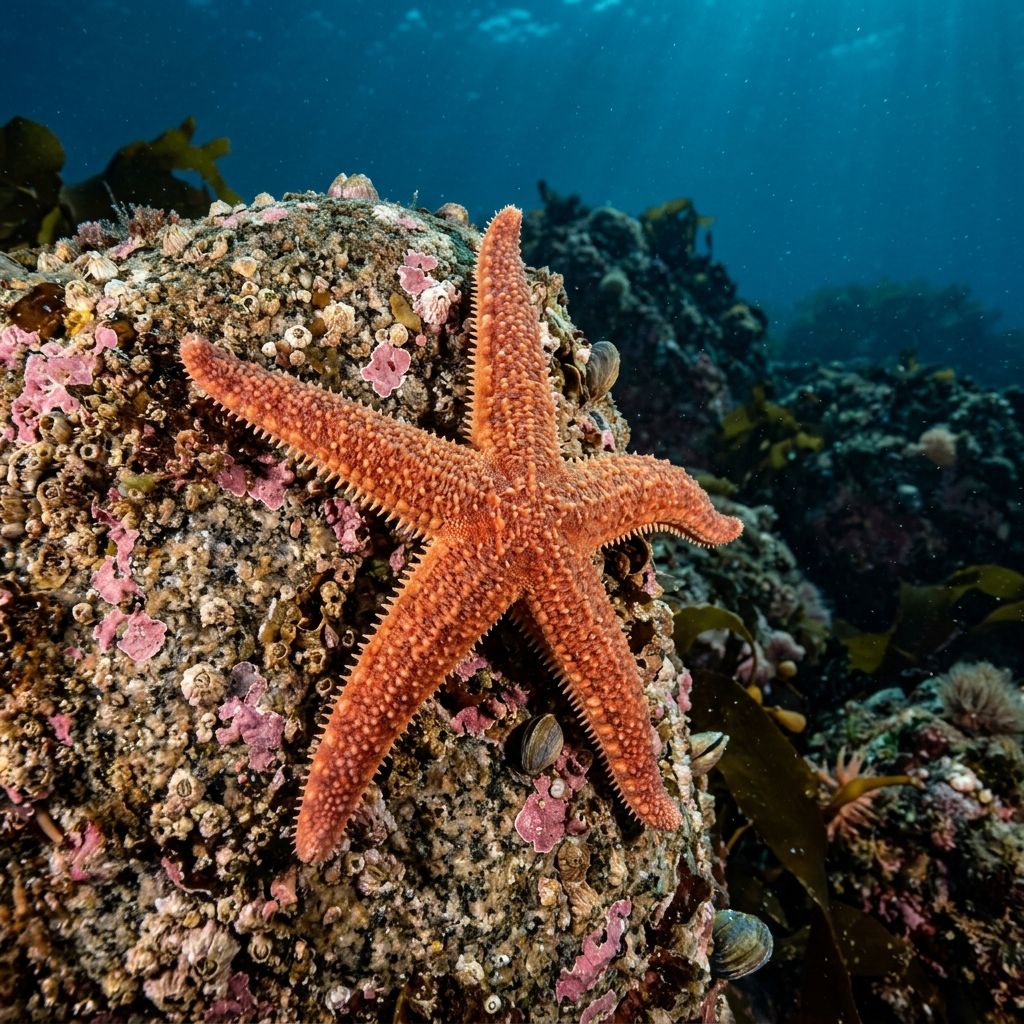
Common Sea Star
2,271 sites