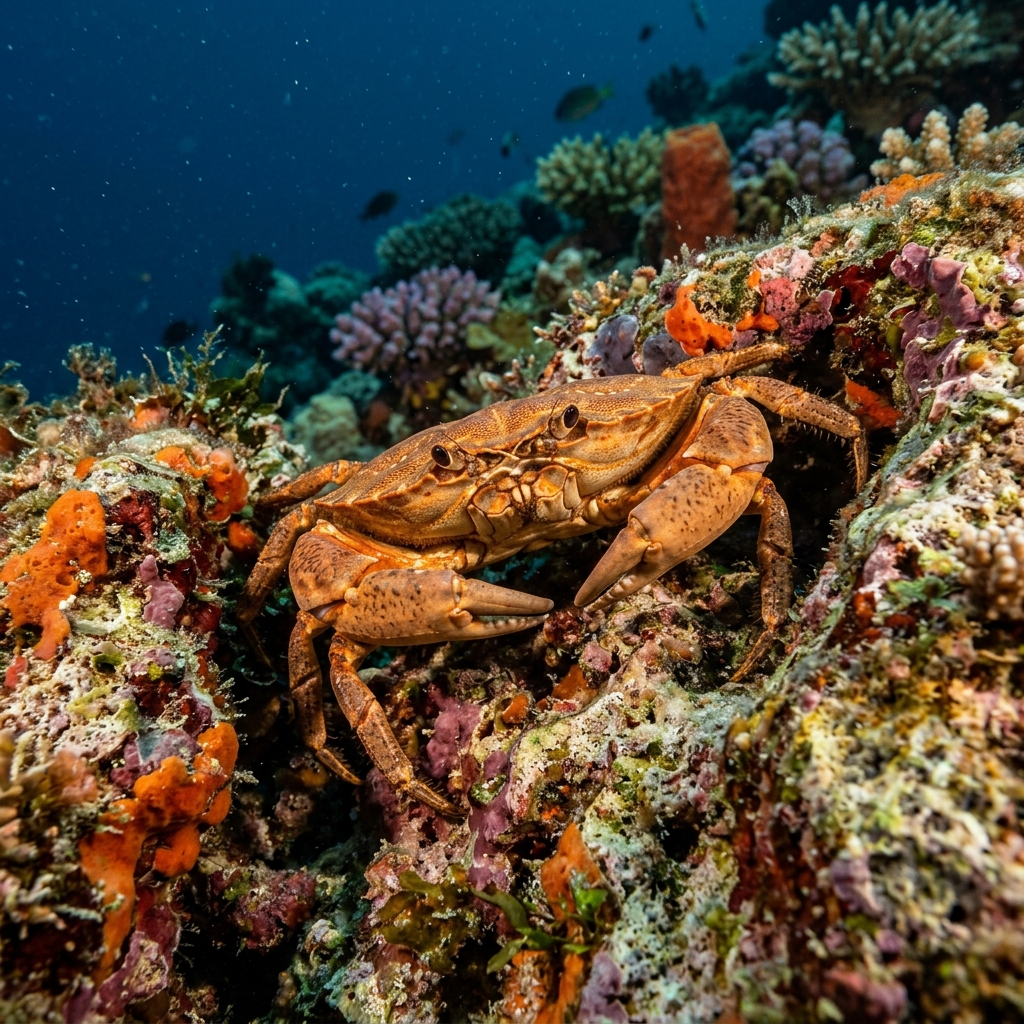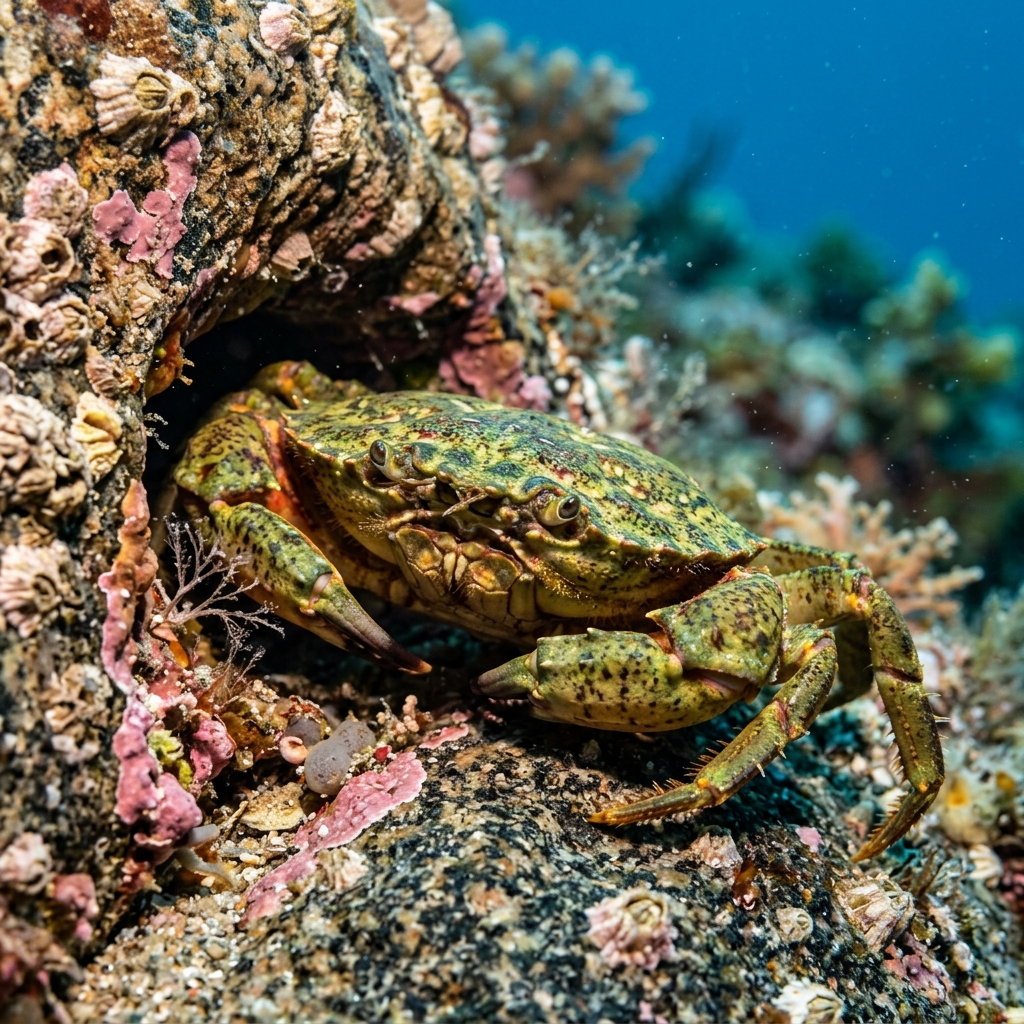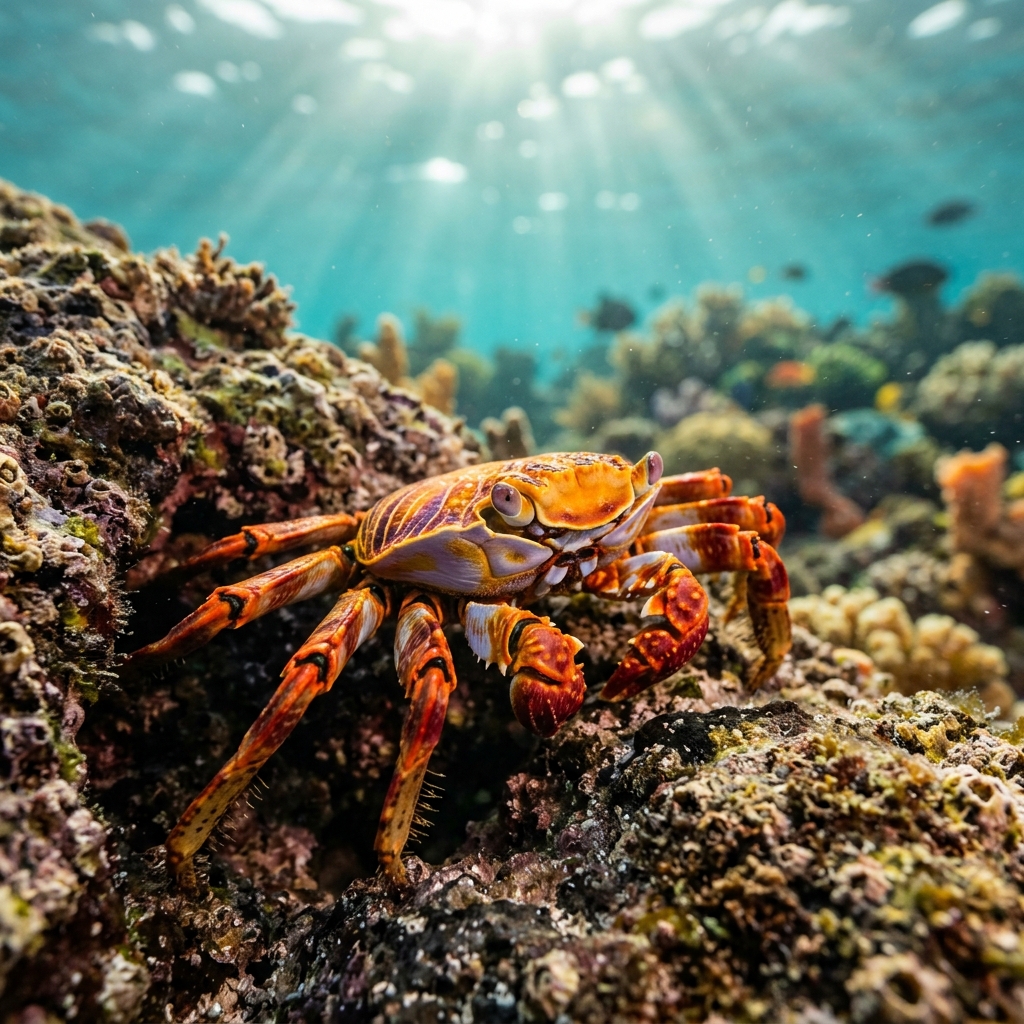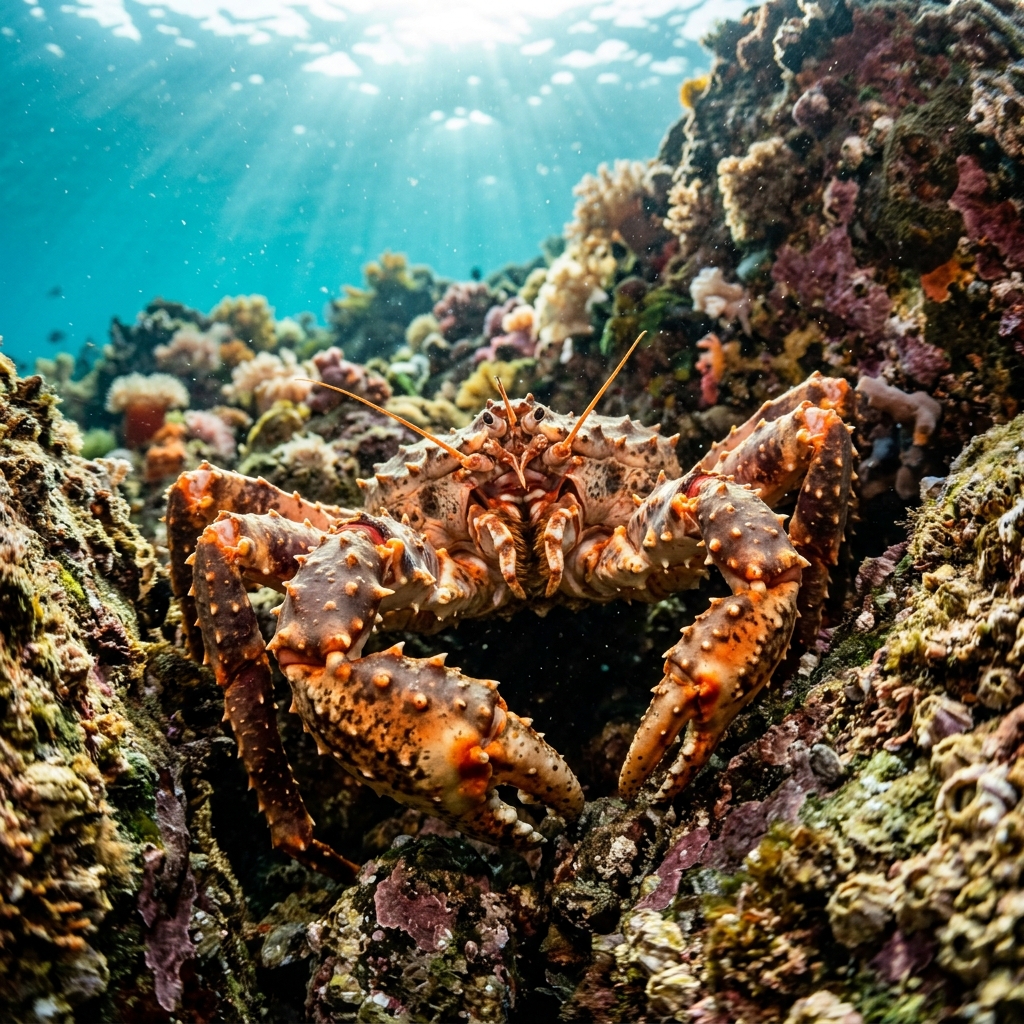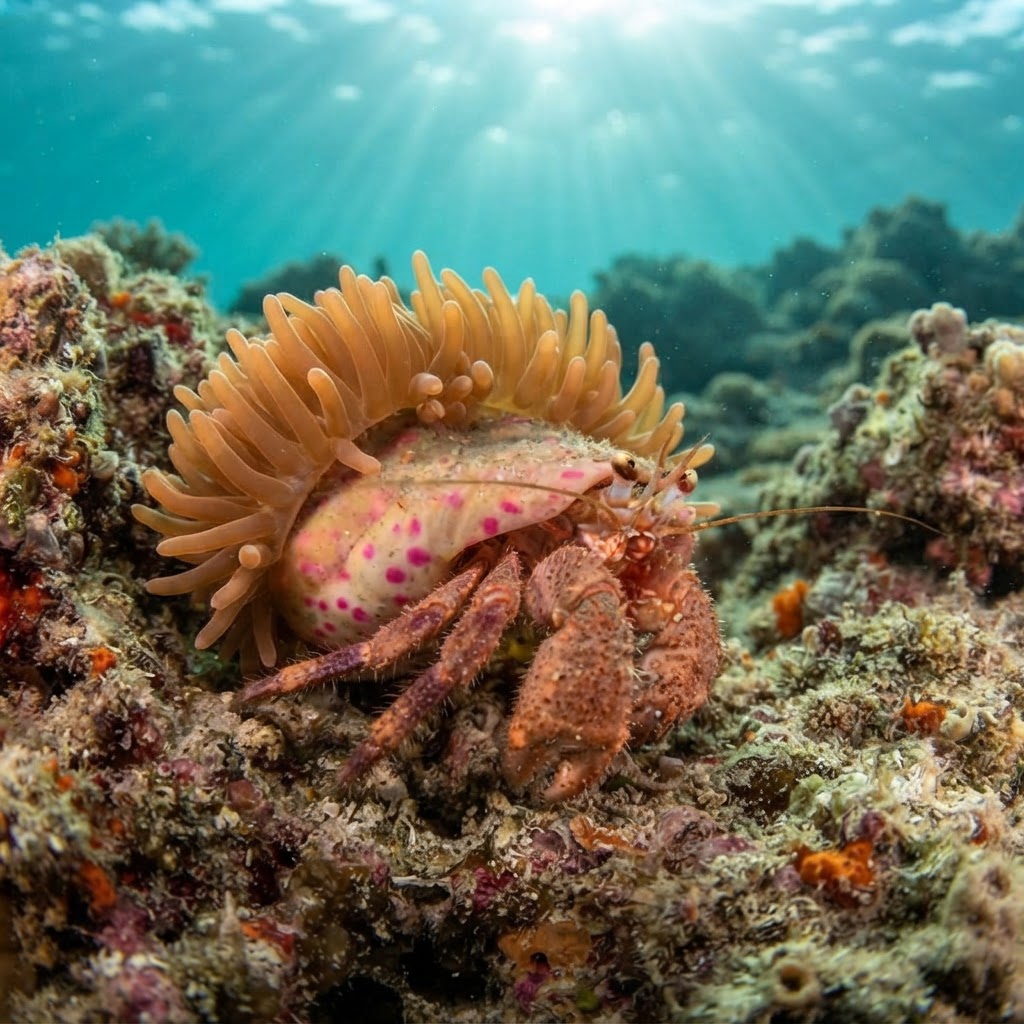
Pagurus prideaux
Look for its cloak anemone hitchhiker on this hermit crab, a reliable uncommon find around Northern Ireland and Lanzarote year-round.
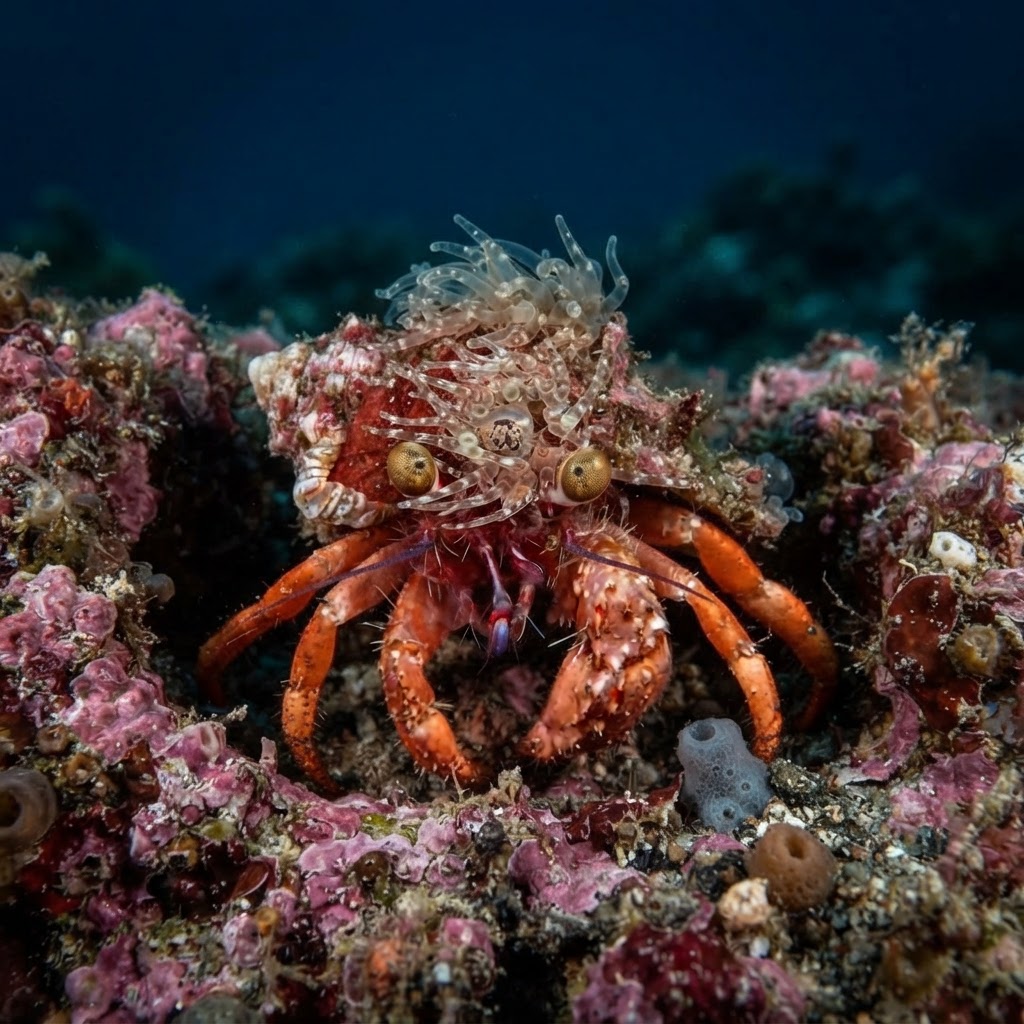
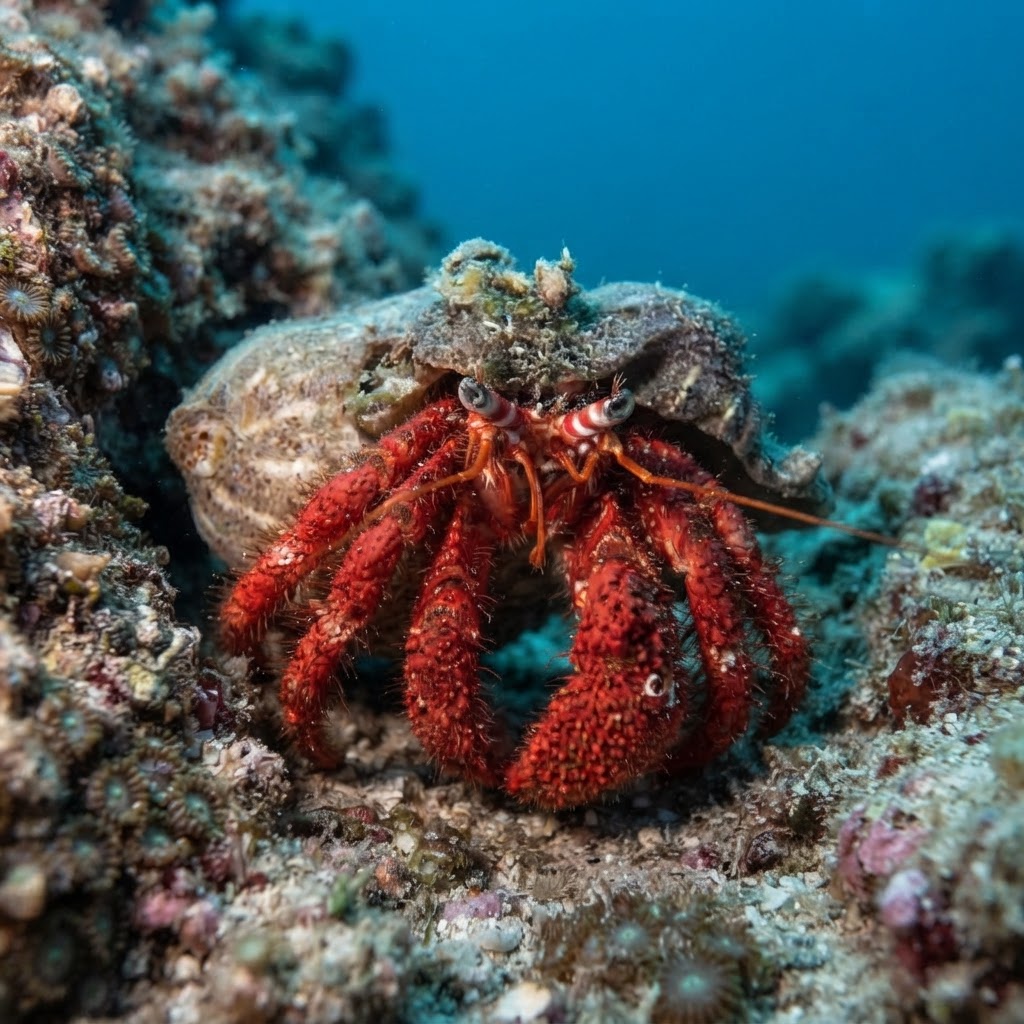
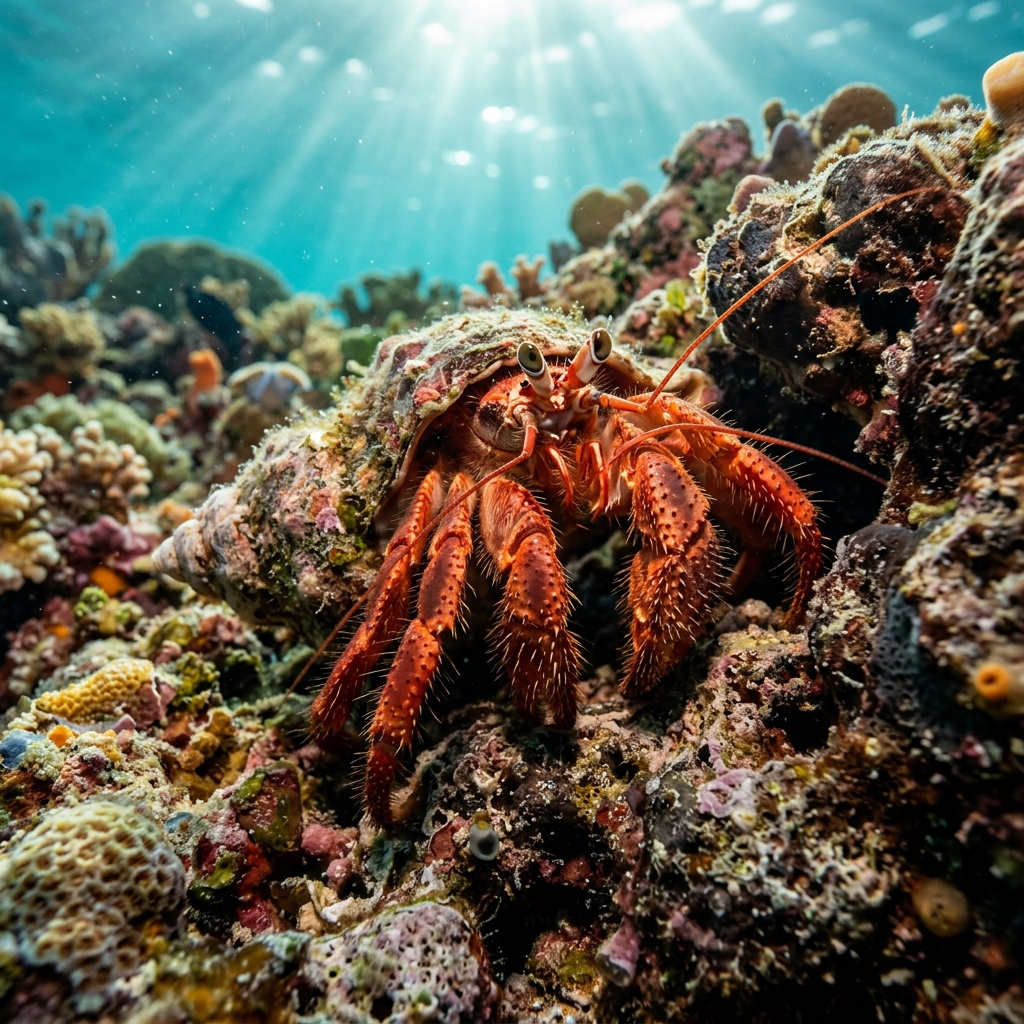
Look for a fairly small hermit crab whose adopted shell is almost always cloaked in a pale, ruffled anemone (the cloak anemone), which is the single easiest giveaway underwater. The visible claws and legs are typically banded in soft pink, cream and lilac tones rather than plain brown. Its eyestalks are long and slender, and it tends to sit part-buried or tucked at a burrow mouth rather than wandering openly across the seabed.
Divers usually spot it sitting still on sand or mixed seabed, often half tucked into a burrow with just its claws and eyestalks showing. It's not a fast mover and rarely bolts at the sight of a torch or camera, making it an easy subject for a slow, patient macro look. Most encounters happen on gentle, open bottom rather than on reef structure itself.
Its shell is routinely draped in a live cloak anemone, a partnership where the anemone's stinging tentacles help shield the crab while the anemone gets carried to fresh feeding spots and scraps from the crab's meals.
Sightings show no clear seasonal pattern, so treat it as a year-round find. It's logged across a wide temperature range from around 12 to 21 C, meaning it's comfortable on cooler northern dives and milder Mediterranean and Canary Islands water alike.
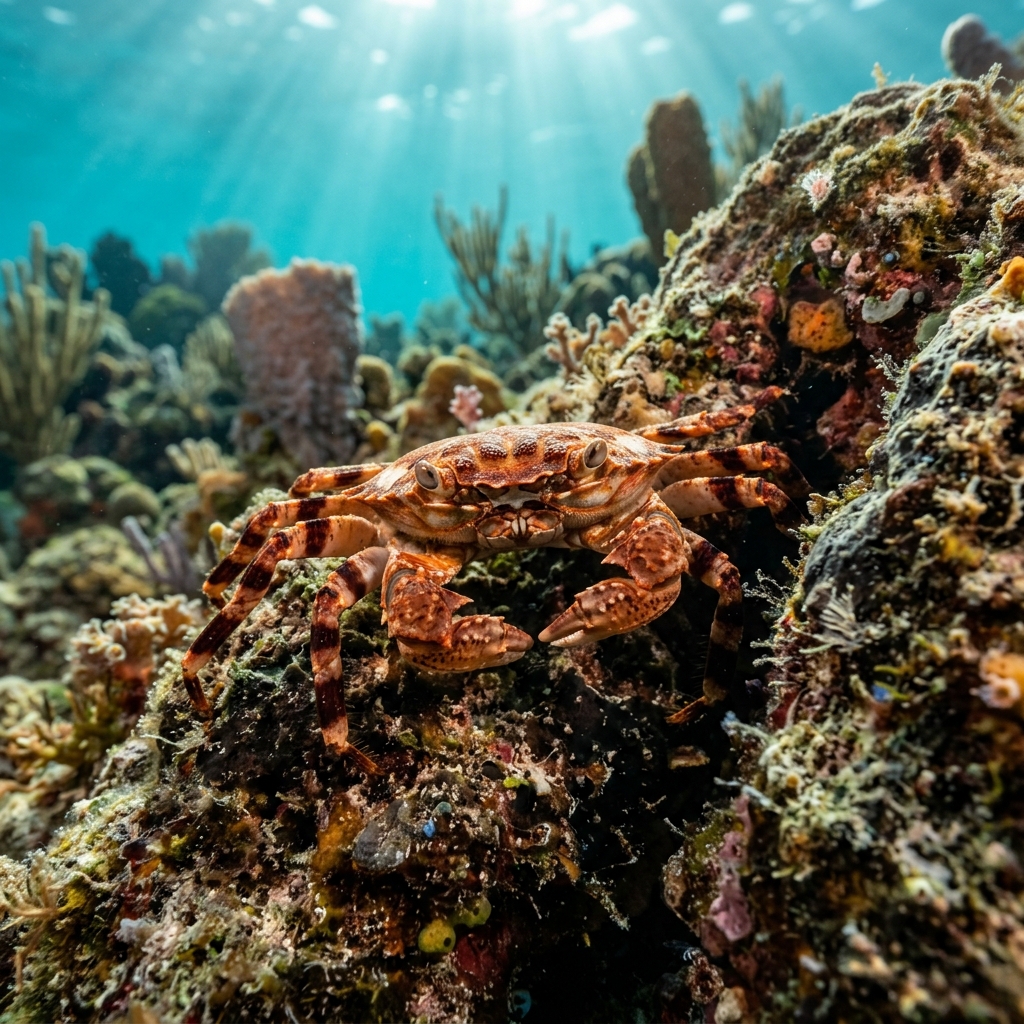
Reef neighbours a diver could mistake it for. Use the identification notes above to tell them apart.
Most reliably logged in the United Kingdom, especially around Northern Ireland, and a strong presence in France across Brittany and the French Riviera and Provence. Also a steady find in the Canary Islands, particularly Lanzarote, with further sightings in Catalonia, Spain and Galway and Connemara in Ireland.
Mapping where Prideaux's Hermit Crab is logged…
It's most commonly logged around Northern Ireland in the UK, plus Brittany and the French Riviera in France, and Lanzarote in the Canary Islands. Smaller numbers turn up in Catalonia, Spain and Galway and Connemara in Ireland.
There's no strong seasonal pattern in the sightings, so it's considered a year-round find. It's recorded in water from around 12 to 21 C, so it doesn't disappear in cooler months the way some warm-water species do.
The quickest tell is the pale, ruffled anemone almost always draped over its shell. Beyond that, look for pink and cream banded claws, long slender eyestalks, and a habit of sitting still near a burrow rather than roaming.
No, it poses no danger to divers. It's a small, slow-moving bottom dweller that will simply sit still or retreat slightly into its shell if approached.
It carries a living anemone on its shell as a bodyguard, a partnership where the anemone's stinging tentacles deter predators while it rides along and shares in the crab's leftovers.
Site and sighting data is aggregated from diver logs, iNaturalist and GBIF. For taxonomy and conservation status:
European Green Crab
2,469 sites