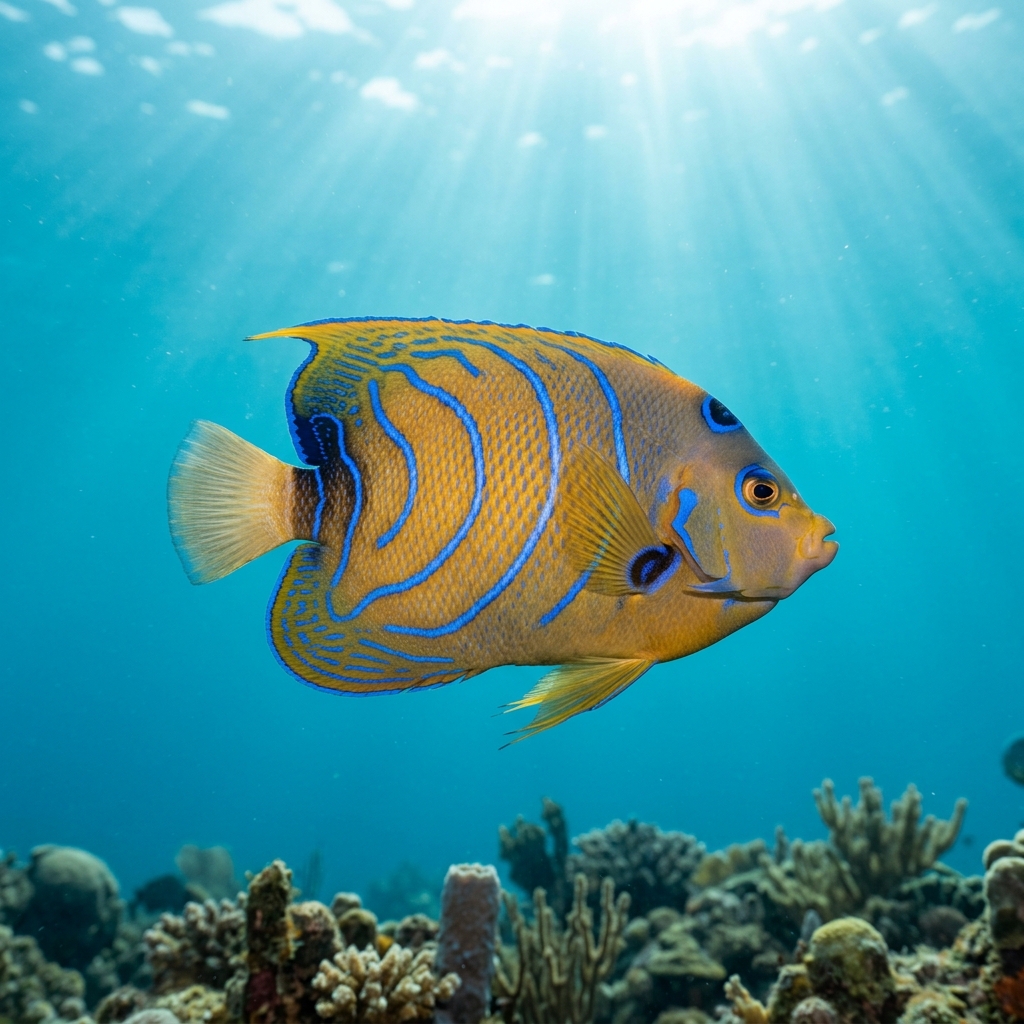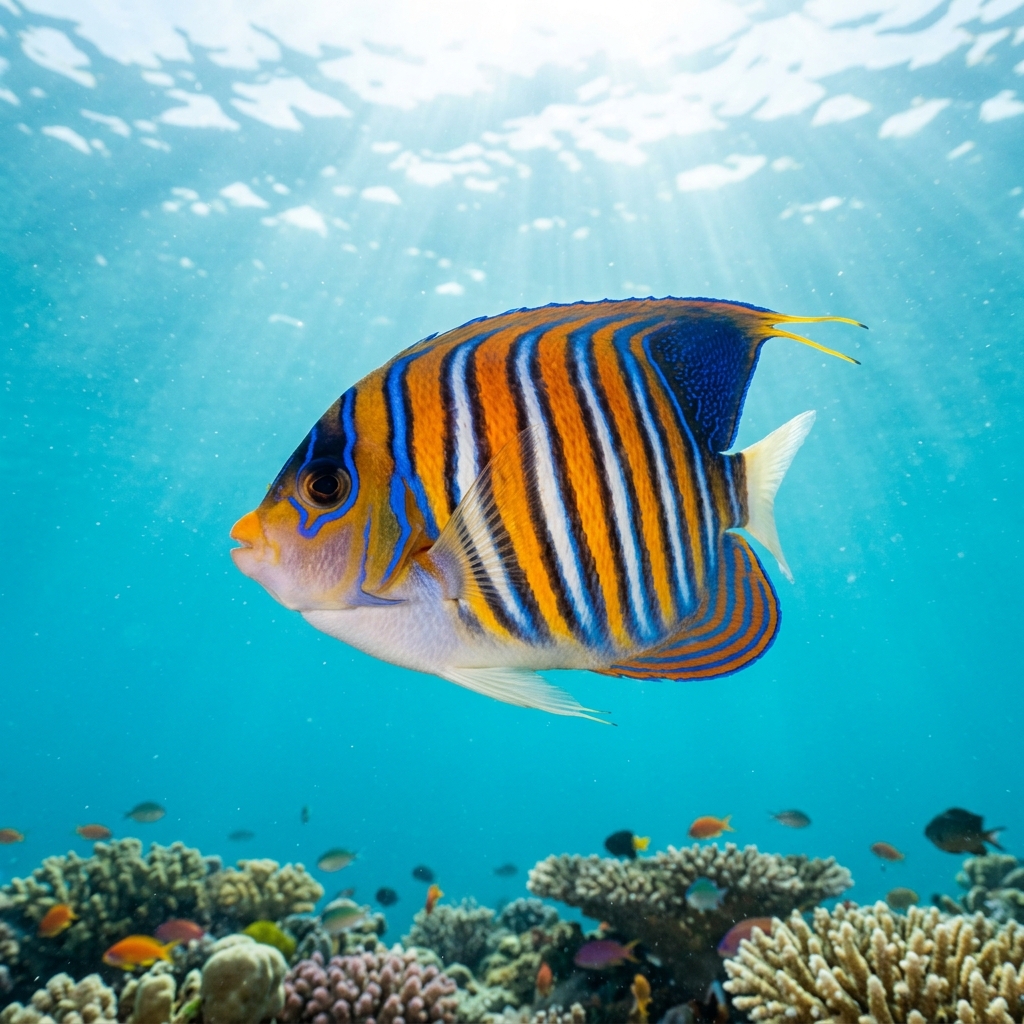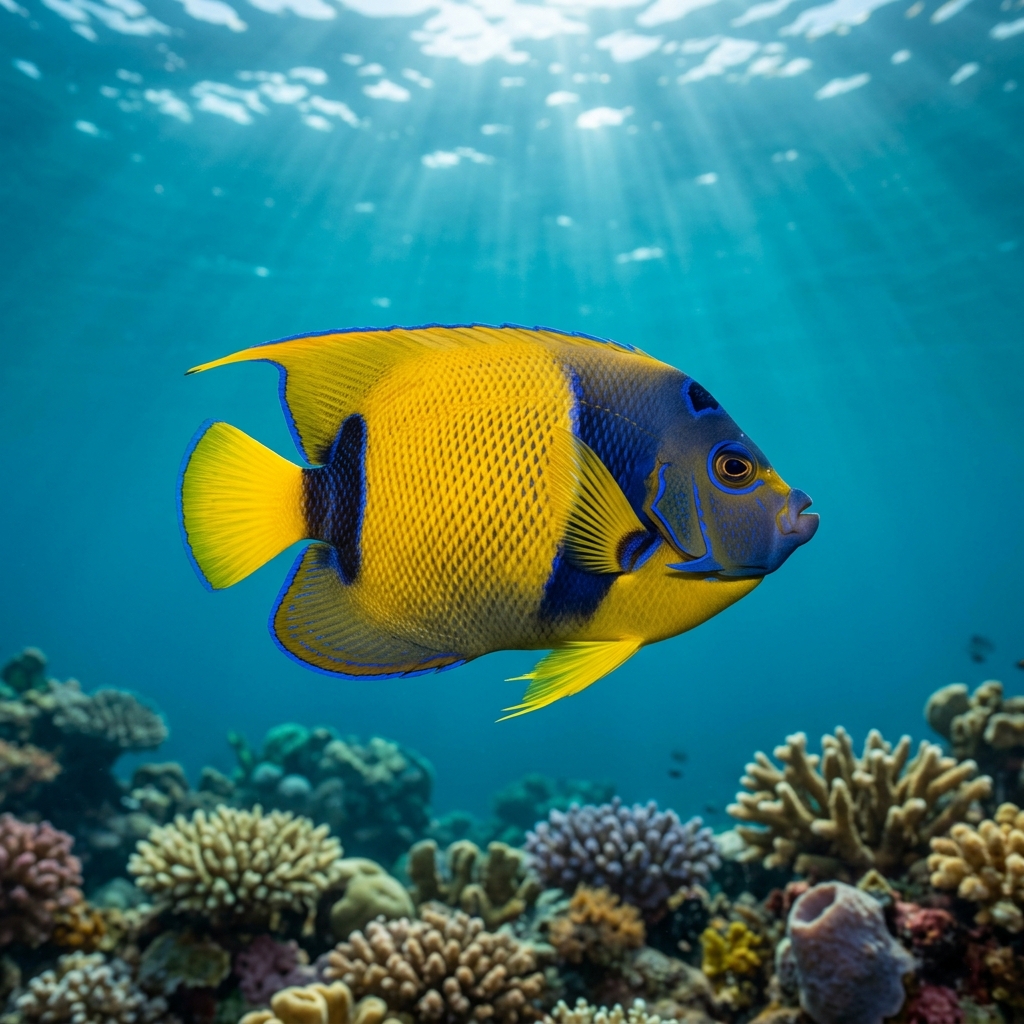
Pomacanthus navarchus
Spot the vivid blue-and-orange Bluegirdled Angelfish across Sulawesi, Maluku, and the Philippines in warm 27-29°C Indo-Pacific reefs.
A mid-sized angelfish with a deep, disc-shaped body coloured in rich orange-yellow, bisected by a bold electric-blue saddle (girdle) across the back and flanks that gives the species its name. The tail is pale blue-white and the face is blue with orange highlights, making it instantly distinctive even in busy reef settings. Juveniles look entirely different: dark navy-blue with white and light blue concentric curved lines, a pattern shared with several other pomacanthid juveniles that can cause confusion before the adult colours develop.
You will most often encounter a bluegirdled angelfish moving deliberately along coral-rich walls or bommies (isolated reef structures), picking at sponges, tunicates, and algae as it goes. It tends to keep close to the reef rather than venturing into open water, and it is typically shy around divers, retreating into crevices if approached too quickly. Slow, non-threatening approaches give the best views; hovering at a slight distance and waiting often brings it back out.
Like all members of the Pomacanthidae family, bluegirdled angelfish are protogynous hermaphrodites, meaning females can transition into males when a dominant male in the group disappears. This means a large, boldly coloured individual you see patrolling a territory may recently have been female.
Southern Hemisphere seasonality data points to October through February as the peak window for sightings, which aligns with the warmer austral summer months across the Indo-Pacific range.
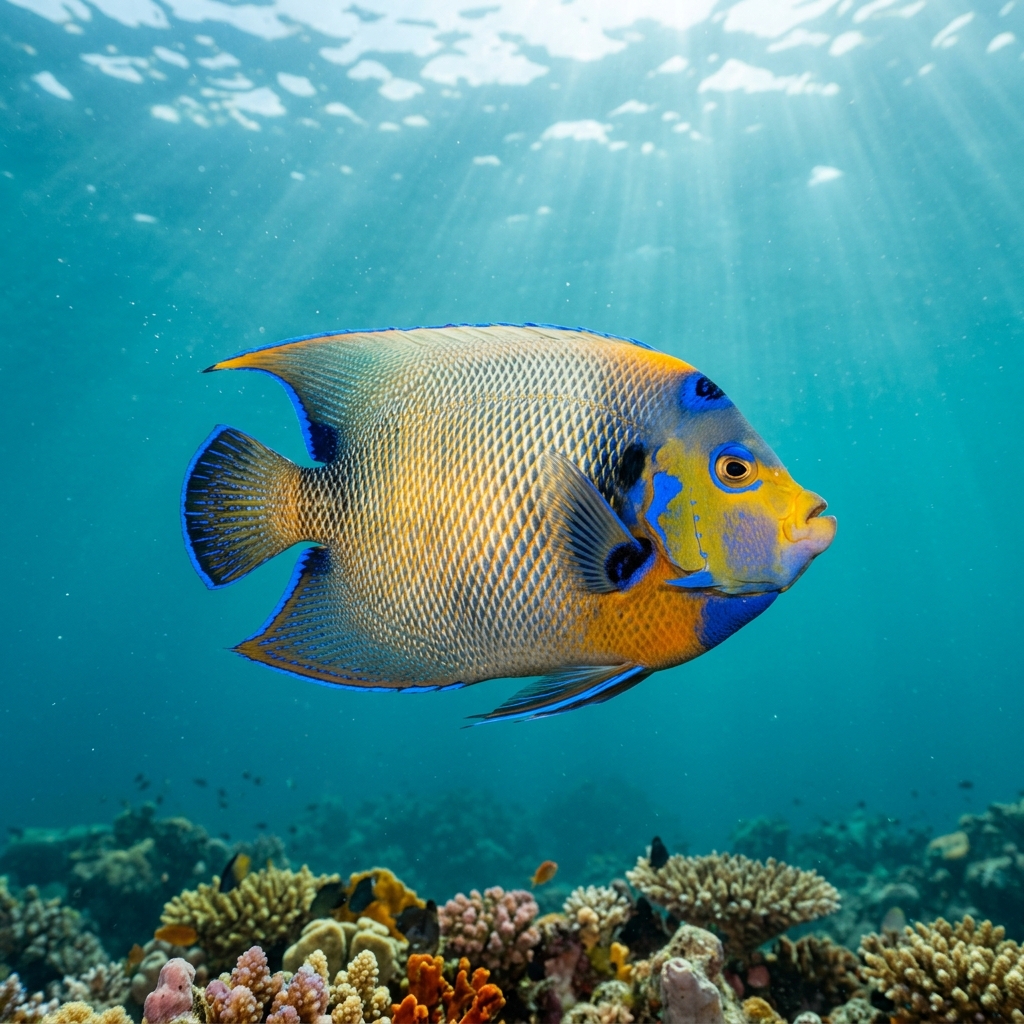
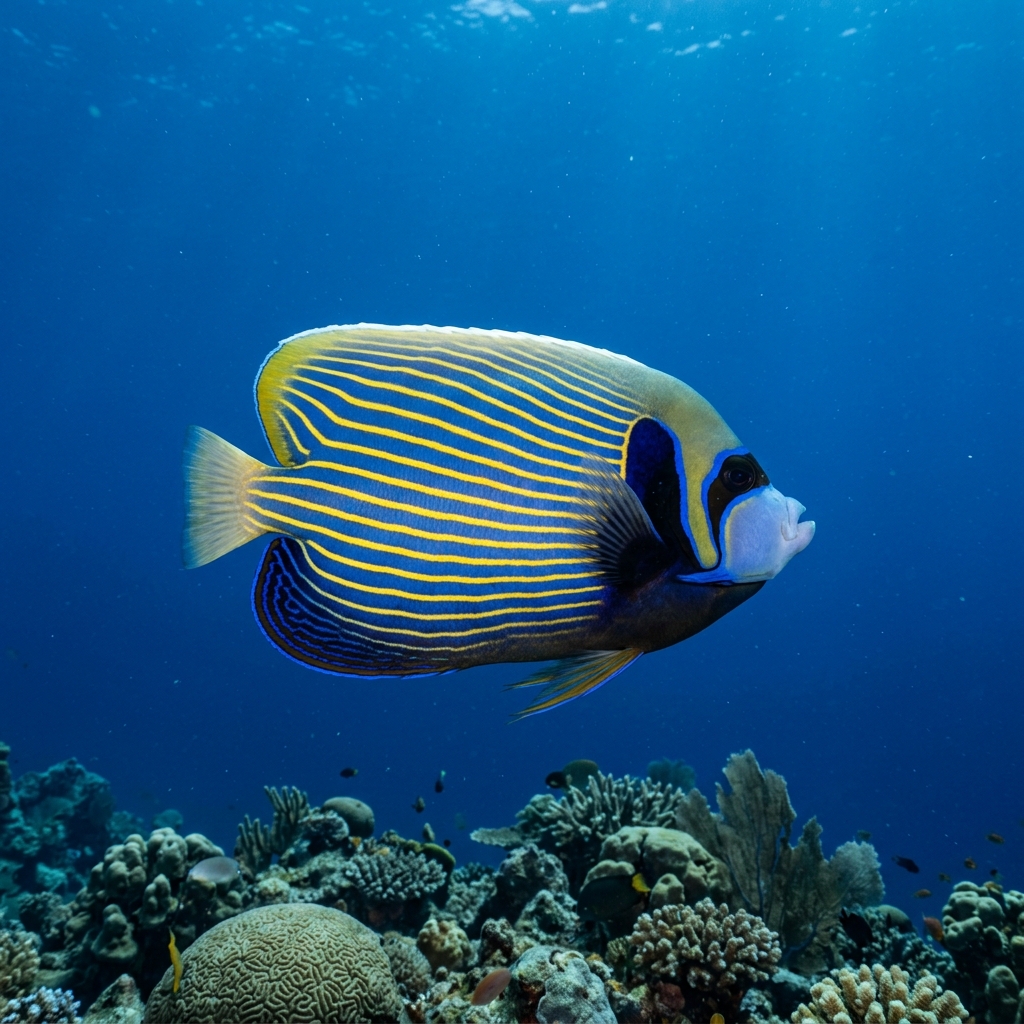
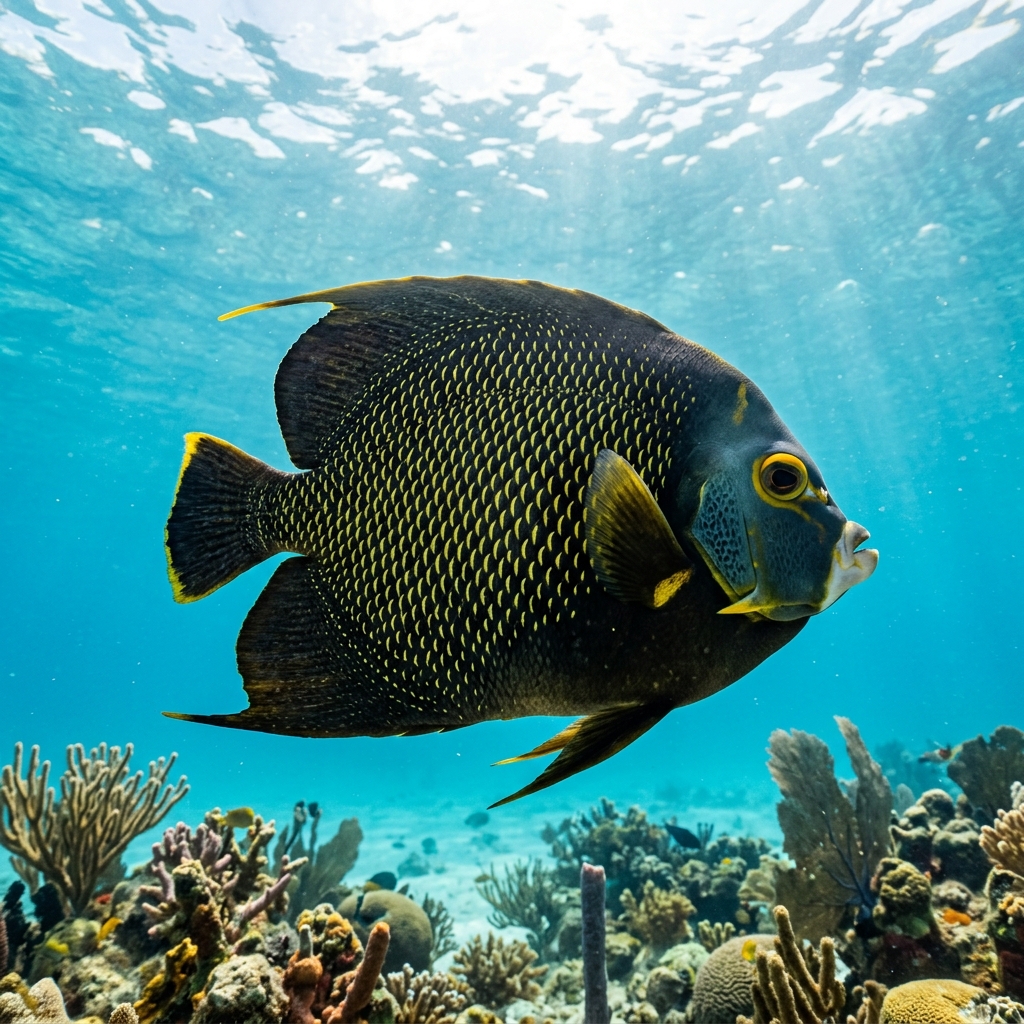
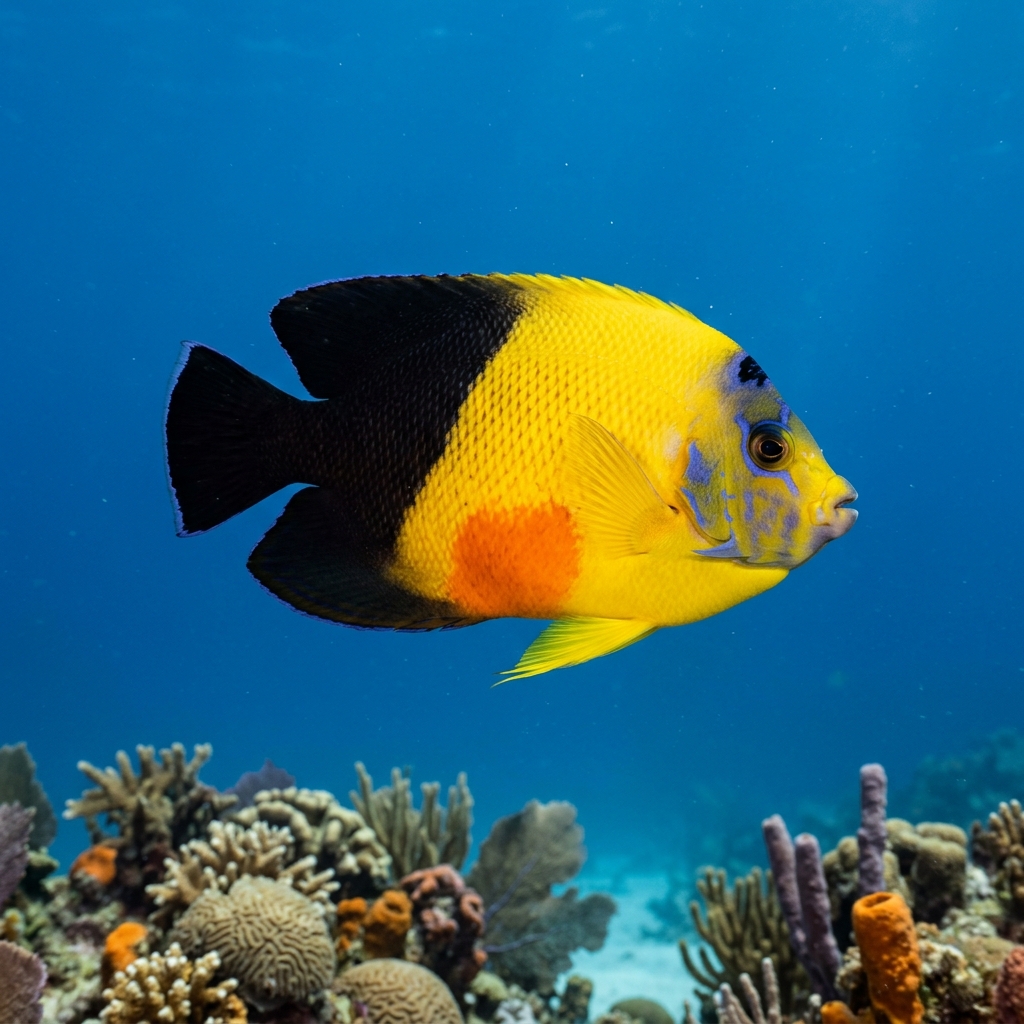
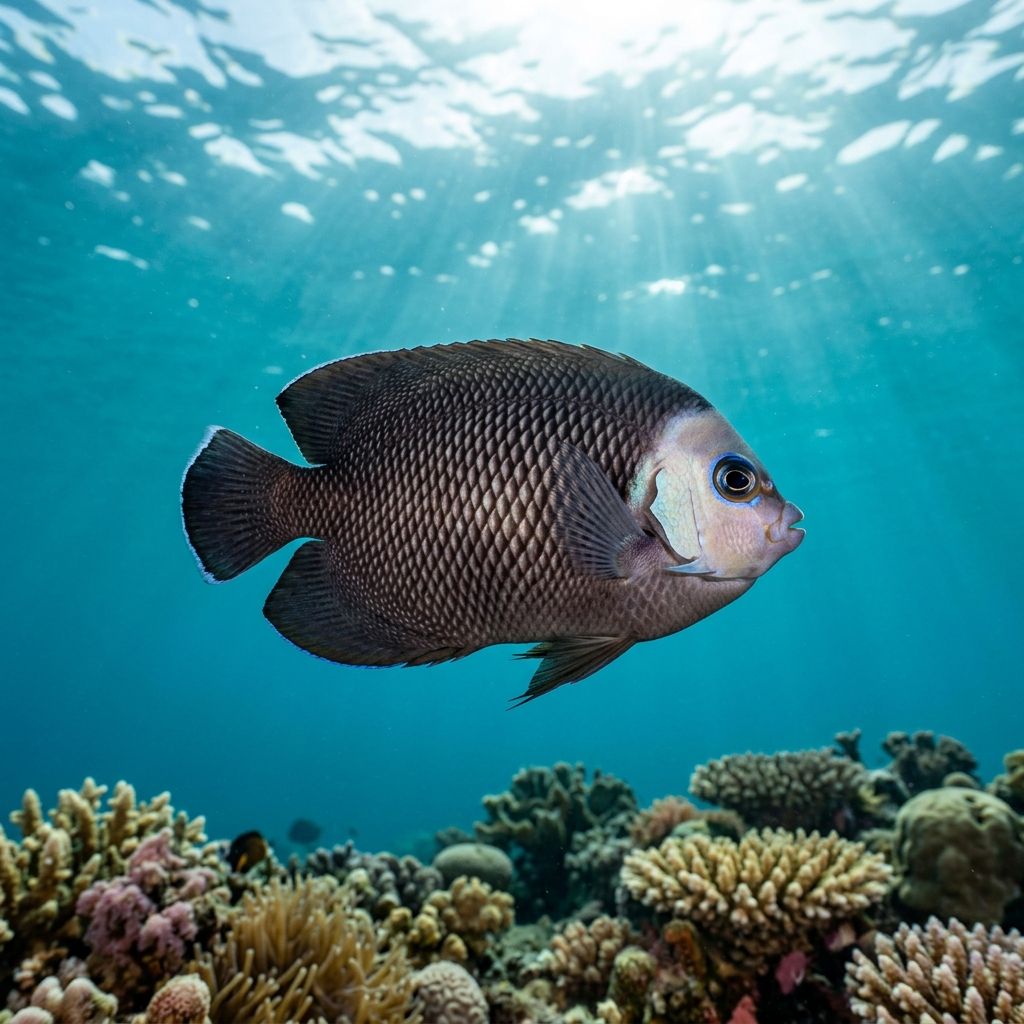
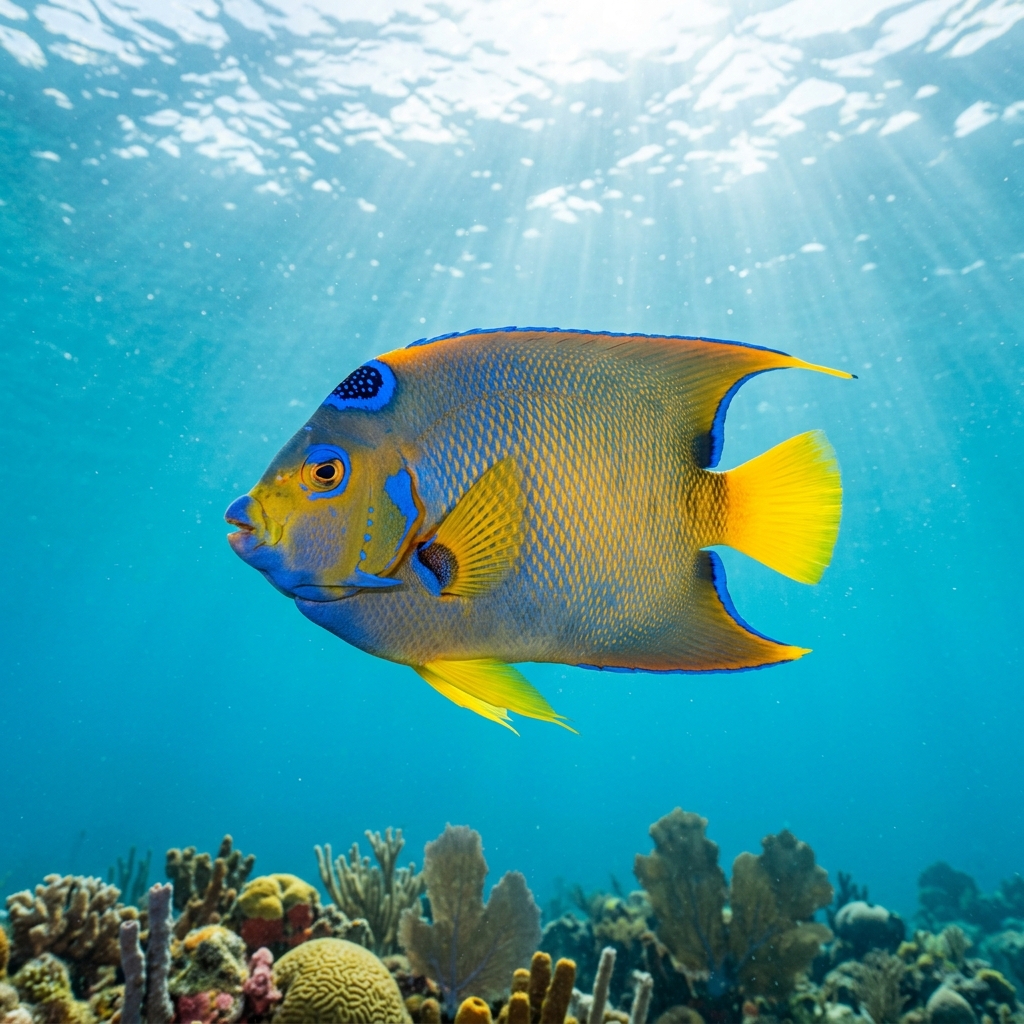
Reef neighbours a diver could mistake it for. Use the identification notes above to tell them apart.
Indonesia accounts for the vast majority of logged sightings, with Sulawesi, Maluku and Papua, and Nusa Tenggara and the Banda Sea all showing strong records. The Philippines, particularly the Visayas, is the next most reliable destination, and a smaller number of sightings are logged from Milne Bay in Papua New Guinea.
Mapping where Bluegirdled Angelfish is logged…
The species is most commonly logged in Indonesia, particularly across Sulawesi, Maluku and Papua, and the Nusa Tenggara and Banda Sea region. The Visayas in the Philippines and Milne Bay in Papua New Guinea are also reliable areas. All of these fall within the warm Indo-Pacific coral triangle.
Sighting data from the southern hemisphere concentrates between October and February, coinciding with the warmer austral summer period. Water temperatures in the observed range run from about 27.5 to 29.3°C, so conditions during those months suit the species well.
Look for the striking electric-blue saddle crossing an otherwise orange-yellow body, combined with a pale blue-white tail and a blue face. No other angelfish in the Indo-Pacific combines exactly that colour layout, so once seen it is very recognisable. Juveniles are dark blue with concentric white-blue lines and look nothing like the adult.
Across most sites where divers log it, the bluegirdled angelfish is classed as uncommon, and at a significant portion of sites it is rare. Common sightings are reported at only a small number of locations. Patience and slow reef exploration give you the best chance of a good encounter.
No. The species is currently assessed as Least Concern on the IUCN Red List, meaning populations are considered stable across its Indo-Pacific range.
Site and sighting data is aggregated from diver logs, iNaturalist and GBIF. For taxonomy and conservation status:
Rock Beauty
1,573 sites