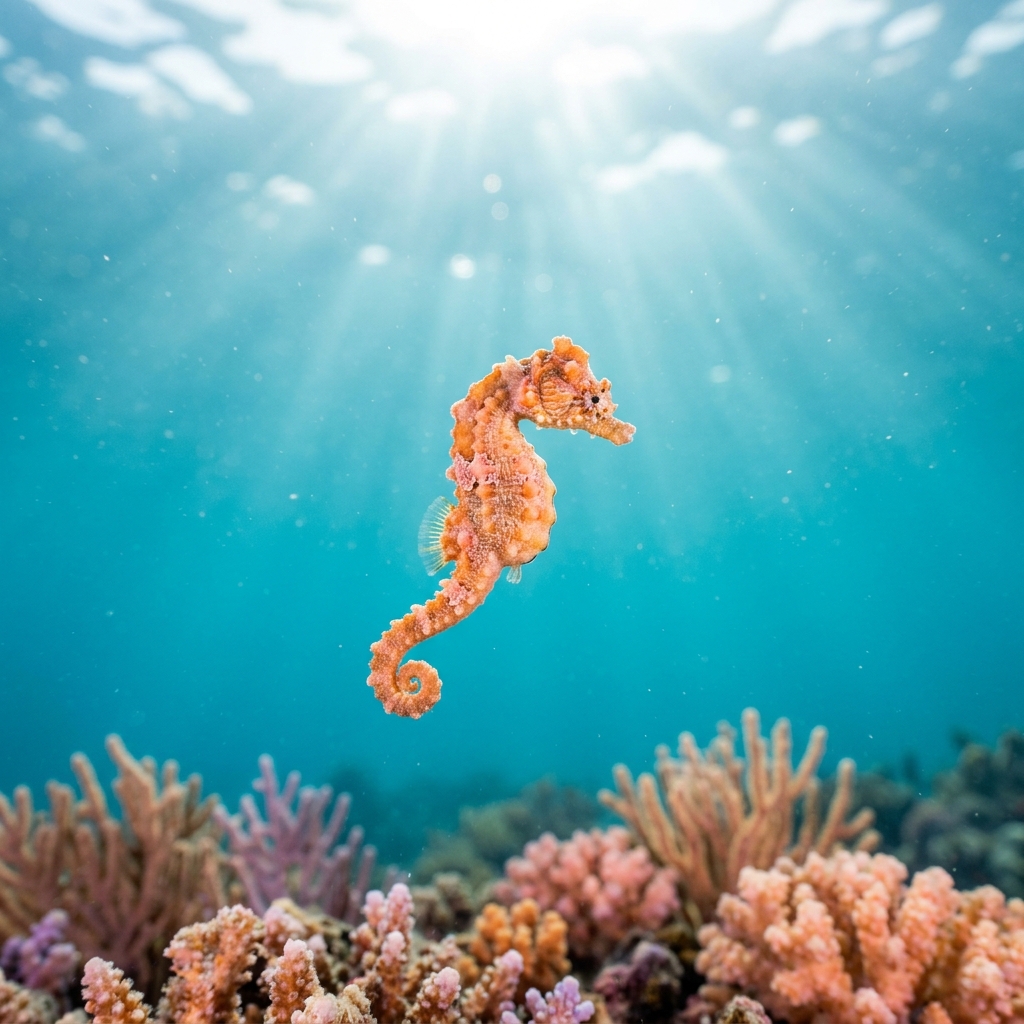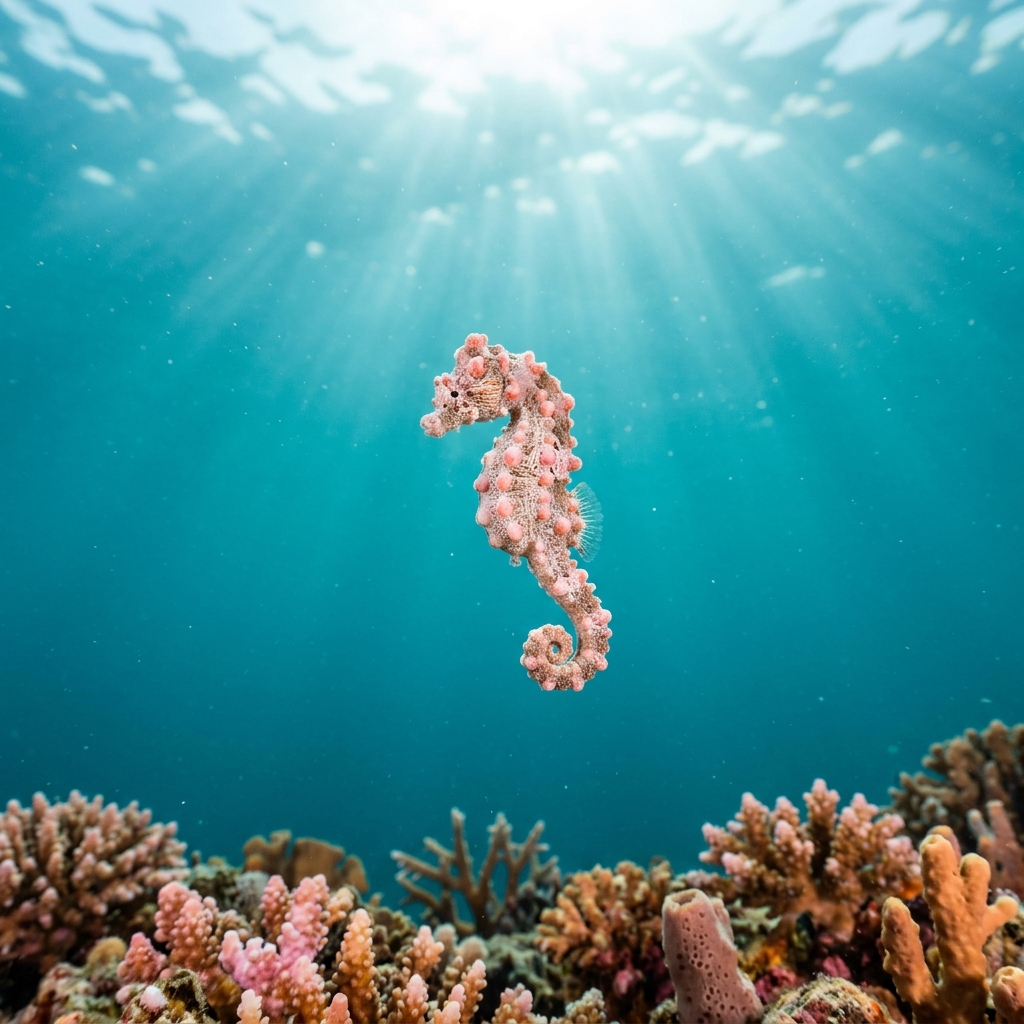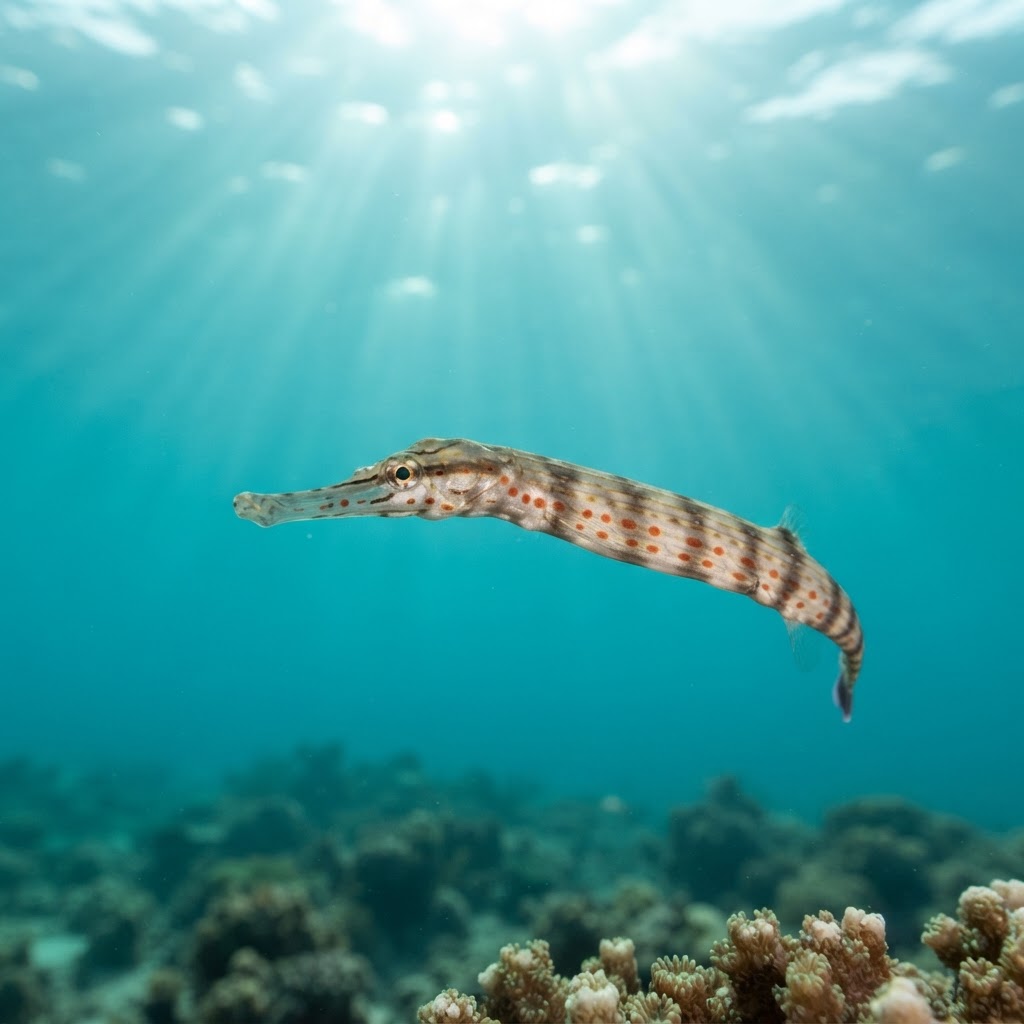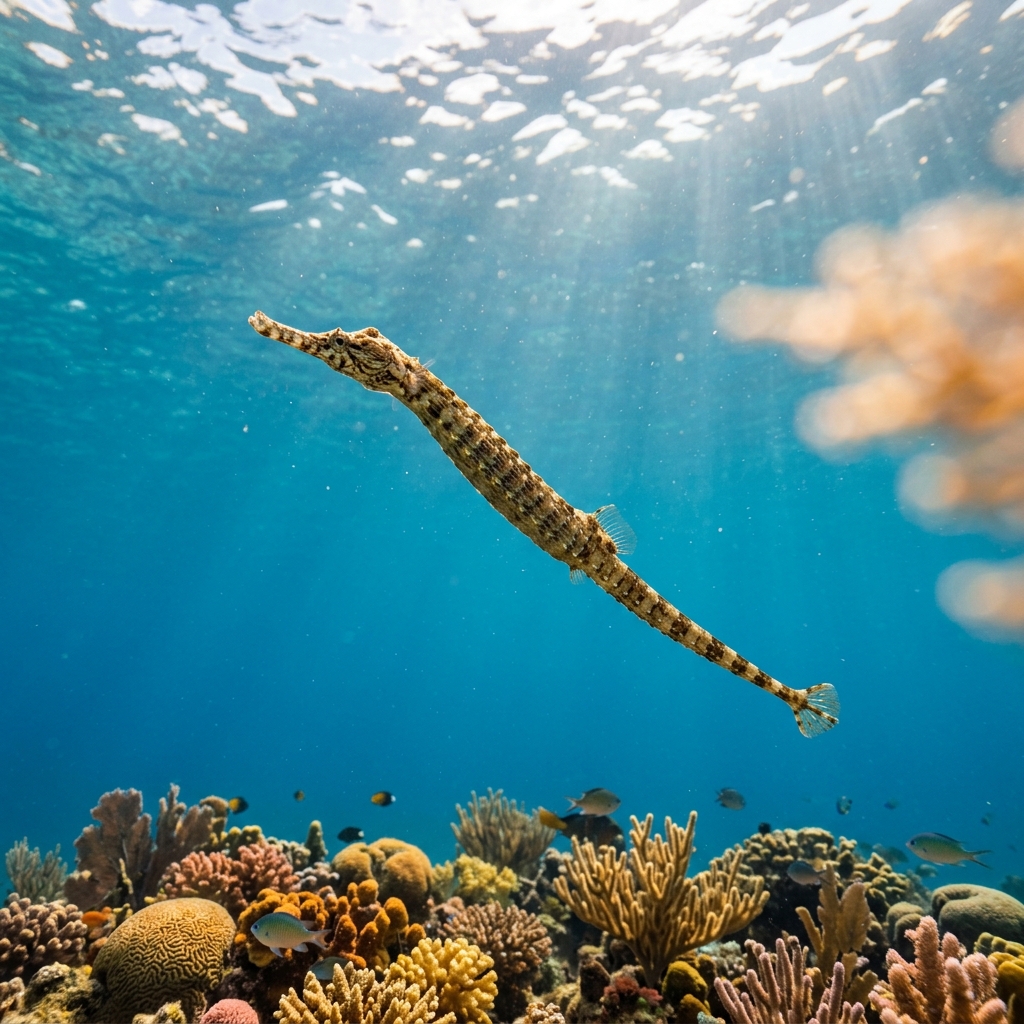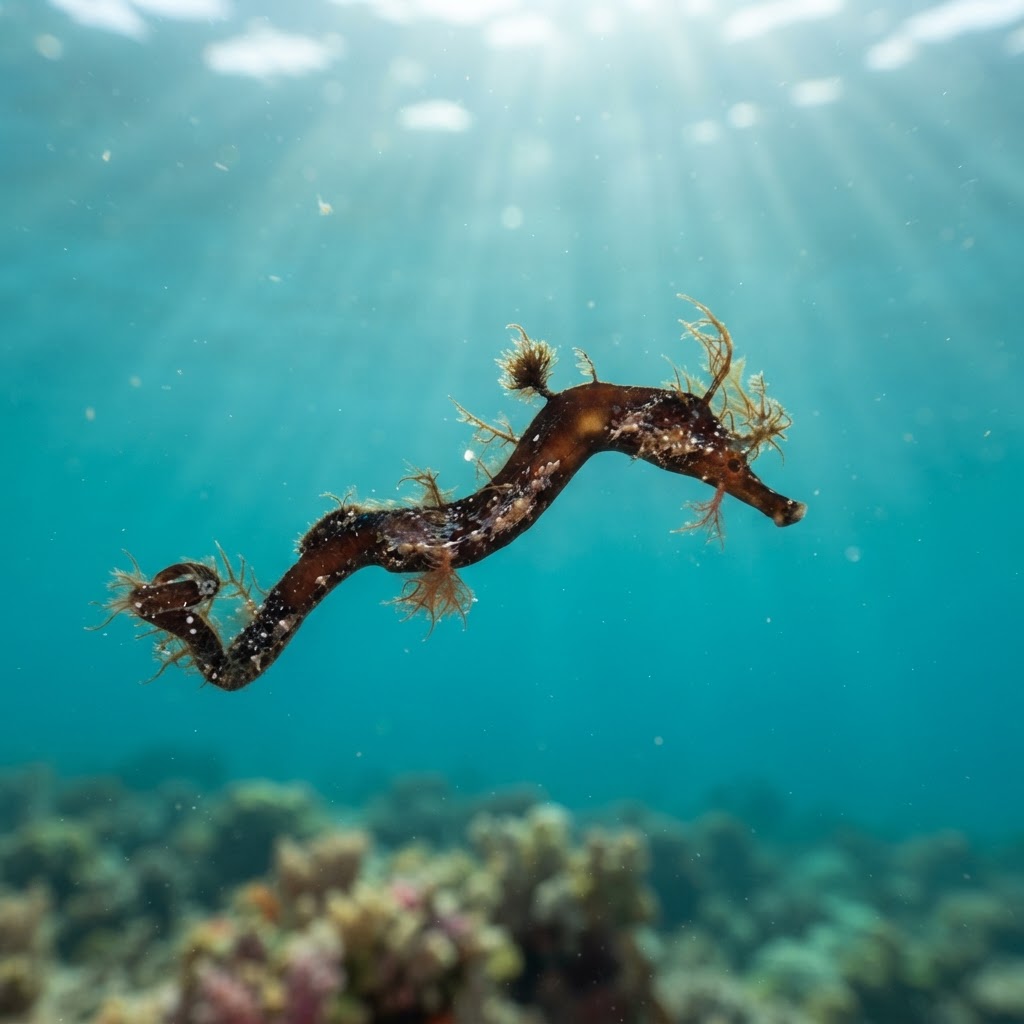
Amphelikturus dendriticus
Rarely logged and easy to miss: pipehorse turn up on branching sponges around Grand Cayman in warm 24-28C water year-round.
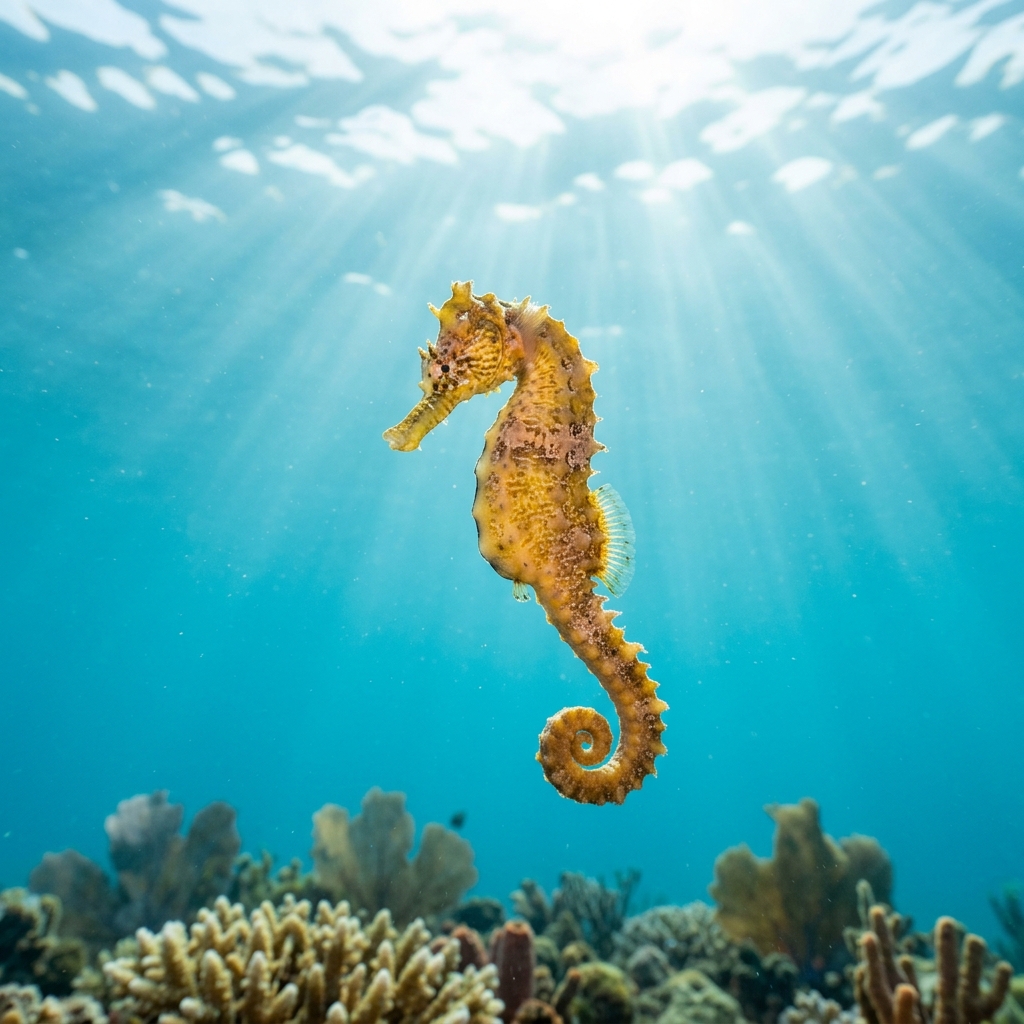
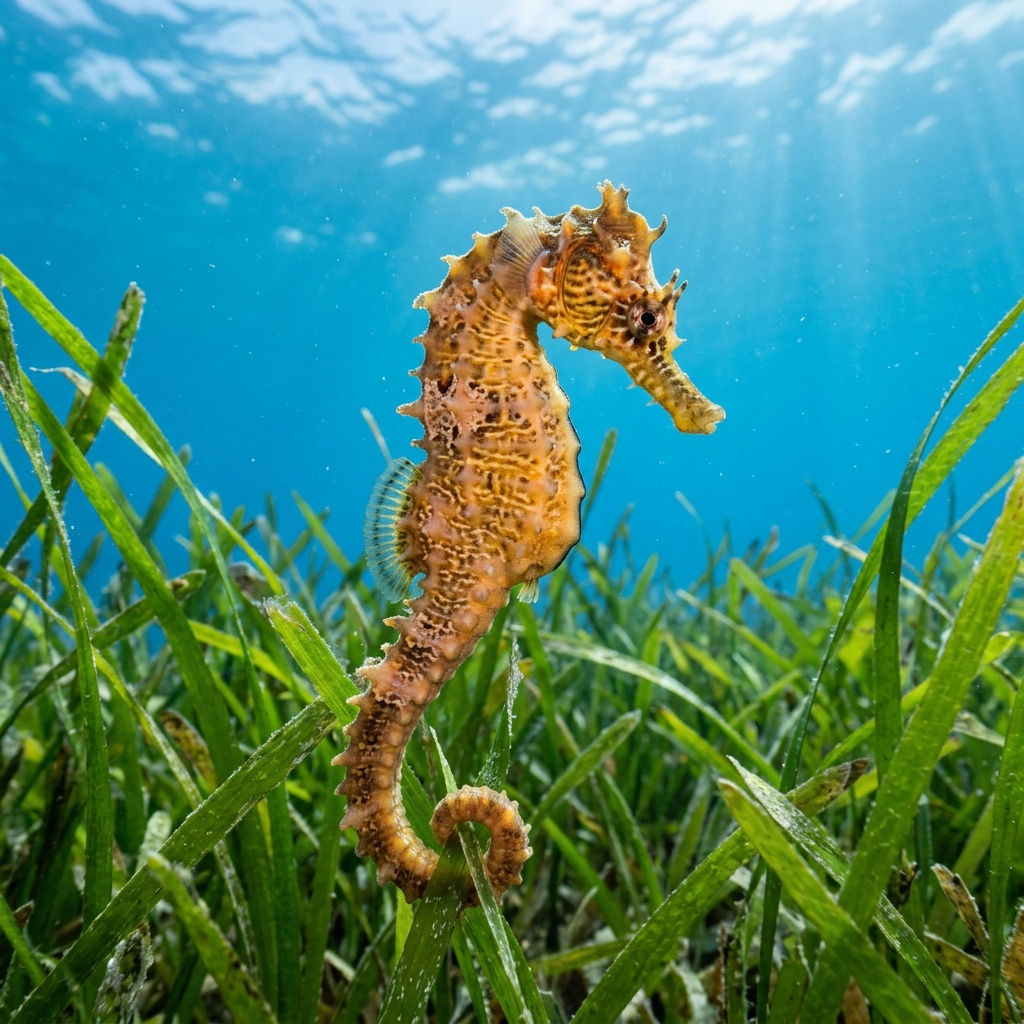
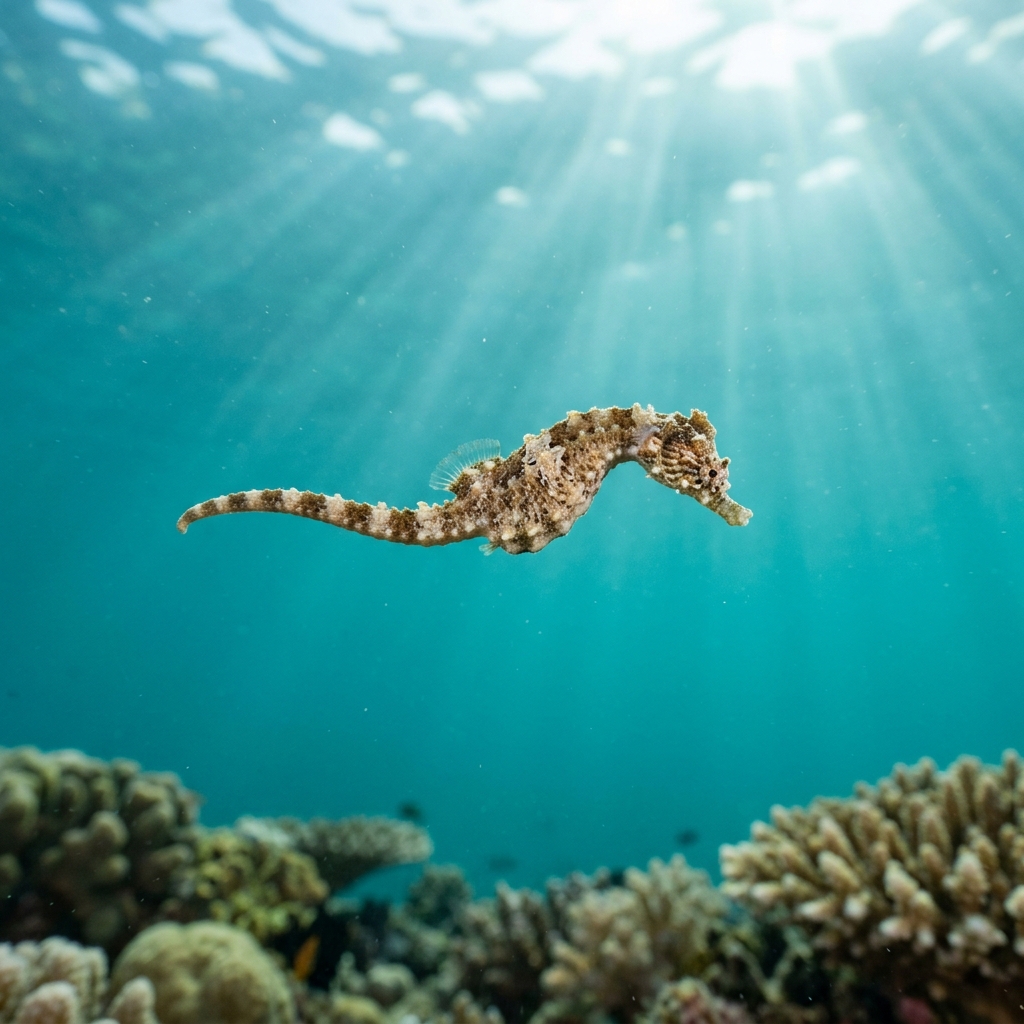
Barely 6cm long, with a thin twiggy body that mimics the branching sponges and hydroids it clings to rather than swimming freely. It has no true tail curl like a seahorse and no obvious head bend, just a straight, stick-like profile mottled brown or grey to match its perch. Look closely at sponge branches rather than open reef, since colour and texture blend it into the background almost completely.
Expect to find it holding perfectly still on a branching sponge or hydroid, gripping with its tail the way seahorses do, rather than out swimming over open reef. It relies on camouflage and stillness rather than fleeing, so a slow approach and a careful eye scanning sponge fingers is more productive than searching open sand or rubble. Divers who log it tend to be looking specifically, since it does not stand out on a casual pass.
It is a true pipehorse, a small group that bridges seahorses and pipefish, holding onto its perch with a prehensile tail like a seahorse while keeping the straight, uncurled body of a pipefish.
Sightings show no clear season, and with water sitting between 23.7 and 27.8C year-round in Grand Cayman, pipehorse can plausibly turn up on any dive. Treat this as a species to look for whenever you are diving Cayman rather than one tied to a particular month.
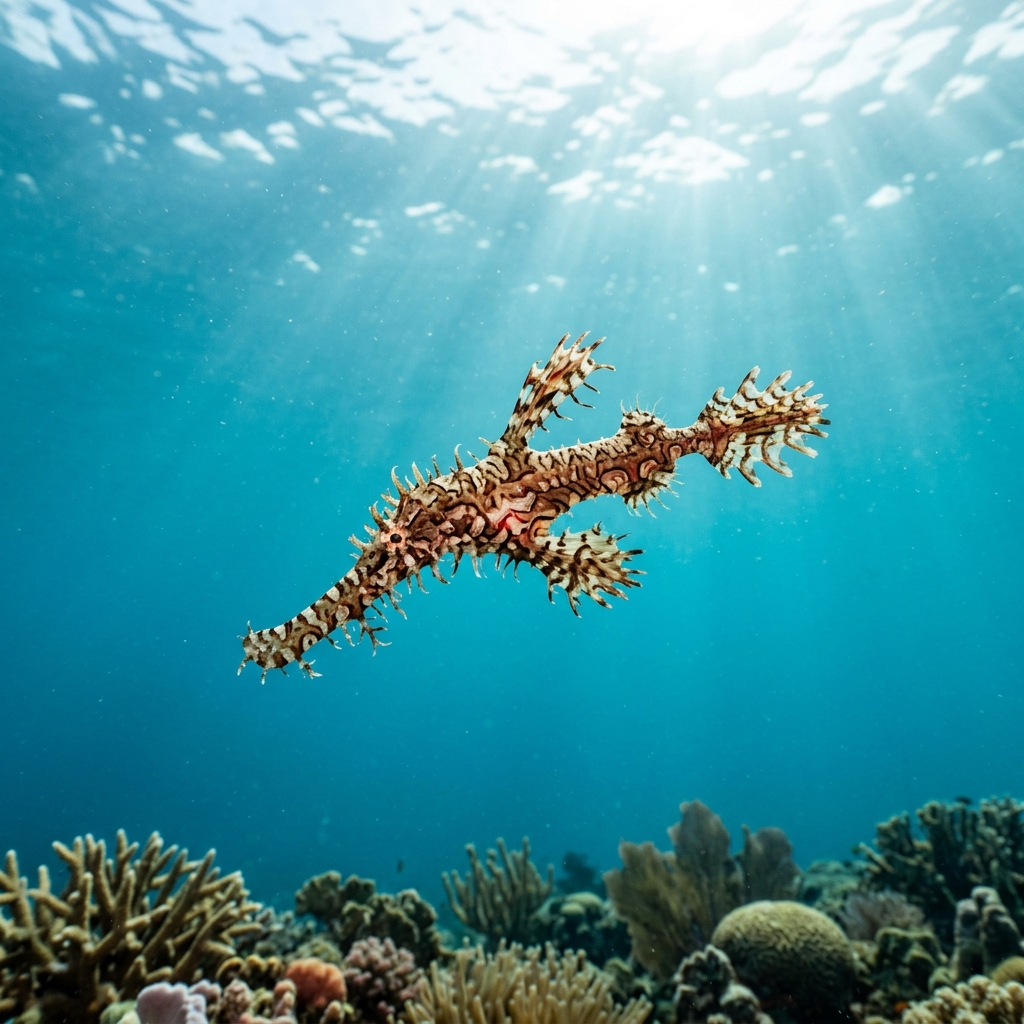
Reef neighbours a diver could mistake it for. Use the identification notes above to tell them apart.
Every logged sighting of this species comes from Grand Cayman in the Cayman Islands, making it the only place divers currently report finding pipehorse. Within Grand Cayman it turns up at a handful of specific sites, so local dive guides who know the exact sponge colonies are your best route to a sighting.
Mapping where Pipehorse is logged…
All current sightings come from Grand Cayman in the Cayman Islands, where it has been logged at a small number of specific dive sites. It has not been reported diving elsewhere, so Grand Cayman is currently the place to look.
There is no detected season, and water temperature stays in a comfortable 23.7 to 27.8C range year-round in Grand Cayman, so sightings are possible any month. It comes down to finding the right sponge colony rather than timing your trip.
Look for a thin, twig-like body around 6cm long clinging to branching sponges rather than swimming in open water. Its mottled colouring matches its perch closely, so it is easier to spot by scanning sponge branches slowly than by looking for movement.
They stay small, reaching around 6cm in length, which combined with their sponge-matching colour makes them one of the easier reef animals to swim straight past.
No, they pose no risk to divers. They are tiny, slow-moving animals that rely entirely on camouflage rather than any defence against something as large as a diver.
It sits between seahorses and pipefish, gripping sponges and hydroids with a prehensile tail like a seahorse while keeping the straight, uncurled body shape of a pipefish.
Site and sighting data is aggregated from diver logs, iNaturalist and GBIF. For taxonomy and conservation status:
Seahorse
1,346 sites