Paguristes gamianus
Rare, pink-tinged hermit crab found on Western Cape reefs in cool water from 13.4 to 19.4 C. Here's what to look for.
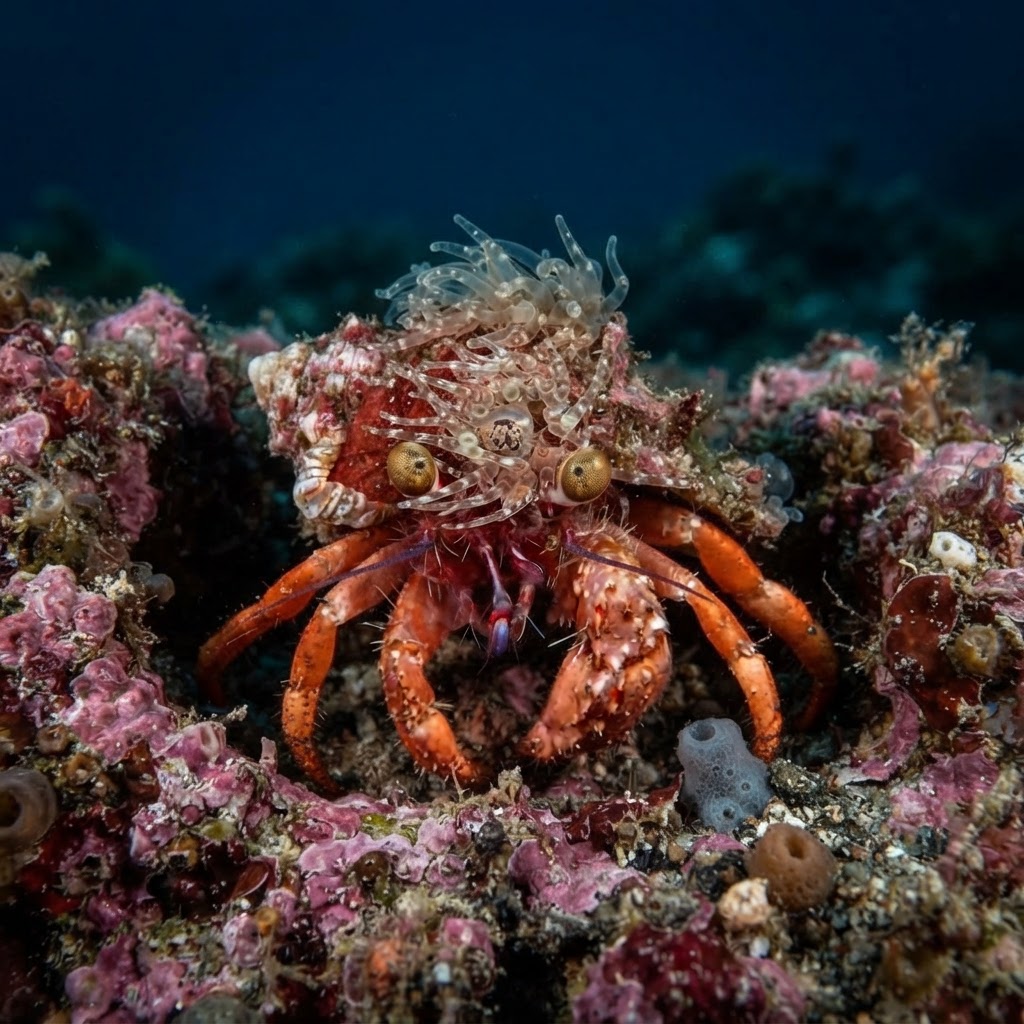
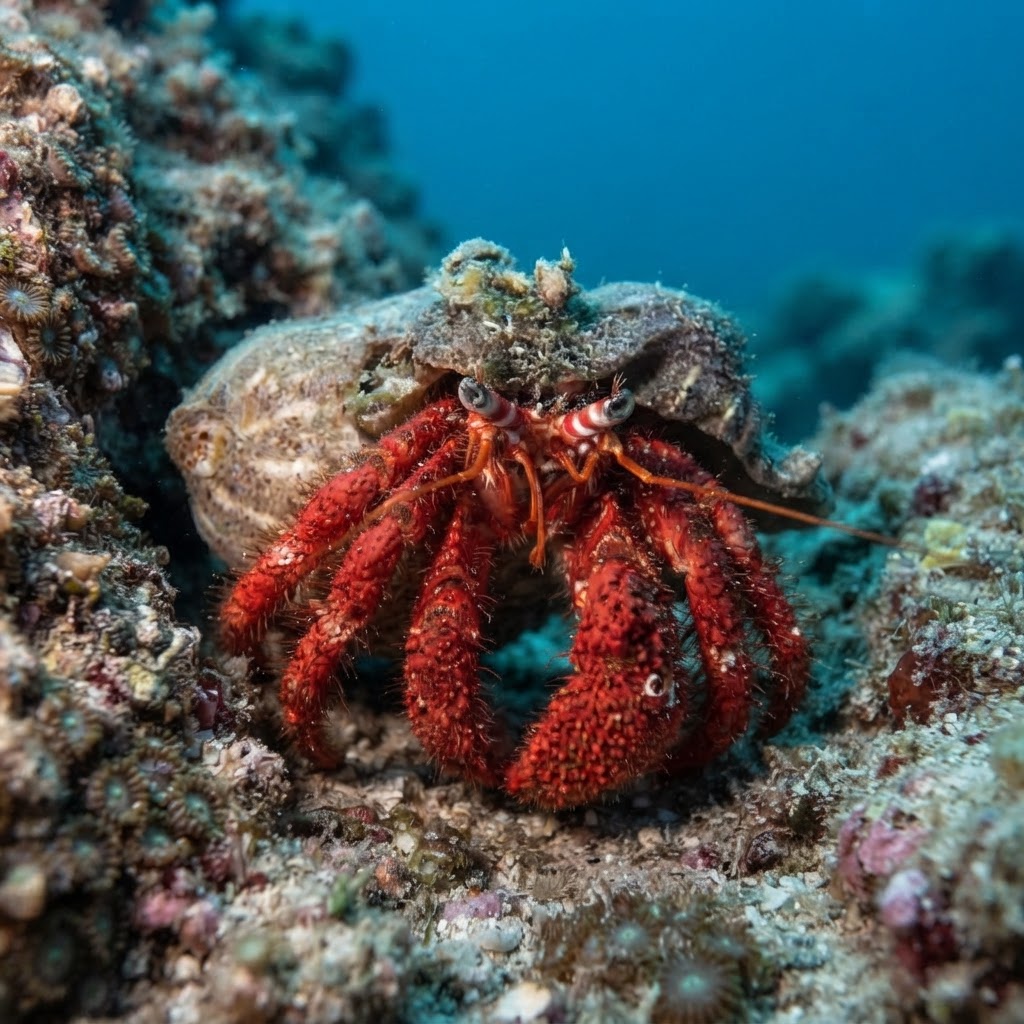
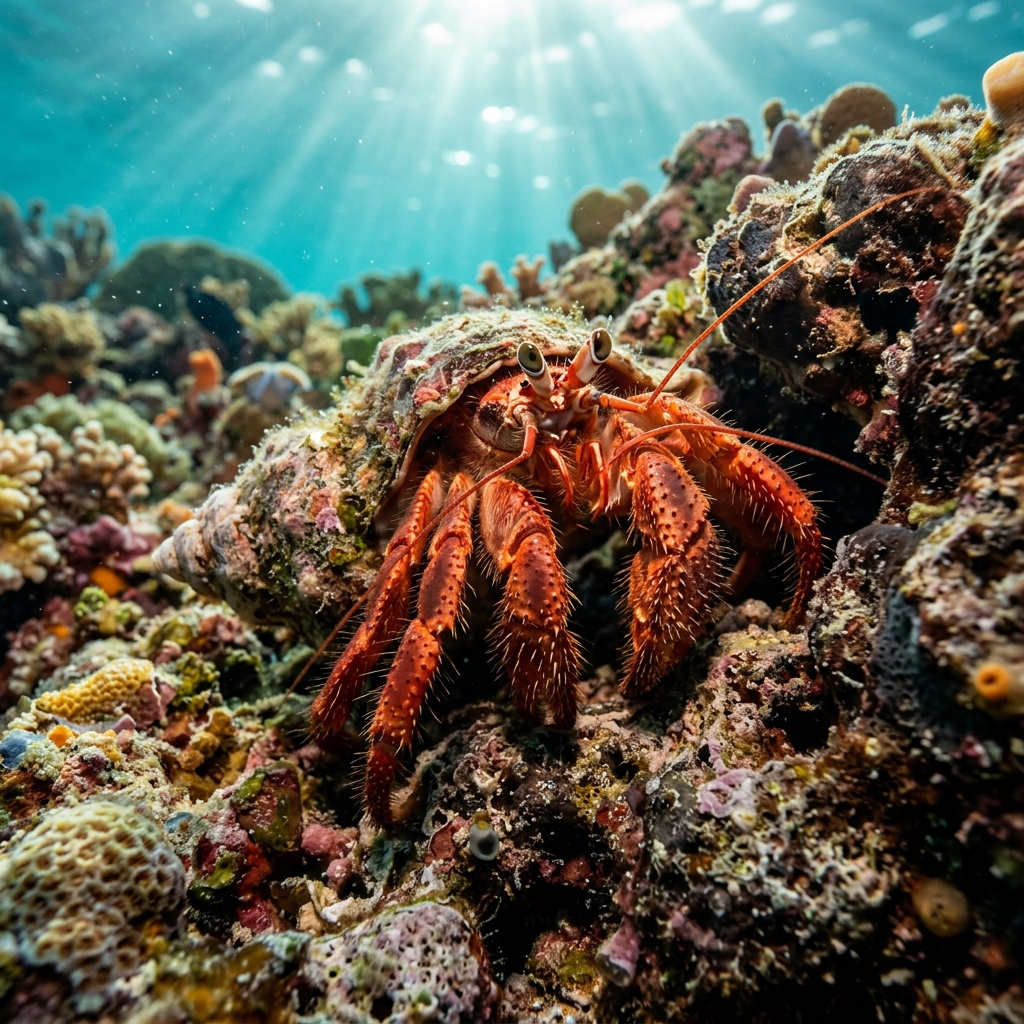
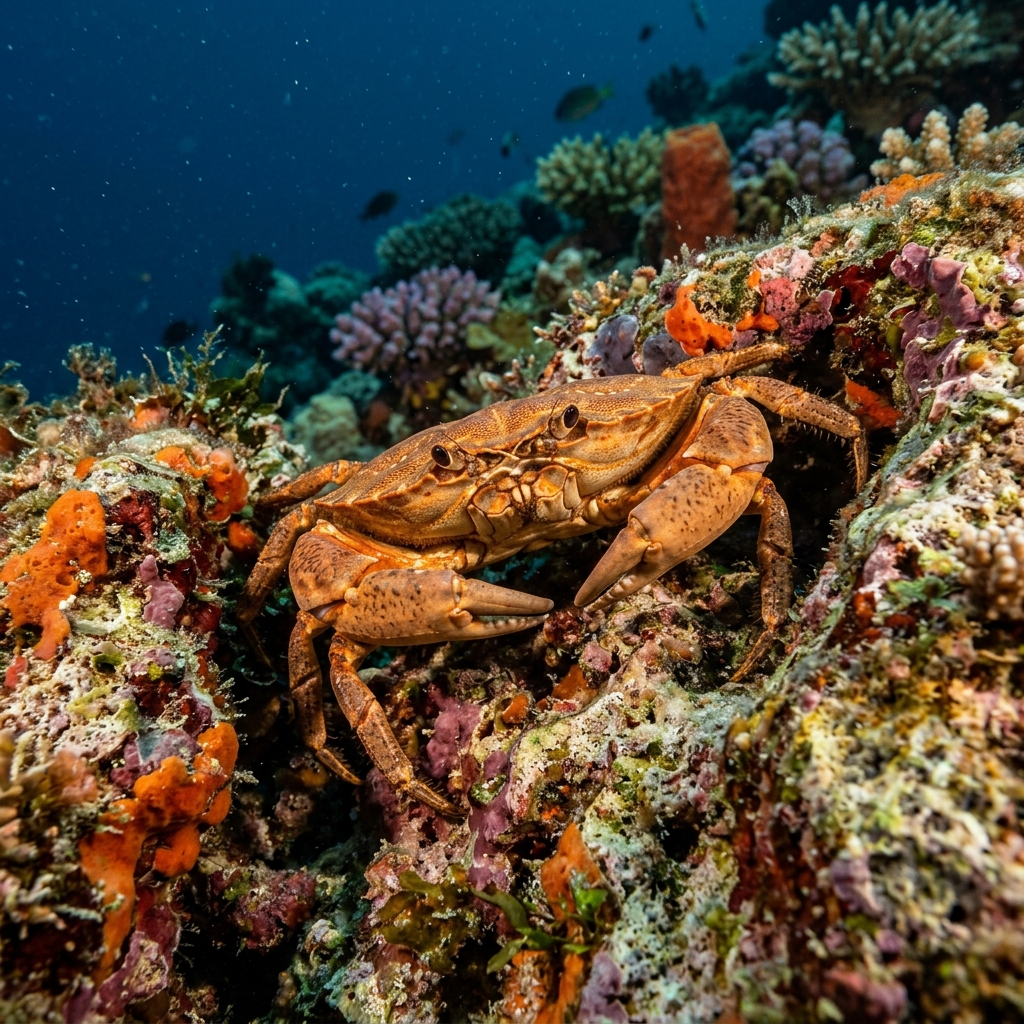
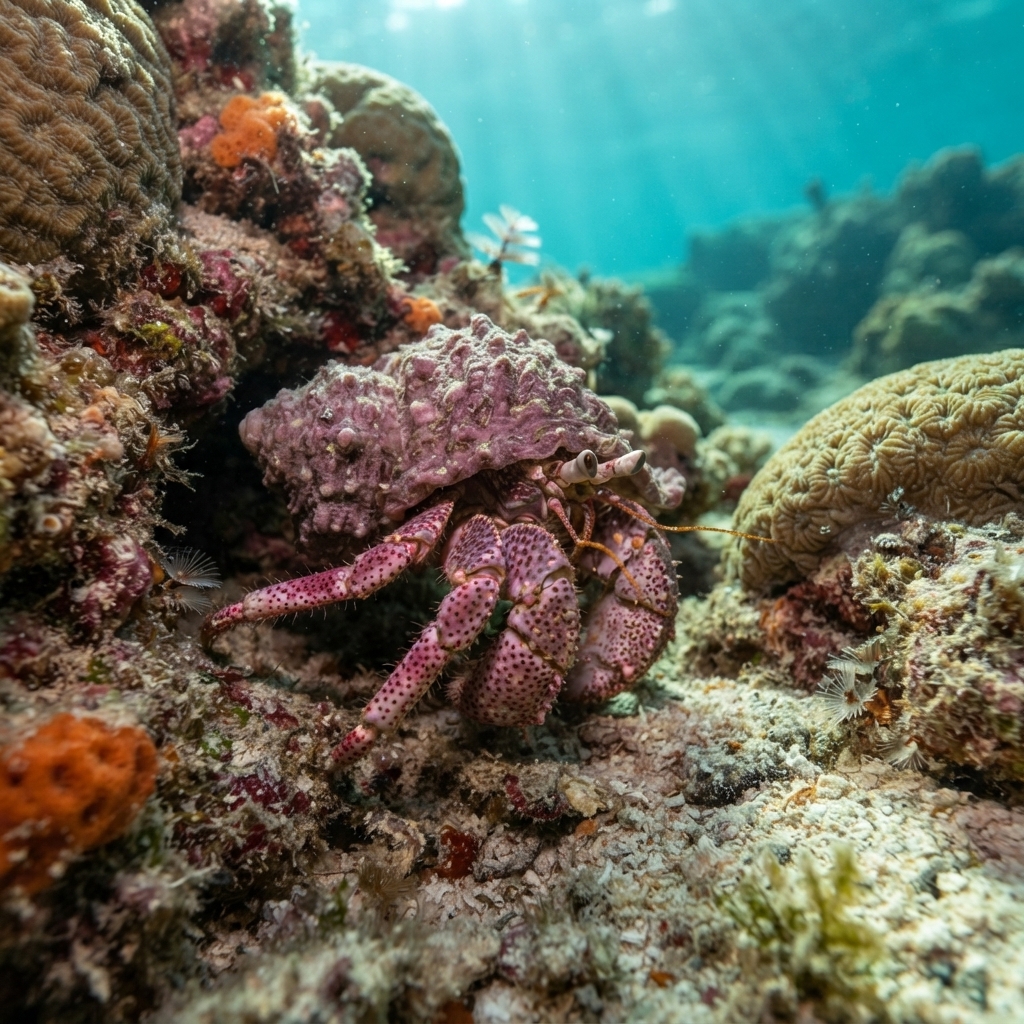
Small hermit crab with pale to dusty pink legs and claws, usually spotted with just the legs and eyestalks poking from a scavenged shell. Look for a squat, borrowed shell dragged across rock and rubble rather than any fixed body shape, since the crab's own soft abdomen stays hidden inside it. The pink wash on the limbs is the main giveaway against the more common local hermit crabs in the same reefs.
Divers find it tucked into rocky crevices and rubble patches, moving slowly across the bottom in its borrowed shell while foraging. It's not a species that reacts dramatically to divers, tending to withdraw into its shell if disturbed rather than fleeing, so a slow approach and a close look at the substrate is the best way to spot one.
Like all hermit crabs it doesn't grow its own hard shell, so as it grows it has to find and move into a bigger empty snail shell, meaning the same individual can look like it's wearing a completely different shell from one dive to the next.
No clear seasonal pattern shows up in the sightings, and the water it's found in sits in a fairly narrow cool band of 13.4 to 19.4 C, so treat it as a year-round possibility on Western Cape dives whenever conditions allow a look at the substrate.
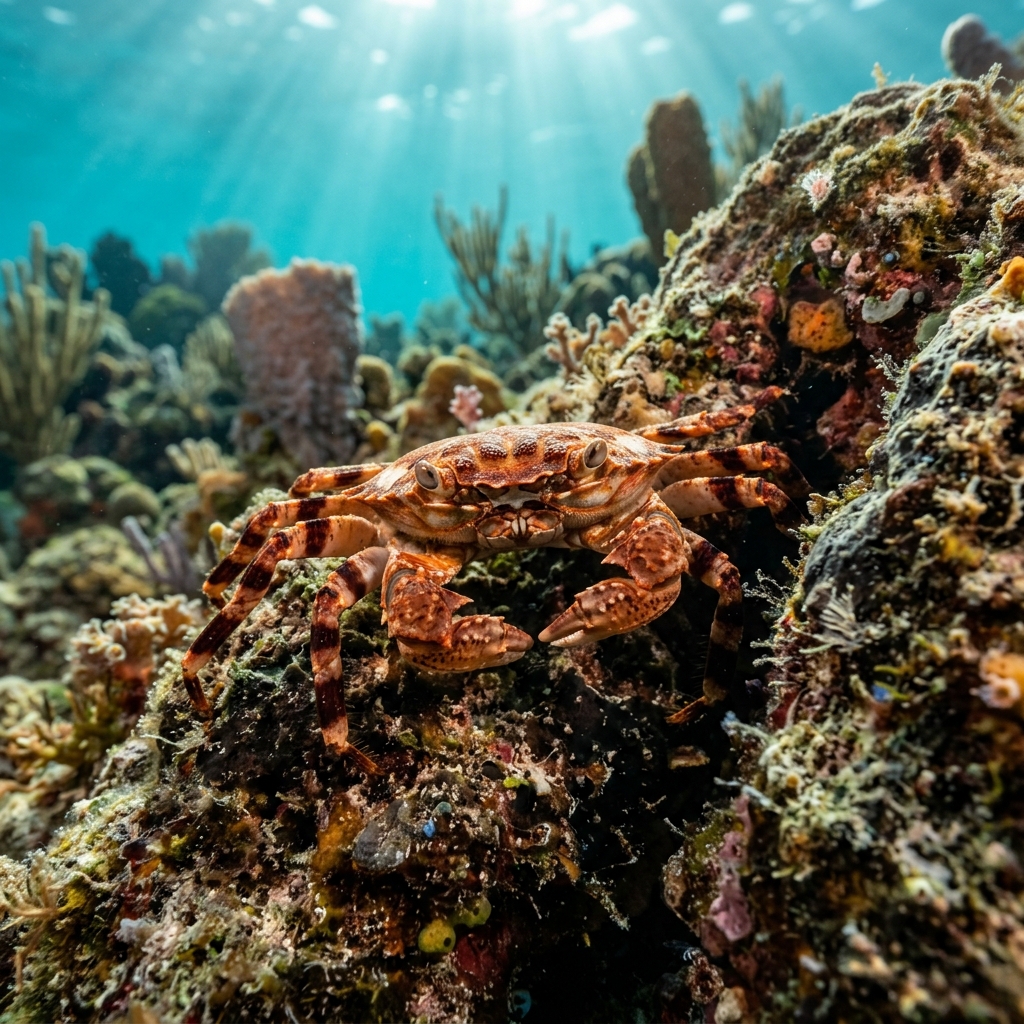
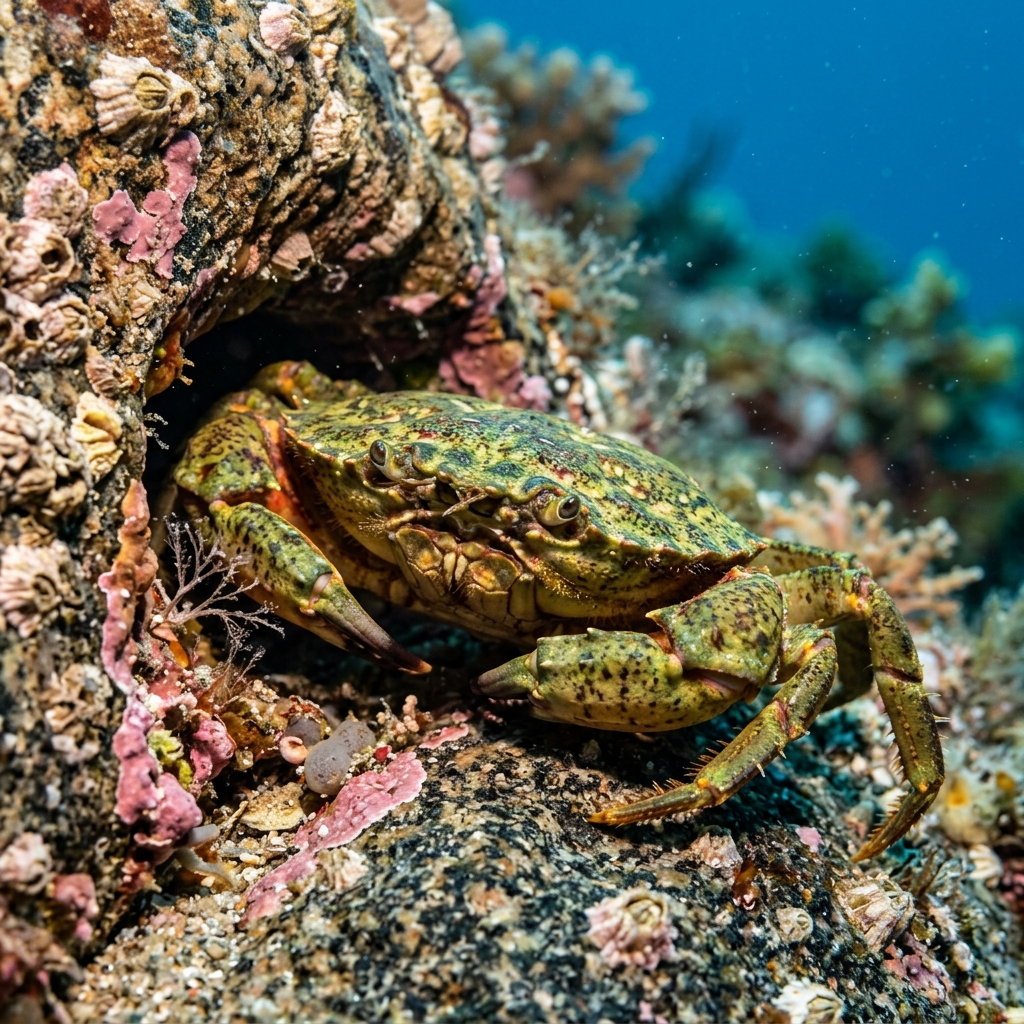
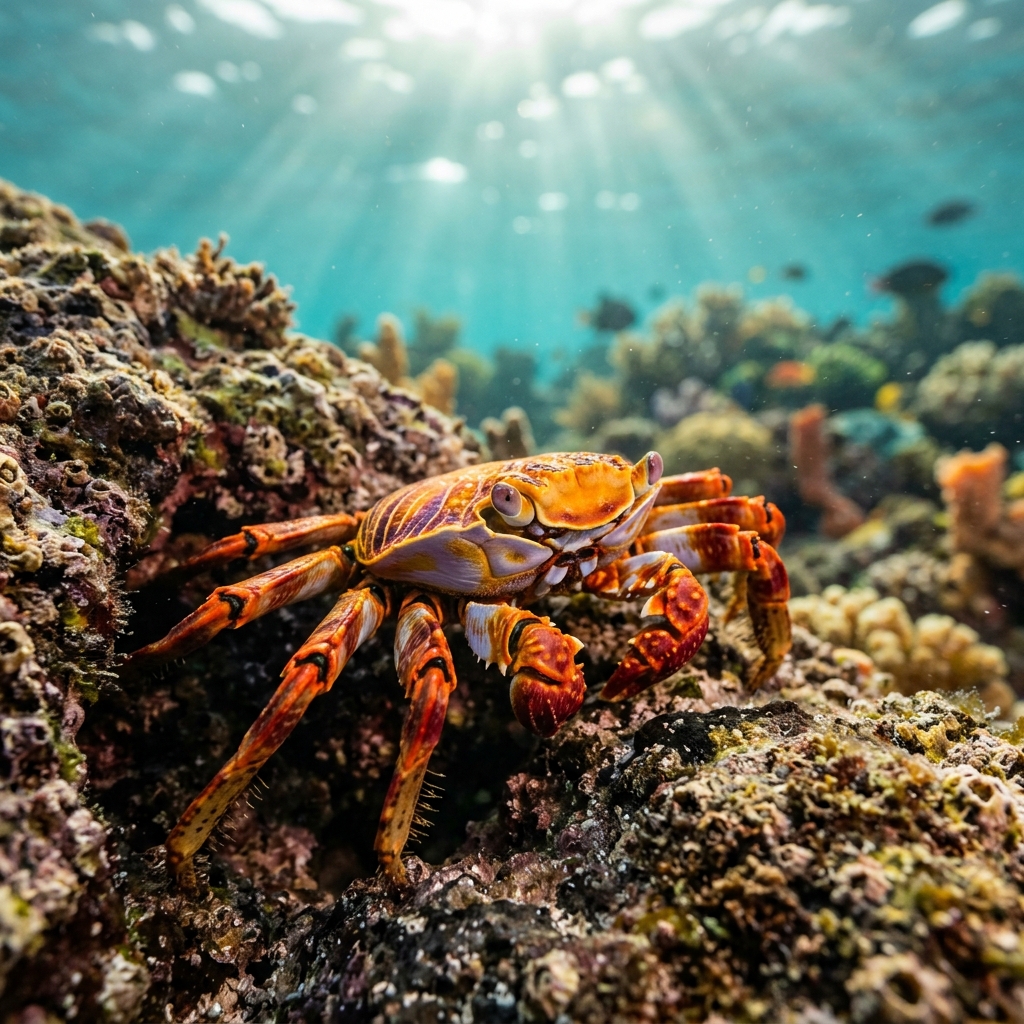
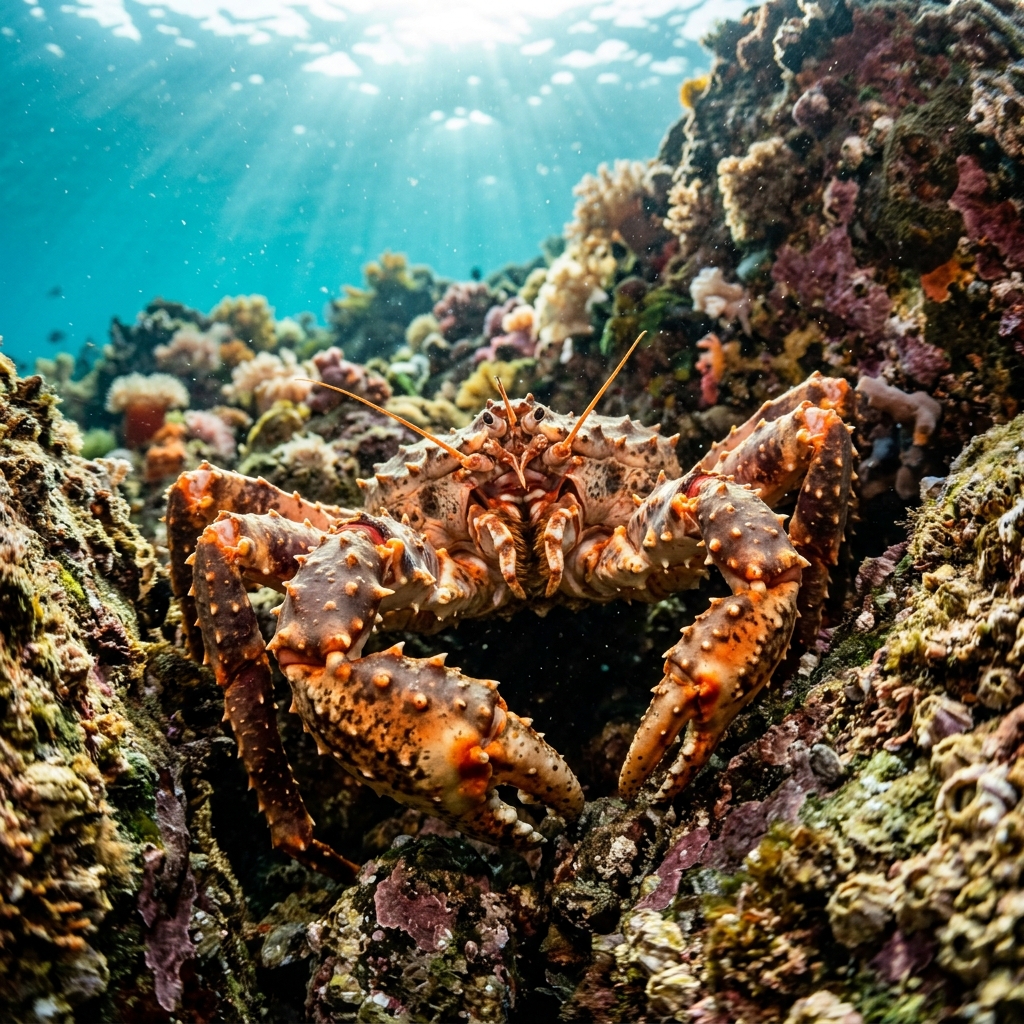
Reef neighbours a diver could mistake it for. Use the identification notes above to tell them apart.
Every logged sighting so far comes from South Africa, concentrated in the Western Cape, making it the only region divers currently associate with this species. Within that area it turns up on cool-water reef and rubble sites rather than being spread across a wide range of locations.
Mapping where Pink Hermit Crab is logged…
All confirmed sightings are from South Africa's Western Cape, making it the region to target if you want a chance of finding one. It hasn't been logged outside this area.
There's no detected seasonal pattern, so sightings are treated as possible year-round. It's found in cool water between 13.4 and 19.4 C, which is typical of Western Cape diving conditions through most of the year.
Look for a small hermit crab with pale pink legs and claws poking out from a scavenged snail shell on rock or rubble. The pink colouring on the limbs is the clearest feature separating it from other local hermit crabs.
Exact size data isn't confirmed, but like other hermit crabs in this genus it's a small species, easily overlooked unless you're scanning rubble and rock crevices closely.
No, they pose no danger to divers. They're small, defensive rather than aggressive, and simply retreat into their shell if approached.
They don't grow their own shell, instead occupying empty snail shells and upgrading to a larger one as they grow, so the same crab can look completely different between sightings depending on which shell it's found.
Site and sighting data is aggregated from diver logs, iNaturalist and GBIF. For taxonomy and conservation status:
European Green Crab
2,469 sites