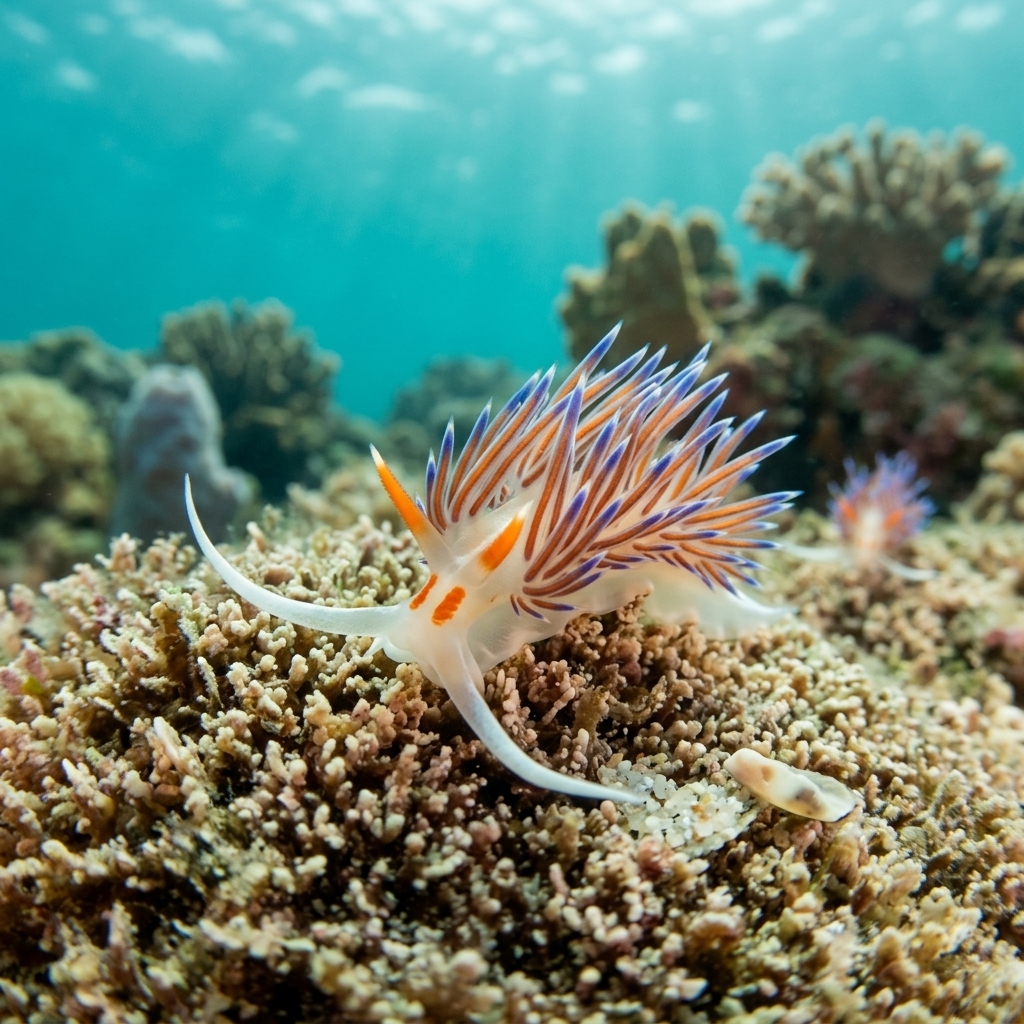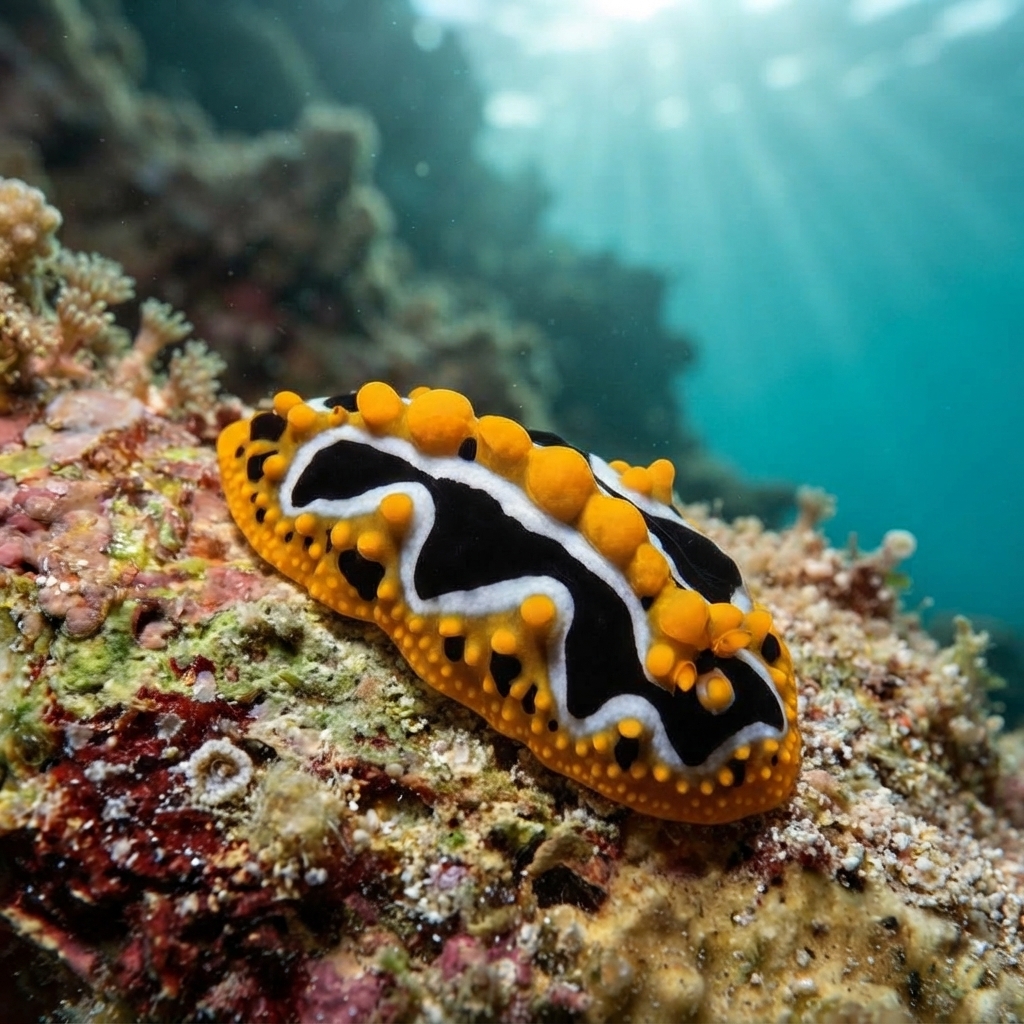
Phyllidia undula
Small warty nudibranch turning up on reef walls in Flic-en-Flac and Saint-Paul, year-round in 22-28C water. Here's how to spot one.
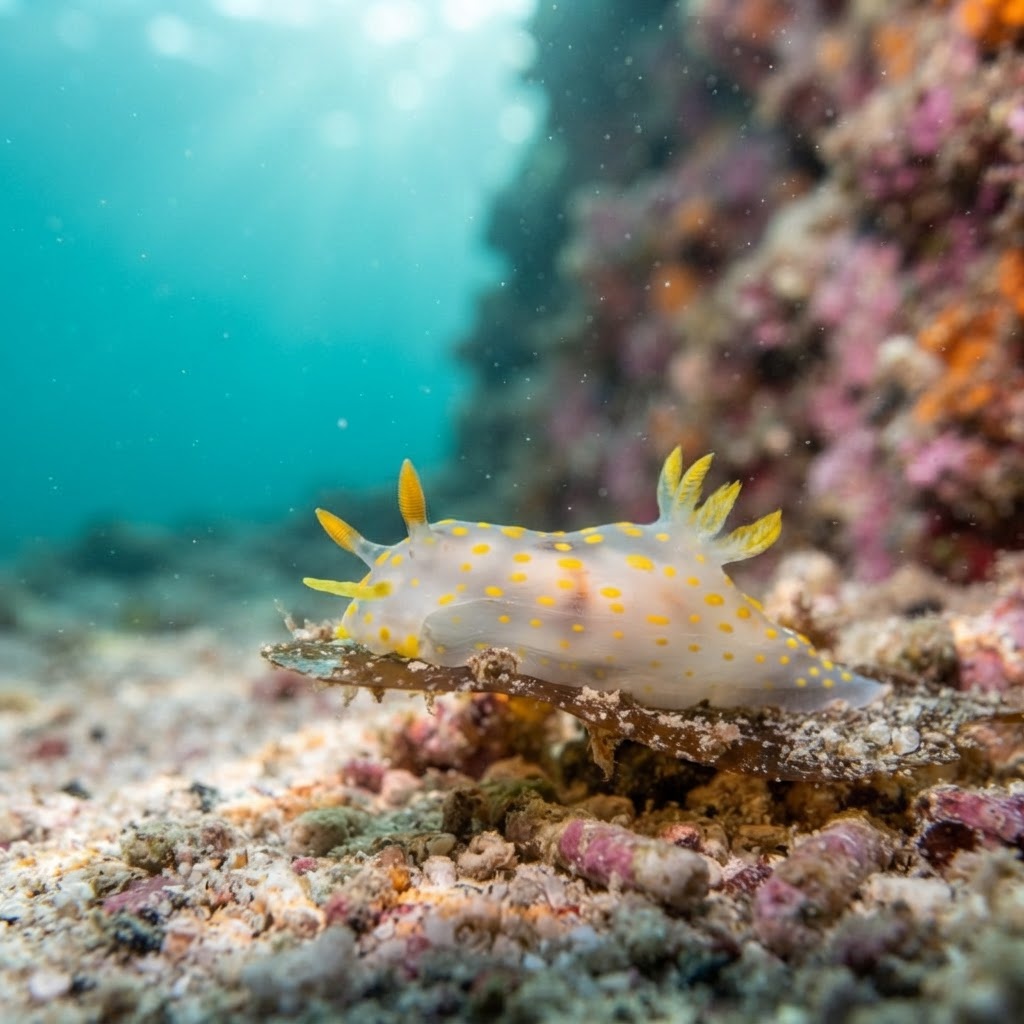
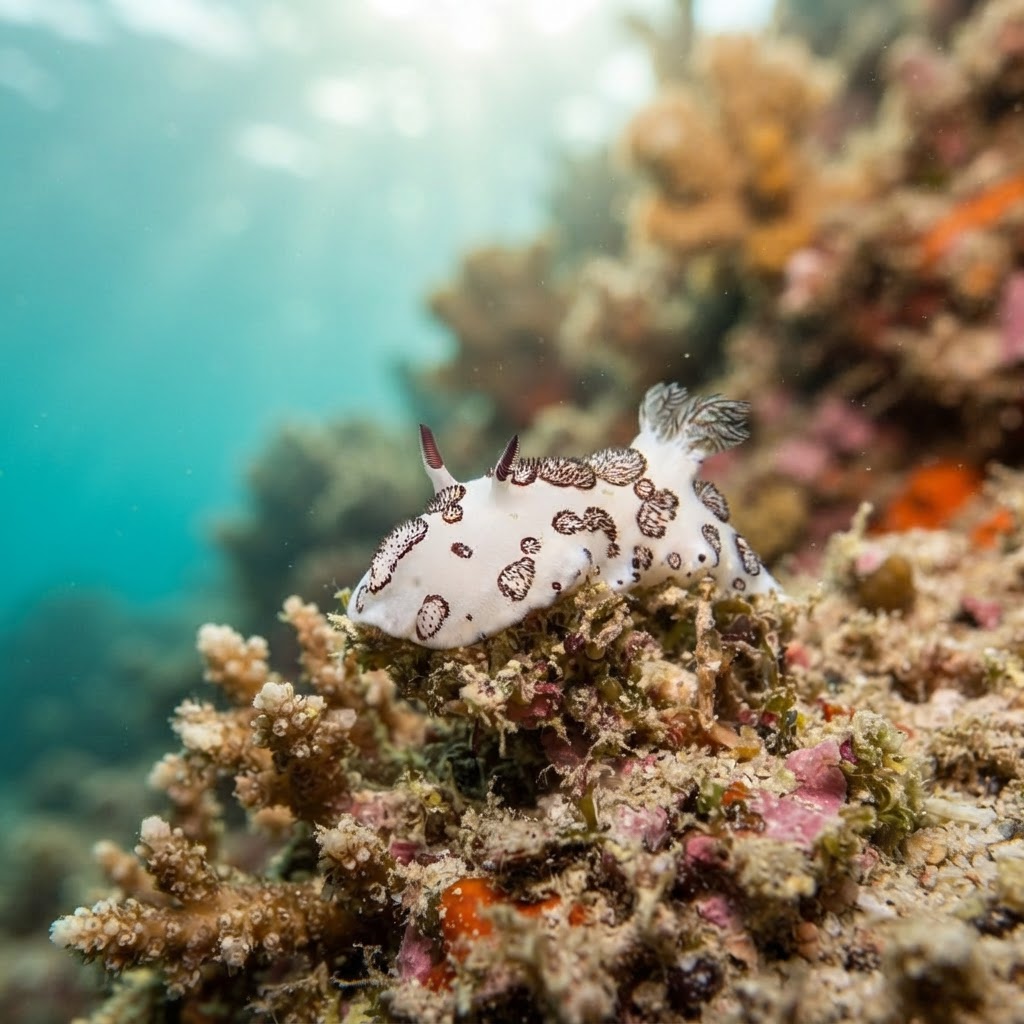
A small, elongated nudibranch with a stiff, warty-looking body covered in raised ridges (tubercles) rather than the smooth or gilled look of many reef slugs. Colouration runs pale grey to bluish-white with black lines tracing the ridges, giving it a mottled, almost armoured appearance against the reef. It moves slowly and stays low, so divers usually spot it by scanning rubble and dead coral rather than open rock.
Divers find it parked on rubble, dead coral, and low reef structure rather than out in the open, moving at the unhurried pace typical of phyllidiid nudibranchs. It does not react to divers approaching with a light or camera, making it an easy macro subject once you've located one. Most sightings are logged as uncommon rather than common, so it rewards a slow, close look at the substrate rather than a quick swim-by.
Like other Phyllidia species, it likely gets its toxin defences from sponge prey rather than producing them itself, which is why phyllidiids can afford to sit still in plain view without much risk from predators.
No clear seasonal pattern shows up in the sighting data, and its comfort range of 22.2 to 28.2C spans most of the diving calendar at these sites, so treat it as a year-round find rather than something tied to a particular month.
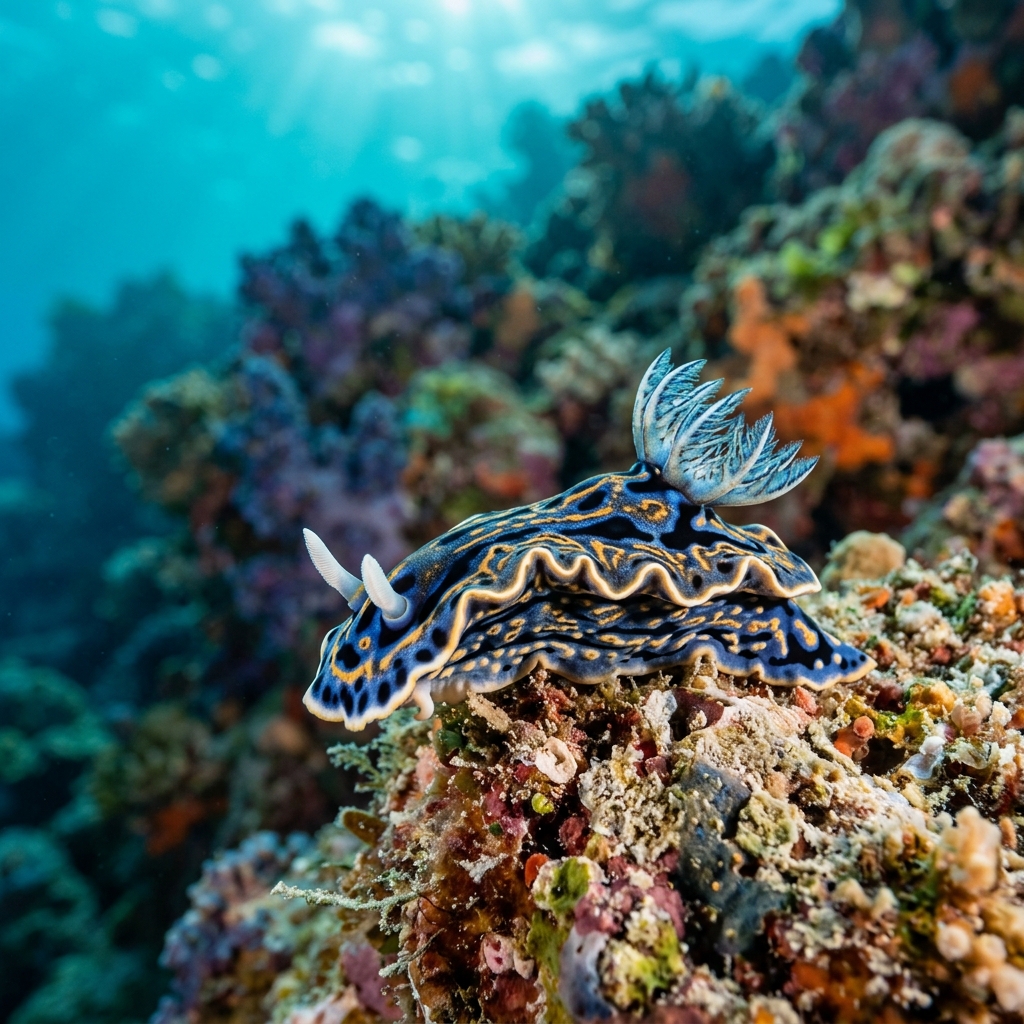
Reef neighbours a diver could mistake it for. Use the identification notes above to tell them apart.
Most consistently logged in Mauritius, especially around Flic-en-Flac, and in Reunion around Saint-Paul, which together account for the bulk of sightings. It also turns up with fair regularity in Eilat, Israel, and shows up in smaller numbers in South Sinai, Egypt, and Nosy Be, Madagascar.
Mapping where Phyllidia Undula is logged…
Best chances are in Mauritius around Flic-en-Flac and Reunion around Saint-Paul, where it's logged most often. It's also a reasonable find in Eilat, Israel, and appears in smaller numbers in South Sinai, Egypt, and Nosy Be, Madagascar.
There's no strong seasonal signal in the data, and it's found across a wide temperature range from 22 to 28C, so it's a year-round sighting rather than a seasonal one.
Look for a small, stiff-bodied nudibranch with raised warty ridges in pale grey to bluish-white, traced with black lines. It sits low on rubble and dead coral and moves slowly, unlike the smoother-bodied Chromodoris types often seen nearby.
No, it poses no threat to divers. It's a slow-moving, stationary nudibranch that's safe to observe and photograph up close.
They likely carry defensive toxins absorbed from the sponges they feed on, which discourages predators and lets them sit exposed on the reef in daylight without much cover.
Site and sighting data is aggregated from diver logs, iNaturalist and GBIF. For taxonomy and conservation status:
Nudibranch
3,168 sites