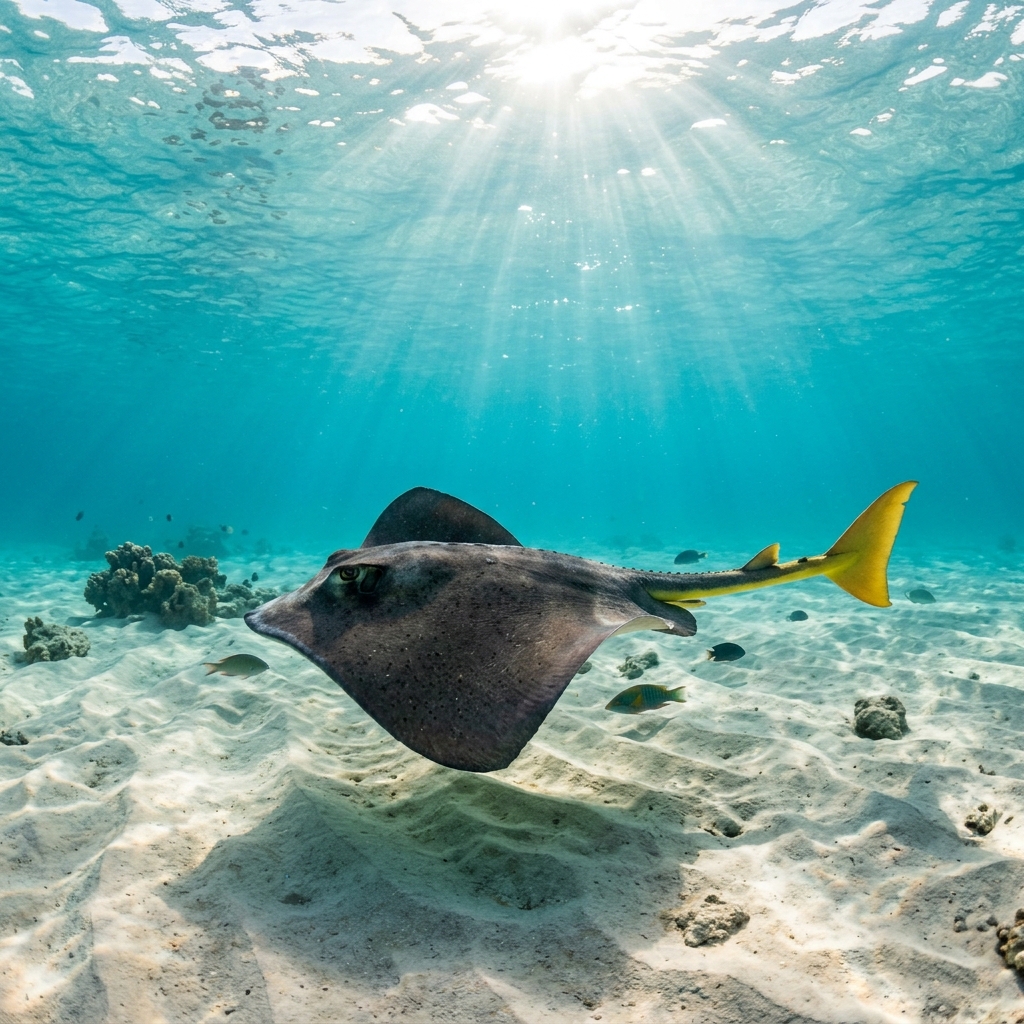
Pastinachus ater
Spot the Banana-tail Ray in Queensland, Egypt's Marsa Alam, and the Seychelles. Tips on ID, best seasons, and where divers log it most.
If you're stung
Venomous tail barbGeneral first-aid guidance, not a substitute for professional medical care. In an emergency, call your local emergency number.
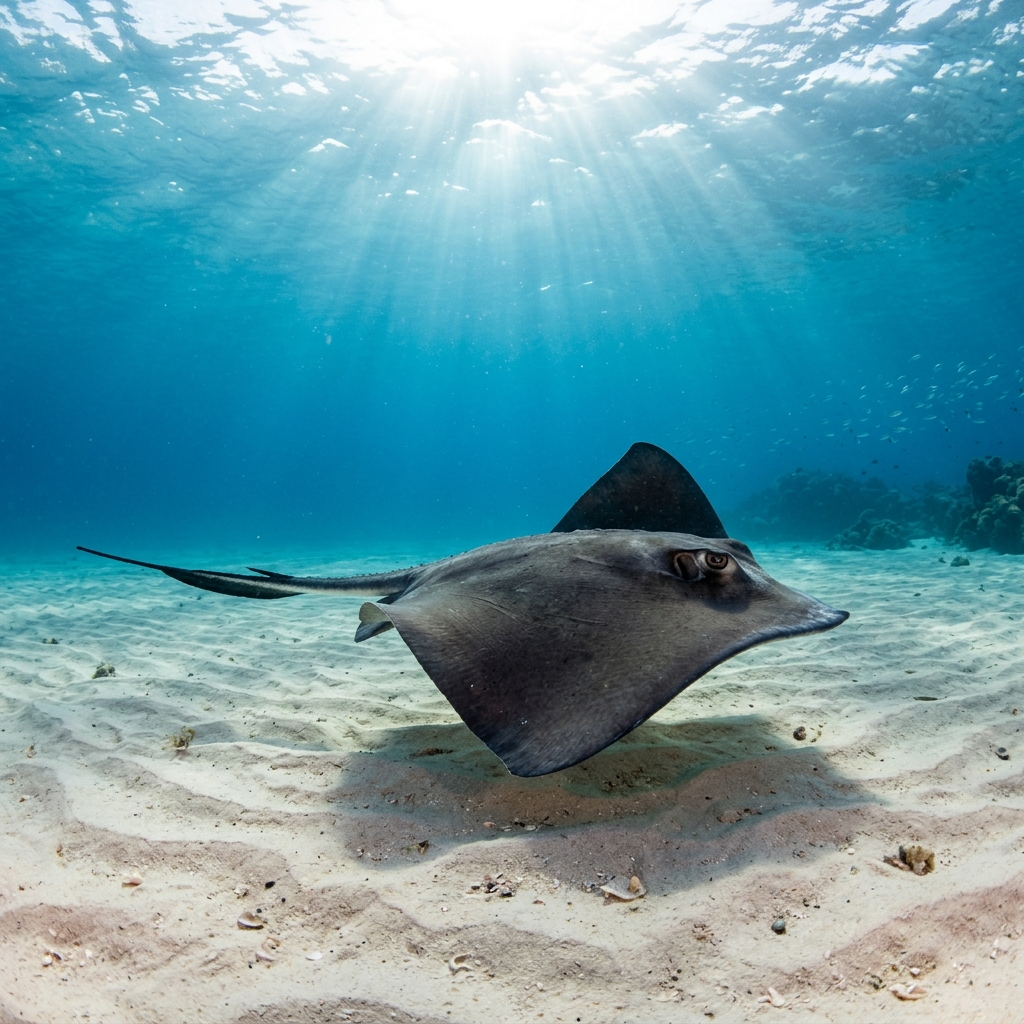
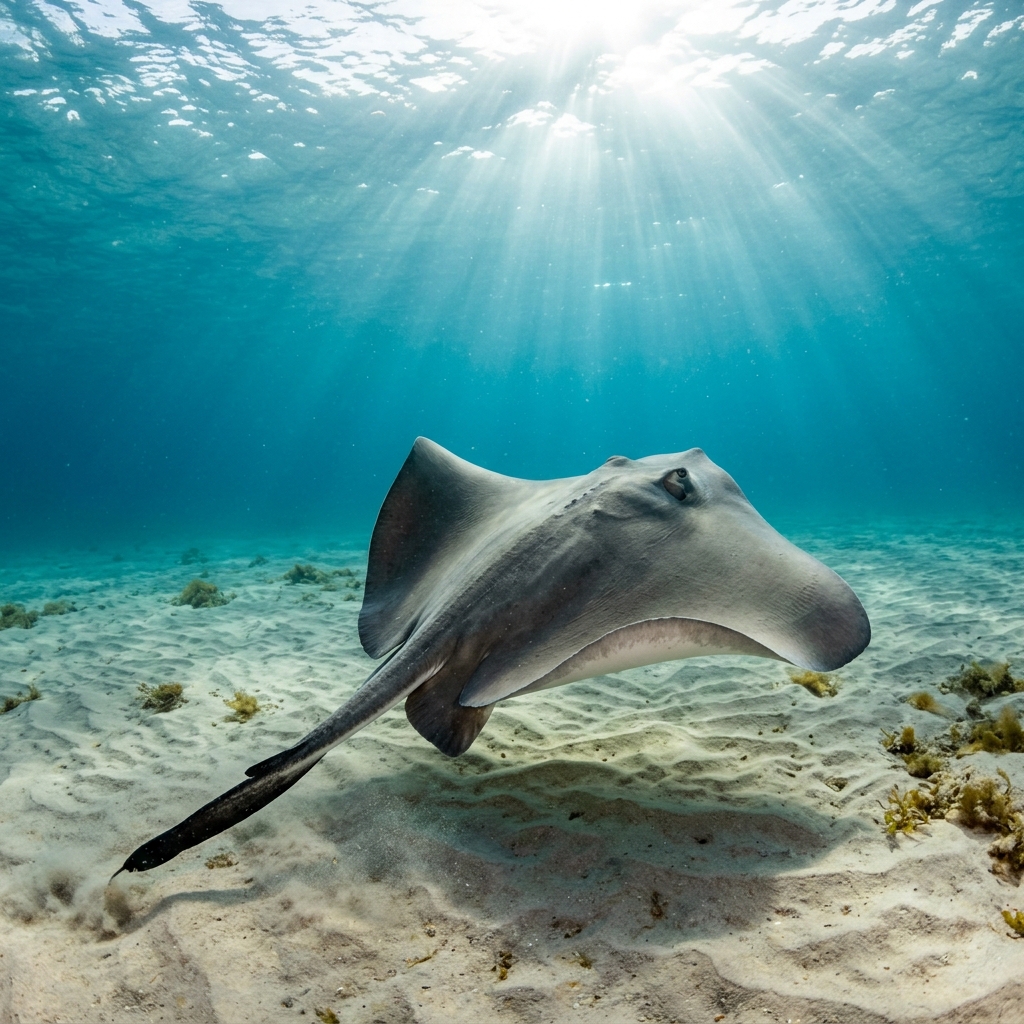
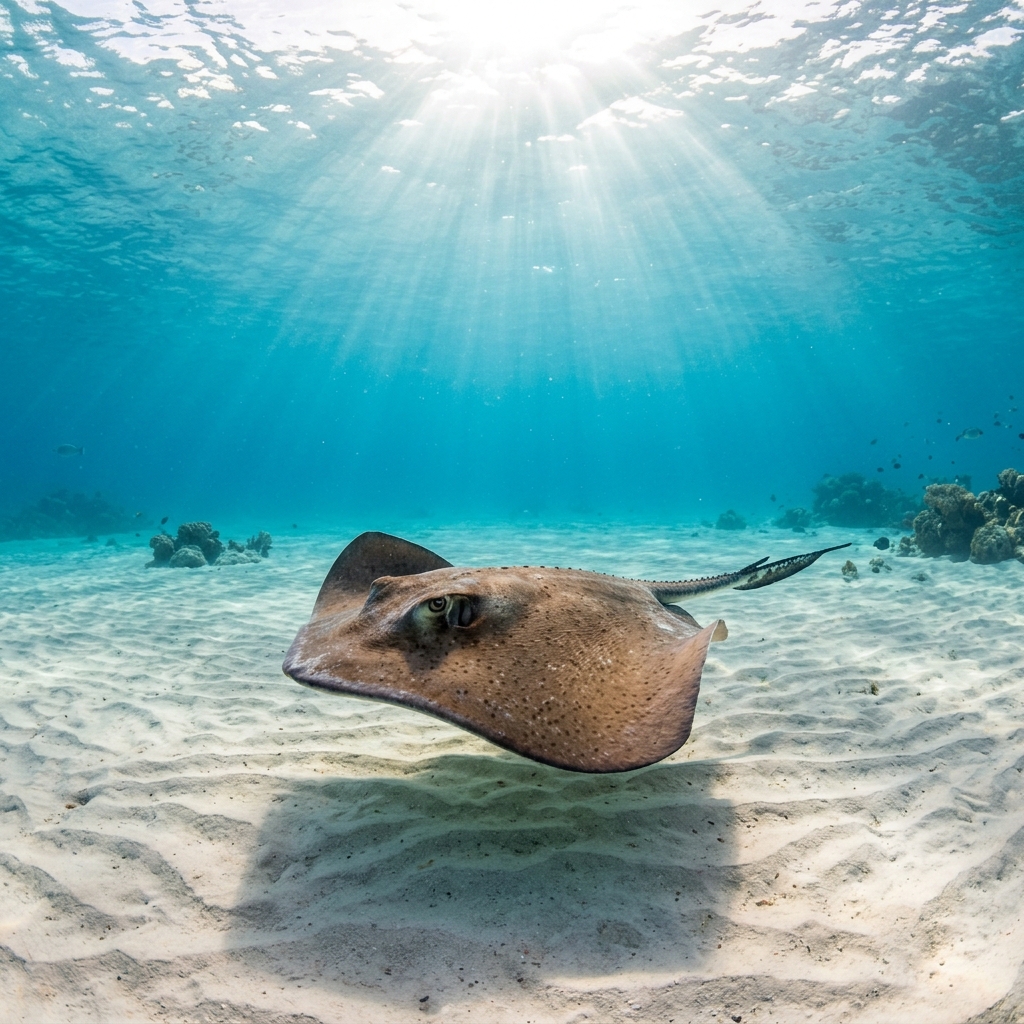
A broad, diamond-shaped disc in uniform dark brown to black on the dorsal (upper) side, with a notably pale, cream to white underside visible when it banks or passes overhead. The tail is long and whip-like, lacking the banded patterning of some relatives, and the posterior disc margin has a characteristic fleshy fold along the tail base that is a useful close-range clue. In the water it reads as a large, plain dark ray; the absence of spots, bars, or patterning is itself the key identification mark.
Typically encountered gliding slowly over sandy or rubble-strewn bottom, often in relatively shallow coastal areas, occasionally resting flat on the seabed. It tends to be tolerant of calm, slow-moving divers but will accelerate away if approached too quickly from above. Most sightings are of solitary individuals; it is not a schooling or aggregating ray in the way some pelagic relatives are.
The fleshy skin fold running along the underside of the tail base, called a ventral tail fold, is a distinguishing anatomical feature of the Pastinachus genus and helps separate it from plain-coloured dasyatid stingrays at close range.
In the Southern Hemisphere sites, sightings concentrate from June through January, so that window covers the Australian cool-to-warm transition and summer. The species has been observed across a water temperature range of roughly 22 to 27 °C, which covers most of the year in the Red Sea and Seychelles, where no strong seasonal gap has been recorded from the data.
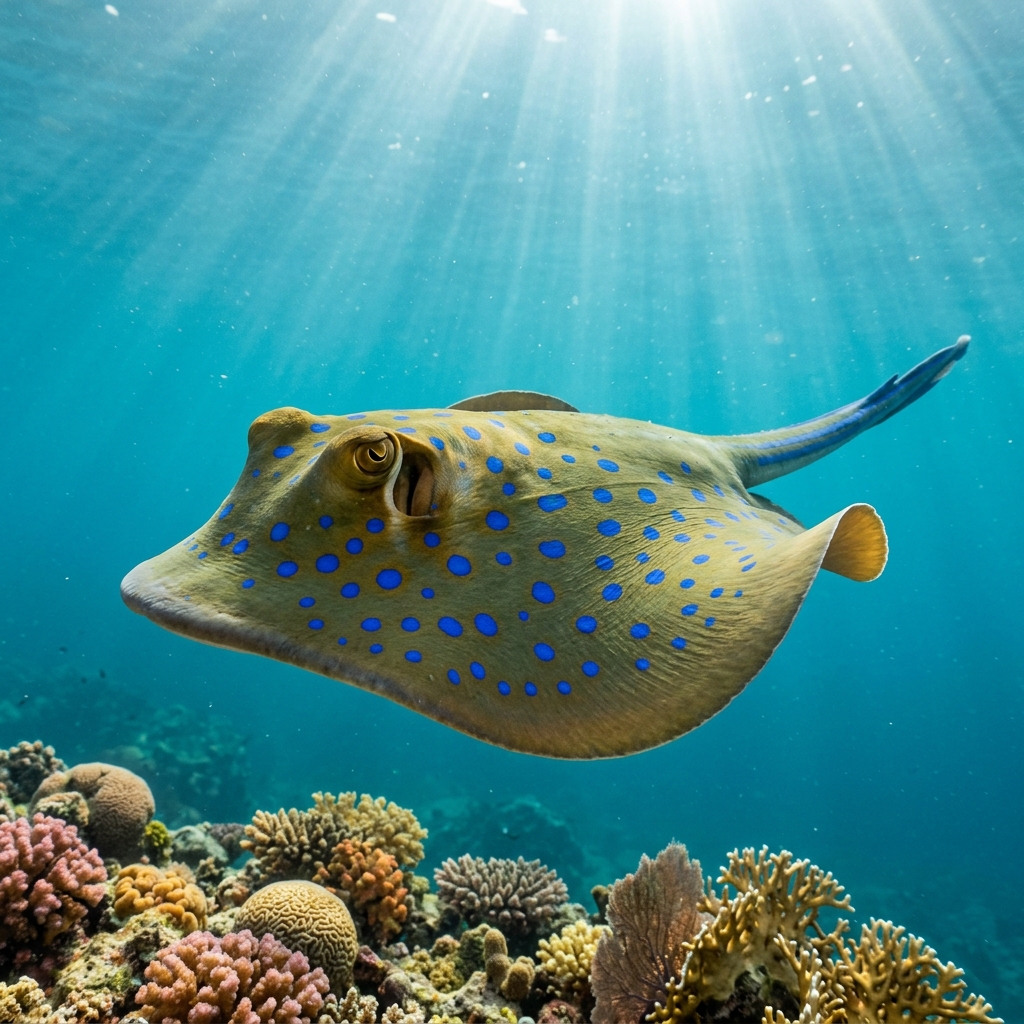
Reef neighbours a diver could mistake it for. Use the identification notes above to tell them apart.
Most logged in Australia, where Queensland's reefs and bays account for the lion's share of sightings, with additional records from New South Wales and Western Australia. Egypt's Marsa Alam is the strongest site cluster outside the Indo-Pacific, making the northern Red Sea a solid secondary destination, while the Seychelles (particularly the Praslin and La Digue area) and Fujairah in the UAE round out the Indian Ocean spread.
Mapping where Broad Cowtail Ray is logged…
Queensland, Australia is by far the most consistent location, with additional sightings along the New South Wales and Western Australian coasts. Outside Australia, Marsa Alam in Egypt's Red Sea is a reliable region, and the Seychelles, UAE (Fujairah), and Maldives also have confirmed sightings.
In Australian waters, sightings peak between June and January. In the Red Sea and Seychelles, the species appears throughout the year where water temperatures sit in the 22 to 27 °C range it favours.
Look for a large, plain dark brown to black disc with no spots or bars, a bright pale underside, and a long whip-like tail with a fleshy fold at its base. The lack of any patterning on top is the quickest field mark separating it from spotted or marbled rays.
They are not considered dangerous. Like all stingrays they carry a venomous tail spine, but the species shows no aggressive behaviour toward divers. Give it space and avoid cornering or standing on the seafloor near it, and there is no meaningful risk.
They are classified as Vulnerable by the IUCN, one step below Endangered. Coastal habitat loss and incidental capture in fishing gear are the main pressures. Divers can help by logging sightings and avoiding any handling or harassment.
Across the sites where it has been observed, it is most often rated as uncommon, with a sizeable portion of sites rating it rare. Common sightings are reported at a smaller number of sites, mainly in Queensland. Going in with patience and low expectations is sensible; it is a pleasing find rather than a guaranteed encounter.
The Broad Cowtail Ray is listed as vulnerable by the IUCN. Observe from a distance, avoid touching or feeding it, and report sightings to local marine research organisations.
Listed as Vulnerable on the IUCN Red List, meaning populations face real pressure from coastal habitat degradation and bycatch across its range. If you encounter one, keep a respectful distance and avoid touching or chasing it; reporting your sighting through a platform like iNaturalist contributes valuable distribution data for this under-studied species.
Site and sighting data is aggregated from diver logs, iNaturalist and GBIF. For taxonomy and conservation status:
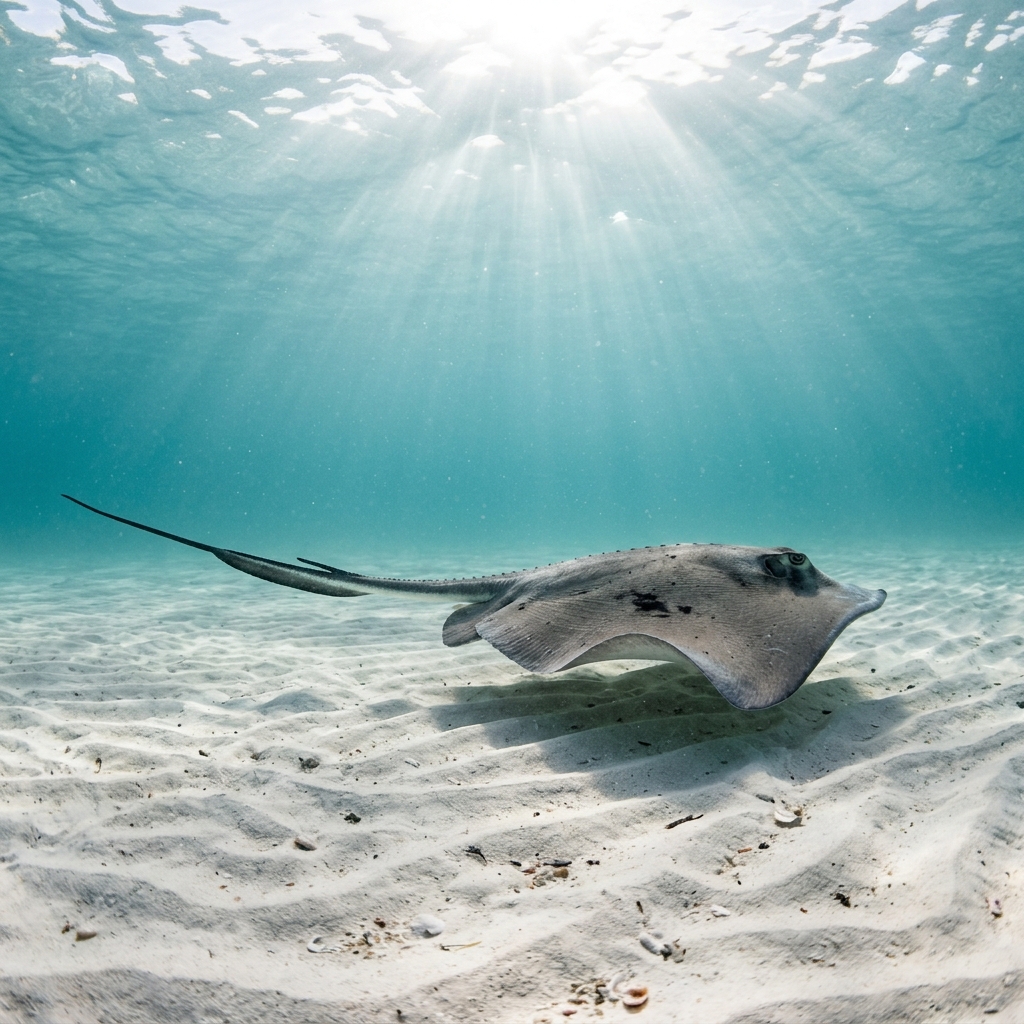
Whiptail Stingray
1,747 sites