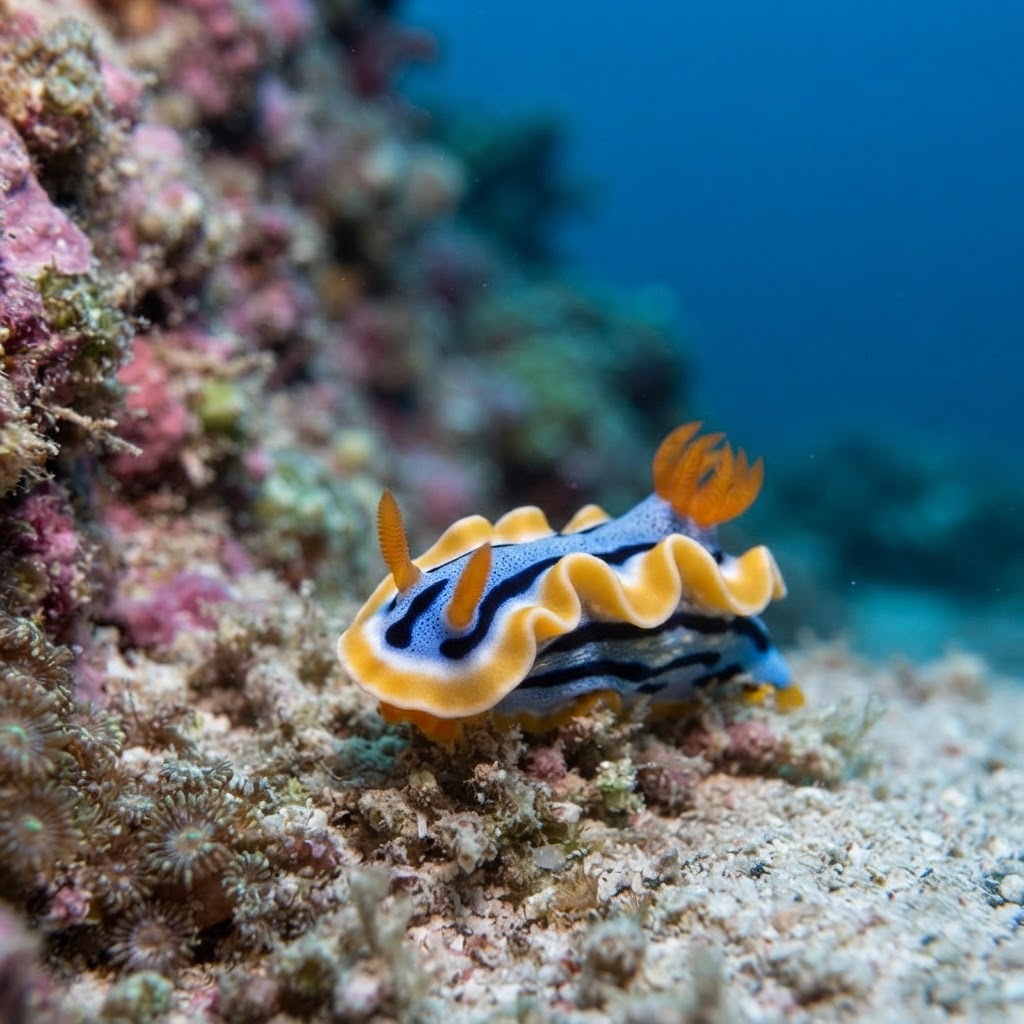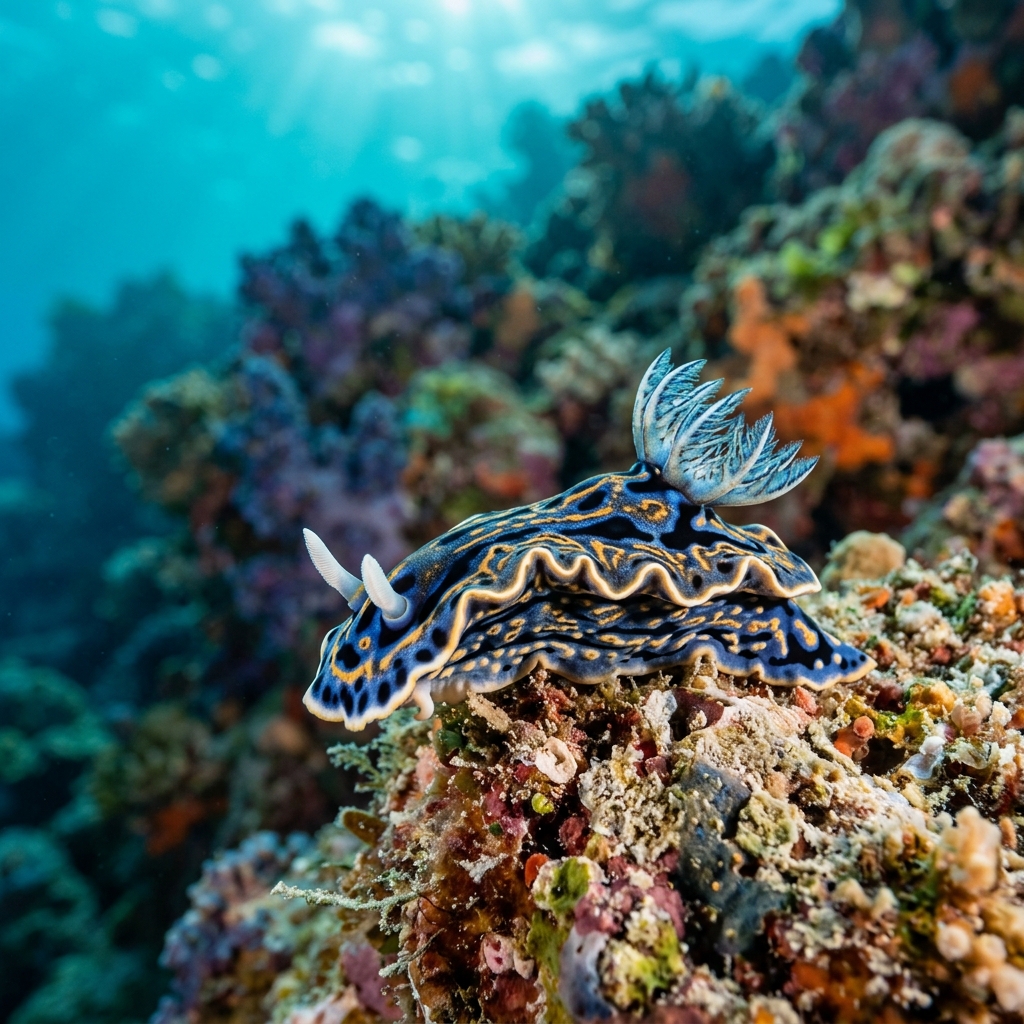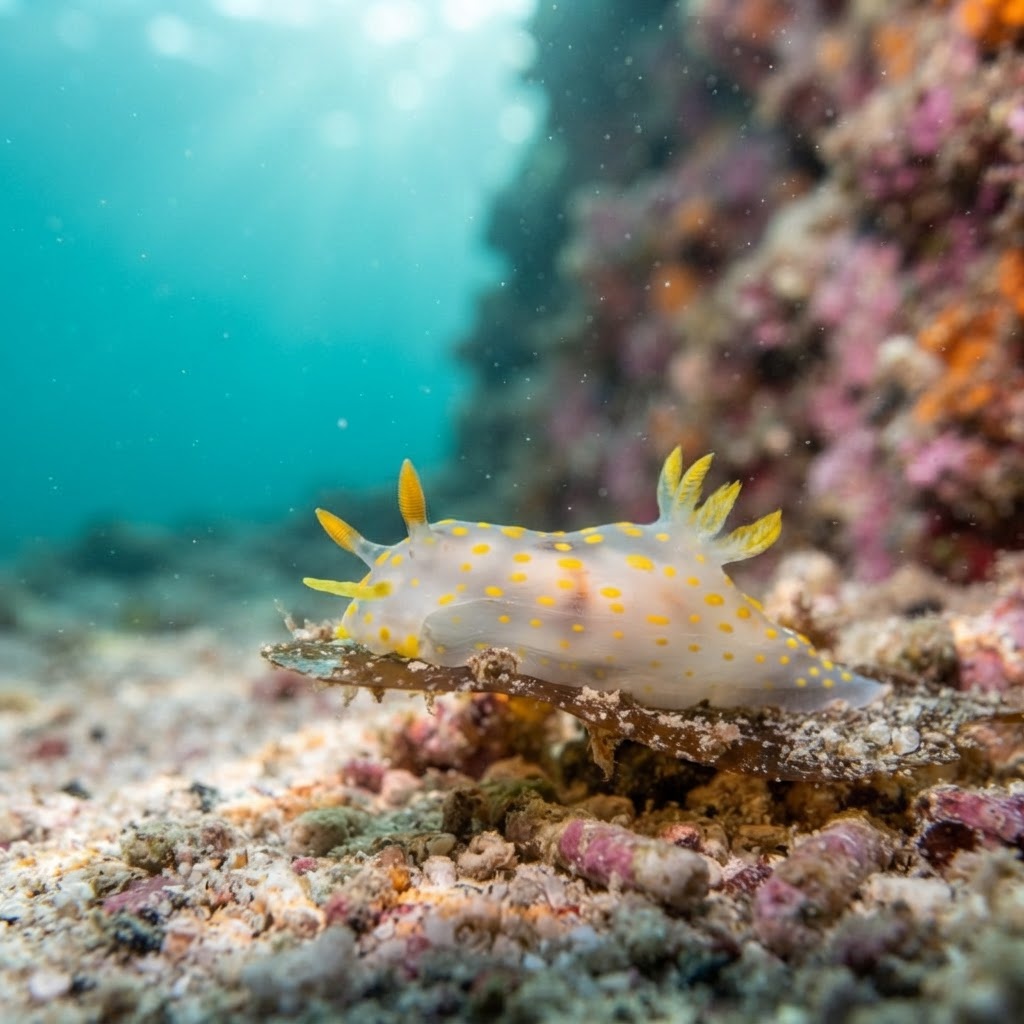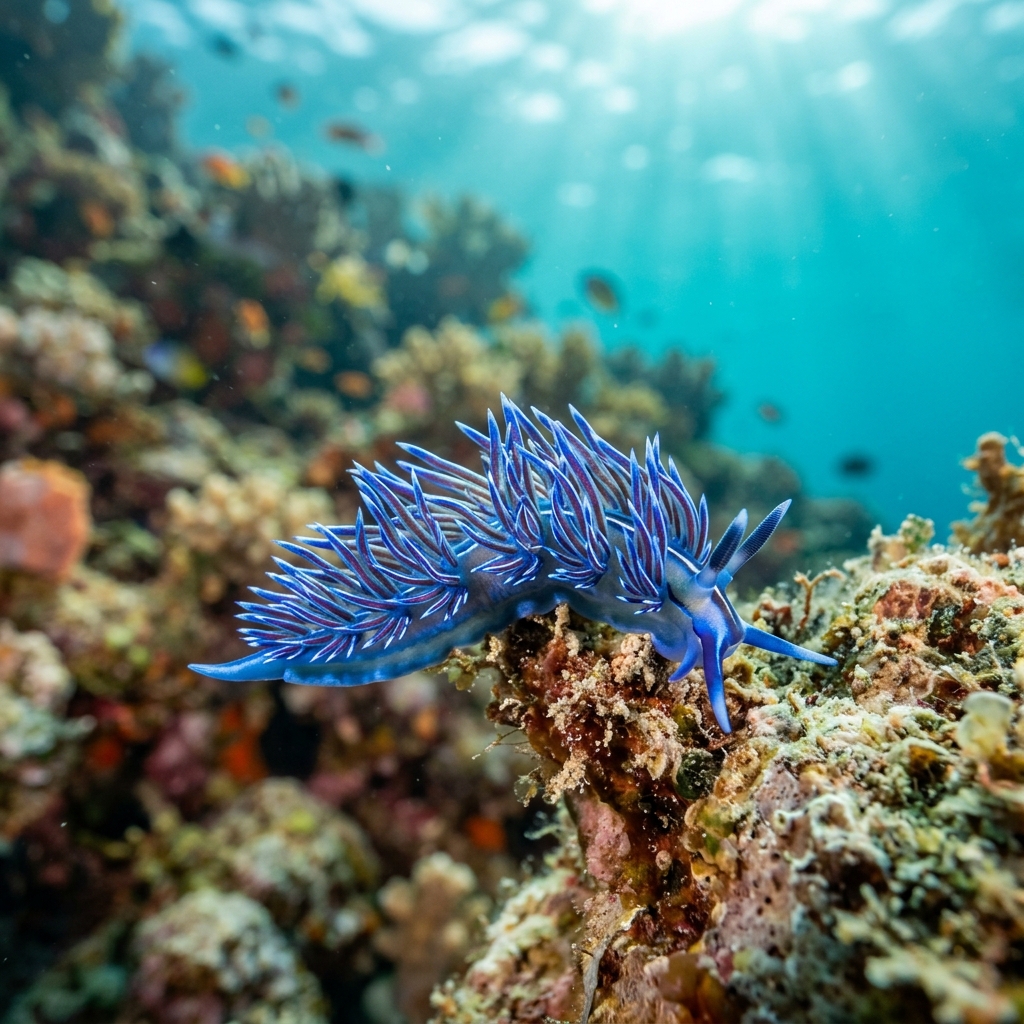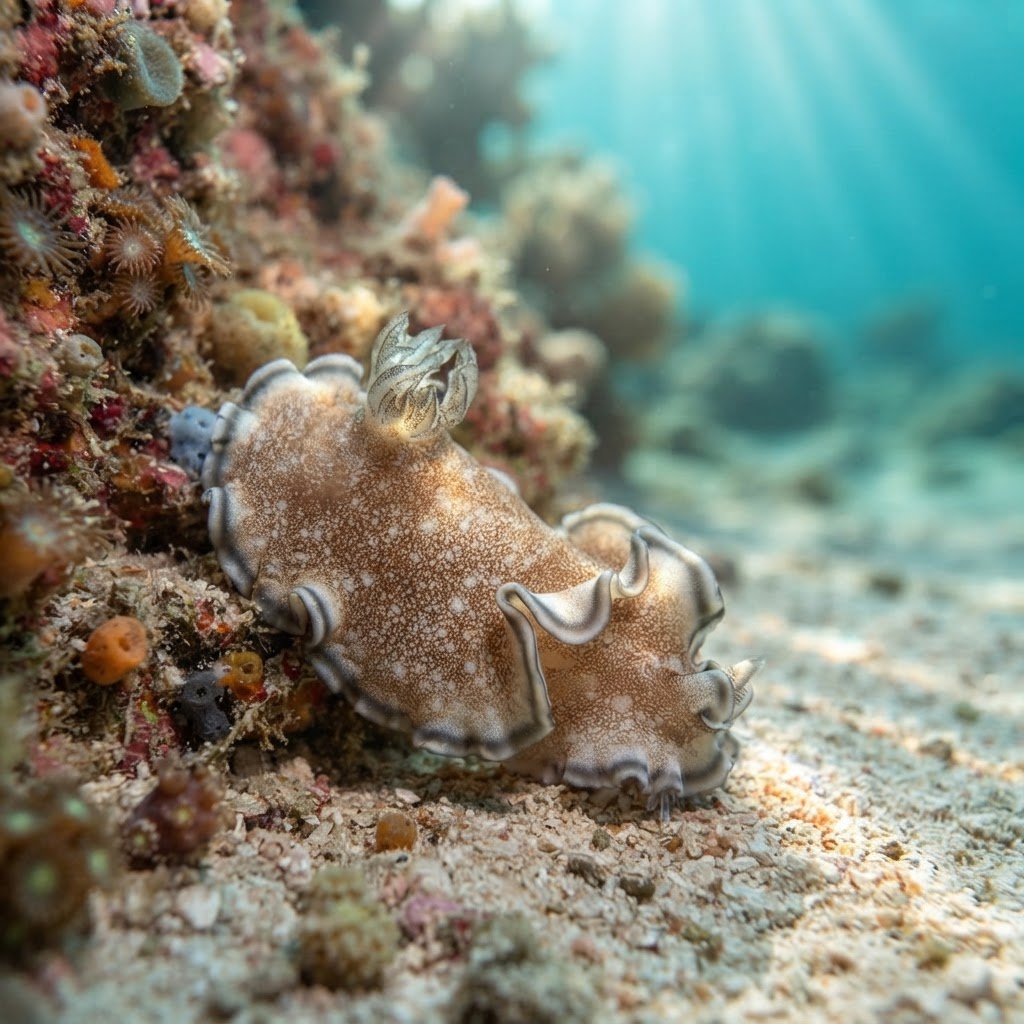
Glossodoris hikuerensis
A small pastel nudibranch turning up on reefs from Egypt's Red Sea Riviera to Mafia Island, Tanzania, year-round in warm water.
A small, elongated nudibranch reaching about 6 cm, with a soft pastel body that shifts between pink, cream and pale yellow along raised longitudinal ridges. Look for the smooth, oval outline typical of dorid nudibranchs, with feathery gills clustered near the rear and short rhinophores (sensory tentacles) up front. It moves slowly across the reef surface, so once you spot the pastel colouring against darker coral or rubble, it is easy to hold in view.
Divers typically find it grazing slowly over reef substrate, rubble or sponge-covered rock, moving at the unhurried pace typical of dorid nudibranchs. It shows no reaction to divers beyond continuing its crawl, so it is a reliable subject for a close macro shot if you take the time to look along the substrate rather than the open reef. Most logs describe it as uncommon rather than rare, so it rewards a slow, deliberate search on a macro-focused dive.
Like other members of Chromodorididae, it almost certainly feeds on sponges, and the soft pastel colours it displays are likely drawn from pigments in that diet rather than being purely defensive.
No strong seasonal pattern shows up in the data, and with a comfortable range of roughly 24 to 30 C, it is present on warm tropical reefs throughout the year rather than tied to a particular month.
Reef neighbours a diver could mistake it for. Use the identification notes above to tell them apart.
Most reliably logged in Egypt, especially around the Red Sea Riviera and Marsa Alam & the Deep South, with additional sightings in Taiwan's Kenting region and Tanzania's Mafia Island. Smaller numbers turn up further into the Pacific, including Kwajalein Atoll in the Marshall Islands, Apra Harbor in Guam, and Sulawesi in Indonesia.
Mapping where Pastel Rainbow Dorid is logged…
Egypt's Red Sea Riviera and Marsa Alam & the Deep South are the most consistent spots, alongside Kenting in Taiwan and Mafia Island in Tanzania. It also shows up occasionally in the Marshall Islands, Guam and Indonesia's Sulawesi.
There is no clear season in the sighting data, and its comfortable temperature range of about 24 to 30 C means it can be found on tropical reefs at any time of year.
Look for a small, oval-bodied nudibranch around 6 cm long, coloured in soft pink, cream and pale yellow along ridged lines, with feathery gills at the rear and short rhinophores up front. It moves slowly across reef surfaces, making it easy to photograph up close.
They typically reach about 6 cm in length, a fairly small nudibranch best spotted with a slow, close look along the reef floor.
No. It poses no threat to divers and can be safely observed and photographed at close range without any risk.
Like other dorid nudibranchs in the Chromodorididae family, it almost certainly grazes on sponges, and its soft pastel body tones likely come from pigments absorbed through that diet.
Site and sighting data is aggregated from diver logs, iNaturalist and GBIF. For taxonomy and conservation status:
Light-spotted Aegires
3,168 sites