Elysia papillosa
A 3cm sea slug found almost exclusively around Grande-Terre, Guadeloupe, in warm 25-31C water. Here's how to find and ID it.
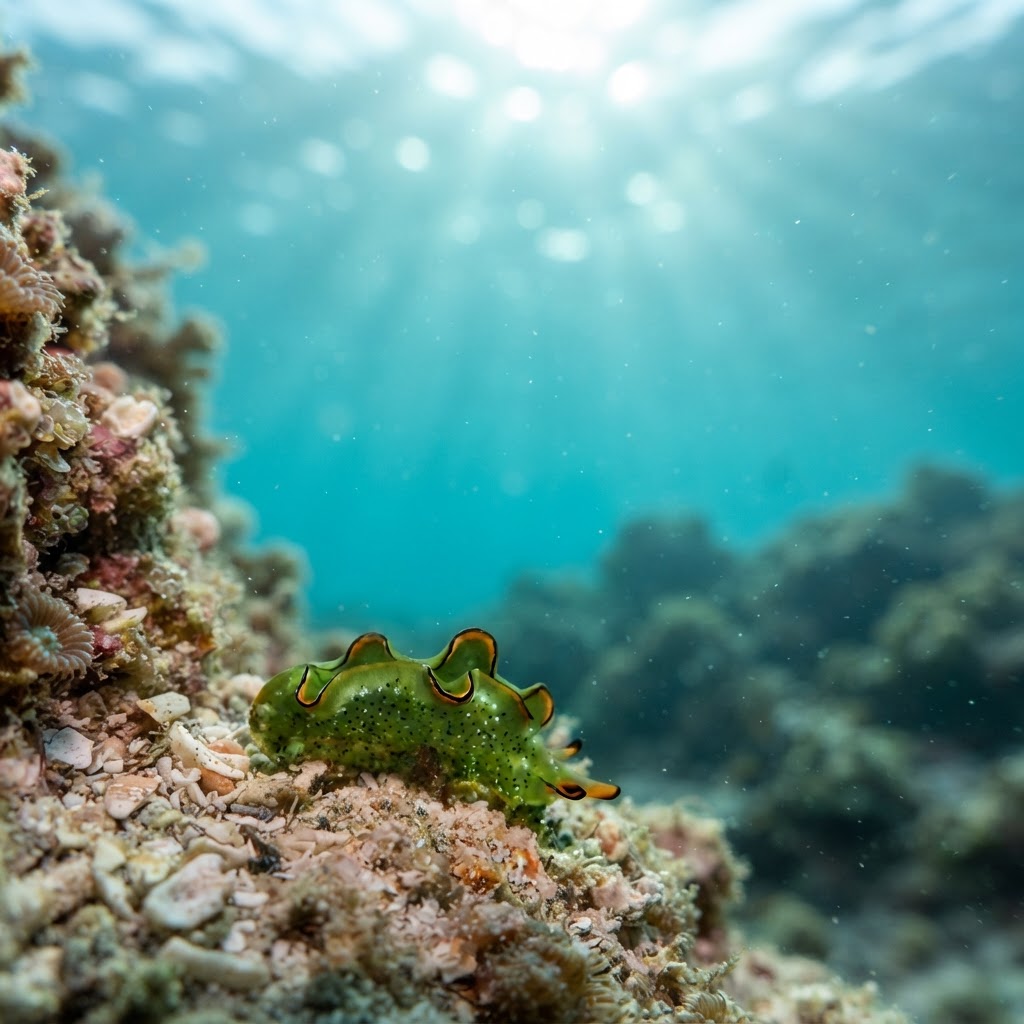
A small, soft-bodied sea slug reaching about 3cm, with a body covered in fine, fleshy bumps (papillae) that give it a textured, almost furry look rather than a smooth slug surface. Colour runs mottled green to brownish, often blending closely with algae-covered rock or rubble, which is exactly why divers walk past it without noticing. Look for the two rolled, wing-like flaps (parapodia) along its back, a family trait of the sap-sucking slugs, rather than a distinct pattern or bright colour to key on.
Expect to find it grazing slowly over algae-covered rock or rubble in shallow water, using its rolled parapodia and body colour to blend into the background rather than draw attention. It doesn't react to divers in any noticeable way, it simply keeps browsing, so the challenge is spotting it in the first place rather than approaching it. Logged as uncommon even at the sites where it turns up, so this is very much a slow, close-focus, look-twice kind of find.
Like other members of its family, it likely retains chloroplasts from the algae it feeds on inside its own tissue, using them to photosynthesise for a time after feeding, a trick called kleptoplasty shared across the sap-sucking slugs.
Sightings show no detectable seasonal pattern, and with water in the 24.7 to 30.7C range year-round, conditions stay comfortable for it on Guadeloupe's reefs in any month. Treat it as a year-round target and focus on searching well rather than timing your trip around it.
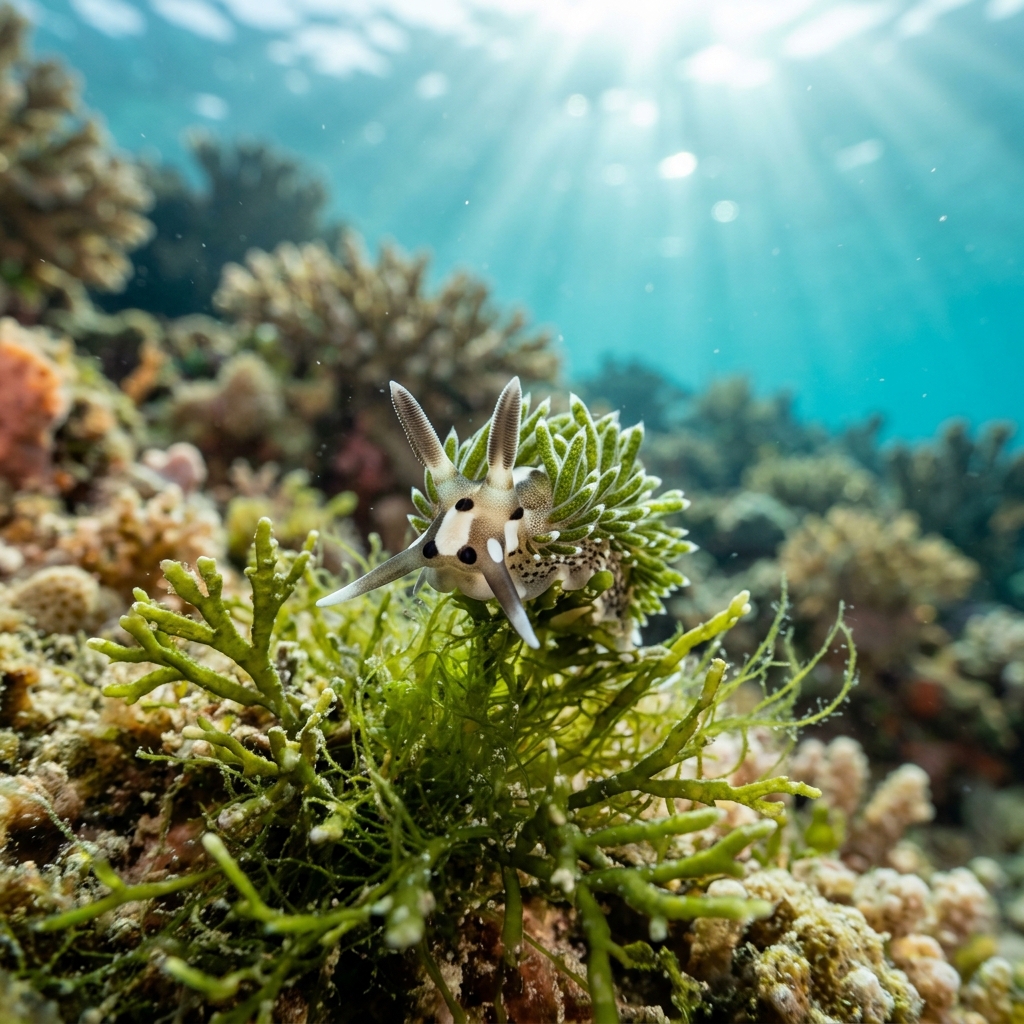
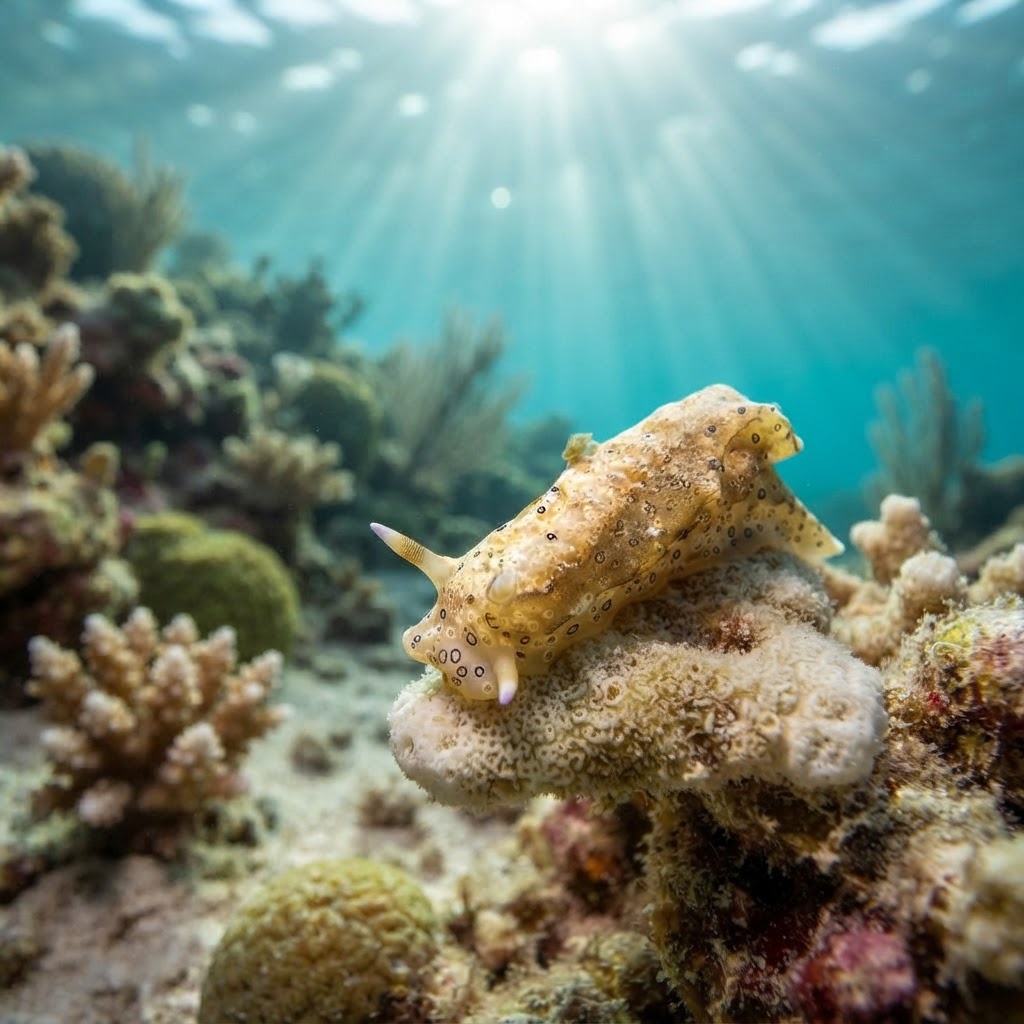
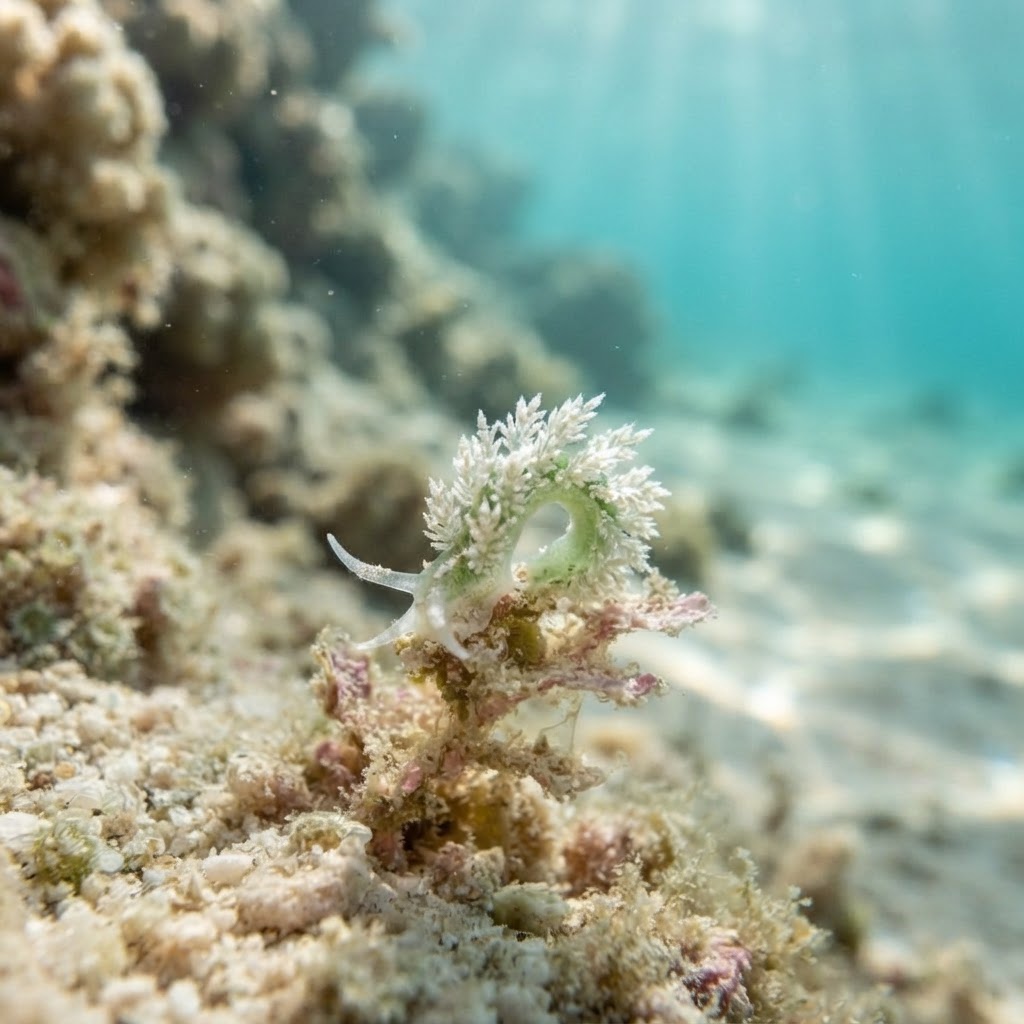
Reef neighbours a diver could mistake it for. Use the identification notes above to tell them apart.
This one is essentially a Guadeloupe specialty in the logged data, with Grande-Terre accounting for the vast majority of sightings and a lone site on Basse-Terre rounding out the picture. If you're diving or snorkelling shallow, algae-rich sites around Grande-Terre, that's where to slow down and start scanning.
Mapping where Papillose Elysia is logged…
Almost all logged sightings come from Guadeloupe, concentrated around Grande-Terre with a single record on Basse-Terre. It hasn't been reported elsewhere in the diver/iNaturalist data, so Guadeloupe is currently the place to look.
There's no clear season in the sighting data, and water temperatures around Guadeloupe stay warm (roughly 25 to 31C) throughout the year, so it's considered a year-round find rather than a seasonal one.
Look for a small, bumpy-skinned sea slug around 3cm long in mottled green-brown tones, with two rolled flaps along its back rather than a smooth, patterned body. It blends into algae and rubble, so it's easier to notice by texture than by colour.
They're small, typically reaching around 3cm in length, so they're easy to miss unless you're looking closely at algae-covered surfaces.
Like related sap-sucking slugs, it's thought to hold onto chloroplasts from the algae it eats and keep them functioning in its own tissue for a while, effectively borrowing the plant's ability to photosynthesise.
No, they pose no risk to divers. They're tiny, slow-moving grazers with no means of harming anyone, so the only challenge is spotting one.
Site and sighting data is aggregated from diver logs, iNaturalist and GBIF. For taxonomy and conservation status:
Light-spotted Aegires
3,168 sites