Echidna nocturna
A rarely-logged eel of Mexico's Pacific Coast and Costa Rica's Central Pacific, found year-round in 22-29C water.
Safety warning
It can bite if provoked or if a diver puts a hand into a crevice without looking first, and moray bites are ragged and prone to infection. Keep hands away from holes on the reef and admire this one from a small distance rather than trying to coax it out.
If you're bitten
BiteGeneral first-aid guidance, not a substitute for professional medical care. In an emergency, call your local emergency number.
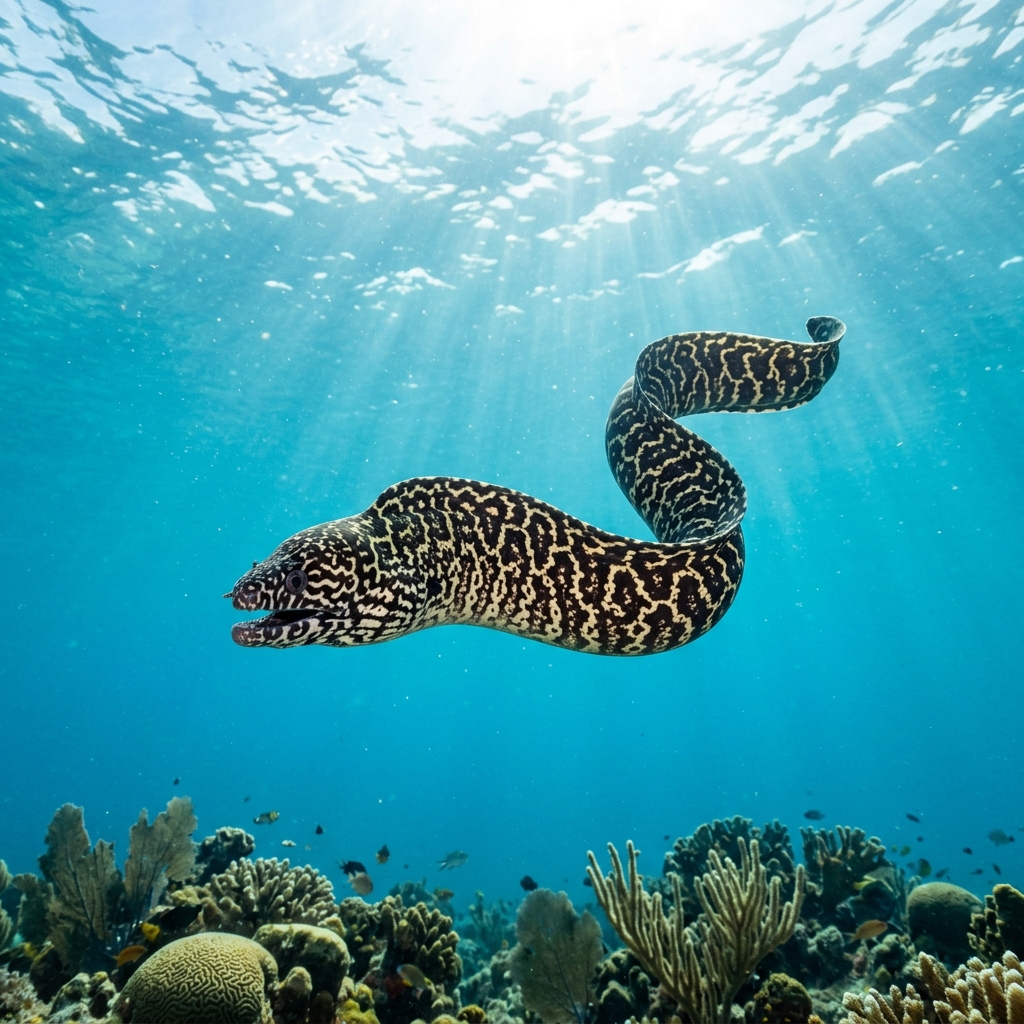
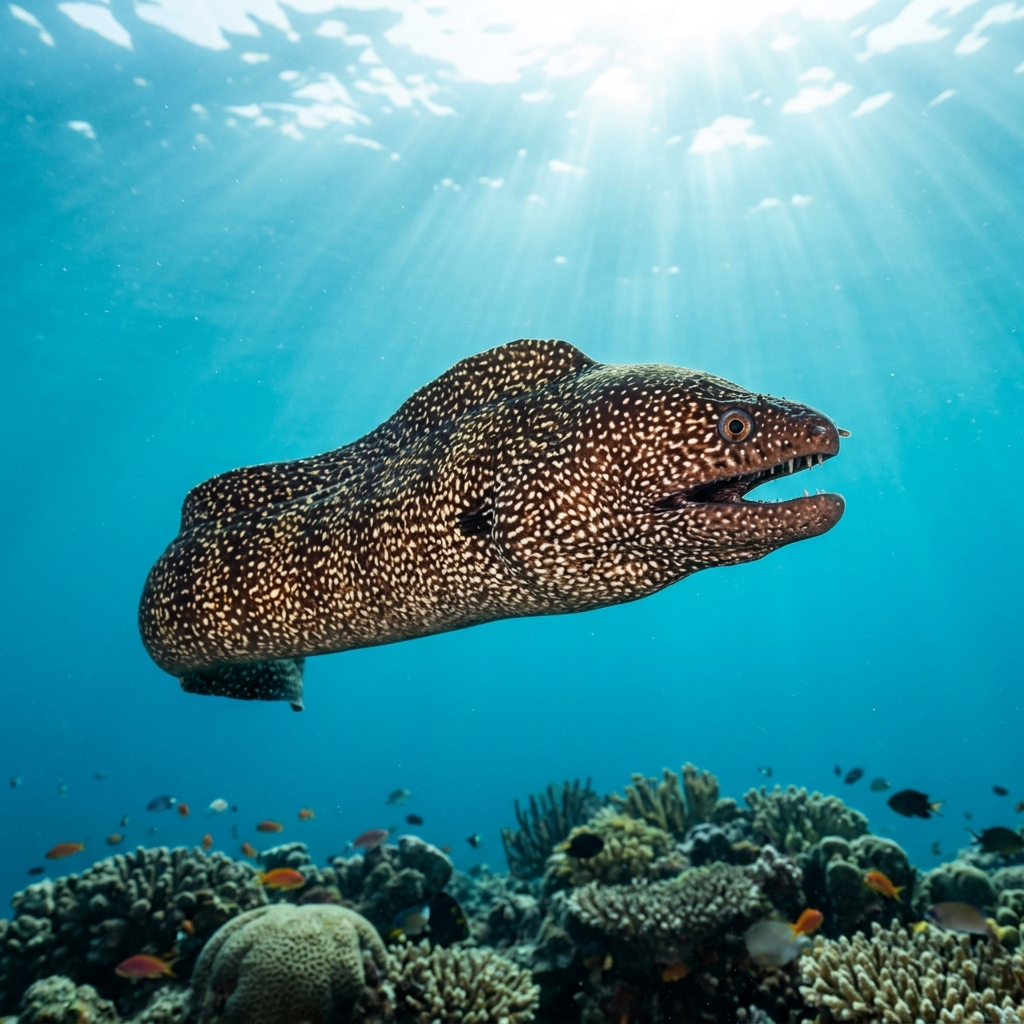
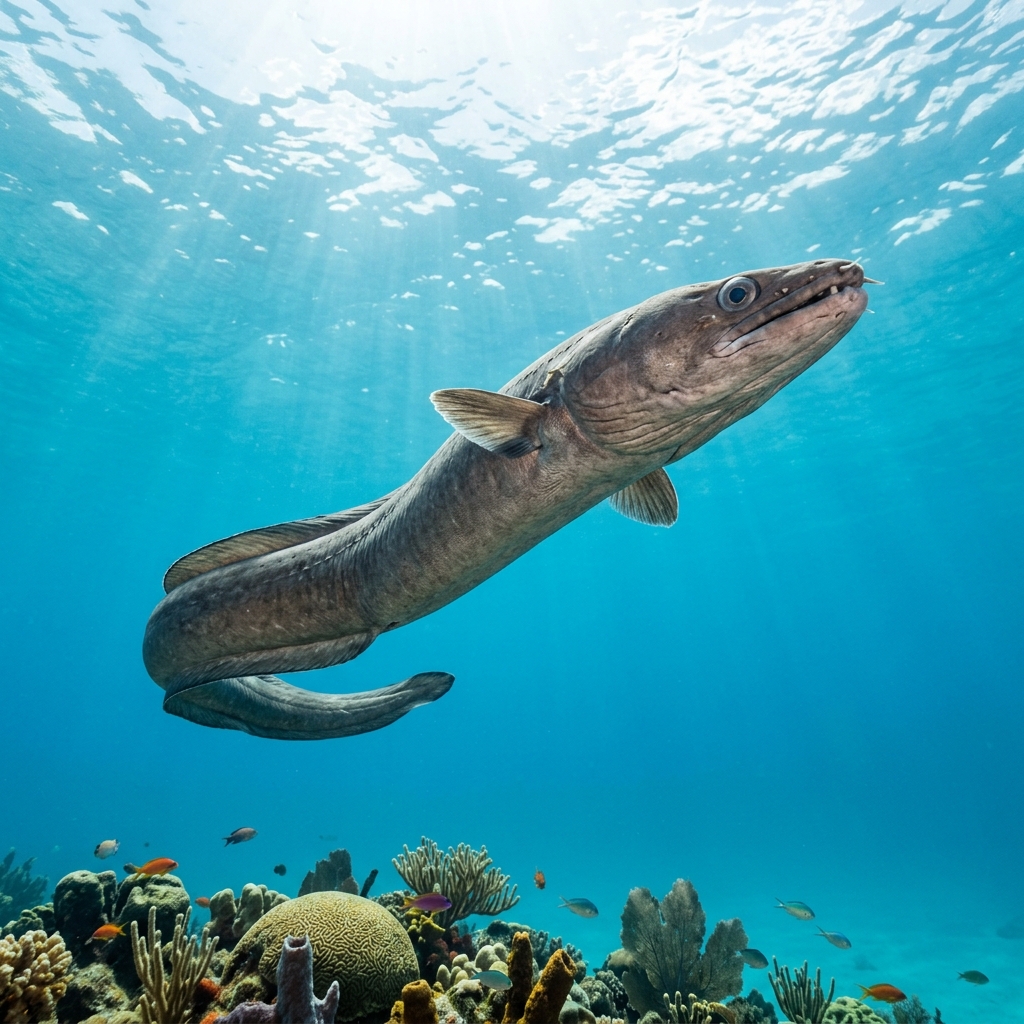
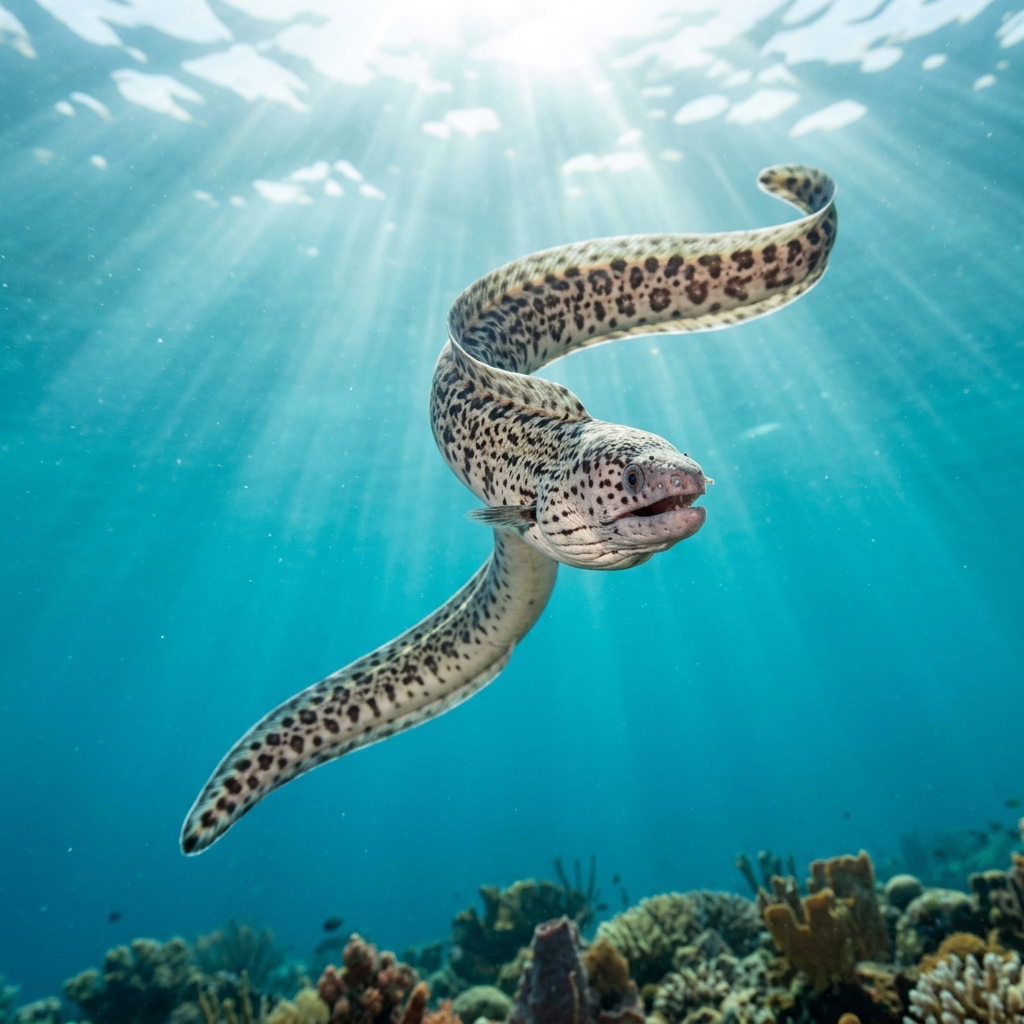
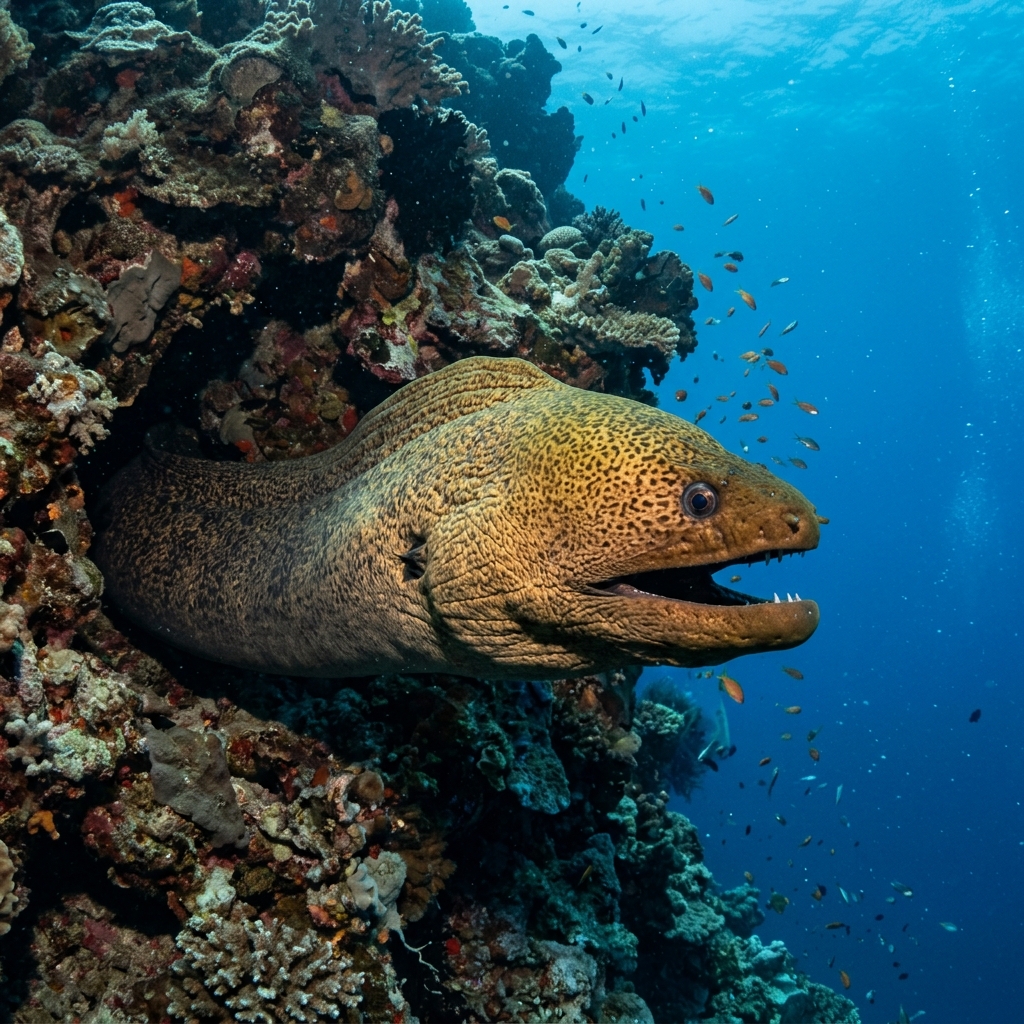
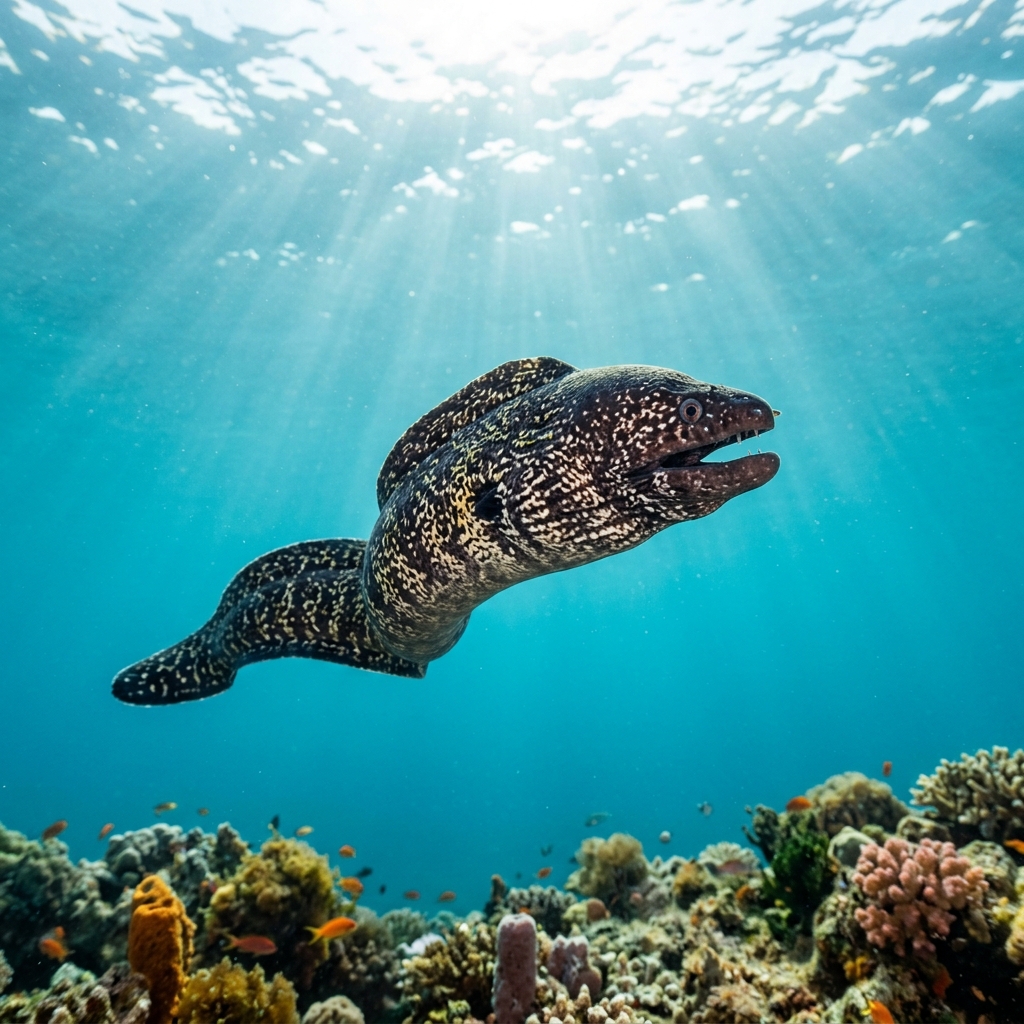
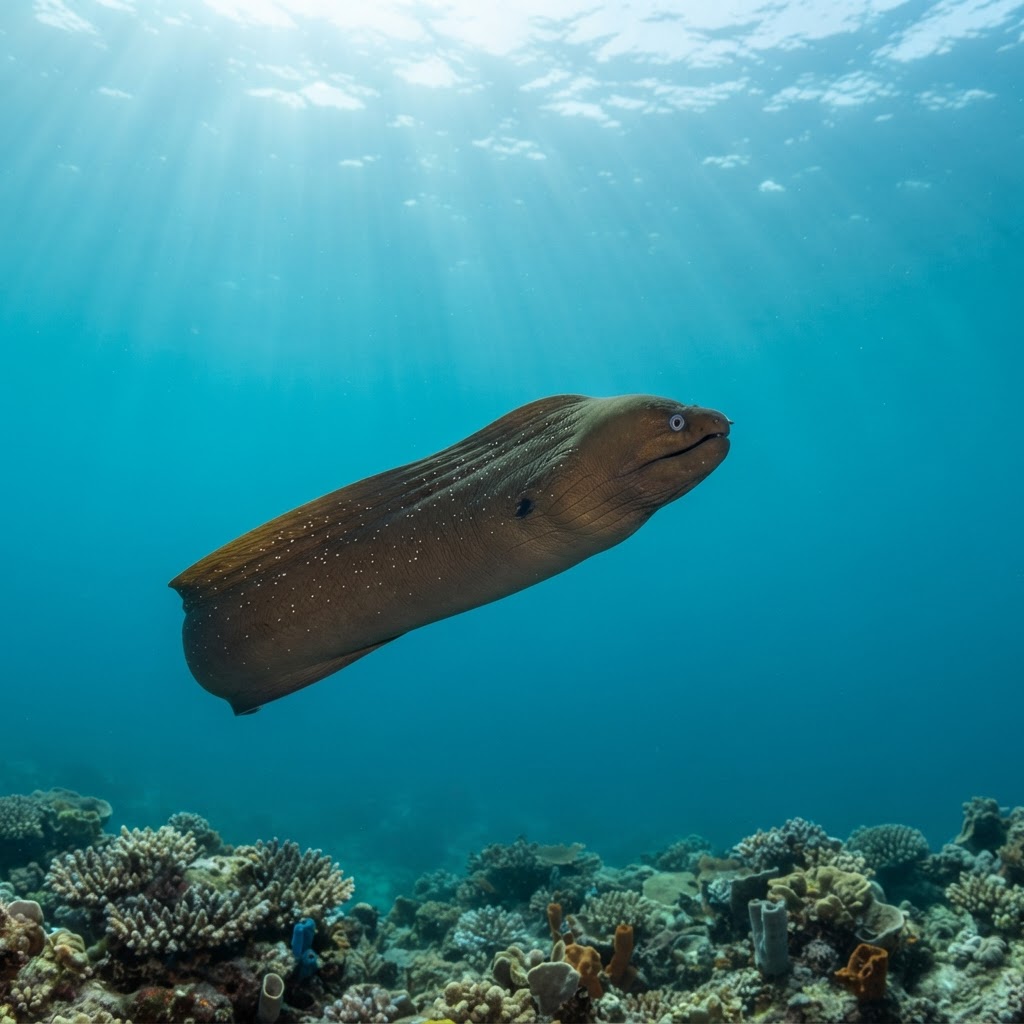
A stocky, medium-sized moray reaching around 50 cm, with a mottled brown-to-grey body that fades to a paler, almost washed-out snout, which is where the common name comes from. The head looks blunt and thick-set compared with slimmer reef eels, and most of the body stays tucked into a crevice with just the head visible. No bold banding or spotting, just a grainy, speckled camouflage pattern that blends into rock and rubble.
Expect to find it wedged into a rocky hole or crevice with just its head poking out, gills pumping steadily as it breathes. It is not a species that swims out to greet divers, most sightings are of a still, watching head rather than an eel on the move. Divers logging it describe it as rare to uncommon even at sites where it turns up, so a calm, patient look into rock crevices on a Pacific reef is the best way to find one.
Like other morays, it relies on a second set of jaws in its throat (pharyngeal jaws) to drag prey down its gullet, since it cannot generate suction to swallow the way most fish do.
No clear seasonal pattern shows up in the data, so treat it as a year-round sighting on eastern Pacific reefs. Water in its recorded range sits between 22.3 and 29.1 C, comfortable for tropical and subtropical divers most months.
Reef neighbours a diver could mistake it for. Use the identification notes above to tell them apart.
Most consistently logged along Mexico's Pacific Coast, with a strong secondary presence in Costa Rica's Central Pacific region and a single logged sighting on Ecuador's Pacific Coast. Sites in Guanacaste, Costa Rica, add another pocket of records, but this is an eel you have to search rocky reef crevices for rather than expect on every dive.
Mapping where Palenose Moray is logged…
Best chances are along Mexico's Pacific Coast and Costa Rica's Central Pacific region, with a single Ecuador record on the Pacific Coast. It is logged as rare to uncommon even at these sites, so it is a bonus find rather than a guaranteed sighting.
There is no strong seasonal signal in the sightings, so it can turn up any month. Water temperatures where it is recorded range from 22.3 to 29.1 C, matching typical year-round conditions on eastern Pacific reefs.
They can bite if disturbed or cornered, and moray bites carry infection risk, but they are not aggressive towards divers who leave them alone. Avoid reaching into reef crevices and you are unlikely to have any issue.
Look for a mottled brown-grey body around 50 cm long with a notably paler snout poking out of a rocky crevice. It lacks bold spots or bands, relying instead on a speckled camouflage pattern.
They typically reach around 50 cm in length, making them a medium-sized moray compared with larger reef eels like the green moray.
Site and sighting data is aggregated from diver logs, iNaturalist and GBIF. For taxonomy and conservation status:
Garden Eel
2,448 sites